

Interior and exterior confidence
Create Academy has been such a great resource. I'm in the middle of renovating a bungalow with a very large garden and the courses have offered a wealth of inform...
Harvey
Jun 10, 2026
Creating a Romantic English Country Garden
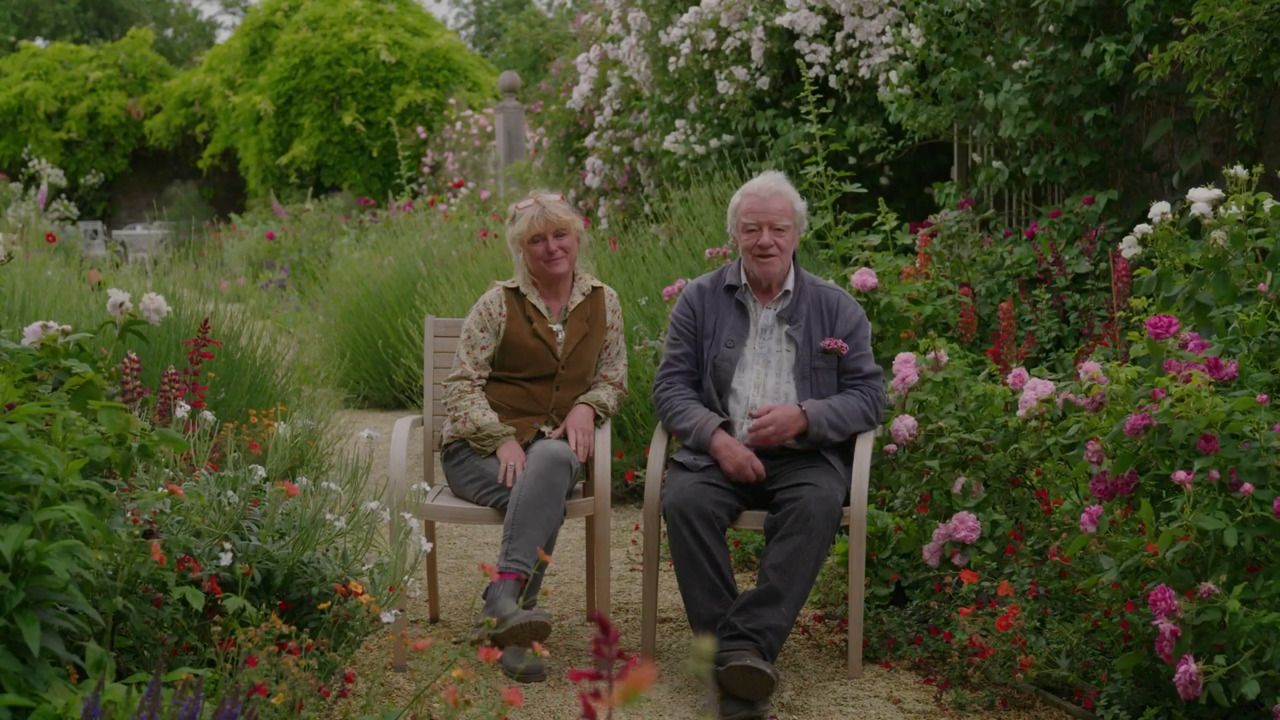
with ISABEL & JULIAN BANNERMAN — Acclaimed British garden designer duo.
Lesson 4 of 12
Subscribe to watch
This lesson covers how strong grids, paths, hedges and “punctuation points” create a garden that works in every season, including why yew and gravel are such effective structural tools.
In this lesson you'll learn how we set out the underlying structure of a garden - the grid, the paths, the hedges, and the practical decisions that make everything else work.
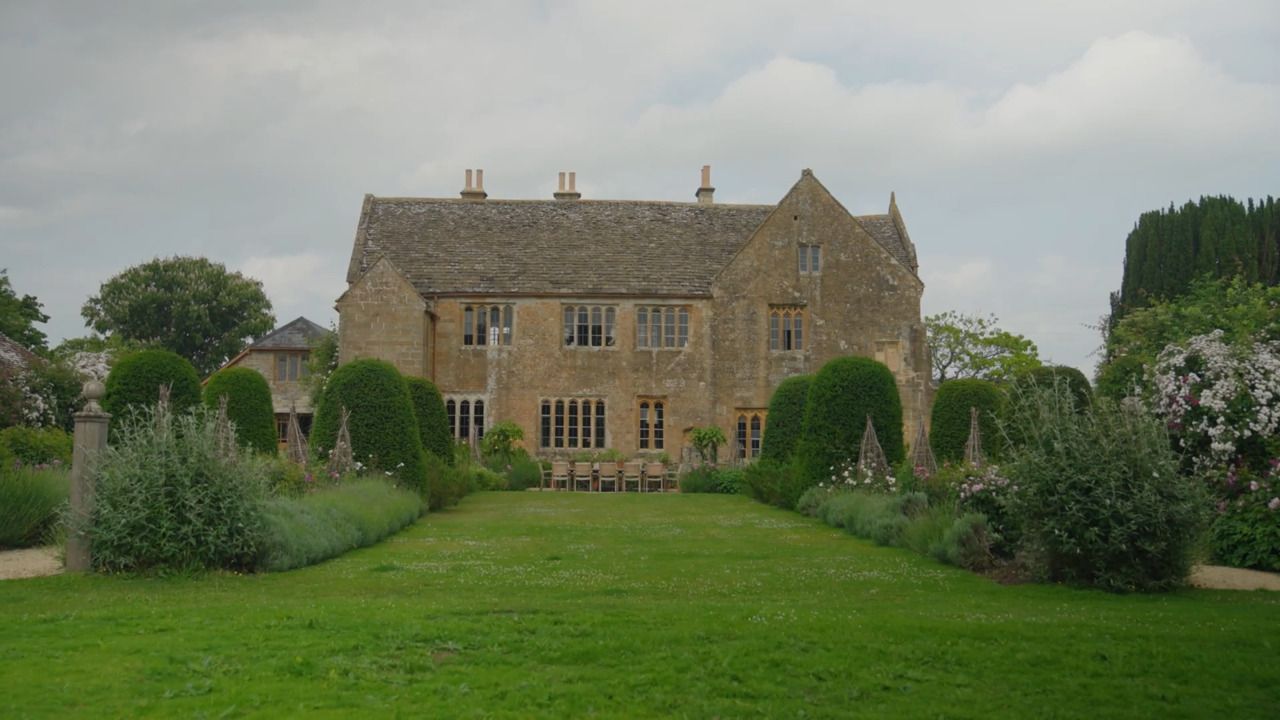
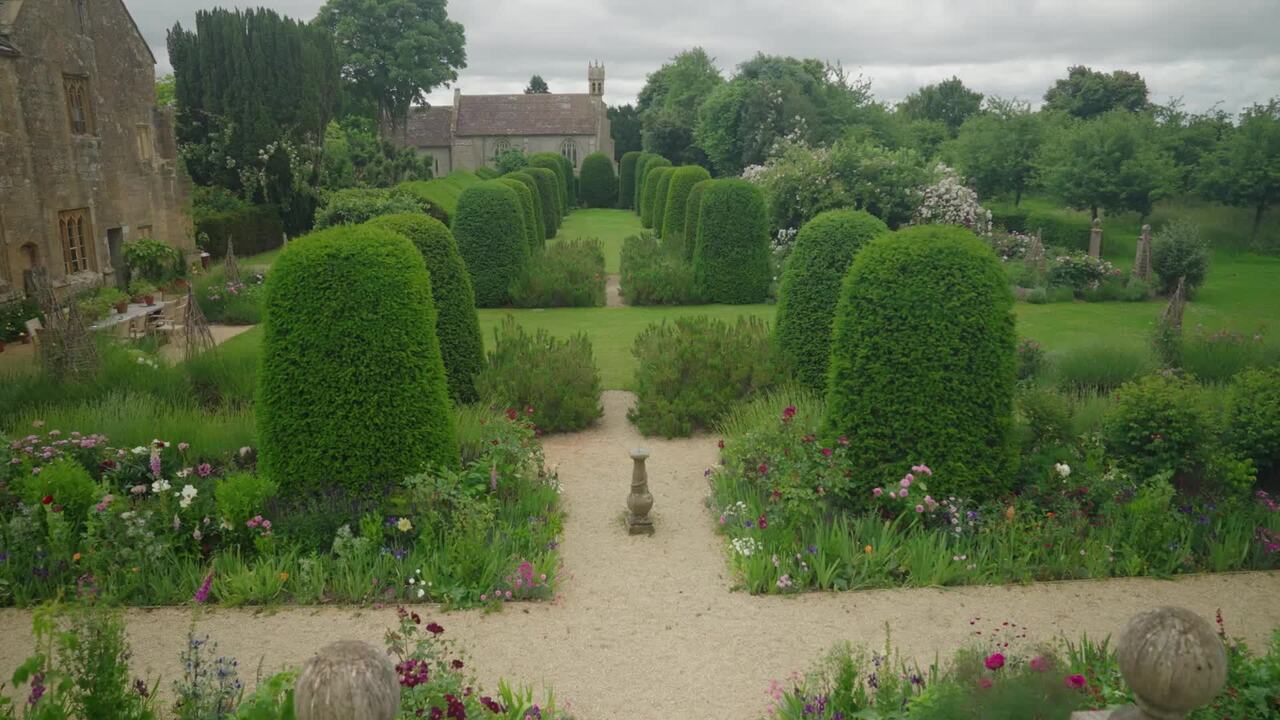
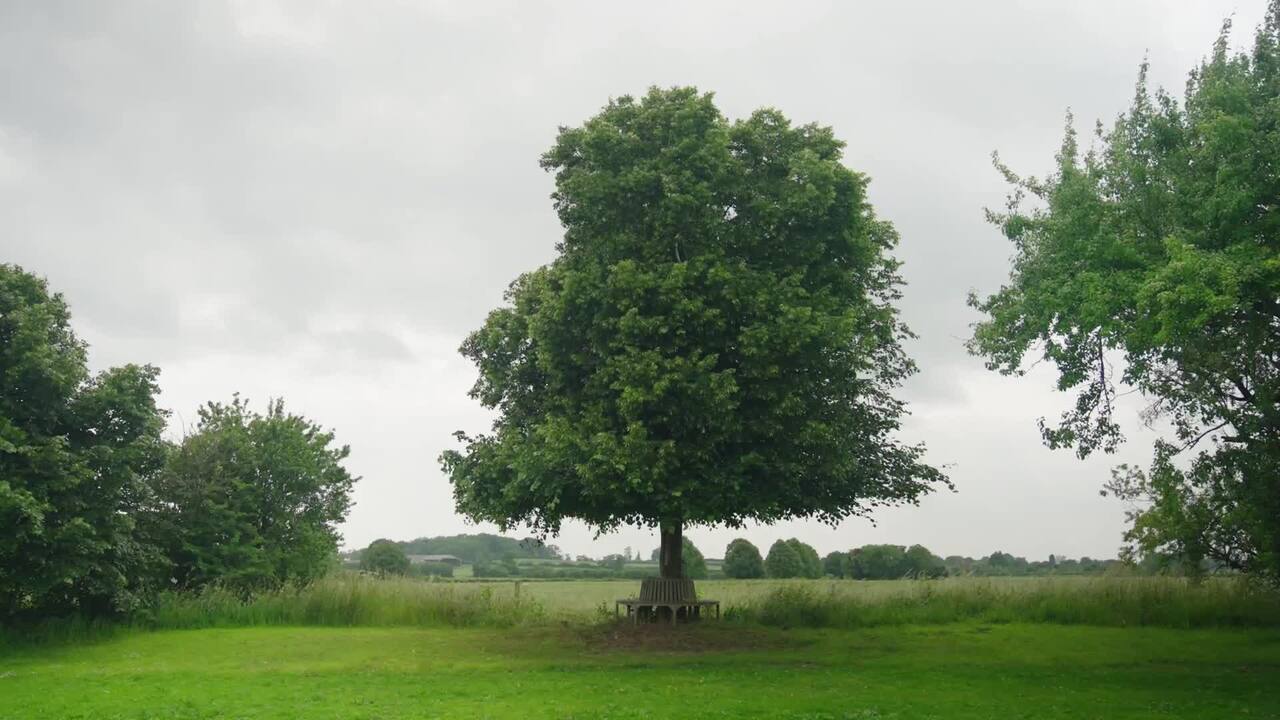
We started by agreeing on a simple grid, anchored by two things: a door out of the big hall in the house and the church bell tower beyond the garden. That immediately gave us the main paths - two running west and a cross path centred on the tower. The existing nut tree with ferns beneath naturally became the spring garden, so the plan wasn't forced - it presented itself.
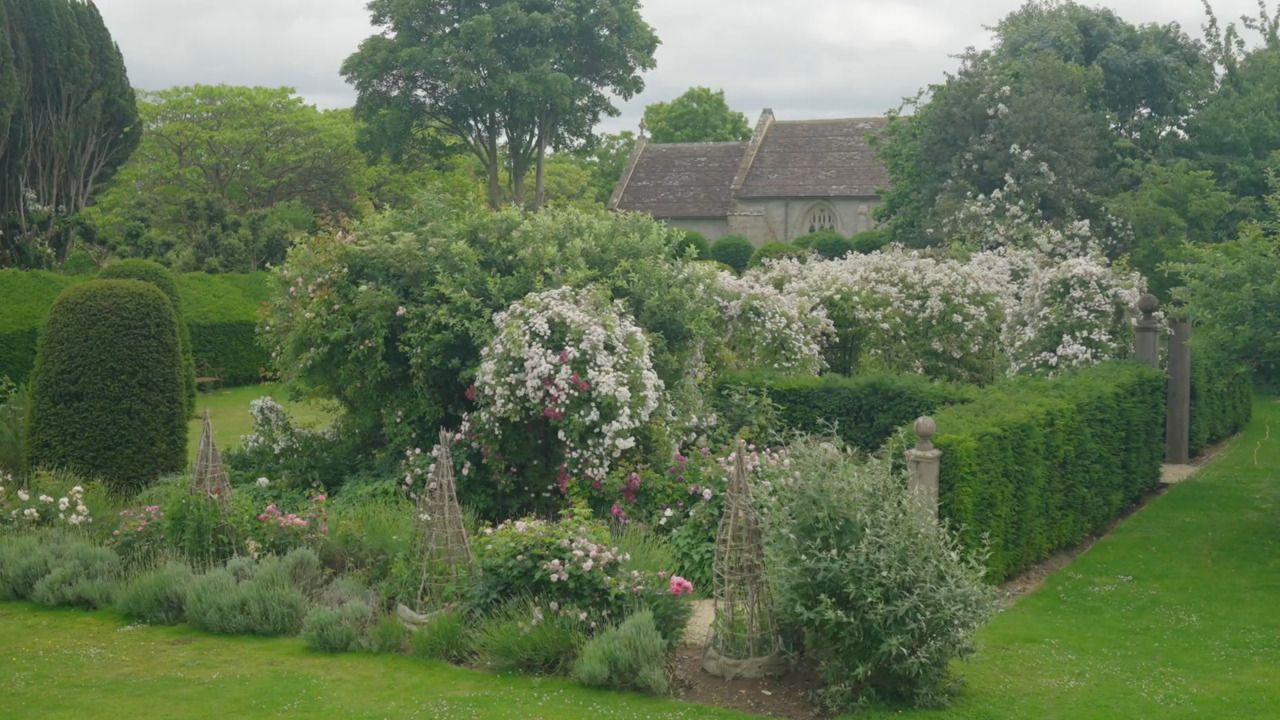
When the big yews arrived, some people worried they'd block the view, but we don't want to see everything at once. Verticals and framing make you move, pause, and look harder. It's not blockage - it's theatre.
We chose large yews because this site is so flat and open, and we wanted the garden to feel grounded quickly. Planting small is often better (cheaper, easier, and plants establish well and grow quickly), but sometimes you decide you want the bones now, not in 20 years. Yew will also outlast nearly everything - it's the long-term framework while borders evolve and change.
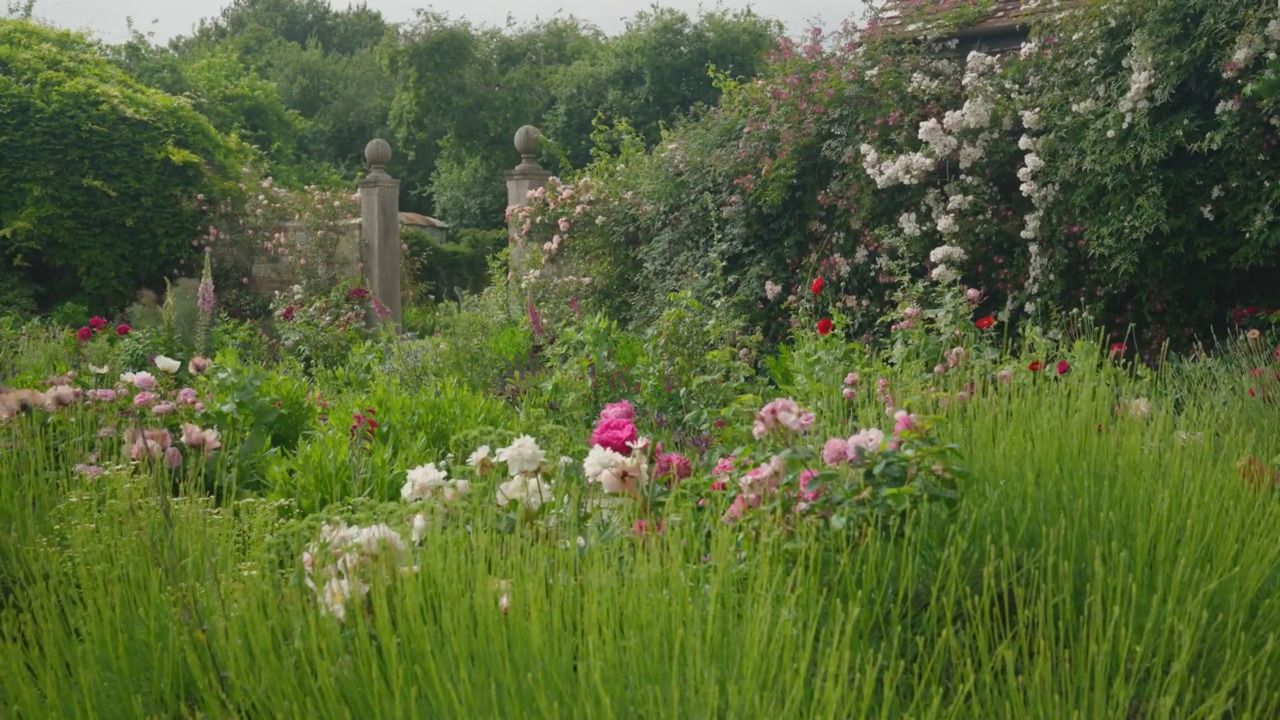
Gateways are important in providing punctuation, along with paths, seats and corners. Oak posts with spheres on the top flanking a path provide gentle punctuation.
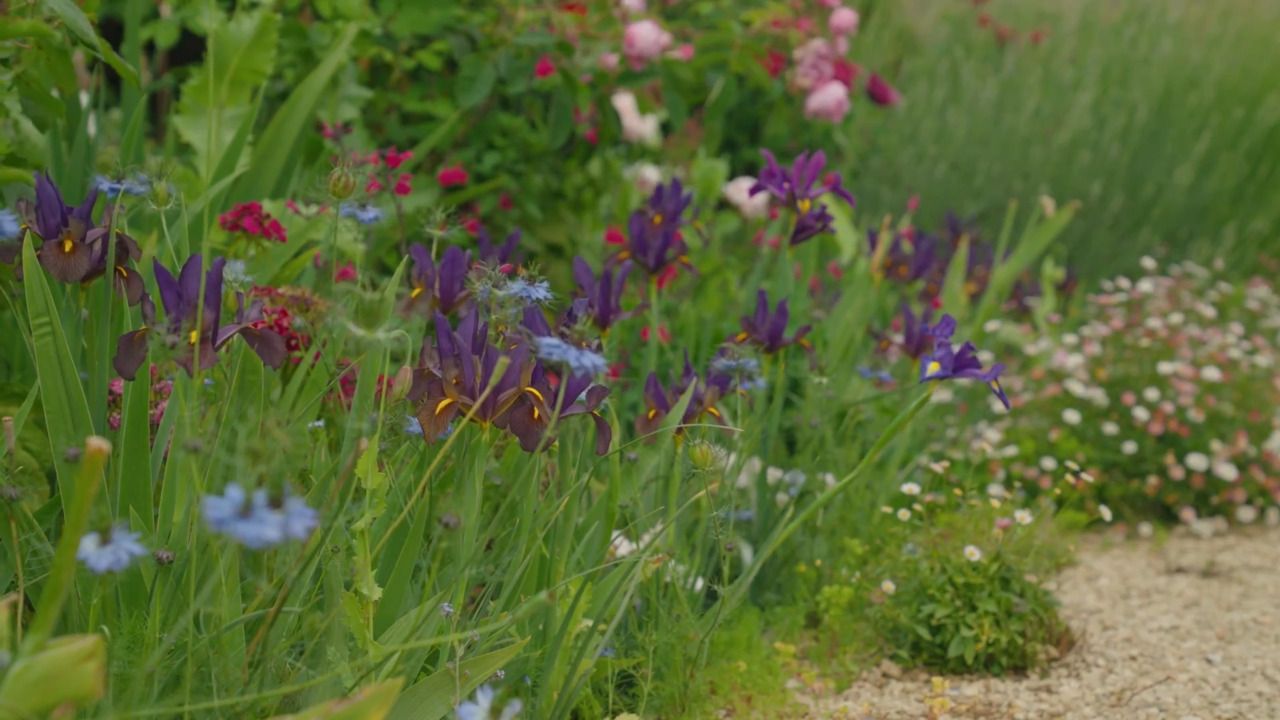
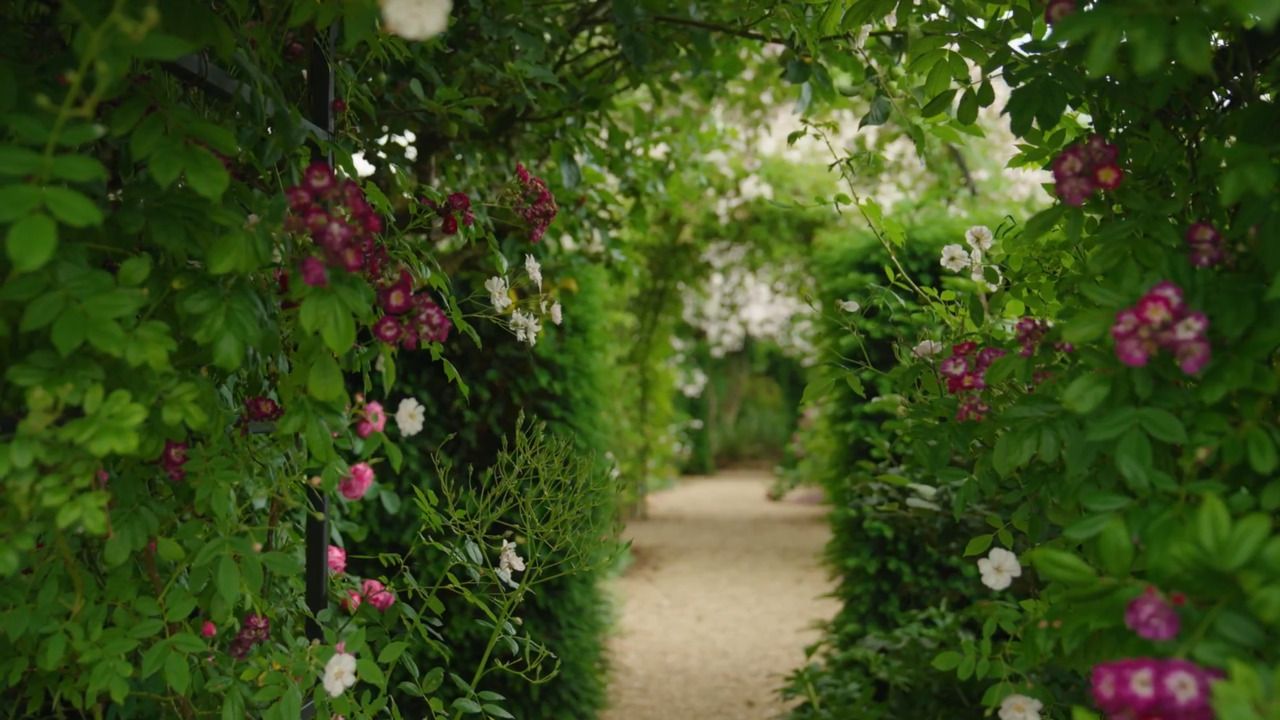
Paths are essential in a garden for structure as well as simply moving around comfortably. We use a lot of gravel, partly because it's affordable, but also because gravel is brilliant: it throws light up, it's comfortable to walk on, and it becomes its own growing medium with little seedlings popping up. Paths are always one of the first things we put in.
What you see out of the corner of your eye as you move through a space, such as what you're surrounded by, affects the atmosphere. This needs to be incorporated into the design and can often be achieved through the use of vertical elements.
The key elements of a garden are generally where you'll park, where you'll sit and eat, and where you'll grow vegetables. But a garden should still work even in winter - in fact winter can be our favourite time, because structure and expectation are what make a garden sing. Think about whether a garden would work as a black and white photograph, without any colour from flowers, to gauge whether there is good structure.
One of the things we always say is: a plan can look clever and still fail. You have to design for how people actually move - what you notice out of the corner of your eye, the feeling of enclosure, the way a space changes as you walk through it. That's why vertical structure is so important.
It's so easy to be swept away by beautiful images in gardening magazines, but it's essential to create a garden that won't overwhelm you. Create something you can be immersed in that's joyous and scented and all the things that you uniquely love but is manageable.
Taxus baccata
Common yew
Hardy evergreen tree or shrub
Taxaceae
Bellis perennis
Daisy
Hardy evergreen perennial
Asteraceae
Wisteria species and cultivars
Wisteria
Hardy deciduous climbers
Fabaceae
Malus domestica cultivars
Apples
Hardy deciduous trees
Rosaceae
Corylus avellana
Hazel (nut tree)
Hardy deciduous shrub or tree
Betulaceae
Meconopsis species and cultivars
Himalayan blue poppies
Hardy short-lived perennials
Papaveraceae
Get the full workbook, video lessons, and more with a Create Academy subscription.
Subscribe to access the full workbookAlready a member? Sign in to watch
491 reviews
Read moreCreate Academy has been such a great resource. I'm in the middle of renovating a bungalow with a very large garden and the courses have offered a wealth of inform...
Harvey
Jun 10, 2026
Absolutely love Create Academy! The instructors are extremely informative, and it is beautifully filmed. Create Academy is great value for money and plan on renew...
SG
May 31, 2026
Butter's creativity is stunning! Her ability to incorporate brilliance in small gardens is magical!
Carla
May 30, 2026
The best adventure. I like all the courses, but my favorite are both Rita Konig interior design courses and Anna Jones. Excellent!
Karolina Kluczewska
May 20, 2026
Create Academy has been such a great resource. I'm in the middle of renovating a bungalow with a very large garden and the courses have offered a wealth of information to dive into and explore new ideas. I'm...
Harvey
Jun 10, 2026
Absolutely love Create Academy! The instructors are extremely informative, and it is beautifully filmed. Create Academy is great value for money and plan on renewing my subscription yearly because there are ...
SG
May 31, 2026
Butter's creativity is stunning! Her ability to incorporate brilliance in small gardens is magical!
Carla
May 30, 2026

Your Instructor
Acclaimed British garden designer duo.
Isabel Bannerman and Julian Bannerman have been designing landscapes and garden architecture together since 1983, creating poetic spaces that balance living beauty with clarity of form. Renowned for their romantic English-country aesthetic, they work across urban, woodland and heritage gardens, always inspired by the site’s character rather than imposing a style. Their work is celebrated for its inventive use of space, structure and planting, and is underpinned by an organic ethos and sustainable materials.

Access to all courses


