


Interior and exterior confidence
Create Academy has been such a great resource. I'm in the middle of renovating a bungalow with a very large garden and the courses have offered a wealth of inform...
Harvey
Jun 10, 2026
Creating a Romantic English Country Garden
with ISABEL & JULIAN BANNERMAN — Acclaimed British garden designer duo.
Lesson 11 of 12
Subscribe to watch
Julian demonstrates how to turn deep shade into a layered fernery with bulbs, winter scent and rambling roses up trees, plus the long-game magic of giant lilies.
When we arrived, this was one of the few areas with any character: a hazel tree with a holly beside it, and lots of shade. I knew straight away what it wanted - a proper fernery, with spring bulbs and plants that actually enjoy gloom.
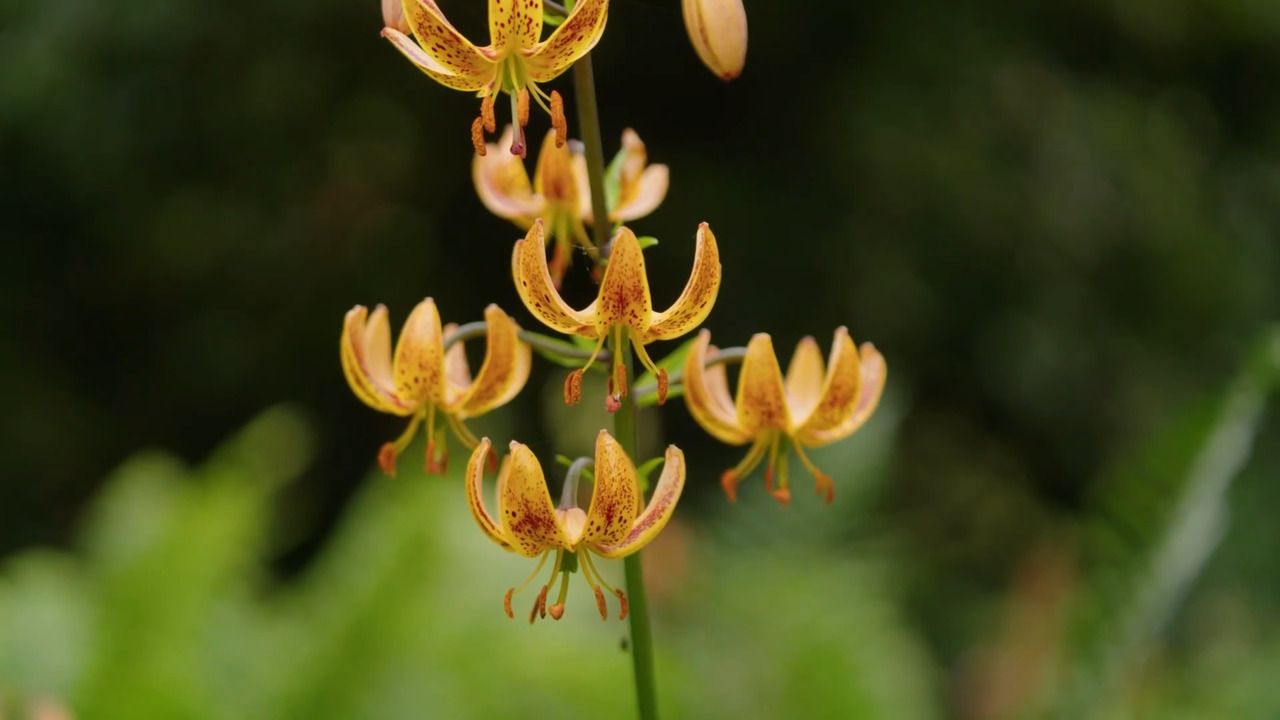
So we packed it with tall scented snowdrops, winter aconites, scillas, and masses of ferns, then added plants that thrive in semi-shade: crocosmia, daphnes, violets, and Martagon lilies, which come in a huge variety of colours now. Round the back of the tree there's Sarcococca for a wonderful winter scent.
In spring it's carpeted with colour, and it's also just a wonderfully quiet place to sit - you can even hear the ancient church bell, and it feels like somewhere you can properly hide. It's a calm area without too much intensity of horticulture - you can't do intensive gardening everywhere.
In this lesson you'll learn how we made a shady corner into a fernery, using bulbs and other shade-loving plants, and rambling roses up trees - with almost no upkeep once they're established.
This is also where we've let roses do what they want to do: we've got 'Rambling Rector' and 'Paul's Himalayan Musk' climbing up the holly and hazel - about 30ft now. It's so much easier than training roses on walls: up a tree they climb, cascade, and the scent travels on the wind. Birds love it too (and we get blackbirds squabbling over the hips in winter).
The trick is to get the root of the rose close to the base of the tree. If you're not able to, you may need to tie it to a pole to get it up into the tree, but this is rather annoying! Hopefully once it's in the tree, there's not much more to do.
We also grow one of the great wonders of shade: Cardiocrinum giganteum - the giant lily. It can grow to about 14 ft, then die down, and you might wait seven years for it to flower again. It's like a fairy tale. When it dies, it produces offsets at the base, but patience is the whole game - though if you plant one each year for seven years, you should get flowering every year. The seedheads are extraordinary too - like little crocodile jaws.
If you've got a damp, shady bed against a north-facing wall and you think you're stuck, honestly, Cardiocrinum is one of the most magical answers.
Corylus avellana
Hazel (nut tree)
Hardy deciduous shrub/tree
Betulaceae
Ilex aquifolium
Holly
Hardy evergreen tree
Aquifoliaceae
Dryopteris species and cultivars
Male ferns or shield ferns
Hardy herbaceous, semi-evergreen or evergreen perennials
Dryopteridaceae
Galanthus species and cultivars
Snowdrops
Hardy bulbous perennials
Amaryllidaceae
Eranthis hyemalis
Winter aconite
Hardy tuberous perennial
Ranunculaceae
Euphorbia characias subsp. wulfeni
Mediterranean spurge
Hardy evergreen perennial
Euphorbiaceae
Daphne species and cultivars
Daphne
Hardy evergreen or deciduous shrubs
Thymelaeaceae
Viola species and cultivars
Violets
Hardy herbaceous perennials
Violaceae
Rosa 'Rambling Rector'
'Rambling Rector' rose
Hardy deciduous rambling rose
Rosaceae
Rosa 'Paul's Himalayan Musk'
'Paul's Himalayan Musk' rose
Hardy deciduous climbing rose
Rosaceae
Cardiocrinum giganteum
Giant Himalayan lily
Bulbous perennial
Liliaceae
Malus domestica cultivars
Apples
Hardy deciduous trees
Rosaceae
Urtica dioica
Common stinging nettle
Hardy herbaceous perennial
Urticaceae
Scilla species and cultivars
Squills
Hardy or half-hardy bulbous perennials
Asparagaceae
Crocosmia species and cultivars
Montbretias
Hardy cormous perennials
Iridaceae
Lilium martagon cultivars
Martagon lilies or Turk's cap lilies
Hardy bulbous perennials
Liliaceae
Sarcococca species and cultivars
Sweet box
Hardy evergreen shrubs
Buxaceae
Laurus nobilis
Bay tree
Hardy evergreen shrub
Lauraceae
Get the full workbook, video lessons, and more with a Create Academy subscription.
Subscribe to access the full workbookAlready a member? Sign in to watch
491 reviews
Read moreCreate Academy has been such a great resource. I'm in the middle of renovating a bungalow with a very large garden and the courses have offered a wealth of inform...
Harvey
Jun 10, 2026
Absolutely love Create Academy! The instructors are extremely informative, and it is beautifully filmed. Create Academy is great value for money and plan on renew...
SG
May 31, 2026
Butter's creativity is stunning! Her ability to incorporate brilliance in small gardens is magical!
Carla
May 30, 2026
The best adventure. I like all the courses, but my favorite are both Rita Konig interior design courses and Anna Jones. Excellent!
Karolina Kluczewska
May 20, 2026
Create Academy has been such a great resource. I'm in the middle of renovating a bungalow with a very large garden and the courses have offered a wealth of information to dive into and explore new ideas. I'm...
Harvey
Jun 10, 2026
Absolutely love Create Academy! The instructors are extremely informative, and it is beautifully filmed. Create Academy is great value for money and plan on renewing my subscription yearly because there are ...
SG
May 31, 2026
Butter's creativity is stunning! Her ability to incorporate brilliance in small gardens is magical!
Carla
May 30, 2026

Your Instructor
Acclaimed British garden designer duo.
Isabel Bannerman and Julian Bannerman have been designing landscapes and garden architecture together since 1983, creating poetic spaces that balance living beauty with clarity of form. Renowned for their romantic English-country aesthetic, they work across urban, woodland and heritage gardens, always inspired by the site’s character rather than imposing a style. Their work is celebrated for its inventive use of space, structure and planting, and is underpinned by an organic ethos and sustainable materials.
Access to all courses


