
The long, hot, dry summer of 2026 has made the reality of climate change feel impossible to ignore. As gardeners, many of us are beginning to rethink what we grow — looking for plants that can better withstand periods of heat and drought, while still bringing colour, movement and beauty to our gardens.
For flower pressers, this presents an interesting opportunity to discover species that are not only resilient but also rewarding to preserve. With thoughtful planting, even a dry garden can provide a rich and varied supply of flowers and foliage to press throughout the season - and now is the perfect time to start planning and planting for next year
Garden favourites including nasturtiums, calendula, catmint, hardy geraniums, sanguisorba, Russian sage (Perovskia), achillea, Japanese anemones, eryngium — particularly the beautifully delicate Eryngium planum — limonium, Knautia macedonica, pelargoniums and the perennial scentless sweet pea, Lathyrus latifolius, can all cope remarkably well with warmer, drier conditions and press beautifully.
Of course, even the toughest plants benefit from a little care. Deadheading, cutting back and the occasional can of water will help keep the garden colourful through a long, hot summer. Drought-tolerant does not mean completely carefree — but choosing resilient plants can make a significant difference.
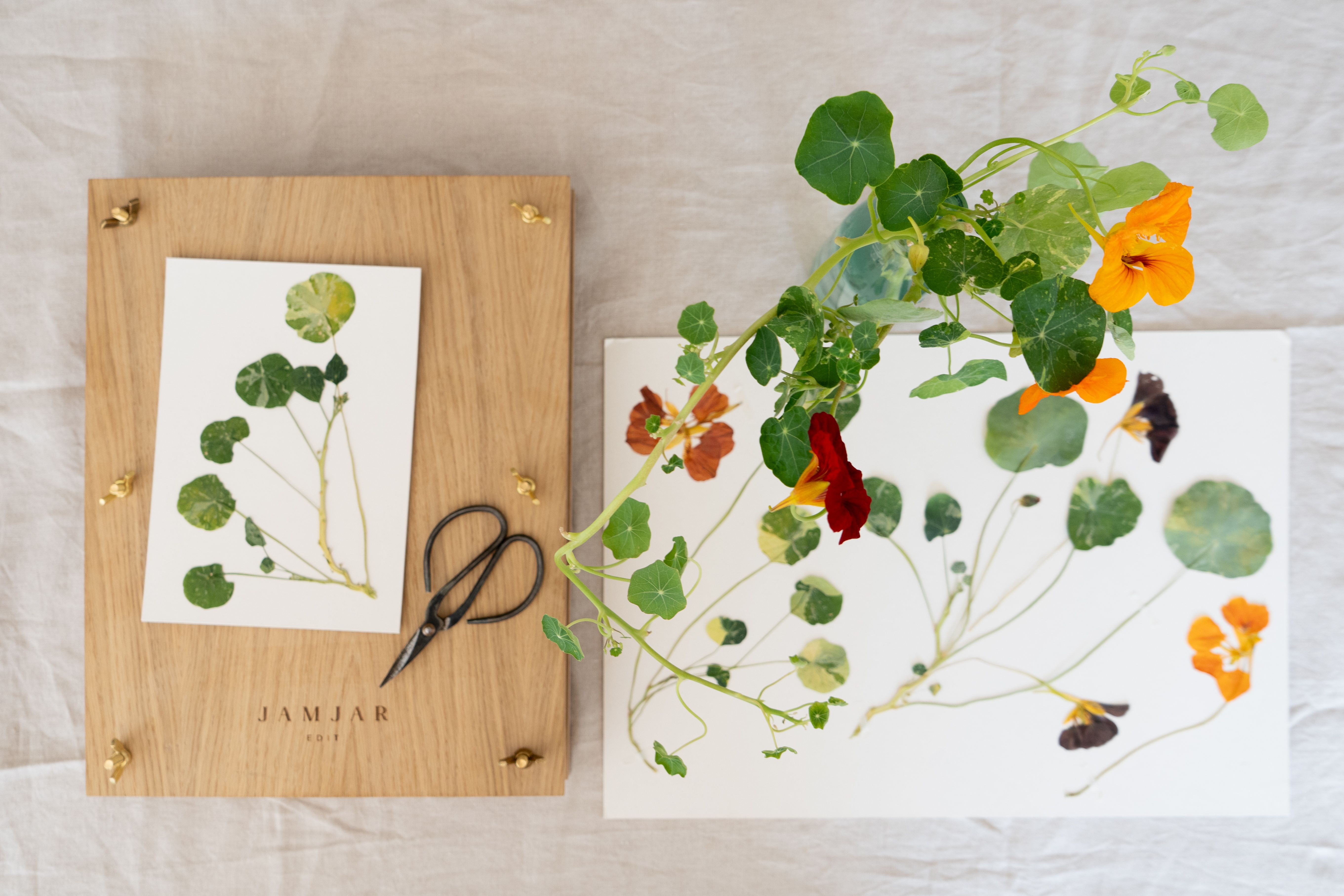
JamJar Edit wooden flower press made in the UK.
Photography: Roberta Longley
A new favourite: variegated nasturtiums
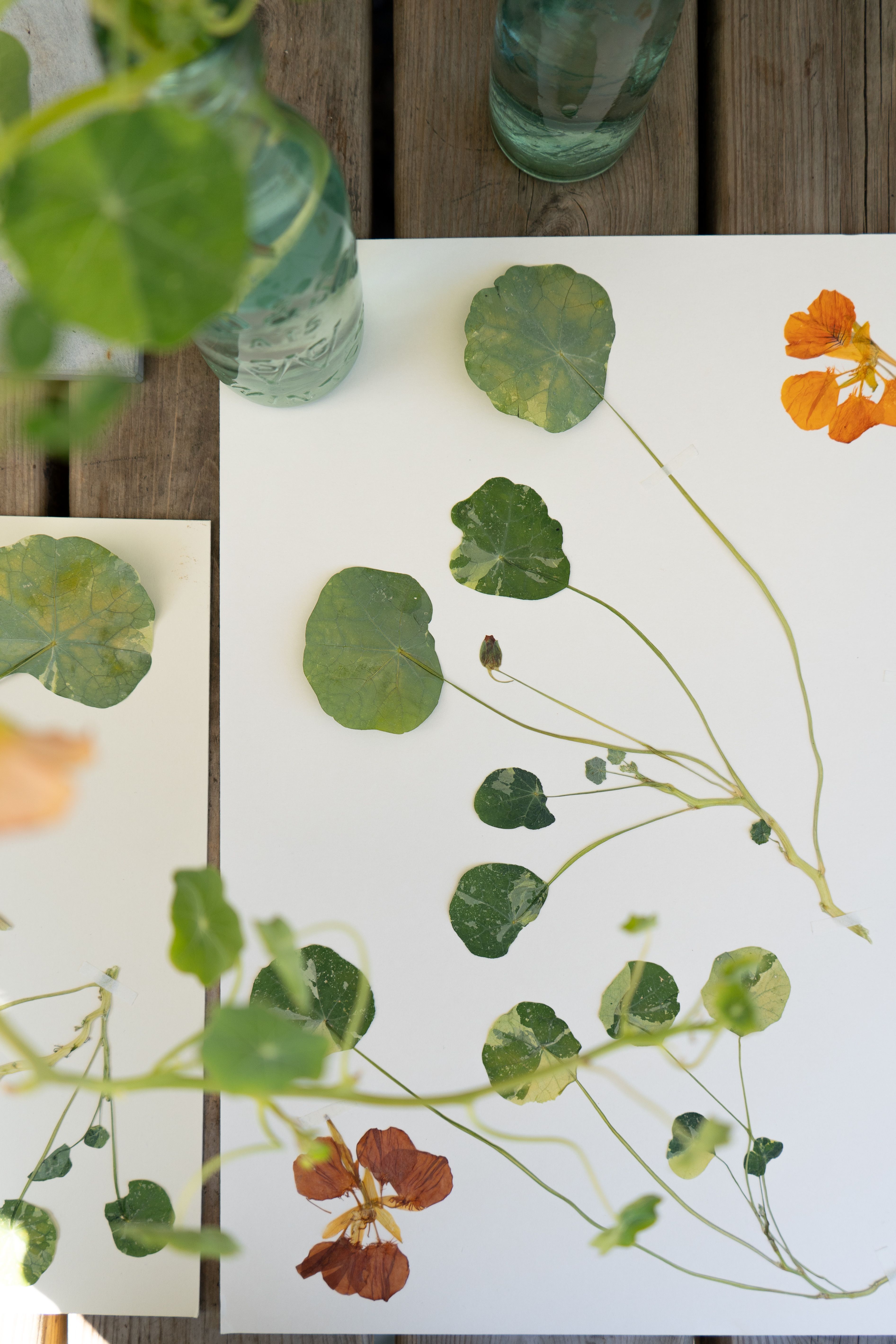
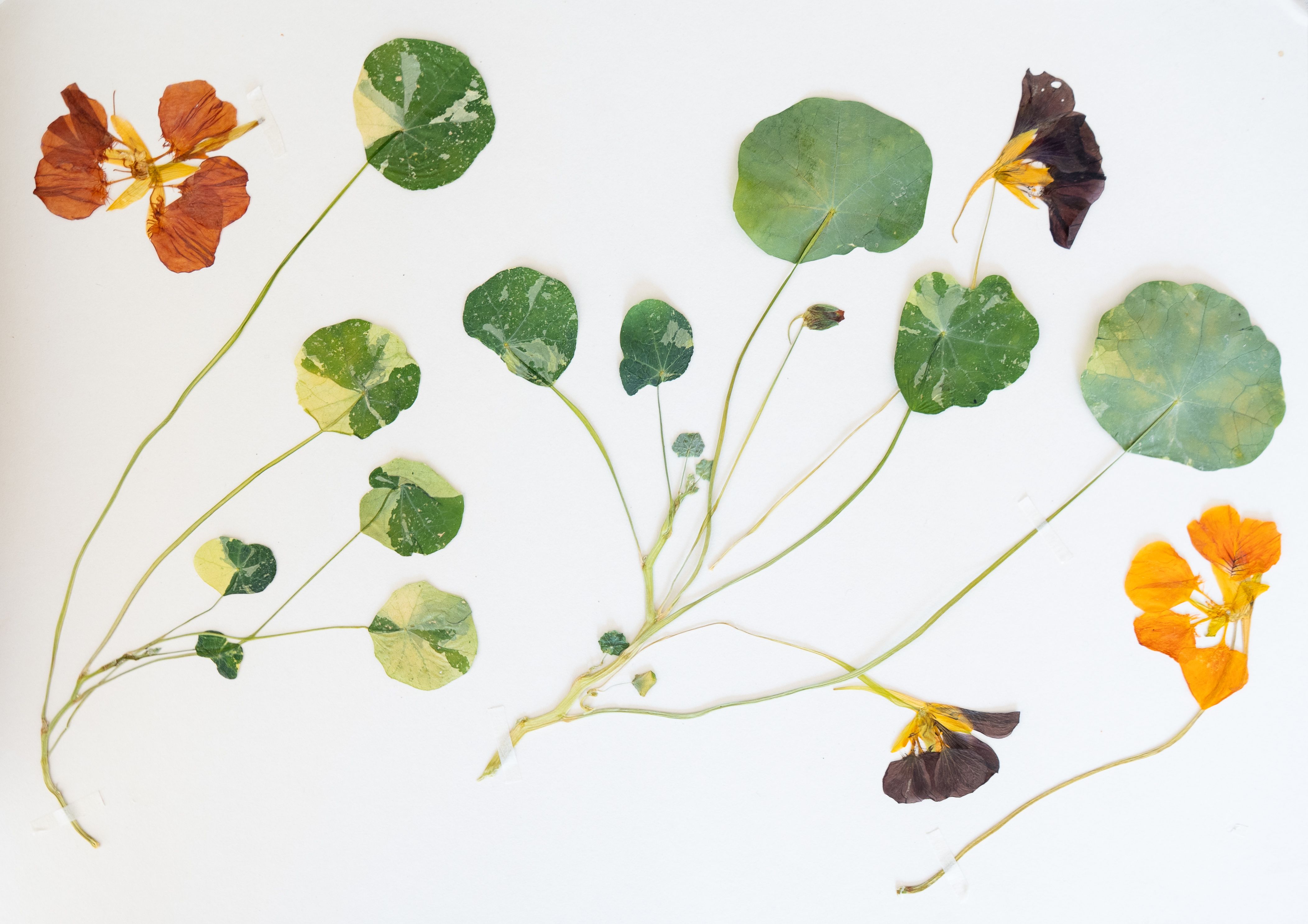
This year, we have particularly fallen in love with the variegated leaves of Phoenix and Alaska Mix nasturtiums. Even as the colours inevitably fade, the marbled patterns in the leaves remain wonderfully striking.
One of our favourite ways to work with nasturtiums is to pick a stem with plenty of buds and place it in a narrow-necked vase, allowing it to continue growing and flowering. As each flower opens, remove and press it. Take away any leaves that begin to discolour, change the water frequently and simply watch the stem continue to twist and grow.
Over the course of a week or so, the leaves and buds often become smaller and more delicate. At this point, press the entire stem, then bring together the flowers and leaves you pressed earlier to create a composition that is full of life and character..
It is a lovely reminder that pressing flowers is not simply about preserving what we see in a single moment. It can also be about observing a plant over time.
Photography: Roberta Longley
Wildflowers to look for
Late summer is also a great time to head outside and notice the wildflowers growing around us. A simple walk can become a source of inspiration when you begin to look closely at the shapes, structures and extraordinary details of individual plants.
Some of our favourites for pressing at this time of year include:
- Fennel, with its starry yellow flowers and delicious aniseed scent. Introduced to Britain by the Romans as a culinary herb, it can often be found growing along roadsides and in coastal places.
- Field scabious, which we love for its wonderfully long, leggy and twisting stems, topped with small lilac-blue pincushion flowers. Look for it on chalky grassland and downland.
- Wild carrot (Daucus carota), an abundant and intricate flower found in many different habitats. Several members of the umbellifer family are known as Queen Anne's Lace, but we think Daucus carota deserves the crown. Look closely among its delicate white umbels and you may find a single dark red floret — said to represent the drop of blood that fell when Queen Anne pricked her finger while making lace. Cultivated forms are often a richer purplish-red, but the wild plant has a delicacy all of its own.
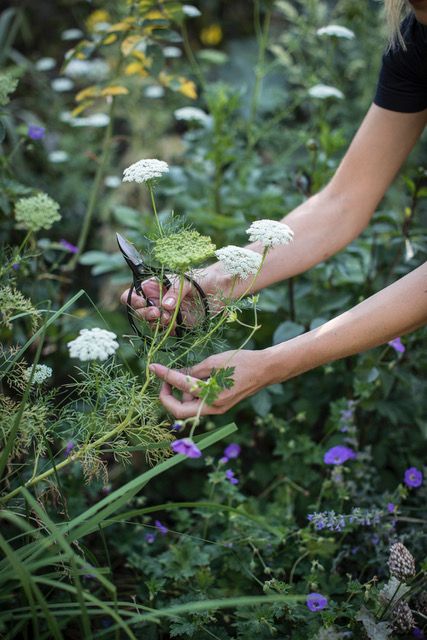
As always, forage thoughtfully and responsibly. Take only what you need, avoid protected species and locations, and leave plenty behind for wildlife and for others to enjoy.
A slower way of looking
Perhaps one of the most rewarding things about flower pressing is the way it encourages us to slow down and look more closely.
A single flower picked on holiday can become a lasting memory. A walk with children can turn into an opportunity to notice the tiny details we might otherwise pass by. Time spent collecting, arranging and pressing flowers offers a welcome way to step away from our screens, spend time outdoors and become completely absorbed in the intricate beauty of nature.
Whether you are growing a garden designed for a changing climate, collecting responsibly from the wild, or simply noticing the flowers growing around you, pressing gives us a way to preserve those fleeting moments and bring a little of the outside world into our homes.
Our Create Academy course is designed to teach you everything you need to begin your own flower-pressing journey — from collecting and pressing your first specimens to creating beautiful botanical artworks. It is an opportunity to discover an absorbing new hobby, slow down and reconnect with nature, and learn how to preserve its beauty for years to come.
Photography: Roberta Longley