
Interior and exterior confidence
Create Academy has been such a great resource. I'm in the middle of renovating a bungalow with a very large garden and the courses have offered a wealth of inform...
Harvey
Jun 10, 2026
A Complete Guide to Contemporary Quilting
with JULIUS ARTHUR — British textile artist specialising in handmade quilts and unique textile objects for the home.
Lesson 11 of 27
Subscribe to watch
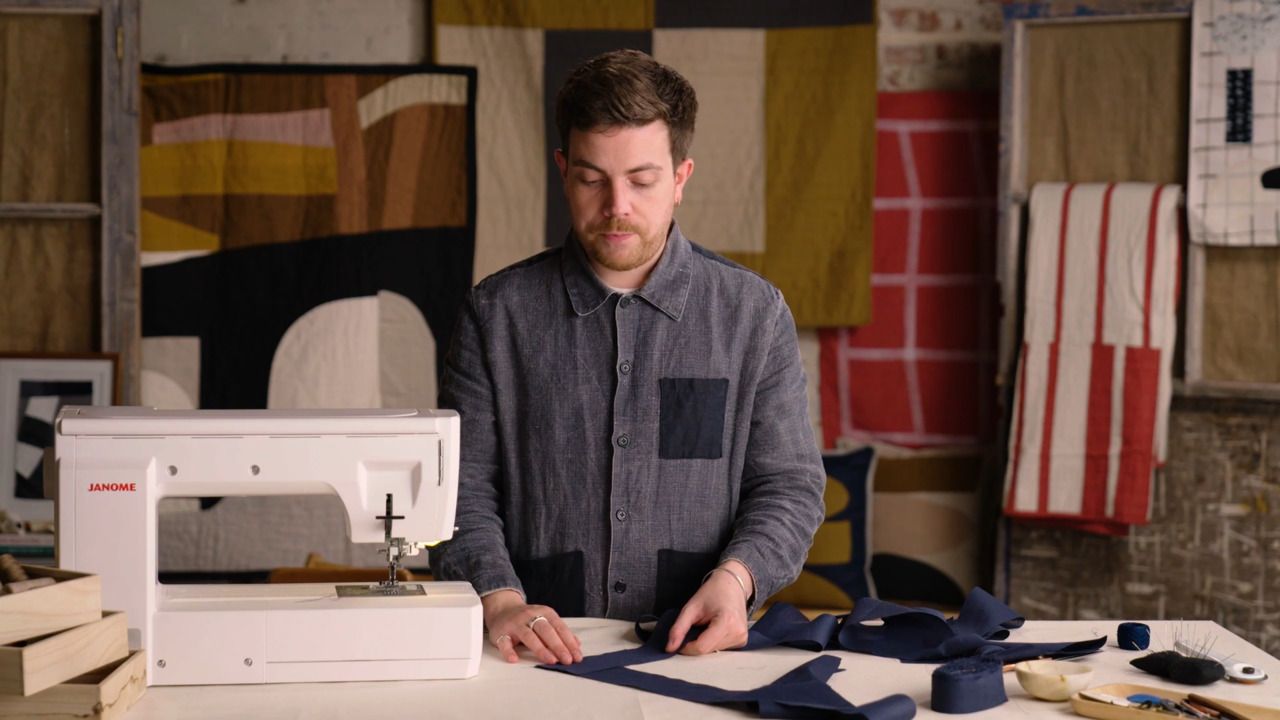
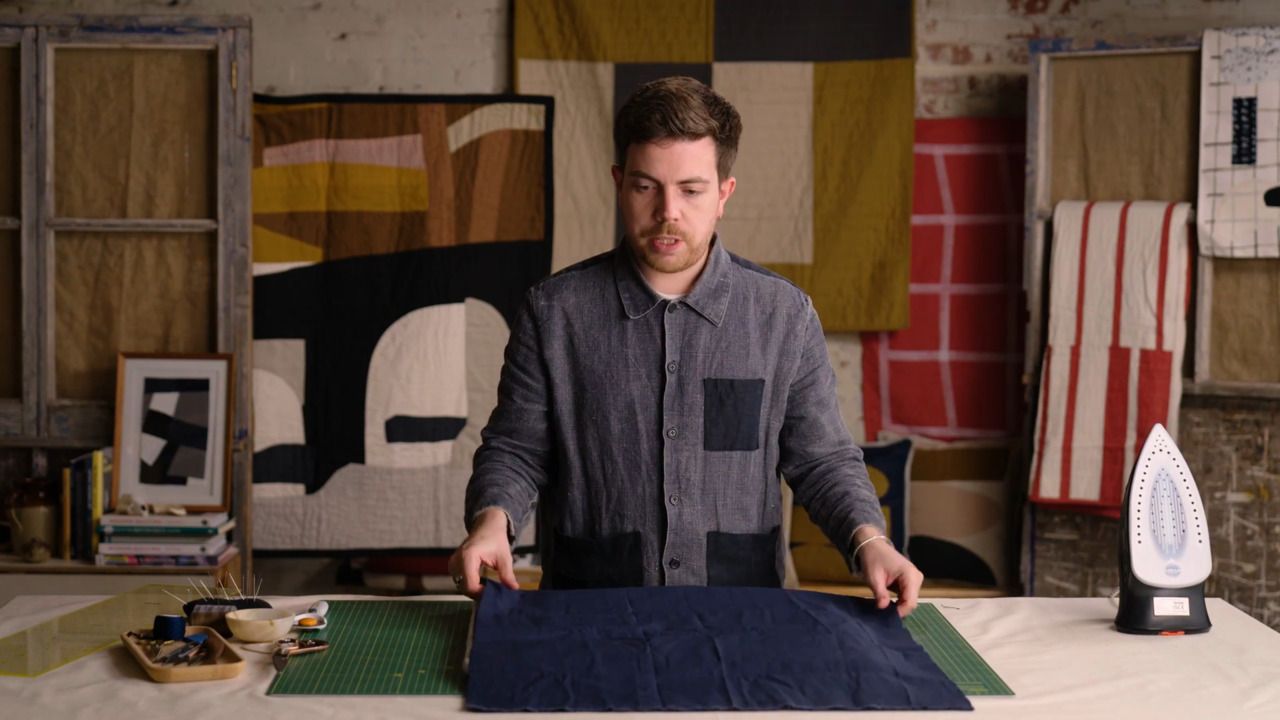
Knowing how many binding strips you need for your quilt can be tricky. Julius shares his formula for cutting binding strips. Discover how to mark, cut, and bind two-fold binding at home.
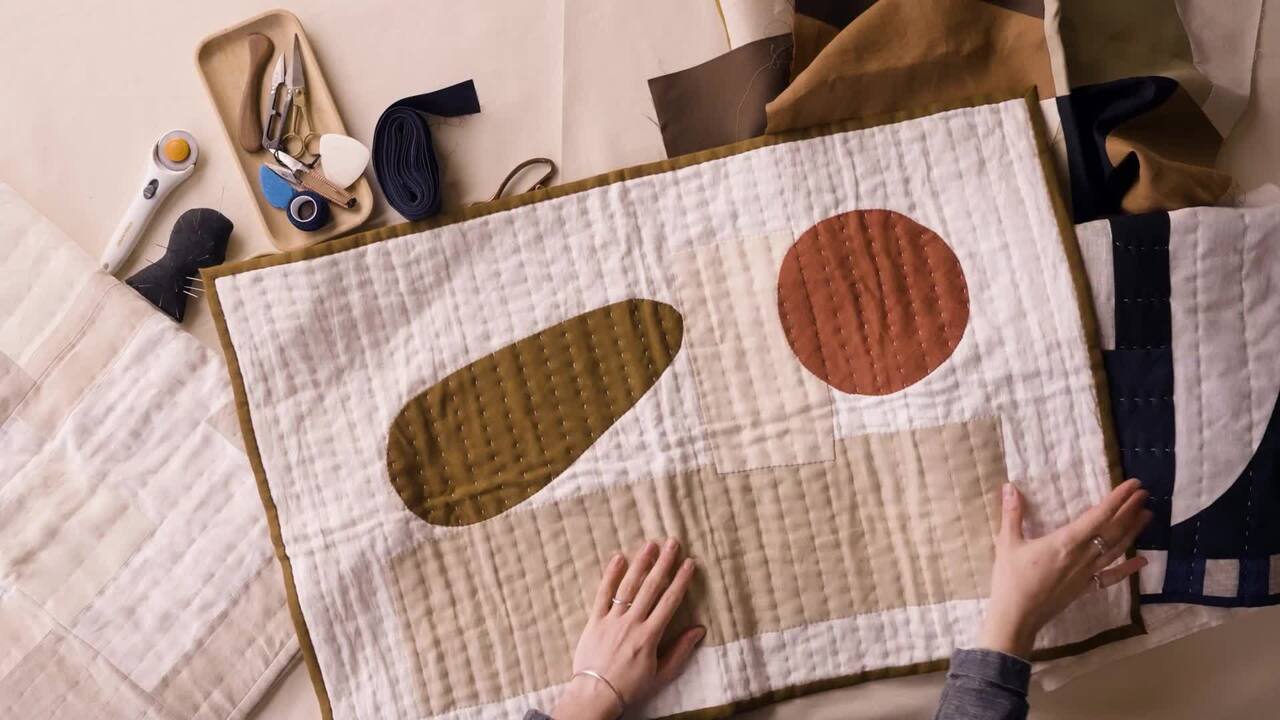
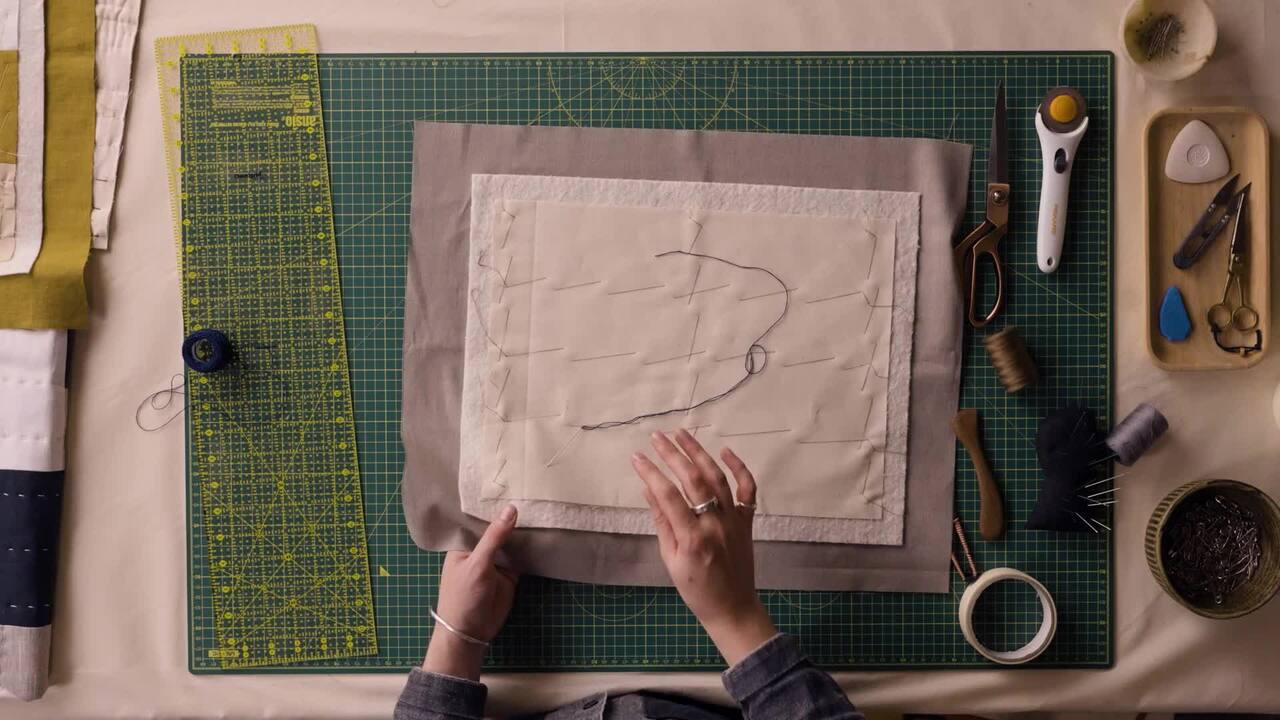
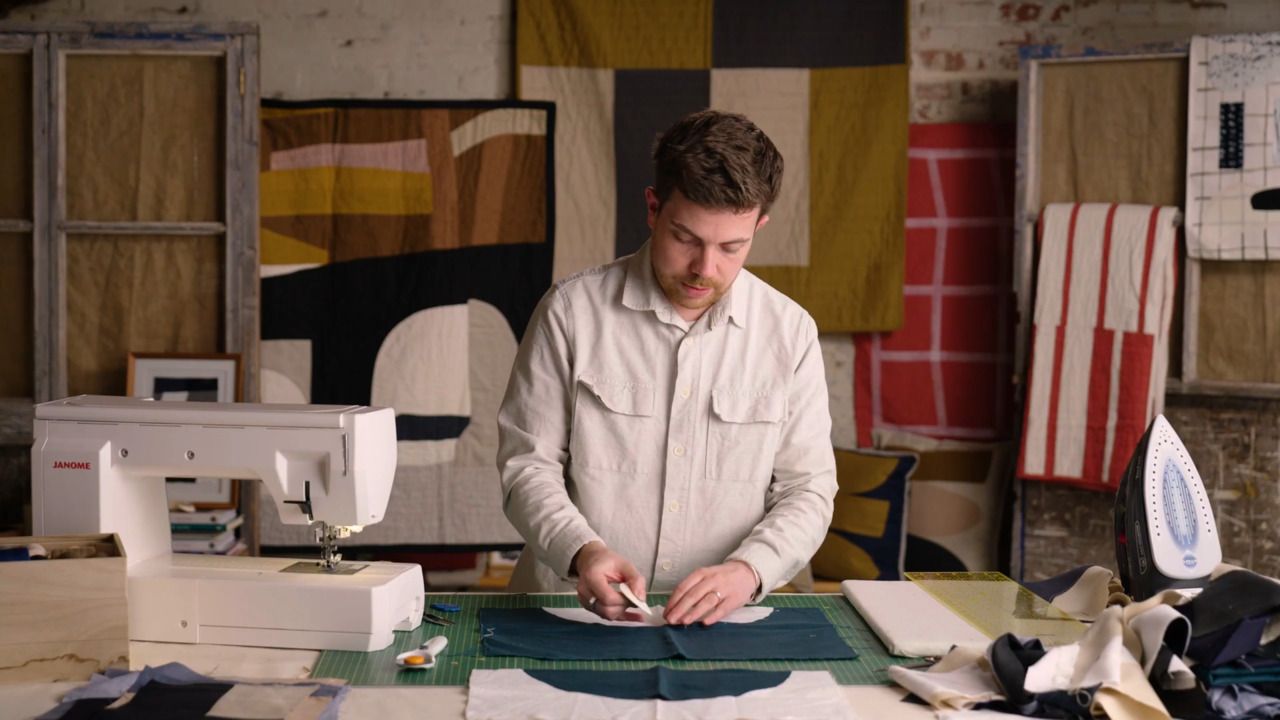
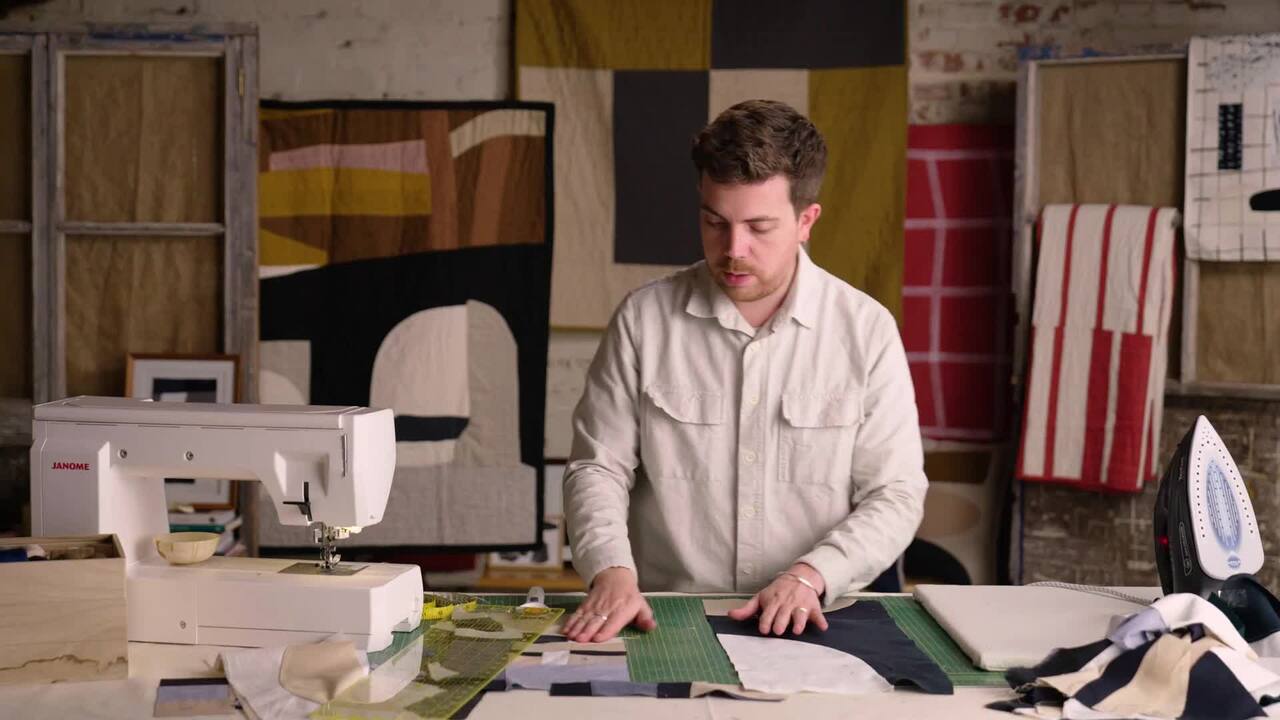
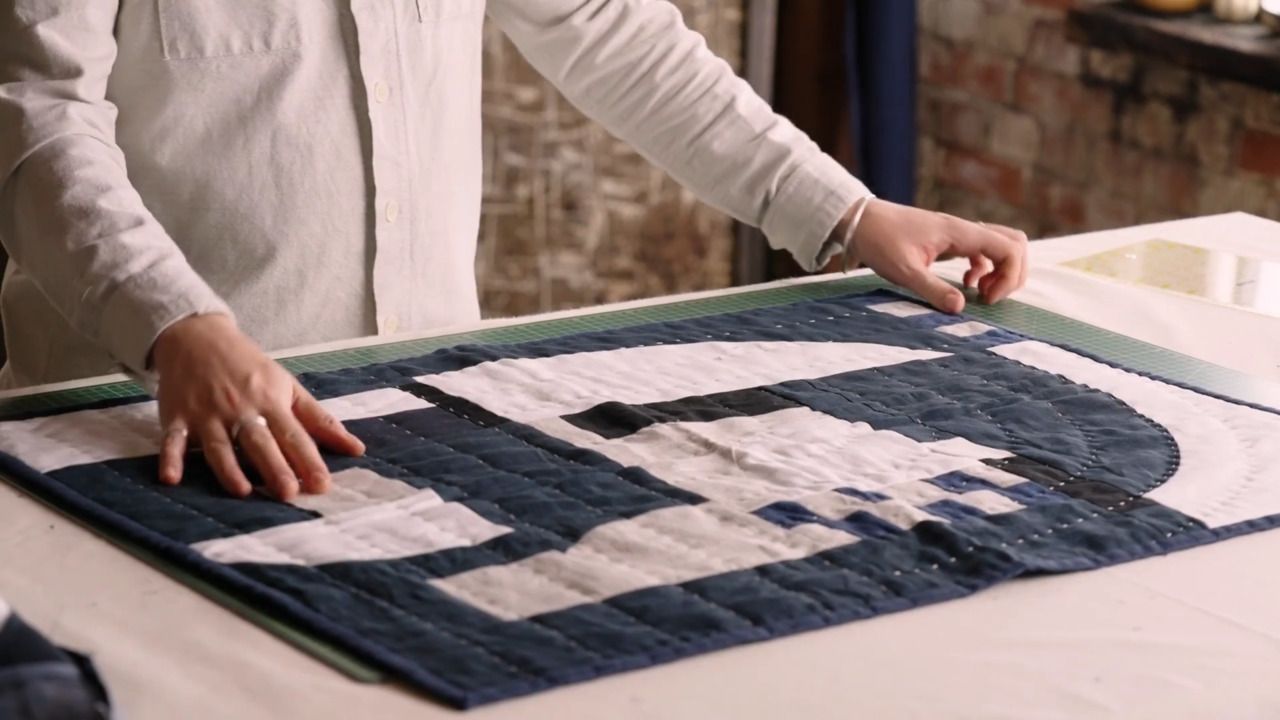
The binding is made up of fabric strips that we will sew onto our quilts. Binding neatens the edge of our project by acting as a frame or border. A two-fold binding is the most common type. The term describes attaching folded strips of fabric to the outside of our quilt, folding them round, and then finishing the edges to give the quilt a nice, neat finish.
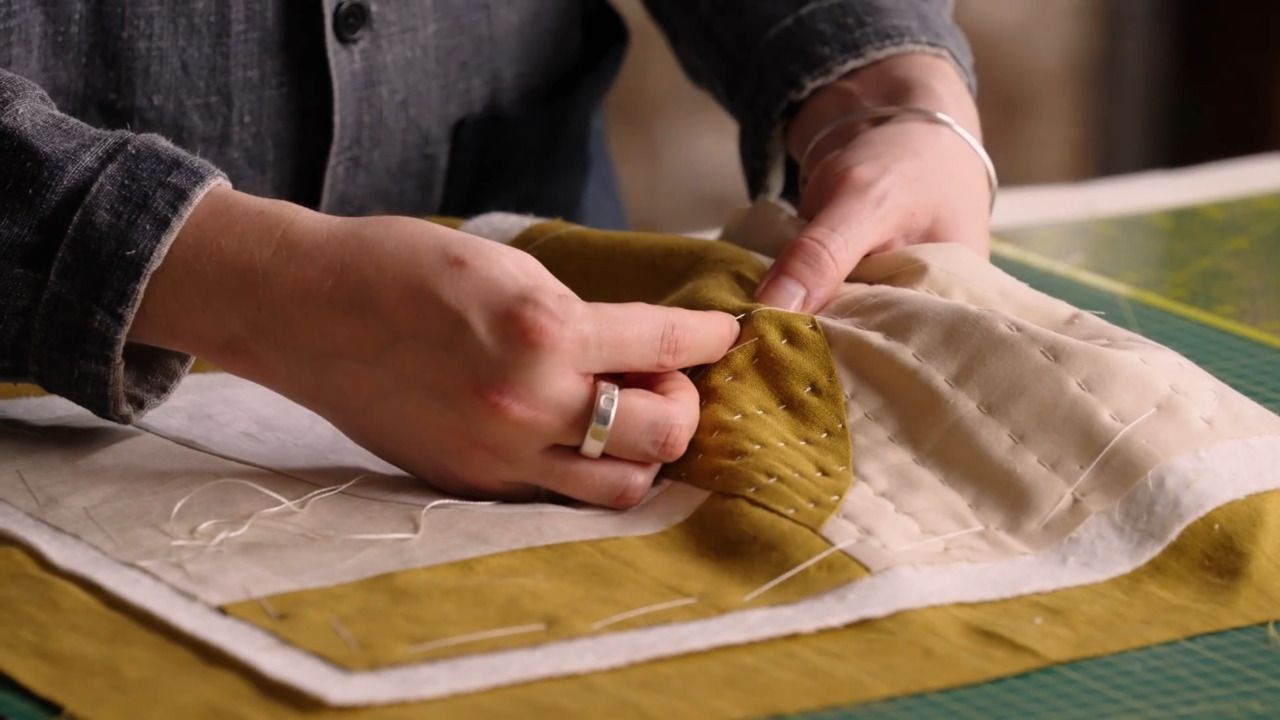
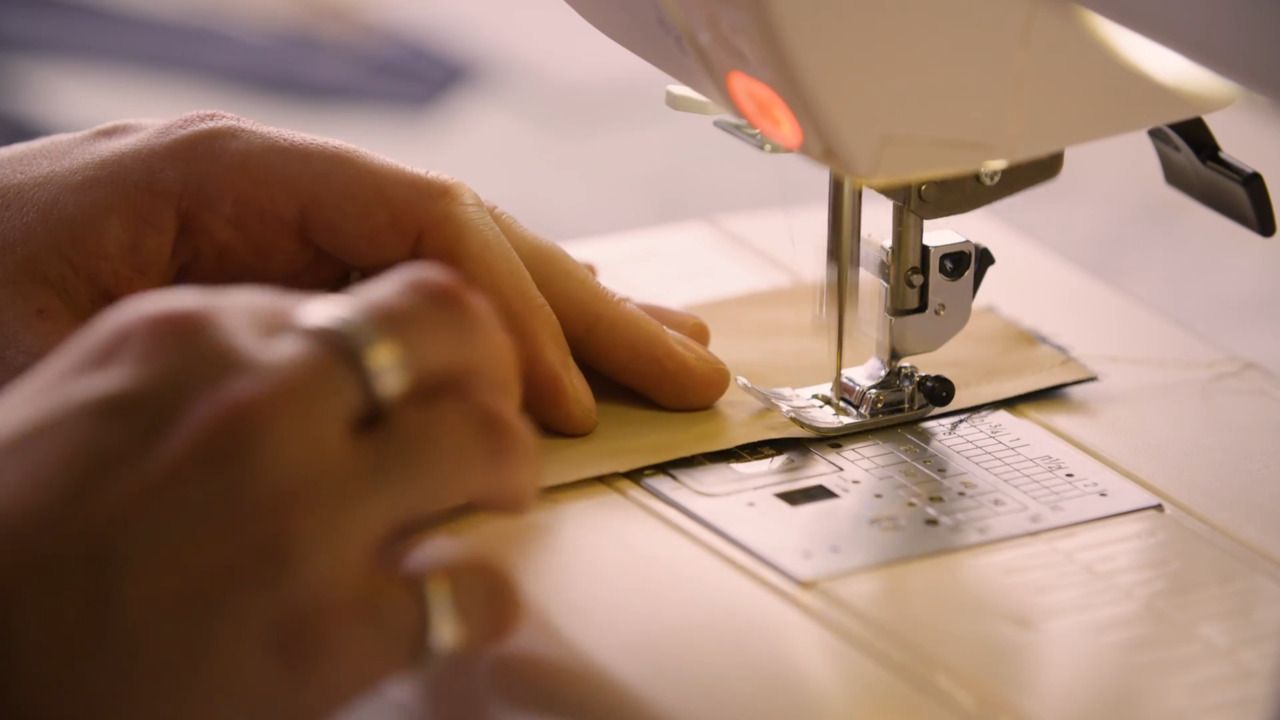
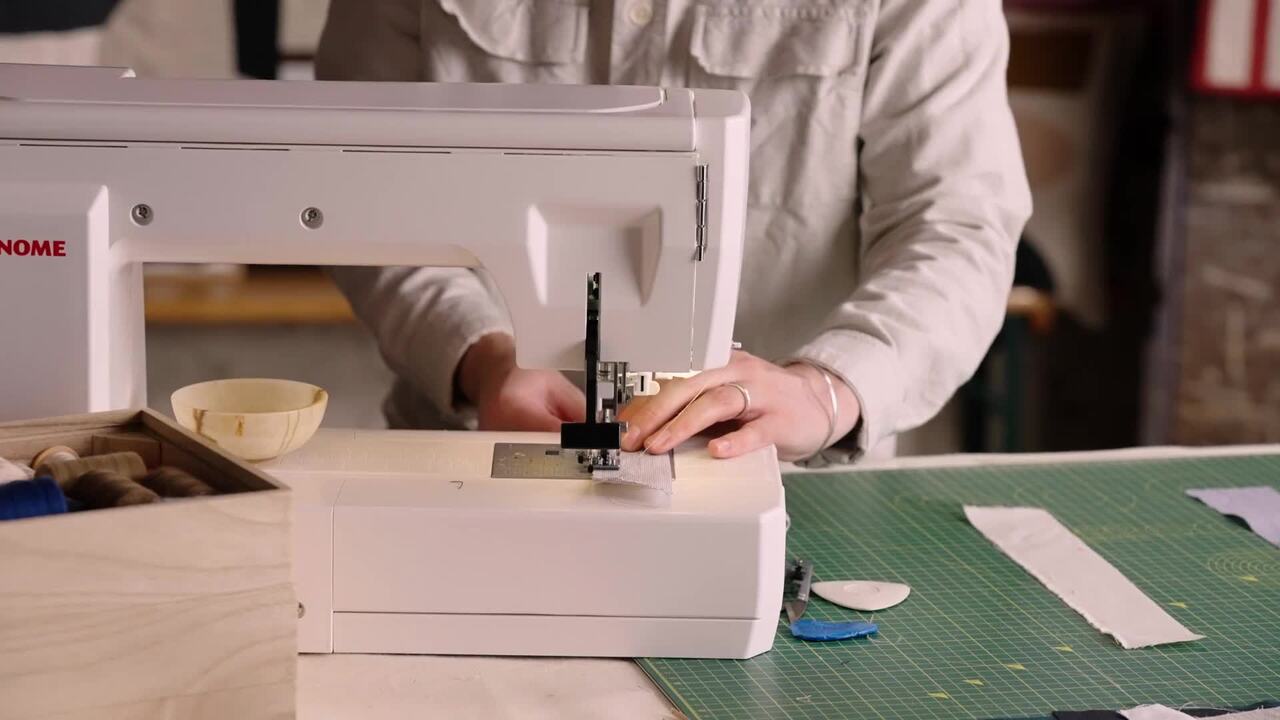
A two-fold binding is applied to your quilt top, stitched to the quilt and hand-finished on the reverse.
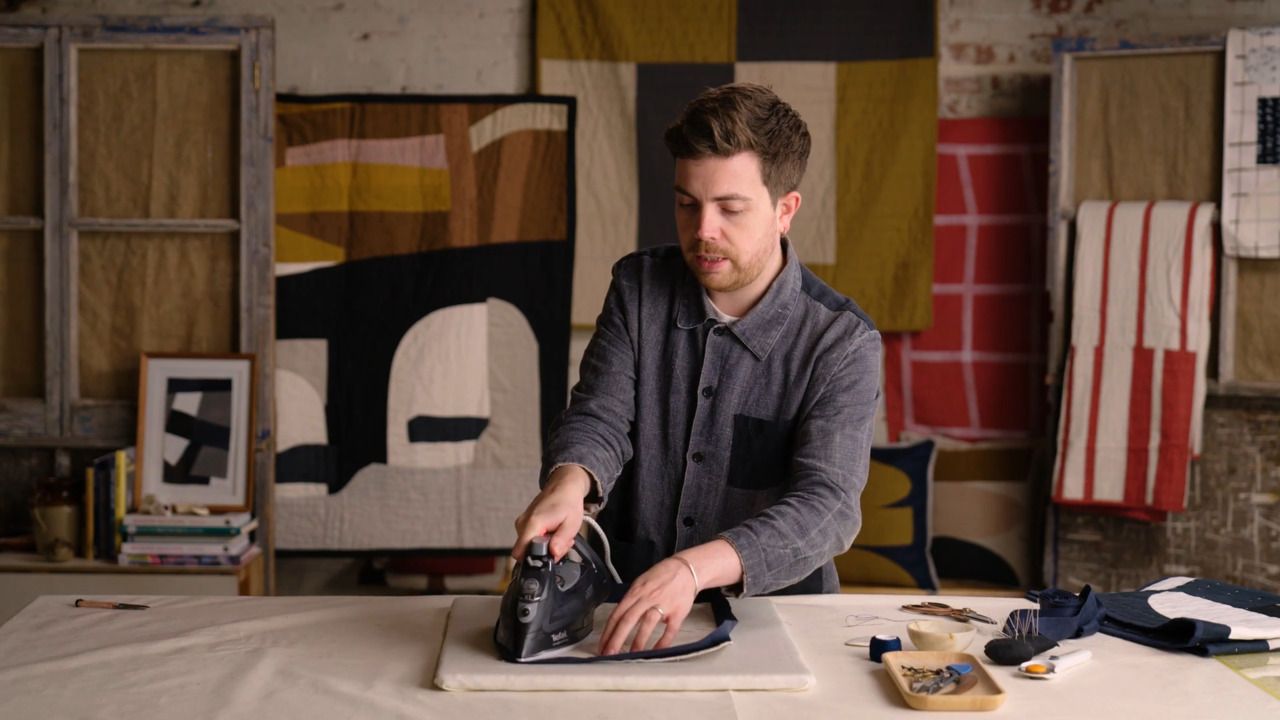
Tip: most natural fabrics can be pressed at high heat. If unsure, start on a lower heat and work your way up.
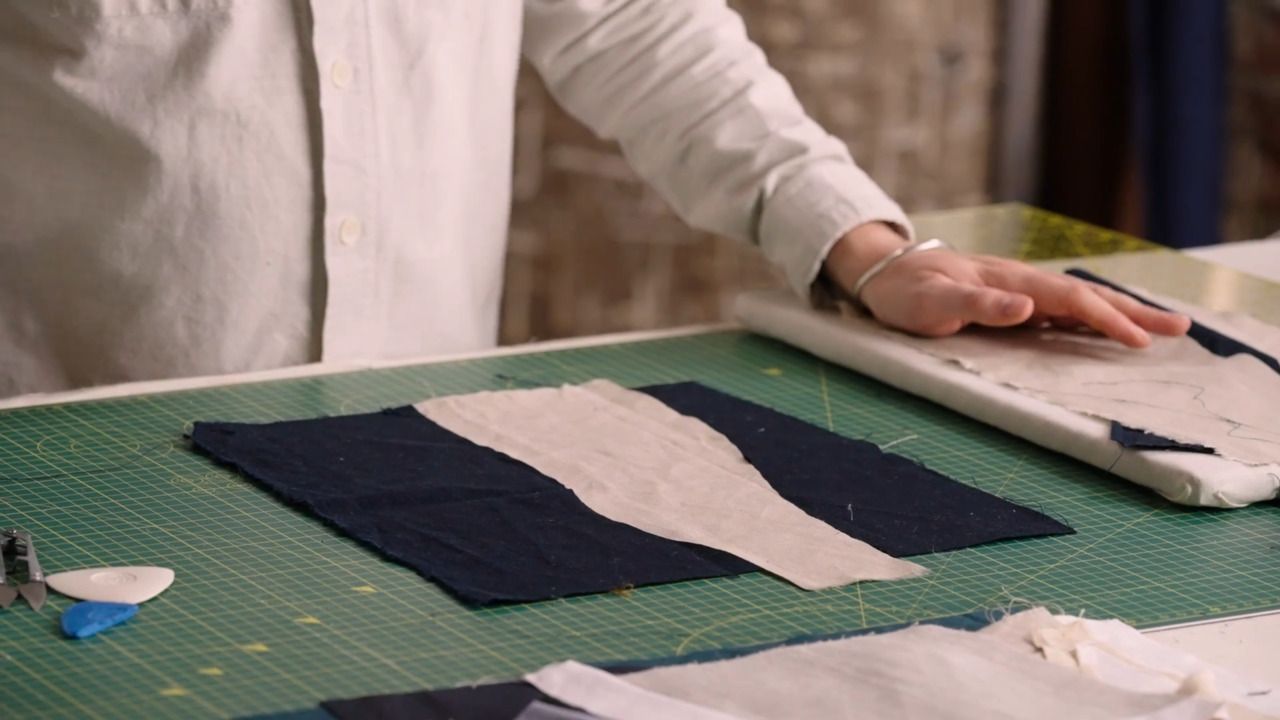
Tip: if you are working with fabric that is 150 cm (59 in) long and a bit too wide to fold and keep on your table, you can always fold it again and make sure your original fold is again straight with your selvedge end. This will make it more manageable to cut out.
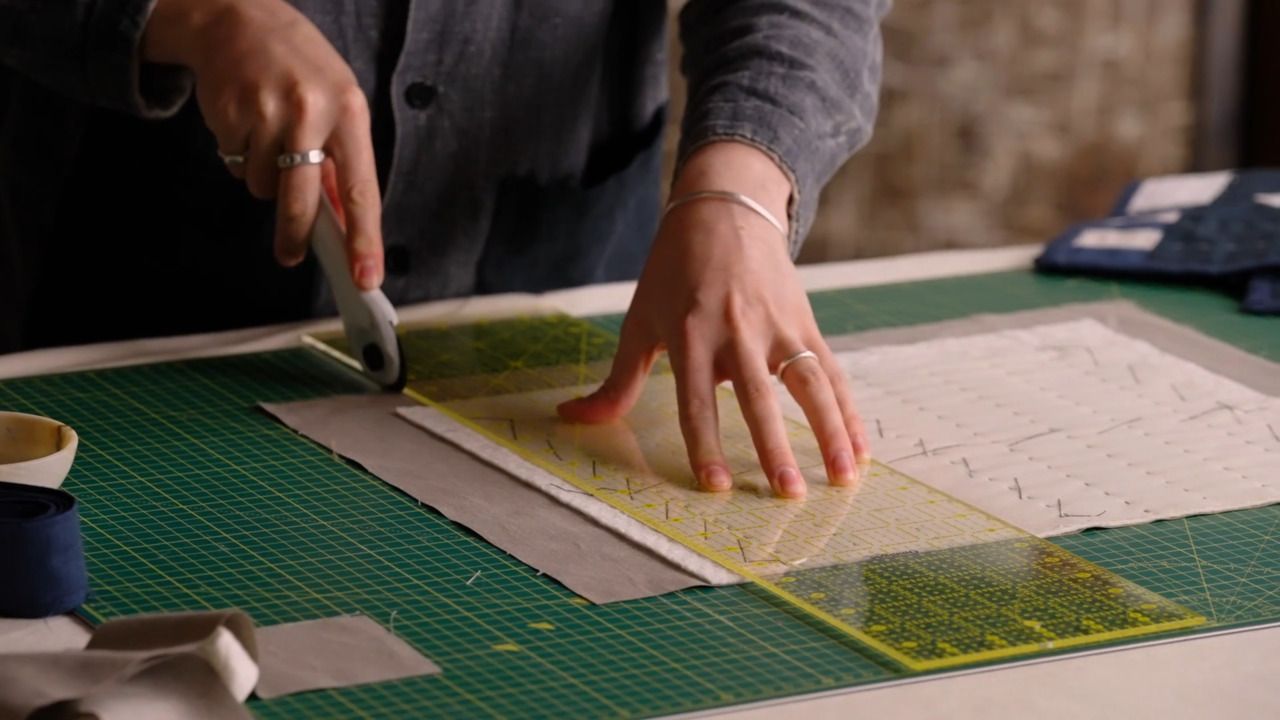
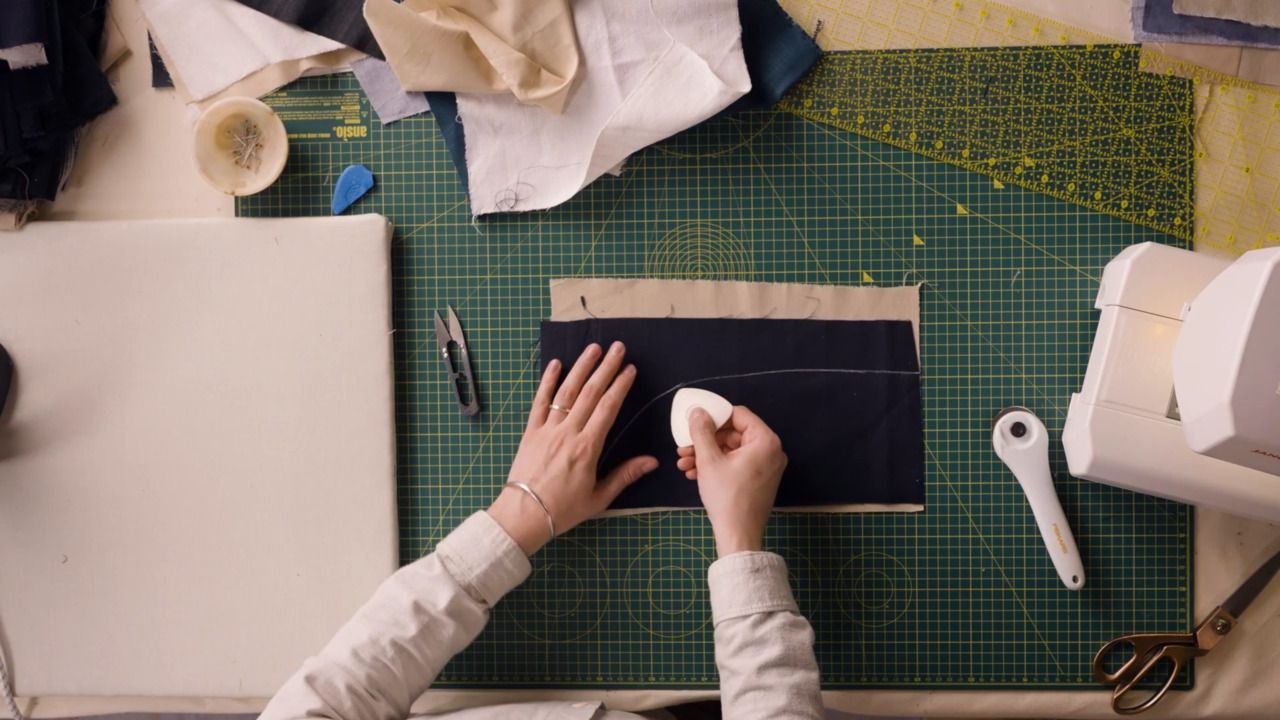
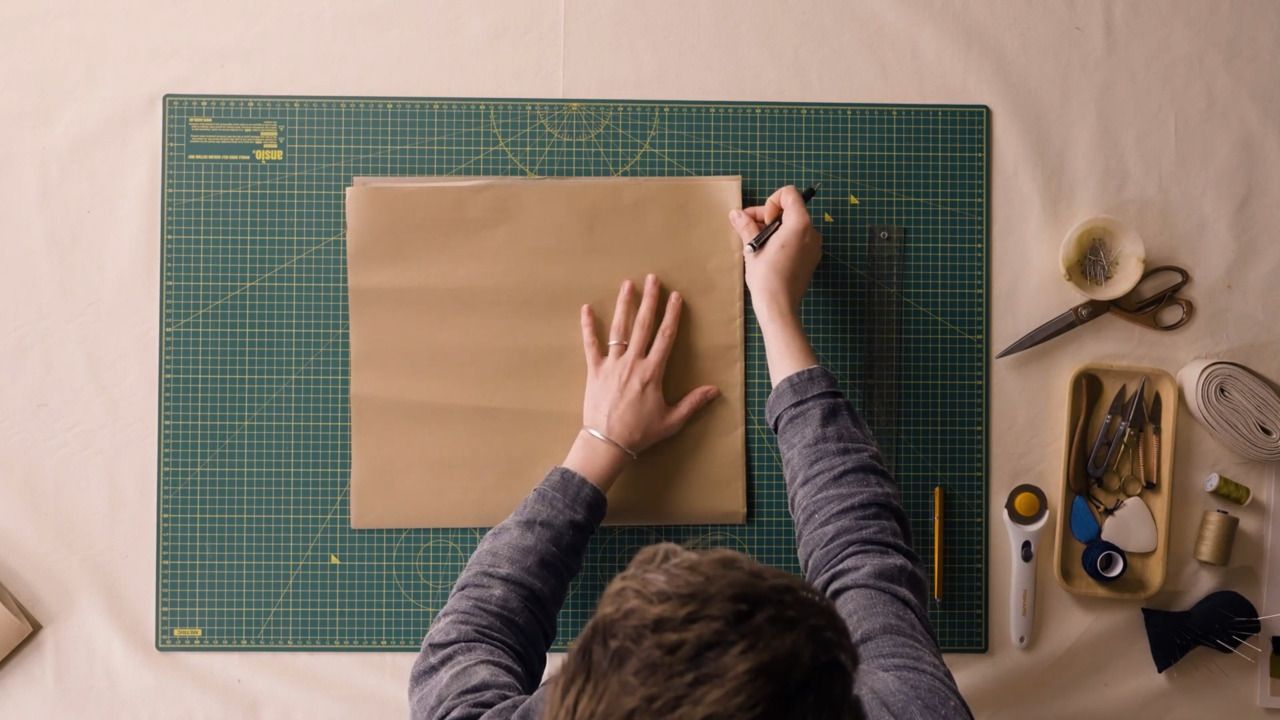
Tip: if you don't have a rotary cutter, you can do the same thing using chalk to draw a line. I like to take the ruler and line it up on the chalk line drawing it on the next one. It is quite handy to draw all your binding on the chalk onto your fabric and then out after. It saves you a little bit of time.
For my binding, I like to work with 7.62 cm (3 in) strips of fabric, which are then folded in half lengthwise to create a 3.81 cm (1.5 in) strip of folded straight binding.
To work out how long your binding needs to go around the entirety of your quilt edges, you can use this calculation.
You can swap between centimetres or inches, depending on what measurements you use. For this example, I am using centimetres.
Example: 120 cm + 100 cm = 220 cm x 2 = 440 cm
Example: 440 cm + 60 cm = 500 cm
Example: 550 cm ÷ 140 cm = 3.57cm (round up to 4 cm strips).
In this example, we now know that I need 4 strips, each 140cm long, to make a binding long enough to go around the edge of my quilt.
To work out how much fabric you need to make that binding:
Example: 4 strips x 7.62 cm = 30.48 cm (round up to 30.5 cm of fabric).
In conclusion, to bind our example quilt measuring 120 cm x 100 cm, we would need 4 strips of 140 cm wide fabric, and we would need 30.5 cm of fabric to be able to make those strips for our binding.
If you want to make wider binding, then adjust your binding width when working out how much fabric you will need in Step 4.
Get the full workbook, video lessons, and more with a Create Academy subscription.
Subscribe to access the full workbookAlready a member? Sign in to watch
491 reviews
Read moreCreate Academy has been such a great resource. I'm in the middle of renovating a bungalow with a very large garden and the courses have offered a wealth of inform...
Harvey
Jun 10, 2026
Absolutely love Create Academy! The instructors are extremely informative, and it is beautifully filmed. Create Academy is great value for money and plan on renew...
SG
May 31, 2026
Butter's creativity is stunning! Her ability to incorporate brilliance in small gardens is magical!
Carla
May 30, 2026
The best adventure. I like all the courses, but my favorite are both Rita Konig interior design courses and Anna Jones. Excellent!
Karolina Kluczewska
May 20, 2026
Create Academy has been such a great resource. I'm in the middle of renovating a bungalow with a very large garden and the courses have offered a wealth of information to dive into and explore new ideas. I'm...
Harvey
Jun 10, 2026
Absolutely love Create Academy! The instructors are extremely informative, and it is beautifully filmed. Create Academy is great value for money and plan on renewing my subscription yearly because there are ...
SG
May 31, 2026
Butter's creativity is stunning! Her ability to incorporate brilliance in small gardens is magical!
Carla
May 30, 2026

Your Instructor
British textile artist specialising in handmade quilts and unique textile objects for the home.
Julius Arthur is a textiles designer specialising in quilts and unique objects for the home. His design practice, House of Quinn, creates small-batch homeware using traditional and age-old craft techniques and practices to cultivate contemporary design narratives onto familiar objects. His work is grounded in uncomplicated - often repurposed - materials and inspired by an abstract view of the places and things around us. Growing up in Cornwall, memories of childhood and a sense of home and belonging intersect in Julius' work. Quilts have become a staple motif in Julius' work - a way of combining materials, connecting through stitch and exploring shape, form and line - and the subject of his book Modern Quilting.
Access to all courses


