


Interior and exterior confidence
Create Academy has been such a great resource. I'm in the middle of renovating a bungalow with a very large garden and the courses have offered a wealth of inform...
Harvey
Jun 10, 2026
with WILLOW CROSSLEY — World-renowned florist, author and designer, known as the UK’s ‘Queen of Flowers’.
Lesson 7 of 20
Subscribe to watch
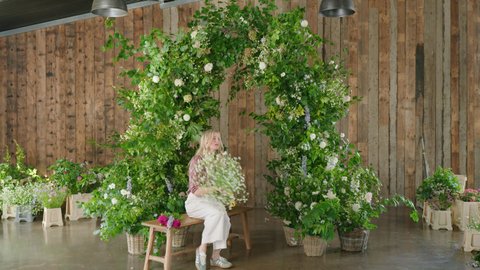
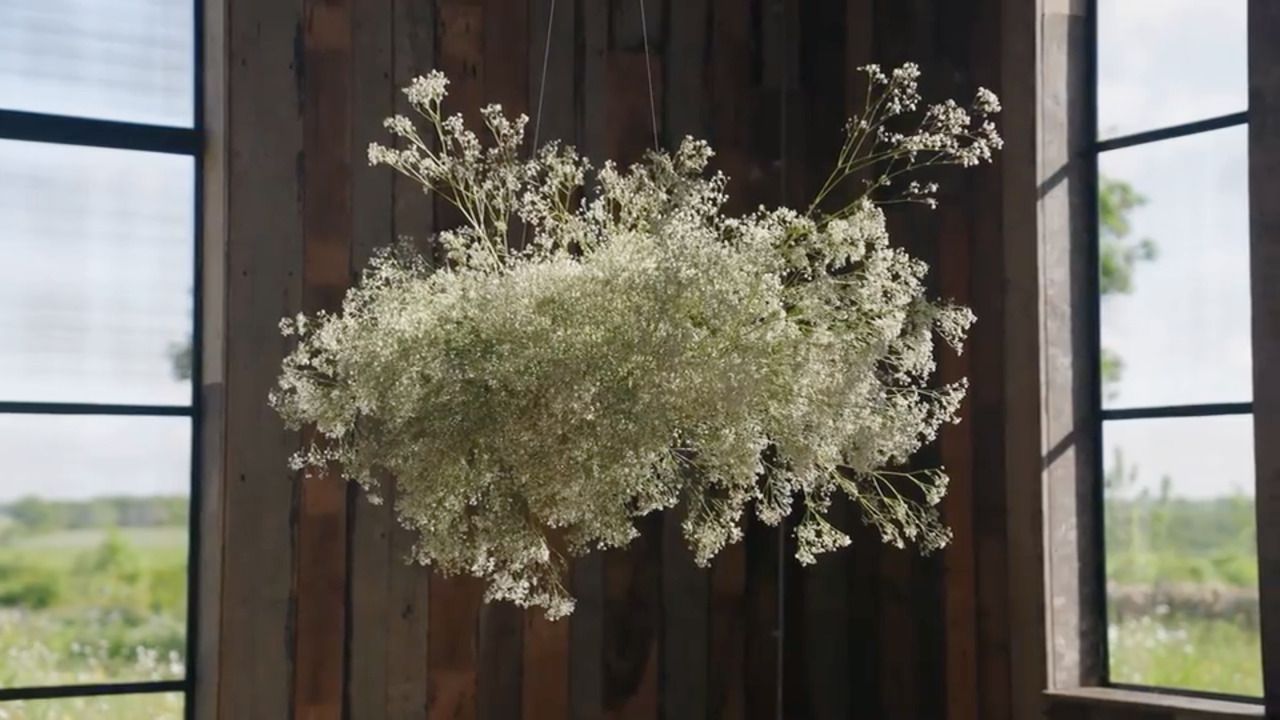
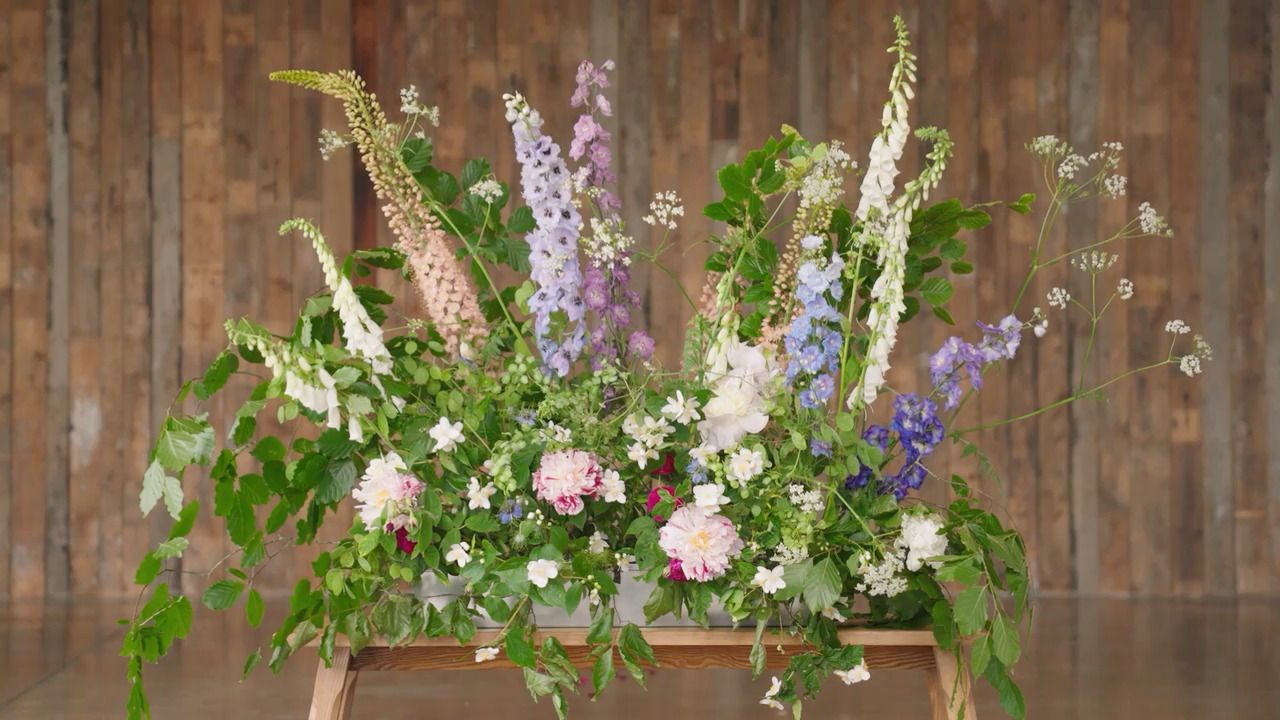
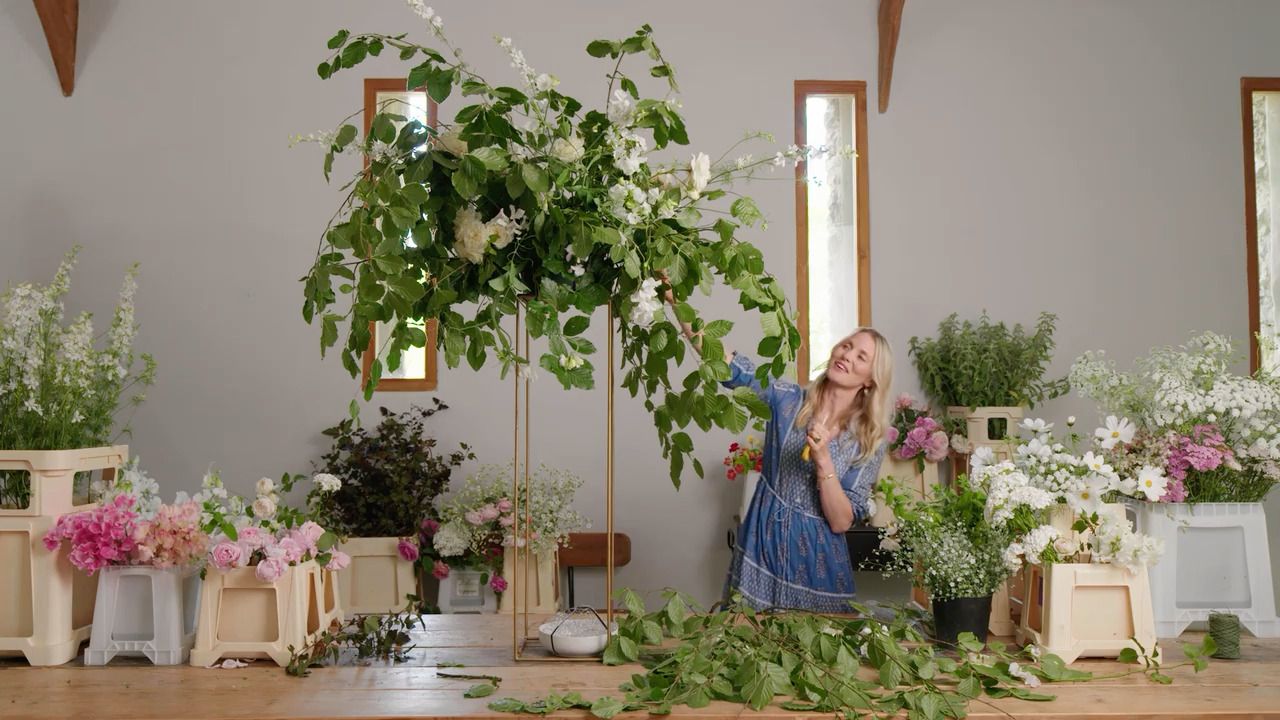
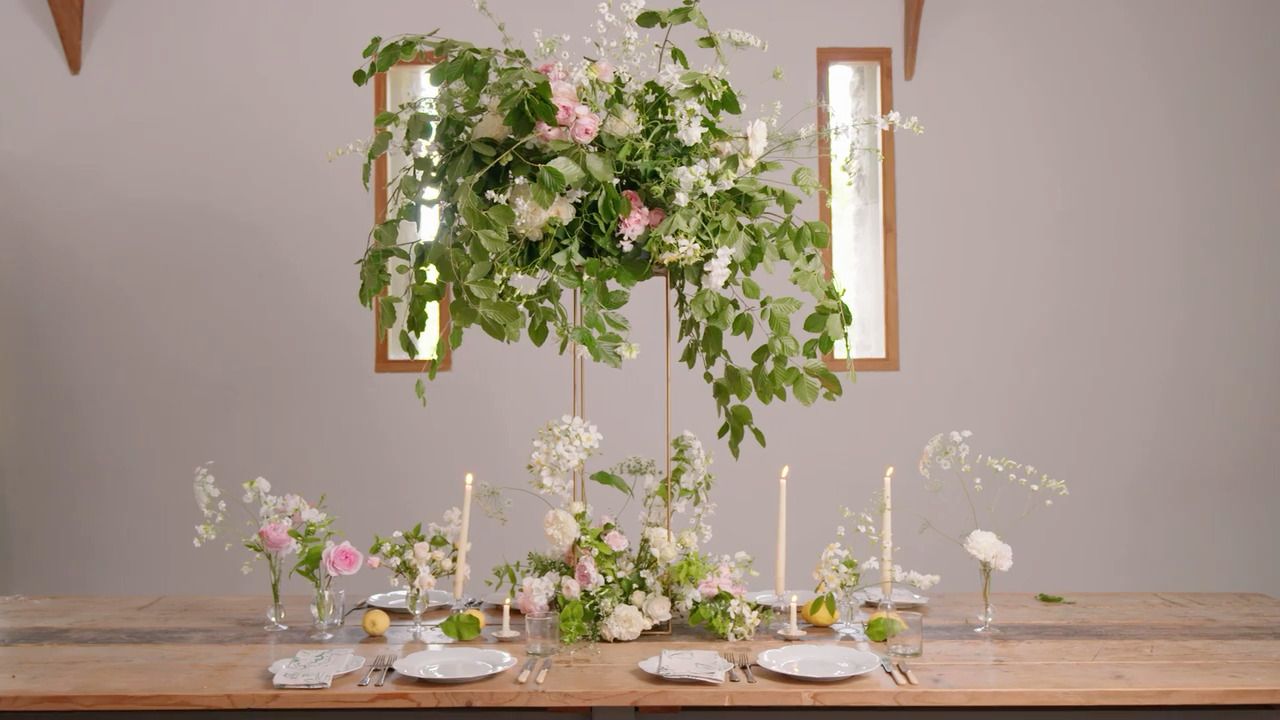
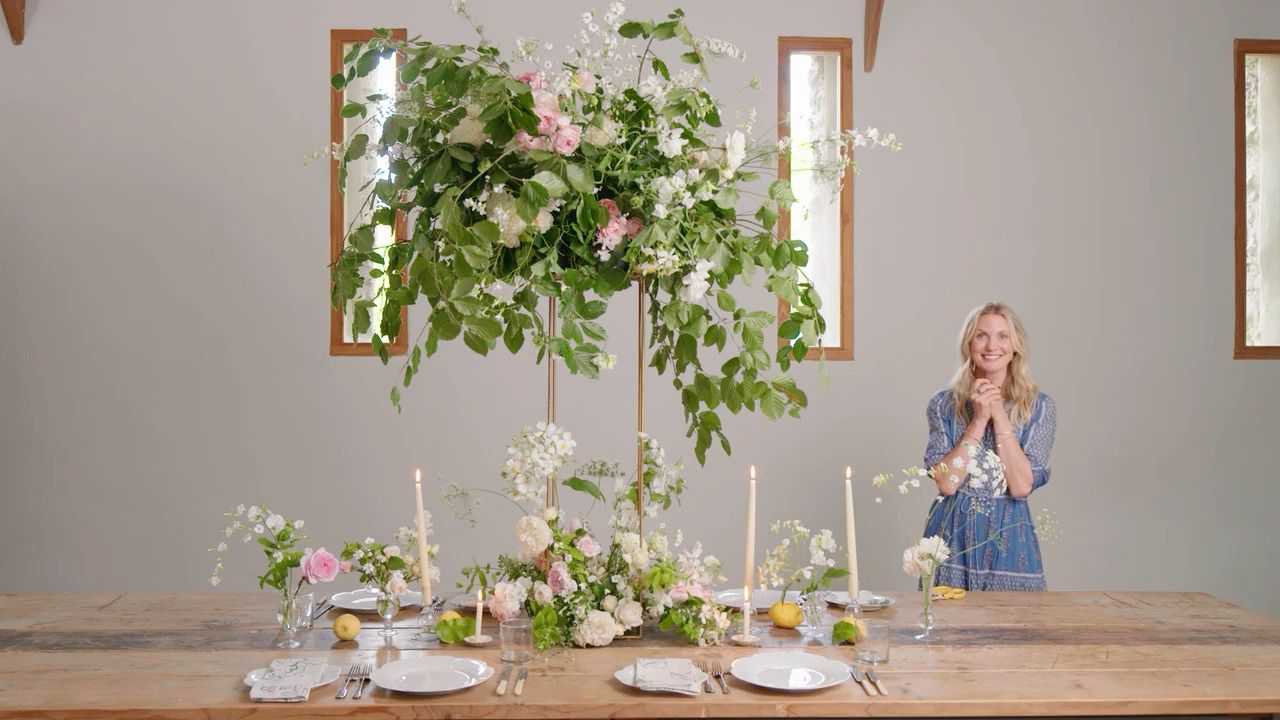
An increasingly popular decorative moment at weddings and parties, a flower cloud is a wonderful addition to a floral scheme. It’s so visually effective, while also being simple to make. Willow first shows you how to assemble and construct the inner workings.
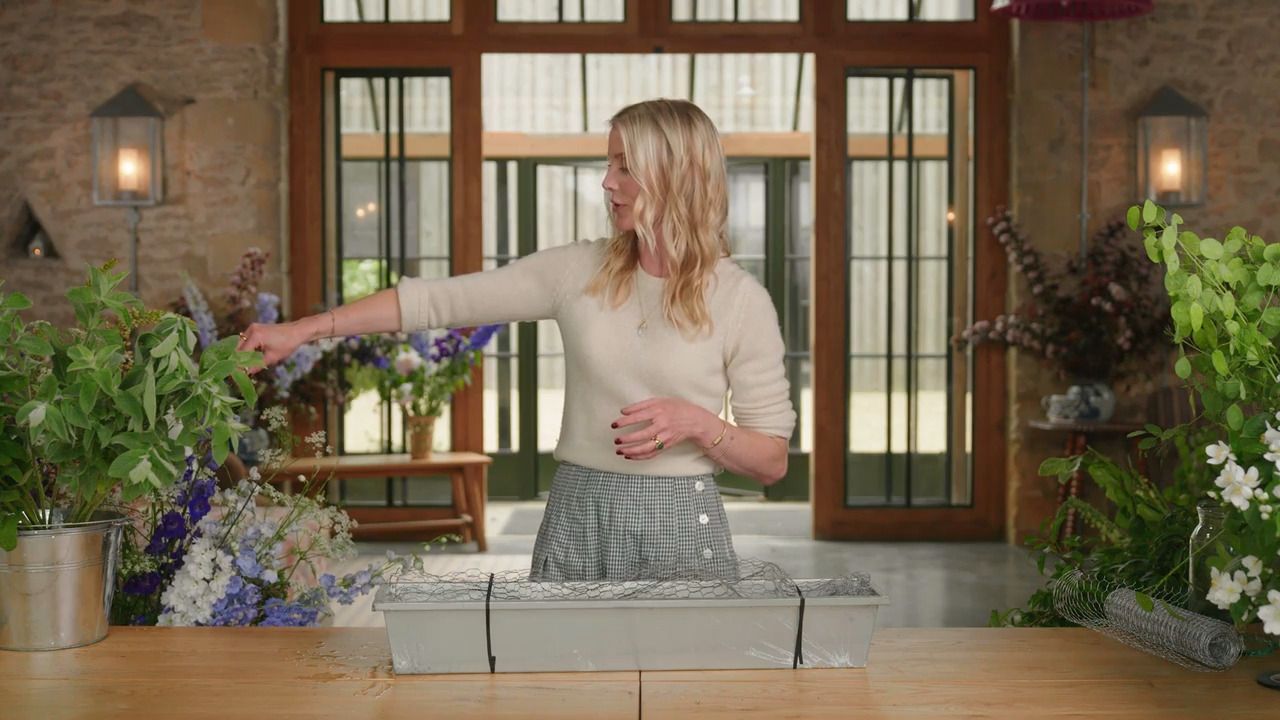
A flower cloud has become an increasingly popular decorative moment at weddings and parties. It's so visually effective, while also being simple to make. First, you will need to construct the inner workings.
Step 1
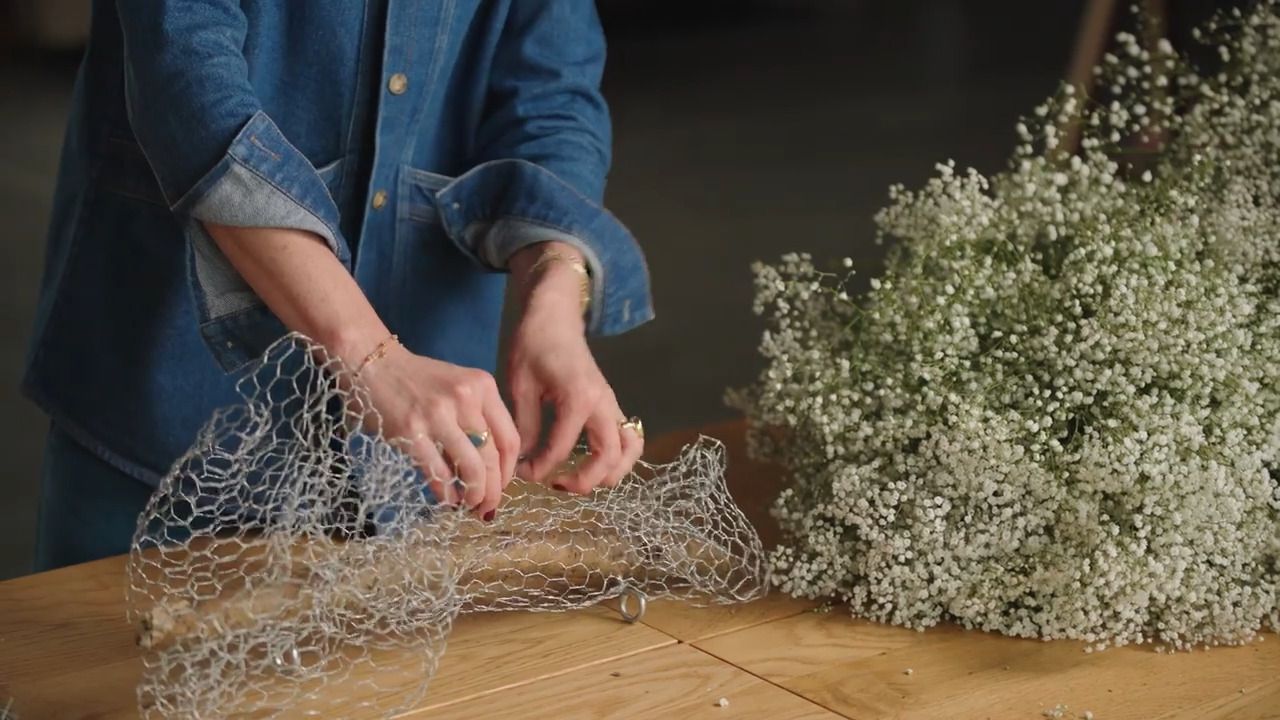
Use wire cutters to cut a length of chicken wire that is roughly double the length of your piece of wood.
Step 2
Lay the chicken wire roughly centrally over the top of the wood, and feed the two eye hooks through the holes. The chicken wire should be loose and airy, rather than flat to the wood so that you have space later on.
Step 3
Encourage the rest of the chicken wire to wrap around the wood, scrunching as you go to create a loose and organic shape. You are aiming to get multiple layers of chicken wire at various points to give the stems better security - you can also add additional layers of chicken wire to achieve this if necessary.
Step 4
Once you're happy, loosely secure the edges of the chicken wire together with cable ties or pieces of stub wire.
Step 5
Cut a generous length of fishing wire. Feed one end through both hooks and then tie both ends of the wire together so that you can hang your framework. It's always best to go as long as you can in the beginning, as you can always shorten the length once you've finished.
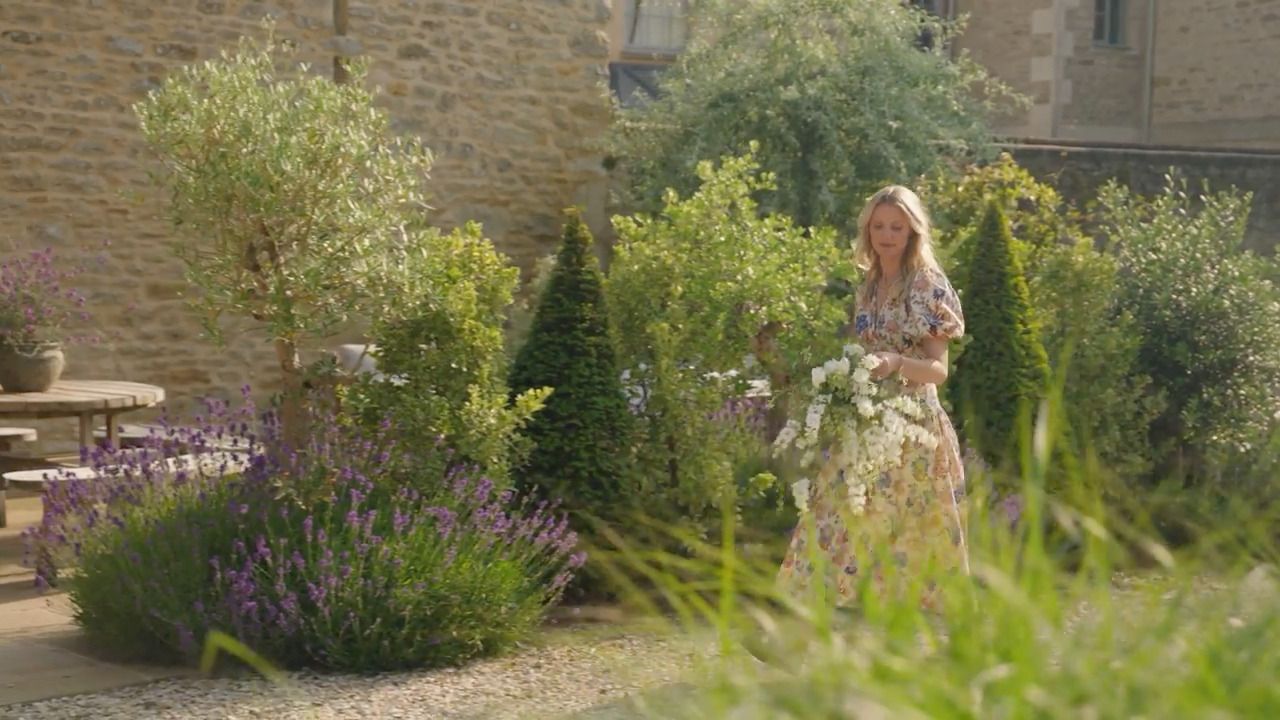
Old man's beard is a wild clematis that produces pale yellow flowers from July to September. Once the flowering season is over, the flowers turn into seed heads called achenes. This is when I particularly love to use Old man's beard, as the seed heads produce gorgeous silky, wispy strands - they give displays an ethereal feel and I adore how they look alone, or mixed in with other foliage.
Get the full workbook, video lessons, and more with a Create Academy subscription.
Subscribe to access the full workbookAlready a member? Sign in to watch
491 reviews
Read moreCreate Academy has been such a great resource. I'm in the middle of renovating a bungalow with a very large garden and the courses have offered a wealth of inform...
Harvey
Jun 10, 2026
Absolutely love Create Academy! The instructors are extremely informative, and it is beautifully filmed. Create Academy is great value for money and plan on renew...
SG
May 31, 2026
Butter's creativity is stunning! Her ability to incorporate brilliance in small gardens is magical!
Carla
May 30, 2026
The best adventure. I like all the courses, but my favorite are both Rita Konig interior design courses and Anna Jones. Excellent!
Karolina Kluczewska
May 20, 2026
Create Academy has been such a great resource. I'm in the middle of renovating a bungalow with a very large garden and the courses have offered a wealth of information to dive into and explore new ideas. I'm...
Harvey
Jun 10, 2026
Absolutely love Create Academy! The instructors are extremely informative, and it is beautifully filmed. Create Academy is great value for money and plan on renewing my subscription yearly because there are ...
SG
May 31, 2026
Butter's creativity is stunning! Her ability to incorporate brilliance in small gardens is magical!
Carla
May 30, 2026

Your Instructor
World-renowned florist, author and designer, known as the UK’s ‘Queen of Flowers’.
Willow Crossley is a professional floral stylist, creating wild and whimsical arrangements full of colour, pattern and movement for an array of top British brands (Jo Malone, OKA). She is the author of four books and is regularly featured in House & Garden and many other publications. Willow is passionate about the profound impact nature can have on how we feel, and has gained a substantial following for her down-to-earth and inclusive approach to floristry and gardening. Willow firmly advocates a sustainable approach to floristry, working with the seasons and sourcing locally grown stems wherever possible.

Access to all courses


