






Interior and exterior confidence
Create Academy has been such a great resource. I'm in the middle of renovating a bungalow with a very large garden and the courses have offered a wealth of inform...
Harvey
Jun 10, 2026
with THE LAND GARDENERS — Award-winning garden designers and cut flower growers on a mission to save our soil.
Lesson 7 of 13
Subscribe to watch
Let the Land Gardeners guide you through their unique method of making microbially rich, nutrient dense compost.
Compost can seem intimidating - should it be hot or cold, enclosed or free-standing? With so many different composting systems on offer, we decided to go back to basics and develop a simple method with Kay Baxter, an organic horticulturist from New Zealand.
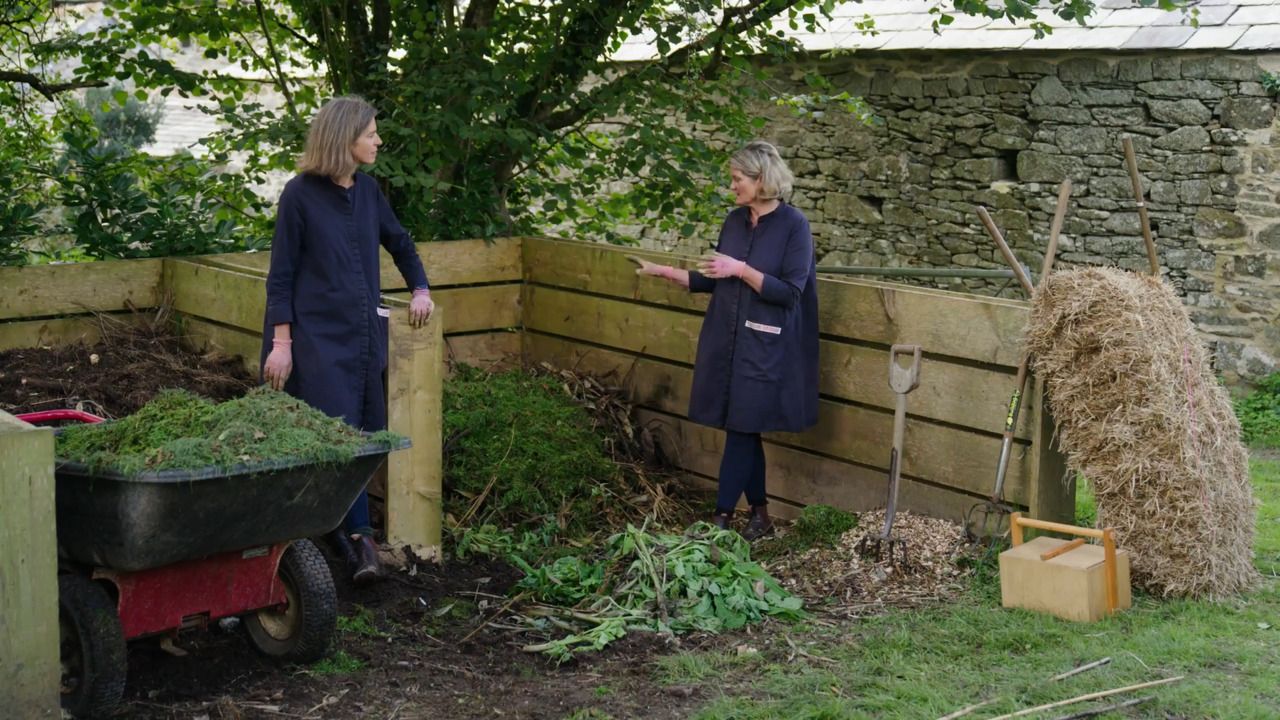
This compost cake doesn't require any turning, so it's a great method for gardeners who don't have much time on their hands. Once you have constructed your heap, all you have to do is keep an eye on the temperature, and in six months to a year you'll have beautiful, friable compost.
Much of the compost we buy in garden centres is fibre based and often heat treated. This means there is little to no microlife in it.
Homemade compost, on the other hand, is bursting with microlife. The best compost pile is made up of a blend of carbon and nitrogen, and contains lots of oxygen which helps to accelerate decomposition and stop your compost from becoming anaerobic.
Carbon materials include dry, brown wood materials such as leaves, branches and cardboard, while nitrogen materials include grass clippings, annual weeds and farmyard manure. Ideally, you want your compost cake to be between 55 and 65 degrees Celsius. You can monitor your cake by inserting a compost thermometer into the middle of the pile.
A temperature of over 55 degrees will kill off any bad bacteria and also any weed seeds that may be lurking in your heap. Anything over 65 degrees will harm your microbial life, so it's important not to let your cake get too hot. If temperatures start to rise, put a stick in the middle of your cake and wiggle it about to try and introduce more oxygen into the pile.
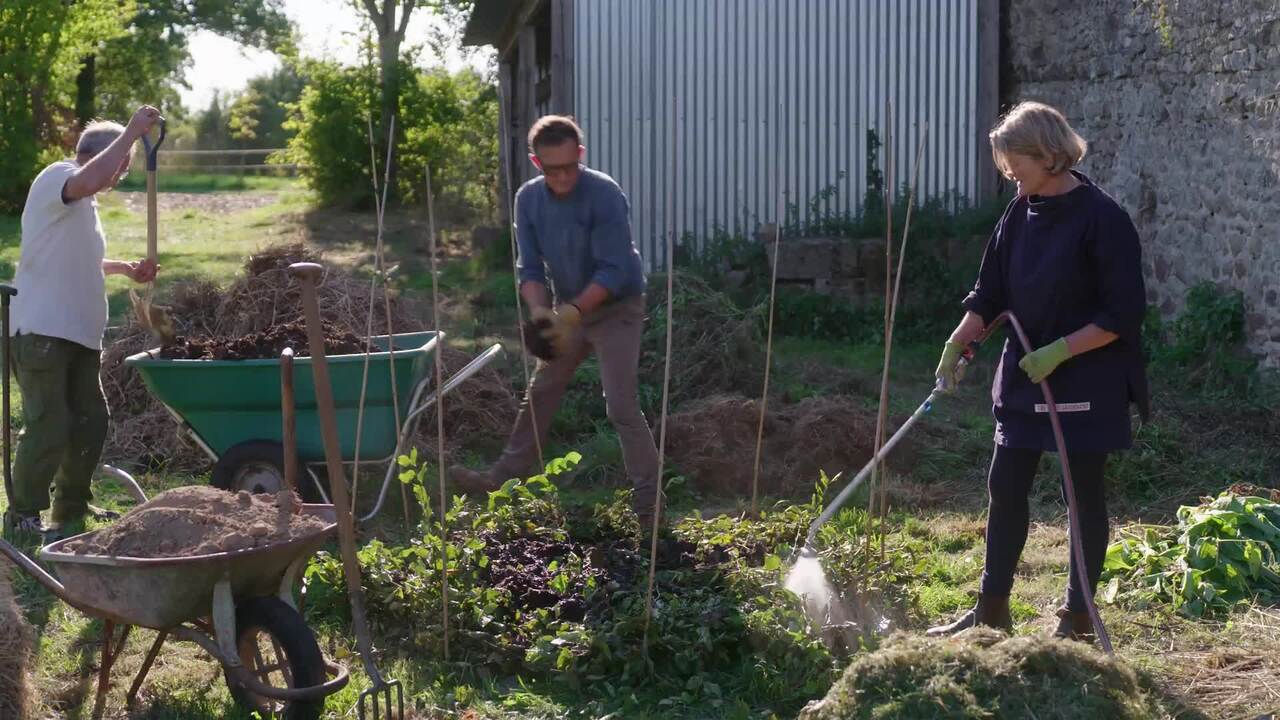
Moisture is another vital ingredient in your cake, so make sure to water the drier layers as you build it. It's important to use filtered water though, as chemicals such as chlorine will harm the microbial life inside. Put a carbon filter on the end of your hose to eliminate the chlorine, or leave buckets of water out overnight so that the chlorine evaporates.
The ideal time to build your first cake is between April and May, when your garden is starting to produce lots of fresh green growth. Nettles are growing well at this time of year too, and are a key ingredient in any compost pile.
We carry on building our cakes right through the summer and autumn months, building our final one in October so that it can break down over winter and be ready in time for spring.
You can gather the ingredients for your compost over time and store them until you're ready to construct your cake. Try and have some fresh nitrogen clippings on the day you build your cake though, as these will help to activate your heap.
And if you can get family and friends to help you build your cake, it'll make the whole process much faster and more fun.
Here's our guide to making your compost cake:
This compost cake is specifically designed to produce nutritious, microbially dense compost in around six months. In order to do this, it's important to have a balance of carbon and nitrogen, as well as other staple ingredients such as clay, water and some old compost.
These materials are then layered up to produce a cake roughly 1.2 metres high.
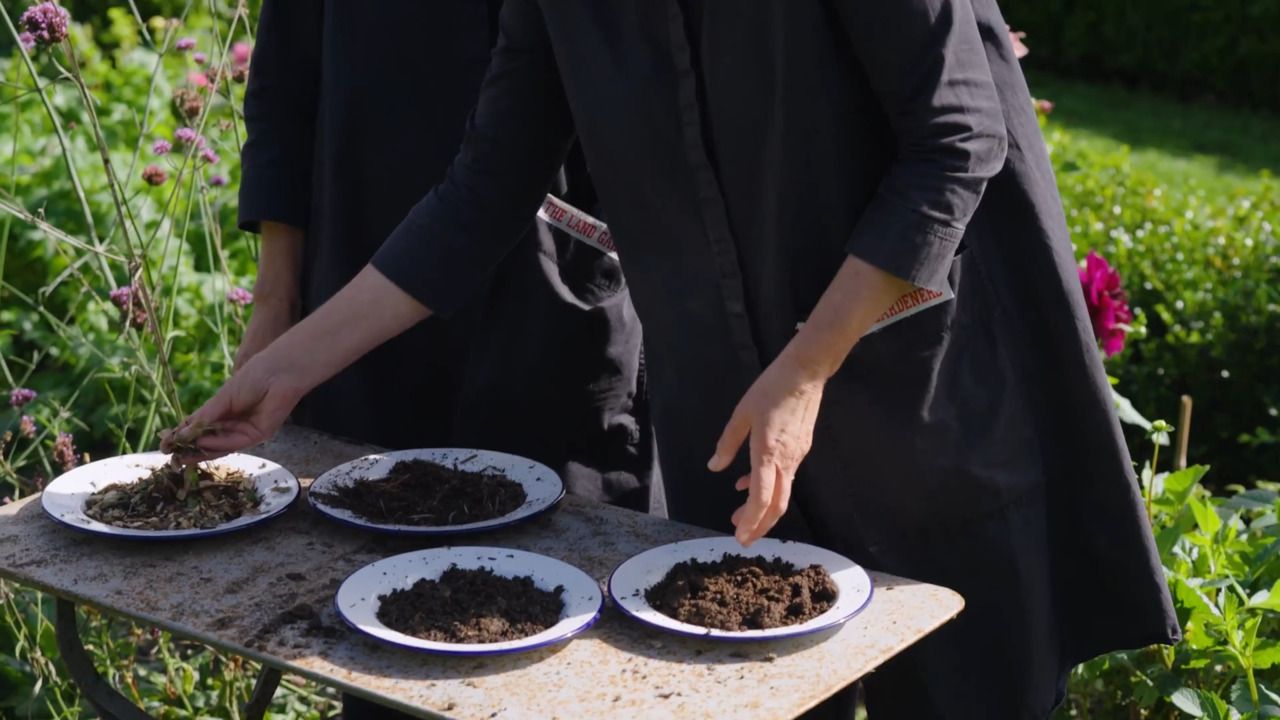
Carbon materials are mostly made up of old plants that have gone to seed and turned brown. You can also use household materials such as cardboard and shredded paper, but make sure to remove any labels or plastic tape first.
Examples of carbon materials are:
Sources of nitrogen are generally plants in their active growth phase, such as grass and annual weeds. It is not advisable to add perennial weeds such as bindweed, ground elder or couch grass to your cake, as the cake may not get hot enough to kill them and these plants can reproduce from just a small part of the root system.
Animal manures are also good sources of carbon and minerals, especially chicken manure.
Some good nitrogen sources are:
Including a small amount of clay in your compost cake - whether in dry powdered form or mixed in a bucket of water - will help retain the minerals in your cake. This is because clay has a negative charge, which means it will form bonds with positively charged mineral particles, strengthening the microlife in your compost in the process.
Adding some good-quality loam or old compost to your heap will help to kickstart the decomposition of your cake, thanks to the presence of microlife in it.
Adding dechlorinated water to your pile will help to keep the heap from drying out and ensure there's enough moisture to aid the decomposition process.
We build our cakes to a height of 1.2 metres and a width of 1.6 metres.
The ratio for a compost cake is:
3 parts carbon to ½ part of nitrogen greens + ¼ part of loamy soil or old compost
When layering up your materials, follow the below pattern:
Start with 12 cm² of carbon followed by 2 cm³ of nitrogen and then 1 cm² of old compost and clay.
Compost is a vital component in healthy garden soil. Compost helps gardeners to put goodness back into their soil and give it a great nutrient boost before or during the growing season.
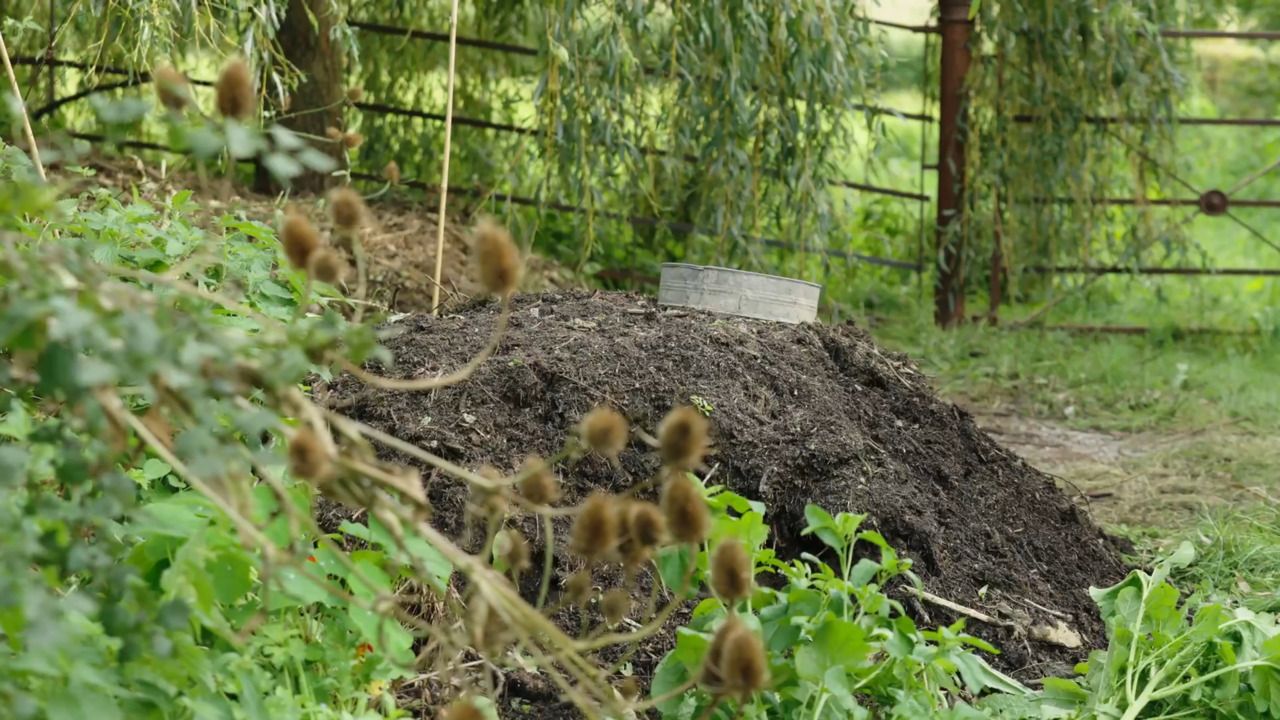
If you make your compost heap in autumn, by the following spring it will be broken down and ready to use on your beds. To use, peel back the top layer of straw and you should find rich, friable compost underneath.
The compost should have an earthy smell. If it smells bad, it means that your cake has not had enough oxygen and it has gone anaerobic. If this is the case, you'll need to start again.
You can now use a pinch of this compost every time you plant out one of your seedlings, or add a thin layer to any new beds.
One of the most popular methods of producing compost on a farm scale, windrow composting involves piling organic matter into long rows.
These rows are left in the open air and are turned by hand (or by a windrow-turning machine) in order to incorporate oxygen into the rows and help them to break down.
This is a labour-intensive method of producing compost, but if you're willing to put in the effort, it will produce excellent compost.
Get the full workbook, video lessons, and more with a Create Academy subscription.
Subscribe to access the full workbookAlready a member? Sign in to watch
491 reviews
Read moreCreate Academy has been such a great resource. I'm in the middle of renovating a bungalow with a very large garden and the courses have offered a wealth of inform...
Harvey
Jun 10, 2026
Absolutely love Create Academy! The instructors are extremely informative, and it is beautifully filmed. Create Academy is great value for money and plan on renew...
SG
May 31, 2026
Butter's creativity is stunning! Her ability to incorporate brilliance in small gardens is magical!
Carla
May 30, 2026
The best adventure. I like all the courses, but my favorite are both Rita Konig interior design courses and Anna Jones. Excellent!
Karolina Kluczewska
May 20, 2026
Create Academy has been such a great resource. I'm in the middle of renovating a bungalow with a very large garden and the courses have offered a wealth of information to dive into and explore new ideas. I'm...
Harvey
Jun 10, 2026
Absolutely love Create Academy! The instructors are extremely informative, and it is beautifully filmed. Create Academy is great value for money and plan on renewing my subscription yearly because there are ...
SG
May 31, 2026
Butter's creativity is stunning! Her ability to incorporate brilliance in small gardens is magical!
Carla
May 30, 2026

Your Instructor
Award-winning garden designers and cut flower growers on a mission to save our soil.
Garden designers, flower growers and compost creators, Henrietta Courtauld and Bridget Elworthy joined forces to found The Land Gardeners in 2012. United by their passion for organically grown plants and a shared interest in soil health, they began by growing and selling cut flowers to esteemed florists, and worked on restoring historic gardens to their former glory. Most recently, they launched Climate Compost - a project born from years of inquisitive research into soil biology with the aim of creating a microbially rich compost that produces nutrient dense crops, while also supporting and boosting the local ecosystem. With an unwavering commitment to improving the health of our land and its biodiversity, The Land Gardeners’ approach is one of sensitivity, unparalleled expertise and, above all, a loving respect for the natural world and its preservation.
Access to all courses


