







Interior and exterior confidence
Create Academy has been such a great resource. I'm in the middle of renovating a bungalow with a very large garden and the courses have offered a wealth of inform...
Harvey
Jun 10, 2026
with THE LAND GARDENERS — Award-winning garden designers and cut flower growers on a mission to save our soil.
Lesson 11 of 13

Subscribe to watch
If you want healthy soil you need to feed it. In this lesson you’ll find out how to create teas to improve fertility, fight pests and give your plants a nutrient boost.
Another excellent way to get essential nutrients and microbes into your soil is to feed them with natural teas. These teas, often made from plants that some people might consider 'weeds', feed your plants throughout the growing year and are a great source of potash, which is excellent for fruiting and flowering plants.
Remember, your garden already contains everything that it needs to heal itself. Not only will natural remedies save you money, but they will also save you from turning to toxic alternatives such as Round Up, which is poisonous to humans and the planet.
Bocking 14 is a type of comfrey that's been specially bred to make it sterile. This means that you can safely plant it in your garden without the risk of it spreading, as it would in a natural environment.
You can order root cuttings of Bocking 14 from online retailers. Once plants have established, you can create new plants by lifting and dividing them at the roots.
Comfrey is a great plant for bees and pollinators too, as it flowers prolifically throughout the summer.
Ideally, pick the leaves of your Bocking 14 plant just before it flowers. The leaves will be at their most nutrient dense at this time and are fantastic for feeding fruiting and flowering crops. Rich in potash, it's great to use in other areas of the garden too.
Ideally, pick the leaves and stems from nettle plants just before they flower. Do not use nettles once they have set seed, otherwise you will spread their seed all around the garden.
Nettles are very nutrient dense, with lots of iron, magnesium and potassium. Nettle tea is great for stressed plants.
While the teas above are great all-rounders, you can also prepare teas for specific issues, such as healing yellowing leaves or to eliminate powdery mildew.
Yarrow flowers are rich in sulphur and are great for discouraging powdery mildew and other fungal infections in flowering plants like peonies and roses.
You will need:
Add the flowers and water to the saucepan and bring to the boil. Leave to cool, strain, and add one cup of the yarrow liquid to a watering can full of water and apply to affected plants.
Mint can be used to discourage flying insects, including aphids, grape worm and whitefly.
You will need:
Soak the mint leaves in unchlorinated, tepid water for 3 to 4 days. Dilute to a ratio of 1 part tea to 4 parts water and apply using a watering can with a rose to affected plants.
Epsom salt water is great for reviving plants that have turned yellow and limp.
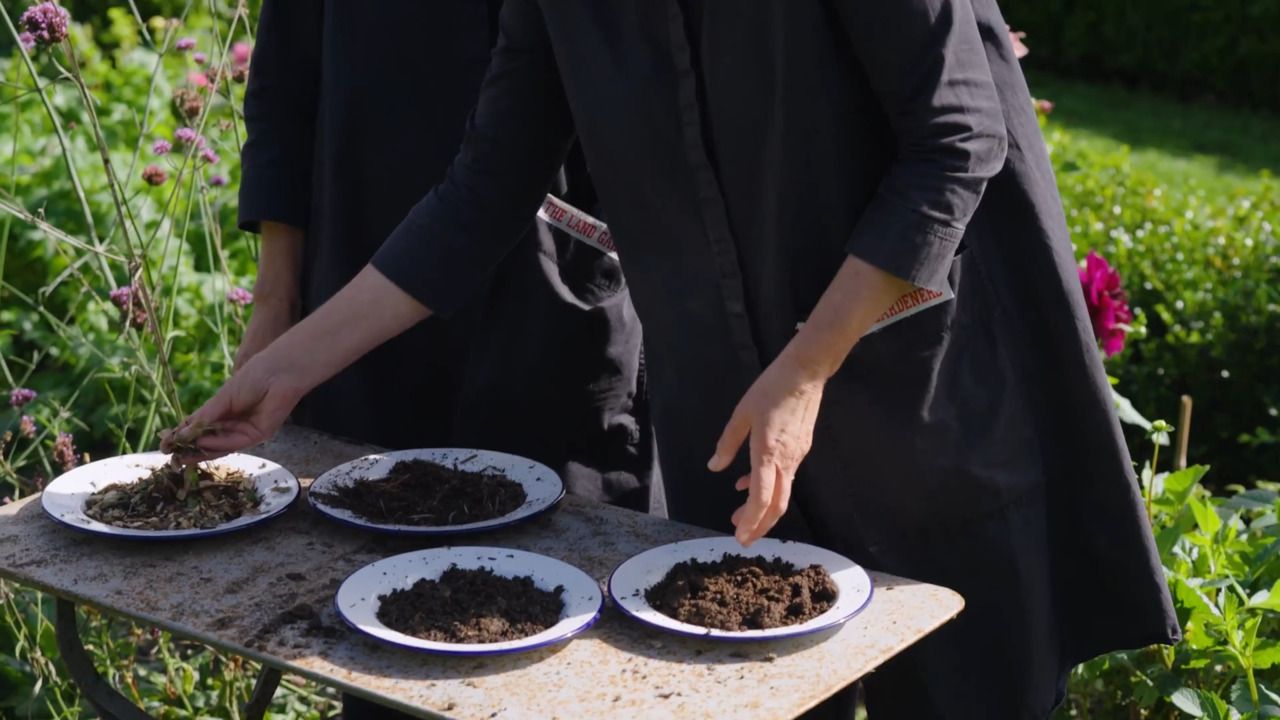
We use our climate compost much like you would use a sourdough starter. Packed full of microbial life, you only need a small amount to give plants the start they need to grow healthy and strong.
We spray our plants with compost teas on a weekly basis. We make sure to cover the foliage of our plants as well as watering the soil, as this helps to prevent aphids and whitefly.
Compost tea
Get the full workbook, video lessons, and more with a Create Academy subscription.
Subscribe to access the full workbookAlready a member? Sign in to watch
491 reviews
Read moreCreate Academy has been such a great resource. I'm in the middle of renovating a bungalow with a very large garden and the courses have offered a wealth of inform...
Harvey
Jun 10, 2026
Absolutely love Create Academy! The instructors are extremely informative, and it is beautifully filmed. Create Academy is great value for money and plan on renew...
SG
May 31, 2026
Butter's creativity is stunning! Her ability to incorporate brilliance in small gardens is magical!
Carla
May 30, 2026
The best adventure. I like all the courses, but my favorite are both Rita Konig interior design courses and Anna Jones. Excellent!
Karolina Kluczewska
May 20, 2026
Create Academy has been such a great resource. I'm in the middle of renovating a bungalow with a very large garden and the courses have offered a wealth of information to dive into and explore new ideas. I'm...
Harvey
Jun 10, 2026
Absolutely love Create Academy! The instructors are extremely informative, and it is beautifully filmed. Create Academy is great value for money and plan on renewing my subscription yearly because there are ...
SG
May 31, 2026
Butter's creativity is stunning! Her ability to incorporate brilliance in small gardens is magical!
Carla
May 30, 2026

Your Instructor
Award-winning garden designers and cut flower growers on a mission to save our soil.
Garden designers, flower growers and compost creators, Henrietta Courtauld and Bridget Elworthy joined forces to found The Land Gardeners in 2012. United by their passion for organically grown plants and a shared interest in soil health, they began by growing and selling cut flowers to esteemed florists, and worked on restoring historic gardens to their former glory. Most recently, they launched Climate Compost - a project born from years of inquisitive research into soil biology with the aim of creating a microbially rich compost that produces nutrient dense crops, while also supporting and boosting the local ecosystem. With an unwavering commitment to improving the health of our land and its biodiversity, The Land Gardeners’ approach is one of sensitivity, unparalleled expertise and, above all, a loving respect for the natural world and its preservation.
Access to all courses


