







Interior and exterior confidence
Create Academy has been such a great resource. I'm in the middle of renovating a bungalow with a very large garden and the courses have offered a wealth of inform...
Harvey
Jun 10, 2026
with THE LAND GARDENERS — Award-winning garden designers and cut flower growers on a mission to save our soil.
Lesson 9 of 13
Subscribe to watch
Whether you have pre-existing compost bays or are planning to build some, let the Land Gardeners teach you how to create healthy, nutrient dense compost in them.
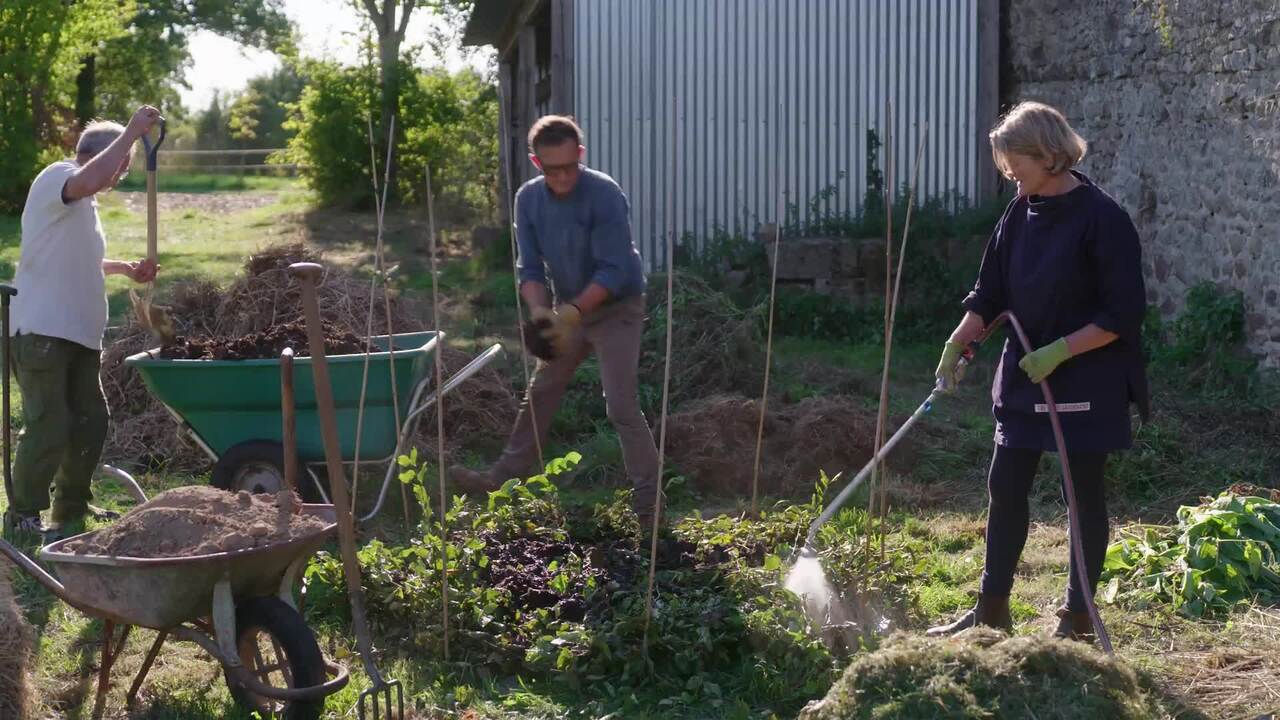
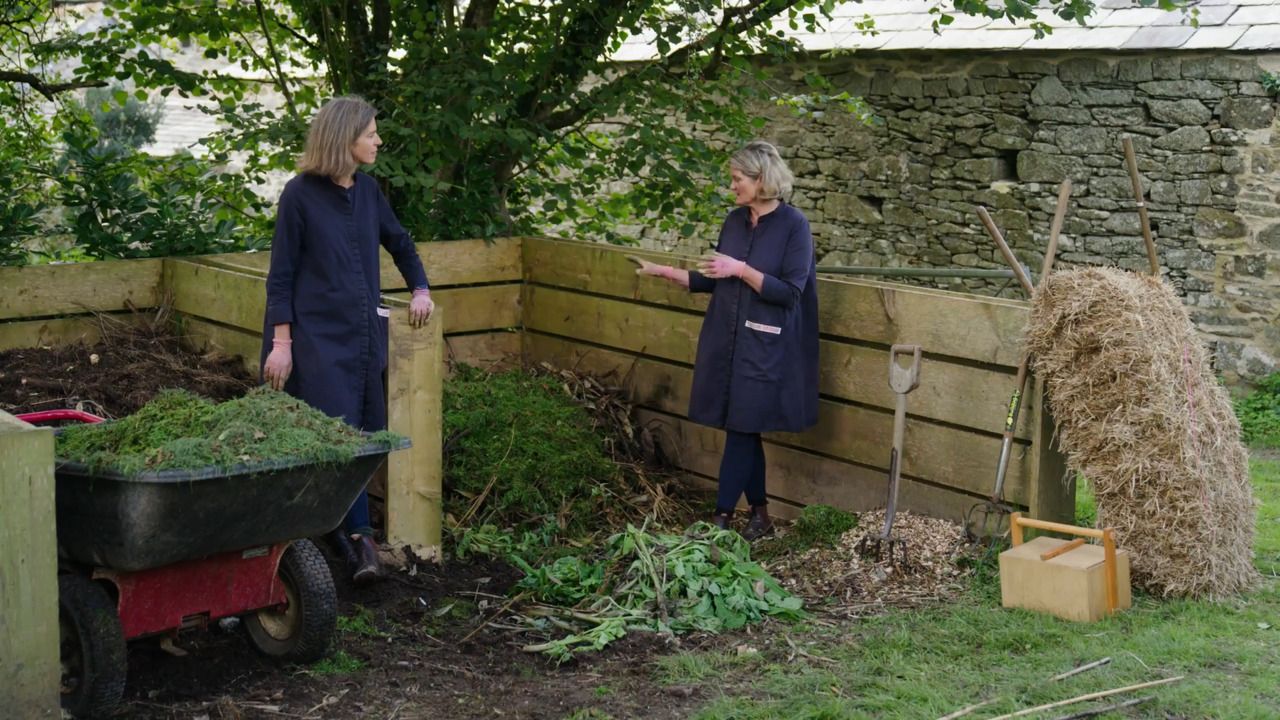
If you want to make a compost cake but within a pre-existing compost bay, you can do so by following the same method, layering carbon and nitrogen within your bay.
When you begin, for the bottom layer you need to create an airy carbon base, using things like young branches, cardoons and artichokes.
Follow this with a nitrogen layer, but be careful when using lawn clippings as they are very high in nitrogen. If nitrogen-rich materials are layered too thickly, they will rot and add too much moisture to your heap. A warning sign that this has happened is if your compost heap starts to give off a bad smell.
It is good practice to keep a bale of hay next to your compost heap so you can ensure that you're adding enough carbon at all times. If you can't get your hands on any hay or straw, then add a layer of cardboard each time you add grass clippings or weeds.
The brown carbon layers will keep your compost heap aerobic and the green nitrogen layers will provide the heat.
The two weeds we try to avoid putting in our piles are ground elder and bindweed.
This is because this method of composting might not reach the required temperature to kill off all the weed seeds in your heap.
As your garden progresses, you'll probably find that you are generating more and more green waste - whether this is grass clippings, spent plants, weeds, or branches from trees and hedges.
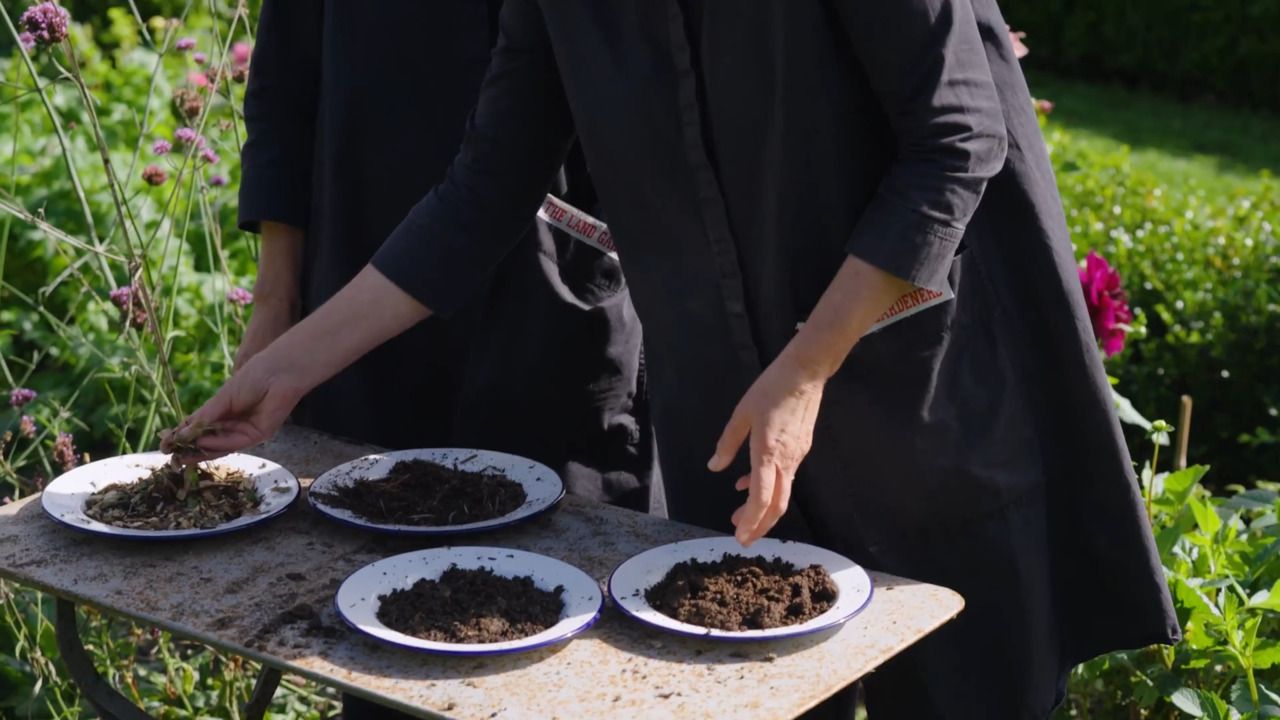
In order to help us manage our waste, we invested in a wood chipper. This helps us to break our branches down into small pieces, which can then be spread on our compost heap. Chipping these larger bits of woody waste means that they will break down much more quickly.
Producing wood chips from smaller branches only will mean that your compost heap is able to break them down more easily.
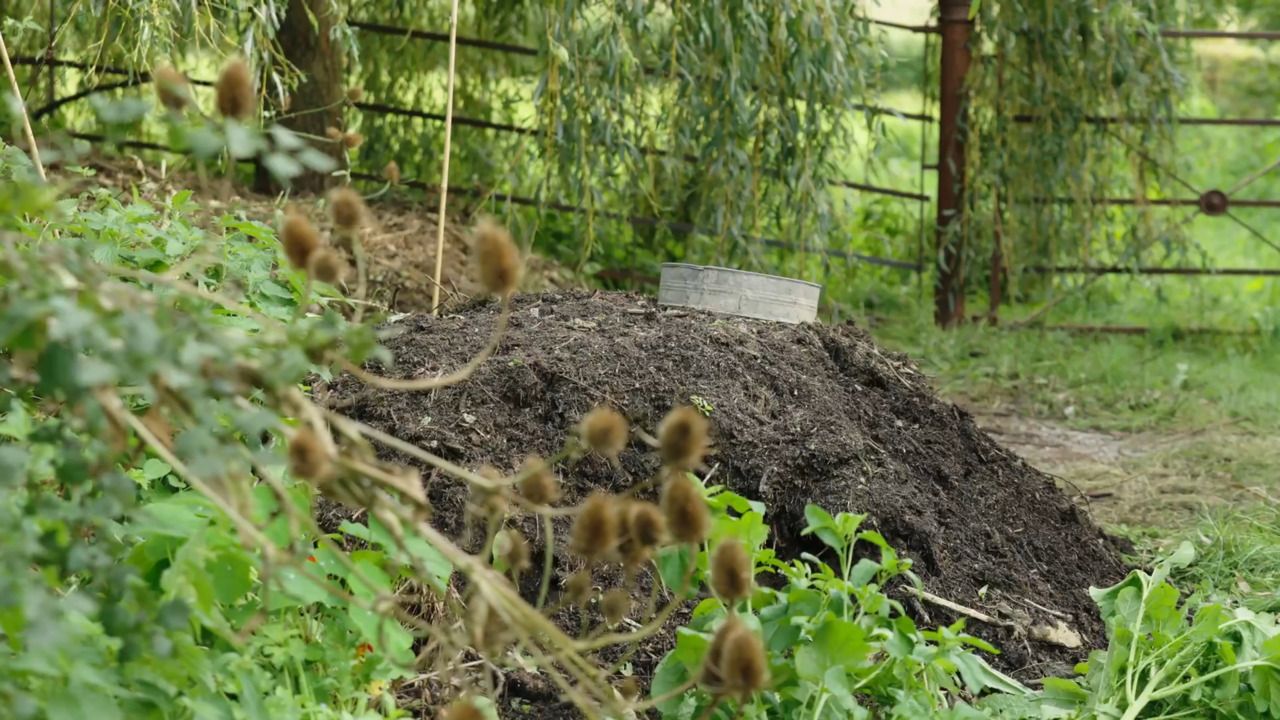
If we have larger branches or trees to process, we will put these through the chipper and then leave them in a pile using the windrows method of composting.
We'll then leave this wood to break down for 18 months to 2 years, and it will produce a great fungal compost. We apply this finished product as mulch around trees, or mix it into our compost extracts.
Another trick we use is to layer our ramial wood chip into our chicken coop. The chickens will then feed and poo among the wood chips, creating an excellent compost mix that we can remove from the coop a year later and use on the garden.
Get the full workbook, video lessons, and more with a Create Academy subscription.
Subscribe to access the full workbookAlready a member? Sign in to watch
491 reviews
Read moreCreate Academy has been such a great resource. I'm in the middle of renovating a bungalow with a very large garden and the courses have offered a wealth of inform...
Harvey
Jun 10, 2026
Absolutely love Create Academy! The instructors are extremely informative, and it is beautifully filmed. Create Academy is great value for money and plan on renew...
SG
May 31, 2026
Butter's creativity is stunning! Her ability to incorporate brilliance in small gardens is magical!
Carla
May 30, 2026
The best adventure. I like all the courses, but my favorite are both Rita Konig interior design courses and Anna Jones. Excellent!
Karolina Kluczewska
May 20, 2026
Create Academy has been such a great resource. I'm in the middle of renovating a bungalow with a very large garden and the courses have offered a wealth of information to dive into and explore new ideas. I'm...
Harvey
Jun 10, 2026
Absolutely love Create Academy! The instructors are extremely informative, and it is beautifully filmed. Create Academy is great value for money and plan on renewing my subscription yearly because there are ...
SG
May 31, 2026
Butter's creativity is stunning! Her ability to incorporate brilliance in small gardens is magical!
Carla
May 30, 2026

Your Instructor
Award-winning garden designers and cut flower growers on a mission to save our soil.
Garden designers, flower growers and compost creators, Henrietta Courtauld and Bridget Elworthy joined forces to found The Land Gardeners in 2012. United by their passion for organically grown plants and a shared interest in soil health, they began by growing and selling cut flowers to esteemed florists, and worked on restoring historic gardens to their former glory. Most recently, they launched Climate Compost - a project born from years of inquisitive research into soil biology with the aim of creating a microbially rich compost that produces nutrient dense crops, while also supporting and boosting the local ecosystem. With an unwavering commitment to improving the health of our land and its biodiversity, The Land Gardeners’ approach is one of sensitivity, unparalleled expertise and, above all, a loving respect for the natural world and its preservation.

Access to all courses


