







Interior and exterior confidence
Create Academy has been such a great resource. I'm in the middle of renovating a bungalow with a very large garden and the courses have offered a wealth of inform...
Harvey
Jun 10, 2026
with THE LAND GARDENERS — Award-winning garden designers and cut flower growers on a mission to save our soil.
Lesson 4 of 13

The best way to get to know your soil is to test it, in this video you’ll discover many ways to do this.
Testing your soil is a great way to get to know it and understand exactly how healthy it is. We became obsessed with learning about soil around 20 years ago, and since then we've looked into many different ways of testing it.
From detailed scientific analysis, to simple home tests, knowing what's in your soil will help you to understand how the complex web of life works, and what you can do to improve it.
For beginners, one of the simplest tests is to dig a hole in your garden and count the number of earthworms present within a defined area. Worms act as natural aerators of your soil, creating air pockets within it, so a higher total number of worms means a healthier soil.
Why not try?
The Soilmentor app is a great resource, used by regenerative farmers to test their soil. You can learn more about it on their website here.
Another easy way to test your soil is to look at drainage. The healthier the soil is, the more it will act like a sponge, absorbing water and holding on to it, resulting in less erosion and less flooding.
Ideally you want it to take a few minutes - if it takes 30 minutes, you have a problem.
Clay soil - takes longer for the water to disappear. Sandy soil - the water should drain away quickly.
To understand the soil in your garden, it's important to know what soil type you have. Your soil type is dependent on local geology and cannot be changed.
For instance, if you have clay soil, you will always have clay soil. However, you can improve the texture of your soil - such as making a heavy clay soil easier to work with, or a sandy soil less free draining - by regularly adding organic matter to the surface of your soil.
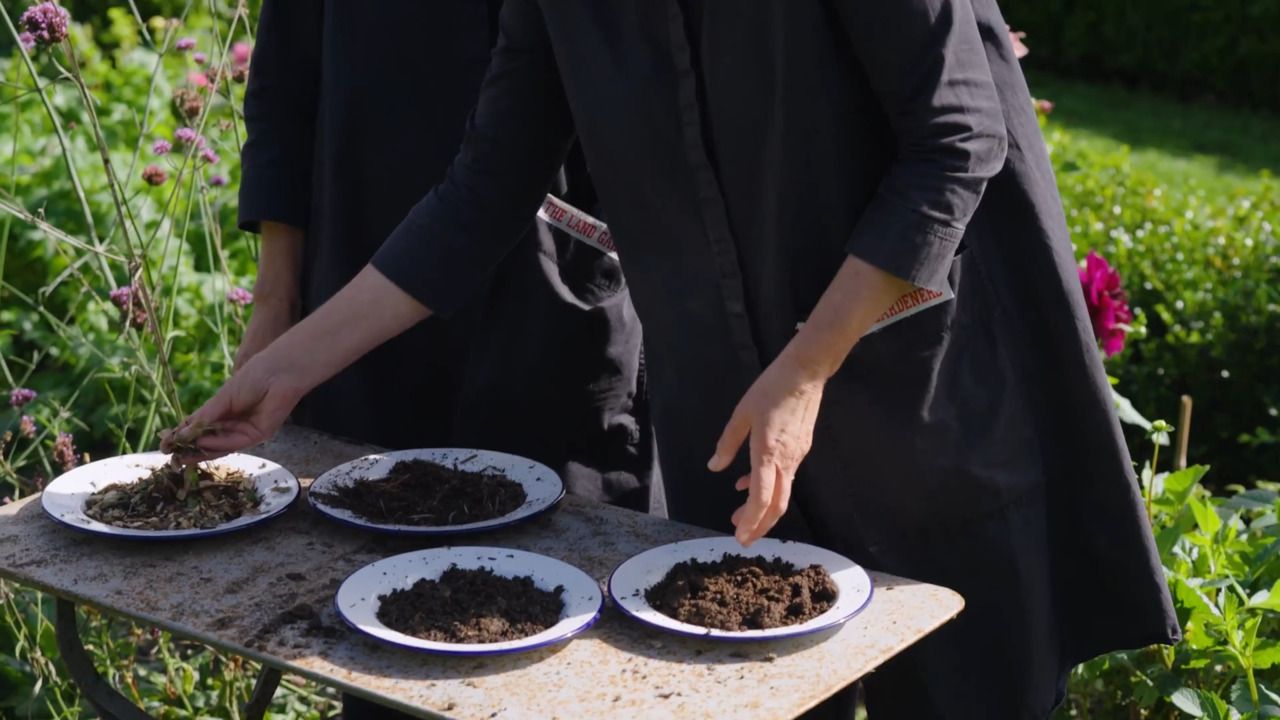
The easiest way to discover the texture of your soil is to hold it in your hands.
Why not try?
A slake test is a simple test that can help you evaluate your soil structure and determine whether you have good levels of humus in your soil.
To perform a slake test:
If the clod remains stuck together, then your soil is in good shape and the microlife present is helping it to retain its structure. If you have poor soil, then the clod will have crumbled and the water will have turned cloudy
What is humus?
Humus is the dark organic matter that's created when organic materials decay. Humification brings soil particles together into clumps in a process called aggregation. This process generates an almost glue-like substance which you will be able to feel when you rub the soil between your fingers.
The Brix test helps you understand the sugar levels within your plant. Sugar levels offer an important indication of the nutrient levels within your plants, and while each plant has a slightly different range, you ideally want to have a reading of over 12 degrees Brix. This indicates that your plant has a higher mineral content and will be better for your health.
As the weather can affect your reading, try to take readings at the same time every day in order to get an average.
While this is not an absolute science, as your soil improves, so should the nutrient density of your plants.
If you want a highly detailed analysis of your soil, you can send it off for scientific testing by completing an Albrecht test. This test will also show you how much carbon is being stored in your soil.
This is the test that showed us how much our Wardington Manor garden had improved.
Testing your soil helps you to get to know it and learn to understand it. Not only will you discover the type of soil that you have - whether it's acidic or alkaline for example - you will also begin to understand what condition it's in and what it needs in order to thrive.
If you have poor soil, try and look at it as a challenge. By following our advice, with time and care the condition of your soil will begin to improve and you will be able to see progress.
Why not try?
Get the full workbook, video lessons, and more with a Create Academy subscription.
Subscribe to access the full workbookAlready a member? Sign in to watch
510 reviews
Read moreCreate Academy has been such a great resource. I'm in the middle of renovating a bungalow with a very large garden and the courses have offered a wealth of inform...
Harvey
Jun 10, 2026
Absolutely love Create Academy! The instructors are extremely informative, and it is beautifully filmed. Create Academy is great value for money and plan on renew...
SG
May 31, 2026
Butter's creativity is stunning! Her ability to incorporate brilliance in small gardens is magical!
Carla
May 30, 2026
The best adventure. I like all the courses, but my favorite are both Rita Konig interior design courses and Anna Jones. Excellent!
Karolina Kluczewska
May 20, 2026
Create Academy has been such a great resource. I'm in the middle of renovating a bungalow with a very large garden and the courses have offered a wealth of information to dive into and explore new ideas. I'm...
Harvey
Jun 10, 2026
Absolutely love Create Academy! The instructors are extremely informative, and it is beautifully filmed. Create Academy is great value for money and plan on renewing my subscription yearly because there are ...
SG
May 31, 2026
Butter's creativity is stunning! Her ability to incorporate brilliance in small gardens is magical!
Carla
May 30, 2026

Your Instructor
Award-winning garden designers and cut flower growers on a mission to save our soil.
Garden designers, flower growers and compost creators, Henrietta Courtauld and Bridget Elworthy joined forces to found The Land Gardeners in 2012. United by their passion for organically grown plants and a shared interest in soil health, they began by growing and selling cut flowers to esteemed florists, and worked on restoring historic gardens to their former glory. Most recently, they launched Climate Compost - a project born from years of inquisitive research into soil biology with the aim of creating a microbially rich compost that produces nutrient dense crops, while also supporting and boosting the local ecosystem. With an unwavering commitment to improving the health of our land and its biodiversity, The Land Gardeners’ approach is one of sensitivity, unparalleled expertise and, above all, a loving respect for the natural world and its preservation.
Access to all courses


