

Interior and exterior confidence
Create Academy has been such a great resource. I'm in the middle of renovating a bungalow with a very large garden and the courses have offered a wealth of inform...
Harvey
Jun 10, 2026
with KATHARINE AMIES — Leading British botanical artist
Lesson 14 of 16
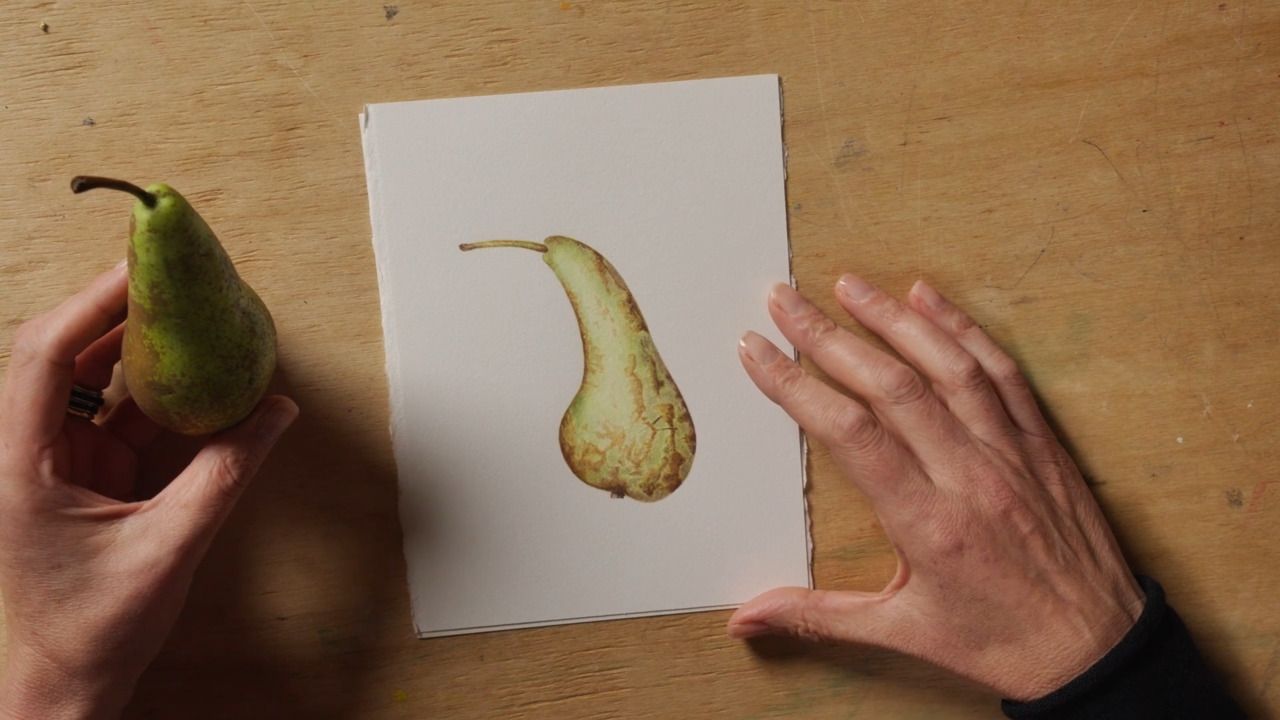
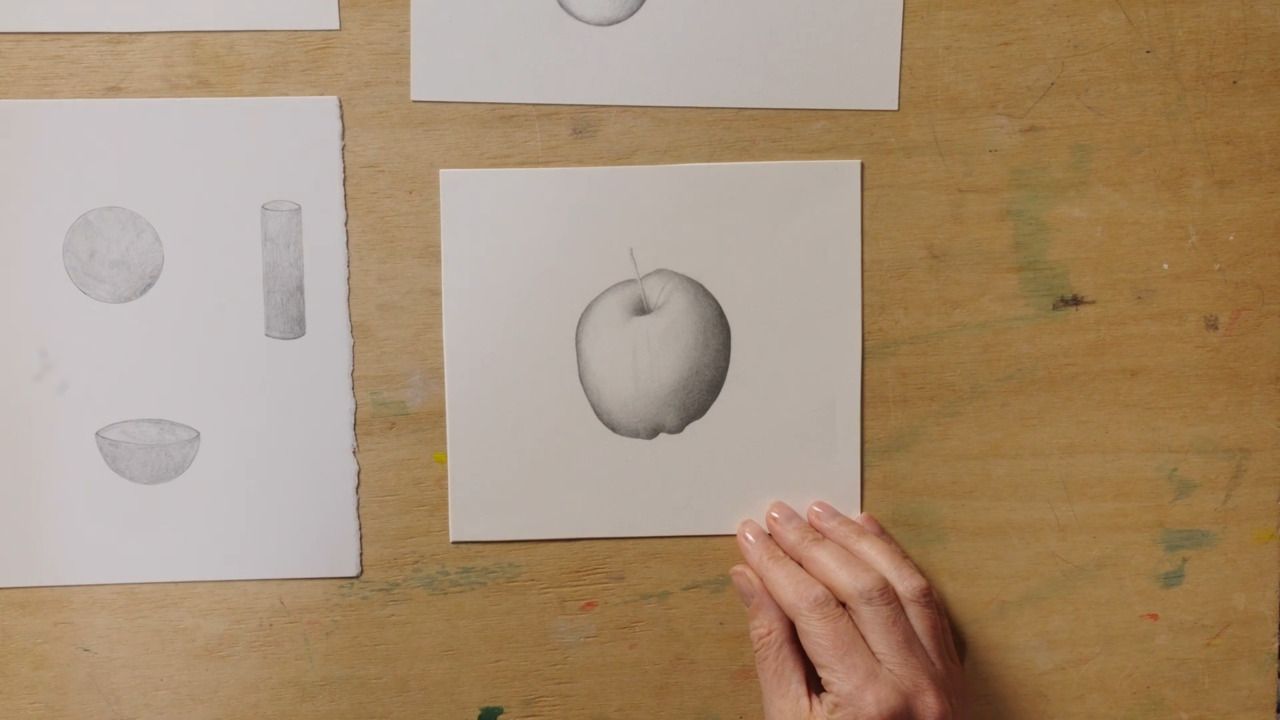
During this course, you’ll have spent a lot of time perfecting your ability to create the illusion of form within your painting. This is an incredibly important building block for learning the next skill; adding in pattern and detail.
We've spent a lot of time on how best to create the illusion of form within your painting, which is an incredibly important building block for learning the next skill; adding in pattern.
The key to adding pattern and detail to your painting is always building up a really solid form first - a technique we've practised extensively throughout this course.
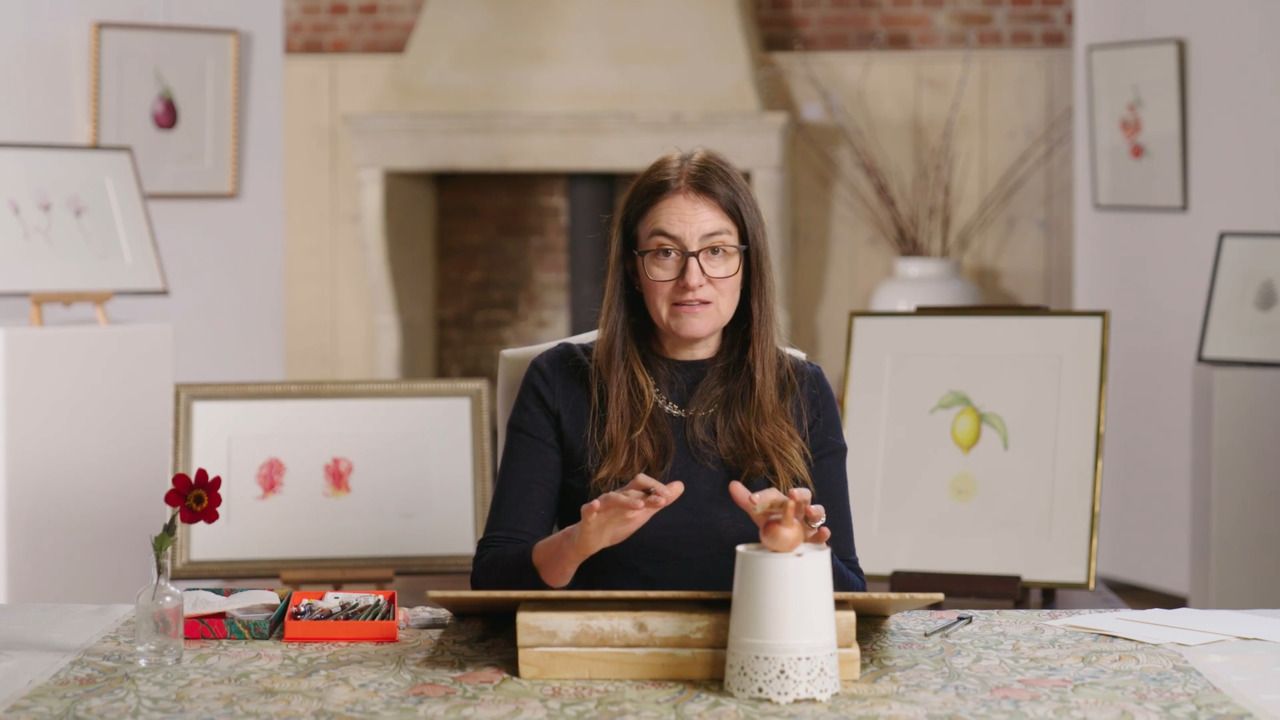
I'll be using a conference pear to demonstrate how to incorporate pattern within your painting; I would recommend choosing a small one with a nice stalk.
Step 1
Position your specimen and draw its outline onto a piece of paper. Rub away the pencil marks until they are faint.
Step 2
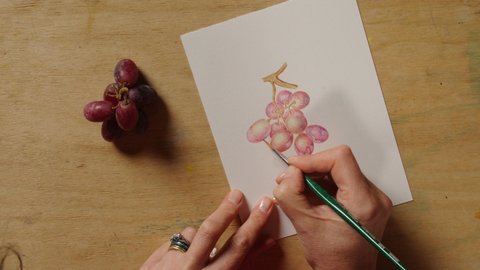
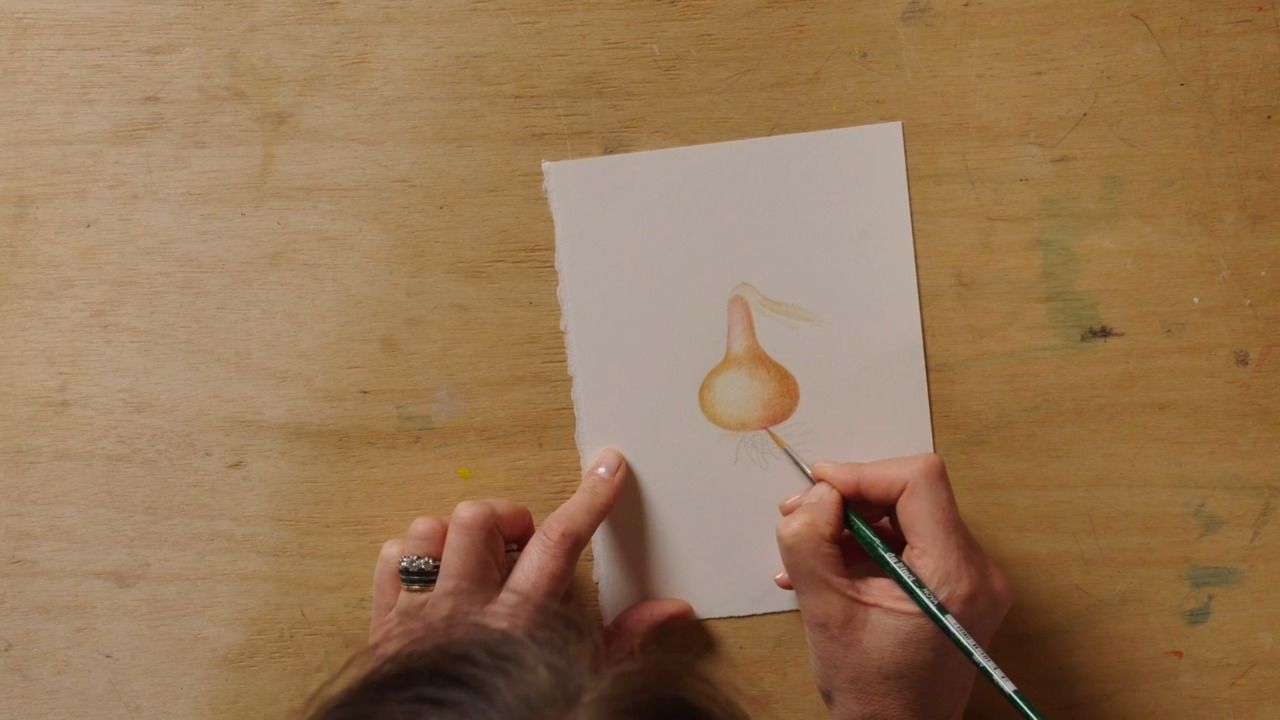
Mix a pale green, and apply it all over your pear and stalk - remember to keep your highlight zones paler and build up areas of shadow on the right side and around the edges. Maintain a dry brush, and work in sections to avoid getting your paper too wet.
Step 3
Red can be used to create darker areas, while light washes of pale yellow can lift areas that you want to read brighter.
Step 4
Create depth within the stalk by adding areas of Burnt Umber and Burnt Sienna to your pale green wash.
Step 5
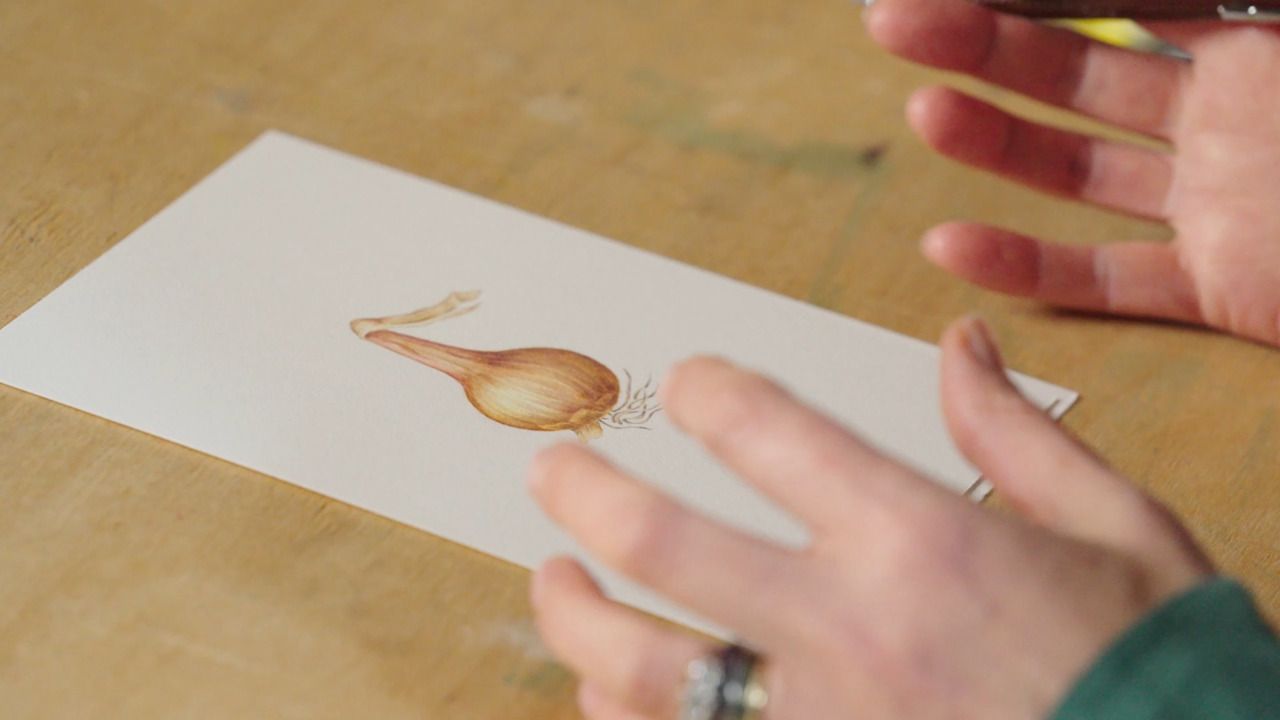
Once you have created a really solid form, you're ready to add in the detail. Start by applying a very pale brown, and gradually build up to darker hues in the more shaded areas.
Get the full workbook, video lessons, and more with a Create Academy subscription.
Subscribe to access the full workbookAlready a member? Sign in to watch
510 reviews
Read moreCreate Academy has been such a great resource. I'm in the middle of renovating a bungalow with a very large garden and the courses have offered a wealth of inform...
Harvey
Jun 10, 2026
Absolutely love Create Academy! The instructors are extremely informative, and it is beautifully filmed. Create Academy is great value for money and plan on renew...
SG
May 31, 2026
Butter's creativity is stunning! Her ability to incorporate brilliance in small gardens is magical!
Carla
May 30, 2026
The best adventure. I like all the courses, but my favorite are both Rita Konig interior design courses and Anna Jones. Excellent!
Karolina Kluczewska
May 20, 2026
Create Academy has been such a great resource. I'm in the middle of renovating a bungalow with a very large garden and the courses have offered a wealth of information to dive into and explore new ideas. I'm...
Harvey
Jun 10, 2026
Absolutely love Create Academy! The instructors are extremely informative, and it is beautifully filmed. Create Academy is great value for money and plan on renewing my subscription yearly because there are ...
SG
May 31, 2026
Butter's creativity is stunning! Her ability to incorporate brilliance in small gardens is magical!
Carla
May 30, 2026

Your Instructor
Leading British botanical artist
Katharine Amies is a leading British botanical artist. Katharine's work seeks to capture the intimate essence of plants in a manner that photographs, despite their detail, fail to convey. Katharine trained at the Chelsea Physic Garden in 2000. Her work is represented in the Shirley Sherwood Collection of Botanical Art at Kew Gardens which is the largest collection of contemporary botanical art in the world.
Access to all courses


