

Interior and exterior confidence
Create Academy has been such a great resource. I'm in the middle of renovating a bungalow with a very large garden and the courses have offered a wealth of inform...
Harvey
Jun 10, 2026
with KATHARINE AMIES — Leading British botanical artist
Lesson 5 of 16
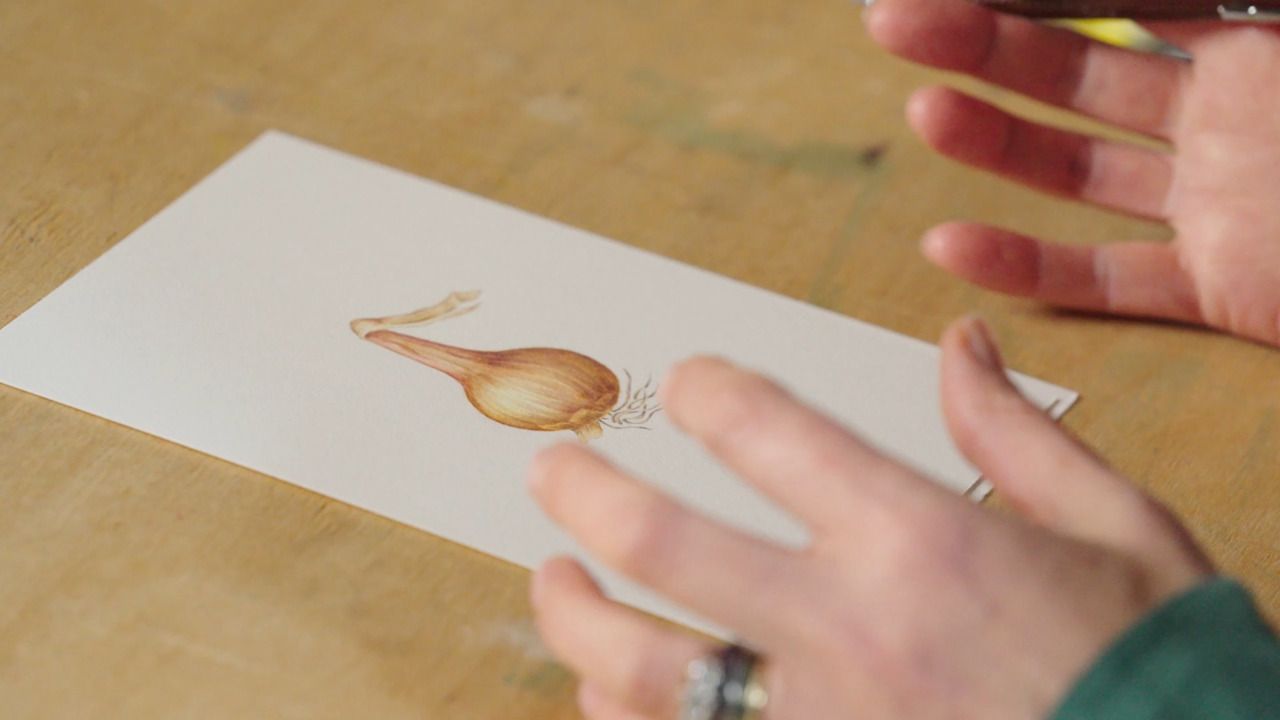
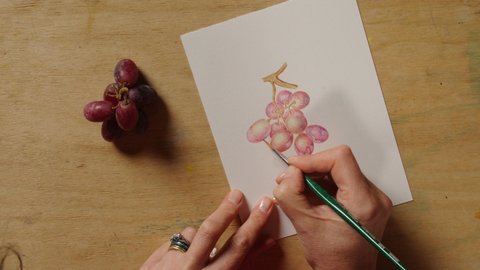
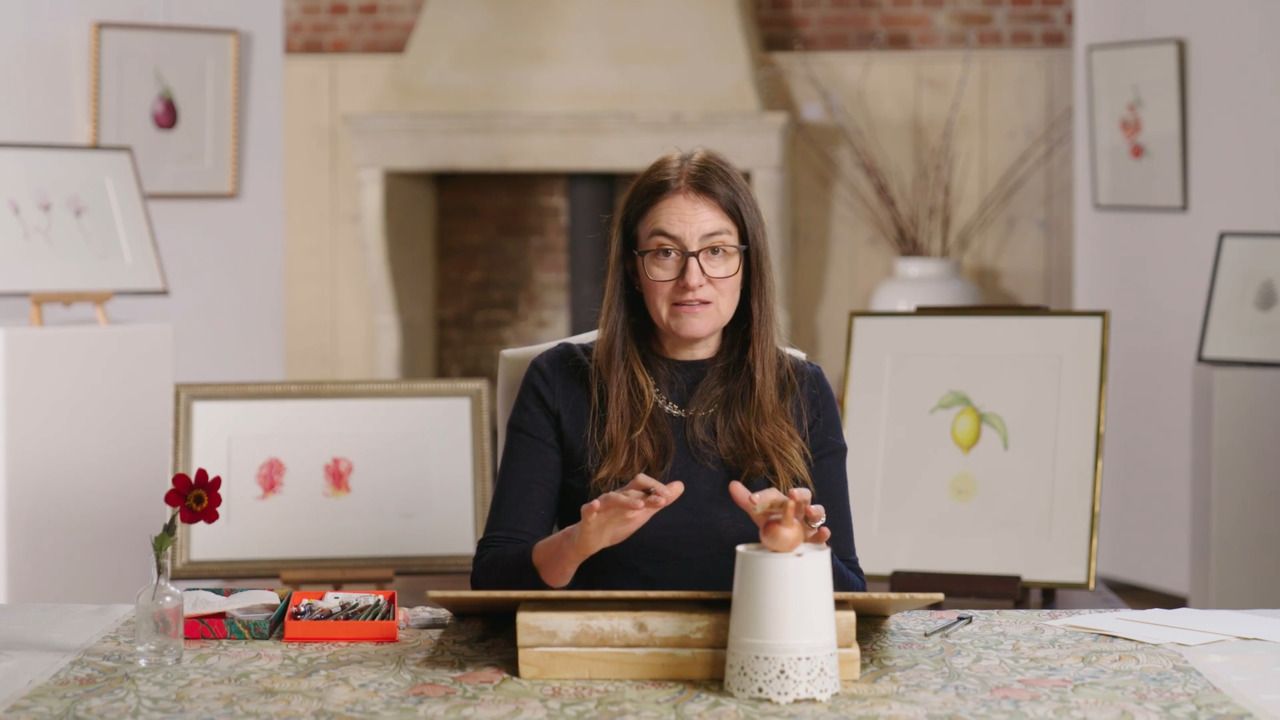
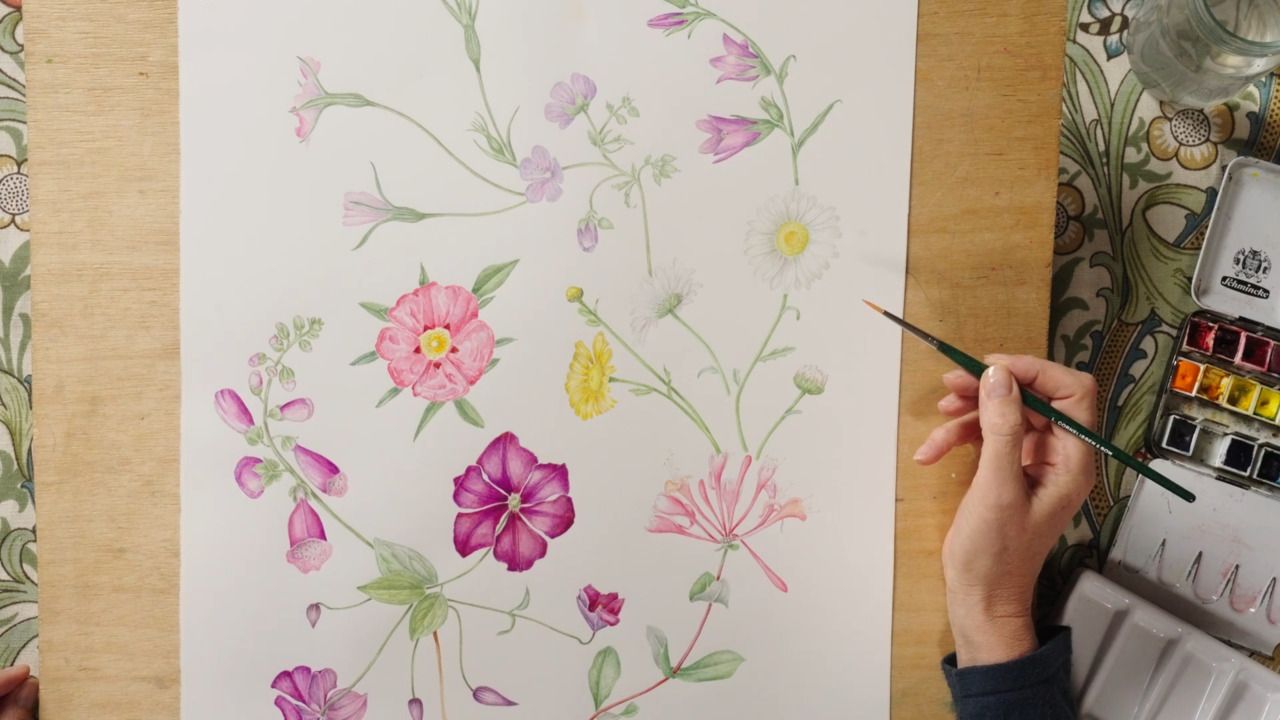
With an understanding of the relationship between light and shadow, you will now move onto applying this to colour. Sticking with the example of a shallot, Katharine shows you the tips and tricks of using watercolour paints to enhance the illusion of form.
We are now moving onto working in colour. Sticking with the example of a shallot, I'll be showing you the tips and tricks of using watercolour paints to enhance the illusion of form.
Using colour is a powerful tool in botanical painting; it helps to further communicate the intricacies and characteristics of your specimen.
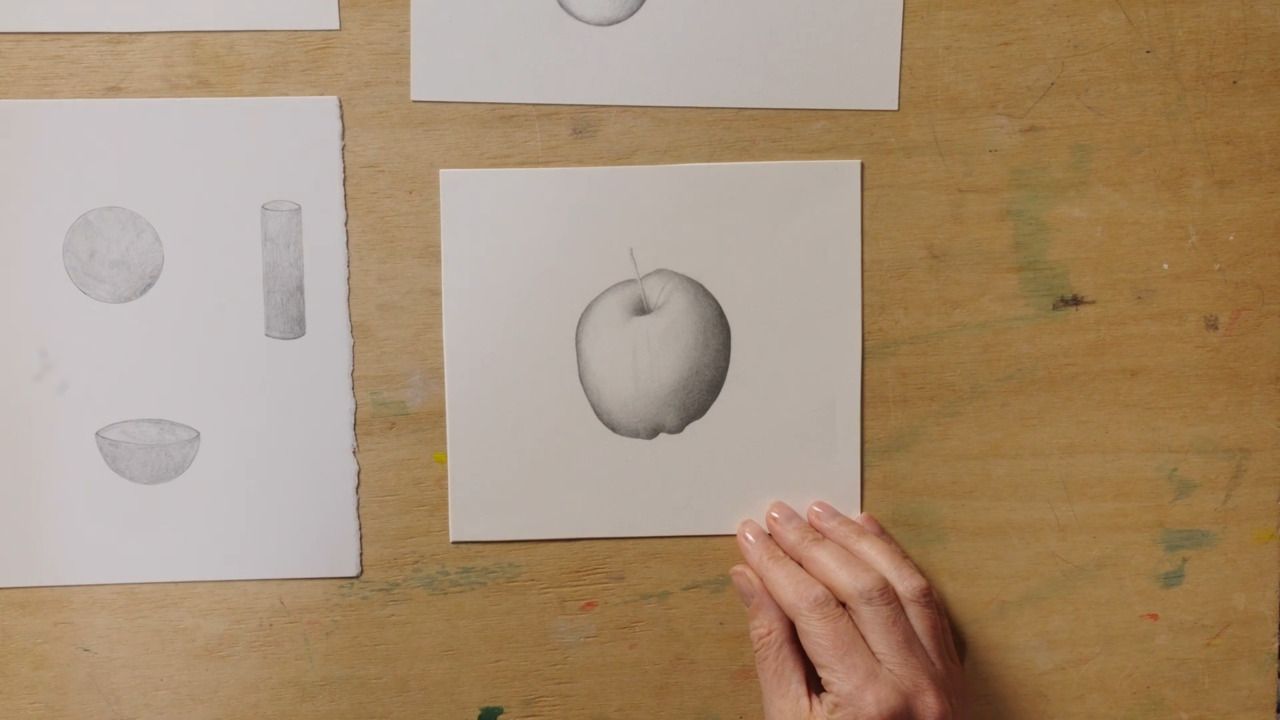
The same essential principles of light and shadow that we covered in the previous lesson apply, but the technique of using paint to achieve this effect is different.
When using pencil, we started with the darkest areas first and worked through to light. In painting, the process is reversed. It's always best to start with the lightest colour, and build up to the shadowed areas.
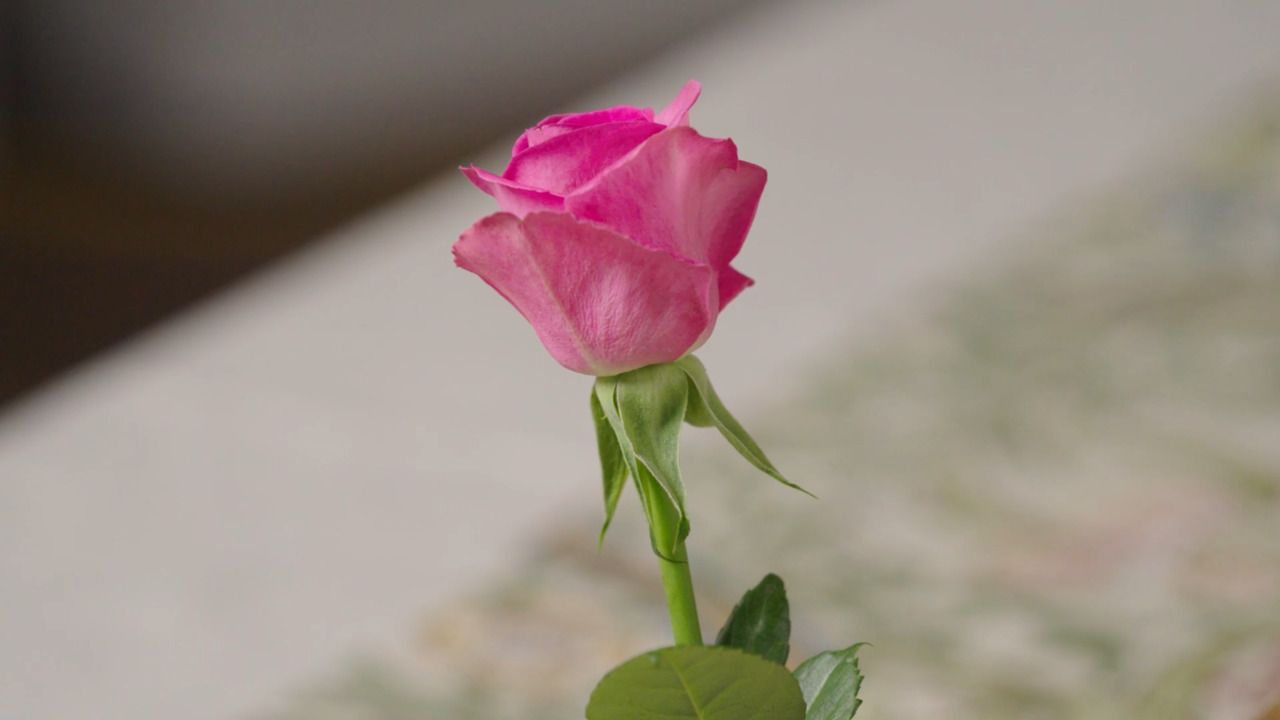
Closely observing your specimen is even more important when using colour, as there are more differences in tone to communicate.
What You Will Need
Step 1
Select and position your specimen, then draw the outline as we did in the previous lesson.
Step 2
Use a putty rubber to lightly rub out the pencil marks so that your line drawing becomes really faint. Keep the roots as normal pencil marks.
Step 3
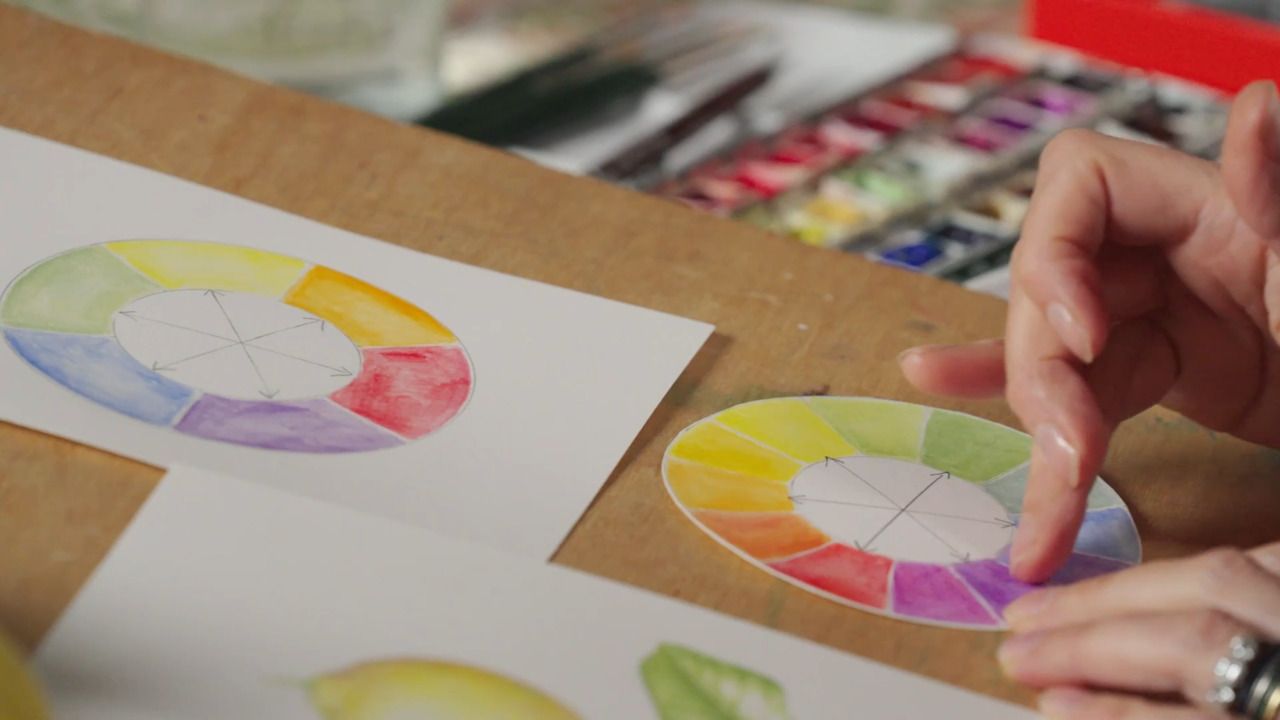
Select your colours. Use an old brush to extract each colour from the pan onto your ceramic palette, rinsing your brush in a jar of water and blot drying it with a kitchen towel in between each one.
Step 4
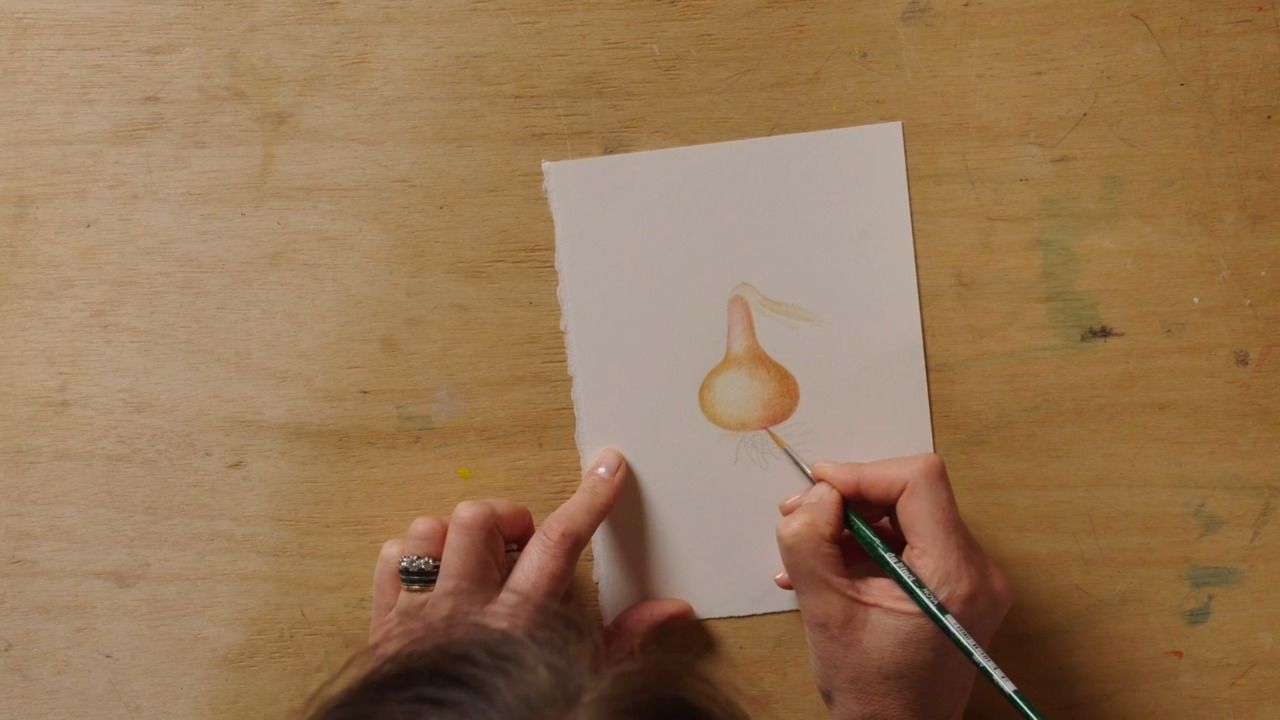
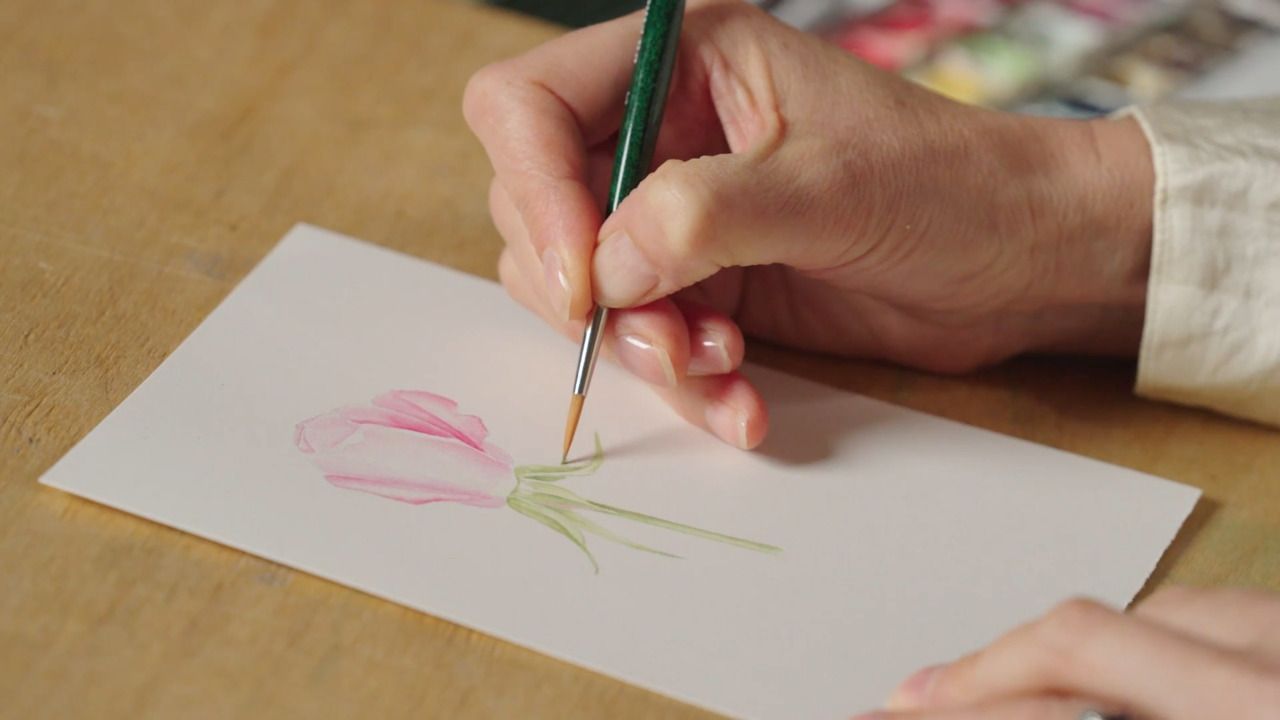
Apply a very thin wash of your lightest colour to the highlight section of your drawing on the left-hand side. Then, take a darker shade and apply as a thin wash to the darkest, most shadowy areas on the right-hand side. There are a few things to bear in mind when trying to achieve a good effect with watercolour paints.
Step 5
Continue to work through your colour palette to create the illusion of form, moving from the lighter to the darkest shades. Building up a solid form with lots of depth before moving on to adding any details is really important. Try not to be intimidated by colour; think back to the previous lesson and see it as a progression from the fundamentals you learnt about the contrast between light and dark.
Step 6
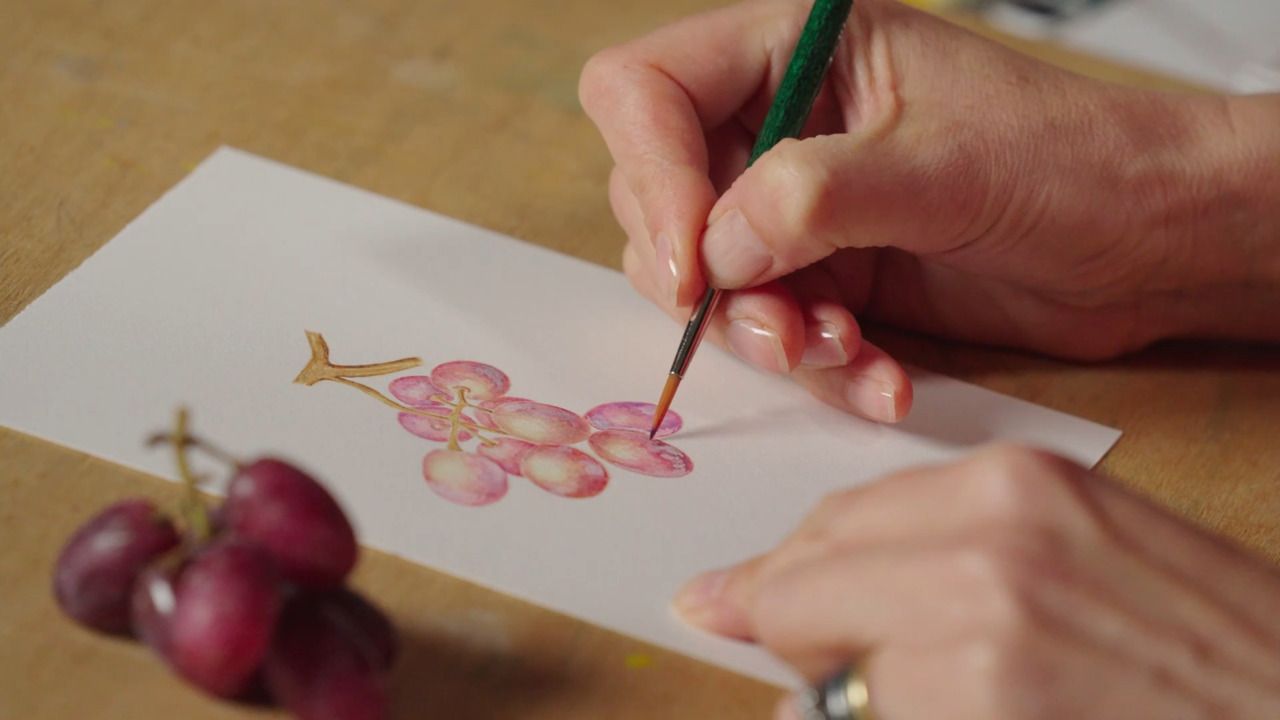
Once you have built up layers of different colours and are happy with how the form of your painted specimen is looking, it's time to add the details. One of the details to tackle when painting a shallot is the roots - this is also a good case study to explain how I mix colours.
Step 7
Continue adding in the other details within your specimen; the sheets of skin and fine lines. Think back to the principles you learnt in the previous lesson and apply them here, using paint instead of pencil.
Get the full workbook, video lessons, and more with a Create Academy subscription.
Subscribe to access the full workbookAlready a member? Sign in to watch
510 reviews
Read moreCreate Academy has been such a great resource. I'm in the middle of renovating a bungalow with a very large garden and the courses have offered a wealth of inform...
Harvey
Jun 10, 2026
Absolutely love Create Academy! The instructors are extremely informative, and it is beautifully filmed. Create Academy is great value for money and plan on renew...
SG
May 31, 2026
Butter's creativity is stunning! Her ability to incorporate brilliance in small gardens is magical!
Carla
May 30, 2026
The best adventure. I like all the courses, but my favorite are both Rita Konig interior design courses and Anna Jones. Excellent!
Karolina Kluczewska
May 20, 2026
Create Academy has been such a great resource. I'm in the middle of renovating a bungalow with a very large garden and the courses have offered a wealth of information to dive into and explore new ideas. I'm...
Harvey
Jun 10, 2026
Absolutely love Create Academy! The instructors are extremely informative, and it is beautifully filmed. Create Academy is great value for money and plan on renewing my subscription yearly because there are ...
SG
May 31, 2026
Butter's creativity is stunning! Her ability to incorporate brilliance in small gardens is magical!
Carla
May 30, 2026

Your Instructor
Leading British botanical artist
Katharine Amies is a leading British botanical artist. Katharine's work seeks to capture the intimate essence of plants in a manner that photographs, despite their detail, fail to convey. Katharine trained at the Chelsea Physic Garden in 2000. Her work is represented in the Shirley Sherwood Collection of Botanical Art at Kew Gardens which is the largest collection of contemporary botanical art in the world.
Access to all courses


