

Interior and exterior confidence
Create Academy has been such a great resource. I'm in the middle of renovating a bungalow with a very large garden and the courses have offered a wealth of inform...
Harvey
Jun 10, 2026
with KATHARINE AMIES — Leading British botanical artist
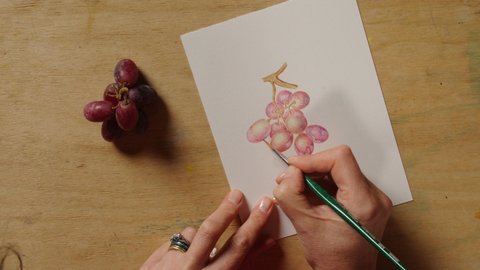
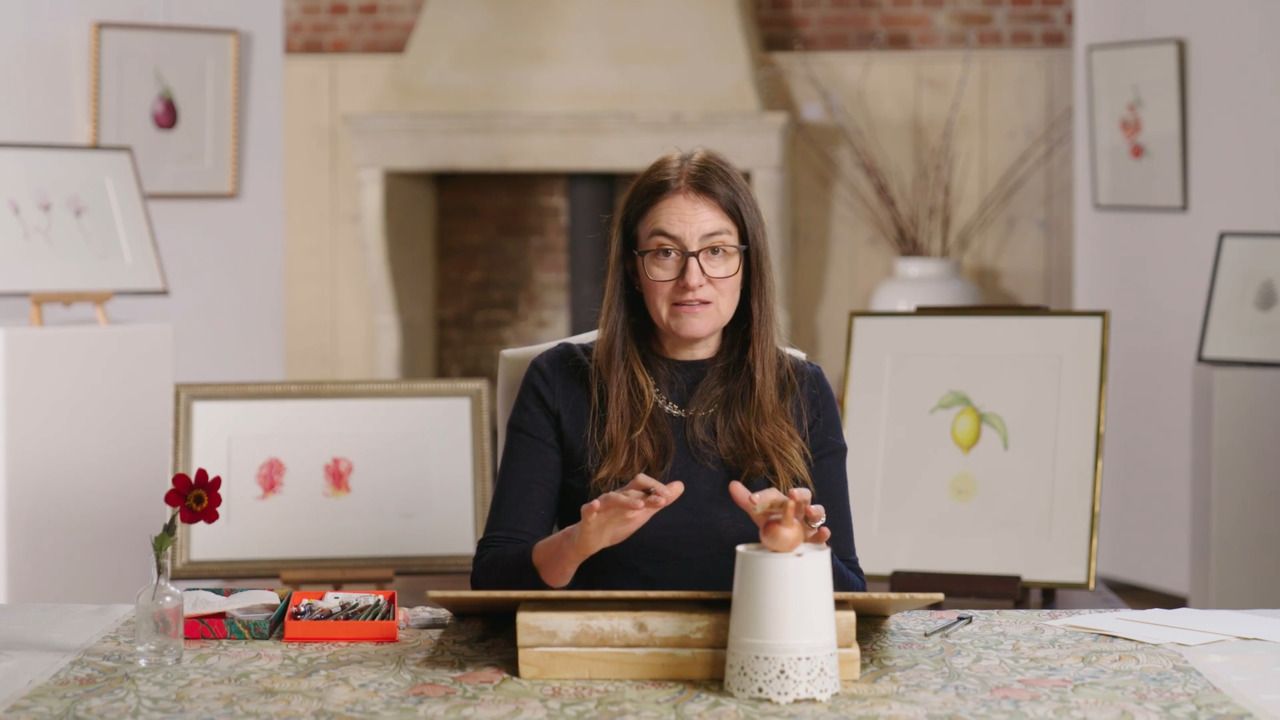
Often found on fruits such as grapes, plums and figs, bloom is a whitish coating that the plant produces to protect the fruit as it ripens. Katharine shares with you the technique she uses to communicate this effect.
Often found on fruits such as grapes, plums and figs, bloom is a whitish coating that the plant produces to protect the fruit as it ripens. In this lesson, I share with you the technique I use to communicate this effect.
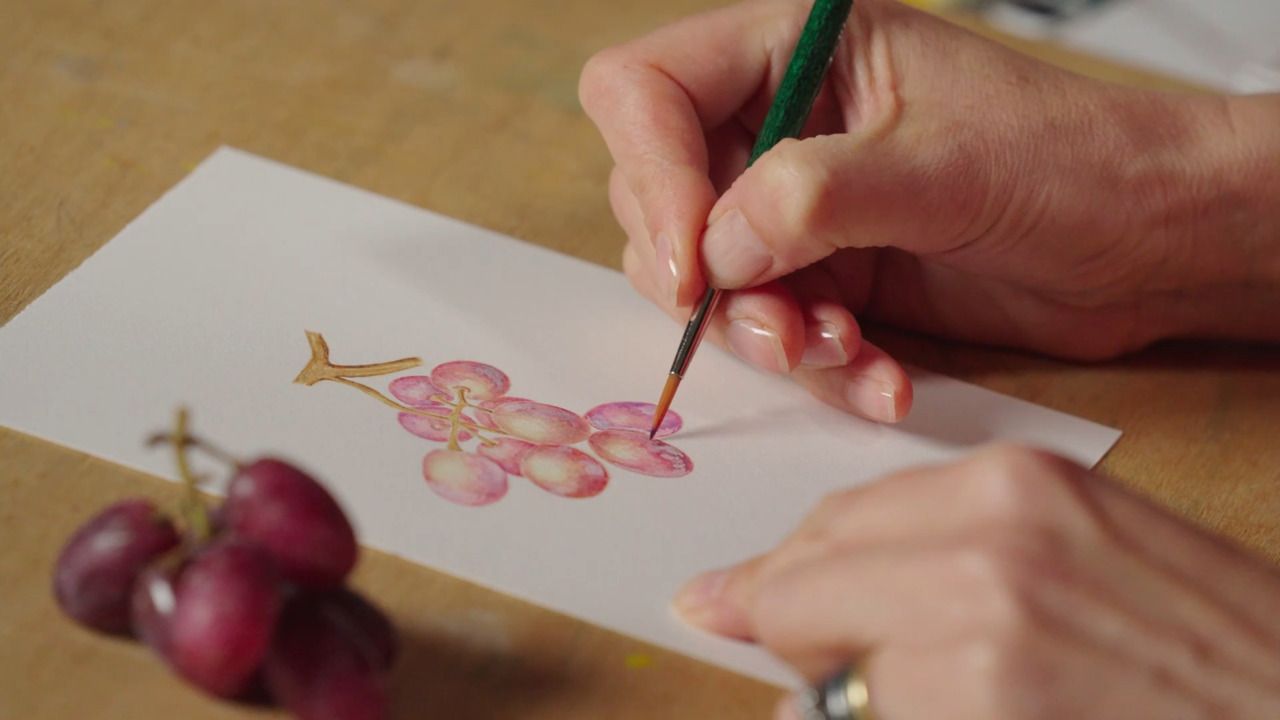
Draw the bunch of grapes. When you're happy, gently rub away your pencil marks so that you're left with a faint outline. Your specimen will most likely present you with a fair few grapes overlapping, which you may want to approach slightly differently.
Choose your colours, beginning with the palest shade you can see and working through the spectrum to the darkest. You may need to mix a green using yellow and blue, as well as a pink with orange to achieve a peachy colour.
Apply your palest colour all over each grape, being careful not to use too much water.
Turn your attention to the stalk, and apply a pale wash of green as the base.
Going back to your grapes, begin building up the colours you can see working from lightest to darkest. As in our previous lessons together, think about your highlight zones and areas of shadow.
Move between different grapes and the stalk as you wait for areas to dry, slowly building up the layers of colour to create the illusion of form.
Once you're completely happy with the colours in your painting and it's almost finished, you're ready to add the bloom. The white gouache paint shows up particularly well against dark areas, so go over your painting and consider if there's any areas you can increase the darkness a little.
Dispense the white gouache paint onto your ceramic palette, and dip your brush into it; we will be using it as a sort of glaze, so you only need a very tiny amount on your brush.
Add a light covering of the paint to the areas of your grape where you can see the bloom - it's often patchy and random, so try to represent this on your painting for a realistic effect.
When you are finished adding the white gouache, go back in very delicately with some darker paint to edge the zones of bloom and really make it stand out.
Get the full workbook, video lessons, and more with a Create Academy subscription.
Subscribe to access the full workbookAlready a member? Sign in to watch
Sign up or log in to keep watching
By continuing, you agree to our Terms of Use and Privacy Policy.
510 reviews
Read moreCreate Academy has been such a great resource. I'm in the middle of renovating a bungalow with a very large garden and the courses have offered a wealth of inform...
Harvey
Jun 10, 2026
Absolutely love Create Academy! The instructors are extremely informative, and it is beautifully filmed. Create Academy is great value for money and plan on renew...
SG
May 31, 2026
Butter's creativity is stunning! Her ability to incorporate brilliance in small gardens is magical!
Carla
May 30, 2026
The best adventure. I like all the courses, but my favorite are both Rita Konig interior design courses and Anna Jones. Excellent!
Karolina Kluczewska
May 20, 2026
Create Academy has been such a great resource. I'm in the middle of renovating a bungalow with a very large garden and the courses have offered a wealth of information to dive into and explore new ideas. I'm...
Harvey
Jun 10, 2026
Absolutely love Create Academy! The instructors are extremely informative, and it is beautifully filmed. Create Academy is great value for money and plan on renewing my subscription yearly because there are ...
SG
May 31, 2026
Butter's creativity is stunning! Her ability to incorporate brilliance in small gardens is magical!
Carla
May 30, 2026

Your Instructor
Leading British botanical artist
Katharine Amies is a leading British botanical artist. Katharine's work seeks to capture the intimate essence of plants in a manner that photographs, despite their detail, fail to convey. Katharine trained at the Chelsea Physic Garden in 2000. Her work is represented in the Shirley Sherwood Collection of Botanical Art at Kew Gardens which is the largest collection of contemporary botanical art in the world.
Access to all courses


