

Interior and exterior confidence
Create Academy has been such a great resource. I'm in the middle of renovating a bungalow with a very large garden and the courses have offered a wealth of inform...
Harvey
Jun 10, 2026
with KATHARINE AMIES — Leading British botanical artist
Lesson 12 of 16
Subscribe to watch
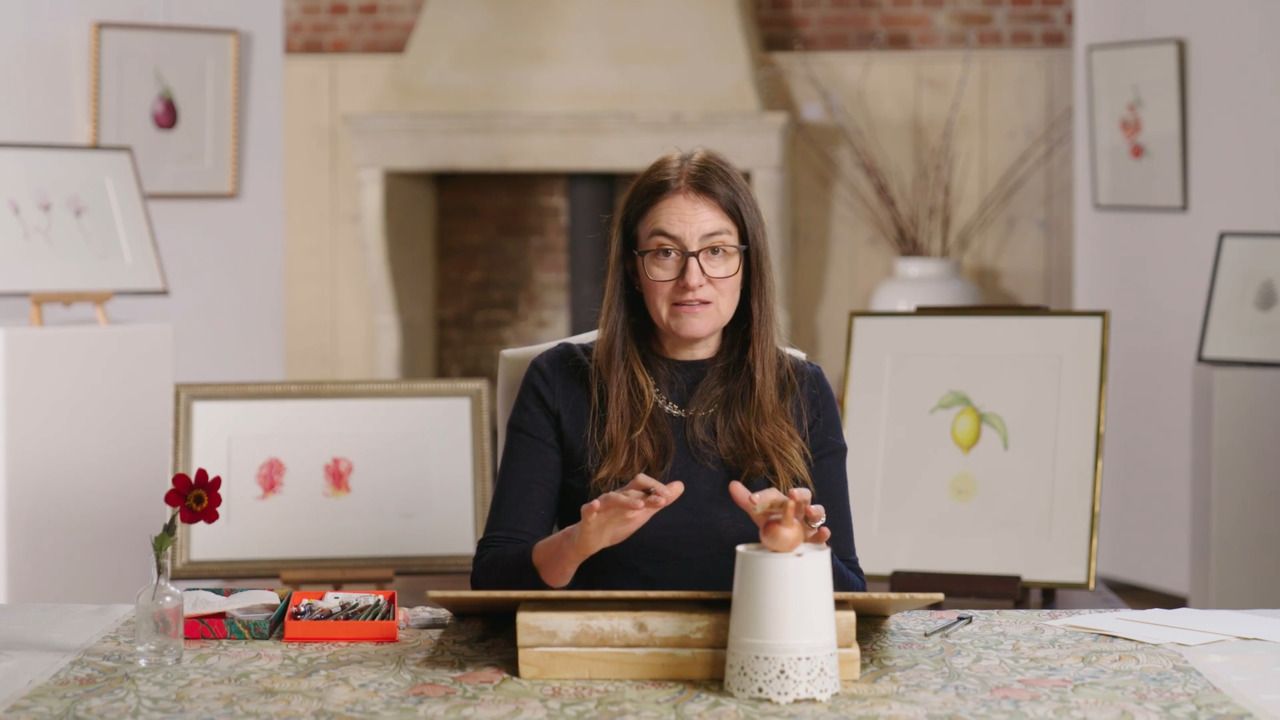
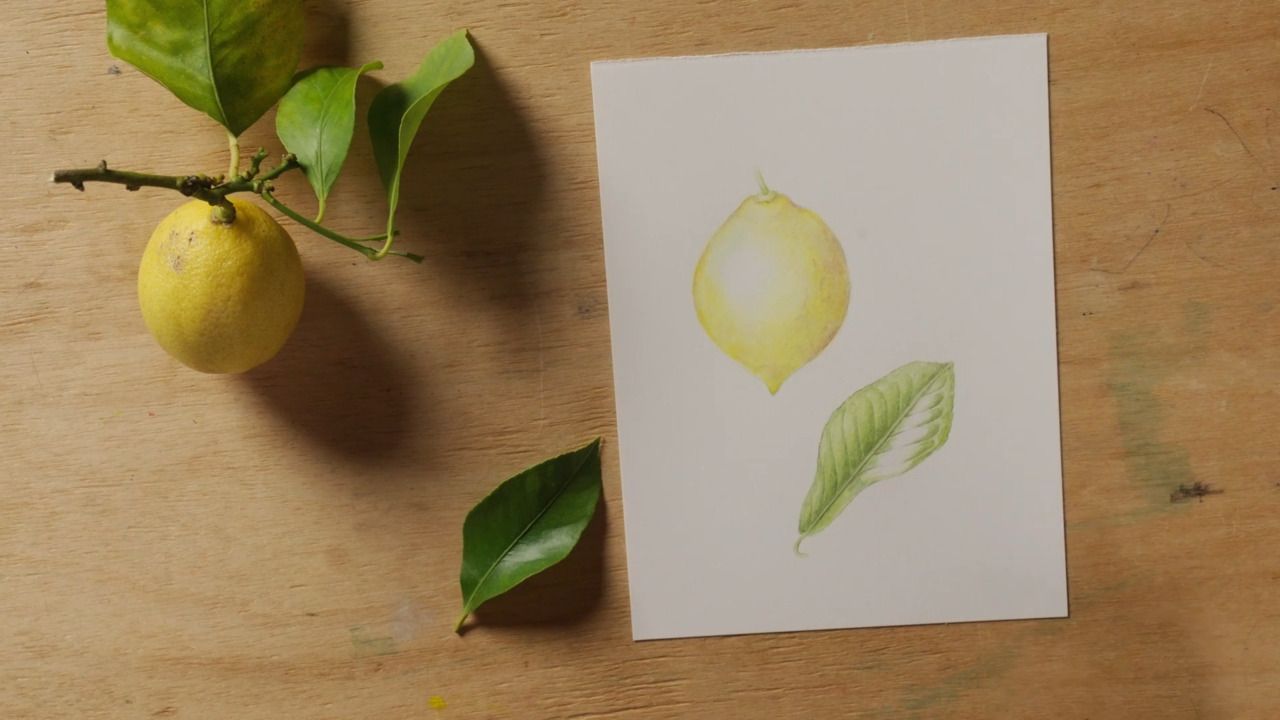
Thanks to its limited tonal range, yellow can be a tricky colour to use in botanical painting. Watch as Katharine discusses its pitfalls, and reveals how to counteract them. With a lemon as the subject in this lesson, it’s also the perfect opportunity to practise communicating the form of a leaf.
For this lesson, we'll be using a lemon as our subject. It's the perfect specimen to discuss how to approach the limited tonal range of yellow and the pitfalls that this can present, as well as offering an opportunity to practise communicating the form of a leaf.
The tonal range of yellow is quite limited; pale hues can be barely visible, while darker colours tend to veer into muddy browns. This can make it quite difficult to create depth and form when painting yellow specimens.
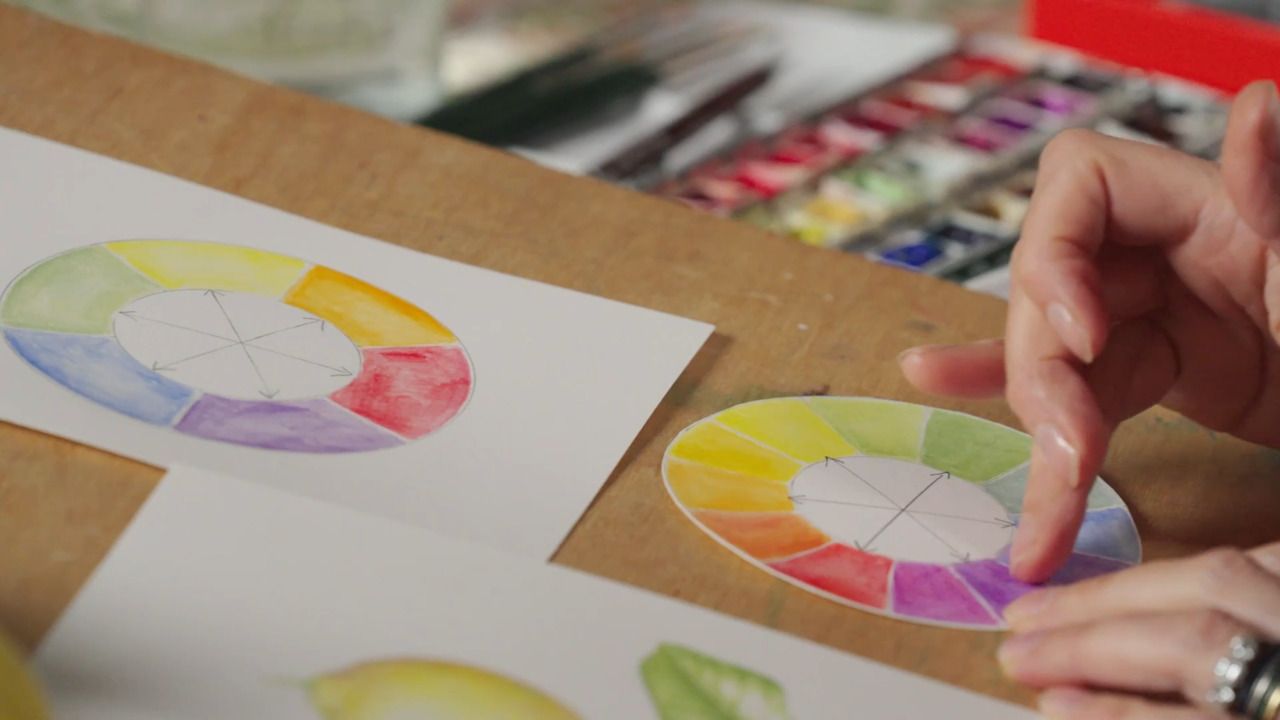
While most people reach for brown to darken their yellows, I would always recommend using purples instead to maintain a fresh and lively look.
Generally speaking, the front face of a leaf is slightly boat shaped with a dip in the centre and each side cupping round.
This shape is actually a great help to us in botanical painting, as there are obvious moments of shade and light that we can represent to communicate the illusion of form. The midrib will be the darkest point, and the right side of the leaf the lightest.
The veining can be thought of as tiny pillows, using light and shade to create undulating dips to represent each vein.
A leaf's underside is often a much paler green, and the middle section protrudes with the midrib sitting proud from the leaf's surface. This requires a different approach, so for now we'll be focusing on the front face.
I use the Da Vinci Nova 5570
I am using Lemon Yellow, Windsor Yellow, Aureolin Yellow, Indian Yellow, Cobalt Blue, Cobalt Violet, Cerulean Blue, Permanent Magenta and Winsor Violet, all from the Winsor & Newton Professional watercolour range in the half-pan size.
Step 1
Position the specimen in a pleasing way and then, using a pen and paper, draw a simple outline of your lemon and its leaf. When you're happy, use a rubber to soften your pencil marks.
Step 2
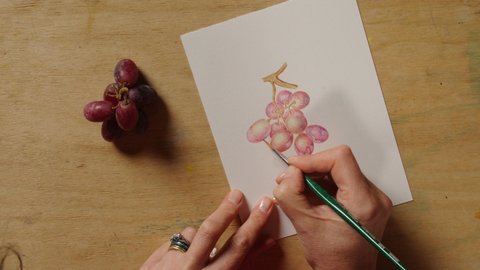
Begin painting with the shade Lemon Yellow. Apply it mostly around the outside of your shape, while gradually pushing the paint inwards - this initiates the creation of the spherical illusion.
Step 3
Mix a very pale green, and apply it in a wash to your stalk. You can also add it to any green areas you can see of the lemon itself.
Step 4
Mix a slightly darker green, and paint it over the entire left hand side of the leaf. Start at the bottom, and brush the paint upwards. Then apply a small amount to the edge of the right side and the midrib.
Step 5
Keep moving between the lemon and the leaf, and continue layering the Lemon Yellow and your pale greens to build up your base of colour.
Step 6
Next, look for opportunities for places you can go darker. This could be around the base of the stalk, the edges of your lemon or the midrib of your leaf. Use Aureolin Yellow and Cobalt Violet on the lemon, and mix a darker green for the leaf. Make sure you are preserving the white space in the middle of the lemon and right side of your leaf.
Step 7
Continue to systematically build up layers of colour, slowly and smoothly. Look out for characteristics of the lemon to capture and make it feel more realistic. Enrich the shadowy areas with very subtle touches of mauves and cool blues, such as Permanent Magenta and Cerulean Blue.
Get the full workbook, video lessons, and more with a Create Academy subscription.
Subscribe to access the full workbookAlready a member? Sign in to watch
491 reviews
Read moreCreate Academy has been such a great resource. I'm in the middle of renovating a bungalow with a very large garden and the courses have offered a wealth of inform...
Harvey
Jun 10, 2026
Absolutely love Create Academy! The instructors are extremely informative, and it is beautifully filmed. Create Academy is great value for money and plan on renew...
SG
May 31, 2026
Butter's creativity is stunning! Her ability to incorporate brilliance in small gardens is magical!
Carla
May 30, 2026
The best adventure. I like all the courses, but my favorite are both Rita Konig interior design courses and Anna Jones. Excellent!
Karolina Kluczewska
May 20, 2026
Create Academy has been such a great resource. I'm in the middle of renovating a bungalow with a very large garden and the courses have offered a wealth of information to dive into and explore new ideas. I'm...
Harvey
Jun 10, 2026
Absolutely love Create Academy! The instructors are extremely informative, and it is beautifully filmed. Create Academy is great value for money and plan on renewing my subscription yearly because there are ...
SG
May 31, 2026
Butter's creativity is stunning! Her ability to incorporate brilliance in small gardens is magical!
Carla
May 30, 2026

Your Instructor
Leading British botanical artist
Katharine Amies is a leading British botanical artist. Katharine's work seeks to capture the intimate essence of plants in a manner that photographs, despite their detail, fail to convey. Katharine trained at the Chelsea Physic Garden in 2000. Her work is represented in the Shirley Sherwood Collection of Botanical Art at Kew Gardens which is the largest collection of contemporary botanical art in the world.
Access to all courses


