

Interior and exterior confidence
Create Academy has been such a great resource. I'm in the middle of renovating a bungalow with a very large garden and the courses have offered a wealth of inform...
Harvey
Jun 10, 2026
Handsewn Lampshade Masterclass
with CHLOE JONASON — Designer and soft furnishing expert specialising in vintage textiles and hand-crafted homewares.
Lesson 8 of 21
Subscribe to watch
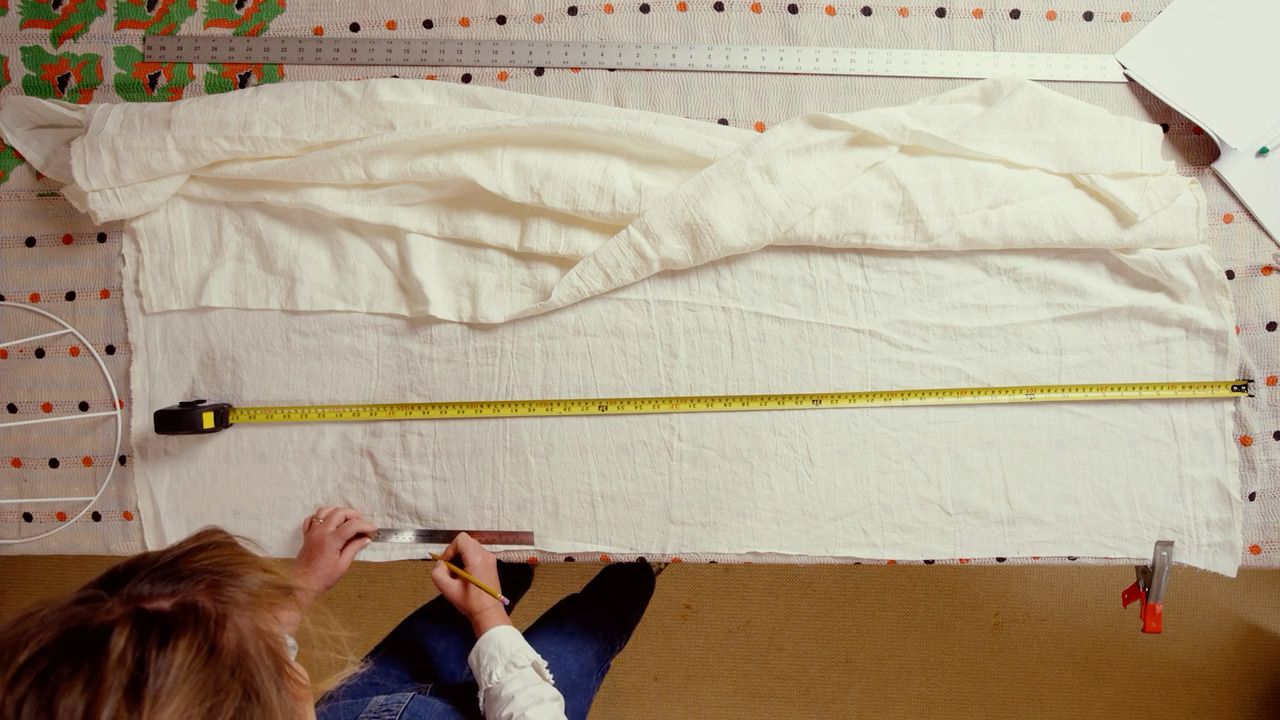
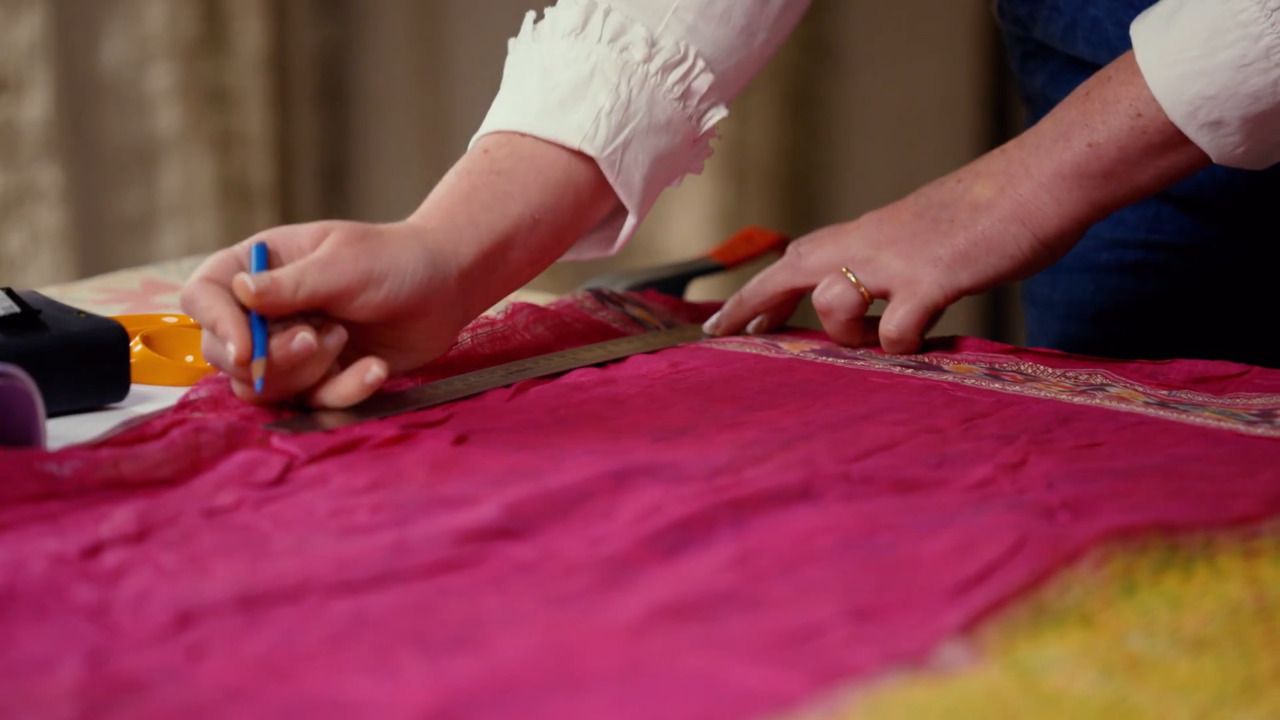
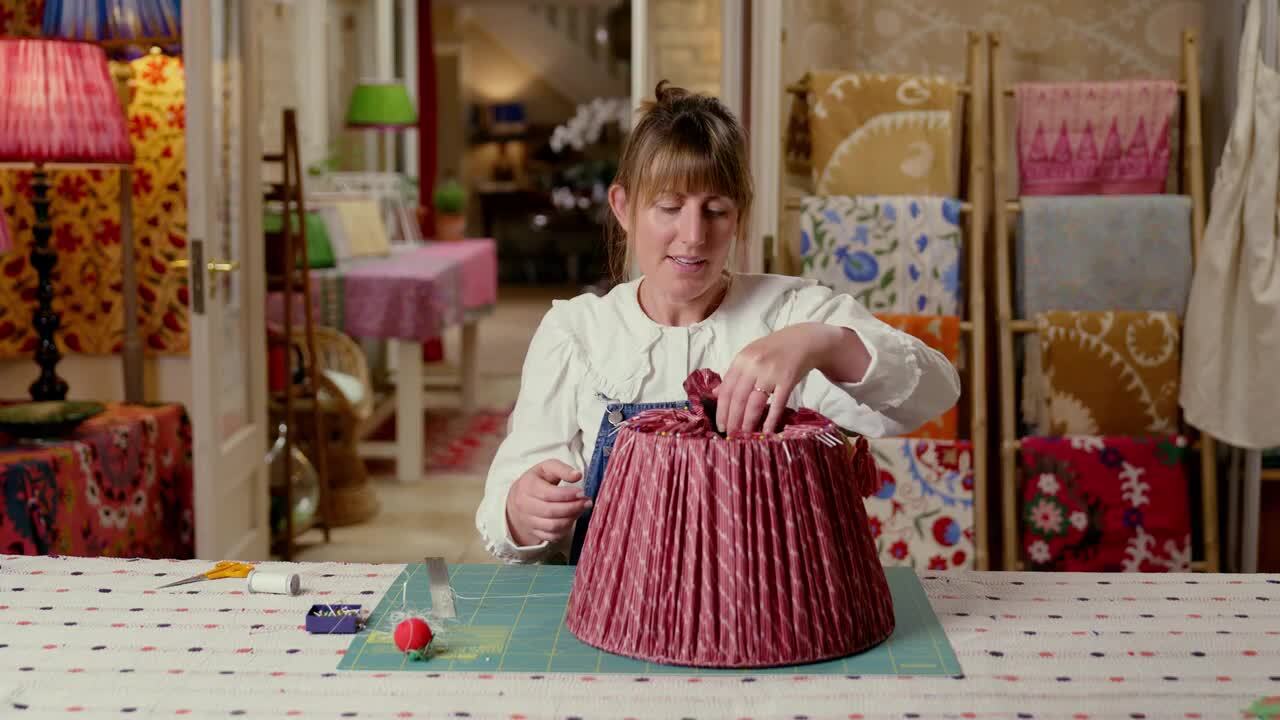
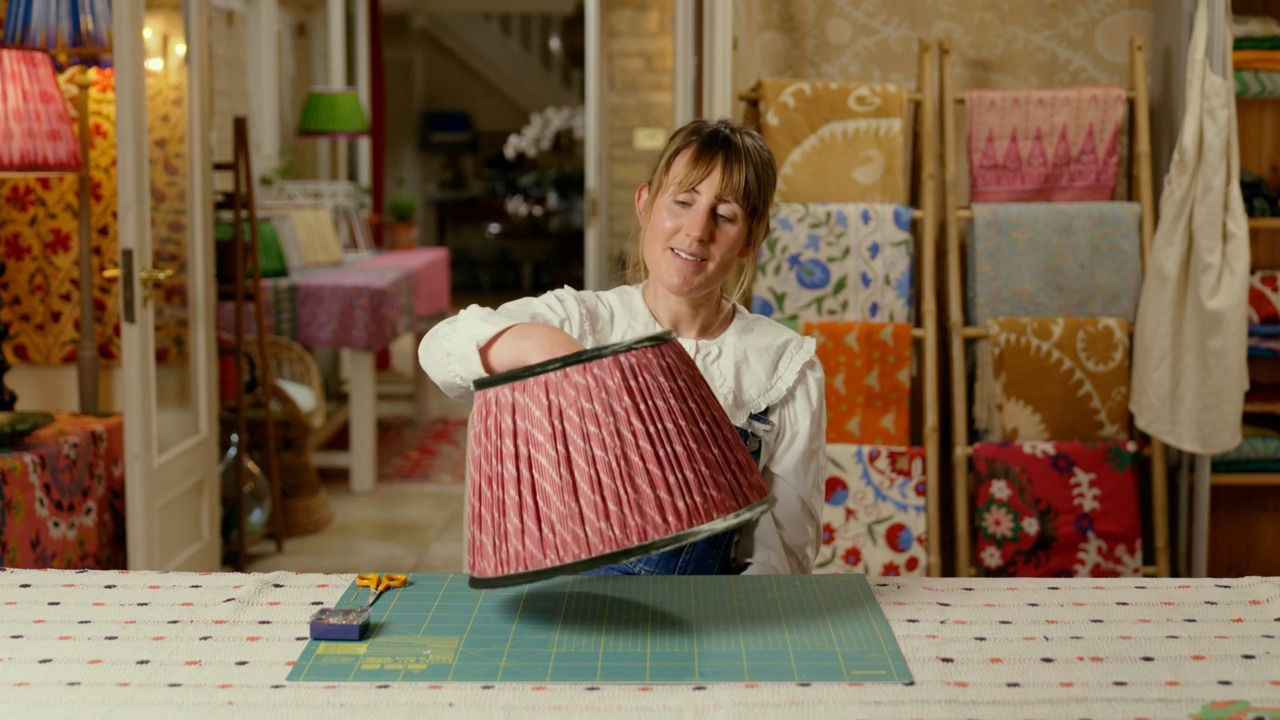
A vital key to the success of lampshade making is accurately working out how much fabric to use. Chloe shares her winning formulas with you to achieve perfect results each time.
A vital key to the success of lampshade making is accurately working out how much fabric to use. I'm sharing with you some simple formulas that will make this easy, and can be scaled up or down for a variety of projects.
Step 1
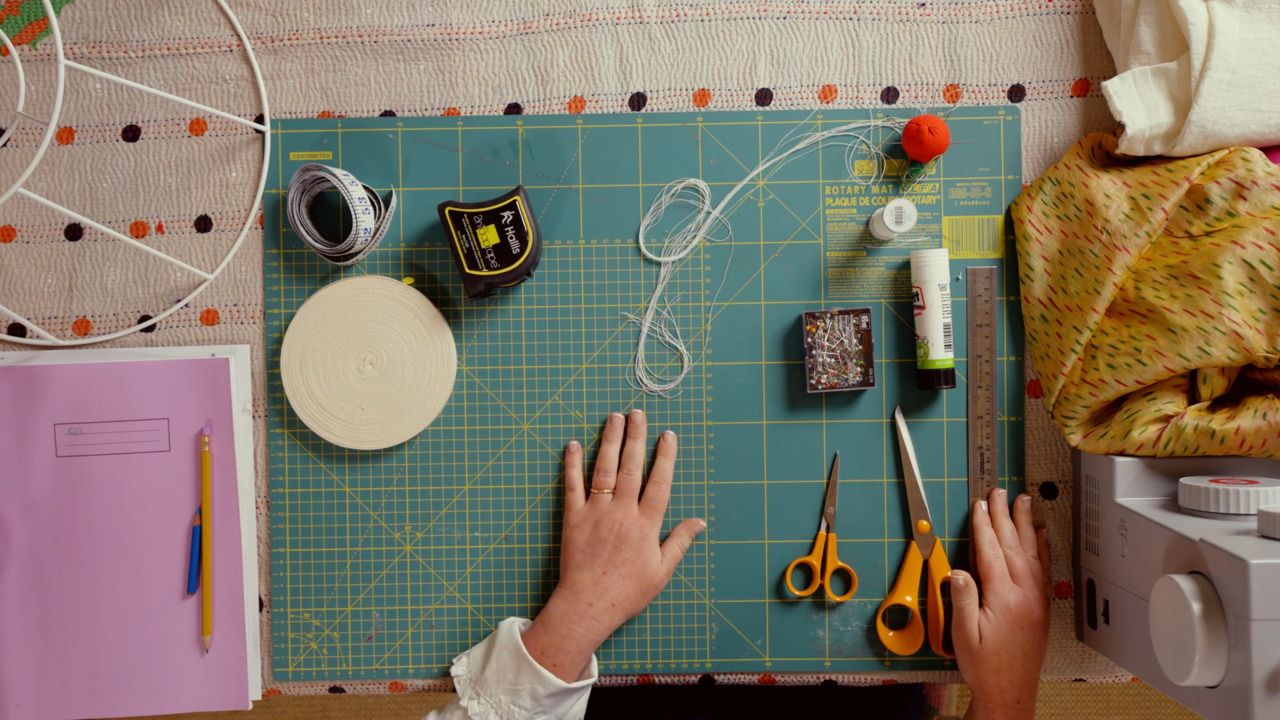
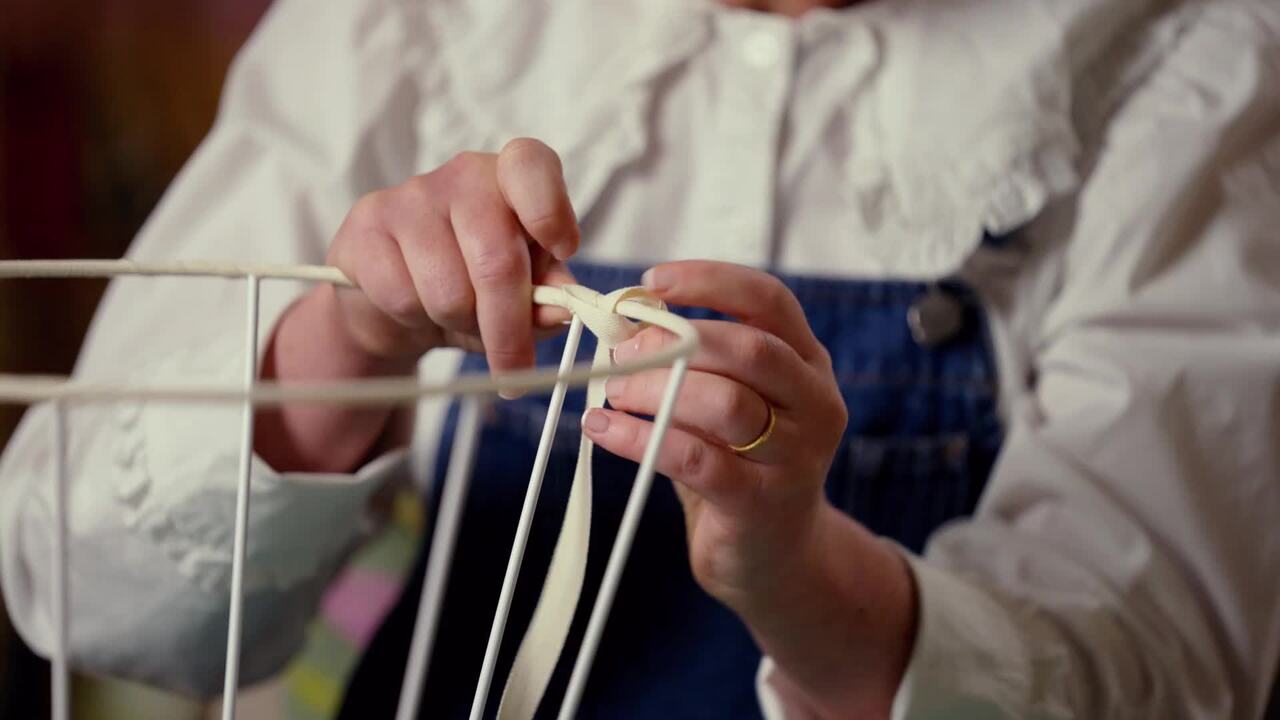
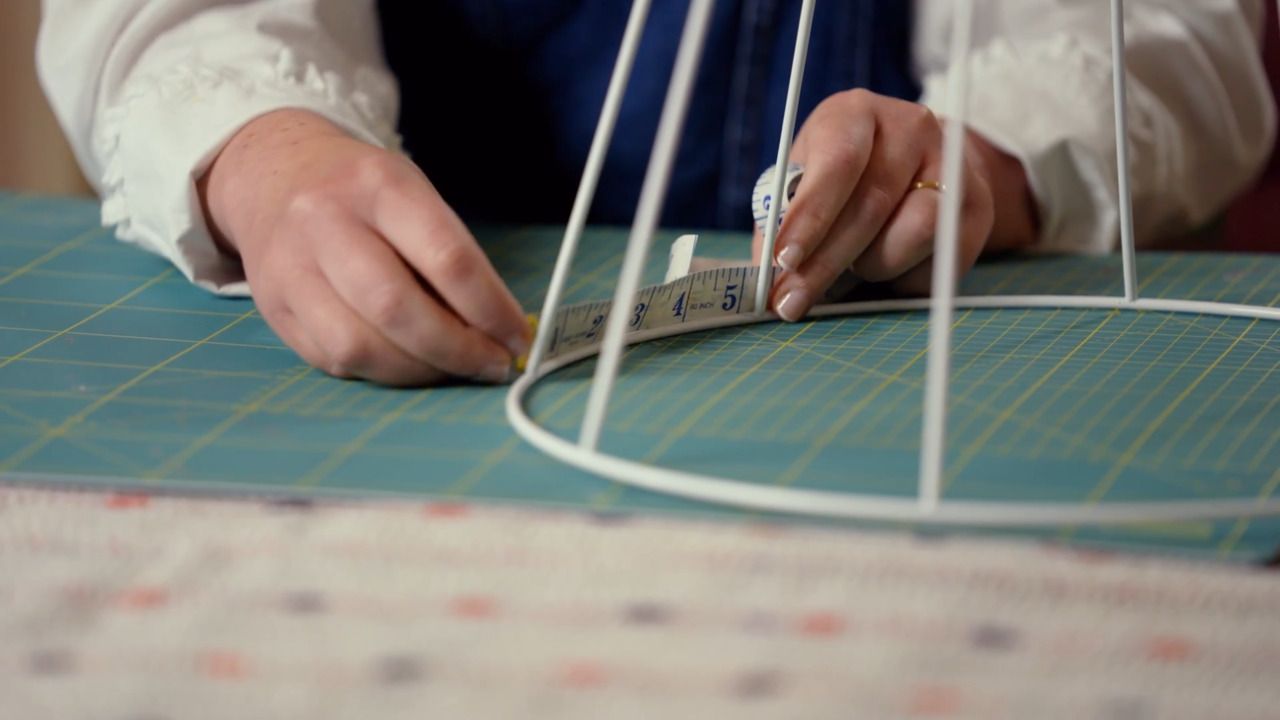
Use a dressmaker's tape measure to measure the distance between the spokes. For my 14 inch frame, this is 14 cm. Note this measurement down in your notebook.
Step 2
Count how many spaces between the spokes and note down. For my frame, there are 8.
Step 3
Now multiply the distance measurement by the number of spaces between the spokes.
Step 4
Add 5 cm seam allowance to this calculation.
Step 5
You now have the width of fabric required for your lining.
Distance between spokes x amount of spaces between spokes + 5 cm seam allowance = width of fabric required for the lining
Example
(14cm x 8) + 5cm = 117cm
Step 1
Refer to the measurements you took for your lining fabric.
Step 2
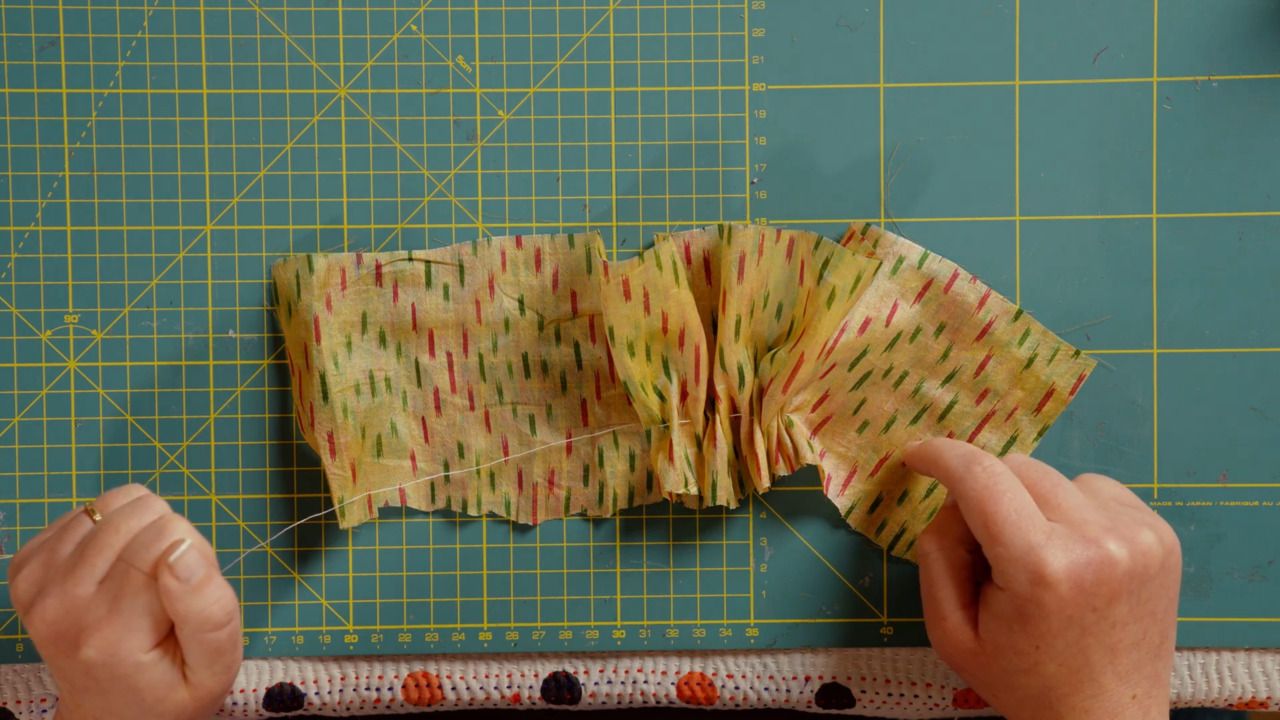
To achieve a good, luxurious gather, you need to multiply the spoke measurement by 2. This gives me a measurement of 28cm.
Step 3
Next, multiply this measurement by the number of spaces between the spokes.
Step 4
Add 5 cm seam allowance to your calculation.
Step 5
This is the width needed for your outer fabric.
Distance between spokes x 2 to achieve fullness x amount of spaces between spokes + 5 cm seam allowance = width of fabric required for the lining
Example
(14cm x 2 x 8) + 5cm = 229cm
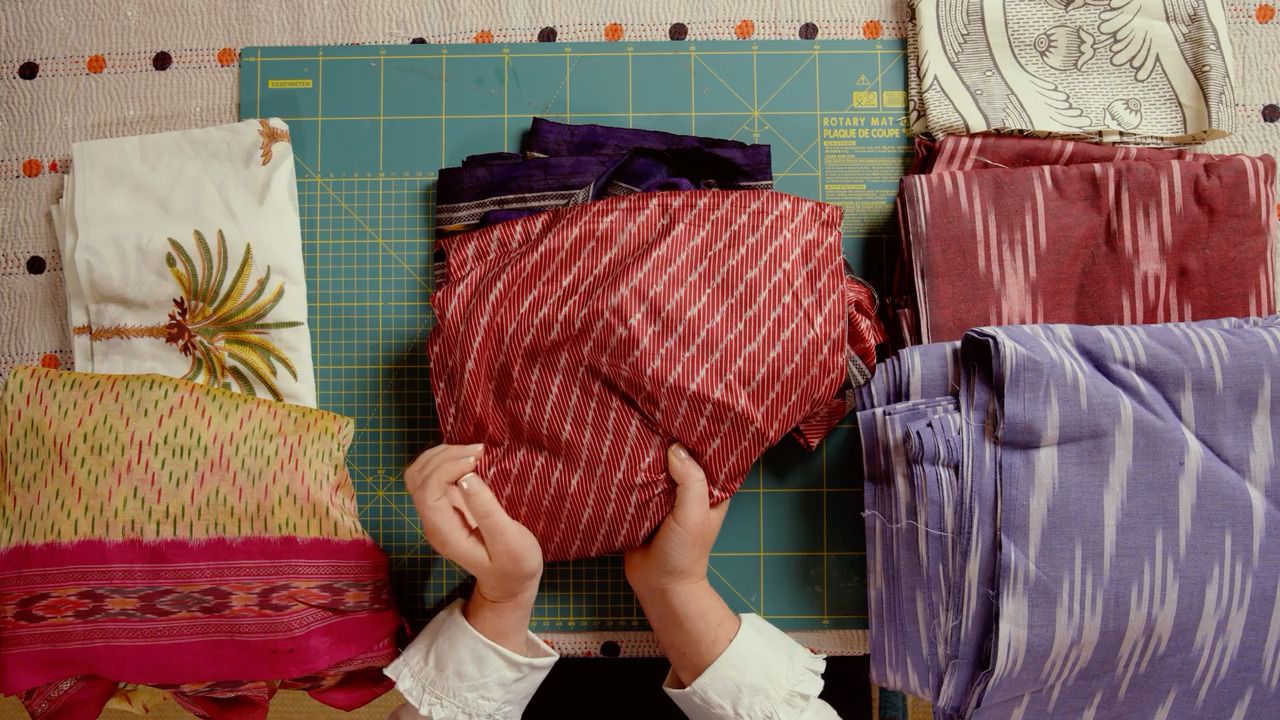
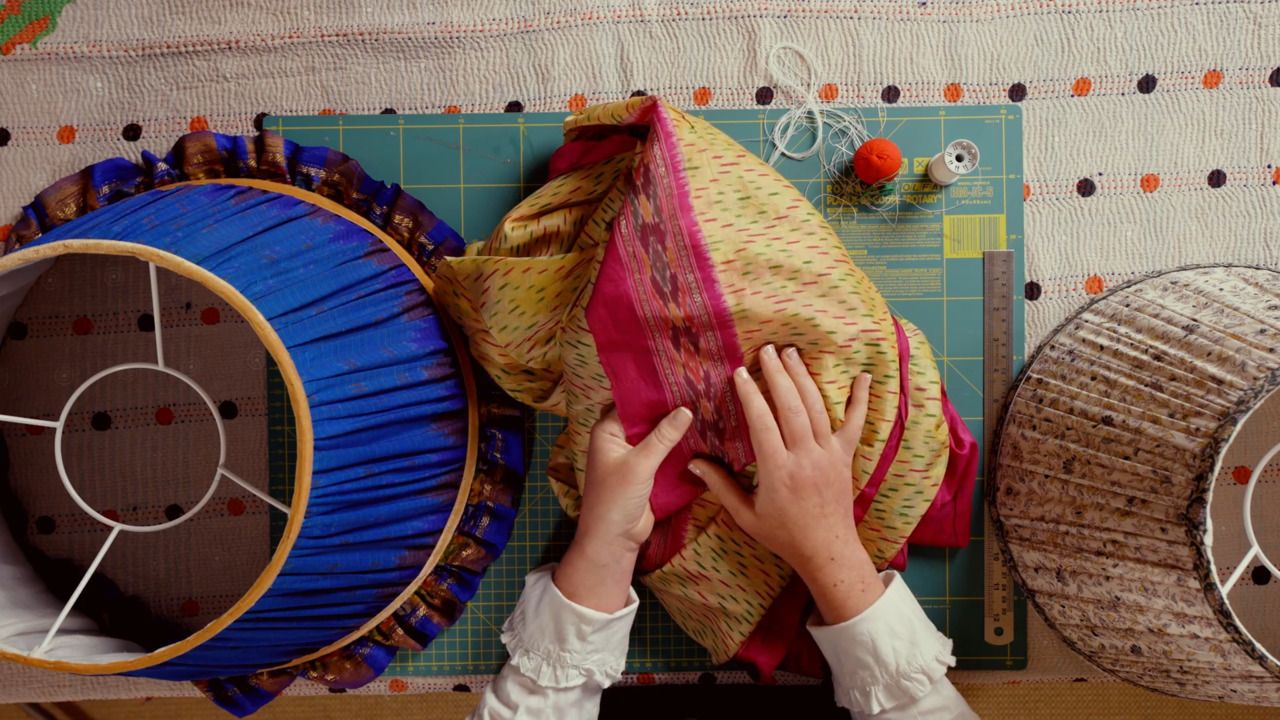
When working with patterned fabric that isn't wide enough to meet the required 229cm width, the fabric needs to be joined in panels. The key is careful preparation and accurate pattern matching before sewing.
Step 1
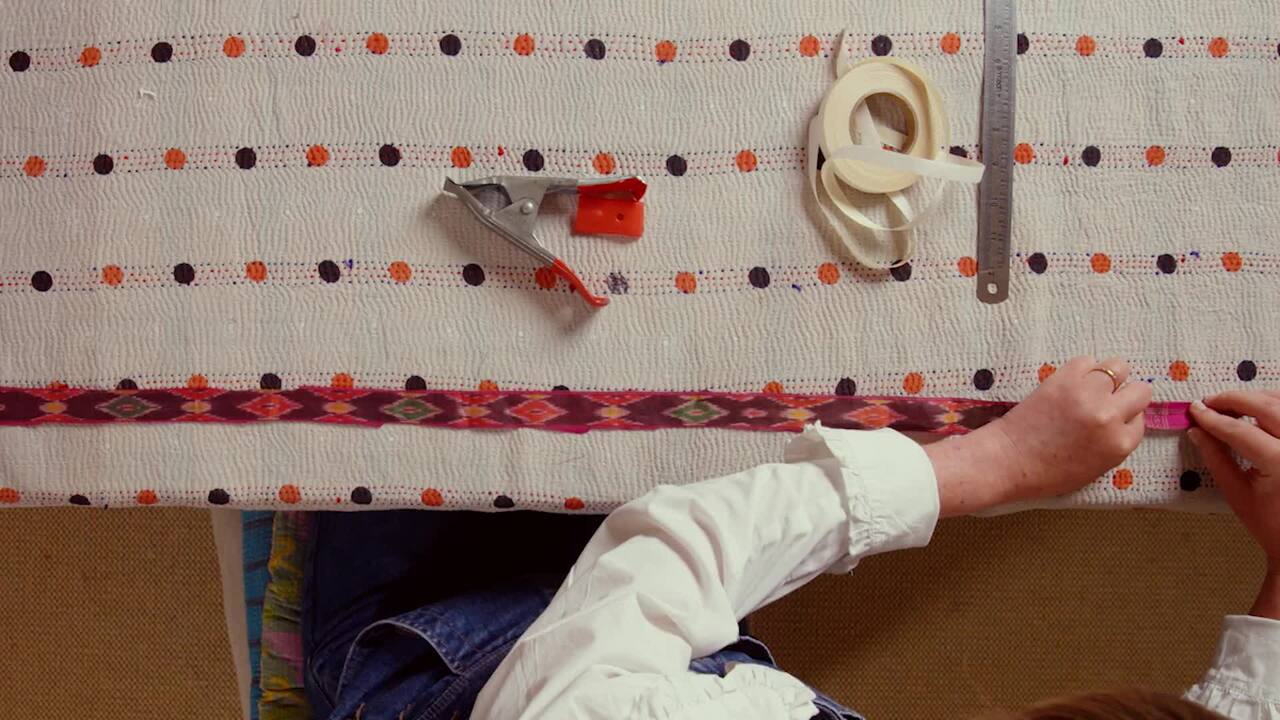
Before joining any pieces, I always recommend laying the fabric out flat and identifying the main pattern repeat (for example, a flower, stripe, or motif that repeats across the fabric). The fabric pieces should then be positioned side by side so that these motifs line up as closely as possible. Pinning or clipping along the join line helps keep everything in place before stitching.
Step 2
Once the pattern is aligned, place the two fabric pieces right sides together and pin along the edge.
Step 3
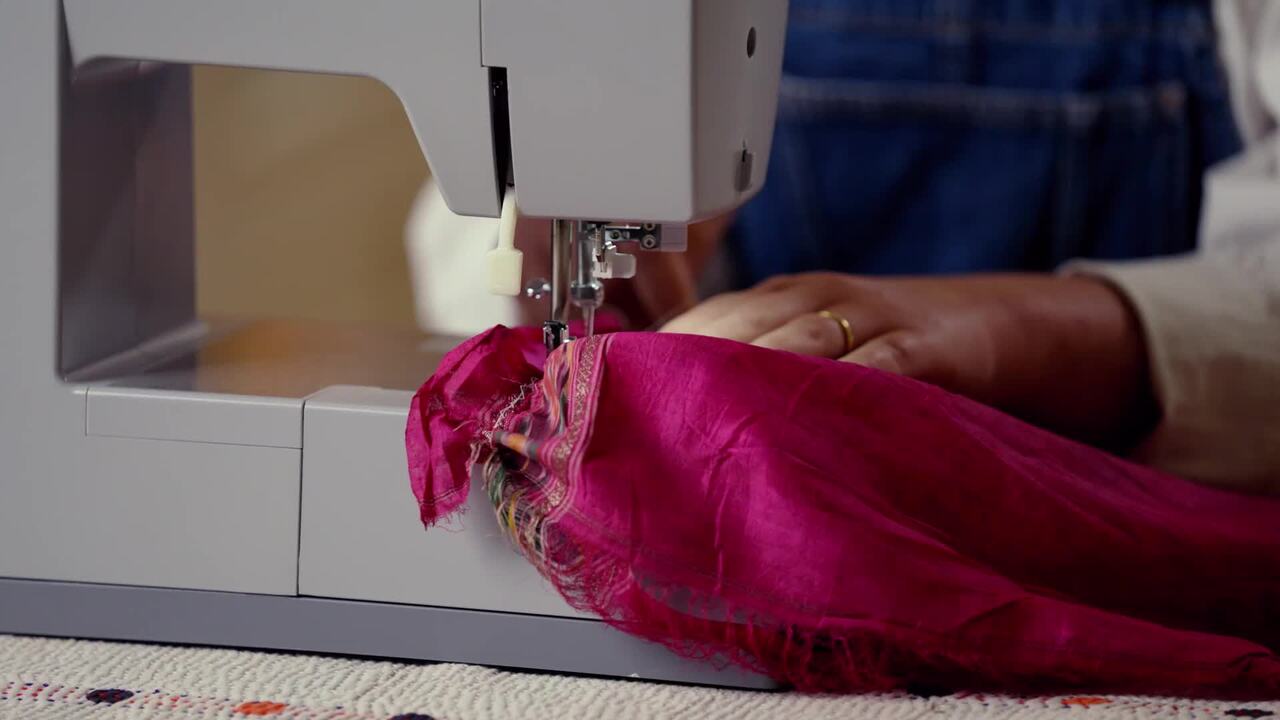
Sew using a straight stitch with a seam allowance of around 1–1.5cm.
Step 4
After sewing, press the seam open with an iron. Pressing is very important, as it helps the seam sit flat and makes the join less visible. When pattern matching is done carefully, the seam blends into the design and becomes hard to notice.
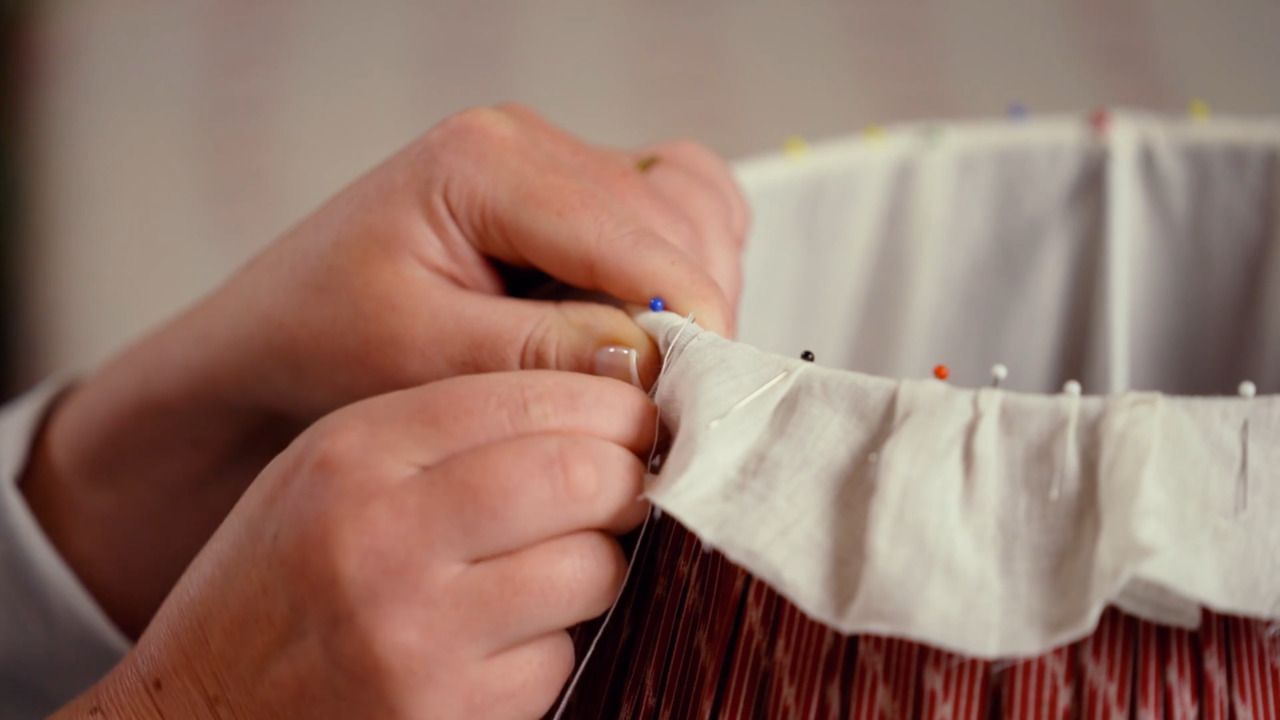
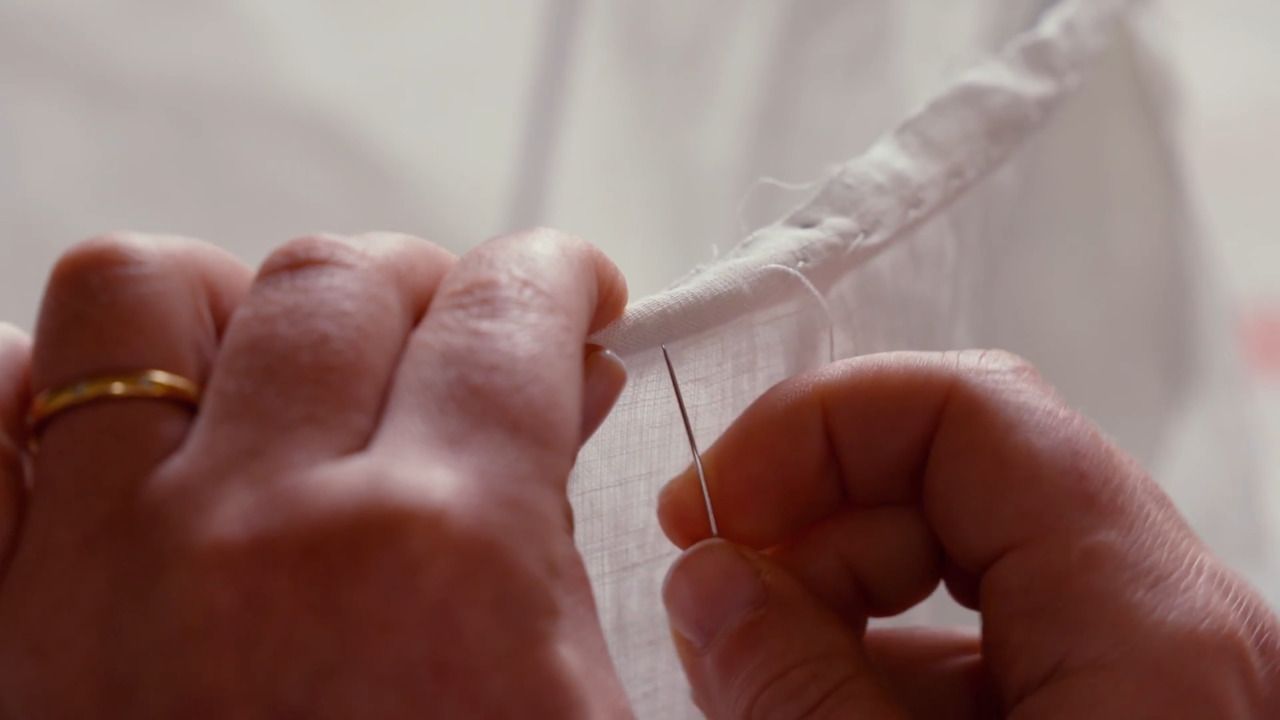
If a sewing machine isn't available, the fabric can be joined neatly by hand using a small, neat backstitch.
Step 2
Pin the fabric pieces together with right sides facing.
Step 3
Thread a hand needle with strong thread that matches the fabric colour. Sew small, even backstitches along the seam line, keeping stitches close together for strength.
Step 4
Once finished, gently press the seam open. This creates a strong and tidy join that works well for most projects.
To achieve the best pattern match, it helps to cut the second panel by laying it directly over the first panel and matching the pattern before cutting. This ensures the motifs are aligned before sewing even begins. Taking time at this stage makes a big difference to the final result.
If several panels are needed to reach the required width, repeat the same process for each join. It's best to work from the centre outwards, keeping the main pattern balanced and symmetrical where possible. Once all panels are joined, the full width fabric can be treated as one piece and marked and cut according to the spokes template.
Get the full workbook, video lessons, and more with a Create Academy subscription.
Subscribe to access the full workbookAlready a member? Sign in to watch
491 reviews
Read moreCreate Academy has been such a great resource. I'm in the middle of renovating a bungalow with a very large garden and the courses have offered a wealth of inform...
Harvey
Jun 10, 2026
Absolutely love Create Academy! The instructors are extremely informative, and it is beautifully filmed. Create Academy is great value for money and plan on renew...
SG
May 31, 2026
Butter's creativity is stunning! Her ability to incorporate brilliance in small gardens is magical!
Carla
May 30, 2026
The best adventure. I like all the courses, but my favorite are both Rita Konig interior design courses and Anna Jones. Excellent!
Karolina Kluczewska
May 20, 2026
Create Academy has been such a great resource. I'm in the middle of renovating a bungalow with a very large garden and the courses have offered a wealth of information to dive into and explore new ideas. I'm...
Harvey
Jun 10, 2026
Absolutely love Create Academy! The instructors are extremely informative, and it is beautifully filmed. Create Academy is great value for money and plan on renewing my subscription yearly because there are ...
SG
May 31, 2026
Butter's creativity is stunning! Her ability to incorporate brilliance in small gardens is magical!
Carla
May 30, 2026

Your Instructor
Designer and soft furnishing expert specialising in vintage textiles and hand-crafted homewares.
Chloe is a designer and textile artist, specialising in upholstery, soft-furnishings, vintage textiles and unique objects for the home. Chloe's fascination with the art of hand sewing was ignited at University when studying History of Art, after which she embarked on a career rooted in furniture and soft furnishing making. In 2015, she founded her eponymous design business - based out of her studio in the South Lincolnshire countryside - where she crafts bespoke homewares and handmade lampshades using colourful vintage fabrics and carefully curated textiles sourced from across the globe.
Access to all courses


