

Interior and exterior confidence
Create Academy has been such a great resource. I'm in the middle of renovating a bungalow with a very large garden and the courses have offered a wealth of inform...
Harvey
Jun 10, 2026
Handsewn Lampshade Masterclass
with CHLOE JONASON — Designer and soft furnishing expert specialising in vintage textiles and hand-crafted homewares.
Lesson 18 of 21
Subscribe to watch
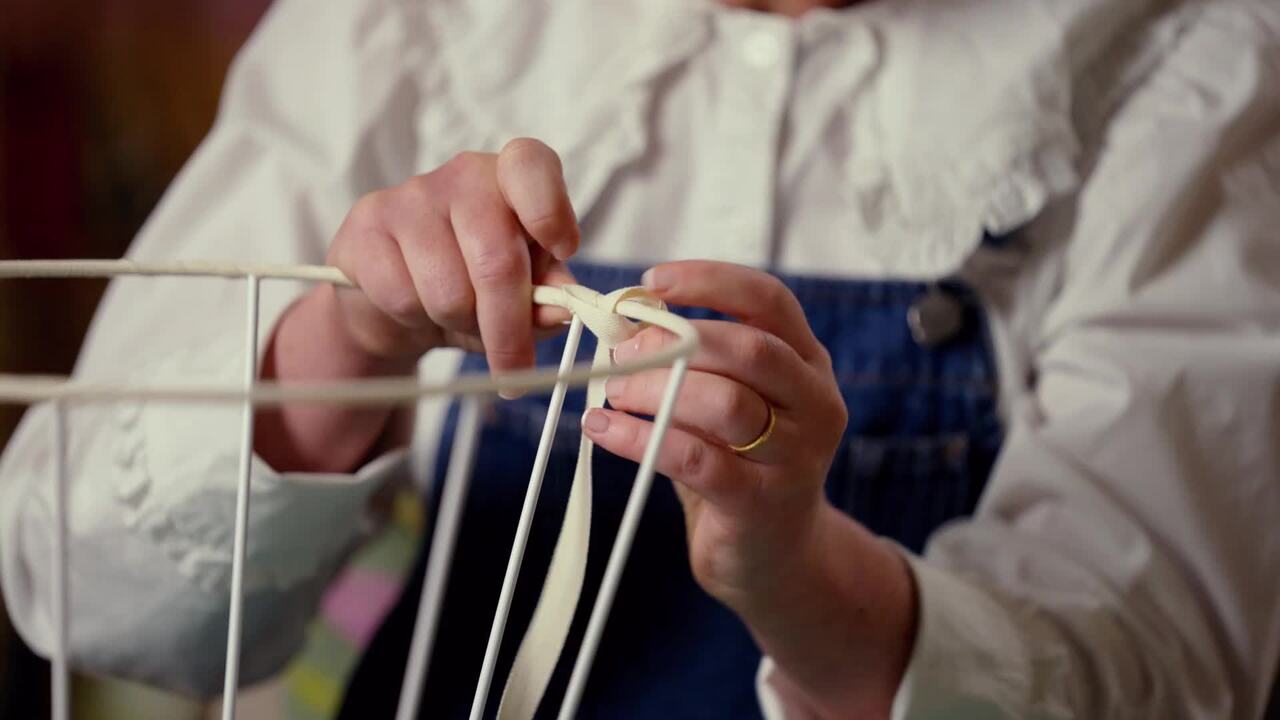
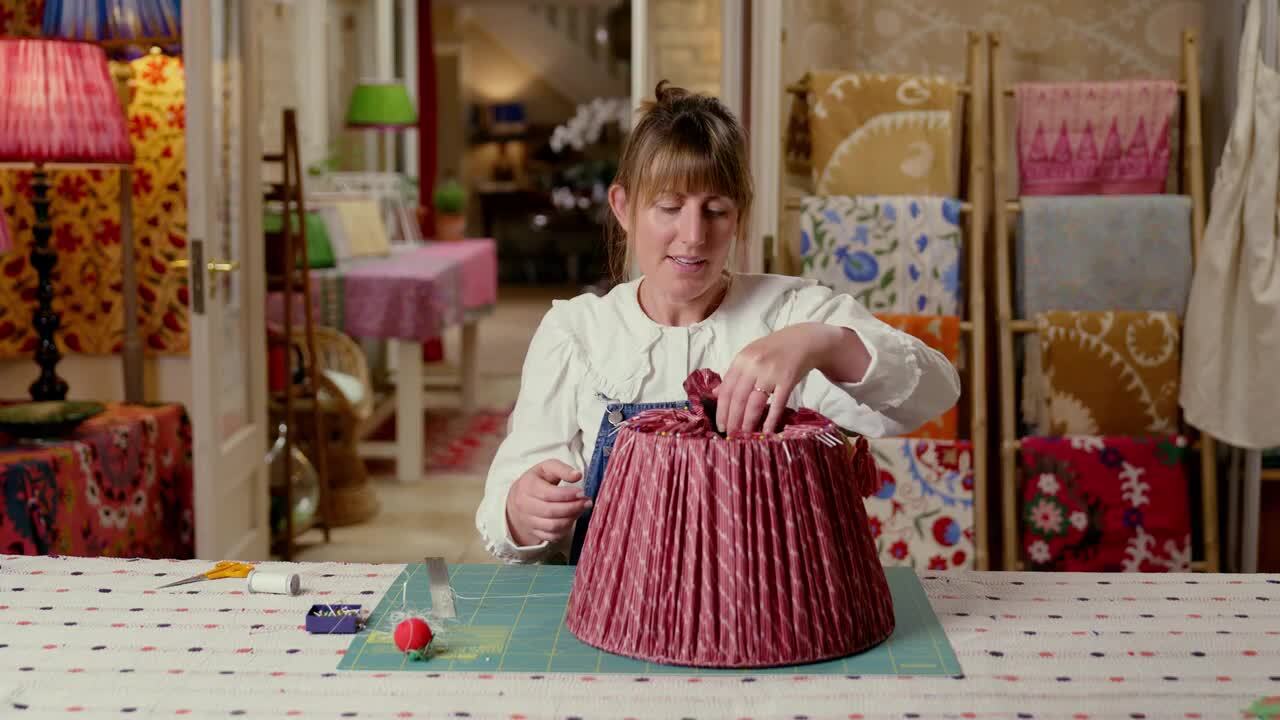
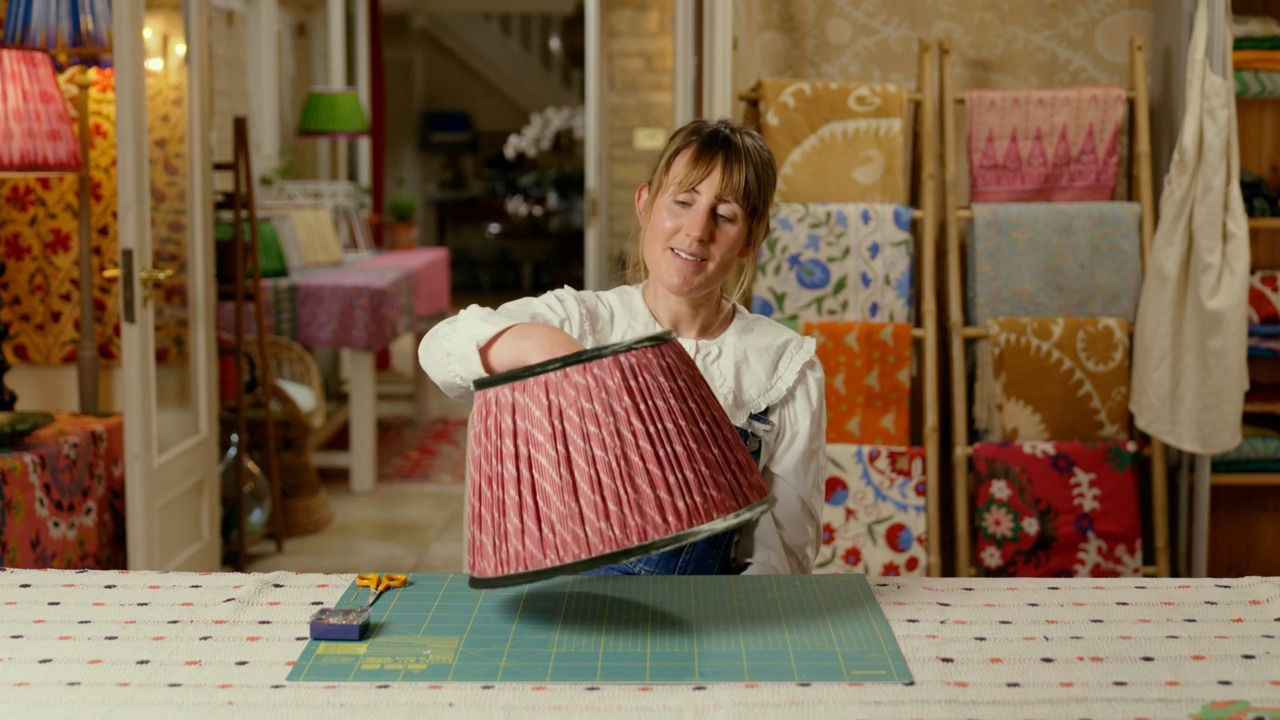
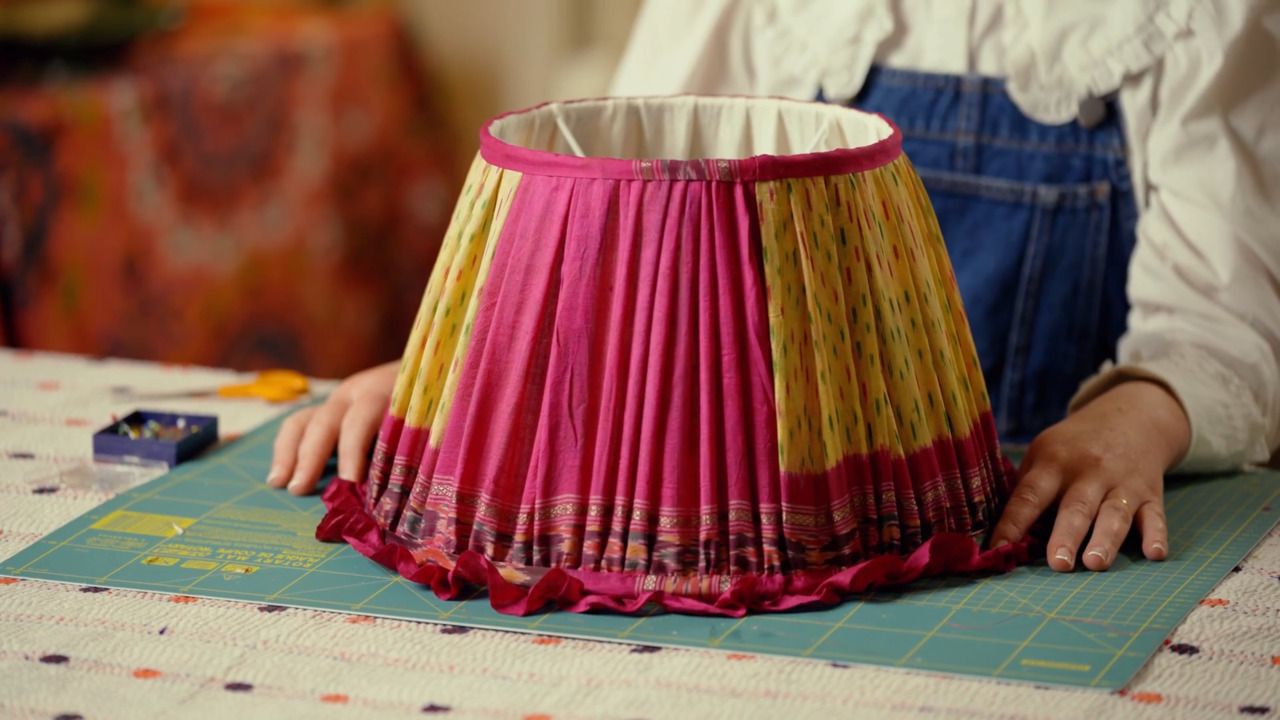
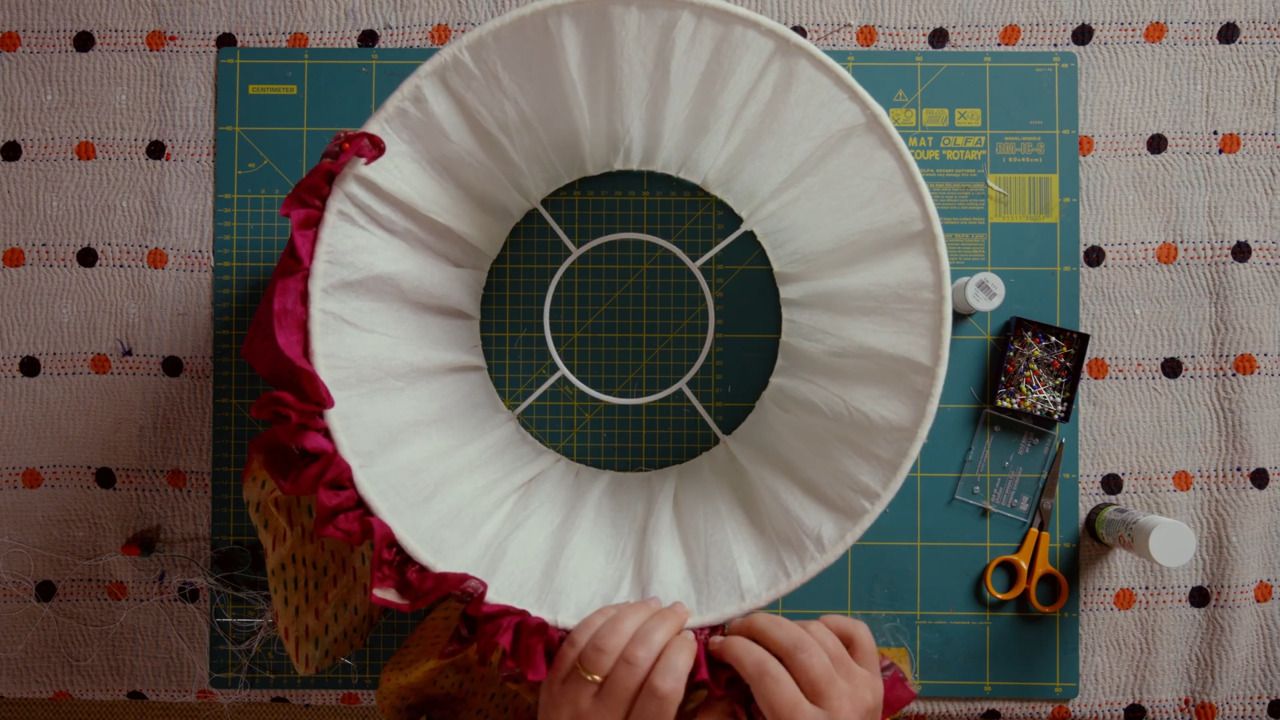
Learn how to accommodate for the frilly edge in this part of the construction, with helpful tips and tricks from Chloe.
It's now time to add the outer fabric. The process is similar to Project 1, but this time we are accommodating the frilly bottom.
Step 1
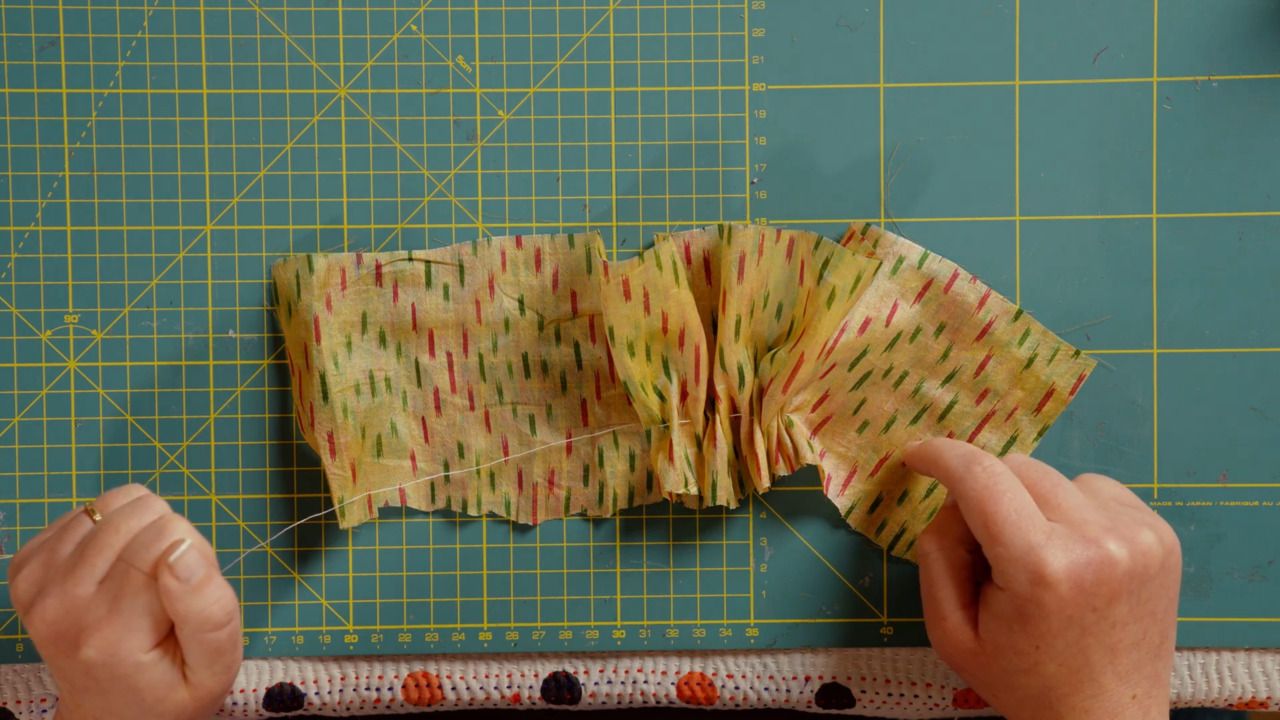
Position the lampshade frame so that the bottom ring is facing up. Take your gathered fabric panel and familiarise yourself with where the markers are for each spoke.
Step 2
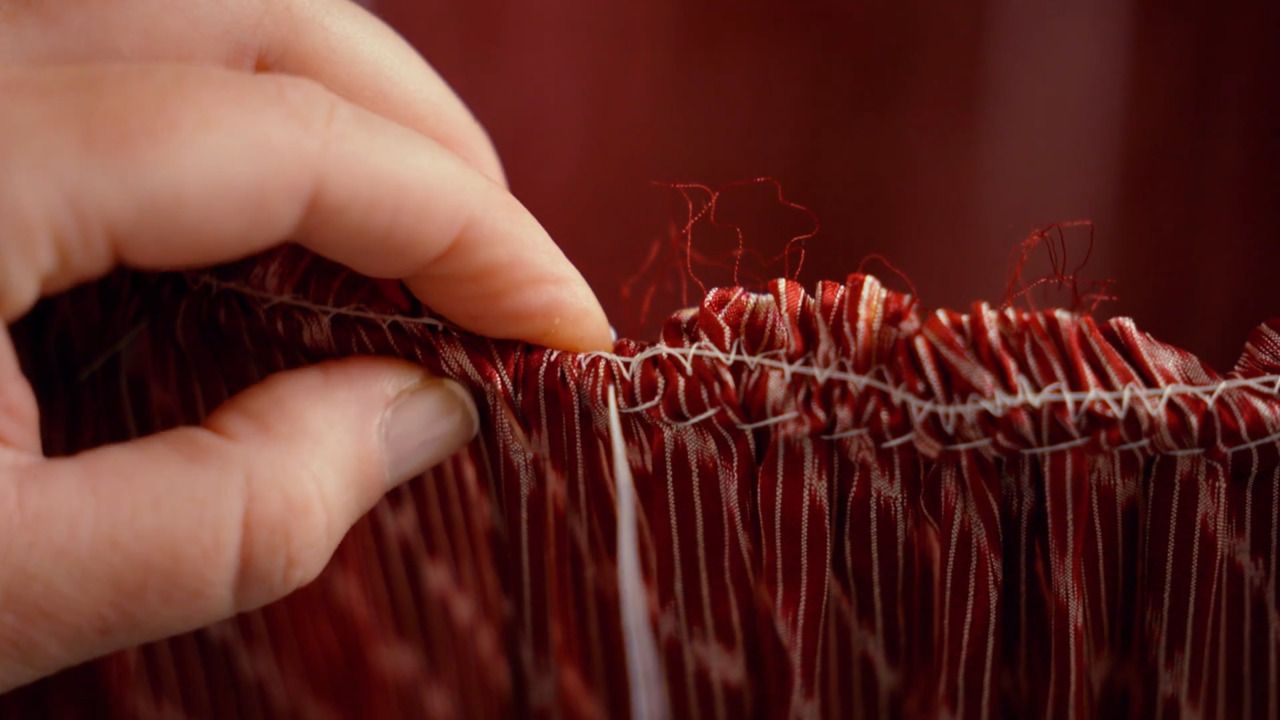
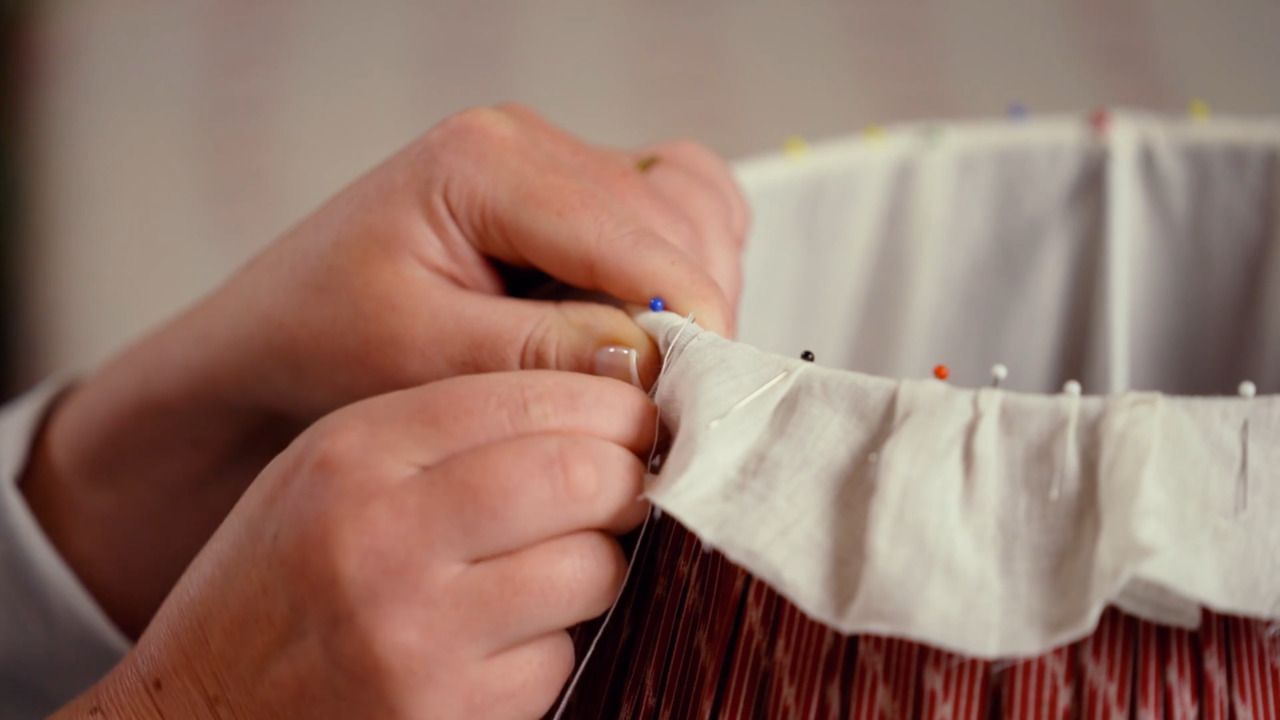
Starting with the left side of the fabric panel, hold it up to the frame so that the right side of the fabric is facing you and the row of zig zag stitching lines up with the bottom ring. You should have a frill protruding beyond the frame.
Step 3
Fold the 2 cm seam allowance inwards towards the frame and pin in place. As always, make sure your pins are facing down, to avoid spiking yourself as you work.
Step 4
Locate your first marking on the fabric, line this up with the next spoke along the frame and pin, gently easing out the gather to an even fullness as you go.
Step 5
Continue this process of lining up each of your markings on the outer fabric to the corresponding spokes on the frame and pinning in place. Keep adjusting the gather of your fabric so that it looks equal in each of the sections.
Step 6
Once you reach the end of the fabric, fold the 2 cm seam allowance inwards and pin in place so that it overlaps the starting edge of the fabric.
Step 7
Moving around the frame, position the fabric so that the zig zag seam sits neatly on the side of the frame all the way along. Pin in place as you go.
Step 8
Check that the outer fabric is gathered evenly around the entire frame. Once you're happy, trim the thread that you have been using to control the gathering.
Step 9
When this is complete, flip the lampshade frame over so the top ring is now facing upwards.
Step 10
Take both sides of the outer fabric panel, and replicate the way in which they are pinned together on the bottom ring onto the top ring; folding the seam allowance and overlapping the two pieces.
Step 11
As you did with the bottom ring, locate the first marking and line it up with the corresponding spoke, pulling the fabric up so the excess is over the top ring. Then fold a small pleat in the fabric and pin in place.
Step 12
Repeat this process for each marker, folding a pleat into the fabric and pinning this to corresponding spoke.
Step 13
Once each marker is pinned and aligned with the positioning of the markers on the bottom ring, you can work your way in sections gathering the fabric by hand and pinning in place. This can be done by eye, and doesn't need to be perfect. At this stage you are just roughly positioning in preparation for sewing the bottom ring.
Step 14
Turn your lampshade so the bottom ring is facing upwards and find the seam line as your starting point.
Step 15
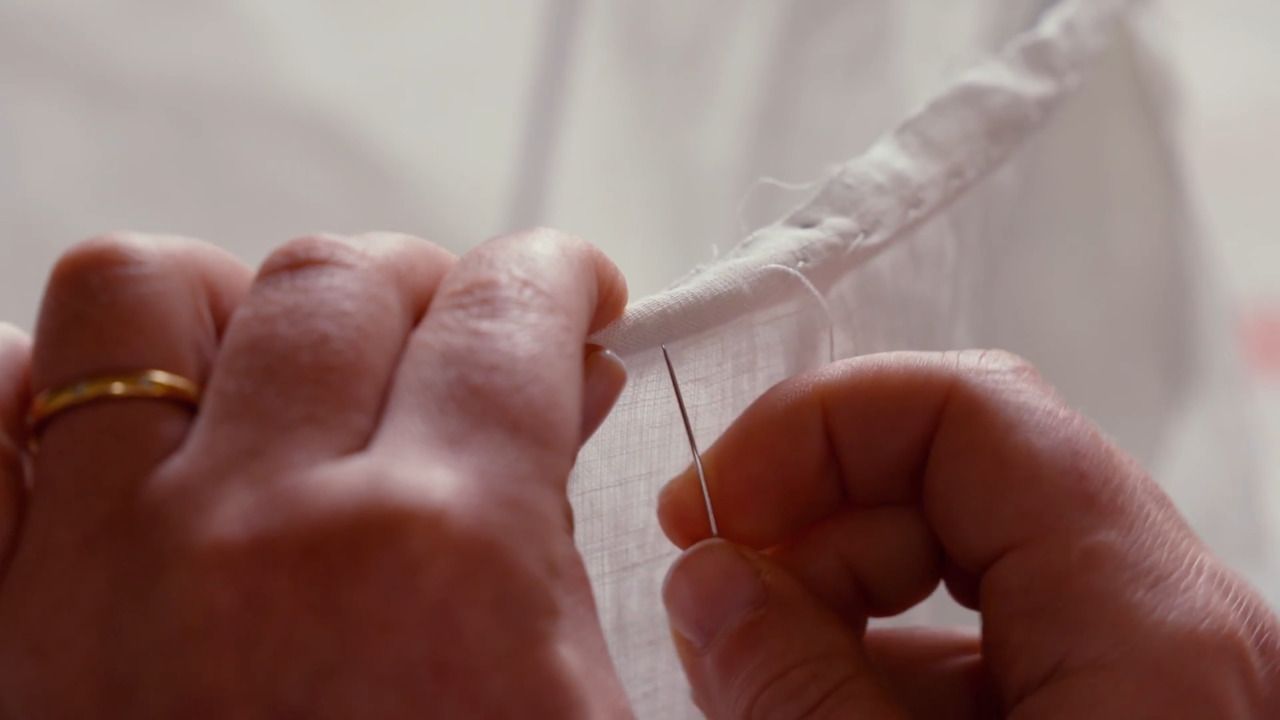
Take a threaded needle, and do a few up and down stitches catching both layers of fabric and the binding to secure the two pieces together, as well as to the frame.
Step 16
Work your way around the lampshade stitching the fabric to the binding on the frame, taking the pins out as you go. It's crucial that the zig zag stitch is exactly parallel to the bottom ring, and runs neatly along the side of the frame.
Step 17
Once you have worked all the way around, turn the lampshade over so the top ring is facing up and you're ready to repeat the process. There is no need to trim the fabric this time, as you are creating a frilly bottom.
Step 18
Now it's time to sew the outer fabric to the top ring - again, making sure you are neatly stitching on the side of the frame. For this step, you should pull the fabric tight as you stitch, aiming for it to be evenly taut all the way around. This is also an opportunity to check that the fabric is straight and each of the pleats are neat - if they're not, you can gently manipulate them at this stage.
Step 19
While we aren't trimming the bottom ring fabric, the outer fabric at the top ring does require trimming. This is slightly tricky, as the lining is already in place and extra care needs to be taken to ensure it doesn't get accidentally cut. Begin by pulling the fabric back and away from the frame.
Step 20
Use small scissors to cut as close as you can to the stitching line, without damaging the lining fabric or the integrity of the seam. Go slowly and very carefully.
Step 21
Once trimmed, give your work a once over checking for any stray threads or sections that might need trimming down further.
Step 22
Take your glue stick, and gently run it all around the top ring of the frame to prevent the edge of the fabric from fraying and to seal the stitches.
Step 23
Allow the glue to dry before moving onto the next stage.
Get the full workbook, video lessons, and more with a Create Academy subscription.
Subscribe to access the full workbookAlready a member? Sign in to watch
491 reviews
Read moreCreate Academy has been such a great resource. I'm in the middle of renovating a bungalow with a very large garden and the courses have offered a wealth of inform...
Harvey
Jun 10, 2026
Absolutely love Create Academy! The instructors are extremely informative, and it is beautifully filmed. Create Academy is great value for money and plan on renew...
SG
May 31, 2026
Butter's creativity is stunning! Her ability to incorporate brilliance in small gardens is magical!
Carla
May 30, 2026
The best adventure. I like all the courses, but my favorite are both Rita Konig interior design courses and Anna Jones. Excellent!
Karolina Kluczewska
May 20, 2026
Create Academy has been such a great resource. I'm in the middle of renovating a bungalow with a very large garden and the courses have offered a wealth of information to dive into and explore new ideas. I'm...
Harvey
Jun 10, 2026
Absolutely love Create Academy! The instructors are extremely informative, and it is beautifully filmed. Create Academy is great value for money and plan on renewing my subscription yearly because there are ...
SG
May 31, 2026
Butter's creativity is stunning! Her ability to incorporate brilliance in small gardens is magical!
Carla
May 30, 2026

Your Instructor
Designer and soft furnishing expert specialising in vintage textiles and hand-crafted homewares.
Chloe is a designer and textile artist, specialising in upholstery, soft-furnishings, vintage textiles and unique objects for the home. Chloe's fascination with the art of hand sewing was ignited at University when studying History of Art, after which she embarked on a career rooted in furniture and soft furnishing making. In 2015, she founded her eponymous design business - based out of her studio in the South Lincolnshire countryside - where she crafts bespoke homewares and handmade lampshades using colourful vintage fabrics and carefully curated textiles sourced from across the globe.

Access to all courses


