

Interior and exterior confidence
Create Academy has been such a great resource. I'm in the middle of renovating a bungalow with a very large garden and the courses have offered a wealth of inform...
Harvey
Jun 10, 2026
The Fundamentals of Garden Design
with JO THOMPSON — A distinguished British garden designer and plantswoman
Lesson 19 of 22
Subscribe to watch
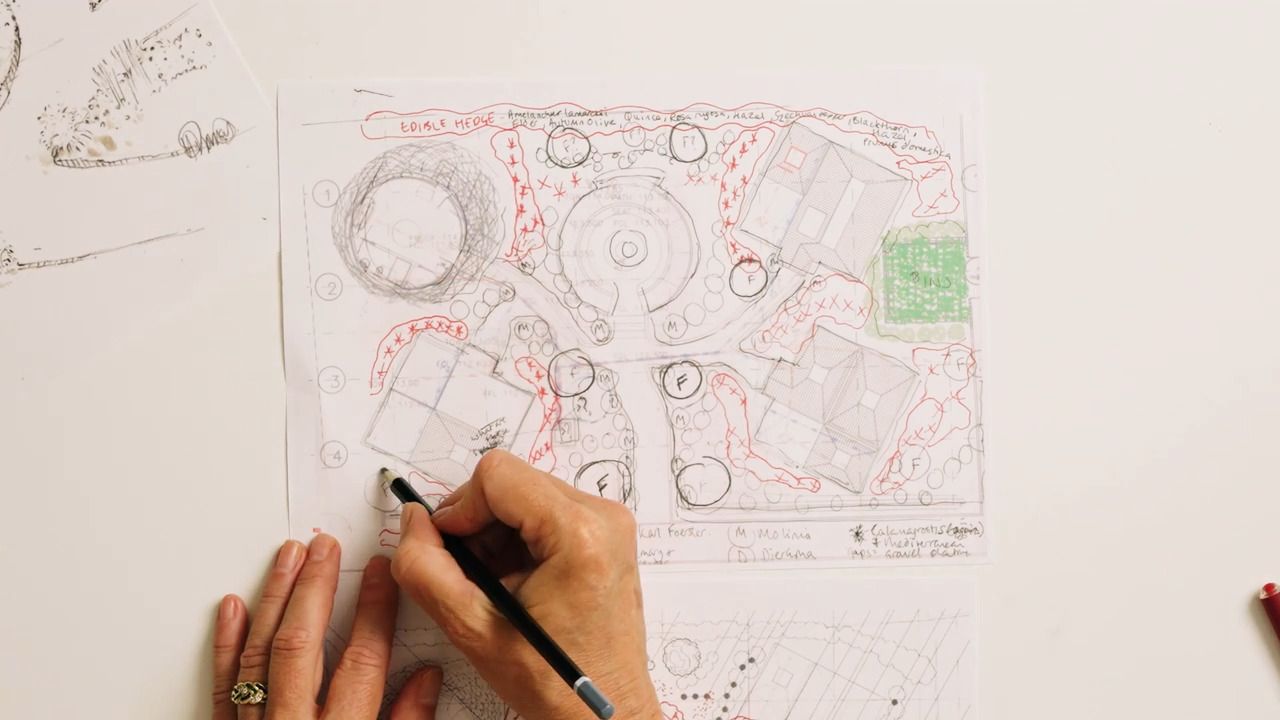
Jo shows us how she makes a planting plan, and how she uses this valuable tool to help judge numbers and proportions of plants to save money and create the most effective design.
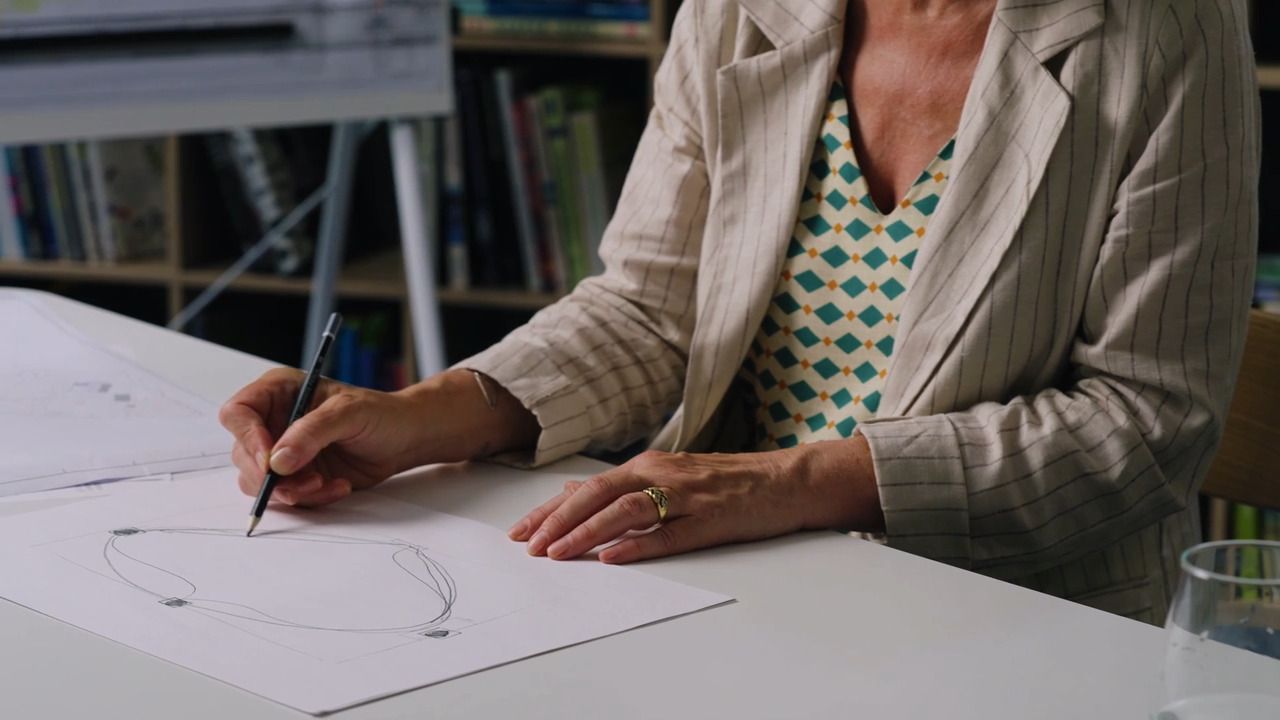
In this lesson I'm going to show you how I start a planting plan and use it to help me judge numbers and proportions of plants.
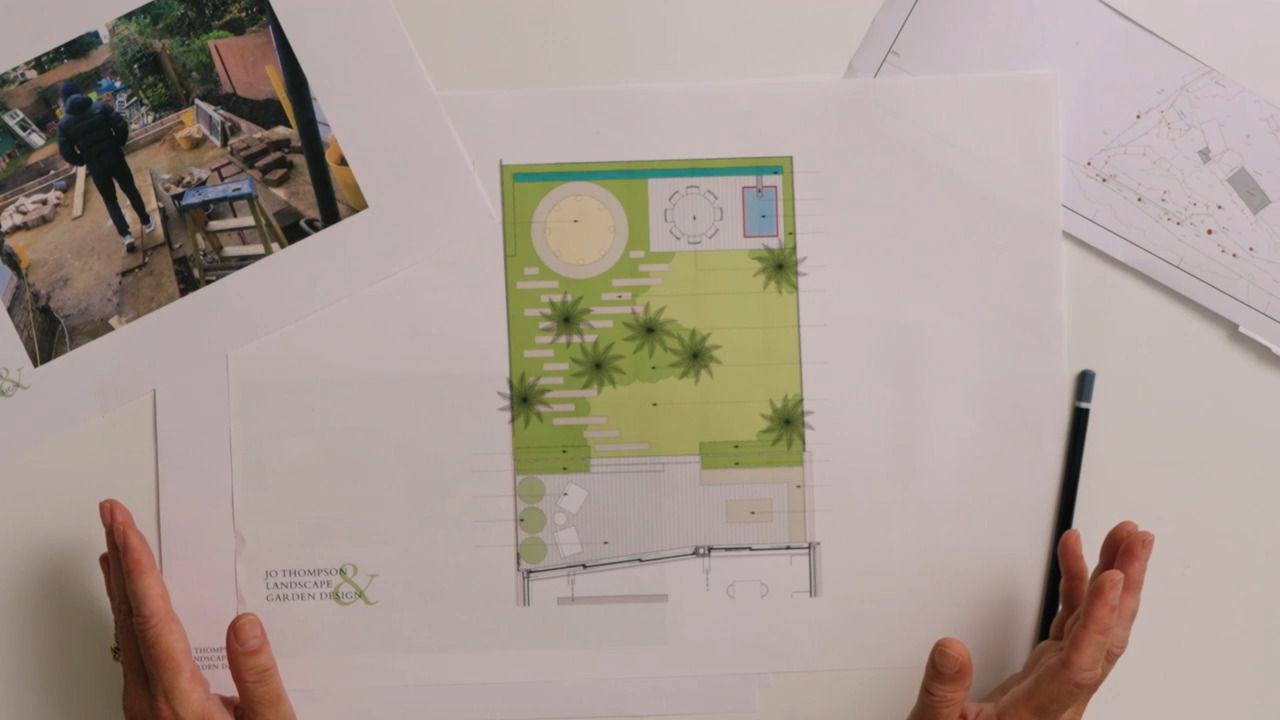
A planting plan is like a map of your garden or a particular border, with circles of different sizes representing plants of different sizes.
When choosing plants for your garden, first choose your trees and shrubs for structure. We'll call this the top layer. This is followed by the middle layer (shrubs) and then the lower layer (bulbs, tubers, corms and perennials). When designing, follow this order and keep in mind that at each stage you're filling in the gaps.
You can use different forms too, such as standards and multi-stems.
Once you've chosen and placed your trees, look for evergreen shrubs that will give year-round interest. I've used:
After the structure is in place, look at the rest of the planting that will bring colour and interest. I've used:
I've used low-maintenance perennials:
The relative numbers of trees, shrubs and perennials you need will depend on what mood you want to create in your garden, but as a rule of thumb, I'd suggest three shrubs to every tree, and three to five perennials for every shrub.
Creating a planting plan will help you buy the right numbers of plants.
They can be drawn quite precisely, but it's important to place your plants and move them around to make sure they look right in real life as well as on paper.
The key is to have the right number of plants and that the plants work together as a palette.
Plant trees and shrubs during the dormant season – roughly November-February.
Plant perennials and late-summer-flowering bulbs/corms/tubers such as dahlias in March-April.
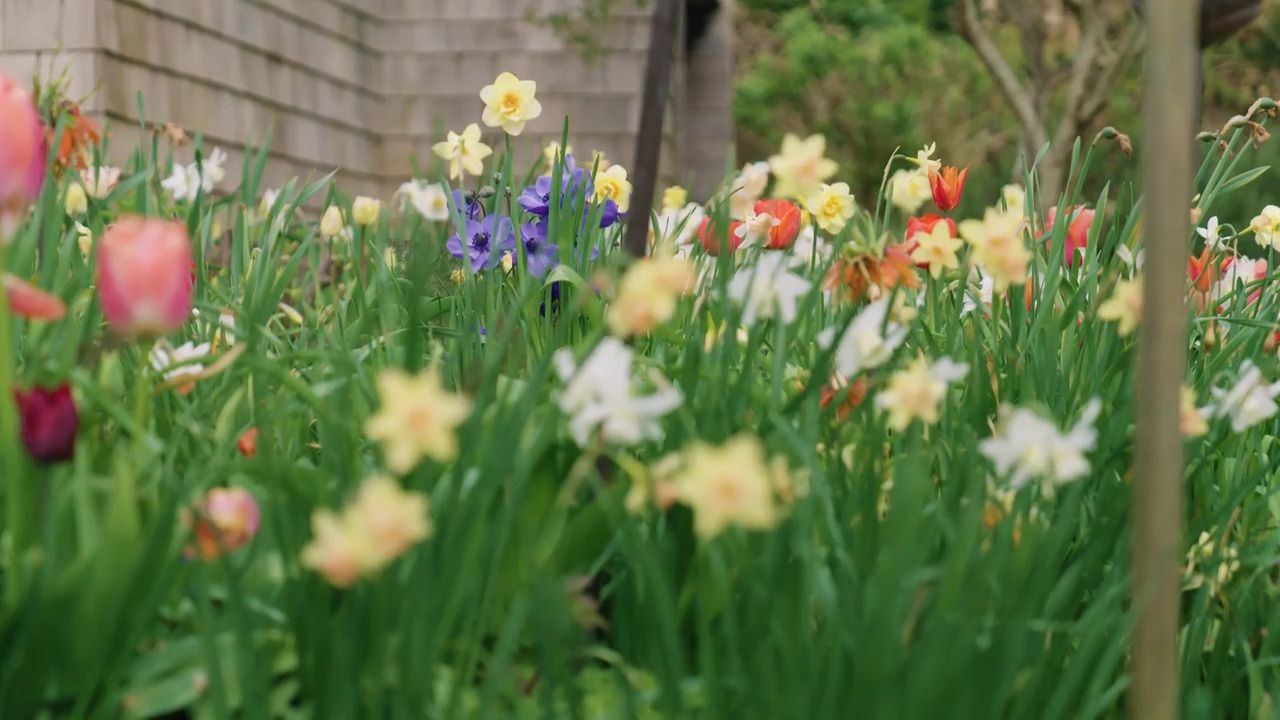
Plant spring bulbs such as tulips and daffodils in October-November.
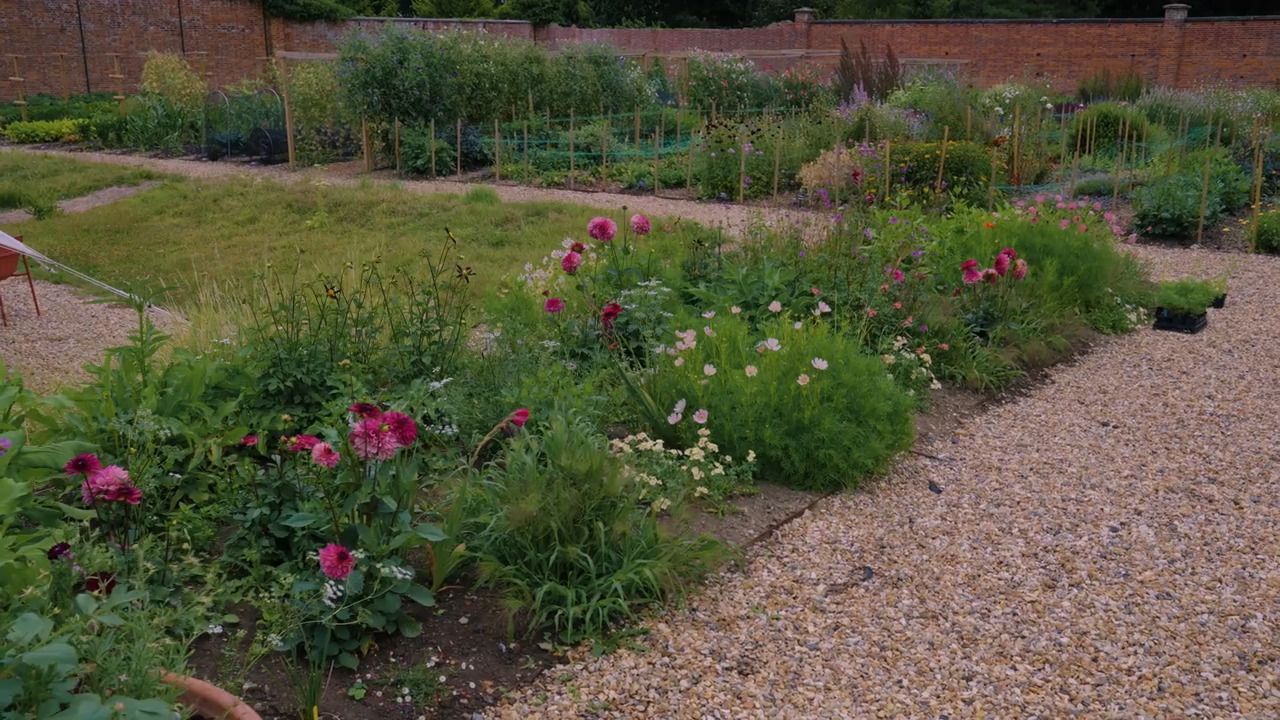
As perennials fade, summer bulbs such as dahlias and Gladioli pick up the colour.
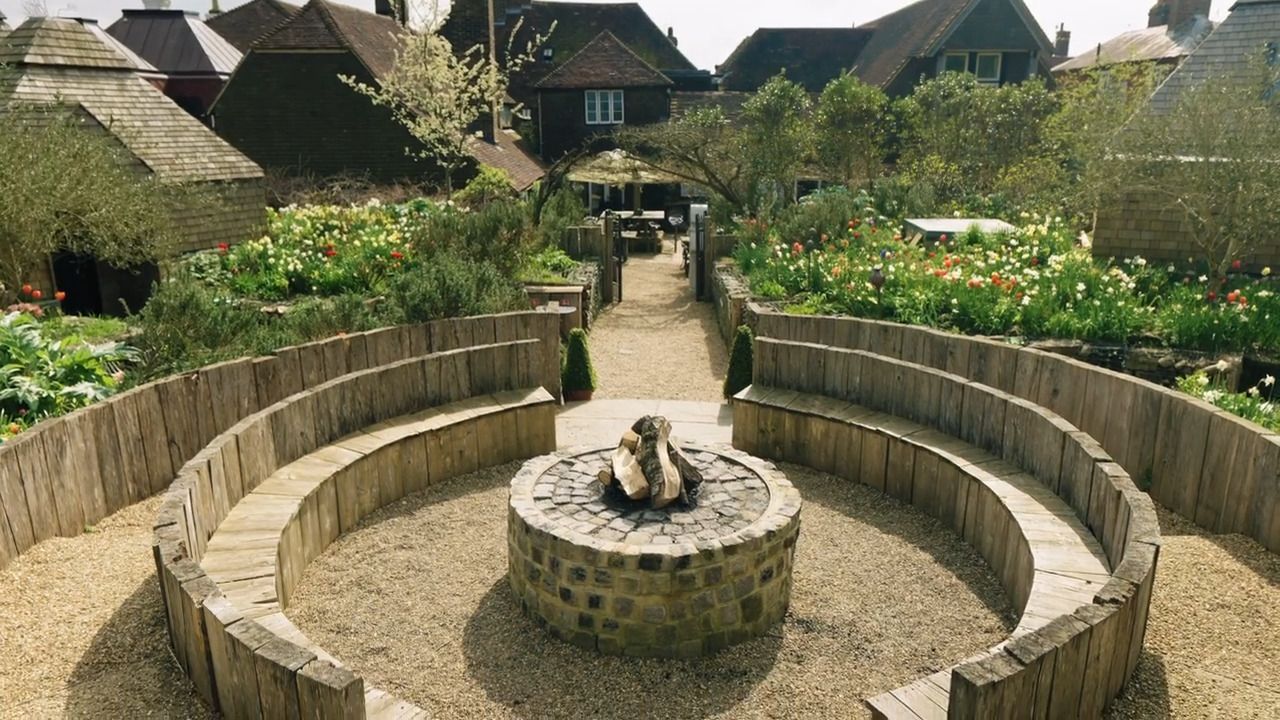
Think about where you want to place your trees:
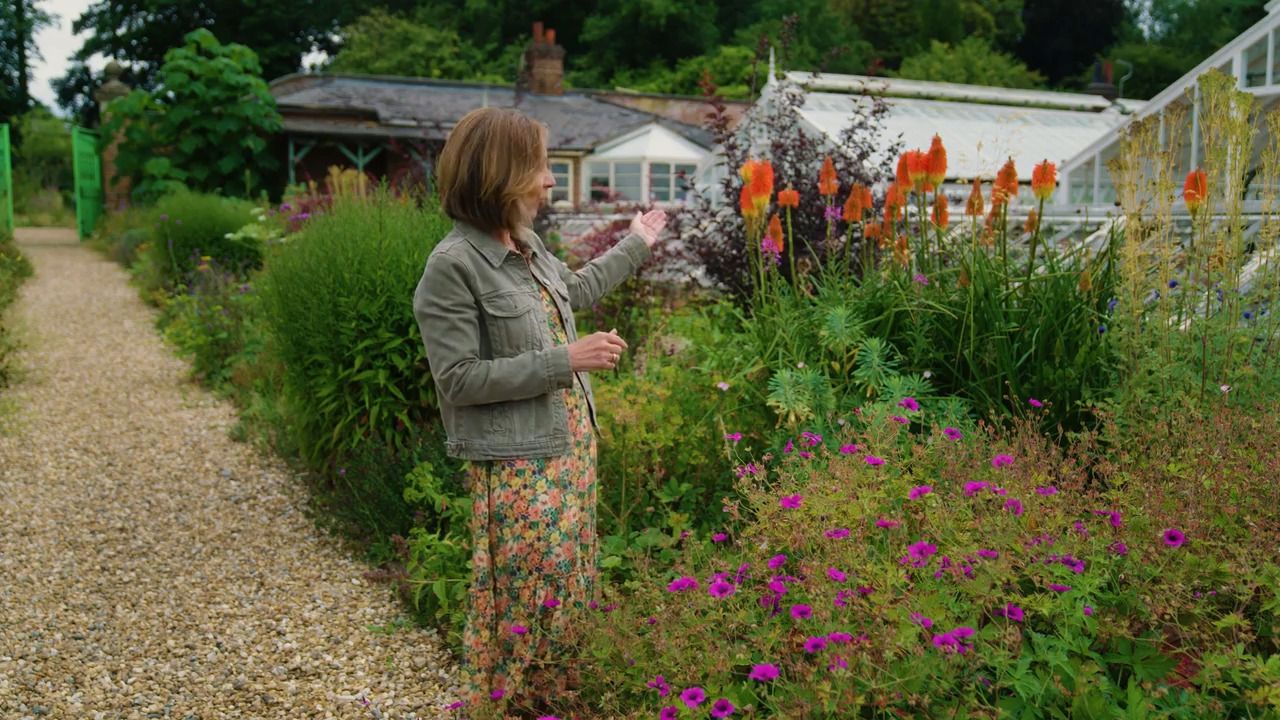
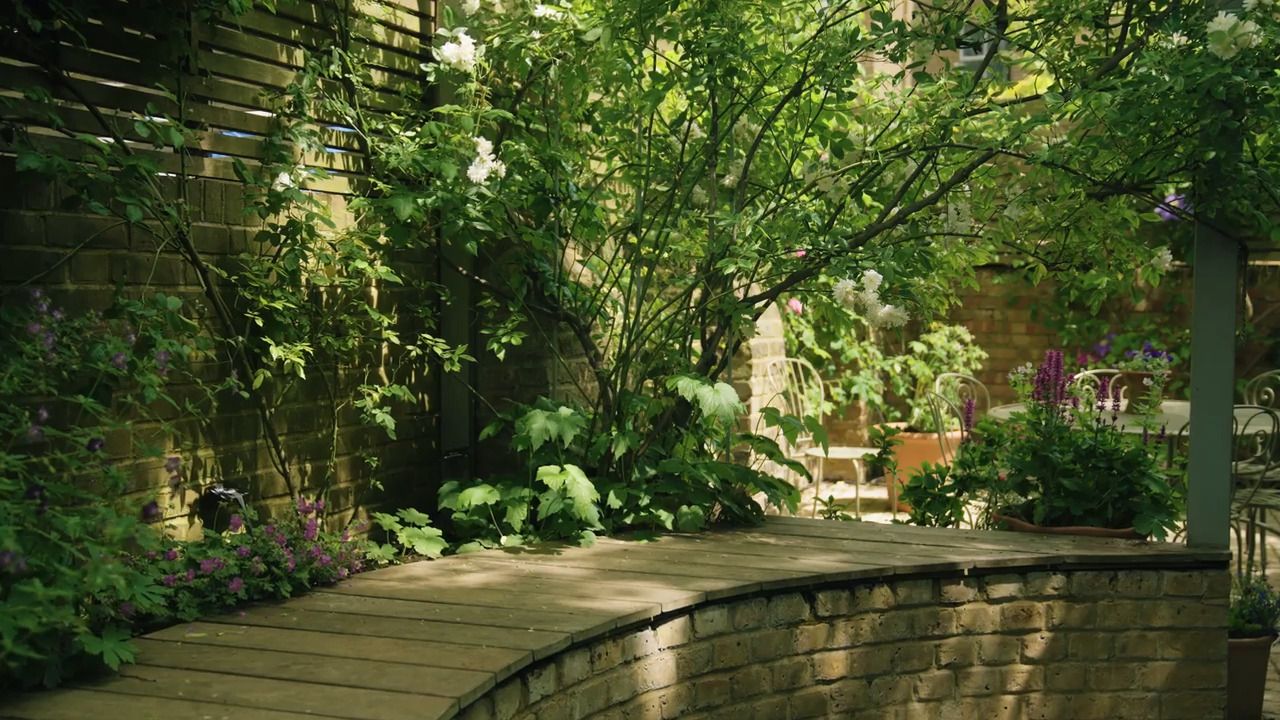
Trees can be used to create a welcome – here they've been pruned to bow over the entrance so you walk under them.
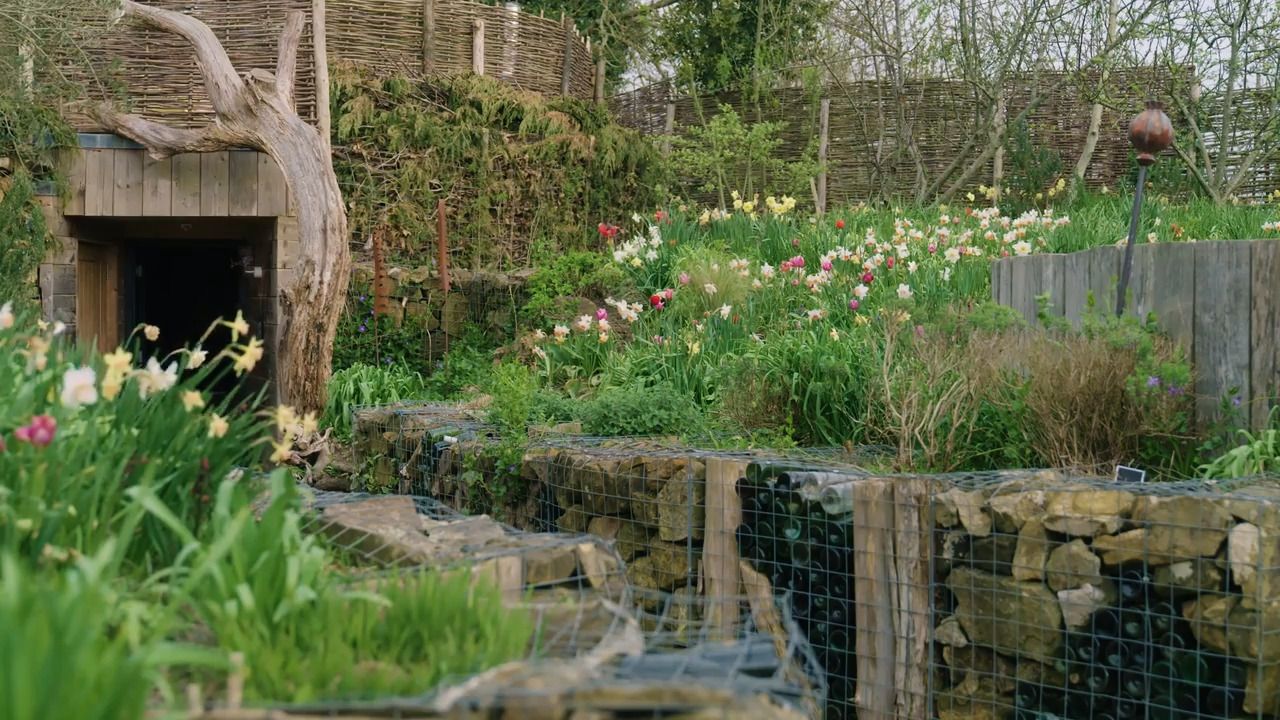
Perennials can give structure too. Think about foliage, especially when it emerges in spring:
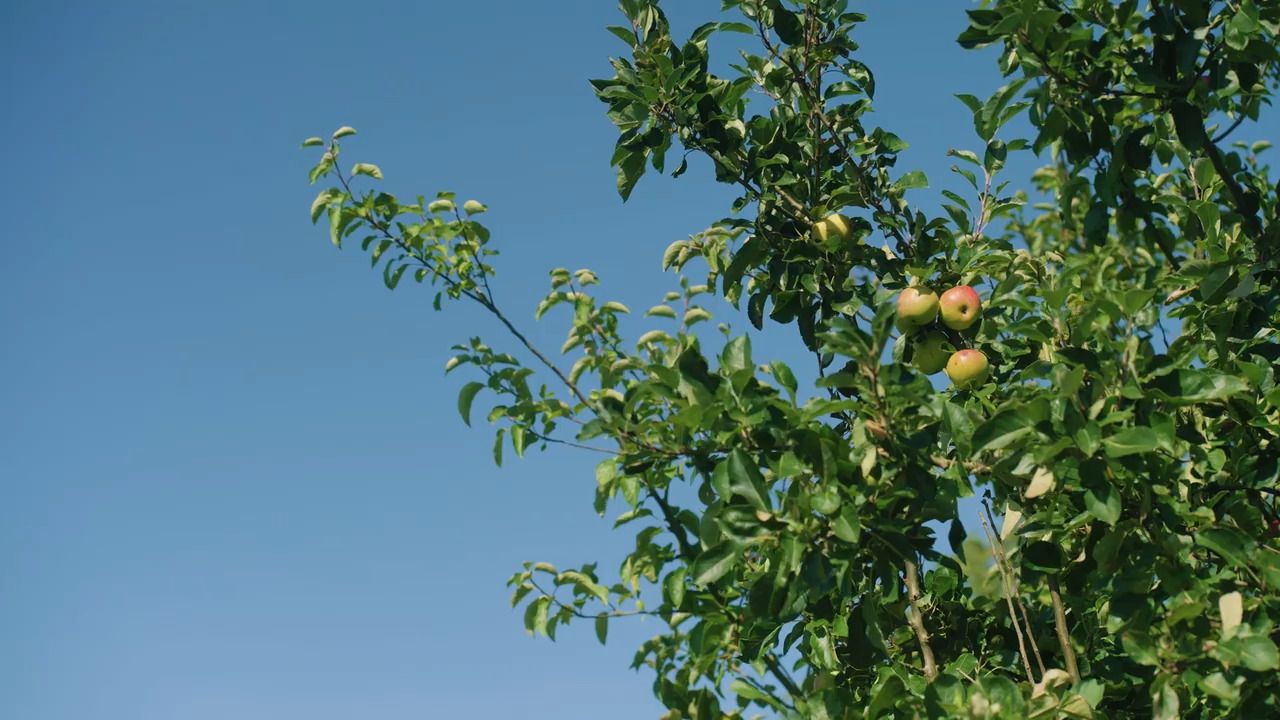
The edible hedge is a forest farm – pear, hazel, roses, apples, blackberries, Amelanchier.
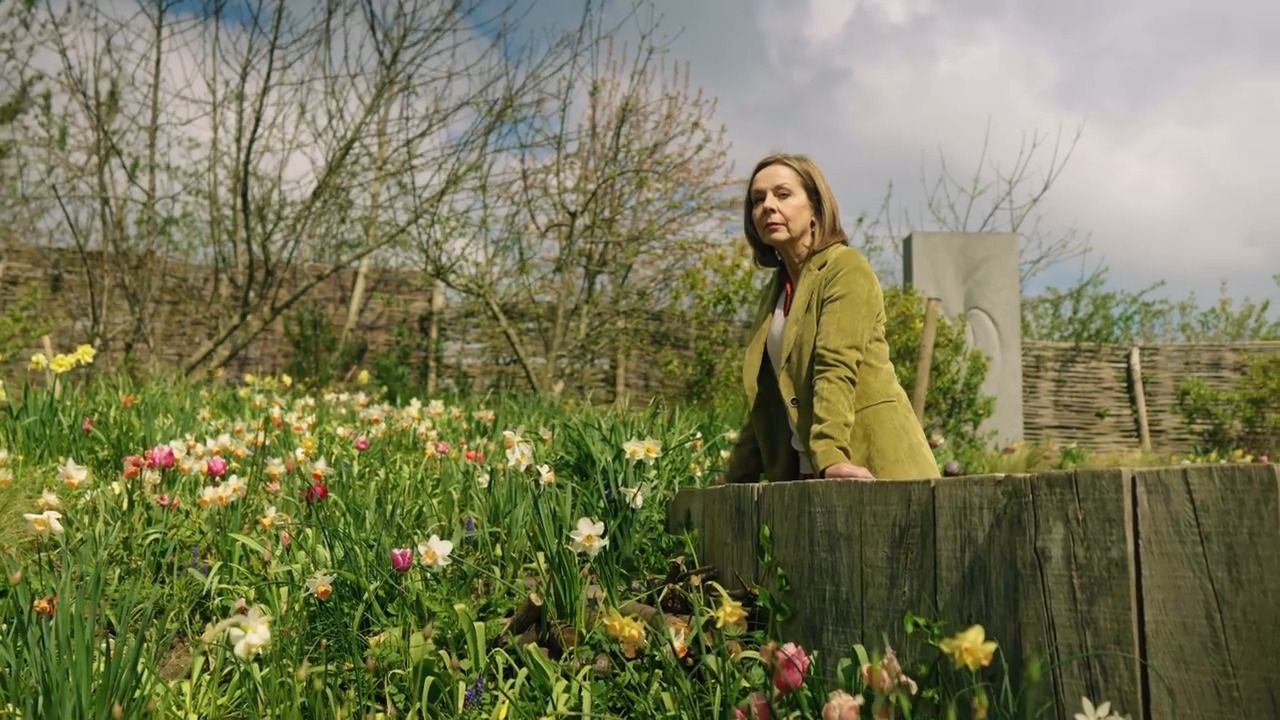
Old tree trunks and logs have been placed in the planting to create structure and habitat for wildlife.
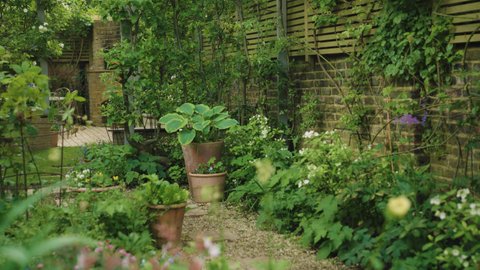
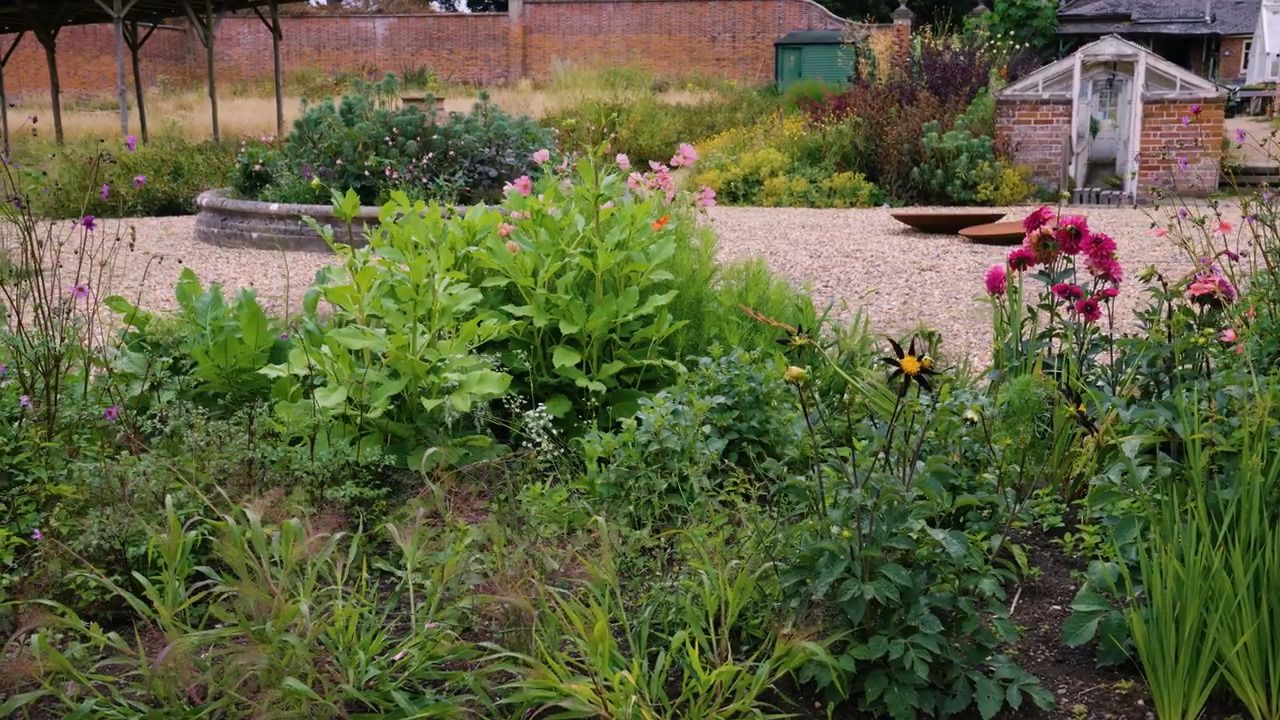
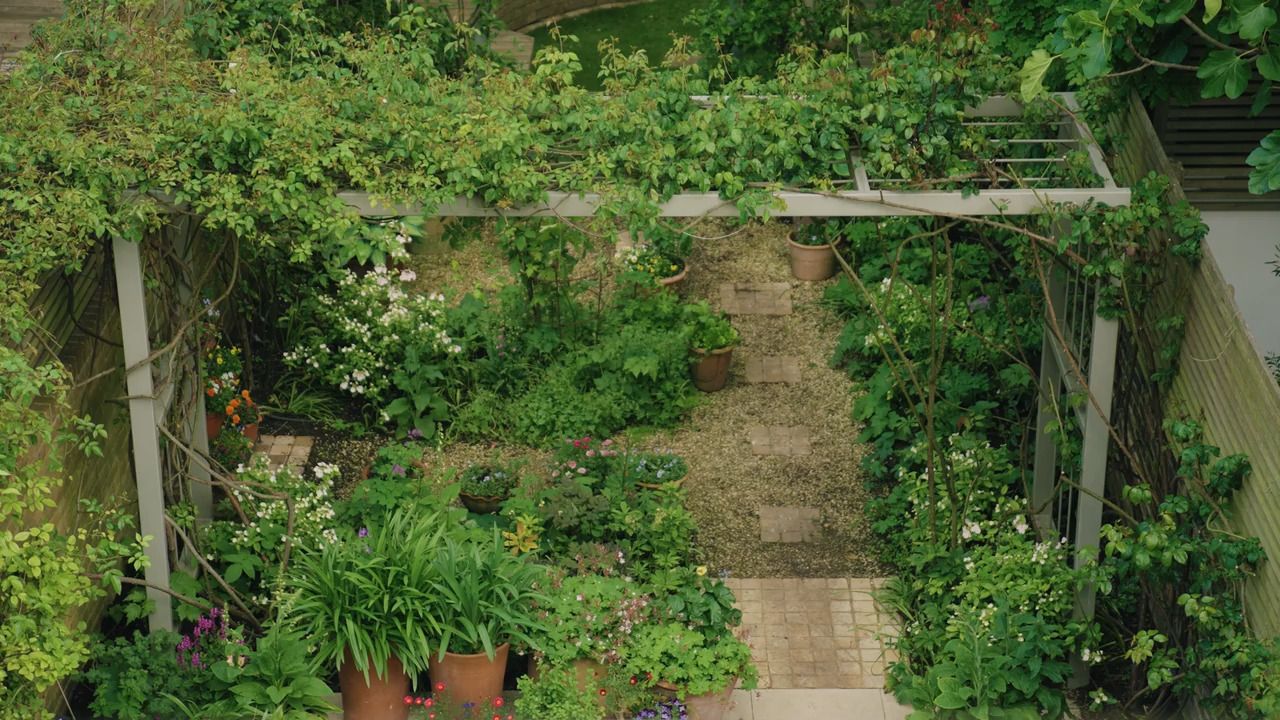
Stick to a small palette of plants in a small space, for a relaxing feel and to keep maintenance down. Keep it simple and then repeat those chosen plants:
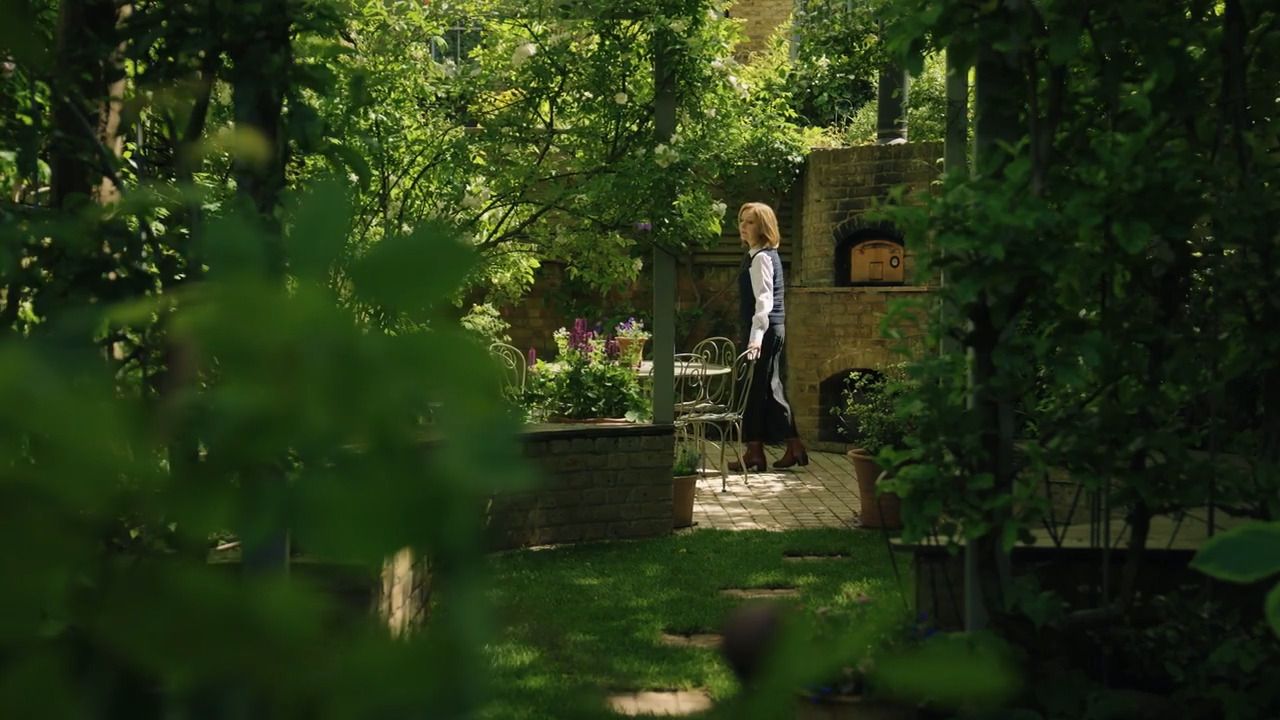
Keep in mind that one of the most important things about a garden is that people can relax in it and enjoy it.
Now it's your chance to think about what you want in your garden. Remember:
Jot down some ideas for three trees, three shrubs and six perennials and bulbs that you might like to include in your garden in the table below. Then note the flowering time for each and the conditions it needs (e.g. sun/shade, damp/dry), ensuring these match the conditions in your garden.
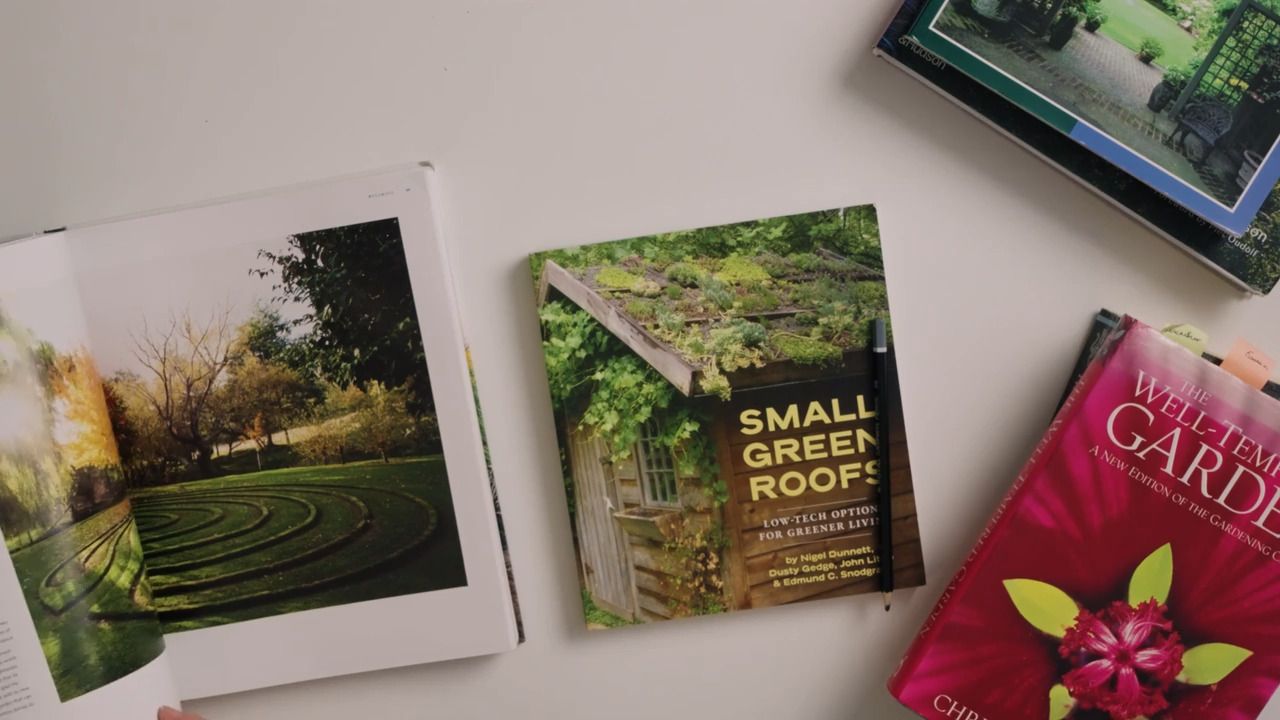
Sources of inspiration:
Calamagrostis species and cultivars
Feather reed-grass
Ornamental deciduous grass
Poaceae
Corylus avellana
Hazel
Hardy deciduous large shrub or small tree
Betulaceae
Cydonia oblonga
Quince
Hardy deciduous large shrub or small tree
Rosaceae
Cynara cardunculus (Scolymus Group)
Globe artichokes
Hardy herbaceous perennials
Asteraceae
Dahlia species and cultivars
Dahlias
Tender or half-hardy perennials, often grown as half-hardy annuals
Asteraceae
Erigeron karvinskianus
Mexican fleabane
Hardy semi-evergreen perennial
Asteraceae
Geranium 'Rozanne'
Cranesbill 'Rozanne'
Hardy perennials
Geraniaceae
Hylotelephium species and cultivars (previously Sedum)
Ice plants, stonecrops
Hardy herbaceous perennials
Crassulaceae
Lavandula species, hybrids and cultivars
Lavenders
Hardy or half-hardy evergreen small shrubs
Lamiaceae
Malus domestica cultivars
Apples
Hardy deciduous trees
Rosaceae
Amelanchie
Narcissus species and cultivars
Daffodils
Bulbous hardy perennials
Amaryllidaceae
Nepeta species, hybrids and cultivars
Catmint
Hardy herbaceous perennials, occasionally annuals
Lamiaceae
Olea europaea
Olive
Half-hardy or hardy evergreen tree
Oleaceae
Prunus spinosa
Blackthorn
Hardy deciduous small tree
Rosaceae
Pyrus communis
Pear
Hardy deciduous tree
Rosaceae
Rosa canina
Dog rose, wild rose
Hardy deciduous shrub
Rosaceae
Rosa species, hybrids and cultivars
Roses
Hardy deciduous or semi-evergreen shrubs or scrambling climbers
Rosaceae
Rosa rugosa cultivars
Japanese rose
Hardy deciduous shrub
Rosaceae
Rubus fruticosus cultivars
Blackberries
Deciduous or evergreen fruiting scramblers
Rosaceae
Salvia rosmarinus
Rosemary
Hardy evergreen shrub
Lamiaceae
Salvia species
Sages
Hardy, half-hardy or tender annuals, biennials, perennials or shrubs
Lamiaceae
Sambucus nigra
Elder
Hardy deciduous large shrub or small tree
Viburnaceae
Taxus baccata
Yew
Hardy evergreen tree
Taxaceae
Tulipa species and cultivars
Tulips
Bulbous hardy perennials
Liliaceae
Get the full workbook, video lessons, and more with a Create Academy subscription.
Subscribe to access the full workbookAlready a member? Sign in to watch
491 reviews
Read moreCreate Academy has been such a great resource. I'm in the middle of renovating a bungalow with a very large garden and the courses have offered a wealth of inform...
Harvey
Jun 10, 2026
Absolutely love Create Academy! The instructors are extremely informative, and it is beautifully filmed. Create Academy is great value for money and plan on renew...
SG
May 31, 2026
Butter's creativity is stunning! Her ability to incorporate brilliance in small gardens is magical!
Carla
May 30, 2026
The best adventure. I like all the courses, but my favorite are both Rita Konig interior design courses and Anna Jones. Excellent!
Karolina Kluczewska
May 20, 2026
Create Academy has been such a great resource. I'm in the middle of renovating a bungalow with a very large garden and the courses have offered a wealth of information to dive into and explore new ideas. I'm...
Harvey
Jun 10, 2026
Absolutely love Create Academy! The instructors are extremely informative, and it is beautifully filmed. Create Academy is great value for money and plan on renewing my subscription yearly because there are ...
SG
May 31, 2026
Butter's creativity is stunning! Her ability to incorporate brilliance in small gardens is magical!
Carla
May 30, 2026

Your Instructor
A distinguished British garden designer and plantswoman
Jo Thompson is a distinguished British garden designer and plantswoman, who has garnered widespread acclaim and recognition for her exceptional expertise in horticulture. Jo is the winner of four Gold and five Silver Gilt medals from the RHS Chelsea Flower Show, as well as the coveted People's Choice award at the RHS Chatsworth Flower Show in 2017. As a member of the RHS Gardens Committee and Garden Advisor for RHS Rosemoor, and an RHS Shows Judge, Jo plays a significant role in shaping the horticultural landscape. She gives regular lectures on her work, including tutoring at The London College of Garden Design, and is a Fellow of the Landscape Institute and a Registered Member of the Society of Garden Designers. Jo is also the author of two books - The New Romantic Garden and The Gardener’s Palette.
Access to all courses


