





Very good tutorial from a professional garden...
I have subscribed to access all the courses so have watched one on interior design and this one with Butter Wakefield who specialises in small garden design. She ...
Louise Brown
Apr 10, 2026
with THE LAND GARDENERS — Award-winning garden designers and cut flower growers on a mission to save our soil.
Lesson 3 of 13
Buy or subscribe to watch
Here, the Land Gardeners will introduce you to their unique climate compost and explain why it acts like a probiotic pill for the soil.
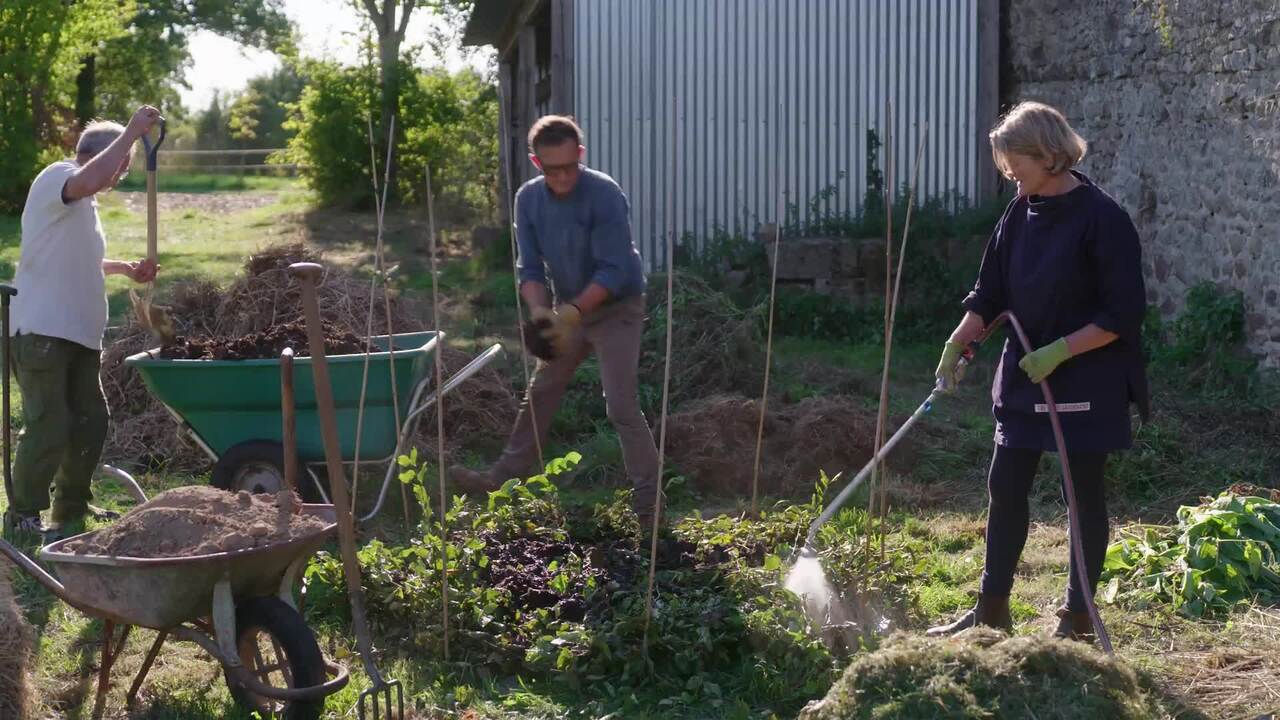
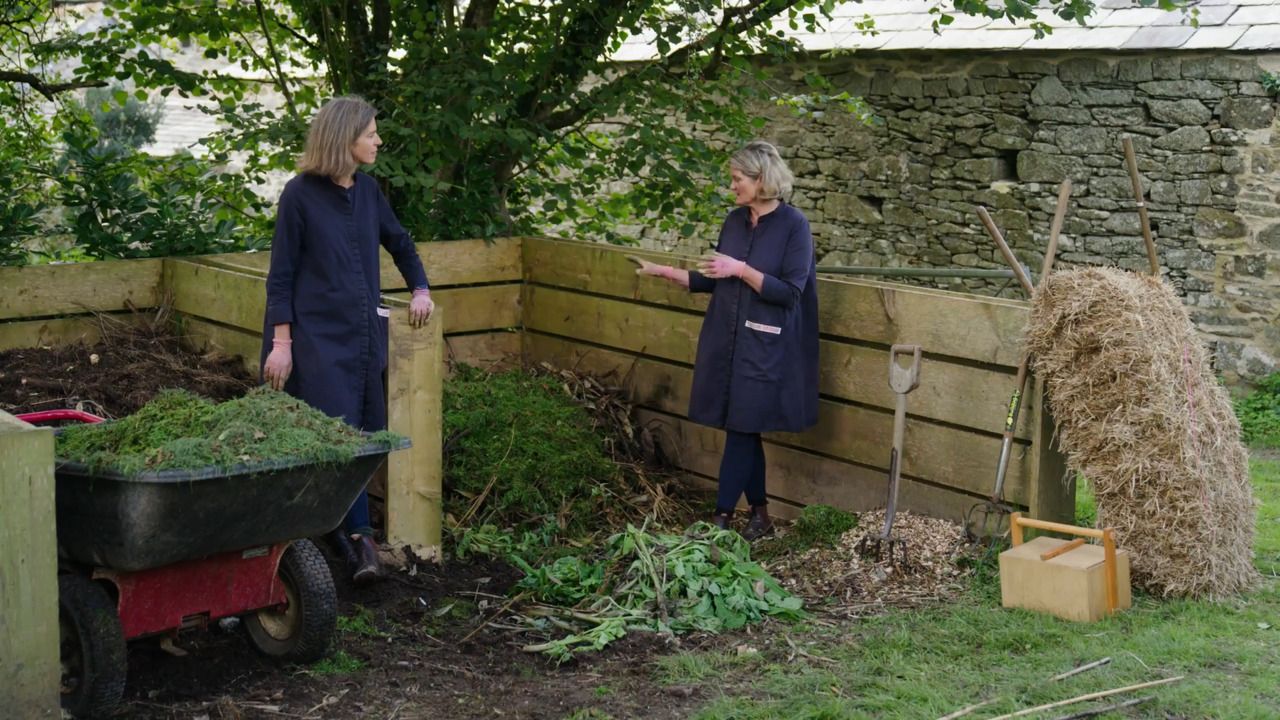
When we began our compost journey, we produced our climate compost by hand, using the windrows method. As we have expanded though, we've taken our compost to a farm scale and we are now producing it commercially using machinery and specific measurements.
Our climate compost acts as a probiotic pill for the soil, and you only need to apply a tiny bit to achieve the full effects.
By applying our climate compost we are able to create the best environment for the microbes in the soil. We have learnt through our years of gardening that applying less compost, but of a much better quality, is the best way to ensure the microbes in your soil are getting what they need.
By applying a thin layer to the surface of the soil and then broadforking it in, you can also ensure that your soil is not disturbed too much.
You might be surprised to learn that a bag of our climate compost, along with cover crops and green manures, is enough to feed an average size garden.
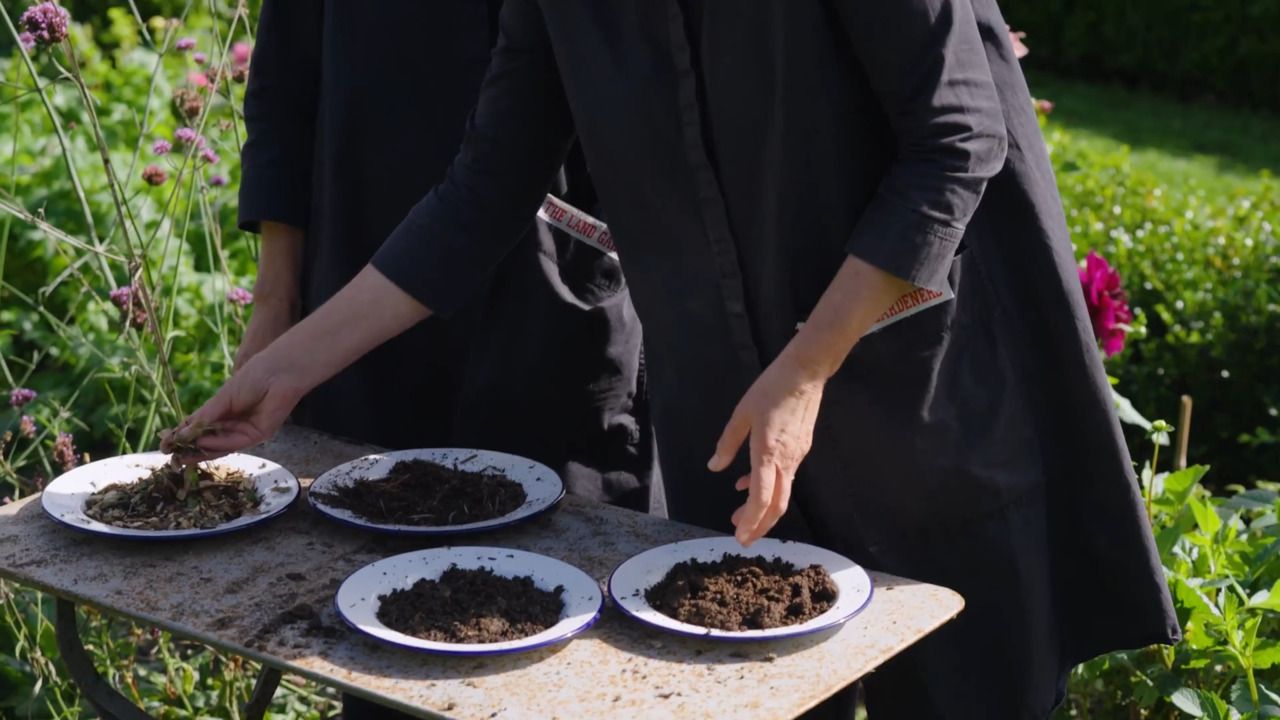
While standard-sized bags of compost are much bigger, they are often simply a bag of fibre without the nutritional benefits. Industrially produced compost is often heated to a high degree too, so much so that all the life within it is destroyed.
While fibrous material isn't bad for your soil, if you don't already have pre-existing microlife in your soil to process it, then it won't break down easily.
Ramial wood chip is created by chipping small, young branches, generally 5cm or less. This produces a great woodchip for mulching beds and can be used for paths too. It is considered a slow release food for your soil and can be produced easily after cutting back a hedge.
Fibrous compost works brilliantly as a mulch, and can help you to suppress any weeds and help with moisture retention in the soil. While it will not feed the soil in the same way that a humus- and nutrient-rich compost would, mulching is great to-do in a hot summer and can help to retain soil in a wet winter too.
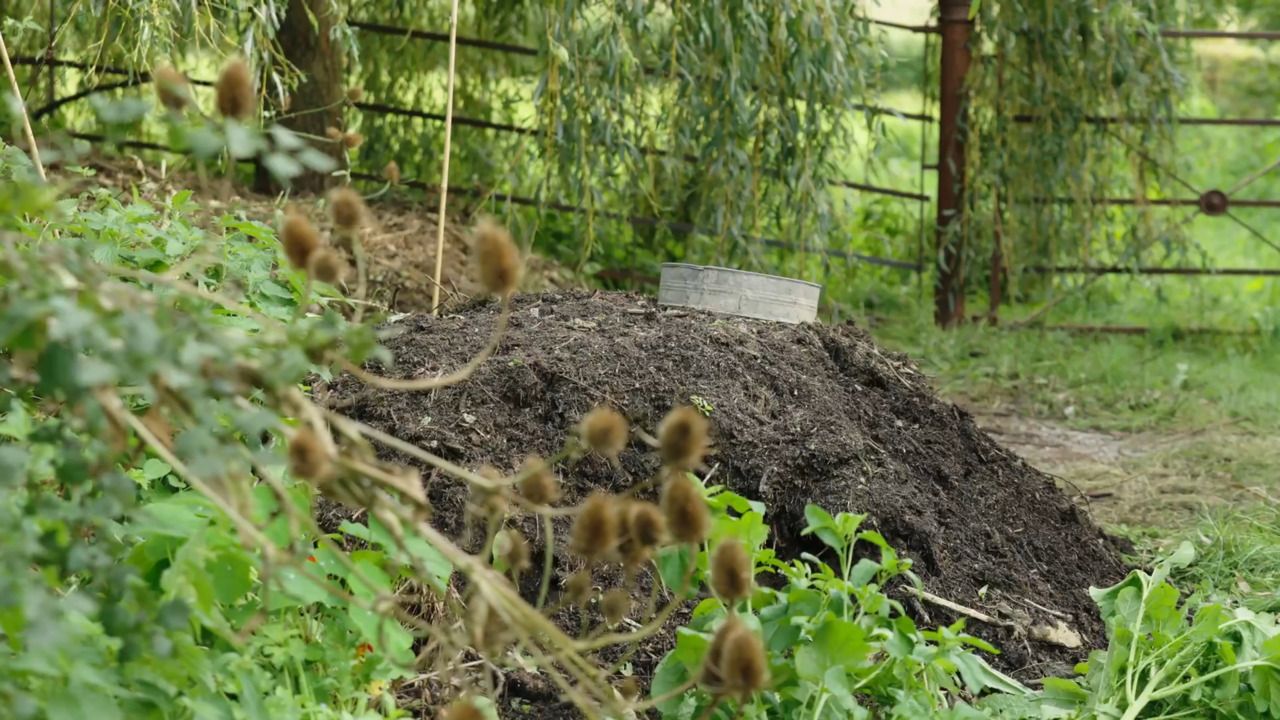
The compost that we create in our compost cakes is moist with a high humus content. Made without turning, you can put a pinch under a seedling, a handful under a shrub, or a handful into compost teas, which can then be used to feed plants and soil.
Fibrous materials are great for no-dig gardening, and if you want to learn more about this method, we recommend you follow the work of Charles Dowding, whose book we have recommended later in the workbook.
If you're using the no-dig method though, we still recommend adding a pinch of climate compost to the soil for every seedling that you sow.
Our preferred method of mulching, however, is with green manures. Crimping them back feeds the soil, while also protecting it, helping to cement the partnership between microbes and plants.
Get the full workbook, video lessons, and more with a Create Academy subscription.
Subscribe to access the full workbookAlready a member? Sign in to watch
437 reviews
Read moreI have subscribed to access all the courses so have watched one on interior design and this one with Butter Wakefield who specialises in small garden design. She ...
Louise Brown
Apr 10, 2026
I love CreateAcademy. I came in for the gardening and floristry courses, but am also watching an interior design one at present. And the photography course is an ...
Wellesley
Apr 1, 2026
What a great investment, I have learned such a lot from the first three courses. My evenings have gone from not being able to find anything that captured my imagi...
sojojo
Mar 30, 2026
I loved this course with Amanda Lindroth! Her approach to decorating is so relaxed and she makes it feel attainable. She explains the reasons behind her decisions...
Elizabeth
Mar 27, 2026
I have subscribed to access all the courses so have watched one on interior design and this one with Butter Wakefield who specialises in small garden design. She has a lovely personality and comes across as ...
Louise Brown
Apr 10, 2026
I love CreateAcademy. I came in for the gardening and floristry courses, but am also watching an interior design one at present. And the photography course is an absolute must, best I've ever done.
Wellesley
Apr 1, 2026
What a great investment, I have learned such a lot from the first three courses. My evenings have gone from not being able to find anything that captured my imagination on TV to learning and expanding my kno...
sojojo
Mar 30, 2026

Your Instructor
Award-winning garden designers and cut flower growers on a mission to save our soil.
Garden designers, flower growers and compost creators, Henrietta Courtauld and Bridget Elworthy joined forces to found The Land Gardeners in 2012. United by their passion for organically grown plants and a shared interest in soil health, they began by growing and selling cut flowers to esteemed florists, and worked on restoring historic gardens to their former glory. Most recently, they launched Climate Compost - a project born from years of inquisitive research into soil biology with the aim of creating a microbially rich compost that produces nutrient dense crops, while also supporting and boosting the local ecosystem. With an unwavering commitment to improving the health of our land and its biodiversity, The Land Gardeners’ approach is one of sensitivity, unparalleled expertise and, above all, a loving respect for the natural world and its preservation.

Access to all courses


