A gathered lampshade with velvet trim - Attaching the lining
with CHLOE JONASON
Lesson 15 of 21

Already a member? Sign in
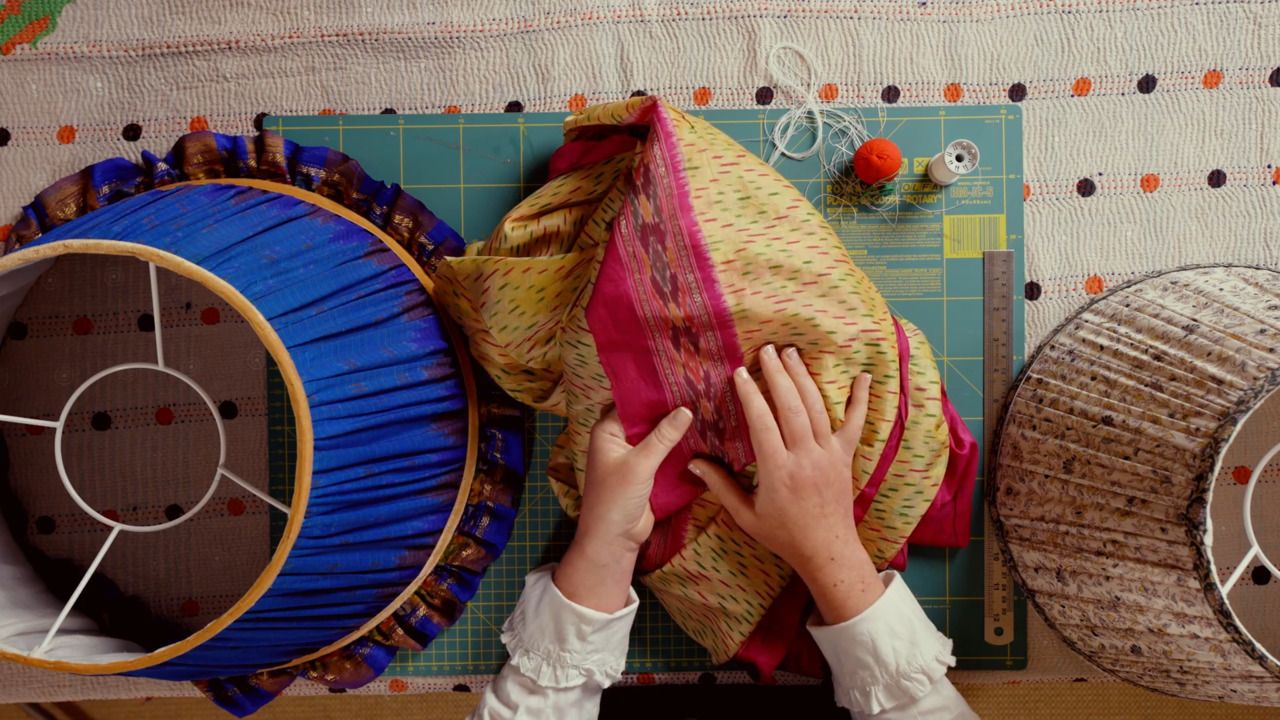
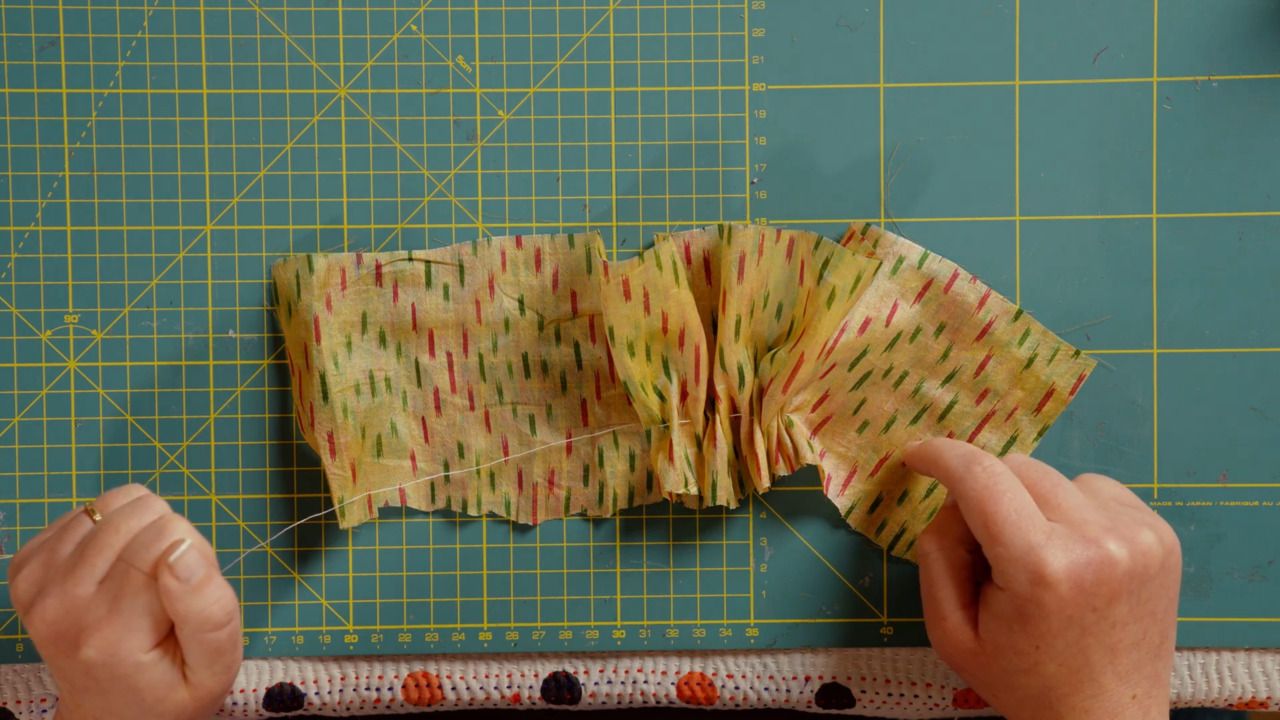
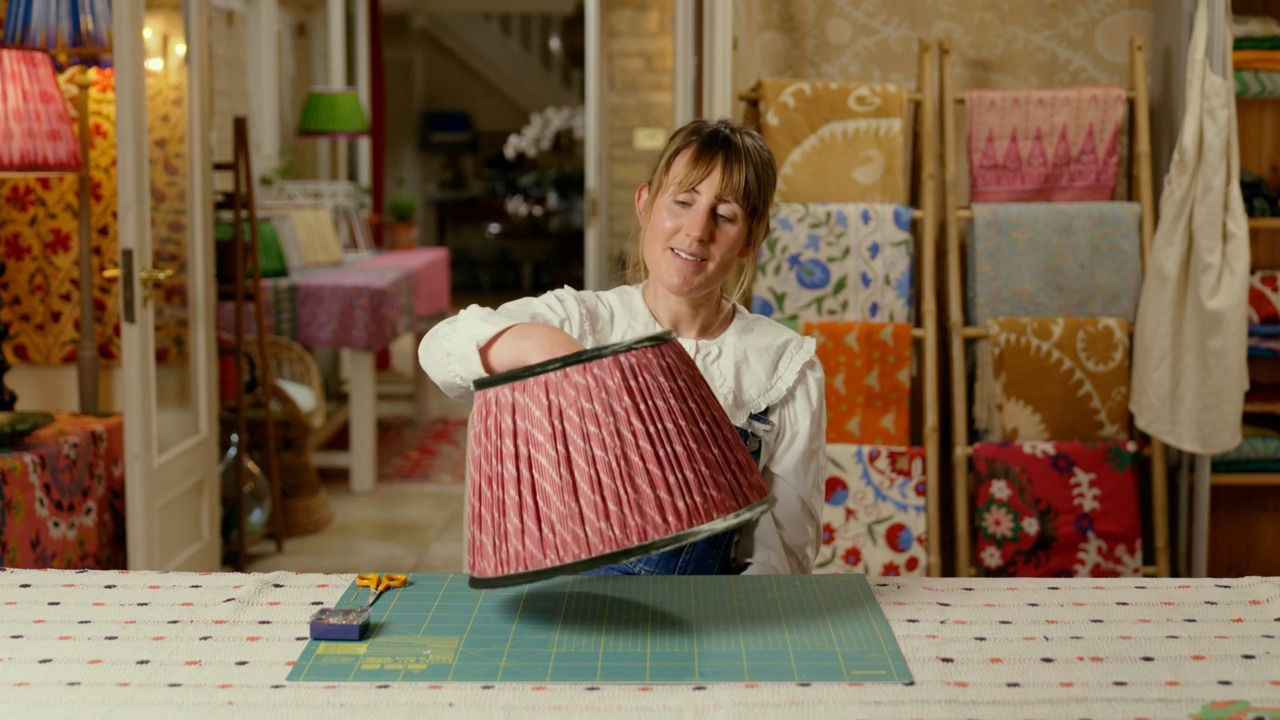
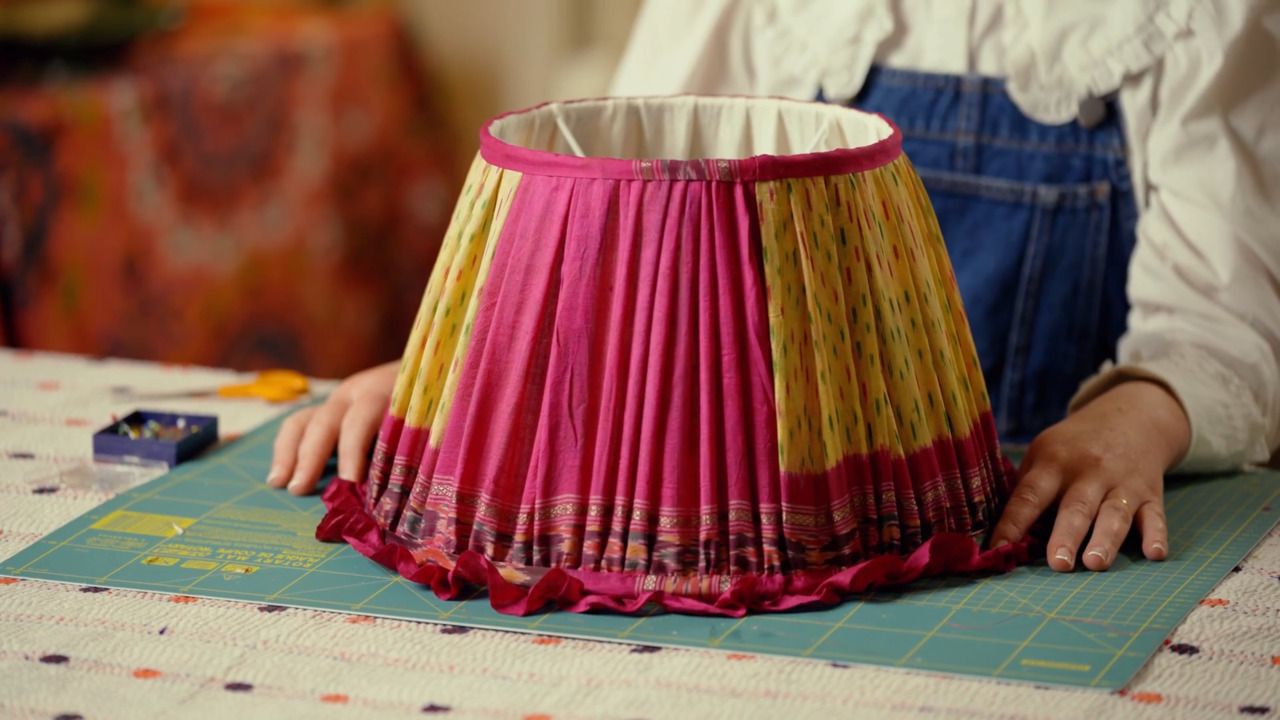
With the outer fabric in place, it’s time to tackle the lining. Many of the techniques are the same, so it’s an opportunity to perfect your skills.
From the Lesson Workbook
Attaching the Lining
With the outer fabric in place, it's time to tackle the lining. Many of the techniques are the same, so it's an opportunity to perfect your skills.
What You Will Need
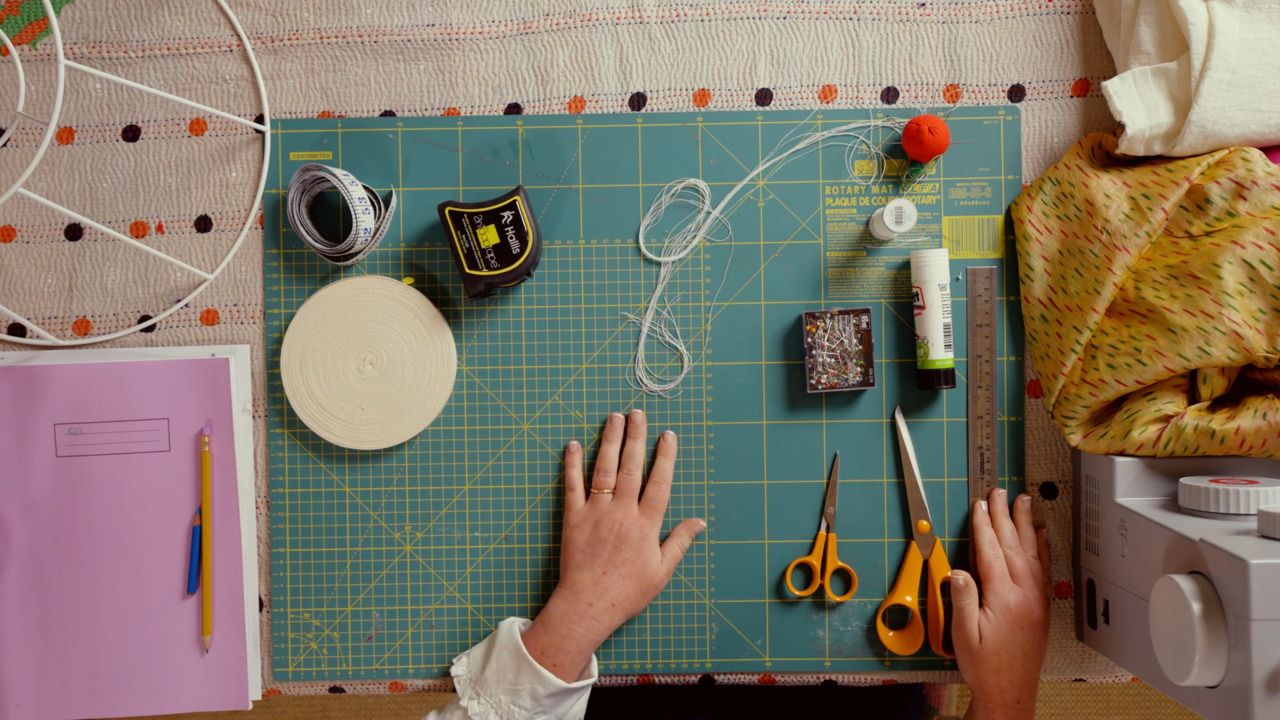
- Lampshade frame with outer fabric attached
- Cut and marked lining fabric
- Pins
- Small scissors
- Needle
- Thread
- Glue stick
Attaching the Lining to the Bottom Ring
Step 1
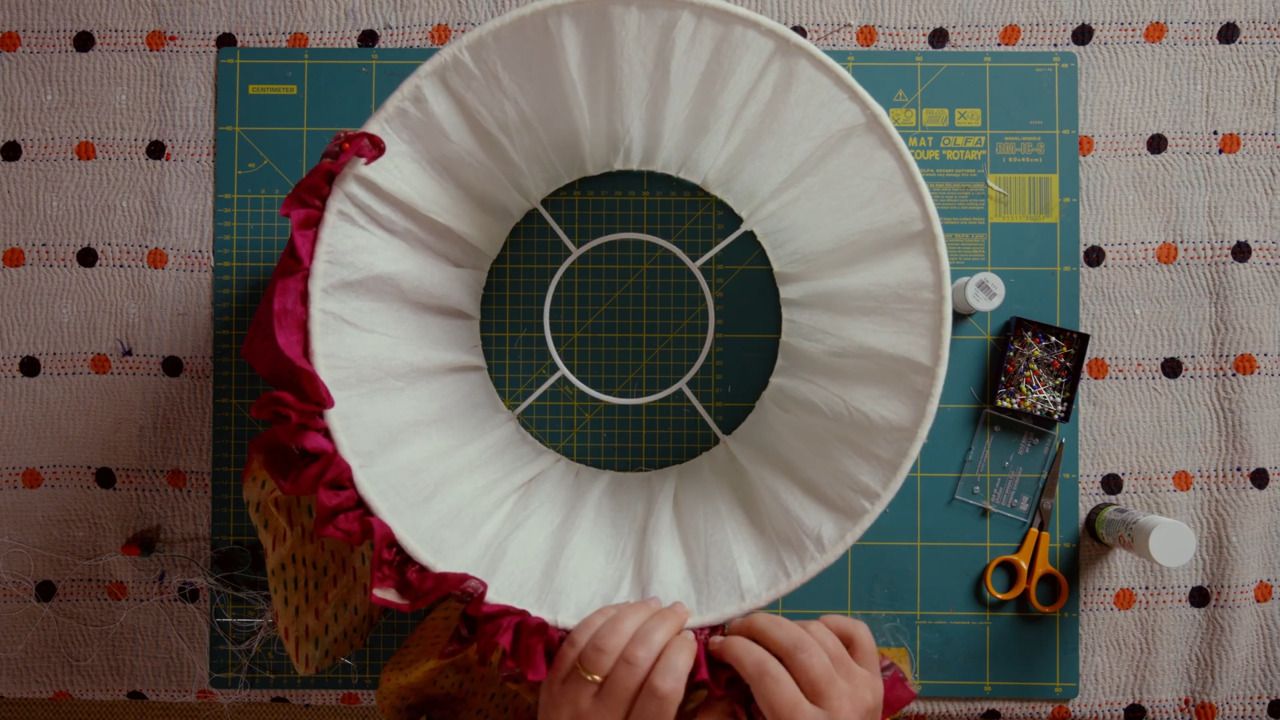
Take your prepped piece of lining fabric, and familiarise yourself with the location of the markers you made earlier. Turn your lampshade frame so that the bottom ring is facing upwards.
Step 2
Hold your lining fabric so the front side - the side that will be visible - is facing away from you. Start with the right side of the fabric panel and fold the 2cm seam allowance over and towards you. Position so that it lines up with the seams of the outer fabric, and pin.
Step 3
Move around the frame, lining up each of your markers to the corresponding spoke and pinning in place. Once you reach the first spoke again, pin the fabric in place so it overlaps, but without folding over the seam allowance.
Step 4
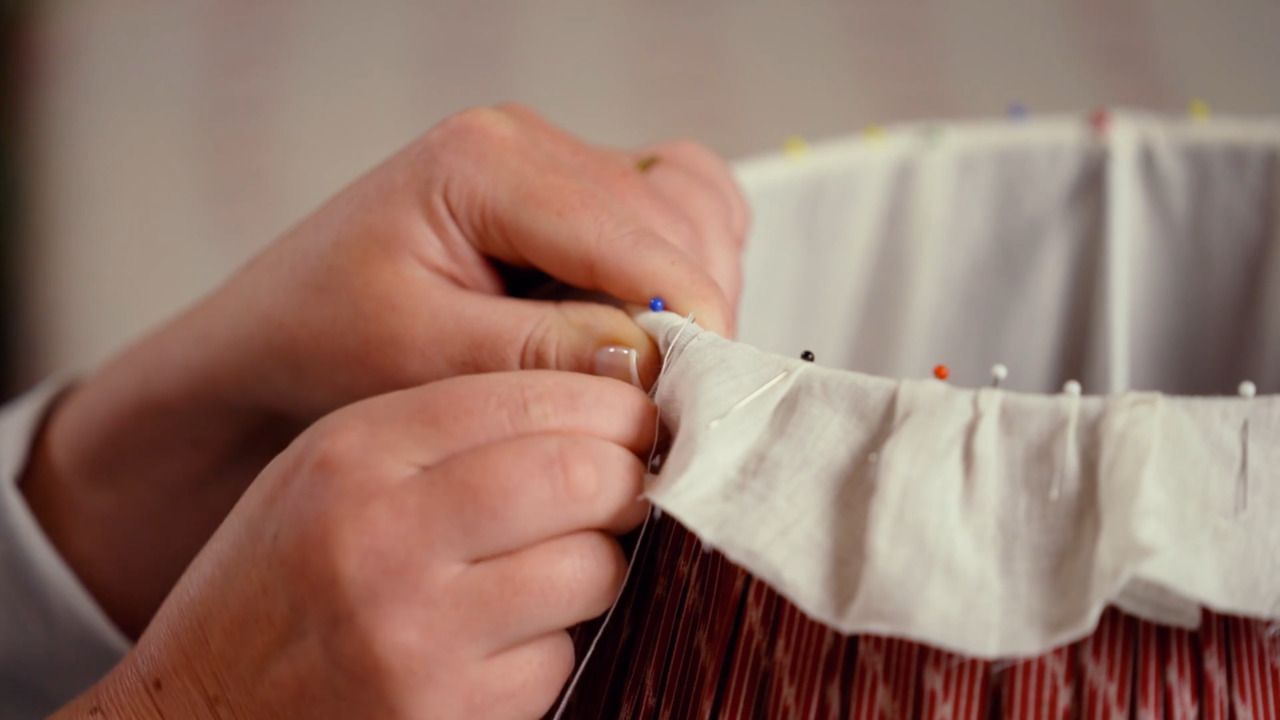
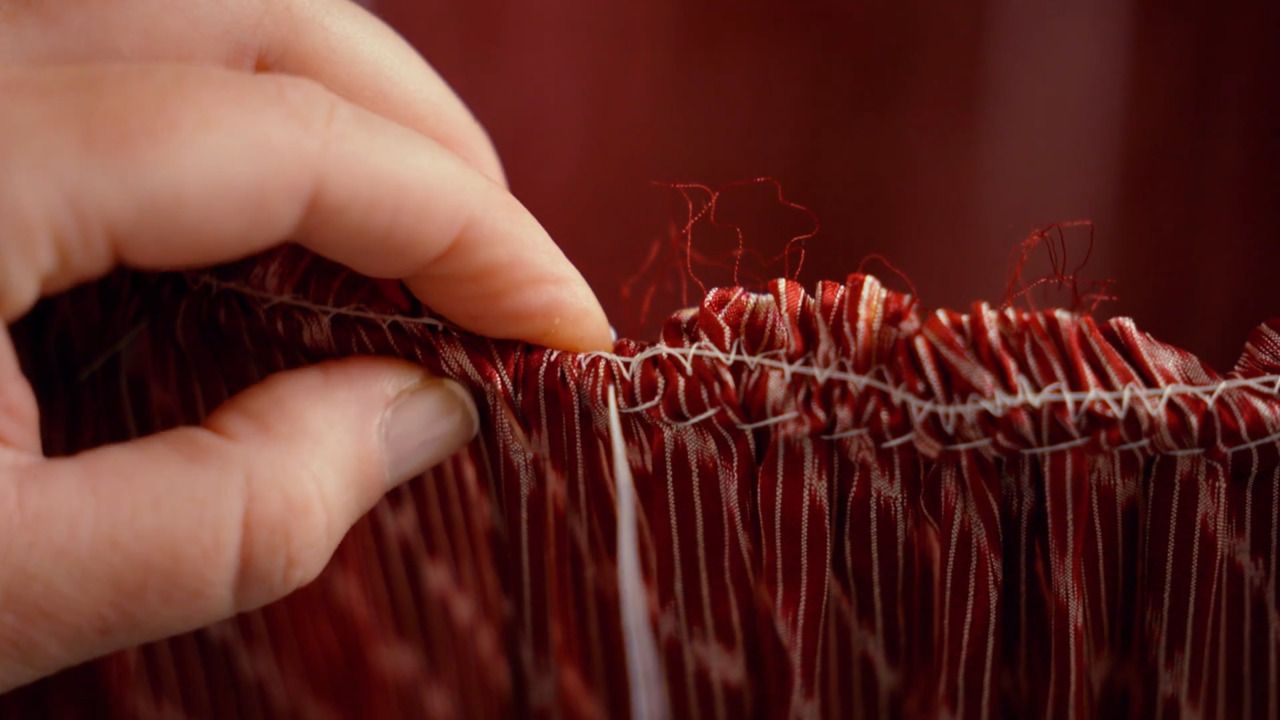
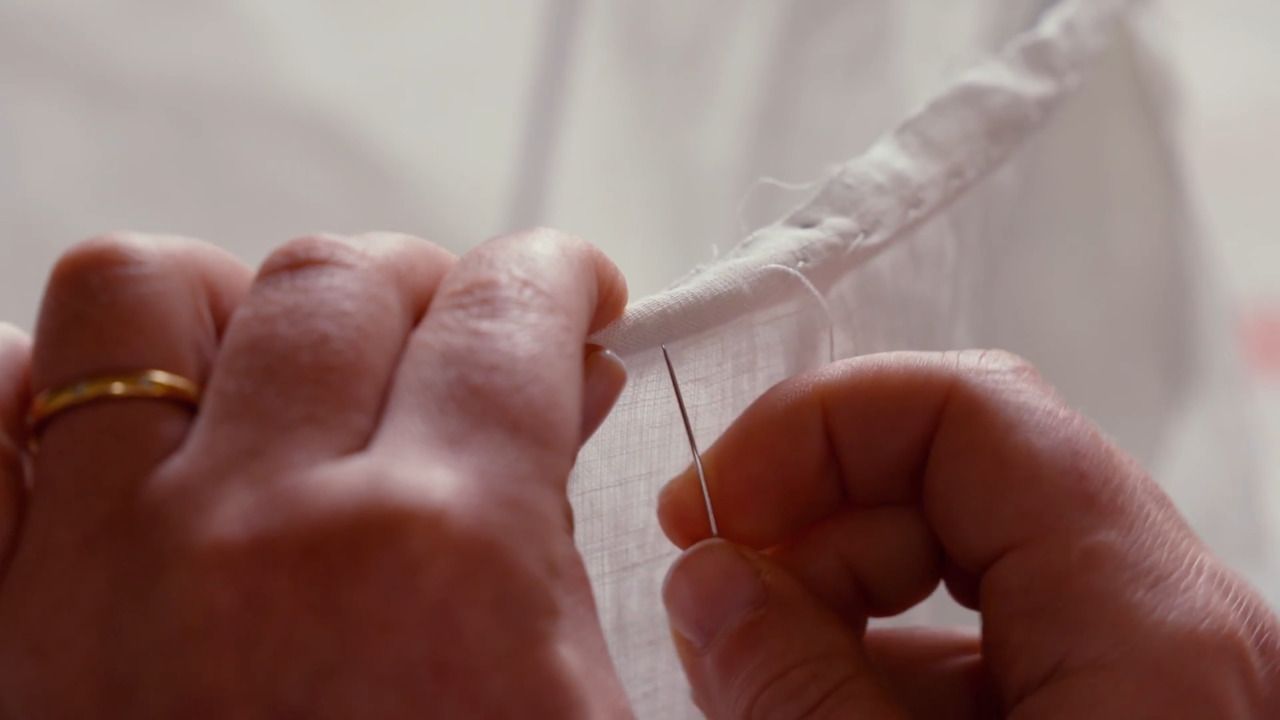
With the lining fully pinned, it's now time to sew it in place. Take a threaded needle, and starting to the right of where the two sides of the lining fabric overlap, begin to stitch. The scooping action with the needle is even more important at this stage, as you need to make sure you are catching both the outer fabric and frame binding in your stitch. Make sure your stitching line is neat and straight along the side of the frame - if they start to creep up or down, they will be noticeable.
Step 5
Once you have sewn all the way around and the lining is fully attached, you can trim the excess lining fabric in the same way as you did with the outer fabric. Use a small pair of scissors and go as close to the frame as you can while keeping your stitches intact.
Step 6
Once trimmed, give your work a once over checking for any stray threads or sections that might need trimming down further.
Step 7
Take your glue stick, and gently run it all around the bottom ring of the frame to prevent the fabric from fraying. Use the glue stick to move the fabric down away from the frame, and you can also go over your stitches at the same time to give them some extra security.
Step 8
Wait for the glue to dry before moving on to address the top of your lampshade.
Attaching the Lining to the Top Ring
Step 9
Pick up your lampshade with one hand, and check you don't have any loose threads or scraps of fabric stuck to your lining fabric. When you're sure it's clean, flip the lampshade over in one hand, and use the other to pull the lining fabric down.
Step 10
Then, turn the lampshade again so the bottom ring is facing up and tuck the lining fabric inside the frame. Reach under and into the top ring to catch the top of the lining fabric, then place the lampshade down on your work surface so the top ring is facing up and you have hold of the lining fabric through it.
Step 11
Locate either side of the lining fabric panel, and repeat exactly what you've done on the bottom ring with the seam allowance and overlap. Pin in place.
Step 12
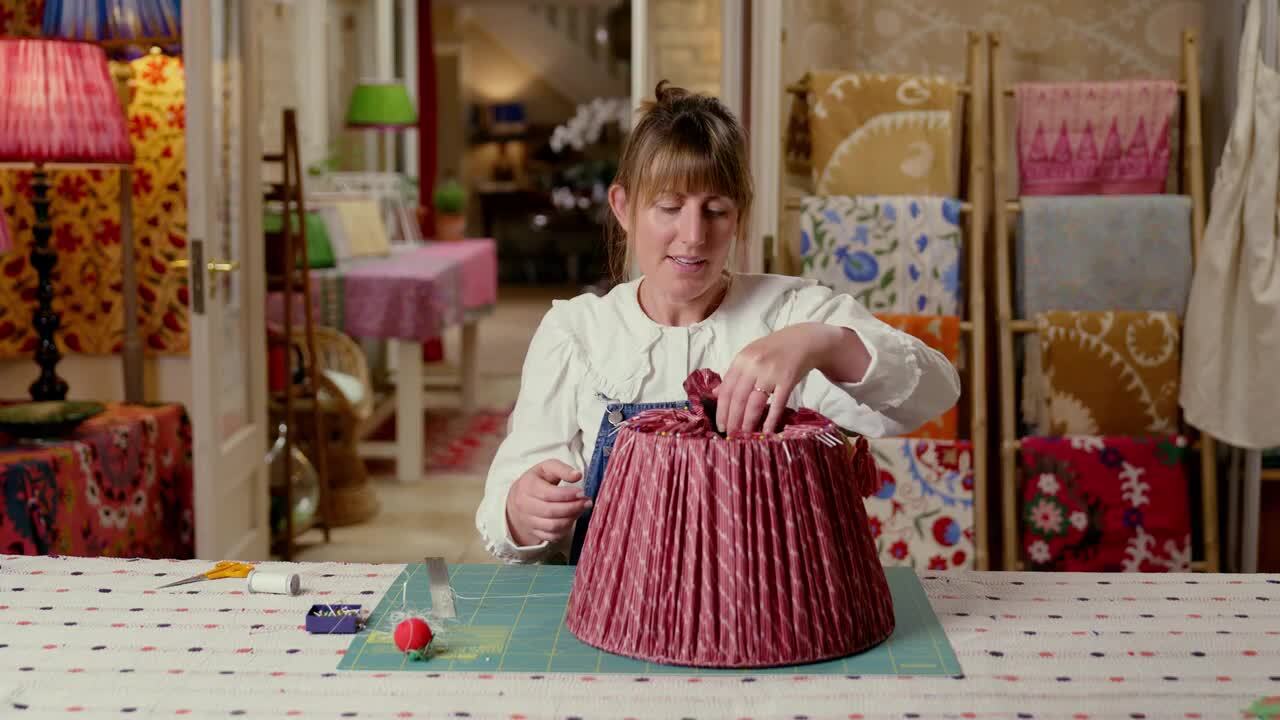
Work your way round the lampshade aligning each marker on the lining fabric to the corresponding spoke, folding a pleat at this point, and then pinning in pace. Ensure you are pulling the lining tight each time.
Step 13
Once you have pleated and pinned each marker, check that everything looks neat - particularly around the bottom ring - and that the fabric is pulled evenly all the way around.
Step 14
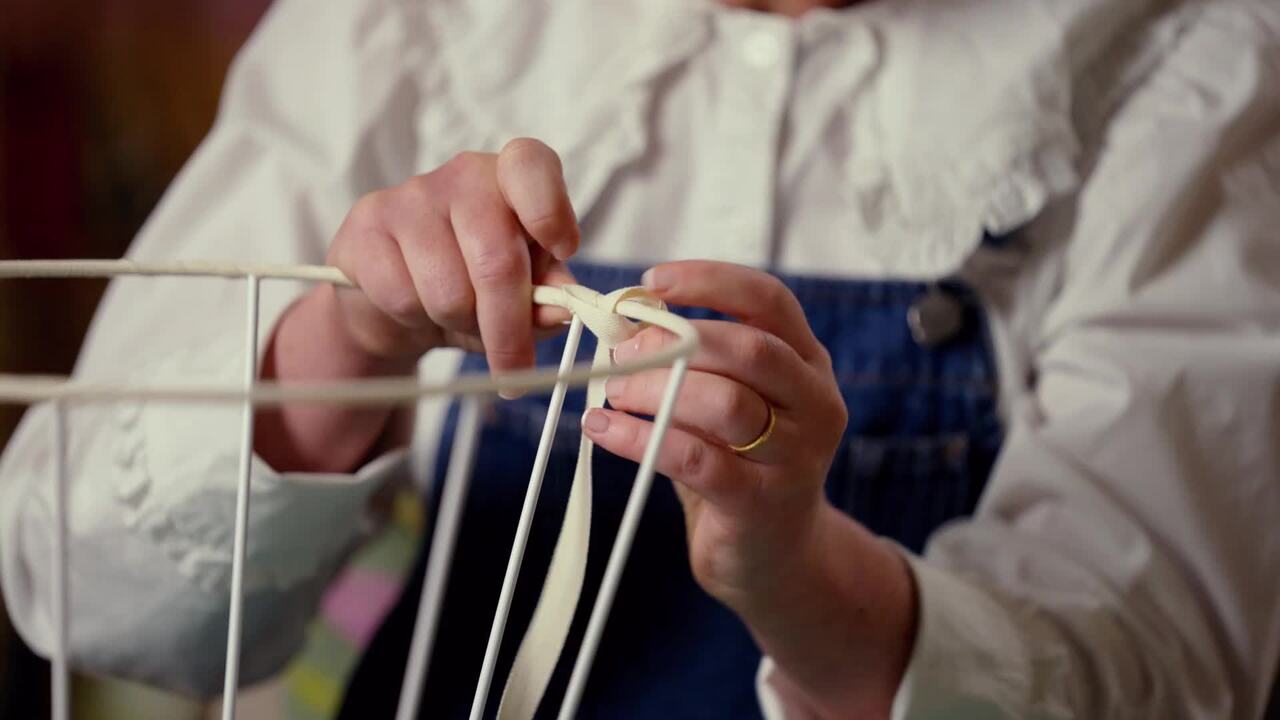
Now you need to accommodate the lining fabric around the horizontal spokes that attach to the lighting fixture in the centre of the shade. To do this, pull the lining fabric up and tight to the spoke - use one hand to hold this in place underneath the spoke.
Step 15
Next, take your small scissors and carefully cut down into your lining fabric at the point where it meets the spoke. The cut should finish just underneath the spoke.
Step 16
Take hold of both sides of the cut you have just made, and pull the fabric round the spoke, neatly overlapping on top of the spoke and pin.
Step 17
Moving round the lampshade, continue to pull the lining fabric tight and pinning to secure. Depending on the fabric you are using, it will either gather and pleat quite naturally as you pull it, or you may have to manipulate your own pleats to achieve a neat finish.
Step 18
Each time you meet a spoke, repeat Step 13-15.
Step 19
Once your lining fabric is fully pinned, it's time to sew. Take a threaded needle, and repeat the same stitch you used to attach the outer fabric, using a scooping action to ensure you are catching all the layers of fabric. Pay close attention to keeping the stitch on the side of the frame; if you veer up or down, the stitches will be visible on the finished piece.
Step 20
With the sewing complete, you can trim the excess lining fabric. Go carefully and take your time - make sure you don't accidentally cut your outer fabric, or any of your stitching.
Step 21
Once trimmed, give your work a once over checking for any stray threads or sections that might need trimming down further.
Step 22
As you have done before, take your glue stick and gently run it around the circumference of the top ring to seal the stitches and prevent any fraying of the lining fabric.
Step 23
Put your lampshade to one side, and wait for the glue to dry before proceeding onto the next stage.
Get the full workbook, video lessons, and more with a Create Academy subscription.
Subscribe to access the full workbook
Your Instructor
Chloe Jonason
Designer and soft furnishing expert specialising in vintage textiles and hand-crafted homewares.
Chloe is a designer and textile artist, specialising in upholstery, soft-furnishings, vintage textiles and unique objects for the home. Chloe's fascination with the art of hand sewing was ignited at University when studying History of Art, after which she embarked on a career rooted in furniture and soft furnishing making. In 2015, she founded her eponymous design business - based out of her studio in the South Lincolnshire countryside - where she crafts bespoke homewares and handmade lampshades using colourful vintage fabrics and carefully curated textiles sourced from across the globe.



Access to all courses