


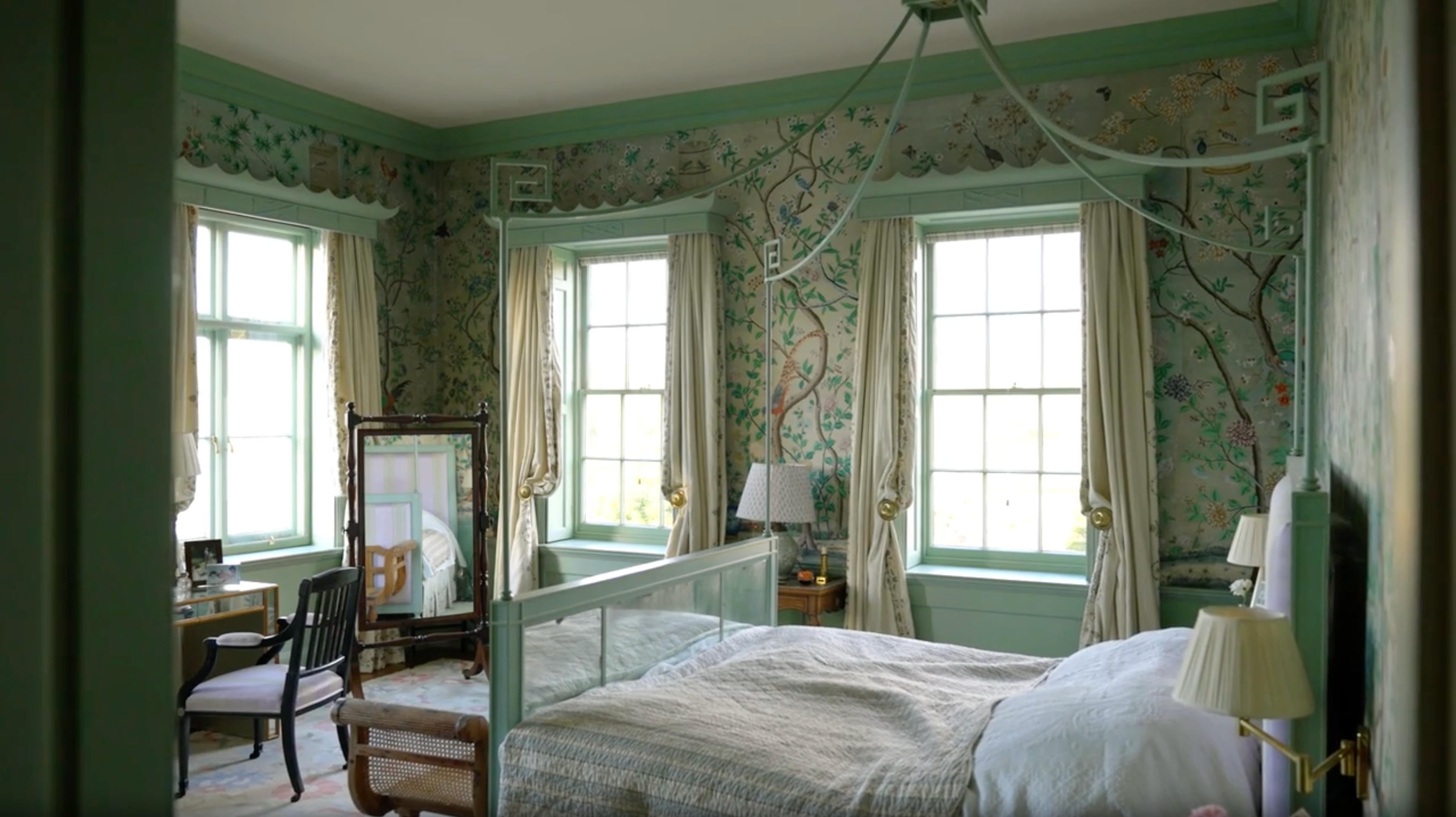


Interior and exterior confidence
Create Academy has been such a great resource. I'm in the middle of renovating a bungalow with a very large garden and the courses have offered a wealth of inform...
Harvey
Jun 10, 2026
A Guide to Pigments, Paints & Palettes
with EDWARD BULMER — Award-winning interior designer, architectural historian, paint expert. House & Garden Top 100.
Lesson 18 of 23

Subscribe to watch
Edward leads you through the second half of his scheming process, explaining how to balance light and dark and how to bring fabric into your scheme.
The next step is to apply the palette you've created to a room.
Connecting spaces or rooms that you travel through are best served with a neutral palette, whereas it's worth going bolder with colour in rooms that you spend time in. Imagining that this is the scheme for an entrance hall, I have disregarded the options with too much colour.
If your starting point is particularly cold, colours with a touch of heat can help to warm up the space. Equally, if your starting point is hot, choose cooler tones to pare the overall look back a bit.
Colour schemes are a play between light and dark, and the contrast between the two. Consider which element you want to stand out, and balance the other elements to be slightly lighter. Imagining that this is the scheme for an entrance hall, I have disregarded the options with too much colour.
Using the same logic and continuing to think about tonality, experiment with bringing different fabrics to join your paint colours. Here, you can use the colour wheel to introduce an element of complementary contrast with your fabrics. For example, a kitchen painted blue may suit a yellow fabric blind.
As you build up, you can start to incorporate stronger pops of colour across different elements of the room. However, to achieve balance, you must always be conscious of the tonal palette you've established. By constantly supporting the tonality of your starting point, you will create a family of materials that will all be in dialogue.
With final colours and fabrics chosen, you can begin to decide exactly where each element will go. I personally think it's wise to keep an off-white within your palette, as this may be necessary for trims and woodwork. If you bring in other materials, keep referring back to the tonal palette you have created.
Get the full workbook, video lessons, and more with a Create Academy subscription.
Subscribe to access the full workbookAlready a member? Sign in to watch
491 reviews
Read moreCreate Academy has been such a great resource. I'm in the middle of renovating a bungalow with a very large garden and the courses have offered a wealth of inform...
Harvey
Jun 10, 2026
Absolutely love Create Academy! The instructors are extremely informative, and it is beautifully filmed. Create Academy is great value for money and plan on renew...
SG
May 31, 2026
Butter's creativity is stunning! Her ability to incorporate brilliance in small gardens is magical!
Carla
May 30, 2026
The best adventure. I like all the courses, but my favorite are both Rita Konig interior design courses and Anna Jones. Excellent!
Karolina Kluczewska
May 20, 2026
Create Academy has been such a great resource. I'm in the middle of renovating a bungalow with a very large garden and the courses have offered a wealth of information to dive into and explore new ideas. I'm...
Harvey
Jun 10, 2026
Absolutely love Create Academy! The instructors are extremely informative, and it is beautifully filmed. Create Academy is great value for money and plan on renewing my subscription yearly because there are ...
SG
May 31, 2026
Butter's creativity is stunning! Her ability to incorporate brilliance in small gardens is magical!
Carla
May 30, 2026

Your Instructor
Award-winning interior designer, architectural historian, paint expert. House & Garden Top 100.
Edward Bulmer is one of the UK’s leading interior designers and architectural historians, specialising in the restoration and decoration of historic buildings. After studying History of Art at university, Edward trained under legendary designer David Mlinaric CBE, as well as working for Alec Cobbe, and Gervase Jackson-Stops OBE, who was architectural advisor to the National Trust. Alongside running his own paint company, Edward Bulmer Natural Paint, Edward has led a highly successful design team for over 30 years, working on some of England’s greatest country houses as well as a range of private and commercial projects including Goodwood, the Tower of London, Chequers and the Arts Club.
Access to all courses


