


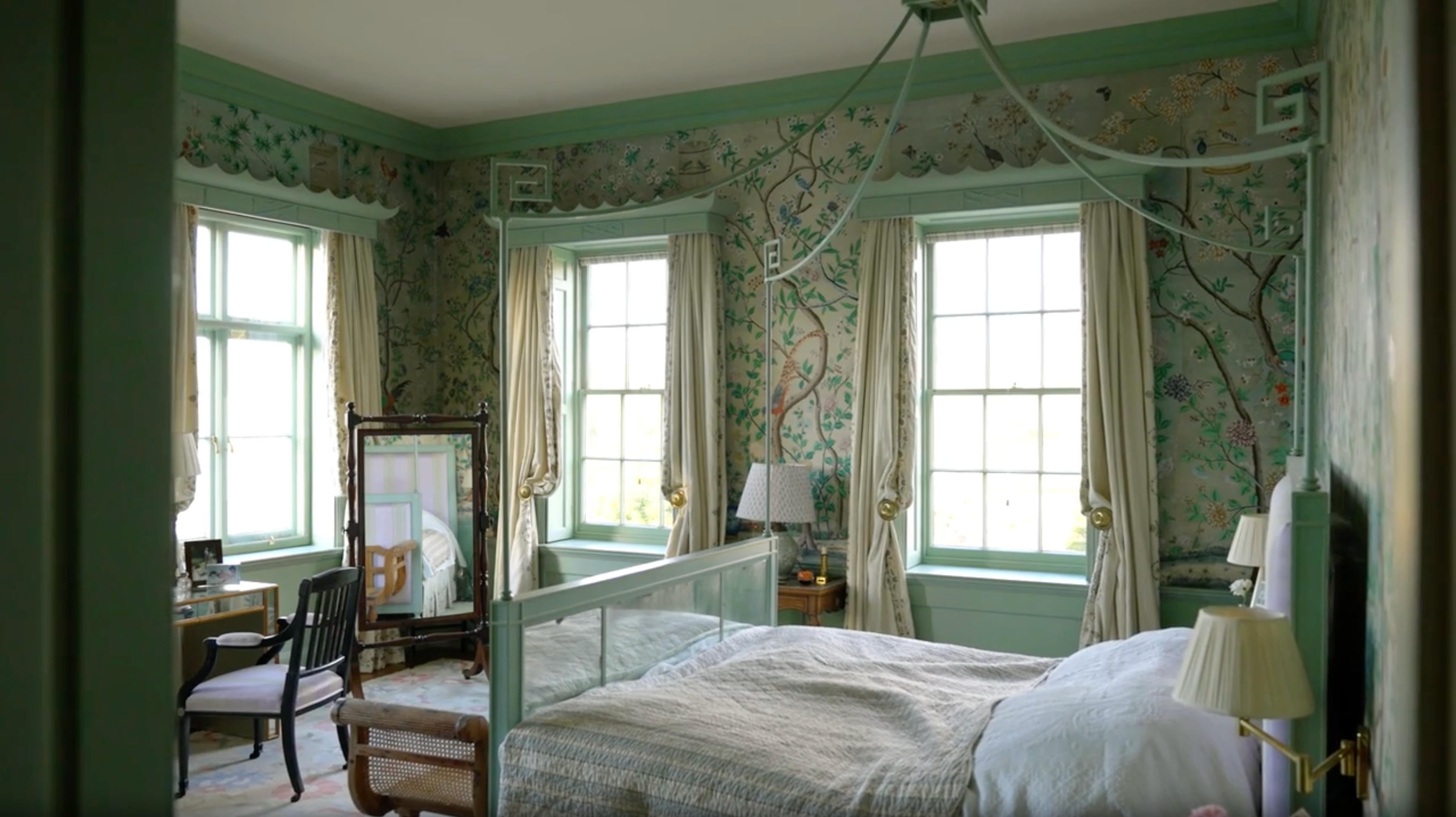


Interior and exterior confidence
Create Academy has been such a great resource. I'm in the middle of renovating a bungalow with a very large garden and the courses have offered a wealth of inform...
Harvey
Jun 10, 2026
A Guide to Pigments, Paints & Palettes
with EDWARD BULMER — Award-winning interior designer, architectural historian, paint expert. House & Garden Top 100.
Scheming should be a fun part of your project, but it can be extremely daunting. Here Edward demystifies the process by walking you through his own scheming process, and revealing how he builds a well-balanced room. For further inspiration, order a free colour chart here: https://bit.ly/free-paint-chart
Scheming should be a fun part of your project, but it can be extremely daunting for a beginner. I've broken it down into easy steps to demystify the process and give you the confidence to build your own well-balanced decorating schemes.
Choose an element that is either a certainty, or exists in the space already. For many projects, flooring will be the starting point.
Use a palette of subtly pigmented off-whites to see if you can work out where your starting point sits in terms of colour and tone.
After a process of trial and error, you will be able to decide on a few shades of off-white that sit harmoniously with the starting point. You may find one matches particularly well, whereas a couple of others offer a little contrast while still feeling balanced.
Establish what pigments are in the off-white that sits perfectly with the starting point. In the case of my example, I will focus on yellow ochre, black and red ochre.
Eliminating colours that don't contain the correct tonality, you are left with a palette of colours to try that contain the harmonious pigments. Experiment with different shades and build up a selection.
You will find some colours, although tonally balanced, will feel too heavy, and vice versa. These can be disregarded.
Once you have done the first cut that determines which colours will work in terms of tonality, you can edit your selection in accordance with personal preference. If you have already decided you want a blue scheme for example, then you can continue with these shades.
Get the full workbook, video lessons, and more with a Create Academy subscription.
Subscribe to access the full workbookAlready a member? Sign in to watch
Sign up or log in to keep watching
By continuing, you agree to our Terms of Use and Privacy Policy.
491 reviews
Read moreCreate Academy has been such a great resource. I'm in the middle of renovating a bungalow with a very large garden and the courses have offered a wealth of inform...
Harvey
Jun 10, 2026
Absolutely love Create Academy! The instructors are extremely informative, and it is beautifully filmed. Create Academy is great value for money and plan on renew...
SG
May 31, 2026
Butter's creativity is stunning! Her ability to incorporate brilliance in small gardens is magical!
Carla
May 30, 2026
The best adventure. I like all the courses, but my favorite are both Rita Konig interior design courses and Anna Jones. Excellent!
Karolina Kluczewska
May 20, 2026
Create Academy has been such a great resource. I'm in the middle of renovating a bungalow with a very large garden and the courses have offered a wealth of information to dive into and explore new ideas. I'm...
Harvey
Jun 10, 2026
Absolutely love Create Academy! The instructors are extremely informative, and it is beautifully filmed. Create Academy is great value for money and plan on renewing my subscription yearly because there are ...
SG
May 31, 2026
Butter's creativity is stunning! Her ability to incorporate brilliance in small gardens is magical!
Carla
May 30, 2026

Your Instructor
Award-winning interior designer, architectural historian, paint expert. House & Garden Top 100.
Edward Bulmer is one of the UK’s leading interior designers and architectural historians, specialising in the restoration and decoration of historic buildings. After studying History of Art at university, Edward trained under legendary designer David Mlinaric CBE, as well as working for Alec Cobbe, and Gervase Jackson-Stops OBE, who was architectural advisor to the National Trust. Alongside running his own paint company, Edward Bulmer Natural Paint, Edward has led a highly successful design team for over 30 years, working on some of England’s greatest country houses as well as a range of private and commercial projects including Goodwood, the Tower of London, Chequers and the Arts Club.
Access to all courses


