with FREYA BRAMBLE-CARTER
Lesson 1 of 9
This lesson is free to watch
Already a member? Sign in
In this opening lesson, Freya introduces her creative world of hand built pottery, sharing her background, influences, and passion for clay. Learners will discover what makes clay such a powerful and expressive medium and get an overview of the vase they’ll create throughout the course. It’s an inspiring start that sets the tone for a soulful, tactile journey into ceramics.
A natural, earthy material made of fine minerals that becomes malleable when wet and hardens when dry or fired.
A pottery technique using only the hands and simple tools, without a wheel, to shape clay into forms.
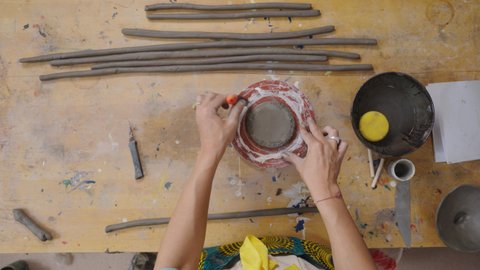
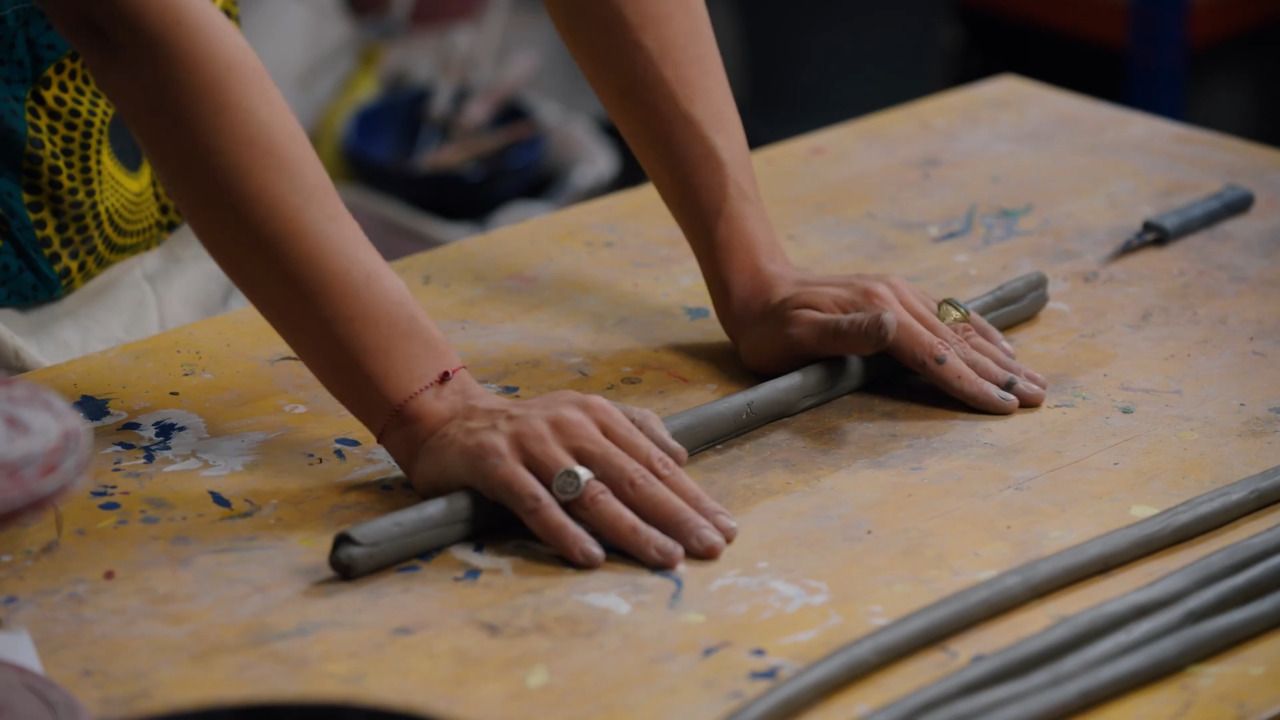
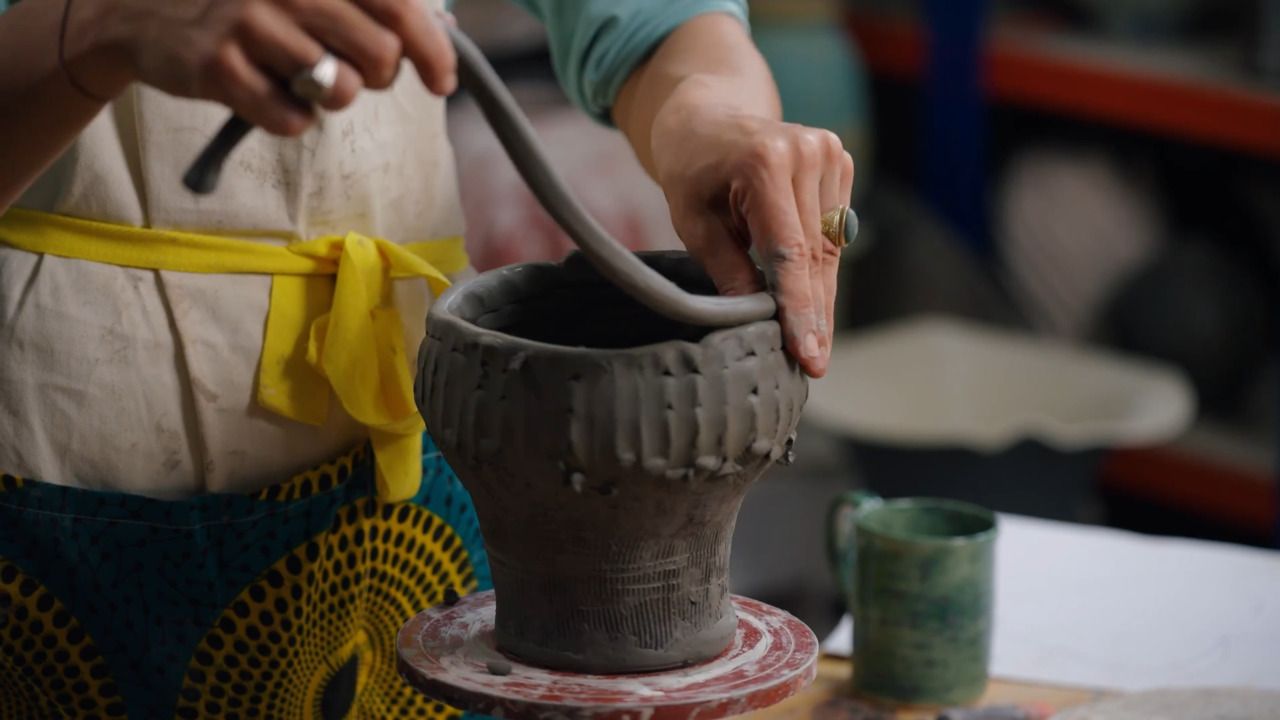
A method where long, rope-like rolls of clay are stacked and joined to build up the walls of a vessel.
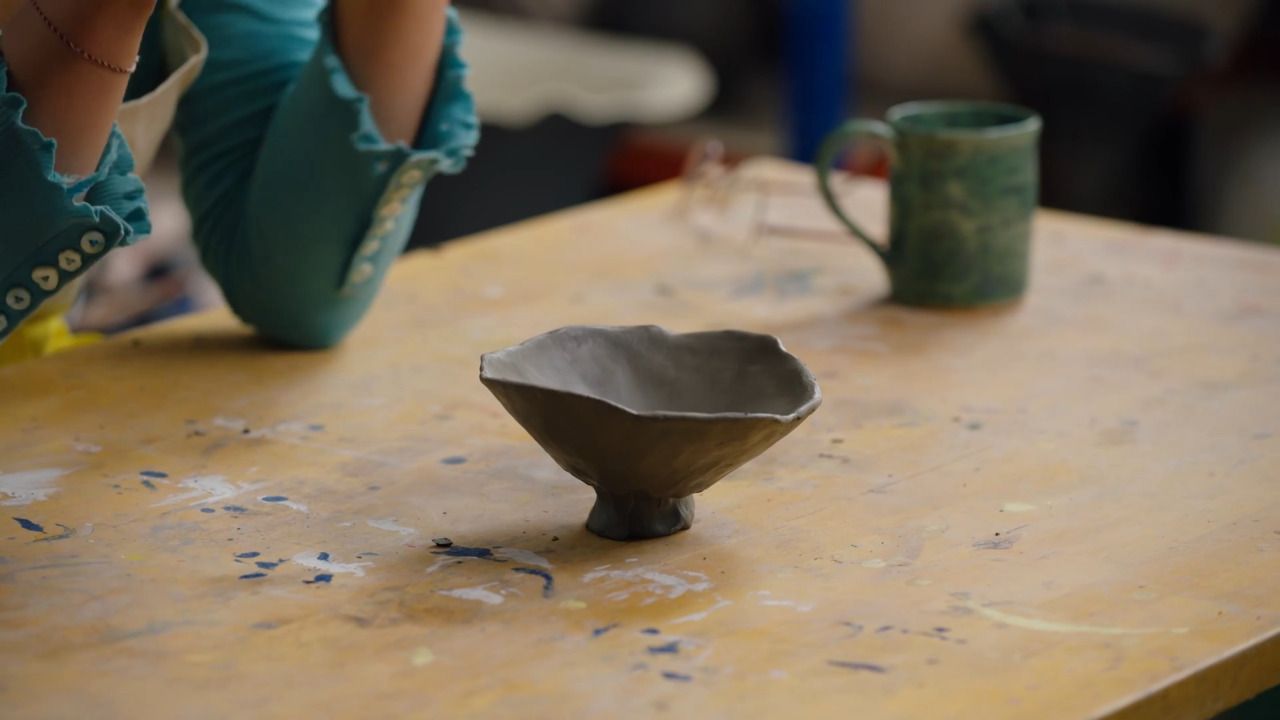
A basic form made by pressing the thumb into a clay ball and pinching the walls into shape with fingers.
Clay that hardens without firing; ideal for home use, but not waterproof unless sealed.
A flat piece of clay rolled to even thickness, often used as a base or structural element in hand-building.
The bottom surface of a pot or sculpture, usually rolled as a slab to support the rest of the form.
Technique for joining clay parts: scoring (scratching) the surfaces and adding slip (watery clay) as glue.
A creamy mixture of clay and water used to bond pieces or for decoration.
Clay that's partially dried—firm and ideal for refining shapes or adding detail, but not brittle yet.
Fully dried clay before firing; extremely fragile and no longer workable.
The process of heating clay in a kiln to harden it permanently. Not required for air-dry clay projects.
A type of clay that fires at lower temperatures and remains porous unless glazed.
A dense, durable clay body that's fired at higher temperatures and becomes non-porous.
The process during firing where clay becomes glass-like and waterproof, typical of stoneware.
A curved pottery tool (often metal or rubber) used for smoothing, shaping, or scraping clay surfaces.
A rib tool with a jagged edge, used to score or texture the clay and remove unevenness.
A cut-out profile guide used to help shape and check the symmetry or design of a piece while building.
A rotating surface (like a banding wheel) used to spin clay pieces for easier access while working.
Polishing the surface of clay using a smooth tool or sponge to create a sheen before it's dry.
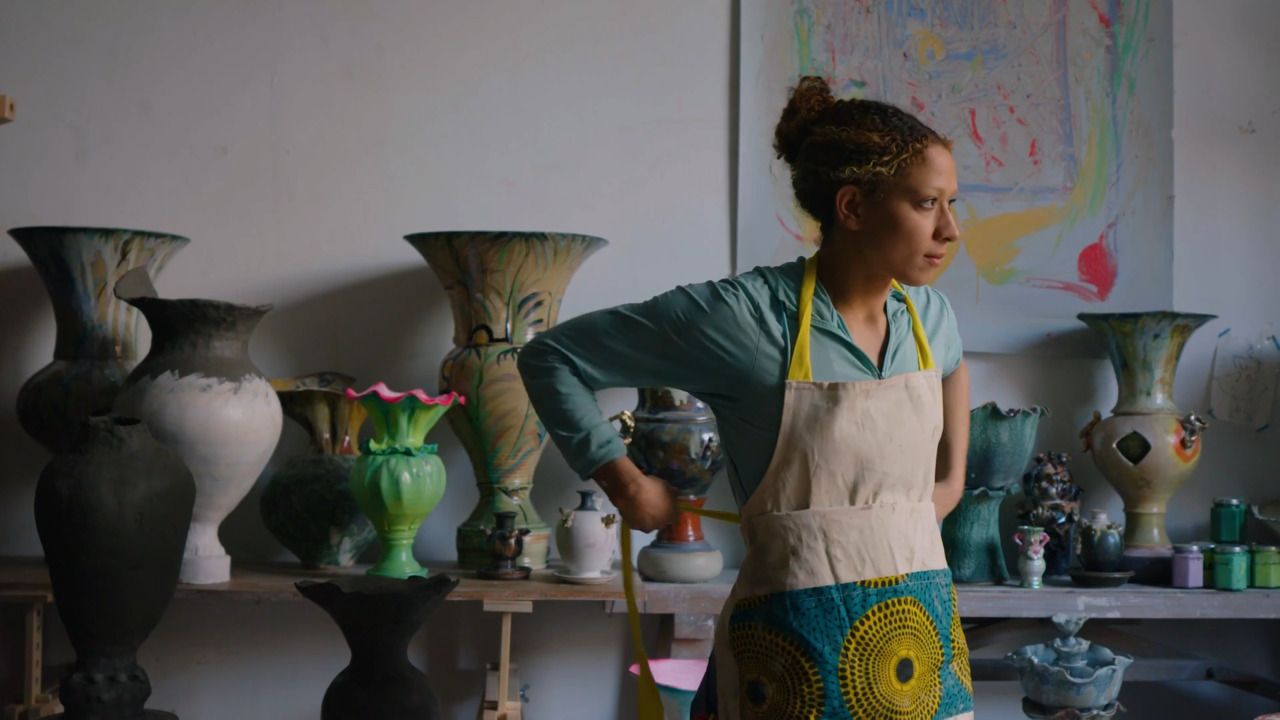
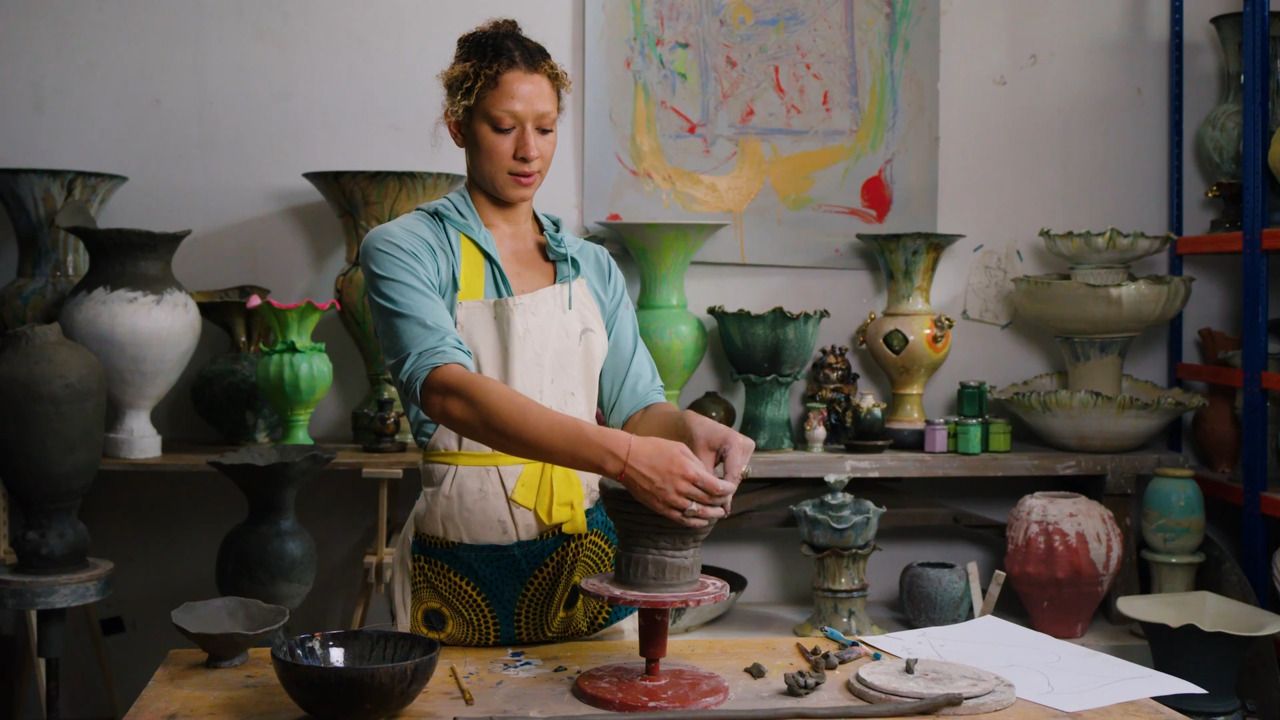
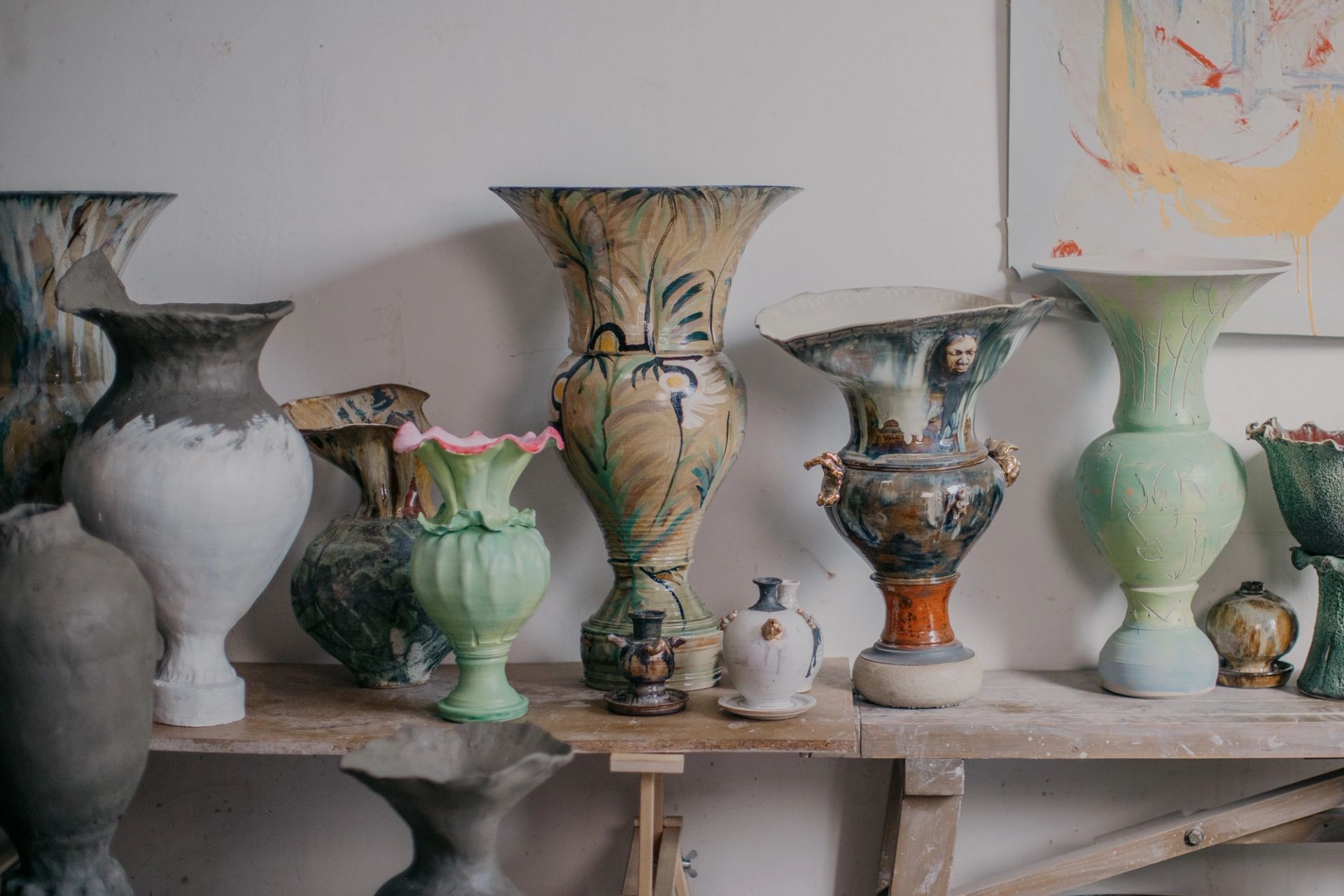
Freya is a ceramicist based in East London. She studied fine art at Chelsea College of Arts while also learning the craft of clay under the guidance of her father, Chris Bramble, a ceramic artist and teacher with over 30 years of experience with whom she shares studio space at Kingsgate Workshops in London. Freya creates tableware as well as larger sculptural vases. Her work incorporates contemporary designs, strongly inspired by the ethos of beauty and nature.
In this first lesson, I'll introduce you to my world of hand built pottery. You'll learn a bit about me, my journey with clay, and what we'll be creating together in this course. I'll also explain why I love coil building and why clay is such a powerful and transformative material.
Clay holds our imprint - it's memory in motion. Working with it is a conversation between your body, your emotions, and the earth.
Honestly, half my work probably started out as a mistake - but that's the beauty of it. Just dive in. There's nothing to lose.
It's accessible, meditative, and deeply creative. Clay doesn't judge - it just invites you to show up and play.
In this lesson, we're getting stuck into clay with one of the most basic and instinctive techniques - making a pinch bowl. This is a great warm-up exercise and an essential skill to build your confidence and hand strength. No tools needed - just your hands and a ball of clay.
Other suppliers
Clay has a beautiful way of absorbing tension. Just squeezing it can feel like letting go of stress - it's like a mini therapy session for your hands.
Your fingers are your number one tools. There's no right or wrong - just learning how your hands move and how the clay responds.
Don't overwork it - if the clay starts feeling floppy, let it rest and dry slightly before continuing.
This is all part of learning to understand clay and yourself. It's about building the connection between your fingers, your ideas and the material. That takes time, patience - and play.
Have fun with your pinch bowl! Even if it's a bit lumpy or uneven, it's your first proper conversation with the clay. Next time, we'll get into the magic of coil building and begin sculpting the base of your vase.
Before we dive into building, let's take a moment to visualise your vase. It's a great way to give your making process some intention, though, don't worry if the design evolves as you go. That's part of the magic.
Start by asking yourself:
For this lesson, I'm inspired by sunlight and flowers. I want my vase to open wide at the top like petals greeting the sun. It'll taper down into a rounded, curvy body and have a narrower, sturdy foot - because we all know I've made a few wobbly bottoms in my time!
Colour-wise, I'm thinking of soft pinks and greens, maybe with white to lighten and shift the tones across the body, creating something that feels radiant and alive.
I always think of the vase as a self-portrait - what energy do you want to hold and express through this form?
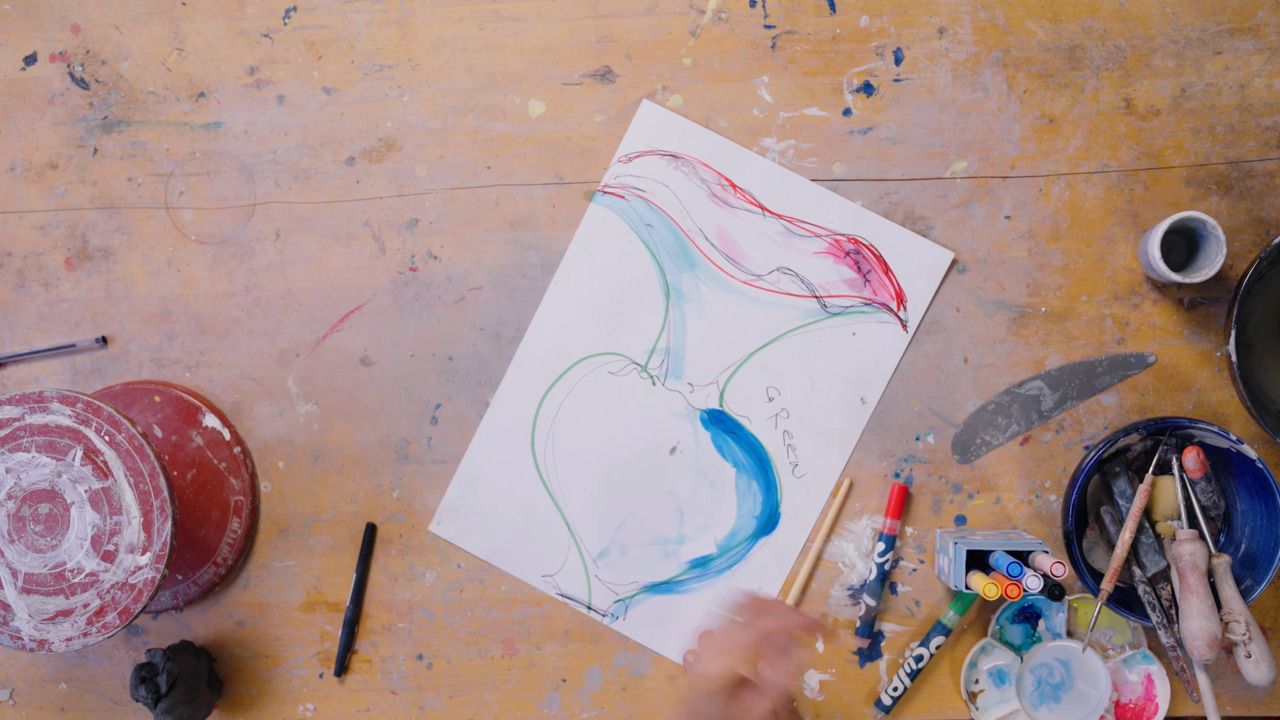
Take a moment to do a quick sketch or colour wash:
If you want a bit of structure while you build:
If your shape is more abstract or freeform, skip the stencil and just follow your instincts.
Use the template if you need it - but if you're feeling bold, let your hands lead. There's no wrong way.
Now that you've got a sense of what you're making, we'll begin the actual build in the next lesson, starting from the base and working up with coils. See you there!
Right, let's get our hands into the clay and start building the base of our vase, and then move on to rolling and stacking coils. This is where things get really tactile and fun.
To begin, we're going to roll out a flat slab of clay for the bottom of the vase.
Steps:
It doesn't have to be perfect. The imperfections are part of your imprint.
Place your base on a surface that's easy to move (like wood or thick card) so you can turn it easily as you build.
The type of clay you're using matters, especially if you're firing it. This is what you should know:
Always tell the person firing your piece what kind of clay it is - otherwise, it might melt or explode. Not ideal.
The clay I'm using has little fibres in it, which helps make it strong, even when bone dry. It can be fired to either earthenware (1180°C) or stoneware temperatures (between 1200°C and 1300°C), and I tend to fire my work to stoneware for that lovely, vitrified finish.
Now we move on to rolling coils - these are the building blocks of your vase walls.
How to roll a coil:
You're aiming for coils about the thickness of your finger. Too thin, and your walls may collapse. Too uneven, and you'll have weak spots.
The trick is to be gentle. If you're too rough and it goes thin, start again. No drama.
Make 4-5 coils to begin with. They'll dry quickly, so keep an eye on the texture. You can use slightly stiffer coils at the bottom of your build to give extra stability.
Working with clay is deeply meditative. It absorbs you, mirrors you. It's a dance, a conversation between you and this ancient material. This clay, even processed, still holds the memory of stone, formed over millions of years. You feel that when you work with it. You're holding a bit of the earth's story in your hands.
It's before your time, before mine. That's the real gift of it.
In the next lesson, we'll start building upwards with coils - joining them to the base and shaping the form. Bring your attention and curiosity. Let's go slow and steady.
Now that we've got our base and coils ready, it's time to start the real building - layer by layer, we'll shape our pot by joining coils and blending them as we go. This is the heart of hand building with clay, and one of my favourite parts of the process.
We begin by attaching the first coil to the base. I always use my firmest coil for this - like the trunk of a tree, it needs strength to support everything above.
How to stick it on properly:
Cross-hatching locks the textures together. Water is the magic that binds them.
Make sure the base and first coil are firmly joined - press it on so you can hear little air bubbles escape. That's a good sign, it's bonding well.
As you stack the coils:
You'll notice a rhythm forming: score, moisten, press, blend.
It's a gentle push and roll - not thinning the coil, just locking it in.
This is the stage where your form starts to emerge. I wanted mine to flare out gently, so I leaned my coils slightly outward as I went.
You can:
Both methods work - it just depends on your style and patience!
Some of the best coil builders I know do one ring at a time - it's meditative, slow, and stunning.
Once you've stacked a few coils:
If your pot is starting to curve or flare, pause to let it firm up before adding more coils. This helps it hold its shape and stops it from slumping.
Posture matters! As you build:
There's something about this process that feels ancient. Coiling connects you to clay in such a primal way - one ring at a time, you're creating a form that holds space, maybe even memory. The act of joining, layer by layer, is like building a story.
Every pot has it's own pace - trust yours.
Next time, we'll look at smoothing and refining the shape, and how to plan your form if you want to change direction mid-build. For now, take it slow, feel your clay, and enjoy this rhythm.
This is where our pot really starts to take shape - we're not just coiling now, we're sculpting a form, considering proportions and how the piece moves through space. It's about tuning in to both your clay and your creative intention.
At this stage, I'm reaching the widest point of my vase - the belly. It's a good time to think about the overall profile.
These ratios matter. A narrower base and wide belly can be beautiful, but they're also more likely to collapse - so I tend to pull in the form a little sooner to keep it stable.
A little tip: you can sketch your shape first or even cut a cardboard stencil form to guide your profile as you build.
Coiling is such a universal technique - I've used it to make all sorts: toilets, sculptures, cutlery! It's perfect for dynamic forms and allows for height, play, and layering other techniques over the top.
It's also one of the first hand-building methods most people learn. There's something intuitive and grounding about it.
I pause often to step back and look at the shape from a distance. A quick trip to the loo and fresh eyes can reveal if things are going off-course!
Keep checking:
Every time you return to your pot, you see it differently - use that to guide your decisions.
If you're short on time, try making flatter, wider coils. They build height faster and help you cover more ground.
I used a few here to speed things up. They're also great for adding structure and variety to the build.
As I built, I kept sculpting the coils to shape the belly and waist of the vase. Once I'd formed the general silhouette:
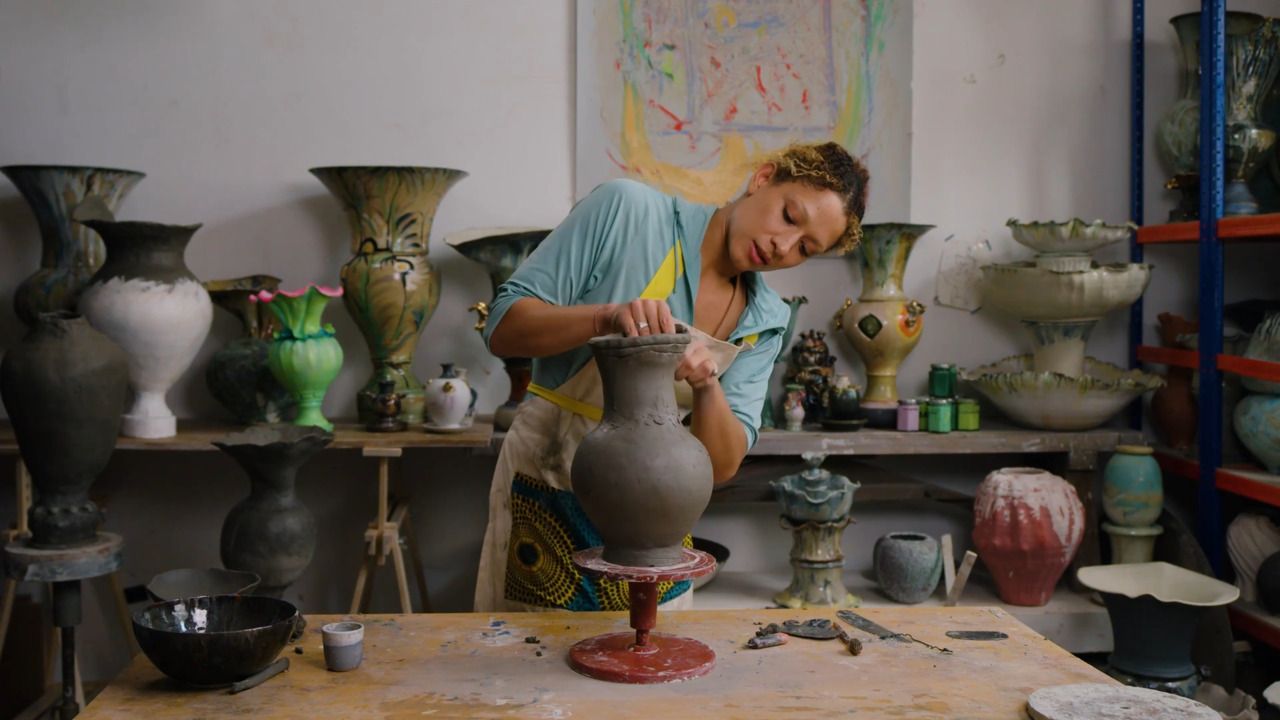
After combing, I switch to a smooth kidney - mine's a favourite soft one from Mud Tools - to polish the surface.
You can also stretch or refine the form from the inside using your knuckles or fingers. Be gentle - you're thinning the clay as you do this.
Push from within, but always listen to the resistance.
If you've taken a break, check your pot's moisture levels. The older coils will have firmed up. To blend fresh ones:
Let the piece rest and dry once you're happy with the shape. I usually leave it for 30 minutes to an hour before adding more height.
If you leave it longer, cover it with a plastic bag to keep the surface pliable - especially important if your studio's warm or dry.
Timing is everything with clay - not too soft, not too dry.
If perfect symmetry is your goal, wheel-throwing might be your best bet. Coiling is more intuitive, slower, and personal. For me, the slight irregularities are what make it beautiful.
I want the human hand to show. That's the poetry in pottery.
Let the form guide you. Let your hands respond. Next time, we'll build the neck and refine the rim - the final flourish before drying and firing.
To keep your unused clay from drying out and becoming too hard to work with, make sure to store it properly. You can either seal the bag with a clip or metal clasp, or—as I often do—twist the top of the bag, tuck it underneath, and store the bag upside down to keep air from getting in.
We're entering the final stretch of our vase-building and shaping the neck. It's where your piece starts to speak, to express its energy and character. Now's the time to infuse your pot with meaning and movement.
After a break, I always check the moisture level of the top coil. If it's gone a bit stiff (heading into leather-hard), I soften it before adding more coils:
Before closing off the neck, check your shape one last time. Now that the clay is firmer, you can apply more pressure to stretch or adjust without it collapsing. I often use my knuckle on the inside to do this.
This is a great moment to refine the profile:
I think of this stage as a gentle combing-through - your tools, your fingers, your presence slowly refining the clay. If done with care, it can look as if the pot's been thrown on a wheel.
Time to go up. You can:
Important: Make sure the base of the neck is firm and thick enough. This area and just below it are prone to collapsing if they're too soft or thin.
When adding water, use just enough - too much and it'll drip down and weaken areas you want to stay strong. Keep the neck tall and expressive, and let the form flow naturally.
This is where the meaning comes in. For me, this open neck symbolises:
But your form might do something else entirely:
Let your personality come through. Allow for little imbalances and imperfections. They make the piece more alive.
Clay forgives. If something collapses a bit, don't panic - reshape, resmooth, keep going.
As you finish shaping, think about this:
Clay reminds me that we can reshape life - soften what's stiff, rebuild what's collapsed, and keep forming something beautiful.
This coiling technique is as powerful for beginners as it is for experienced potters. The more you practise, the more your ideas and your skills develop together. There's always more to discover.
At this point, I'll let the pot dry a little before finishing the top. I might add a few final coils, smooth it out, and next, we'll start to decorate and paint.
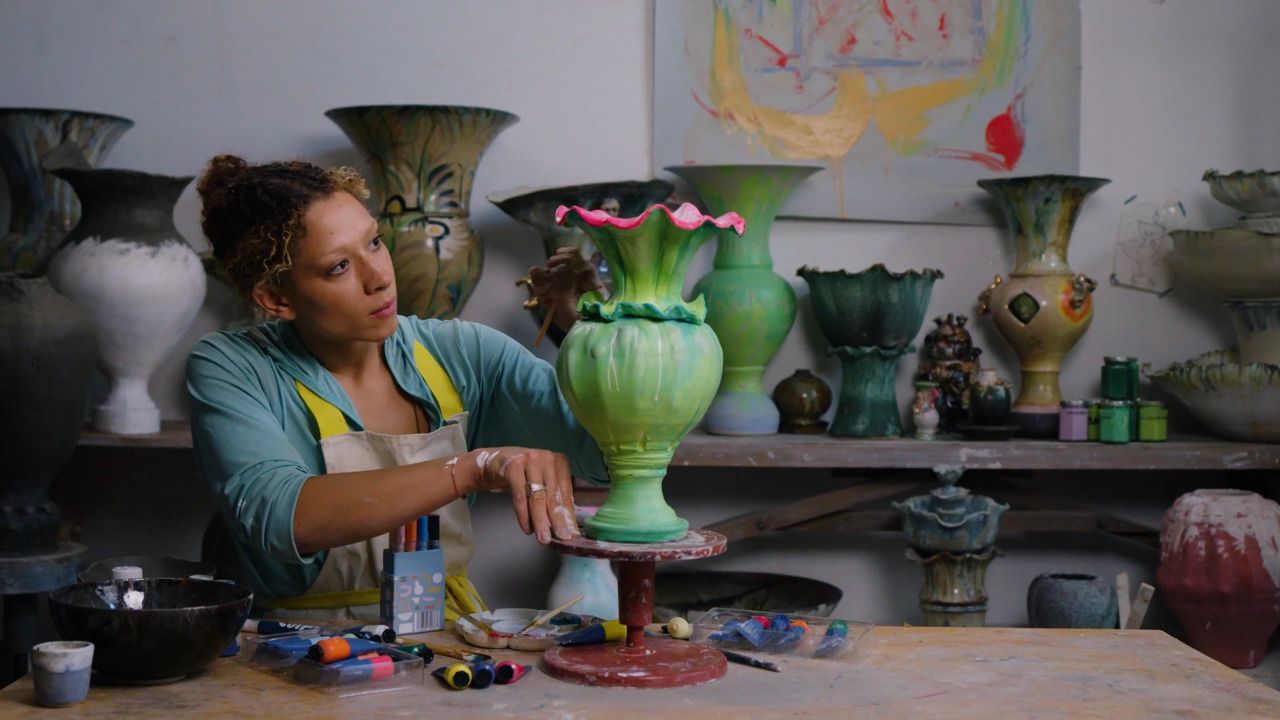
Now we get to paint! This part's all about play, creativity and personality. You're turning your clay vessel into a piece of art that reflects you - your imagination, your colours, your energy. It's where it all comes alive.
At this point, your vase should be leather hard - firm but not bone dry. It should feel like hard cheese - you can press your nail in, but it holds its shape. This is the ideal stage for:
If you want a super smooth, polished finish, take your time here. Use a damp sponge, metal scraper, or even a spoon to burnish and soften the surface.
We're using acrylic paint for this. You don't need a kiln or glaze - this method works for those making at home with air-dry or non-fired clay.
Here's how I paint
The paint becomes your glaze, your design, and your protection all at once.
You can get creative here - there are loads of brilliant paint pens and tools out there too.
Tips for waterproofing:
Acrylic dries fast, so it's great for blending if you work quickly - use a bit of water to help smooth transitions or make a wash.
When I paint, I let the form lead the flow of the colour. For example:
Follow the shape. Let the paint dance with the form.
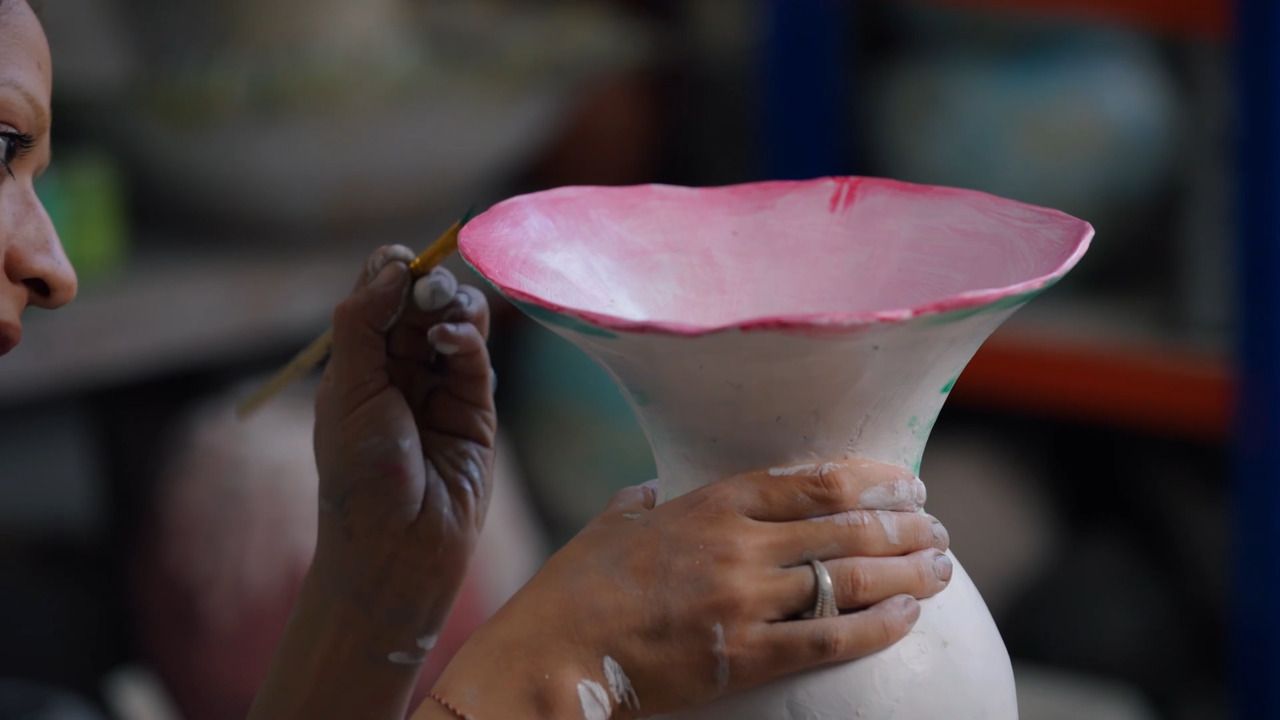
You can be bold or subtle - it's your call. For this vase, I'm blending red into pink inside, and then fading through greens and blues on the outside - soft, organic, nature-inspired.
This stage is intuitive and forgiving:
I'll finish my vase with some highlighting and maybe draw on leaf-like veins or floral lines with my favourite paint pens. You can go as minimal or as decorative as you like.
Let it all dry fully before moving or filling it. And then, you've got your finished, hand-built, hand-painted, completely personal vase.
We've made it to the final touches! This is where everything comes together - colour, form, feeling. I'm just refining a vase I made earlier with a more elaborate design - it's a bit floral, a bit pumpkin or strawberry-like, with these little sculpted ridges and petals. Whatever you've made, now's your moment to bring out its character and seal in all your hard work.
Once the first layers of paint are dry, you can go in and:
It's all about adjusting what you've already done. Just take your time and enjoy the process.
Let the vase tell you what it needs. Follow its curves, listen to its shapes.
This is where paint pens can also come in handy - for details, veins, outlines, or playful embellishments.
This step is key for making your vase watertight and giving it that lovely finished look.
Don't forget to varnish:
If you miss the bottom or inside, you might get a soggy pot and a wet shelf - not ideal, but easily avoidable!
Get the full workbook, video lessons, and more with a Create Academy subscription.
Subscribe to access the full workbook
Your Instructor
Contemporary ceramicist
Freya is a ceramicist based in East London. She studied fine art at Chelsea College of Arts while also learning the craft of clay under the guidance of her father, Chris Bramble, a ceramic artist and teacher with over 30 years of experience with whom she shares studio space at Kingsgate Workshops in London. Freya creates tableware as well as larger sculptural vases. Her work incorporates contemporary designs, strongly inspired by the ethos of beauty and nature.
Access to all courses
Get 15% off your first year of all-access learning, or your first course
Use this code at checkout: