








Interior and exterior confidence
Create Academy has been such a great resource. I'm in the middle of renovating a bungalow with a very large garden and the courses have offered a wealth of inform...
Harvey
Jun 10, 2026
Cut and Come Again Masterclass
with SARAH RAVEN — Acclaimed English gardener, cook and writer. Host of the UK’s No.1 gardening podcast.
Lesson 14 of 48
Subscribe to watch
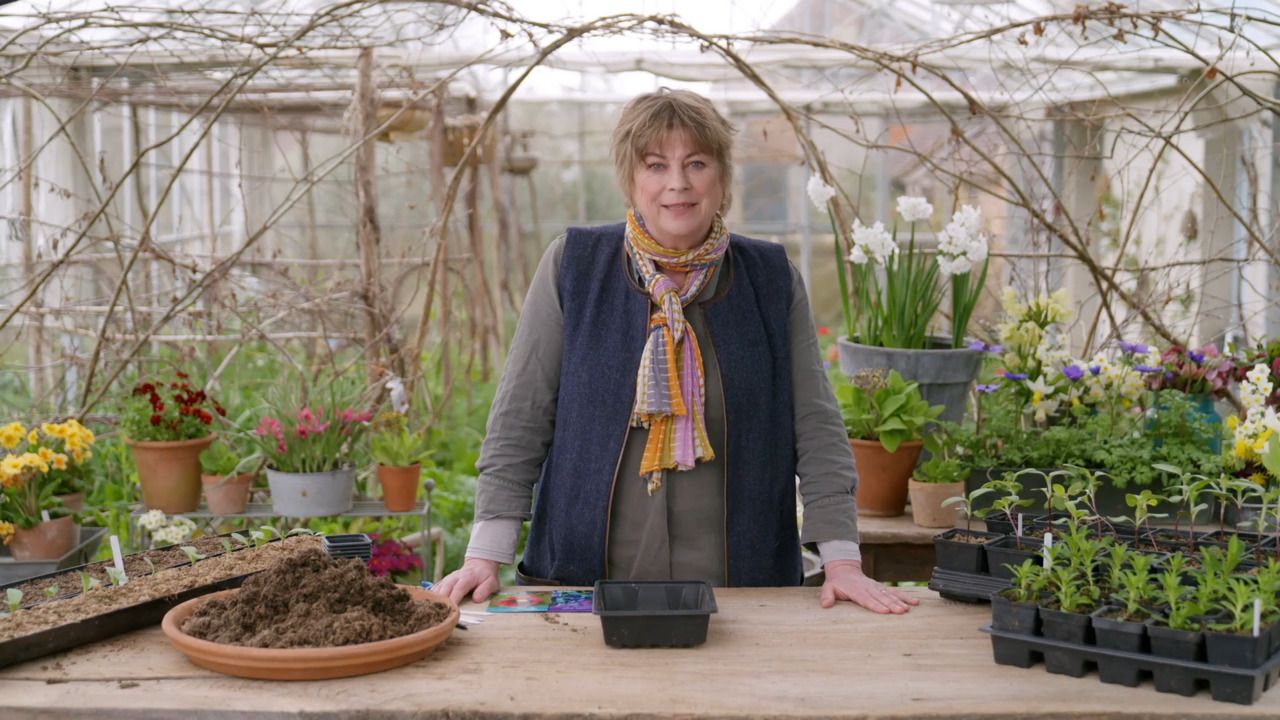
Everything you need to know about how to sow seeds to ensure maximum success with minimum effort, including sowing into gutter pipes, what compost to use and where to keep your seedlings.
March is when the growing season really kicks off in the UK, and while the weather might be changeable, when the clocks go forward, there are more daylight hours for plants to really get growing.
Here are a few of my favourite sowing methods for half-hardy annuals. The method you use will be dictated by the size of your seed. Small seeds are best sown in a seed tray, while larger half-hardy annual seeds can be sown using the gutter pipe or jiffy pellet methods.
Snapdragons can be slow to develop in this country because in their native region (in this case the Mediterranean) they are perennial plants. As they're perennial their root system takes a little bit longer to develop, so we tend to sow our first batch of snapdragons towards the end of January.
Snapdragon seeds are incredibly small, which means you want to sow it from a height and very quickly so that you spread the seed over the whole surface area that you are sowing, as evenly as possible.
As they're so small, you do not need to cover the seeds with more compost, you can just firm them into your seed tray.
After that, give them water (and don't forget to label your tray with the name and the date) and pop the tray onto a heating pad if you can and if not, a sunny windowsill will do.
On average they will take around three weeks to germinate, and then you can prick out the small plants around two weeks after that.
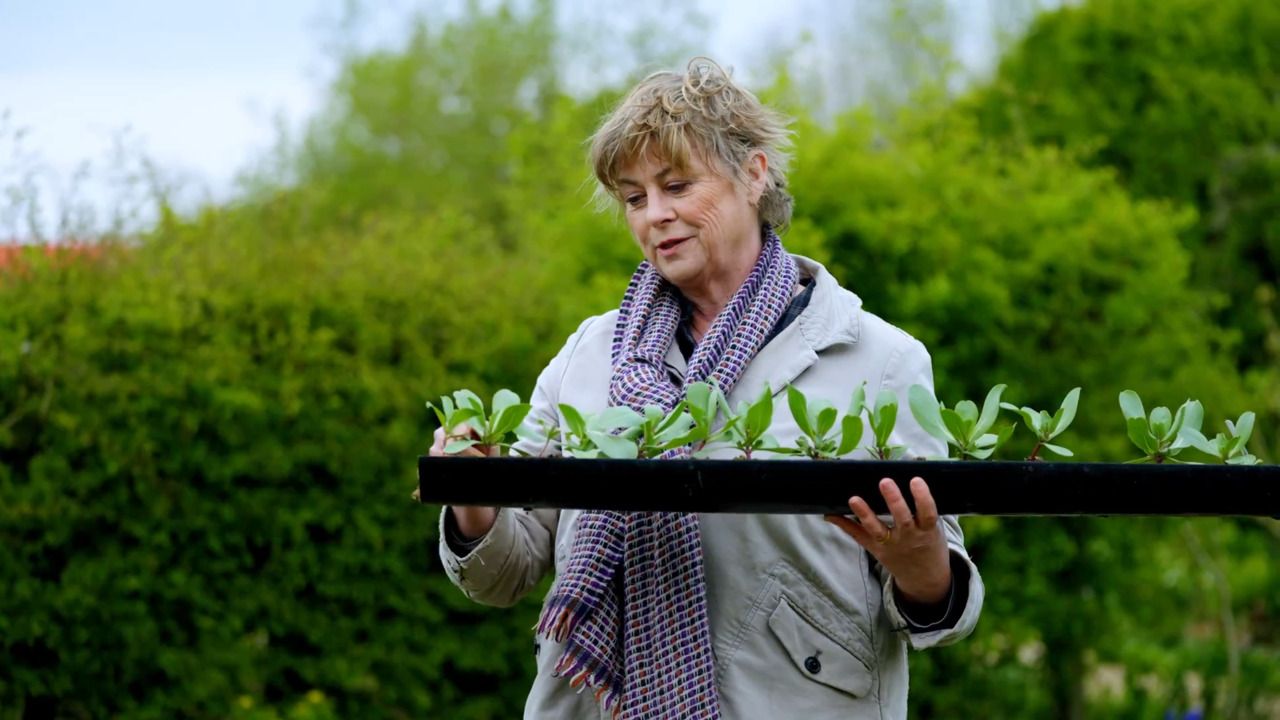
I first read about using a gutter pipe for sowing seeds in a book by Geoff Hamilton, who advised using one for growing peas. Sowing seeds this way is incredibly efficient as there's no need for pricking out or potting on.
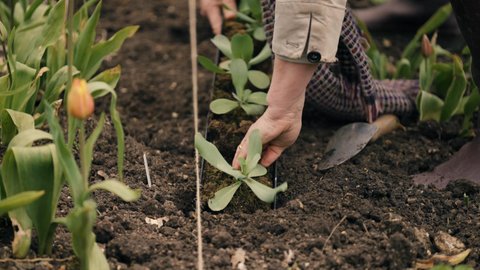
The gutter pipe acts as a ready-made row so that when your seedlings are big enough, all you have to do is push them out into your bed at suitable intervals.
With this method of sowing, you are also likely to get a much higher germination rate, even reaching upwards of 90% germination, which you would be unlikely to get with direct sowing, especially earlier on in the year.
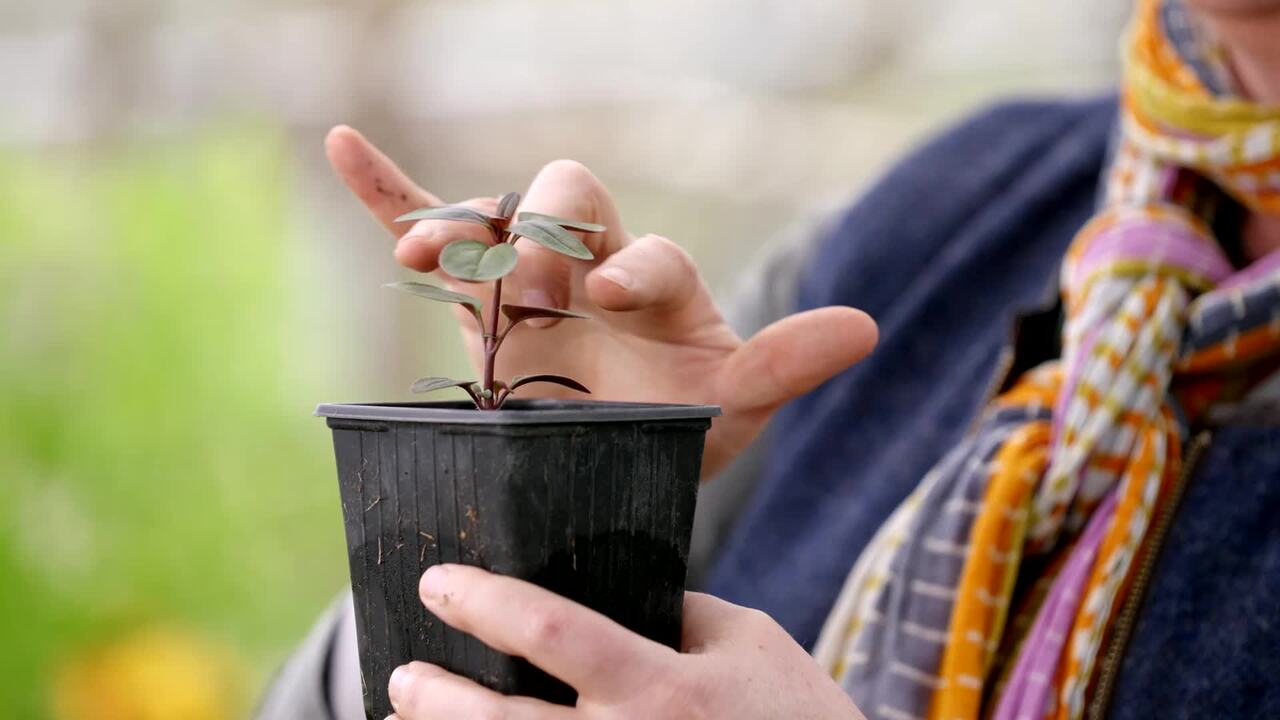
This method is especially good for larger seeds such as Cerinthe major 'Purpascens', and helps you to get maximal productivity from minimal time and minimal space.
I generally use metre-long gutter pipes to sow my seeds in, so that I know the exact number I will need to fill to have enough plants for my space.
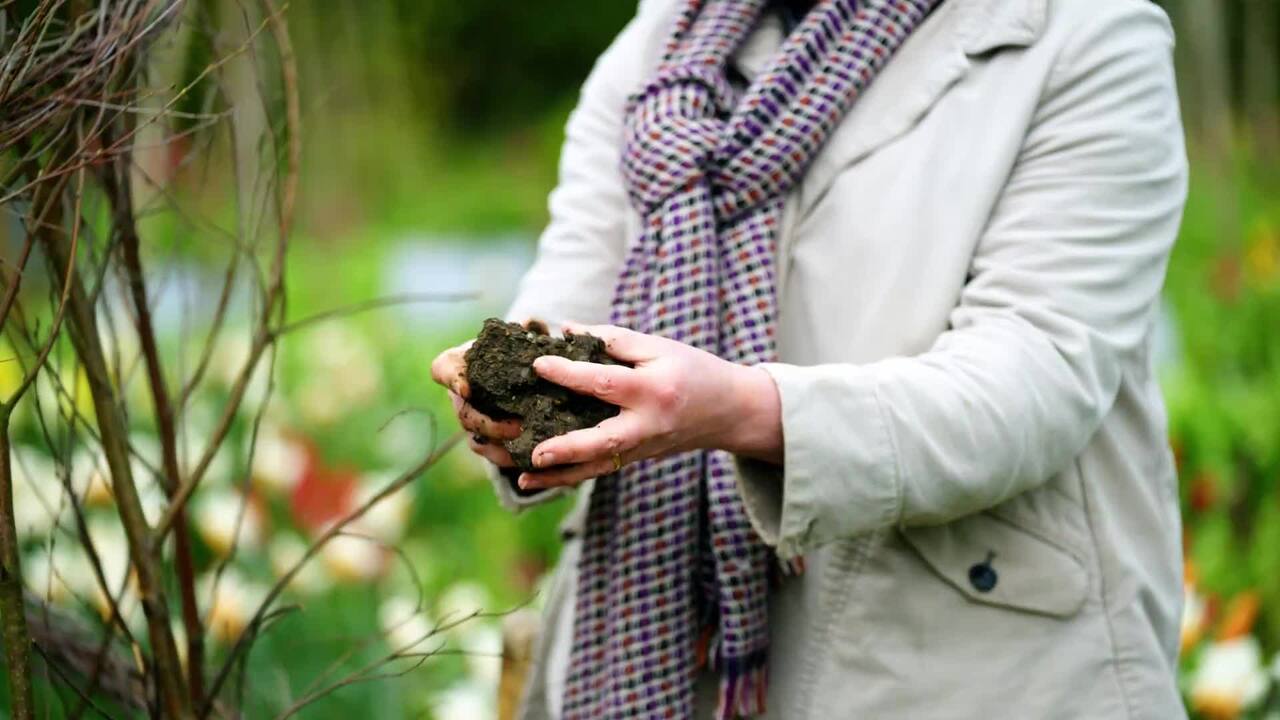
We are totally peat-free on our farm, and we now create our own potting mix. This is made up of our own compost, mole hills and organic farmyard manure, which we then mix with an organic, peat-free multipurpose potting compost.
If you visit your local garden centre you will find an almost overwhelming amount of different compost mixes, from seed compost to potting mixes and general multi-purpose composts.
From our research, we have found that because your seedlings are only spending about six weeks in this mix, it doesn't matter what type it is, because they will soon be out in the garden anyway.
My advice is: Don't overthink it!
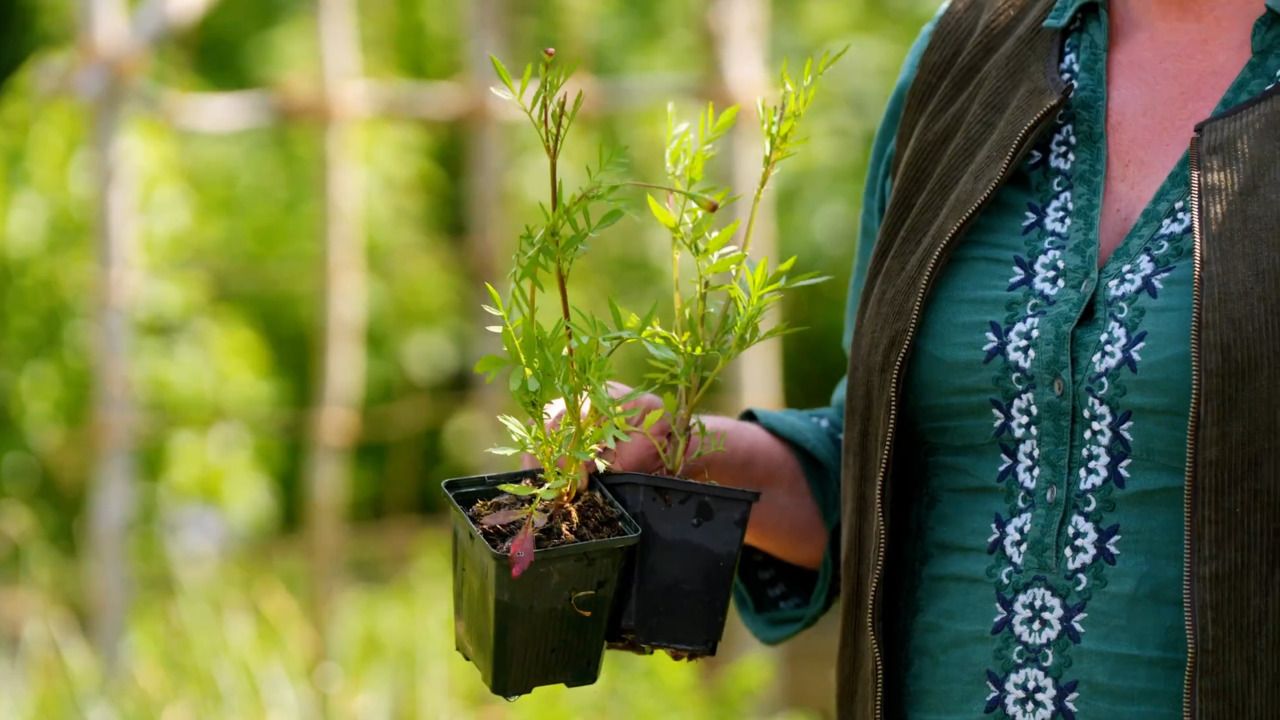
One of the unique aspects of cerinthe seeds is that sometimes they will produce twin plants. It isn't a good idea to plant out both of these seedlings together, as they will compete with each other for food and water and ultimately one will end up weaker than the other.
To separate the pair, hold them by the leaves (never the stems, which are more likely to break) and pull the two plants apart until they separate.
Once these seedlings are ready to go out, plant them out around 30 - 40 cm apart.
Cosmos are very quick germinators. If you have your seeds on a heat pad, you might even get germination overnight. The seedlings then grow very quickly too, so the best way to work out when to sow them is to think about when the last frost will be in your area.
Here, our last expected frost is around early May, so we need to sow our cosmos seeds four or five weeks before this date.
If you're in the north and your last frost is later, then sow your seeds around mid-April.
If you sow your cosmos plants too early, you'll end up having to pot them on before planting them out, which just creates more work and may end up taking up more valuable space in your greenhouse or on your windowsill.
I usually sow my cosmos seeds into jiffies because it means there's no need for pricking out or potting on.
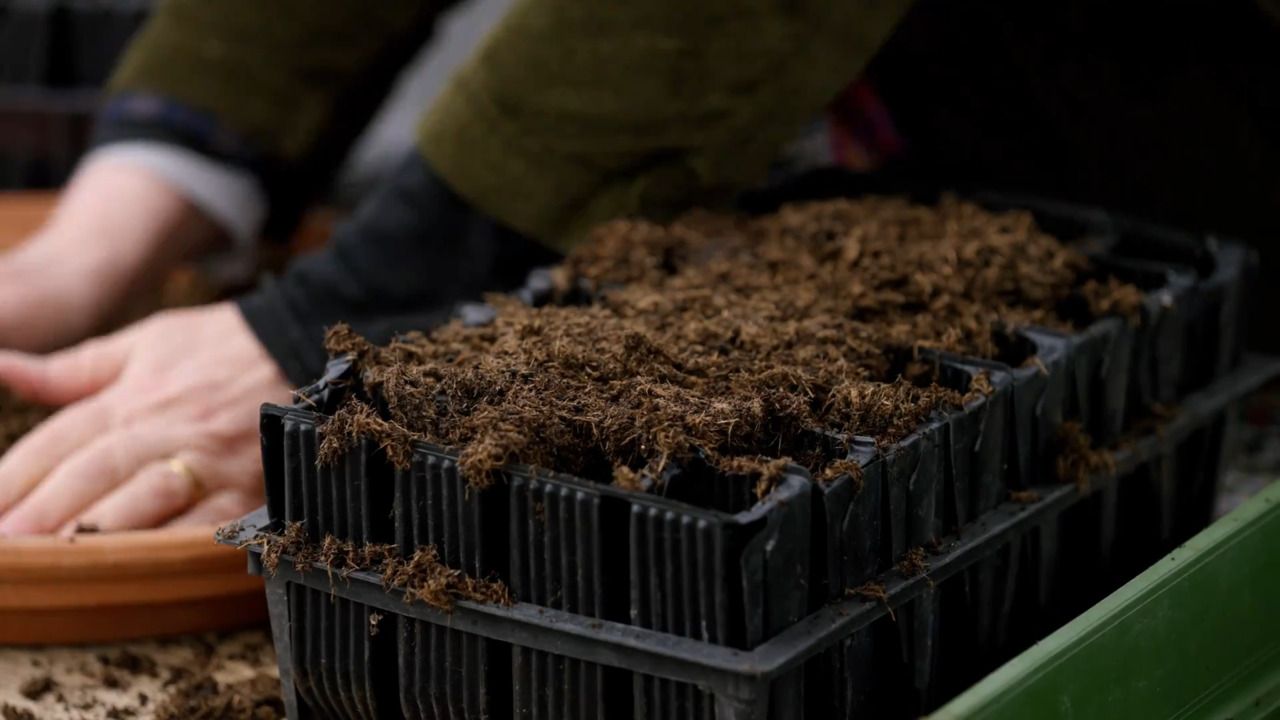
Jiffy's are small pellets of compost mix that can be rehydrated and then used as a medium for sowing and growing. Traditionally made up of a peat mix, you can now buy peat-free jiffys made for coir.
Simply pop them into a bucket of water for 10 minutes to let them plump up and then sow your seed directly into the middle.
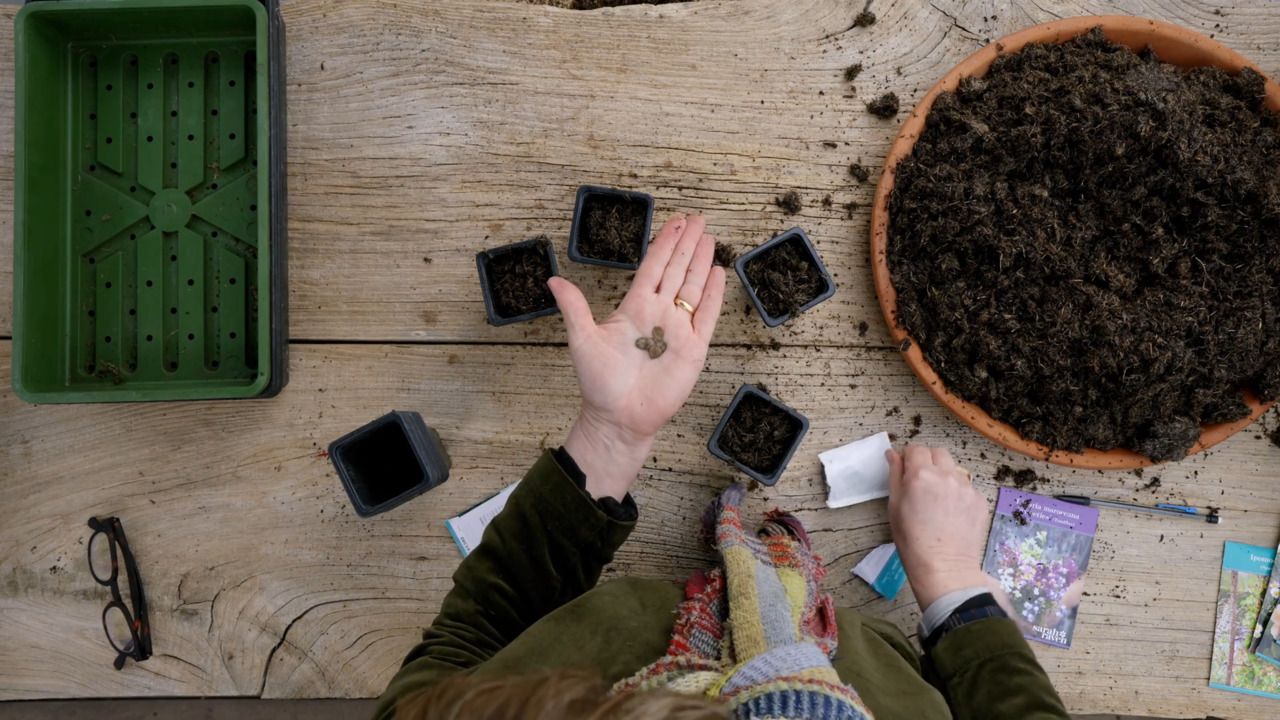
Cosmos are really simple to sow individually as they are large, long seeds and can be separated easily.
If you have leftover seed, store it in a Tupperware box in the fridge, and ideally with a silicone sachet, like the ones you get in parcel deliveries, in the Tupperware box too. This will prevent moisture from getting to your seedlings and prevent germination. They can then be stored for years.
We put our jiffy trays on capillary matting, which is an absorbent material that is great for using on a propagator bench if you have one. To use it, you water one end of the matting and the water then spreads across the surface area of your bench, watering all of your plants evenly.
At this time of year, you only need to water your seedlings three times a week at a maximum, but it is a good idea to check in on them as often as you can to see whether they are germinating.
Remember - lots of annual plants come from warmer and drier climates than ours, so they do not need lots of water to thrive. Generally speaking, you will do more harm if you overwater a plant, than if you slightly underwater it.
Get the full workbook, video lessons, and more with a Create Academy subscription.
Subscribe to access the full workbookAlready a member? Sign in to watch
510 reviews
Read moreCreate Academy has been such a great resource. I'm in the middle of renovating a bungalow with a very large garden and the courses have offered a wealth of inform...
Harvey
Jun 10, 2026
Absolutely love Create Academy! The instructors are extremely informative, and it is beautifully filmed. Create Academy is great value for money and plan on renew...
SG
May 31, 2026
Butter's creativity is stunning! Her ability to incorporate brilliance in small gardens is magical!
Carla
May 30, 2026
The best adventure. I like all the courses, but my favorite are both Rita Konig interior design courses and Anna Jones. Excellent!
Karolina Kluczewska
May 20, 2026
Create Academy has been such a great resource. I'm in the middle of renovating a bungalow with a very large garden and the courses have offered a wealth of information to dive into and explore new ideas. I'm...
Harvey
Jun 10, 2026
Absolutely love Create Academy! The instructors are extremely informative, and it is beautifully filmed. Create Academy is great value for money and plan on renewing my subscription yearly because there are ...
SG
May 31, 2026
Butter's creativity is stunning! Her ability to incorporate brilliance in small gardens is magical!
Carla
May 30, 2026

Your Instructor
Acclaimed English gardener, cook and writer. Host of the UK’s No.1 gardening podcast.
Sarah Raven is a renowned English gardener, cook and award-winning author. She is an inspirational and passionate teacher - combining her decades of experience with her scientific approach to growing (she is medically trained) - and has been running cooking, flower arranging and gardening courses at Perch Hill, her 90-acre farm in East Sussex, and around the UK for over 30 years. She has written for a host of major publications - including House & Garden, The Saturday Telegraph, Country Living, Gardens Illustrated, Gardeners’ World Magazine and The English Garden - and presented on TV shows including Gardeners' World and BBC’s Great British Garden Revival. Her gardening and cookery books have won numerous awards including ‘Best Specialist Gardening Book’ for The Cutting Garden and ‘Cookery Book of the Year’ for Sarah Raven's Garden Cookbook. Sarah is married to the writer Adam Nicolson, Vita Sackville-West's grandson. She also has an online shop that is a brilliant destination for plants, bulbs, seeds, tools and all things garden.

Access to all courses


