




Interior and exterior confidence
Create Academy has been such a great resource. I'm in the middle of renovating a bungalow with a very large garden and the courses have offered a wealth of inform...
Harvey
Jun 10, 2026
A Guide to Pigments, Paints & Palettes
with EDWARD BULMER — Award-winning interior designer, architectural historian, paint expert. House & Garden Top 100.
Lesson 20 of 23

Edward answers some of the more burning questions when it comes to colour, including ‘How to find the perfect off-white?’ and ‘What colour shall I use in a small space?’
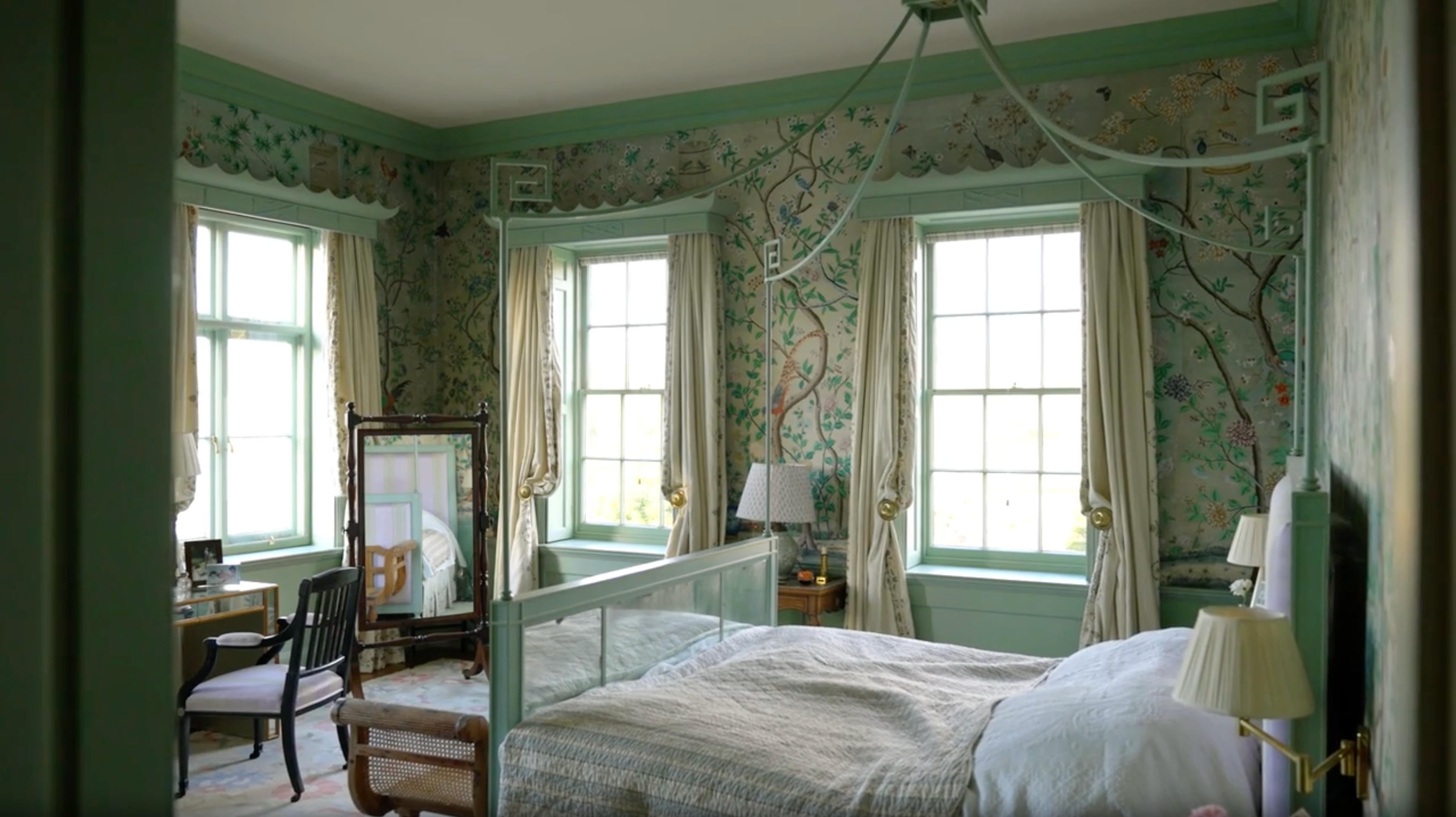
You should base your use of colour on how you use that space. If it's a room you visit for a short period of time, a bit of drama with deep colours and busy patterns might be an option. Similarly, if it doesn't receive much daylight, strong colour can add interest and create an incredibly cosy feeling.
However, if it's a room you want to feel larger, I would advise sticking to a lighter palette. While there isn't one colour that will magically change the scale of a room, the trick is to tune into the light the room receives and work out how it can be manipulated through your use of colour. Paler colours and off-whites will make the most of natural light and increase the feeling of spaciousness.
If your room is lacking in daylight or is north facing, I would strongly recommend choosing colours with dominant warm pigments of yellow ochre or red ochre to balance the cool light.
As well as the choice of colour, the areas you allocate colour can also help to play with the scale of a room. It's good to blur convention in small rooms to trick your eye into reading the space as larger than it is.
For example in an attic room, I would always argue it's better to remove the distinction between walls and ceilings by painting them the same colour. This means you won't have a line that distinguishes the height of the wall, and instead your eye will be drawn up to the highest point for a feeling of spaciousness. This logic can be applied to other small rooms too.
A south facing room receives the most daylight, and will normally work with most colours as a result. You won't need to consider the impact of artificial light as much, as you likely won't need lamps during the day. If you have a north aspect, there's no getting around the fact that the sun will not reach the room and it's unlikely to benefit from much daylight. Because of this, you should be decorating with the impact of artificial light at the forefront of your mind. I like to lean into the cosseting nature of these rooms, and tend to use mid to deep colours that contain underlying warmth in their tonality.
We all spend a great deal of time in the kitchen, and it is a space that has evolved to be somewhere that we not only cook in but also eat, work and relax in too. As a result, kitchens need to be a room that everyone in the house feels comfortable in and enjoys spending time in.
Generally, I would start by choosing a wall colour - even if there is a great deal of cabinets and built-in elements to consider, I still think the key to decorating a space successfully is within the architecture and bare bones of the empty room. Figure out what works in the space in terms of tonality and atmosphere, and then begin to consider this in relation to the cabinet colour.
I find that the people who like colour tend to dress colourfully too, so one way to determine what colours you are drawn to is to have a look in your wardrobe. If you love bright and bubbly colours, a kitchen can be a great place to have some fun with decorating.
Equally, a kitchen can be a great place to keep the palette more neutral and restrained, saving deeper, more daring decorating choices for living rooms and bedrooms where you can introduce more fabrics and artwork.
Get the full workbook, video lessons, and more with a Create Academy subscription.
Subscribe to access the full workbookAlready a member? Sign in to watch
510 reviews
Read moreCreate Academy has been such a great resource. I'm in the middle of renovating a bungalow with a very large garden and the courses have offered a wealth of inform...
Harvey
Jun 10, 2026
Absolutely love Create Academy! The instructors are extremely informative, and it is beautifully filmed. Create Academy is great value for money and plan on renew...
SG
May 31, 2026
Butter's creativity is stunning! Her ability to incorporate brilliance in small gardens is magical!
Carla
May 30, 2026
The best adventure. I like all the courses, but my favorite are both Rita Konig interior design courses and Anna Jones. Excellent!
Karolina Kluczewska
May 20, 2026
Create Academy has been such a great resource. I'm in the middle of renovating a bungalow with a very large garden and the courses have offered a wealth of information to dive into and explore new ideas. I'm...
Harvey
Jun 10, 2026
Absolutely love Create Academy! The instructors are extremely informative, and it is beautifully filmed. Create Academy is great value for money and plan on renewing my subscription yearly because there are ...
SG
May 31, 2026
Butter's creativity is stunning! Her ability to incorporate brilliance in small gardens is magical!
Carla
May 30, 2026

Your Instructor
Award-winning interior designer, architectural historian, paint expert. House & Garden Top 100.
Edward Bulmer is one of the UK’s leading interior designers and architectural historians, specialising in the restoration and decoration of historic buildings. After studying History of Art at university, Edward trained under legendary designer David Mlinaric CBE, as well as working for Alec Cobbe, and Gervase Jackson-Stops OBE, who was architectural advisor to the National Trust. Alongside running his own paint company, Edward Bulmer Natural Paint, Edward has led a highly successful design team for over 30 years, working on some of England’s greatest country houses as well as a range of private and commercial projects including Goodwood, the Tower of London, Chequers and the Arts Club.
Access to all courses


