A painted lampshade - Part 1 - Inspiration and colour
with TESS NEWALL
Lesson 19 of 32



Already a member? Sign in
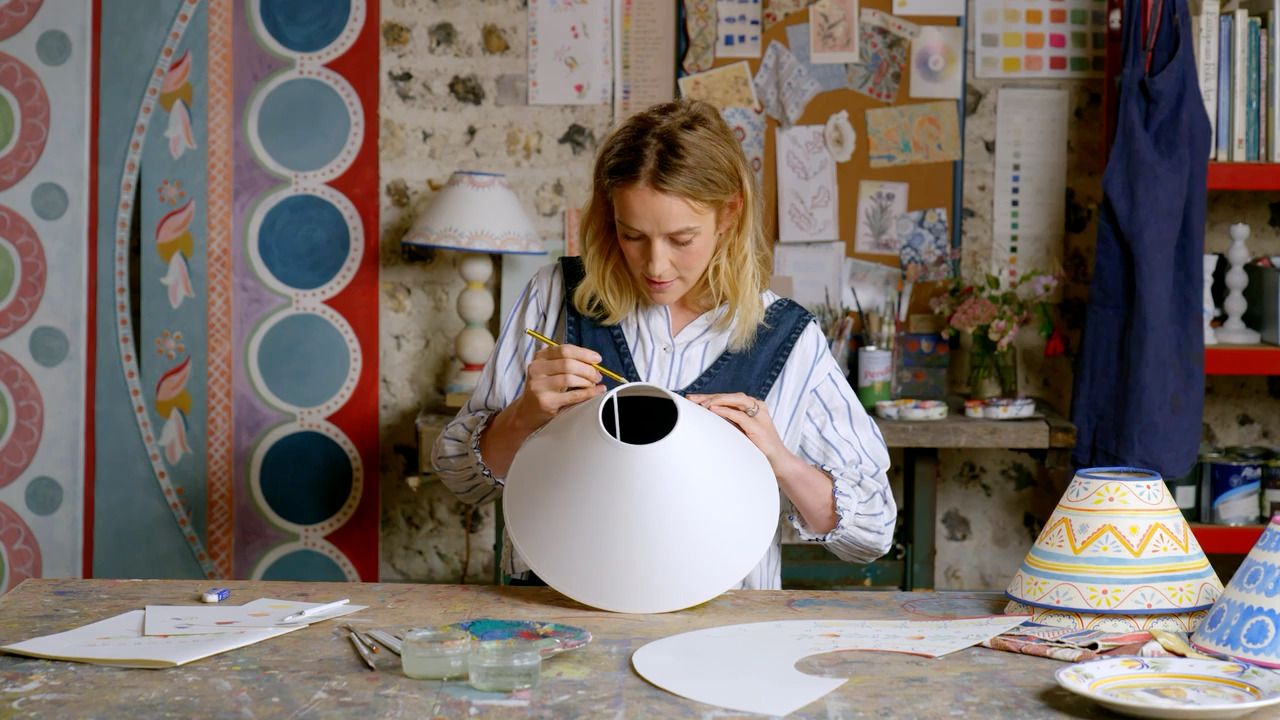
In this part of the course, you’ll be going through a few projects with Tess step-by-step so you can start to put what you have learnt so far into practice. The first is decorating a lampshade.
From the Lesson Workbook
Project 1 - A Painted Lampshade
Part 1 - Inspiration and Colour
In this part of the course, we'll be going through a few projects together step-by-step so you can start to put what you have learnt so far into practice. The first is decorating a lampshade.
Why Lampshades?
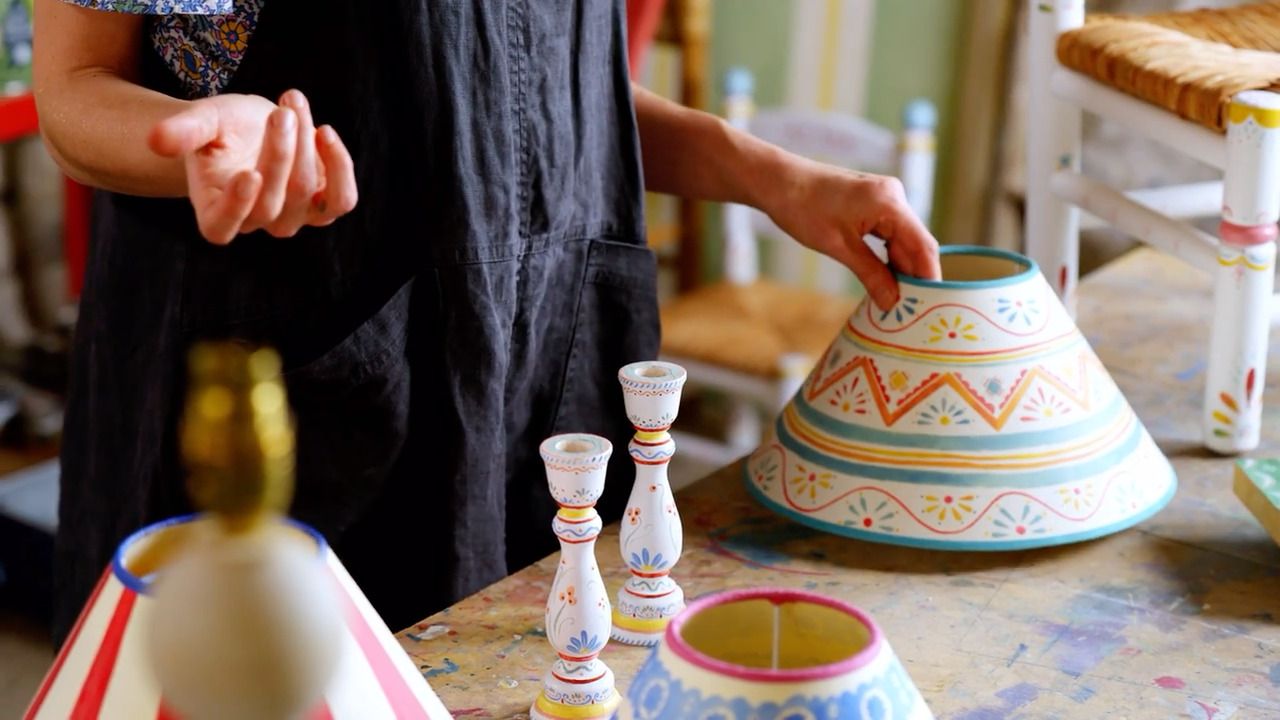
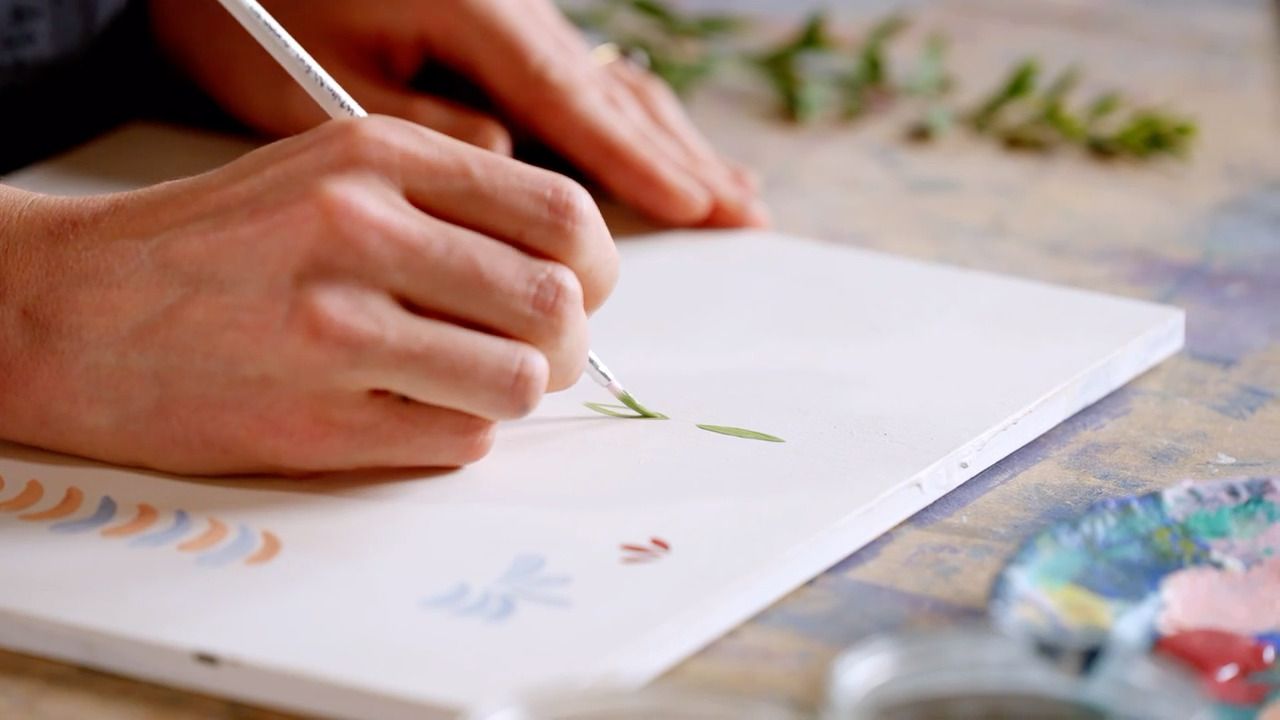
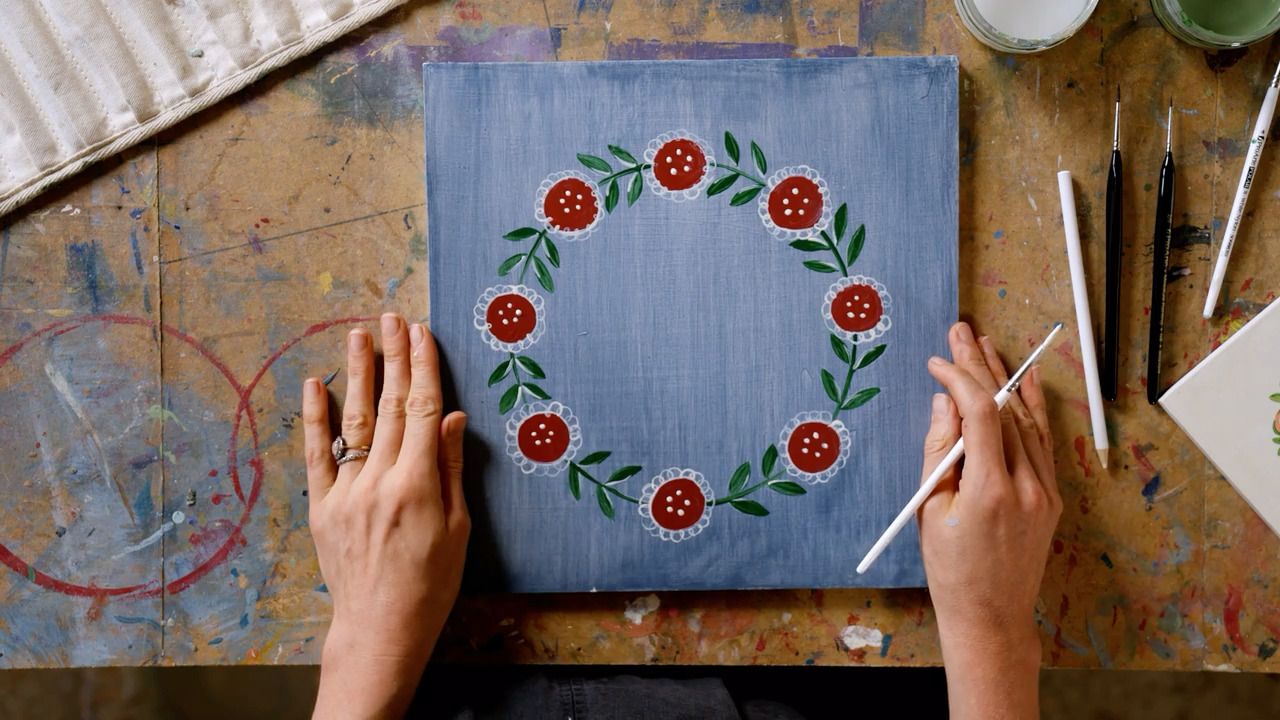
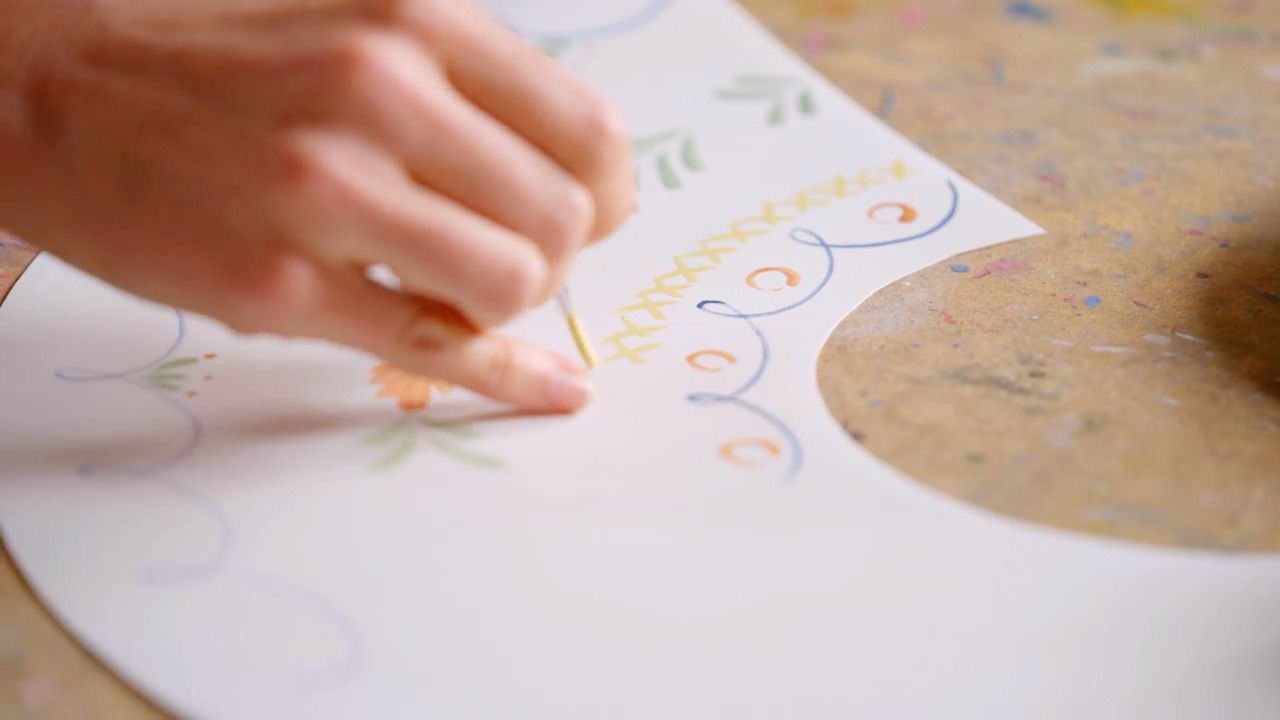
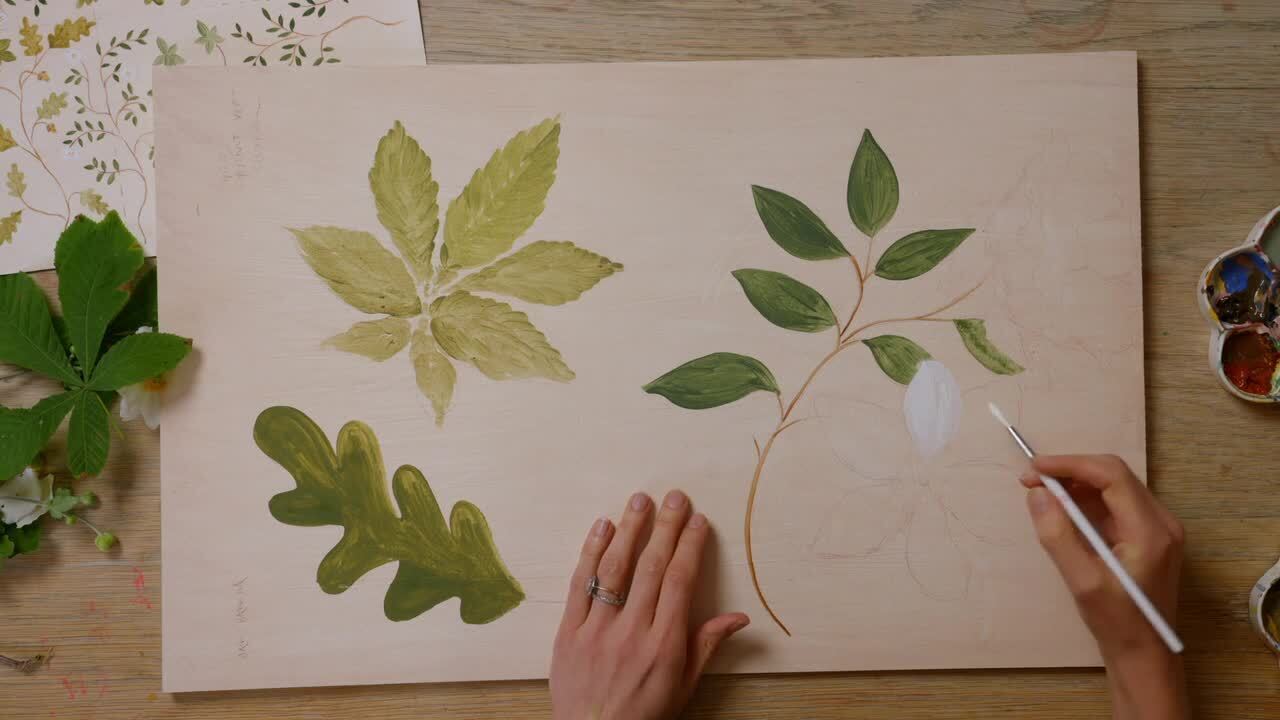
Hand-painting a lampshade is a brilliant first project, as it will feel very similar to when you were practising on paper or card - just with the added 3-D element!
It's also a lovely way to start experimenting with decorative motifs, without the added commitment of going straight onto walls or a big piece of furniture.
Inspiration
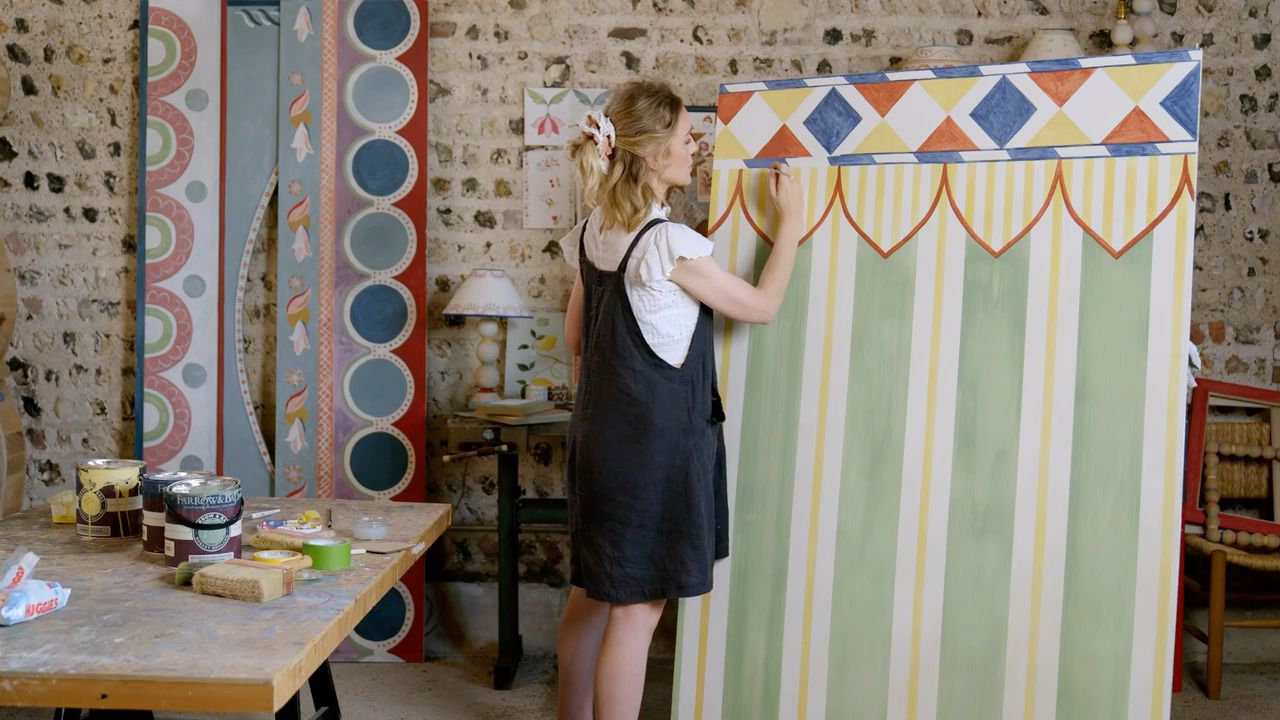
A lampshade is a great opportunity to add some colour and pattern to a room. When it comes to choosing the colours you are using, you can either go for a cohesive approach and stick within your existing scheme, or go for something bolder and more contrasting.
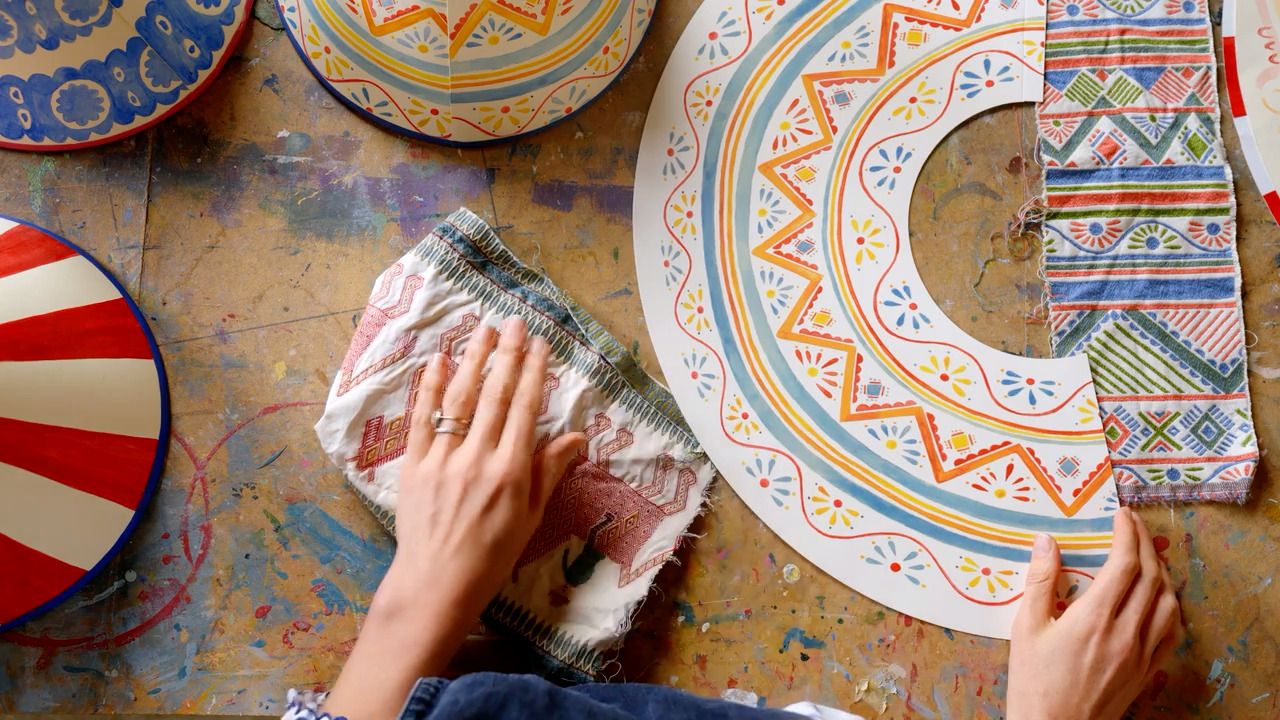
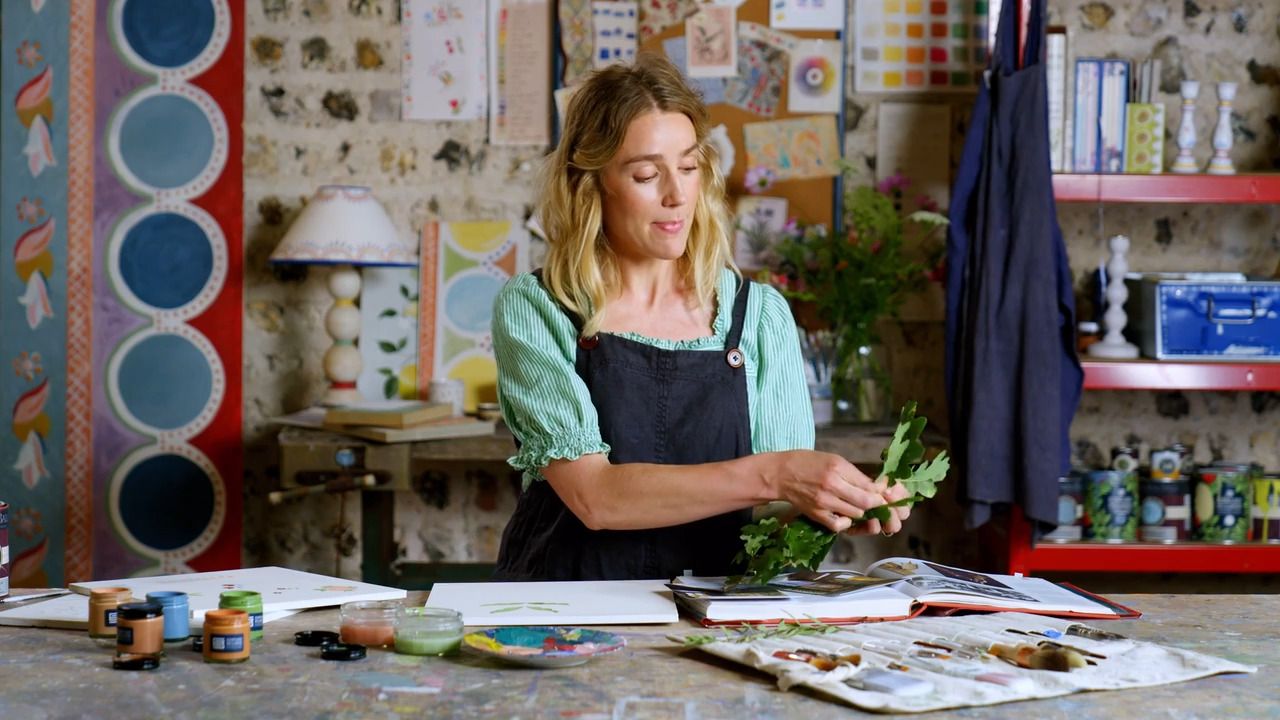
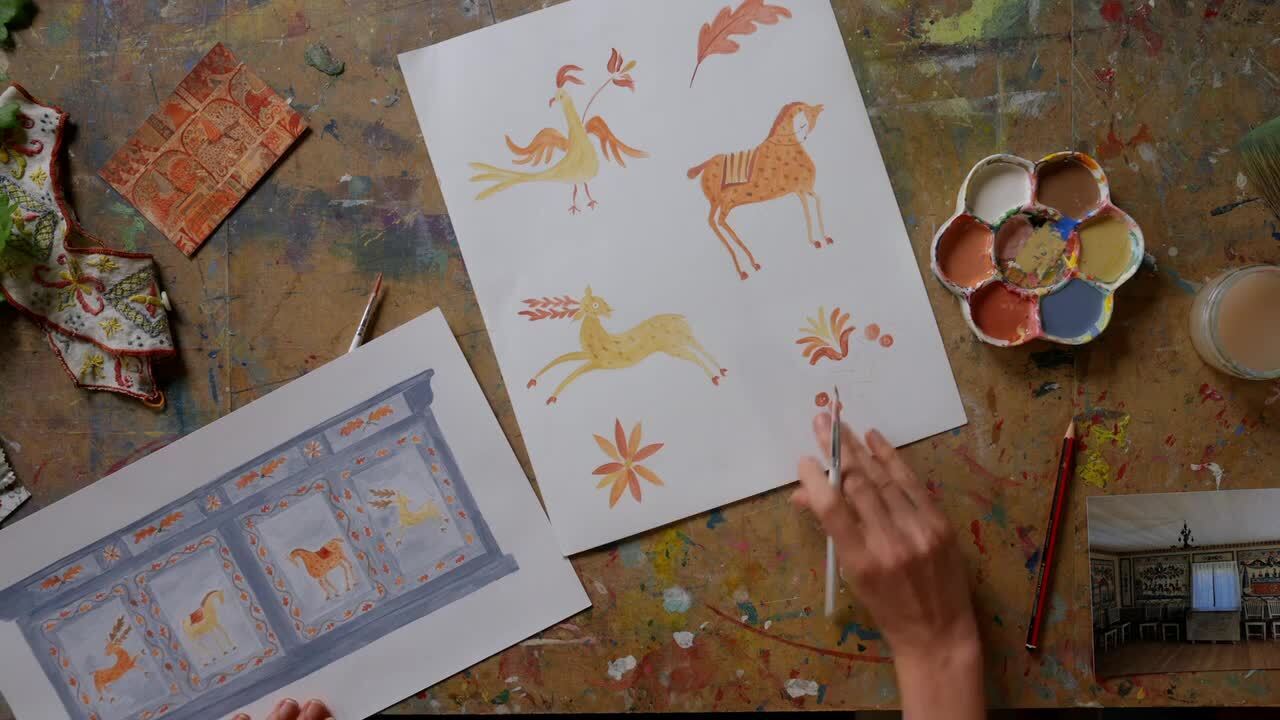
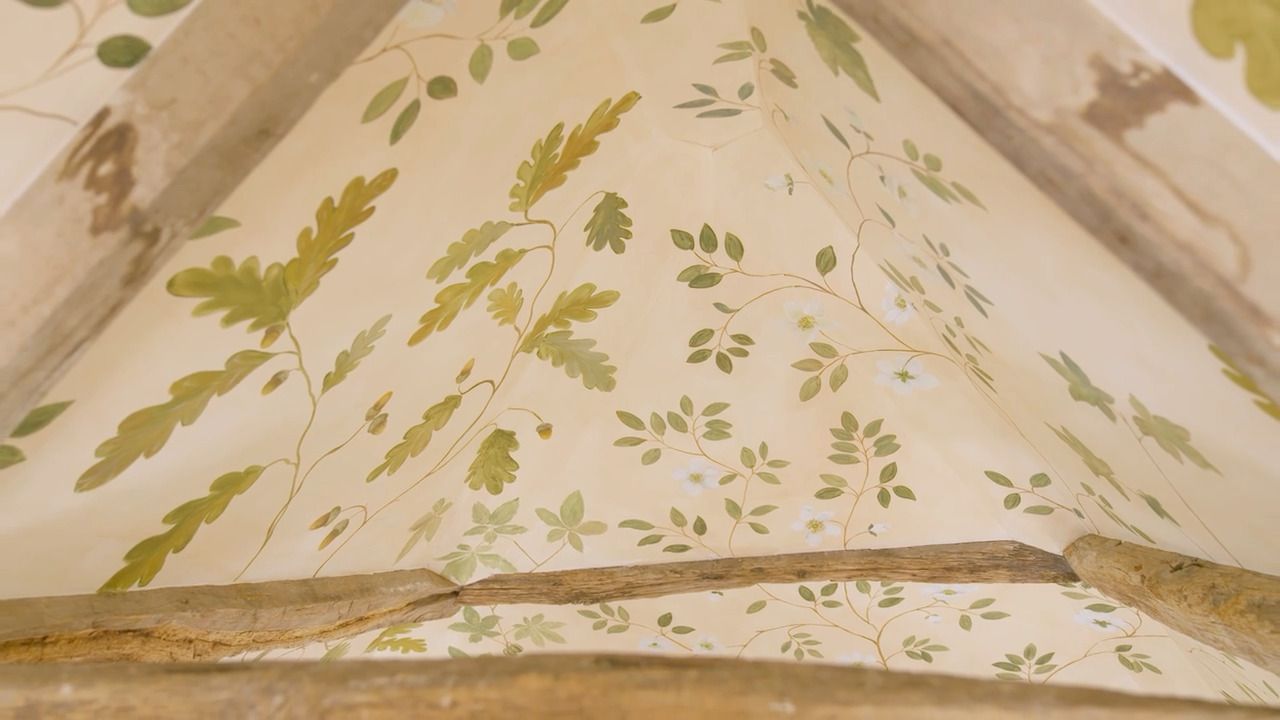
Take inspiration too from the existing patterns in your room. Are there any motifs within the room you particularly love, on the curtains or cushions for example? You can create your own interpretation of this in your hand painting.
Planning Your Design
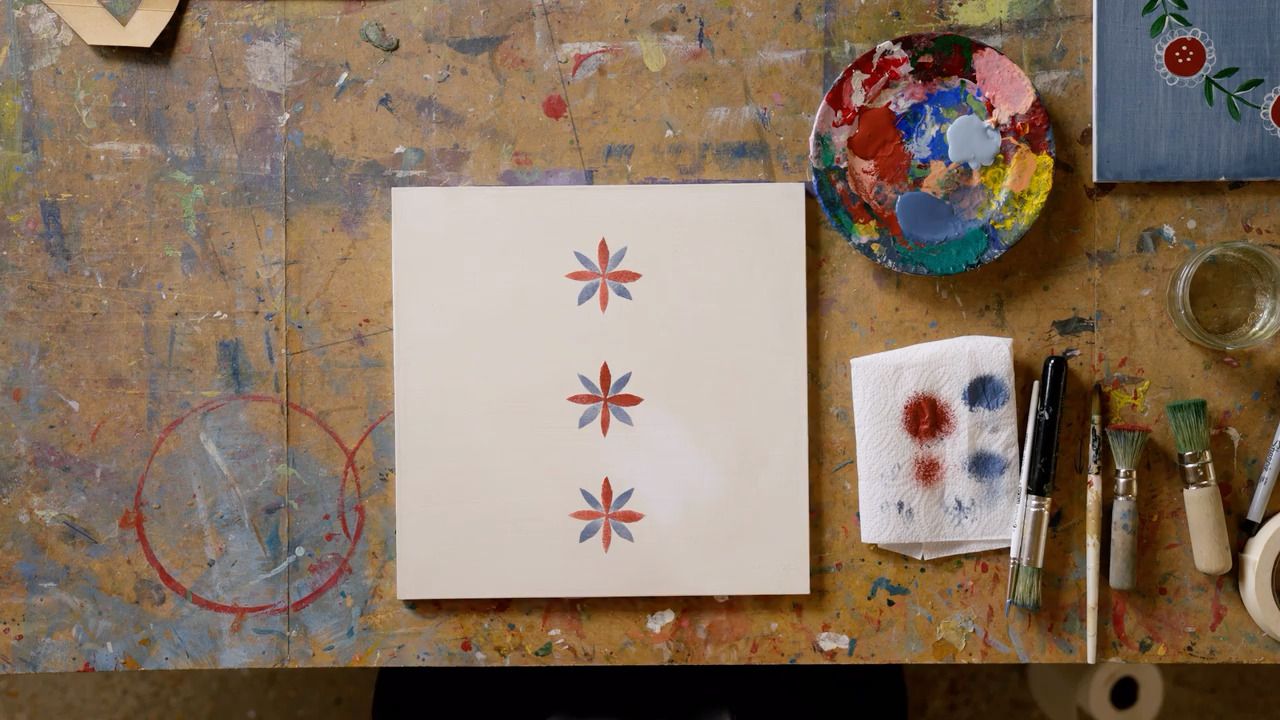
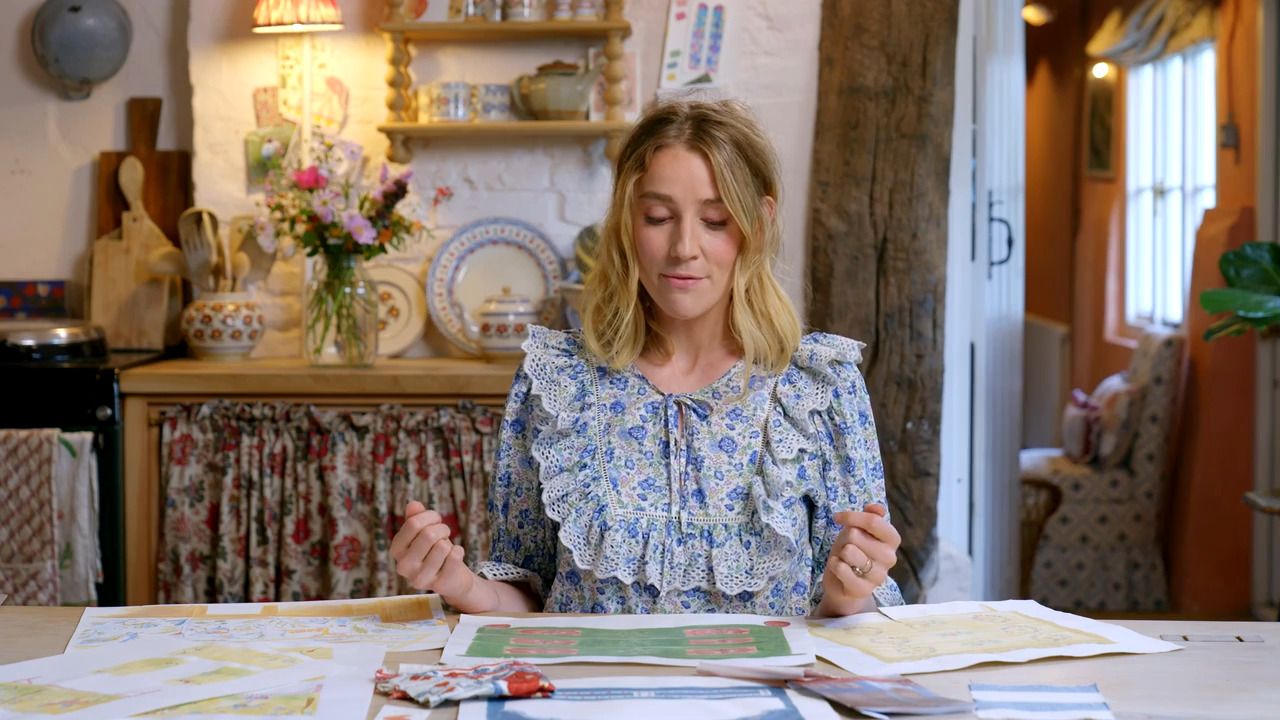
When designing a more complex pattern for a lampshade, I like to cut out a piece of card that is the same measurements as the lampshade and work it out as a flat panel first. It helps to work out where the different elements will sit, and how they will fit on the curve.
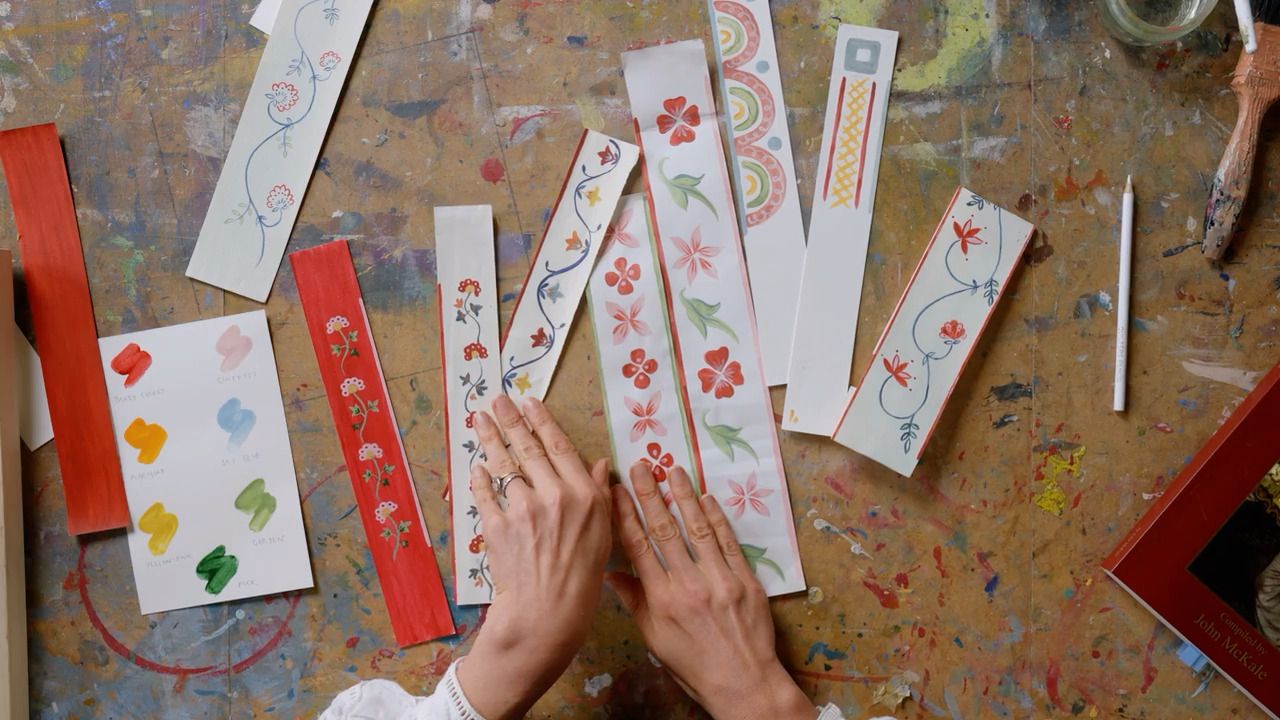
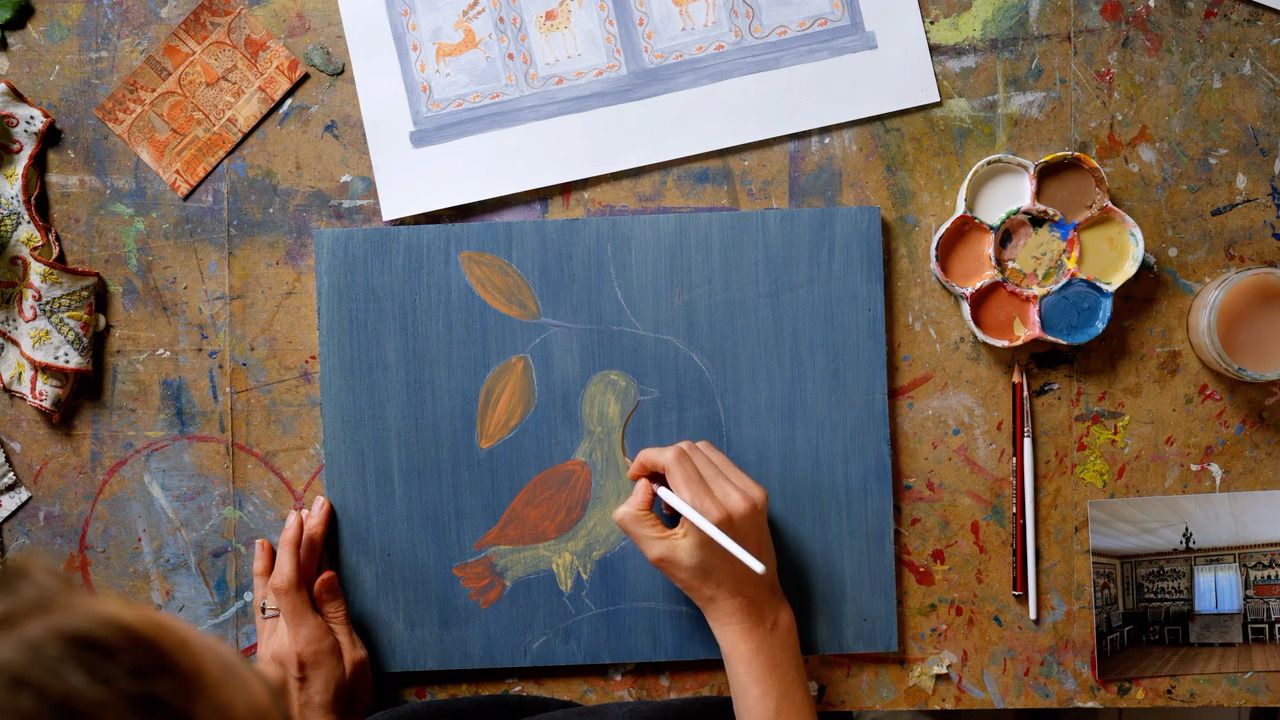
Sketches are also helpful if you want to test out your ideas and get a sense of how they will translate onto the lampshade. You can also use scrap pieces of paper to play around with different motifs and pattern combinations.
I would recommend using a 2H pencil when sketching out your design, as it is lighter than a normal HB pencil and will be easier to rub out.
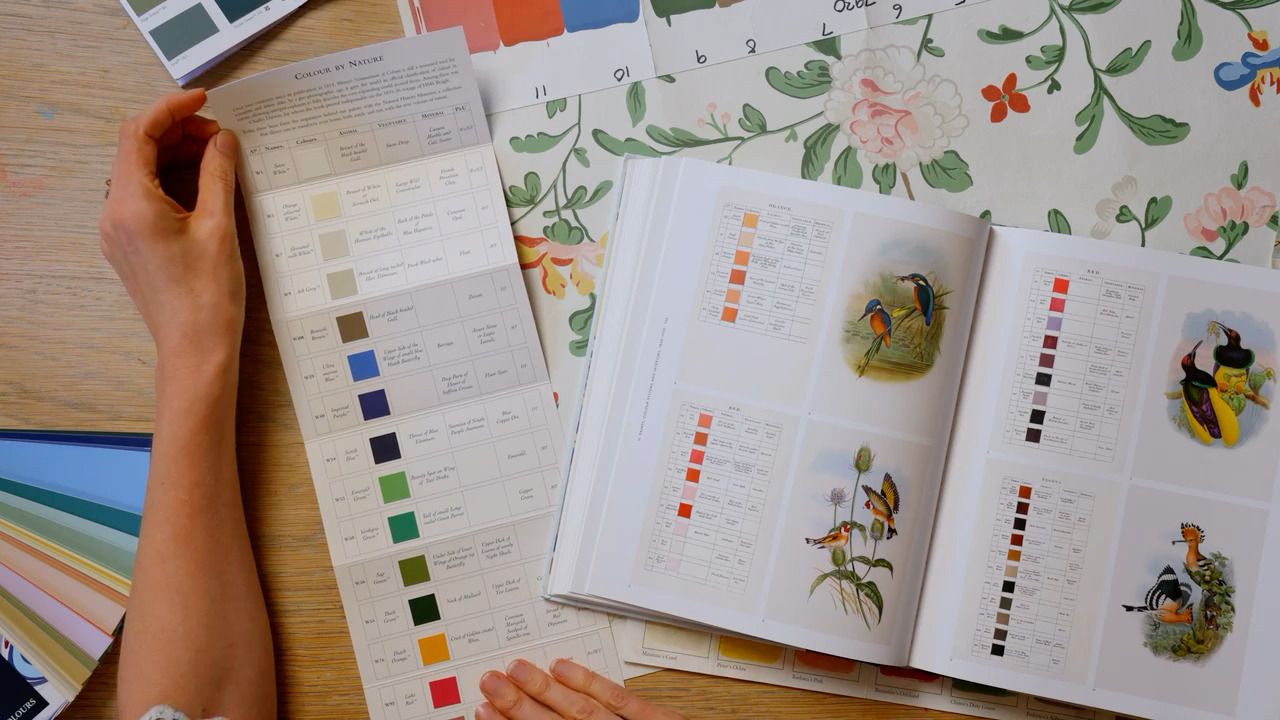
Creating the Colour Palette
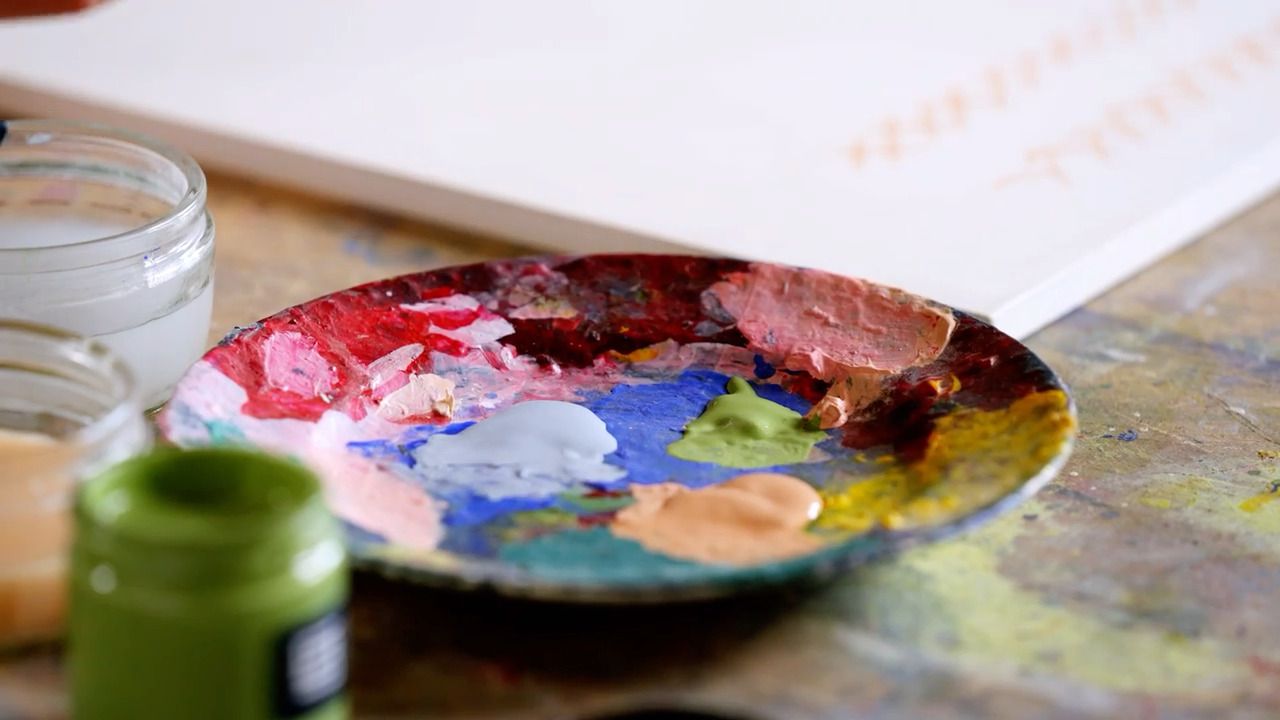
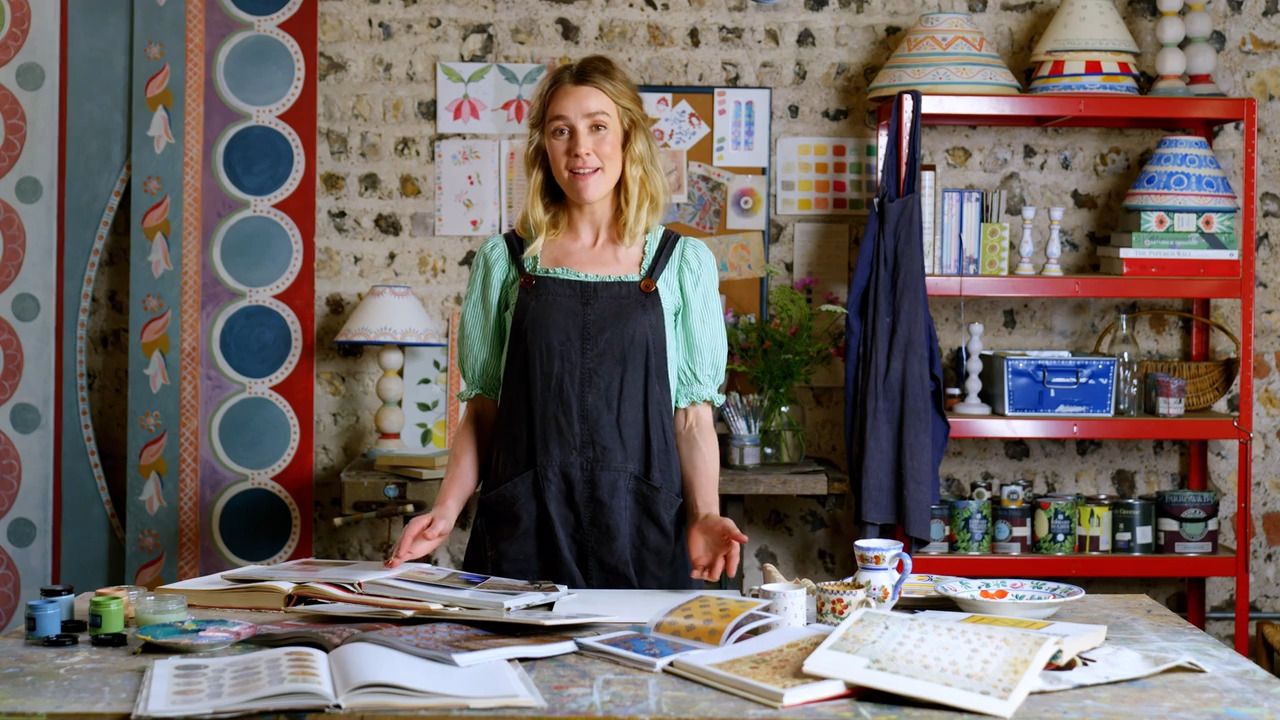
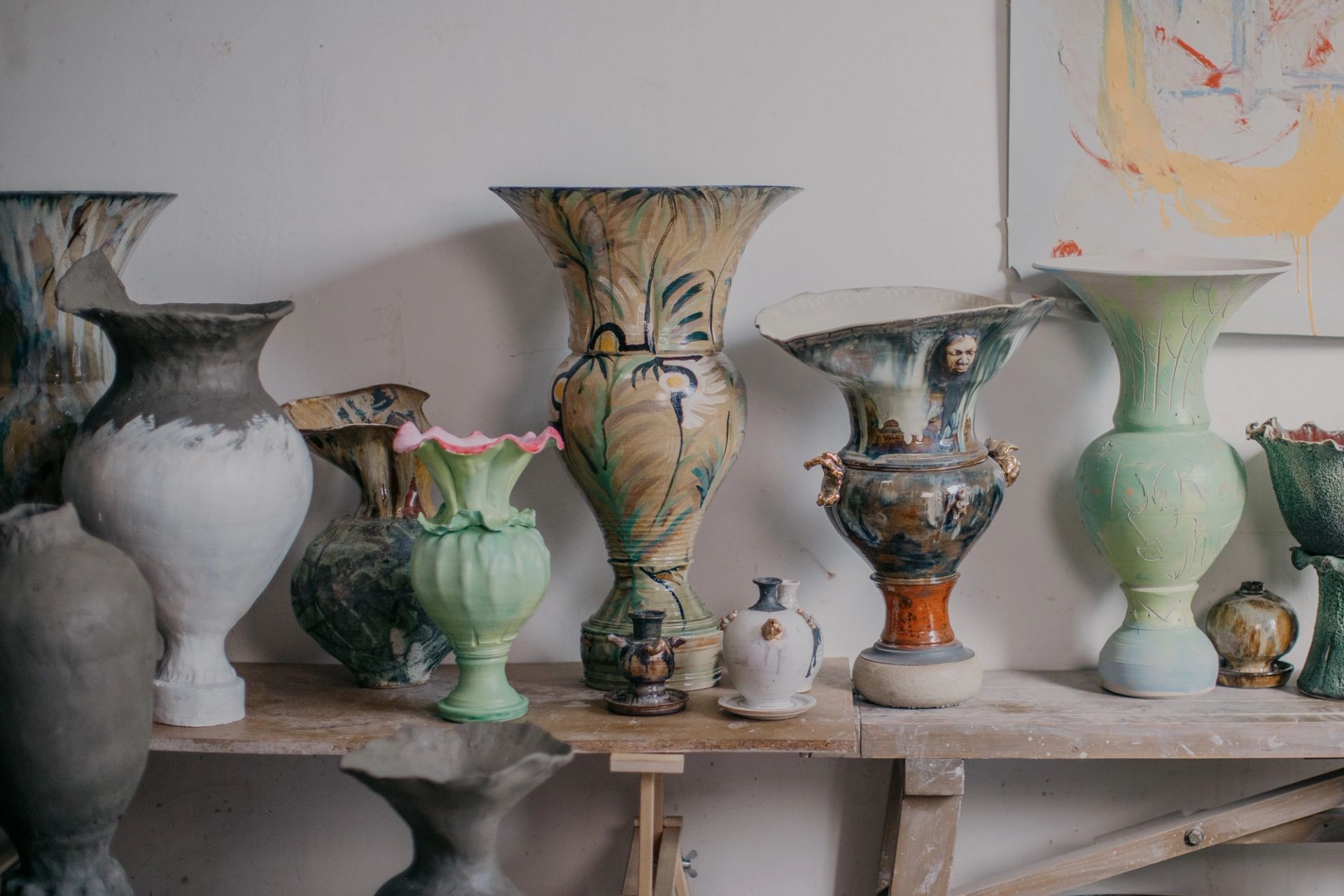
You can look at your inspirational references - I love to refer back to Quimper Pottery - and replicate colour schemes you feel particularly drawn to. Adjust the tones to suit; you may prefer slightly earthier shades or want to go brighter than your reference.
Get the full workbook, video lessons, and more with a Create Academy subscription.
Subscribe to access the full workbook
Your Instructor
Tess Newall
Acclaimed artist and set designer specialising in hand painted homewares and decorative painting.
Tess Newall is a decorative artist based in Sussex, specialising in hand-painted bespoke murals and furniture. Following a decade of experience as a set designer and painter in the film industry, Tess has mastered how to bring a creative vision to life. She often draws on historic patterns and aims to capture an artisanal feel, where textures and brushstrokes add to the atmosphere of a room or to the character of a furniture piece. Tess and her studio team work with interior designers and private clients on bespoke commissions for both commercial and residential projects, as well as collaborating on homewares collections with brands including Liberty and Matilda Goad.


Access to all courses