




Interior and exterior confidence
Create Academy has been such a great resource. I'm in the middle of renovating a bungalow with a very large garden and the courses have offered a wealth of inform...
Harvey
Jun 10, 2026
A Guide to Pigments, Paints & Palettes
with EDWARD BULMER — Award-winning interior designer, architectural historian, paint expert. House & Garden Top 100.
Lesson 23 of 23

Subscribe to watch
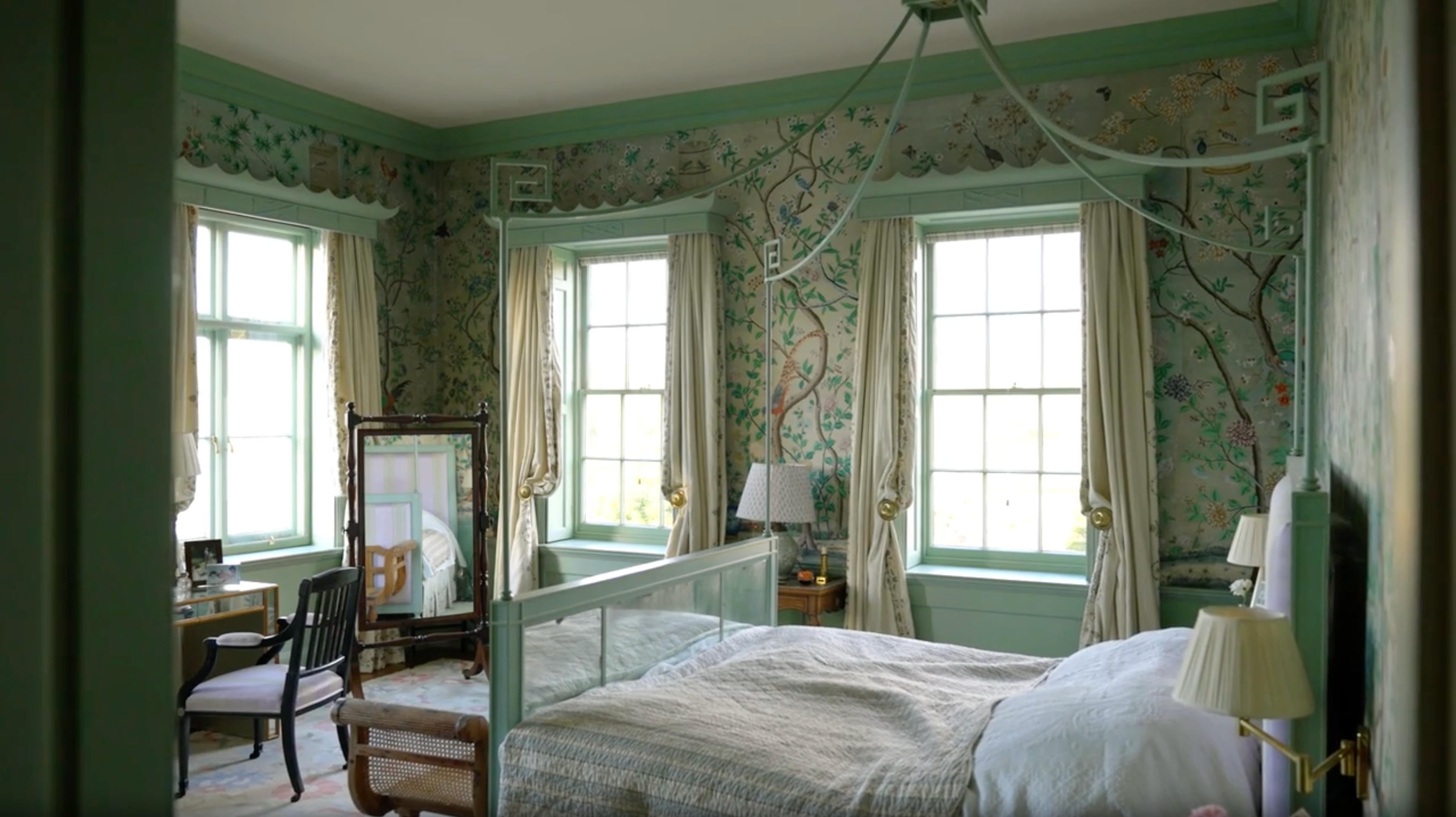
Bright green can be a difficult colour to get right. In this walk through Edward explains how he made it work in this peaceful bathroom.
I wanted to have a go at creating a lime green scheme, and this bathroom felt like the natural place to try it.
Paint Details: Walls in 'Olympian Green' trim in 'Dove'
---
The sustainability of modern house paints is a pertinent question for our generation, and it's our collective responsibility to ensure we decorate in a way that is as kind to our planet as possible.
The question of sustainability in relation to paint can be a tricky one, and is extremely complex with lots of variable factors.
The earliest production of paint was by cavemen using only natural ingredients such as plants, some animal products and minerals. The methods they used carried on largely unchanged until the beginning of the 20th Century.
Although this production method used natural ingredients, a purists view would determine it unsustainable due to its use of unrenewable materials such as minerals. However, this logic is largely unsupported and a more realistic approach to sustainability is to instead examine - and try to eliminate or reduce - the materials that have a significantly adverse effect on the biosphere.
Sustainability at first base means not using fossil fuels, and at second base it means using totally renewable resources. In mass paint production, the first base is quite hard to get past as the process fundamentally requires the use of binders. Binders are largely made from plastics which are a by-product of fossil fuels, and feature within most modern paints. A more sustainable natural paint will rely on linseed oil, clay or lime as a binder, however these are made on smaller scales and can be more expensive.
The use of solvents is another element to consider when examining sustainability. Thankfully it is now a lot easier to buy paint with low solvent levels, or typically known as low-VOC, due to legislation that came into effect in 2010. The legislation banned the production of paint that contained a high VOC levels, and most modern paints now have virtually zero VOC content. While this goes a long way to addressing the healthiness of paint, it doesn't necessarily address the sustainability.
Ultimately sustainability is a balancing act of many different factors, and it is down to each individual to make the most sustainable choice in any given situation.
When you're decorating your home, I would encourage you to take an active role in being as environmentally responsible as you can. This means not only being conscious of the materials you use, but also the process behind how those materials are made.
It is my view that when undertaking a decorating project, you should aim to create something that is durable, maintainable, repairable and comes into being without creating too much waste. Consider every material or product you purchase, and ask yourself if it's necessary and whether it will truly meet your requirements. Also investigate the provenance of the product and how it's created.
It's crucial to be mindful of how your decorating decisions impact the healthiness of your home. For those with certain allergies and illness, this can be particularly vital. Be especially aware of whether materials are prone to 'off-gassing' - releasing chemicals into the air.
In the case of paint, its ability to manage water vapour is also incredibly important to the health of a building and its inhabitants - this is known as breathability. Poor moisture management leads to damp and potentially a whole host of other issues. The SD value is used to measure the breathability of paint, and 0.5 is the advisory upper limit for ancient buildings while 1 is the maximum for more modern properties.
Paint companies are not required to publish their ingredients list, so it can be tricky as a consumer to make an informed decision. Always ask if it can be provided, and look at both technical data sheets and safety data sheets to establish SD values, how the binders are made and the VOC levels.
---
Apply the questions below to your project, and evaluate how sustainable your current decorating decisions are and how you might be able to improve them.
Do I need that product?
What is the product made of?
How is the product made or processed?
Is there any waste created in its production?
Where is the product made or sourced from?
What is the distance the product has travelled?
Does the product have longevity?
Will the product perform as I require it to?
Does it impact the environment negatively?
Get the full workbook, video lessons, and more with a Create Academy subscription.
Subscribe to access the full workbookAlready a member? Sign in to watch
510 reviews
Read moreCreate Academy has been such a great resource. I'm in the middle of renovating a bungalow with a very large garden and the courses have offered a wealth of inform...
Harvey
Jun 10, 2026
Absolutely love Create Academy! The instructors are extremely informative, and it is beautifully filmed. Create Academy is great value for money and plan on renew...
SG
May 31, 2026
Butter's creativity is stunning! Her ability to incorporate brilliance in small gardens is magical!
Carla
May 30, 2026
The best adventure. I like all the courses, but my favorite are both Rita Konig interior design courses and Anna Jones. Excellent!
Karolina Kluczewska
May 20, 2026
Create Academy has been such a great resource. I'm in the middle of renovating a bungalow with a very large garden and the courses have offered a wealth of information to dive into and explore new ideas. I'm...
Harvey
Jun 10, 2026
Absolutely love Create Academy! The instructors are extremely informative, and it is beautifully filmed. Create Academy is great value for money and plan on renewing my subscription yearly because there are ...
SG
May 31, 2026
Butter's creativity is stunning! Her ability to incorporate brilliance in small gardens is magical!
Carla
May 30, 2026

Your Instructor
Award-winning interior designer, architectural historian, paint expert. House & Garden Top 100.
Edward Bulmer is one of the UK’s leading interior designers and architectural historians, specialising in the restoration and decoration of historic buildings. After studying History of Art at university, Edward trained under legendary designer David Mlinaric CBE, as well as working for Alec Cobbe, and Gervase Jackson-Stops OBE, who was architectural advisor to the National Trust. Alongside running his own paint company, Edward Bulmer Natural Paint, Edward has led a highly successful design team for over 30 years, working on some of England’s greatest country houses as well as a range of private and commercial projects including Goodwood, the Tower of London, Chequers and the Arts Club.
Access to all courses


