



Interior and exterior confidence
Create Academy has been such a great resource. I'm in the middle of renovating a bungalow with a very large garden and the courses have offered a wealth of inform...
Harvey
Jun 10, 2026
Subscribe to watch
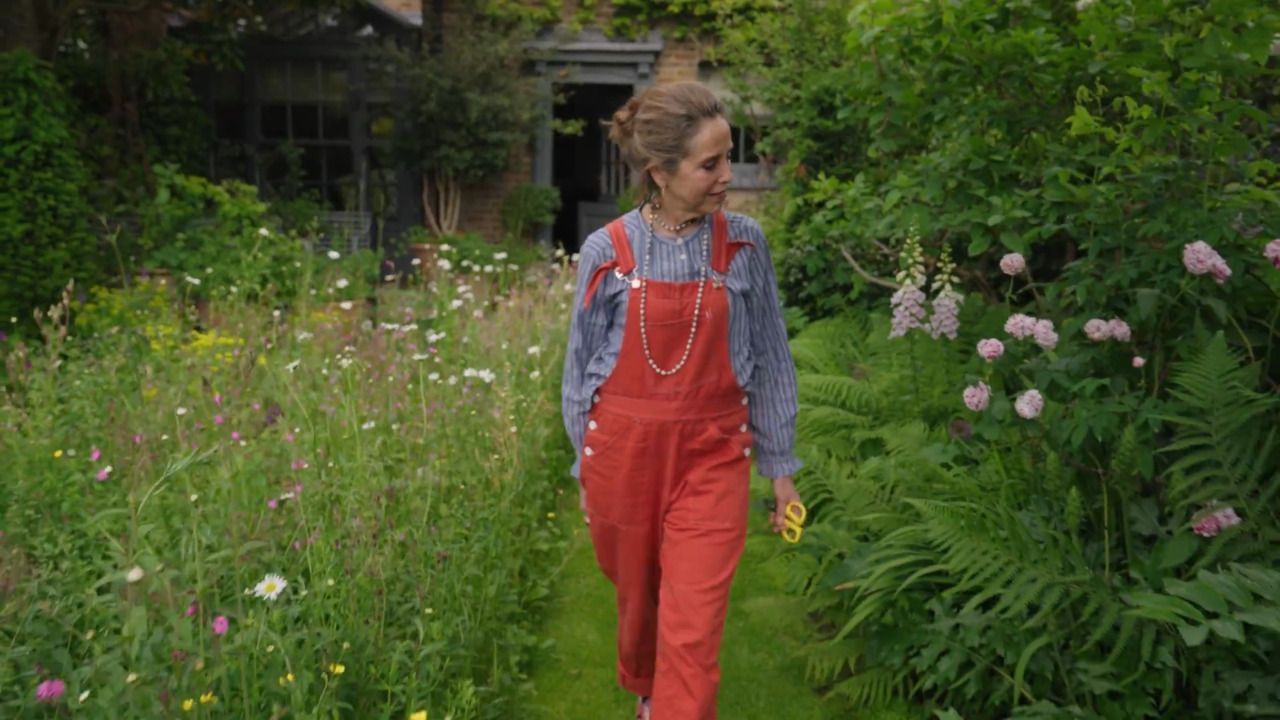
In this video, Butter shows you how she uses mirrors, trellis and stone to create texture and tone in her design projects.
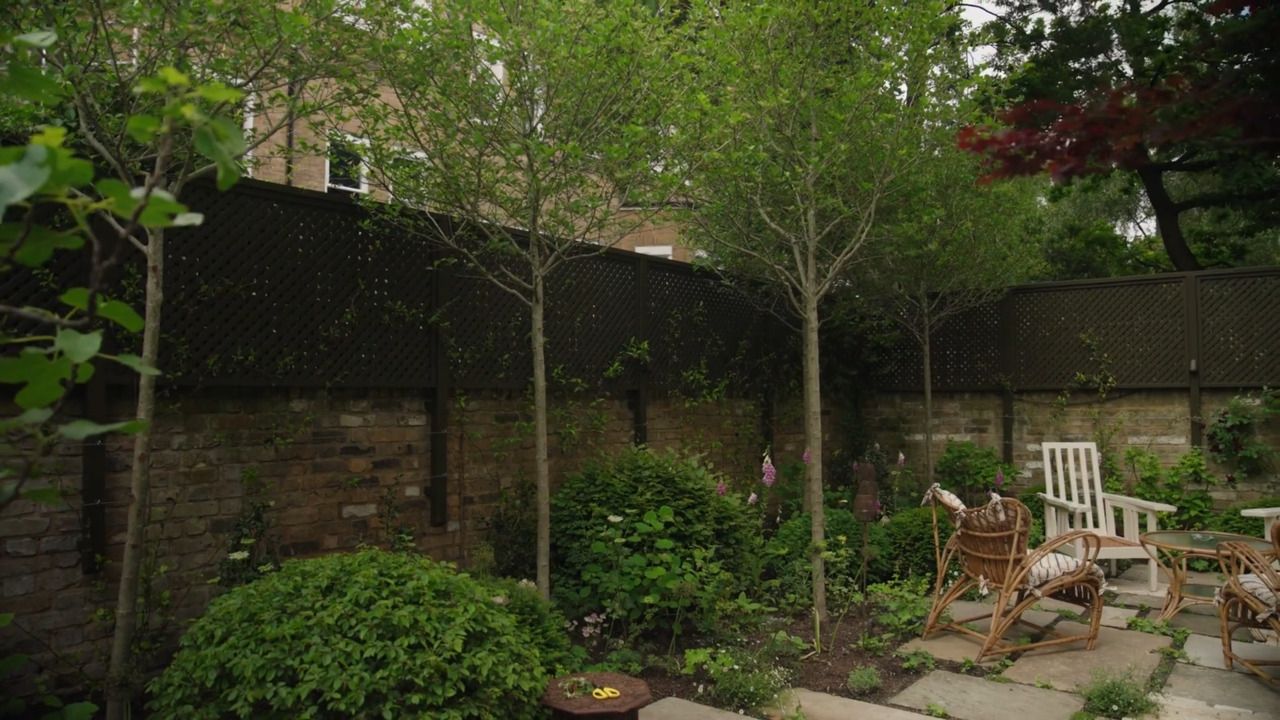
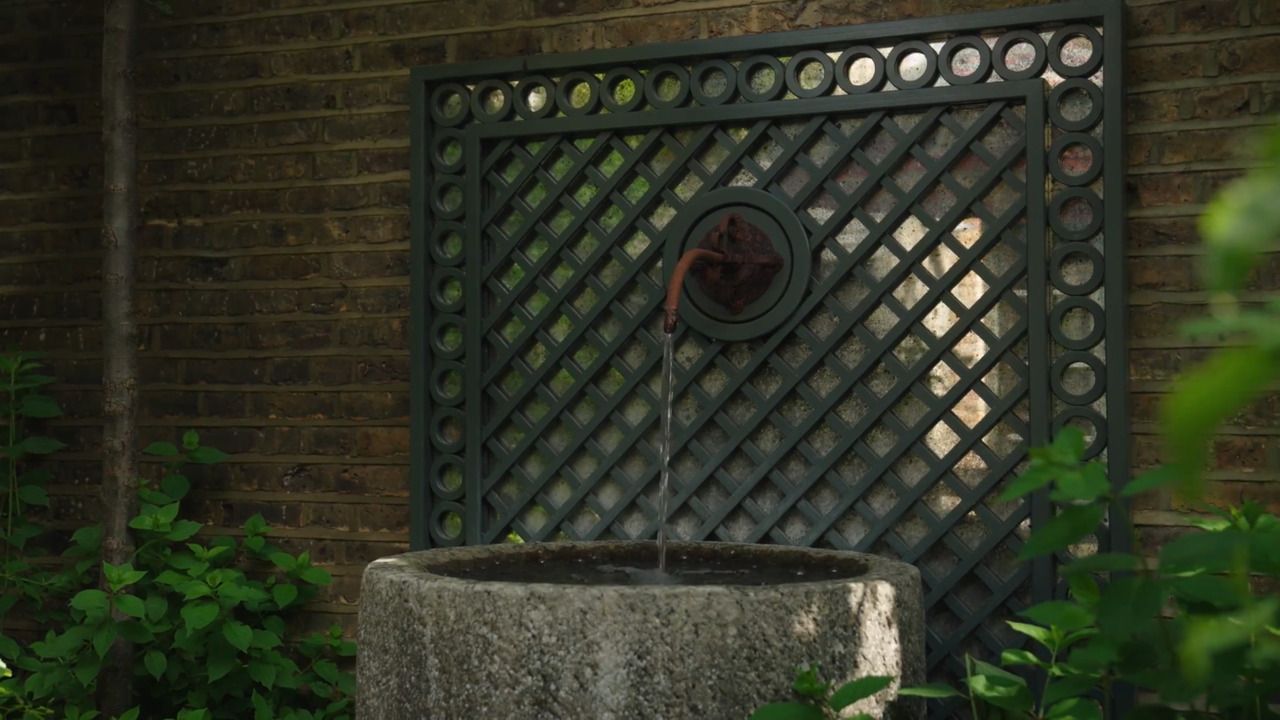
I get bespoke trellis made for most of our London-based design projects as we usually have to create height and privacy within these spaces.
I prefer painted trellis as it brings another layer of interest into the space and if something is beautifully made and pleasing to look at then you will be happy to have it in your garden for a long time.
With bespoke trellis you can have them made to the exact height you require, which you won't be able to achieve with off-the-shelf varieties.
Alongside bespoke trellis, we also use antique mirrors in a lot of our gardens. We place these behind the trellis and these mirrors act to bounce the light and the sun around the garden and expand the space.
If you want to use a mirror though, make sure it's antique. Regular mirrors are too shiny and can confuse birds who see their reflection and believe they have met a mate. To avoid this, either buy an antique mirror or distress your own.
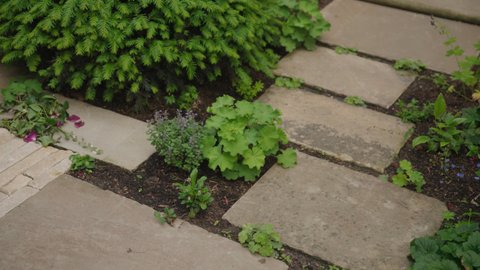
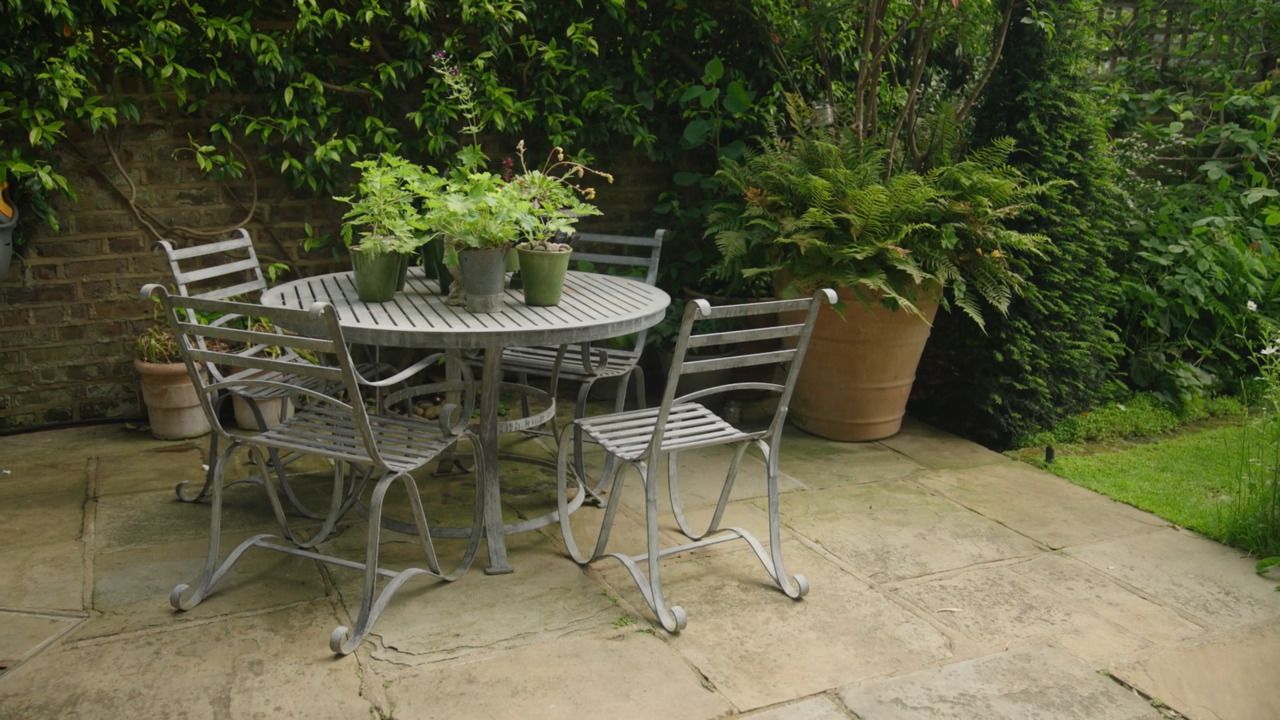
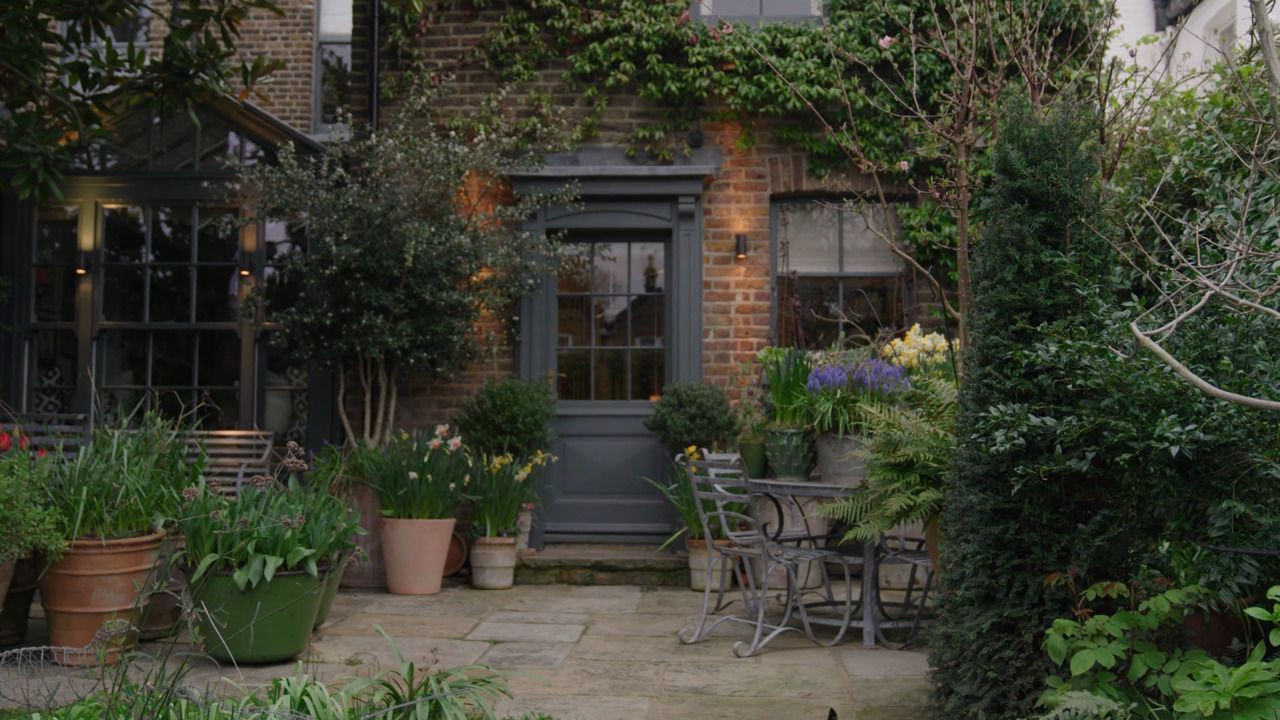
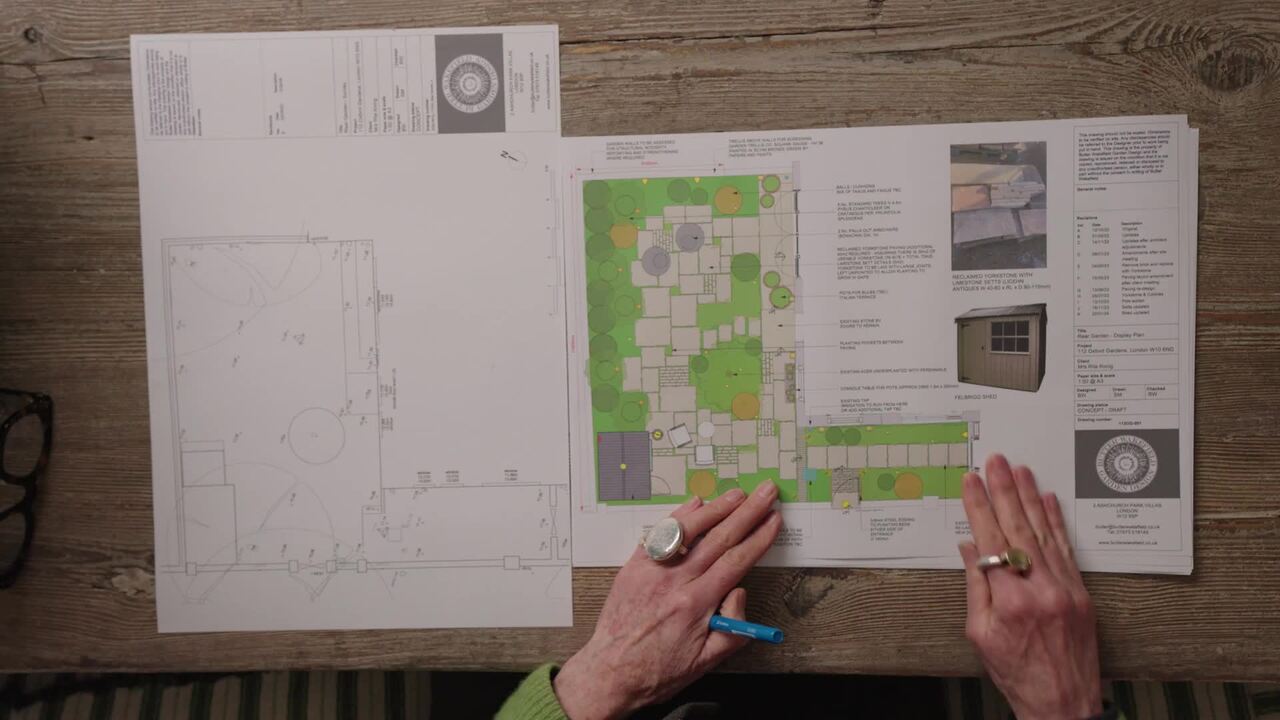
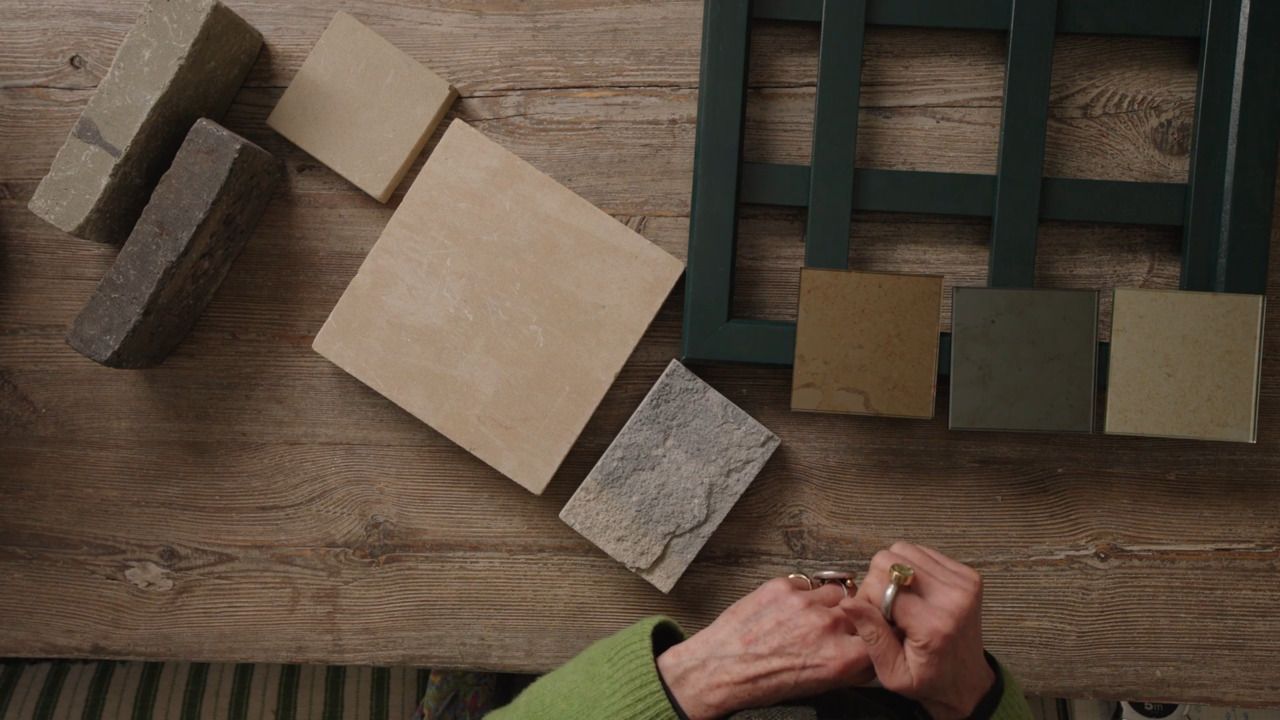
When it comes to flooring, there are a lot of different options available. I am a real fan of sawn Yorkstone which will give your garden a contemporary feel and is also extremely hard-wearing and won't absorb too much water.
On the other hand, if you want to create a more traditional and rustic-looking space then a stone like Durlston Riven Finish will give you a rougher, more natural look.
One thing to bear in mind if you are choosing to go with a riven finish is that you won't have completely level paving slabs and therefore any furniture that you put on top won't be level either. Water will also sit in the crevices too, so you may end up with more algae on your paving surfaces.
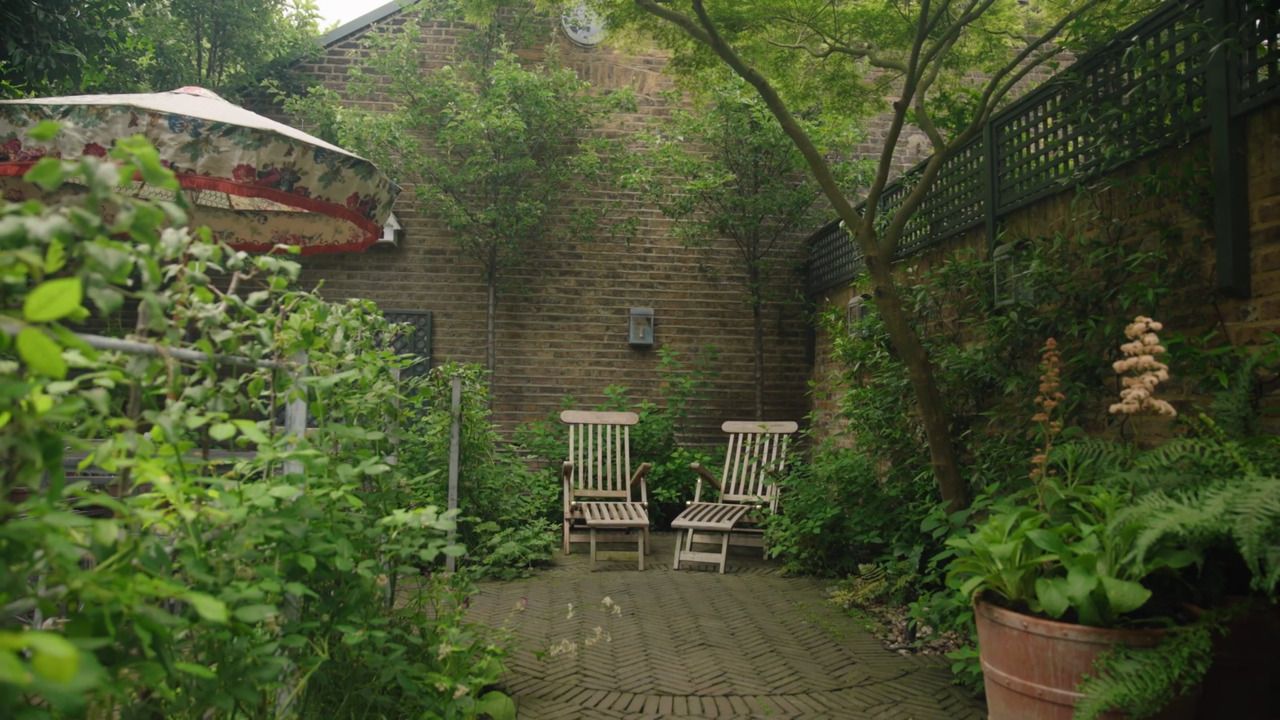
If you're interested in creating patterns in your paving, then consider combining different types of bricks such as Yorkstone and cobbles. Patterns and bold statements can work particularly well in small spaces where a bold statement piece will have more impact and really create interest.
I love to build patterns into my paving and I like to use Belgian bricks rather than regular bricks as they are much narrower. I prefer to arrange them skinny side up and we usually butt joint them, dust in some kiln-dried sand and put them on a permeable base that's Sustainable Urban Drainage System (SUDS) compliant. This means it's good for the environment and won't encourage localised flooding.
I'm particularly fond of dividing a multi-functional space up with different patterns. So I might use a herringbone pattern on one part of the terrace and then a stacked brick effect on another part.
When it comes to colour I always work in bricks that are the same tone and I would never combine lots of different colours together in one garden. If you're looking for a job lot of bricks, make sure to contact local reclaimed brick suppliers in your area. The London Reclaimed Brick Company is particularly great for sourcing reclaimed bricks, but be aware that they're likely to be more porous, so may not work as well in the ground.
The key thing when thinking about paving is to take inspiration from what is already around you. Think about what your house is made of, what features and colours are already in your garden and what stone is used a lot in the local area.
Personally, I think that two or three materials is the maximum amount you want to use in your garden, otherwise things can start to get a little too busy.
Get the full workbook, video lessons, and more with a Create Academy subscription.
Subscribe to access the full workbookAlready a member? Sign in to watch
491 reviews
Read moreCreate Academy has been such a great resource. I'm in the middle of renovating a bungalow with a very large garden and the courses have offered a wealth of inform...
Harvey
Jun 10, 2026
Absolutely love Create Academy! The instructors are extremely informative, and it is beautifully filmed. Create Academy is great value for money and plan on renew...
SG
May 31, 2026
Butter's creativity is stunning! Her ability to incorporate brilliance in small gardens is magical!
Carla
May 30, 2026
The best adventure. I like all the courses, but my favorite are both Rita Konig interior design courses and Anna Jones. Excellent!
Karolina Kluczewska
May 20, 2026
Create Academy has been such a great resource. I'm in the middle of renovating a bungalow with a very large garden and the courses have offered a wealth of information to dive into and explore new ideas. I'm...
Harvey
Jun 10, 2026
Absolutely love Create Academy! The instructors are extremely informative, and it is beautifully filmed. Create Academy is great value for money and plan on renewing my subscription yearly because there are ...
SG
May 31, 2026
Butter's creativity is stunning! Her ability to incorporate brilliance in small gardens is magical!
Carla
May 30, 2026

Your Instructor
Leading British garden designer
Butter Wakefield has been a distinguished garden designer for over 20 years. In 2016, she established her eponymous studio, combining her expertise in interiors with her passion for gardening. Butter's unique ability to connect outside spaces with interiors has made her a sought-after designer, particularly known for her love of city gardens. With over 15 years of experience, Butter has crafted numerous inspirational and purposeful gardens of various sizes in London and beyond.
Her journey into garden design began at the English Gardening School (1997/98), where she completed the Year Diploma Course in Plants and Plantsmanship, winning two prizes. Butter further honed her skills at the London College of Garden Design (2013/14), graduating with a Merit Commended. Before venturing into garden design, she worked as an interior design assistant at Colefax and Fowler on Brook Street. Here, she developed a deep appreciation for scale, texture, pattern, colour, and the core principles of design.

Access to all courses


.jpg)