
Interior and exterior confidence
Create Academy has been such a great resource. I'm in the middle of renovating a bungalow with a very large garden and the courses have offered a wealth of inform...
Harvey
Jun 10, 2026
with THE LAND GARDENERS — Award-winning garden designers and cut flower growers on a mission to save our soil.
Lesson 9 of 37
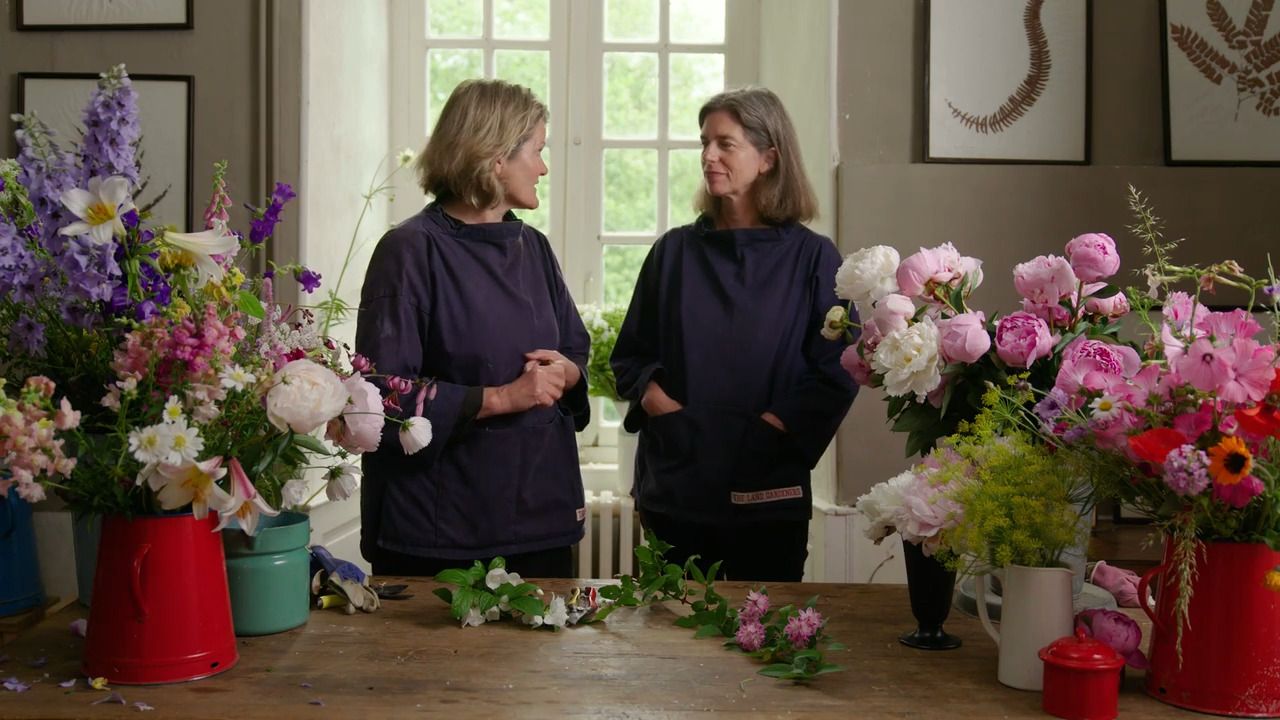
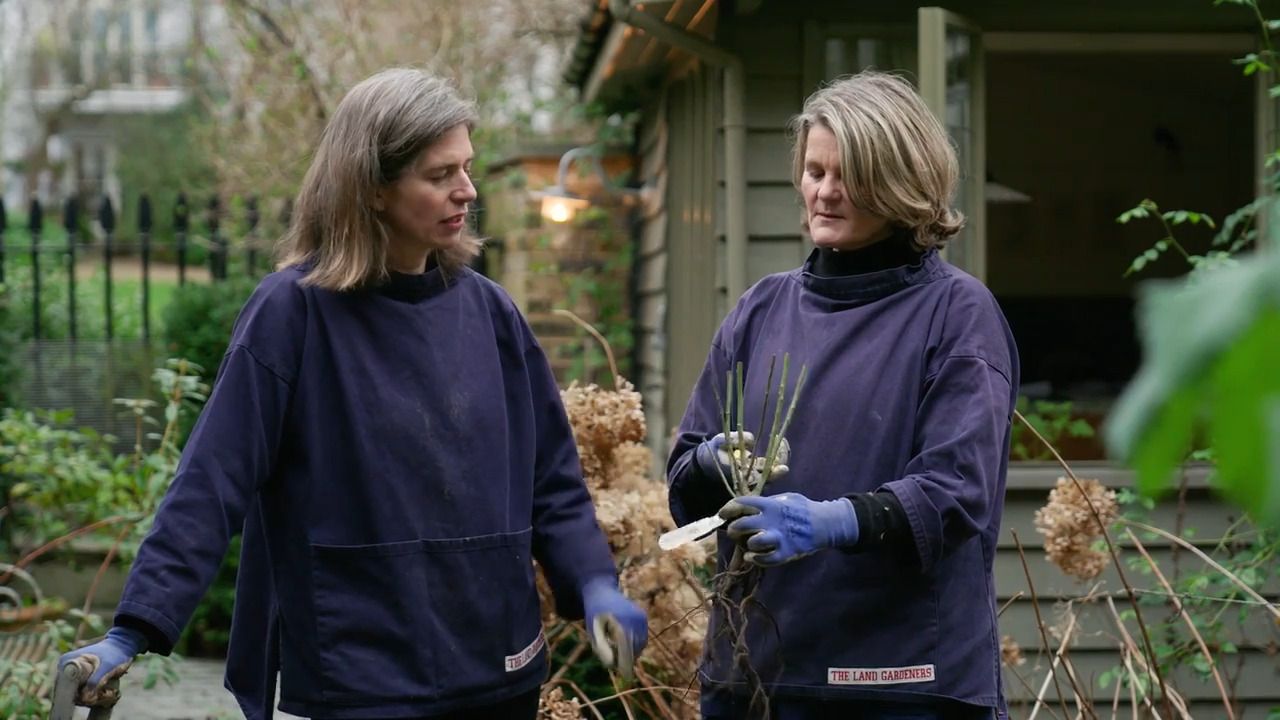
Shrubs are one of Bridget and Henrietta’s passions, valued for being low-maintenance and for their usefulness in spring floral arrangements. Discover some of their favourite flowering shrubs as well as must-have foliage for arrangements.
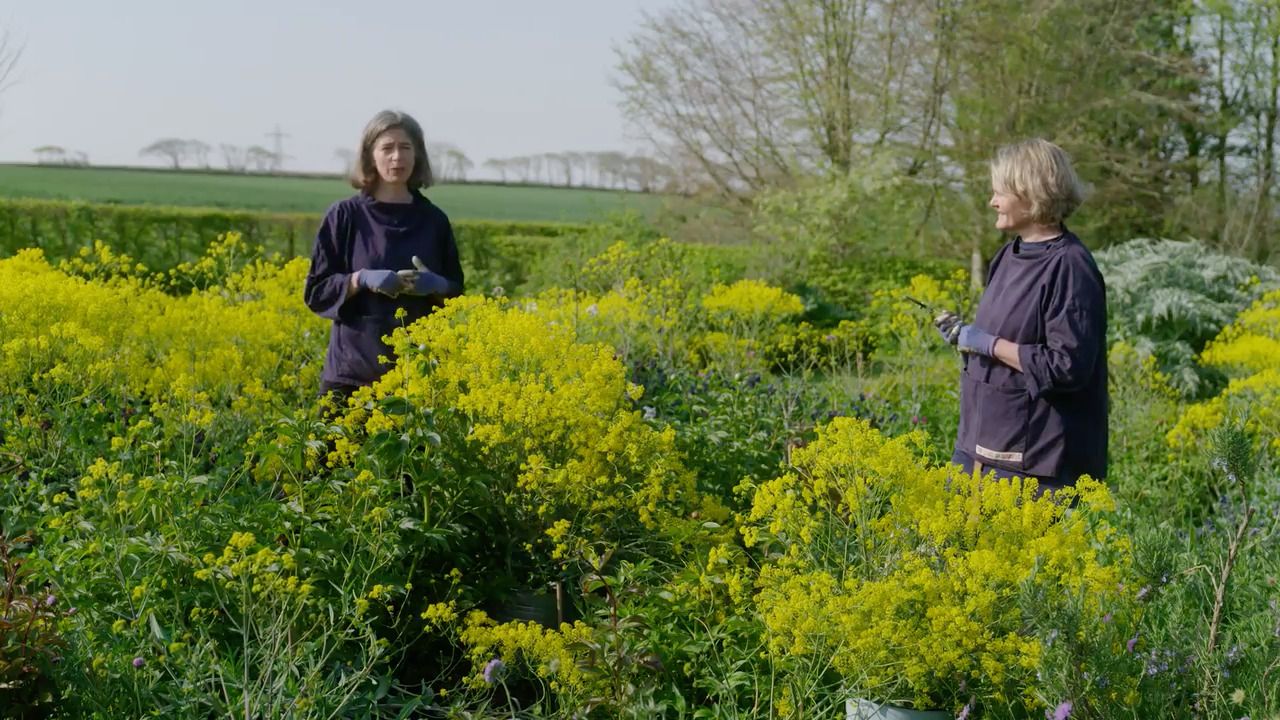
Shrubs are low-maintenance and can be very useful for cutting in the spring. We have become quite passionate about them and have many varieties in our gardens.
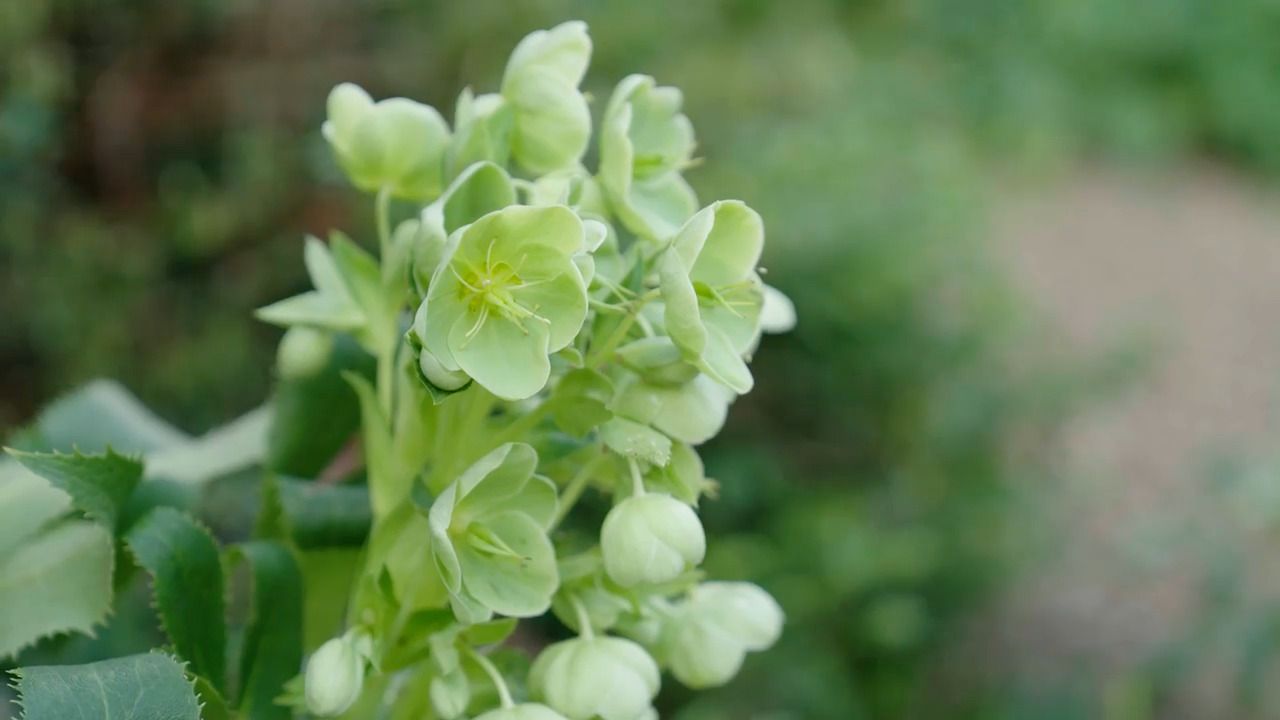
Viburnum opulus (common name: guelder rose) is one of our favourites. It is a showy plant with a relaxed look and bright lime-green flowers. We cut armfuls of it for arrangements. As guelder rose prefers alkaline soil, we don't find they do well in areas where camellias and rhododendrons flourish. We find they suit the wilder parts of the garden, in shrubberies and hedgerows. We plant guelder rose, like most shrubs, between November and March.
Chaenomeles (common name: quince) is another spring shrub that looks good when in flower but is less interesting for the rest of the year, so we plant it further back in the garden.
Euphorbia (common name: milkweed) is our other all-time favourite foliage plant. We grow Euphorbia oblongata and pick from it throughout the summer. It's an easy and very useful plant.
OUR ADVICE:
Currants are easy to grow and are both decorative and productive. They form bushy shrubs with wonderful foliage and produce edible red, white and black berries. If you buy and plant a currant bush in winter, it will bear fruit by early June. Currants also root easily from cuttings.
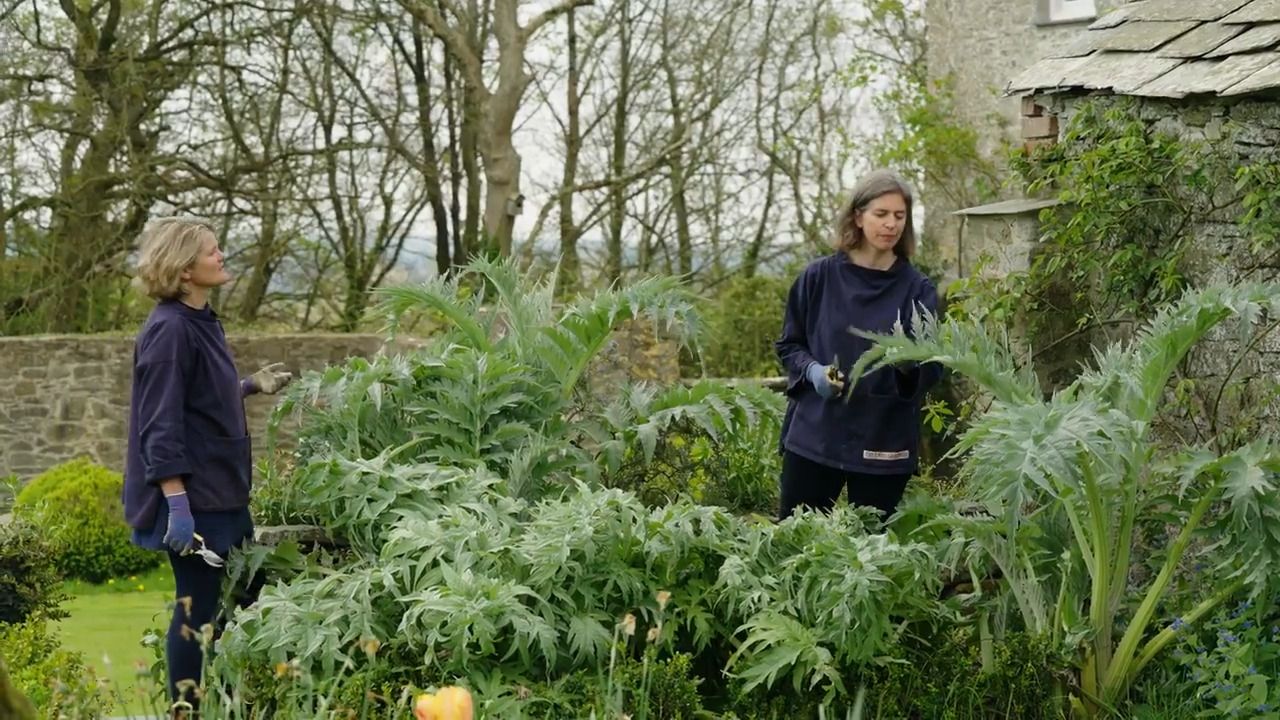
We like using lots of fruits and vegetables in our arrangements and we especially enjoy artichokes for their foliage. We grow artichokes from seed in February/March, then pick young leaves the following spring and harvest the edible artichokes in the summer. Artichoke leaves make a great statement in mixed arrangements and are impressive on their own, but you must remember to sear their stems in boiling water after picking.
We also grow Cynara cardunculus (common name: cardoon), a plant that's similar to artichokes but is taller and appears later in the season. It has attractive grey foliage in summer and produces decorative pods in autumn. Cardoons give height and structure to arrangements.
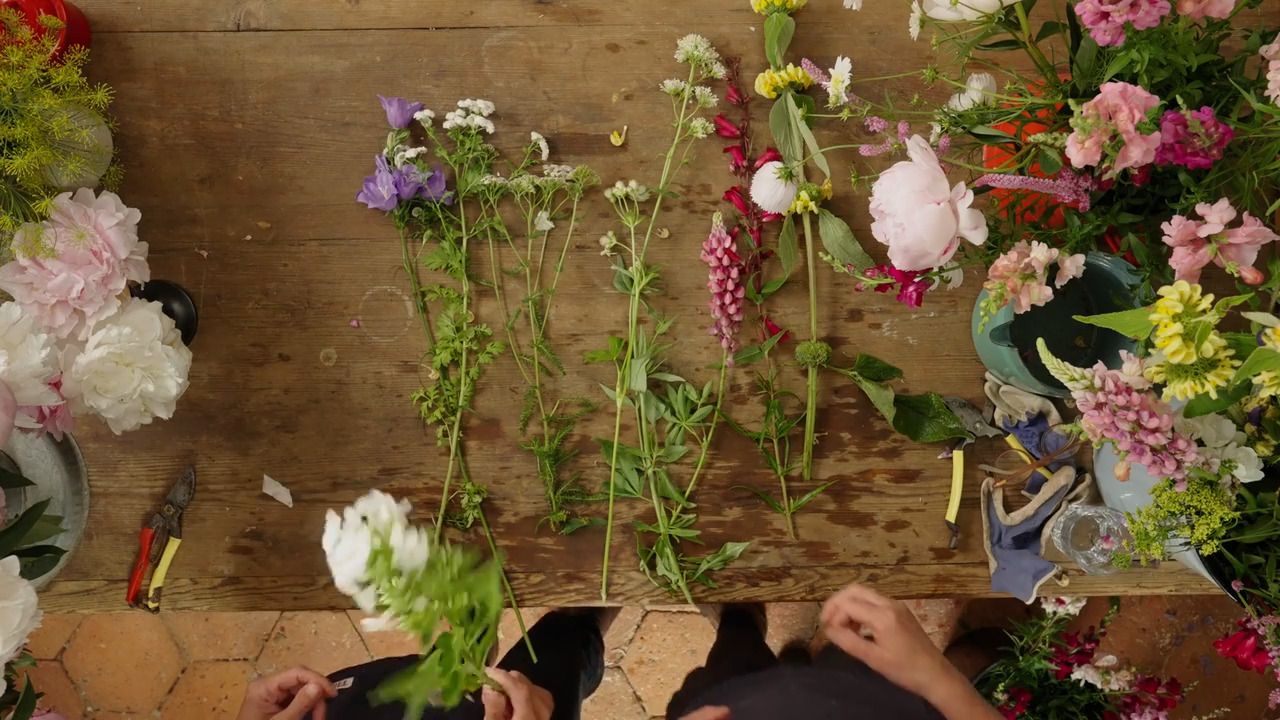
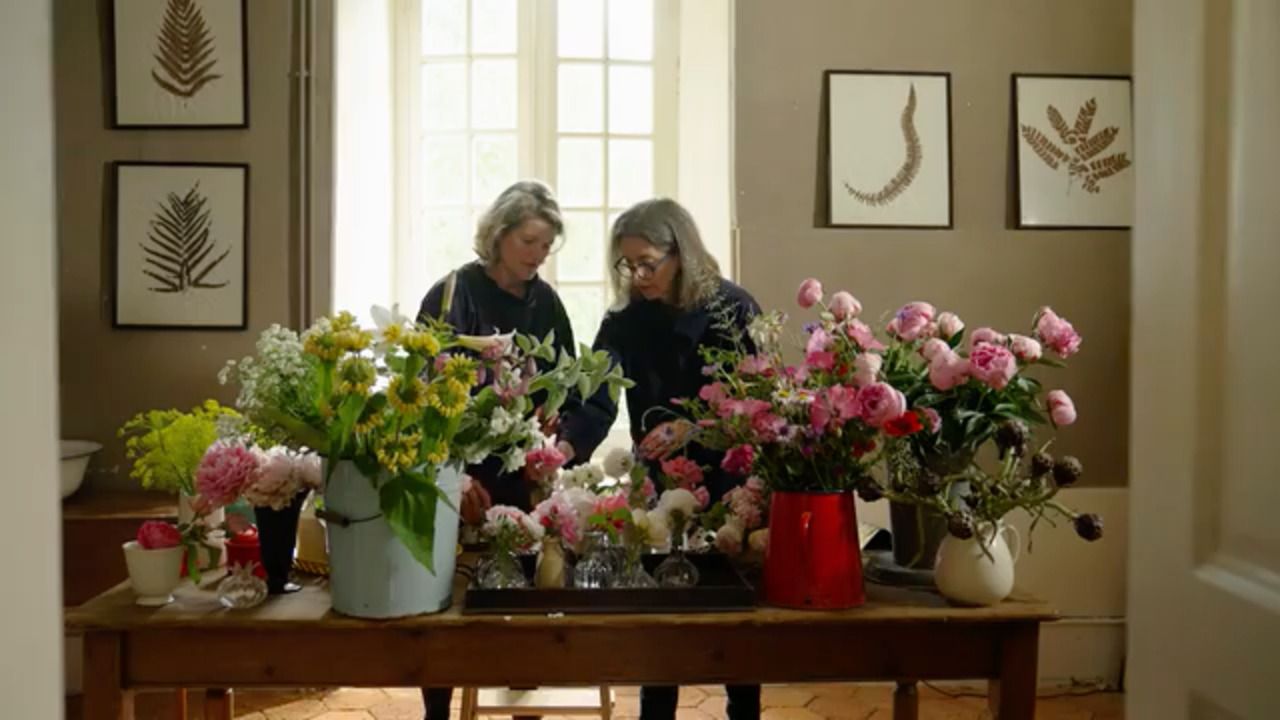
In this lesson we are making a bright, all-green, spring flower arrangement composed of Euphorbia oblongata, apple mint, currant and guelder rose.
To prolong the vase life of Euphorbia, we first sear their ends for five seconds in boiling water. Apple mint brings a wonderful smell, and the branches of currant add interest to the arrangement with their bright-green leaves and new, tiny berries. We've completed the arrangement with guelder rose (Viburnum opulus), which comes in different varieties and is as wonderful in mixed arrangements as it is on its own. To add a final touch of lightness to the arrangement, we've inserted a flowering sprig of tellima - a ground-covering perennial that we grow in shady areas of the garden.
Euphorbia oblongata
common name: egg leaf spurge
Philadelphus
common name: mock orange
Ribes
common name: currant
Syringa
common name: lilac
Tellima
common name: tellima
Viburnum opulus
common name: guelder rose
Get the full workbook, video lessons, and more with a Create Academy subscription.
Subscribe to access the full workbookAlready a member? Sign in to watch
510 reviews
Read moreCreate Academy has been such a great resource. I'm in the middle of renovating a bungalow with a very large garden and the courses have offered a wealth of inform...
Harvey
Jun 10, 2026
Absolutely love Create Academy! The instructors are extremely informative, and it is beautifully filmed. Create Academy is great value for money and plan on renew...
SG
May 31, 2026
Butter's creativity is stunning! Her ability to incorporate brilliance in small gardens is magical!
Carla
May 30, 2026
The best adventure. I like all the courses, but my favorite are both Rita Konig interior design courses and Anna Jones. Excellent!
Karolina Kluczewska
May 20, 2026
Create Academy has been such a great resource. I'm in the middle of renovating a bungalow with a very large garden and the courses have offered a wealth of information to dive into and explore new ideas. I'm...
Harvey
Jun 10, 2026
Absolutely love Create Academy! The instructors are extremely informative, and it is beautifully filmed. Create Academy is great value for money and plan on renewing my subscription yearly because there are ...
SG
May 31, 2026
Butter's creativity is stunning! Her ability to incorporate brilliance in small gardens is magical!
Carla
May 30, 2026

Your Instructor
Award-winning garden designers and cut flower growers on a mission to save our soil.
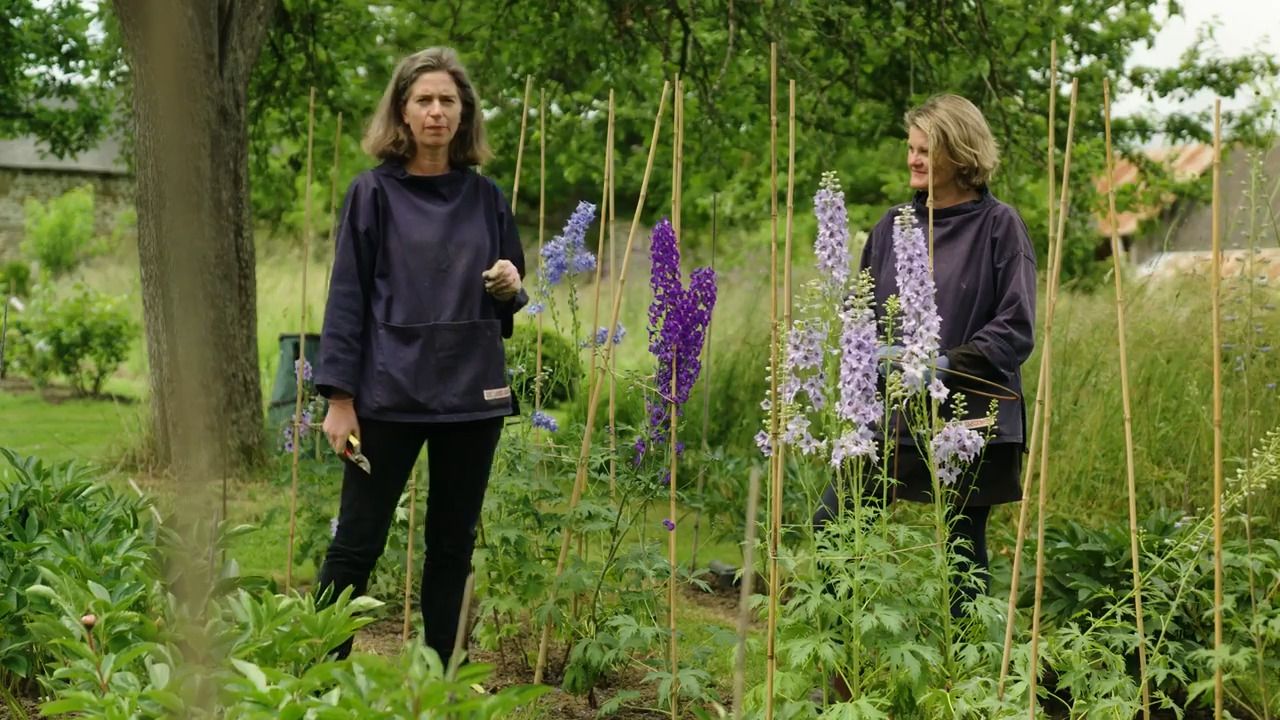
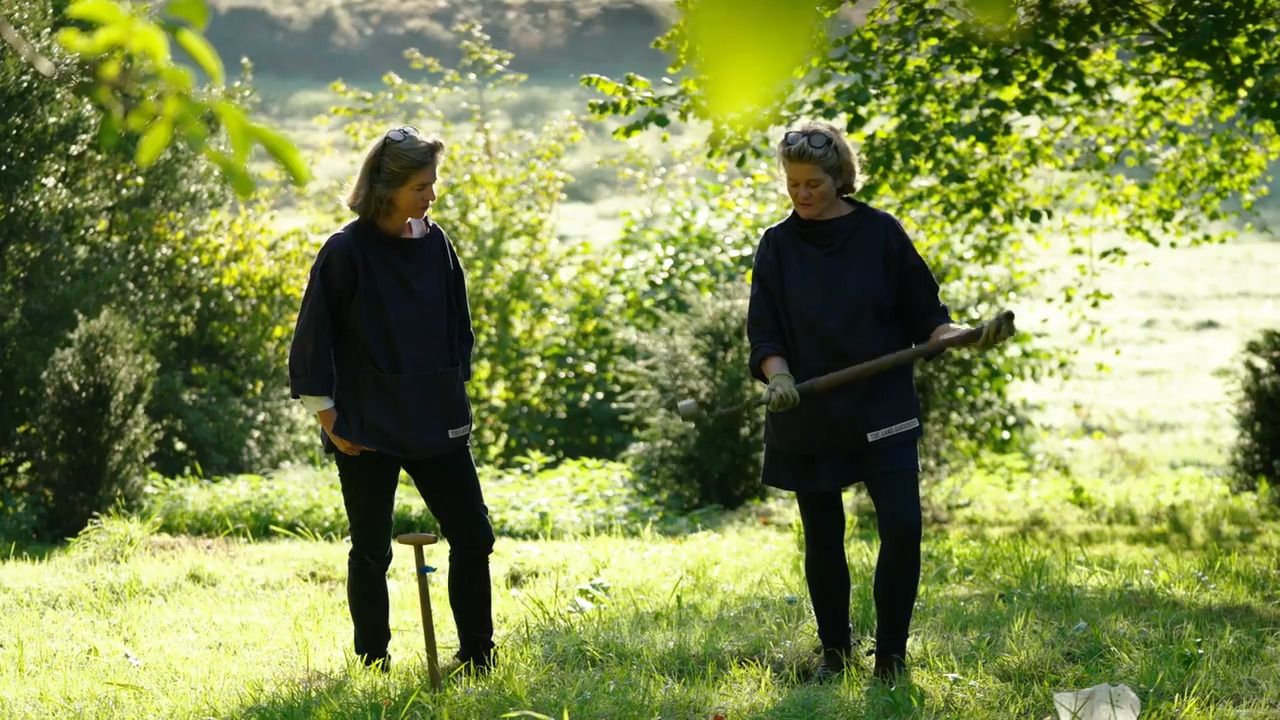
Garden designers, flower growers and compost creators, Henrietta Courtauld and Bridget Elworthy joined forces to found The Land Gardeners in 2012. United by their passion for organically grown plants and a shared interest in soil health, they began by growing and selling cut flowers to esteemed florists, and worked on restoring historic gardens to their former glory. Most recently, they launched Climate Compost - a project born from years of inquisitive research into soil biology with the aim of creating a microbially rich compost that produces nutrient dense crops, while also supporting and boosting the local ecosystem. With an unwavering commitment to improving the health of our land and its biodiversity, The Land Gardeners’ approach is one of sensitivity, unparalleled expertise and, above all, a loving respect for the natural world and its preservation.
Access to all courses


