












Interior and exterior confidence
Create Academy has been such a great resource. I'm in the middle of renovating a bungalow with a very large garden and the courses have offered a wealth of inform...
Harvey
Jun 10, 2026
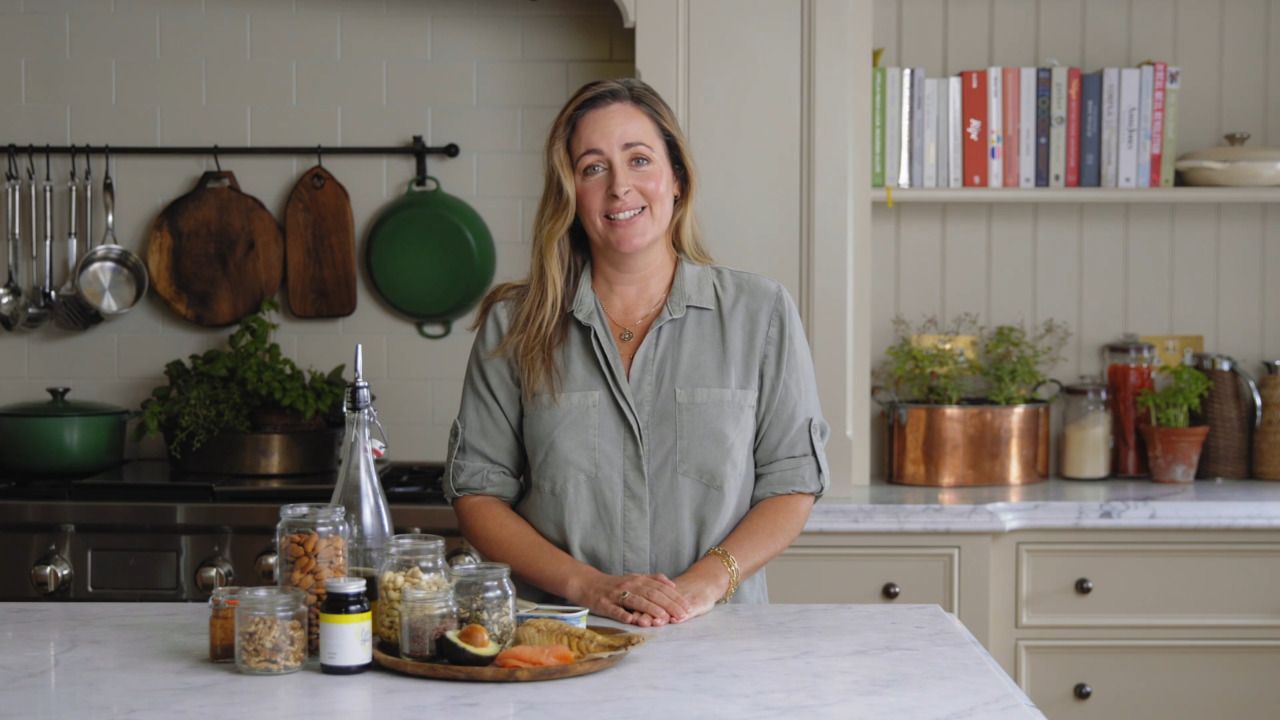
with AMELIA FREER — UK's leading nutritional therapist, healthy eating expert and internationally bestselling author.
Lesson 18 of 30

Subscribe to watch
Amelia breaks down some of the different types of carbohydrate, and explains why wholegrains are more nutritious than those that are refined.
Whole grains are a good source of energy, and may also be a useful and important source of fibre, calcium, iron, zinc, B vitamins and various other nutrients in our diets. However, it can be a bit confusing to work out what is a whole grain, and why they are different to other types of starchy carbohydrate foods. In the video, you saw me give an analogy between whole grains and avocado. I explain it in more detail here.
The skin is like the bran: This is a fibre-rich outer layer. This slows down the digestion and absorption of the starchy central part.
The flesh is like the starchy central part, called the endosperm. This is converted into sugars once digested and absorbed.
The stone is like the germ, the nutrient-packed inner part. This is where much of the nutritional density of whole grains come from.
I tend to divide grains up into three categories in my mind, to simplify things and hopefully make it easier to pick nutritious choices and understand why. There aren't any universally agreed definitions, but I have found this to be a useful 'rule-of-thumb'.
Where the grain is in a similar state to how it was growing on the plant, and still contains all parts of the grain - the bran, endosperm and germ - relatively intact.
Where the grain has been processed and milled. The bran, endosperm and germ (and therefore important micronutrients) are usually still there, but they have been broken down, leaving more of the endosperm (starch) available for quick digestion and absorption.
This is where the bran and germ have been removed and only the endosperm is left behind. Refining grains like this reduces their micronutrient density (i.e., the amount of vitamins and minerals they contain) and makes digestion and absorption of the carbohydrates easier, and thus quicker. Flours may, however, then be fortified with nutrients again after processing.
Get the full workbook, video lessons, and more with a Create Academy subscription.
Subscribe to access the full workbookAlready a member? Sign in to watch
491 reviews
Read moreCreate Academy has been such a great resource. I'm in the middle of renovating a bungalow with a very large garden and the courses have offered a wealth of inform...
Harvey
Jun 10, 2026
Absolutely love Create Academy! The instructors are extremely informative, and it is beautifully filmed. Create Academy is great value for money and plan on renew...
SG
May 31, 2026
Butter's creativity is stunning! Her ability to incorporate brilliance in small gardens is magical!
Carla
May 30, 2026
The best adventure. I like all the courses, but my favorite are both Rita Konig interior design courses and Anna Jones. Excellent!
Karolina Kluczewska
May 20, 2026
Create Academy has been such a great resource. I'm in the middle of renovating a bungalow with a very large garden and the courses have offered a wealth of information to dive into and explore new ideas. I'm...
Harvey
Jun 10, 2026
Absolutely love Create Academy! The instructors are extremely informative, and it is beautifully filmed. Create Academy is great value for money and plan on renewing my subscription yearly because there are ...
SG
May 31, 2026
Butter's creativity is stunning! Her ability to incorporate brilliance in small gardens is magical!
Carla
May 30, 2026

Your Instructor
UK's leading nutritional therapist, healthy eating expert and internationally bestselling author.
Amelia Freer (FdSc, DipION) is one of the UK’s most respected nutritional therapists and healthy eating experts. She is also an internationally best selling author debuting with the inspirational Eat. Nourish. Glow., now translated into many languages around the world. She has headed a thriving private clinic in London for over a decade and has helped thousands to achieve a happier, healthier life. Amelia fervently believes that we can all achieve improved health and well-being by choosing to eat the right foods. Amongst her success stories are famous names such as Victoria Beckham OBE, Boy George, James Corden and Sam Smith.

Access to all courses


