
Interior and exterior confidence
Create Academy has been such a great resource. I'm in the middle of renovating a bungalow with a very large garden and the courses have offered a wealth of inform...
Harvey
Jun 10, 2026
with SARAH RAVEN — Acclaimed English gardener, cook and writer. Host of the UK’s No.1 gardening podcast.
Lesson 9 of 25
Subscribe to watch
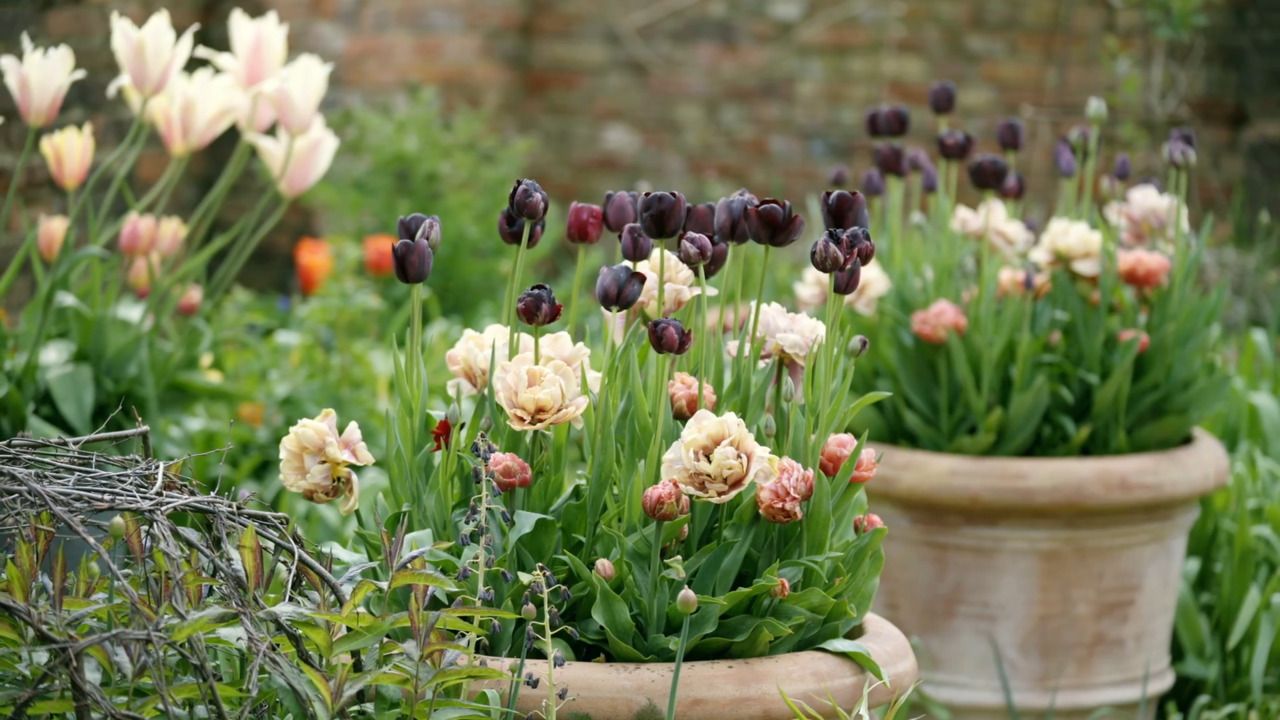
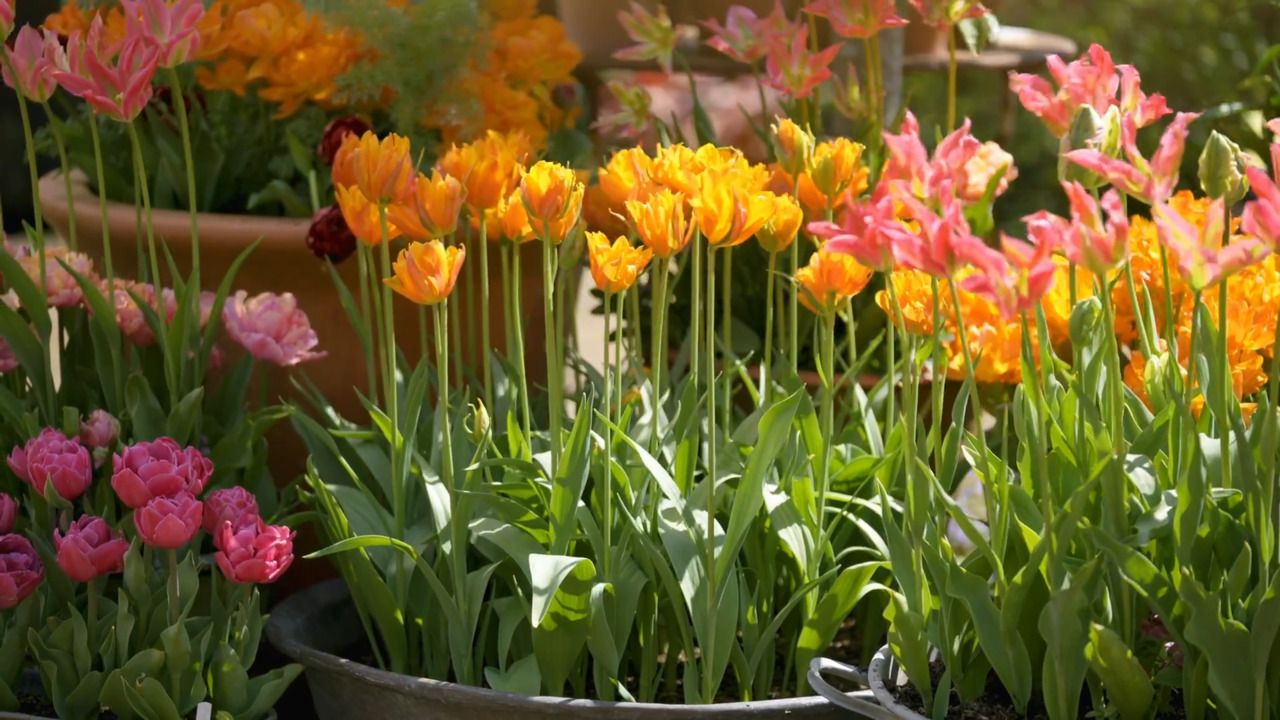
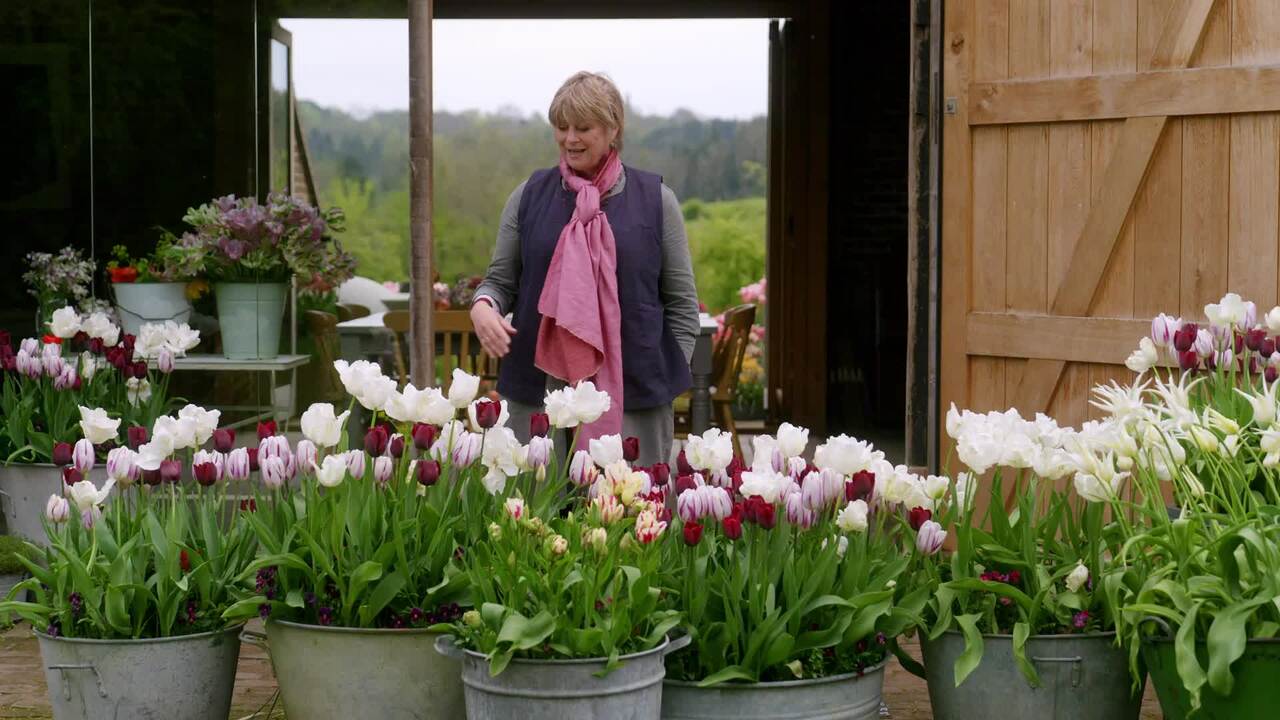
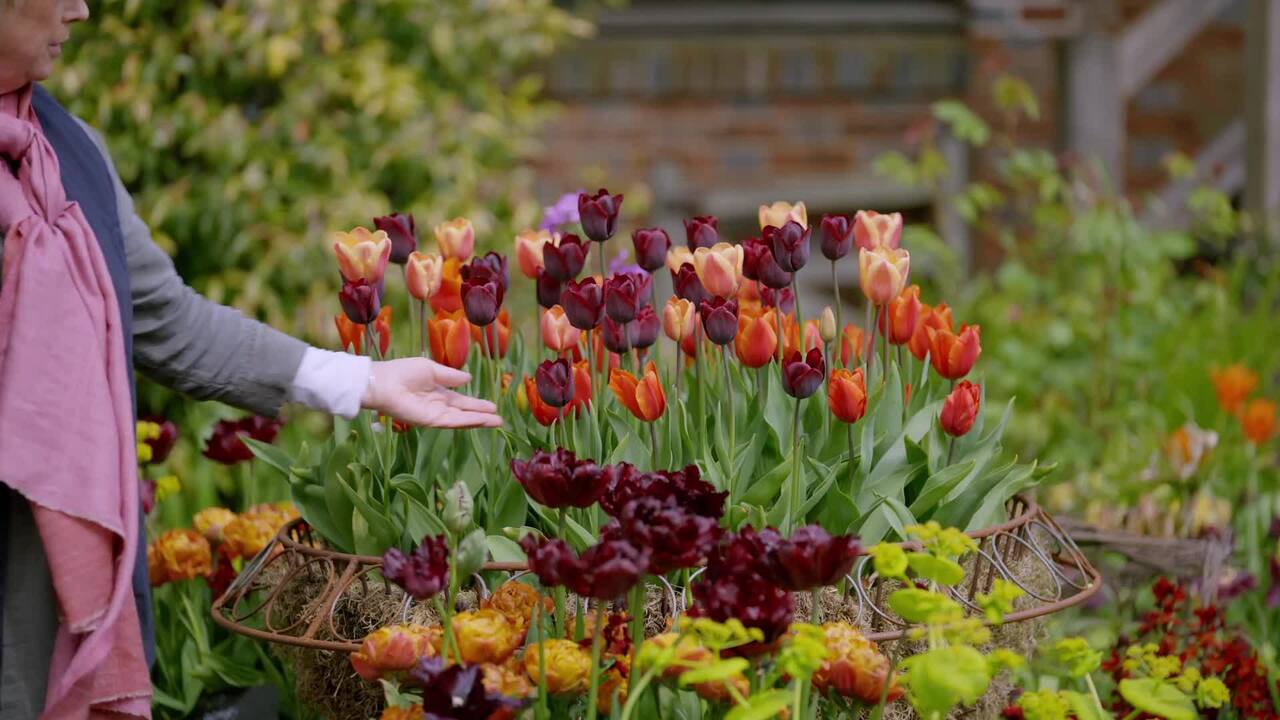
Using the dark and rich palette, Sarah puts together three spring pot combinations using elegant tulips.
The dark and rich palette was the first palette I started working with when I started on my gardening journey, and in this lesson, I'm going to show you how to work with it.
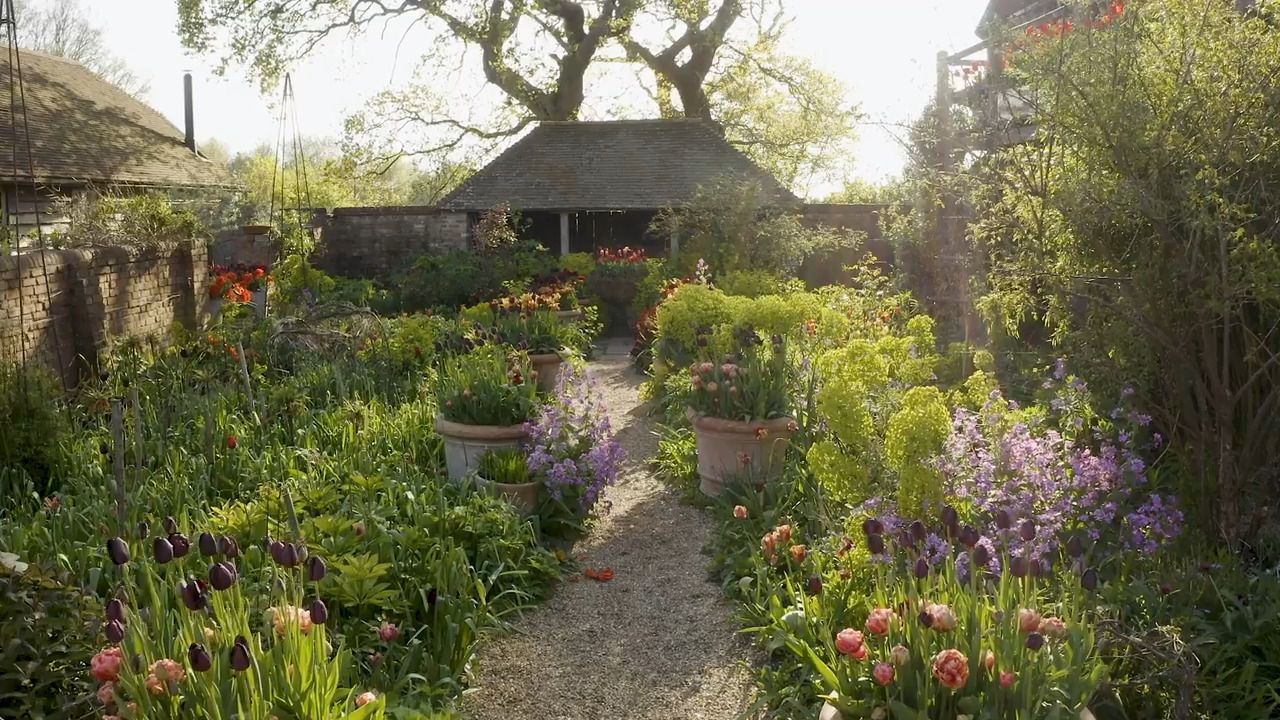
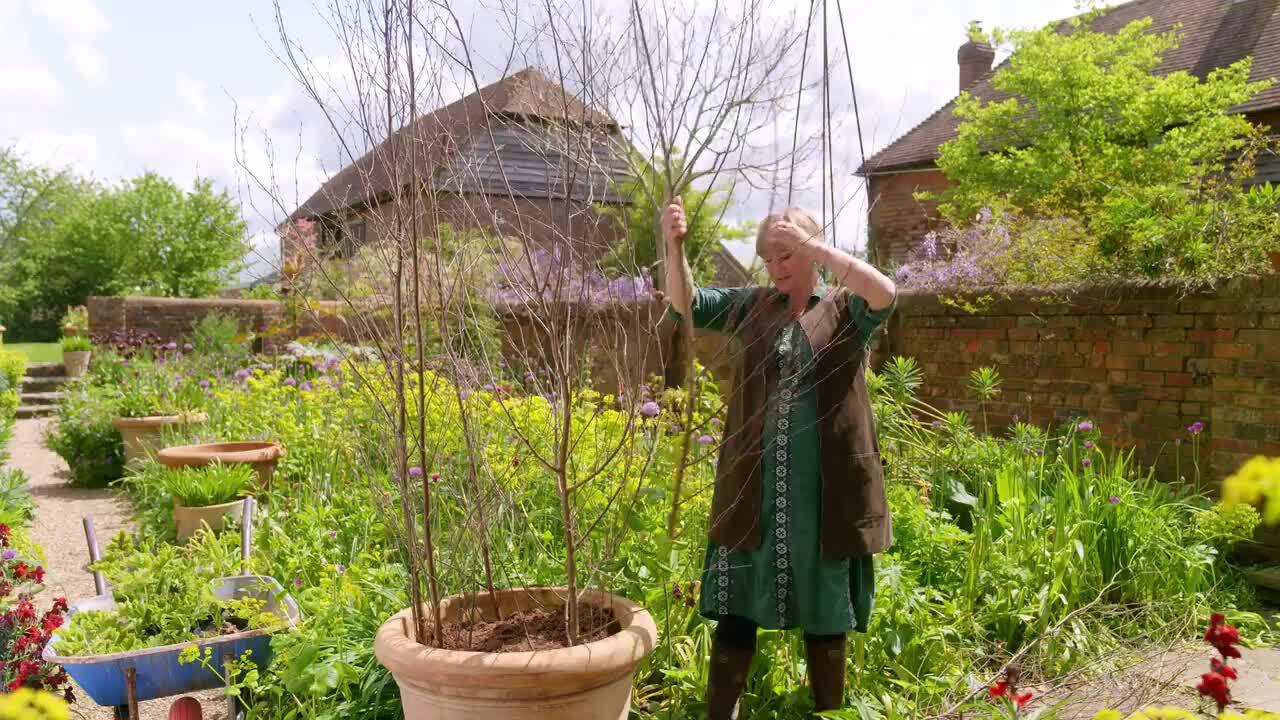
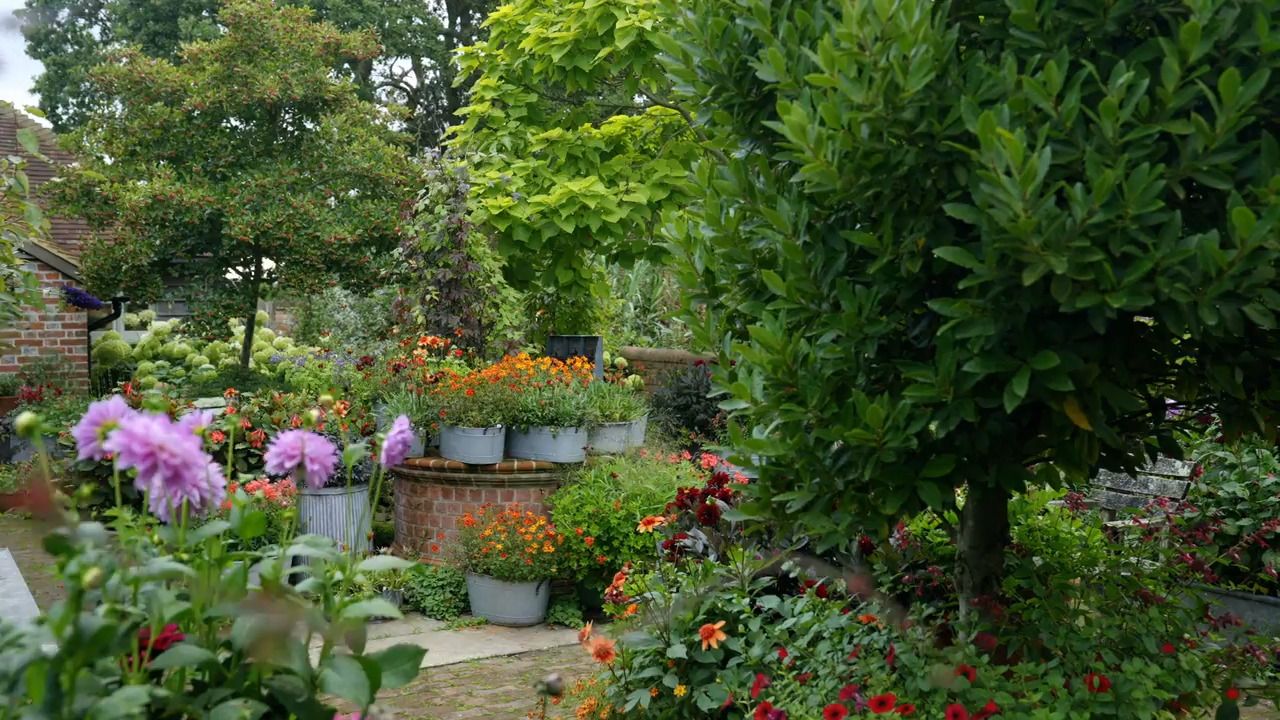
In this garden, the pots provide structure for the flowers and help to elevate the garden as a whole.
The path that runs through the centre of the garden is one of the most important areas here, so the head gardener, Josie, and I create recipes for these pots, to ensure that they are real showstoppers.
Bride: Tulip 'Palmyra'
Bridesmaid: Tulip 'Black Parrot'
Gatecrasher: Tulip 'Brownie'
When it comes to placing the whopper pots in the garden, I think it's important to have a bit of acidity behind them, such as a plant with lime green or yellow-green foliage.
The plant behind my whopper pot is:
Smyrnium perfoliatum
This is a shade-tolerant, triennial plant (meaning its lifecycle is three years) which has zingy yellow-green foliage and stops the whopper pots from feeling sombre, which they might do if they were on their own.
Bride: Tulip 'Sarah Raven'
Bridesmaid: Tulip 'Uncle Tom'
Gatecrasher: Viola 'Red Blotch'
This pot proves that an entirely monochrome selection can work well, you just need to be careful where you put your pot to ensure it doesn't become too sombre.
This whopper pot has orange in it, but it is an earthy blood orange, which shows that it belongs in the dark and rich palette and not in the boiled sweet palette, where I keep the brighter oranges.
Bride: Tulip 'Request'
Bridesmaid: Tulip 'Apricot Foxx'
Gatecrasher: Tulip 'Caviar'
The bridesmaid in this case is from the soft and warm palette.
The main rule when working with opposing palettes is that you need to keep them separate. When it comes to opposing palettes you don't want to mix them together in the same pot (although a dash of soft and warm in a dark and rich palette can work wonders) and you don't want to put different palette pots next to each other either.
Even if you're working in a small space, I would put opposing palettes in different corners of the garden, or perhaps one palette in your front garden and another palette in the back.
The boiled sweet and the dark and rich palettes can work together as they are both highly pigmented, but they would not look good if they were next to the soft and cool or soft and warm palette.
However, the soft and cool and soft and warm palettes can be placed next to each other too, as they are both predominantly white.
We plant our tulip bulbs in November, as by then the fungal spores of tulip blight have generally been killed off by a few rounds of frost.
We also wash out all of our pots with Jeyes fluid just in case any fungal spores are lurking there from the previous season.
We then plant all of our bulbs in a lasagne with around 12-15 bulbs per layer. Sometimes we then plant 'pot toppers' such as wallflowers on the surface, which will provide colour until the tulips bloom in spring.
You won't have to do anything else until spring comes around. If it is a dry spring, we tend to water our tulip pots every 10 days or so, but if it is wet you don't need to do this.
There's no need to feed tulips, as the bulbs contain all the energy they need to produce flowers. If however, you want to plant out your tulip bulbs for the next season, start to feed them once the leaves have started to die back. You can then dig them up and plant them in the garden once the leaves have fully died back.
Get the full workbook, video lessons, and more with a Create Academy subscription.
Subscribe to access the full workbookAlready a member? Sign in to watch
491 reviews
Read moreCreate Academy has been such a great resource. I'm in the middle of renovating a bungalow with a very large garden and the courses have offered a wealth of inform...
Harvey
Jun 10, 2026
Absolutely love Create Academy! The instructors are extremely informative, and it is beautifully filmed. Create Academy is great value for money and plan on renew...
SG
May 31, 2026
Butter's creativity is stunning! Her ability to incorporate brilliance in small gardens is magical!
Carla
May 30, 2026
The best adventure. I like all the courses, but my favorite are both Rita Konig interior design courses and Anna Jones. Excellent!
Karolina Kluczewska
May 20, 2026
Create Academy has been such a great resource. I'm in the middle of renovating a bungalow with a very large garden and the courses have offered a wealth of information to dive into and explore new ideas. I'm...
Harvey
Jun 10, 2026
Absolutely love Create Academy! The instructors are extremely informative, and it is beautifully filmed. Create Academy is great value for money and plan on renewing my subscription yearly because there are ...
SG
May 31, 2026
Butter's creativity is stunning! Her ability to incorporate brilliance in small gardens is magical!
Carla
May 30, 2026

Your Instructor
Acclaimed English gardener, cook and writer. Host of the UK’s No.1 gardening podcast.
Sarah Raven is a renowned English gardener, cook and award-winning author. She is an inspirational and passionate teacher - combining her decades of experience with her scientific approach to growing (she is medically trained) - and has been running cooking, flower arranging and gardening courses at Perch Hill, her 90-acre farm in East Sussex, and around the UK for over 30 years. She has written for a host of major publications - including House & Garden, The Saturday Telegraph, Country Living, Gardens Illustrated, Gardeners’ World Magazine and The English Garden - and presented on TV shows including Gardeners' World and BBC’s Great British Garden Revival. Her gardening and cookery books have won numerous awards including ‘Best Specialist Gardening Book’ for The Cutting Garden and ‘Cookery Book of the Year’ for Sarah Raven's Garden Cookbook. Sarah is married to the writer Adam Nicolson, Vita Sackville-West's grandson. She also has an online shop that is a brilliant destination for plants, bulbs, seeds, tools and all things garden.
Access to all courses


.jpg)