


Interior and exterior confidence
Create Academy has been such a great resource. I'm in the middle of renovating a bungalow with a very large garden and the courses have offered a wealth of inform...
Harvey
Jun 10, 2026
The Complete Floristry Masterclass
with WILLOW CROSSLEY — World-renowned florist, author and designer, known as the UK’s ‘Queen of Flowers’.
Lesson 20 of 43
Subscribe to watch
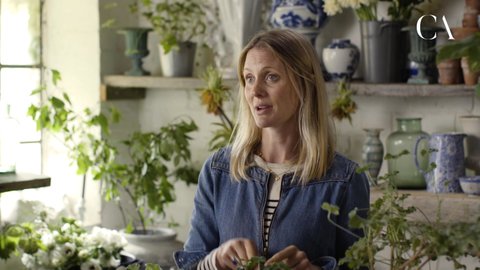
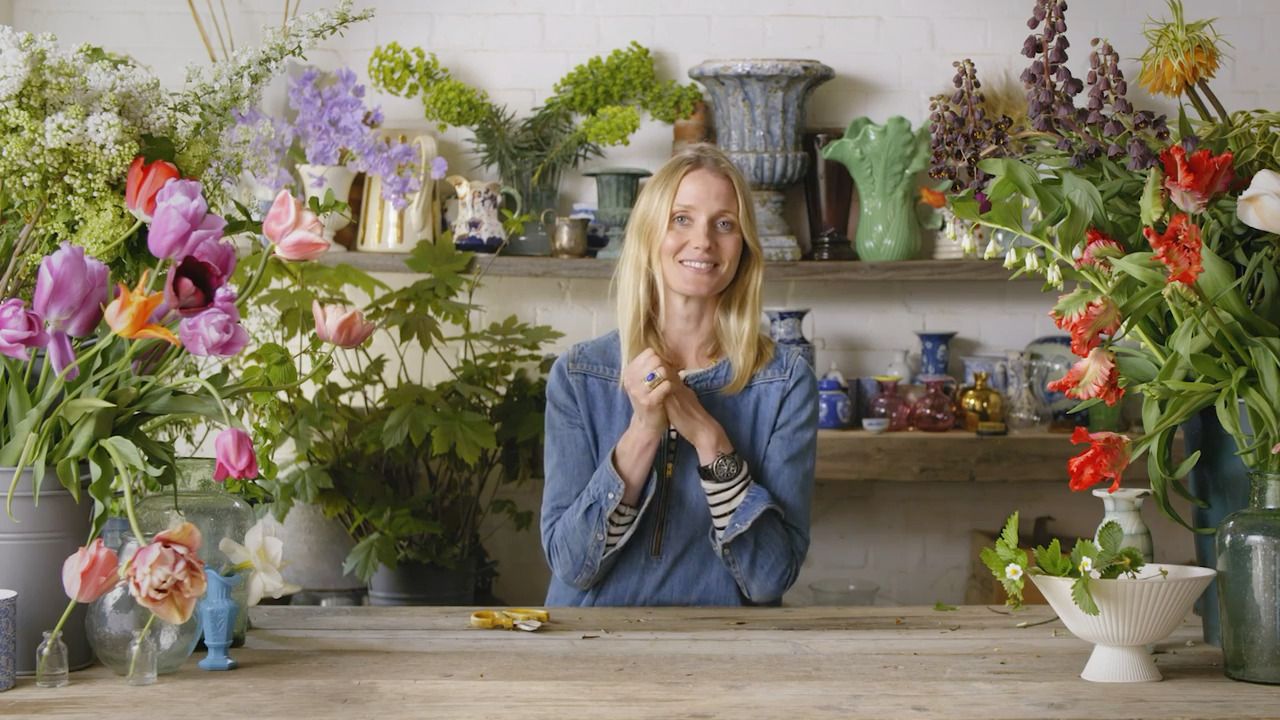
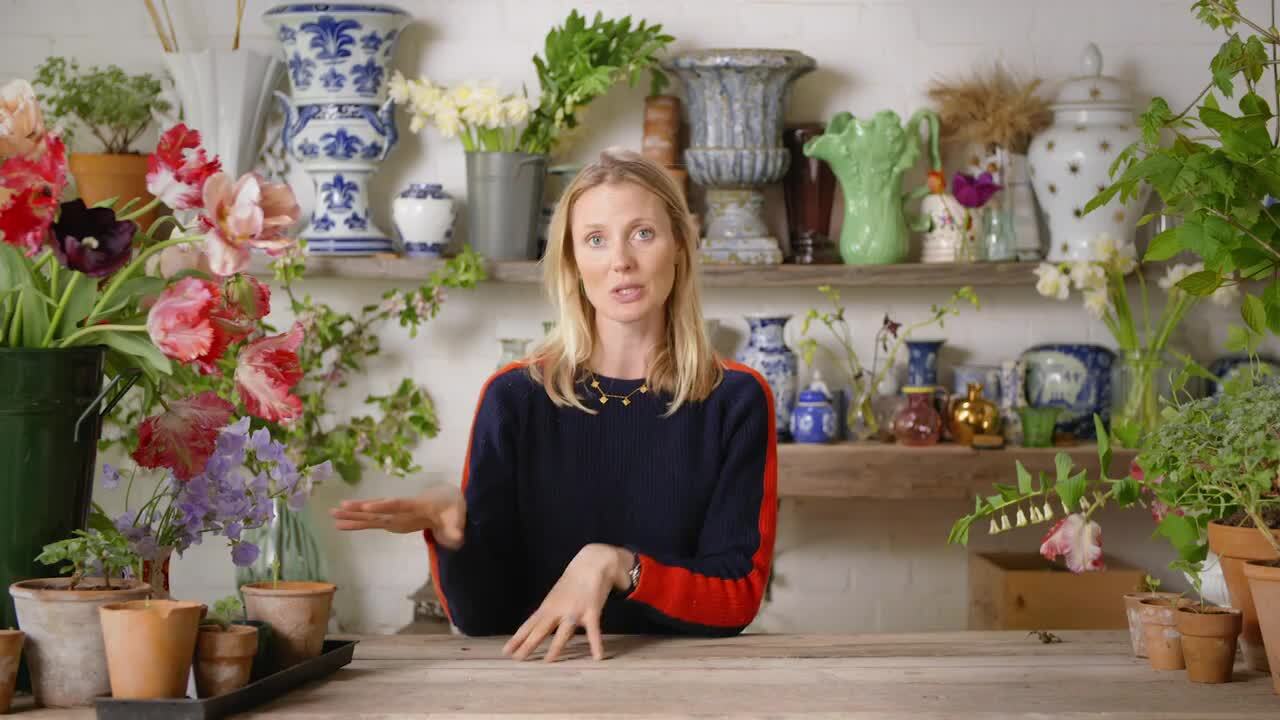
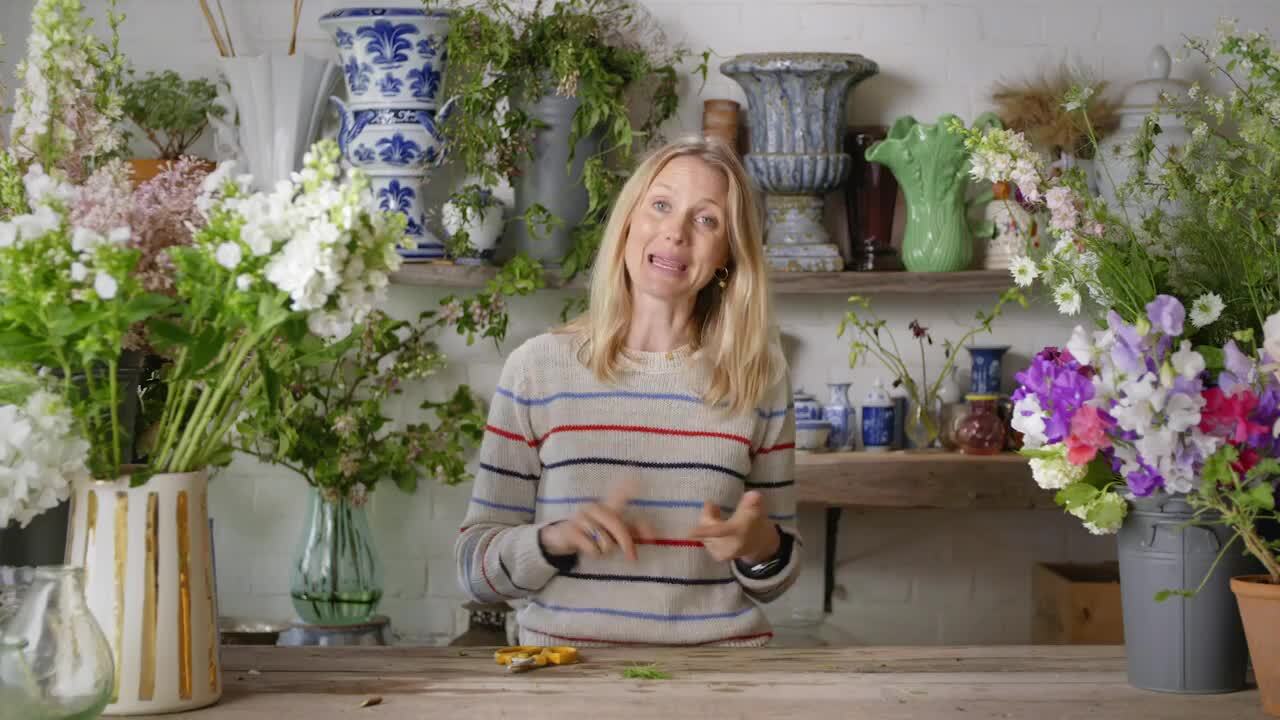
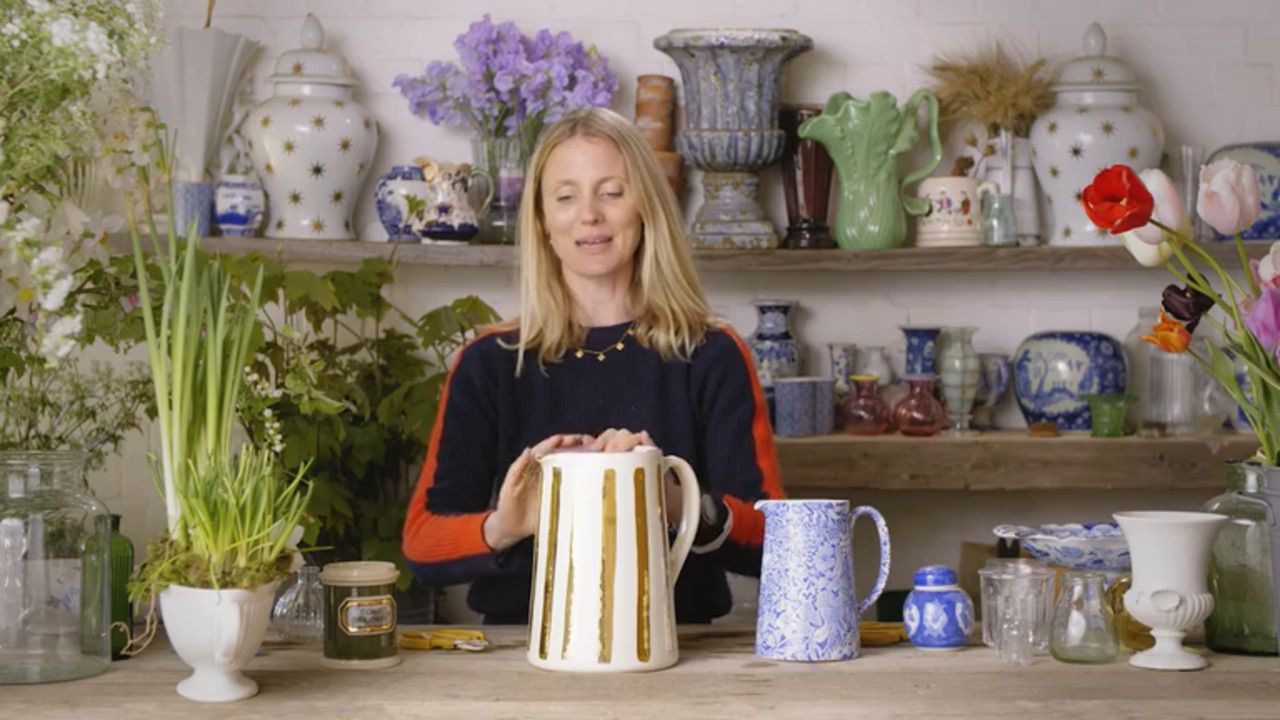
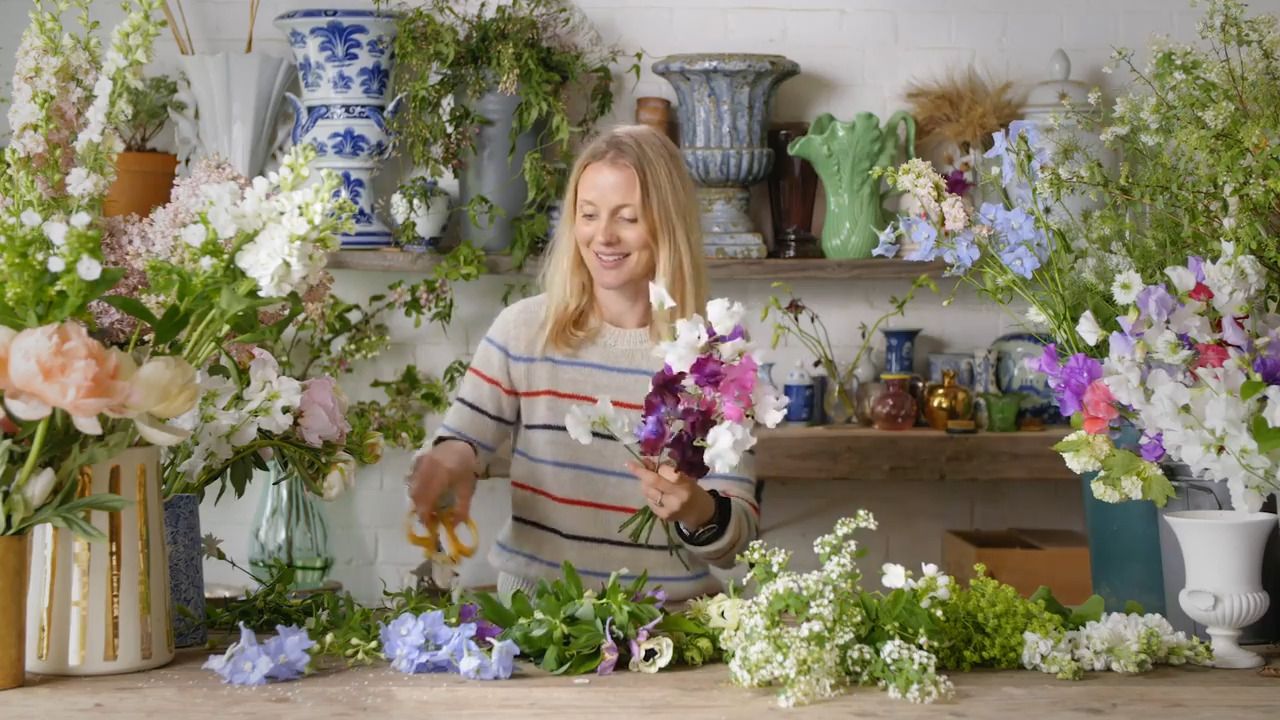
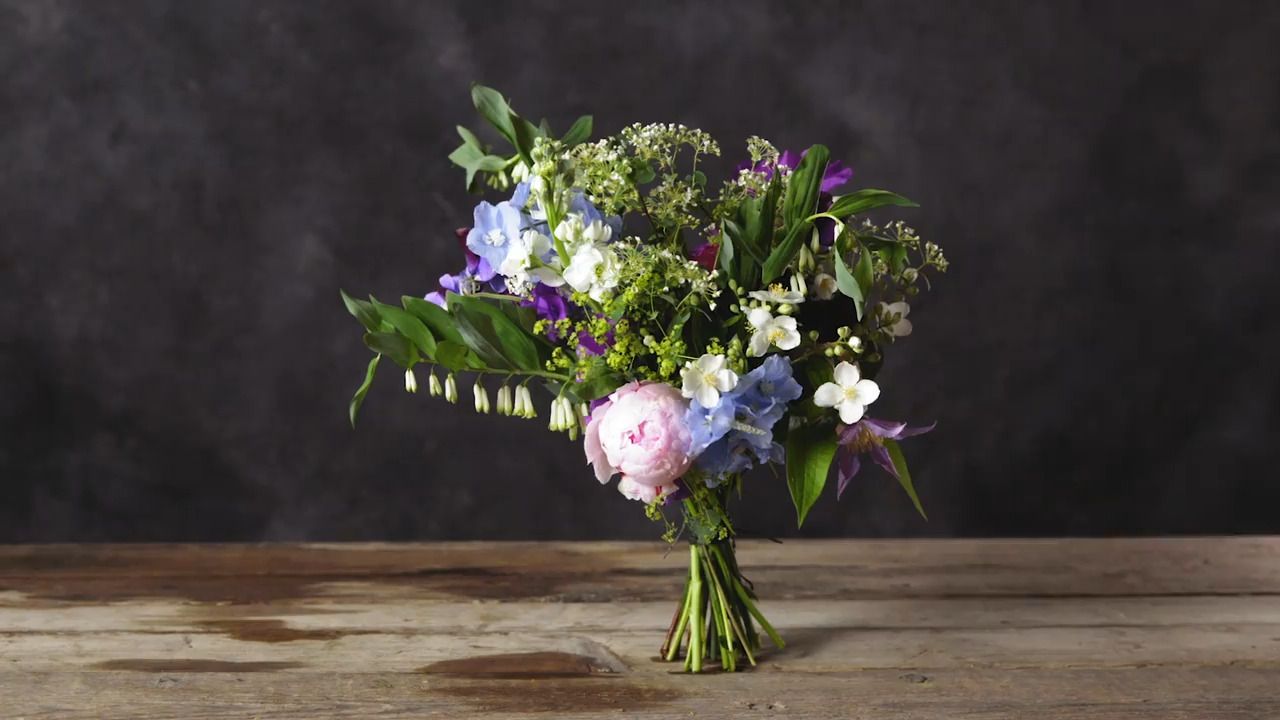
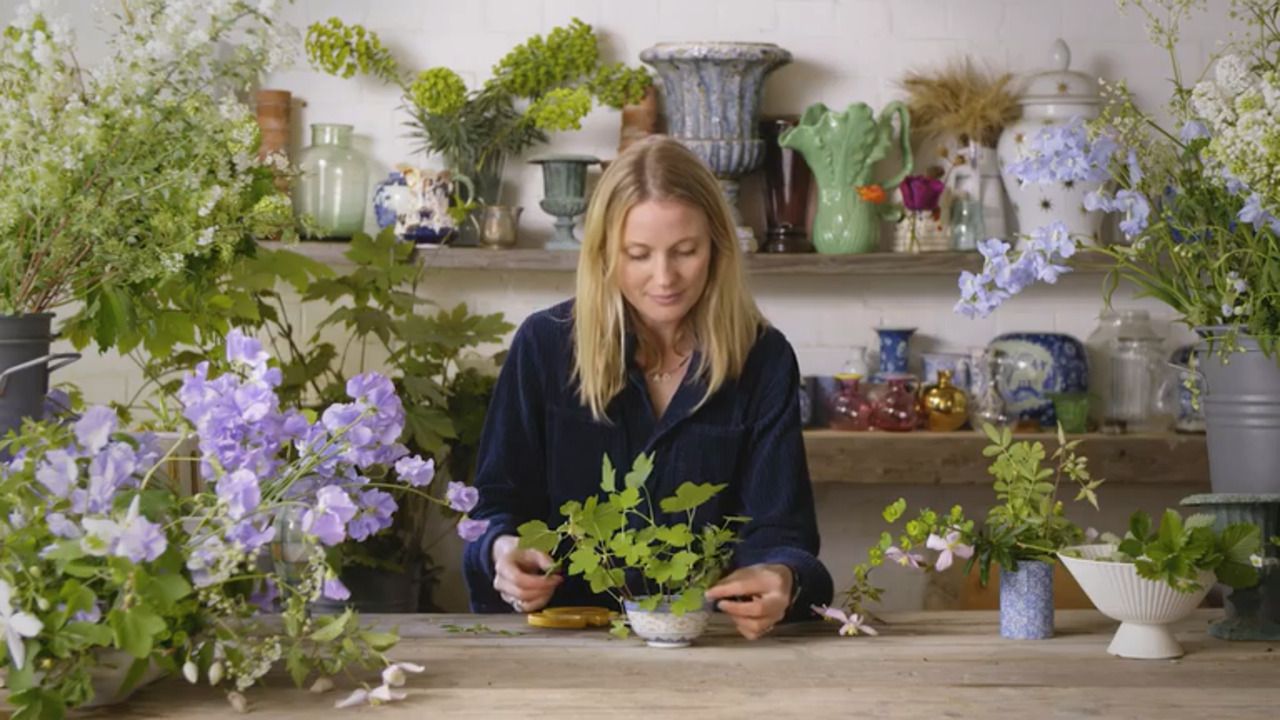
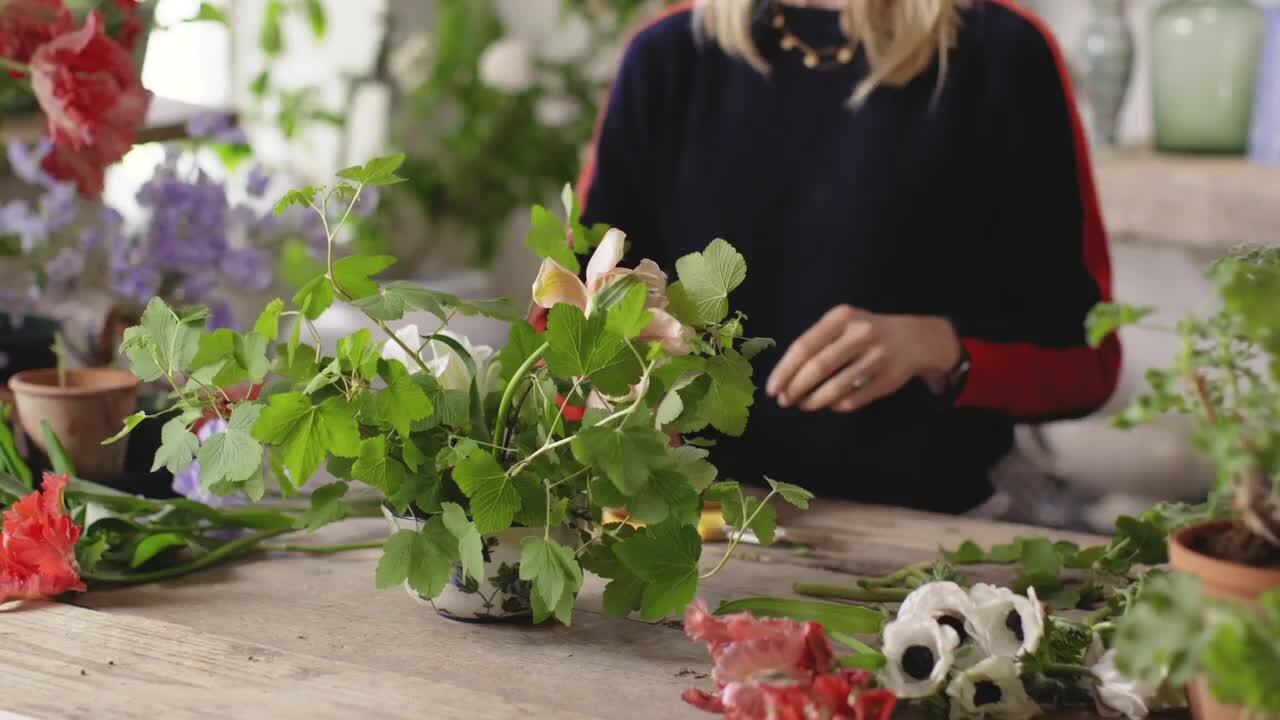
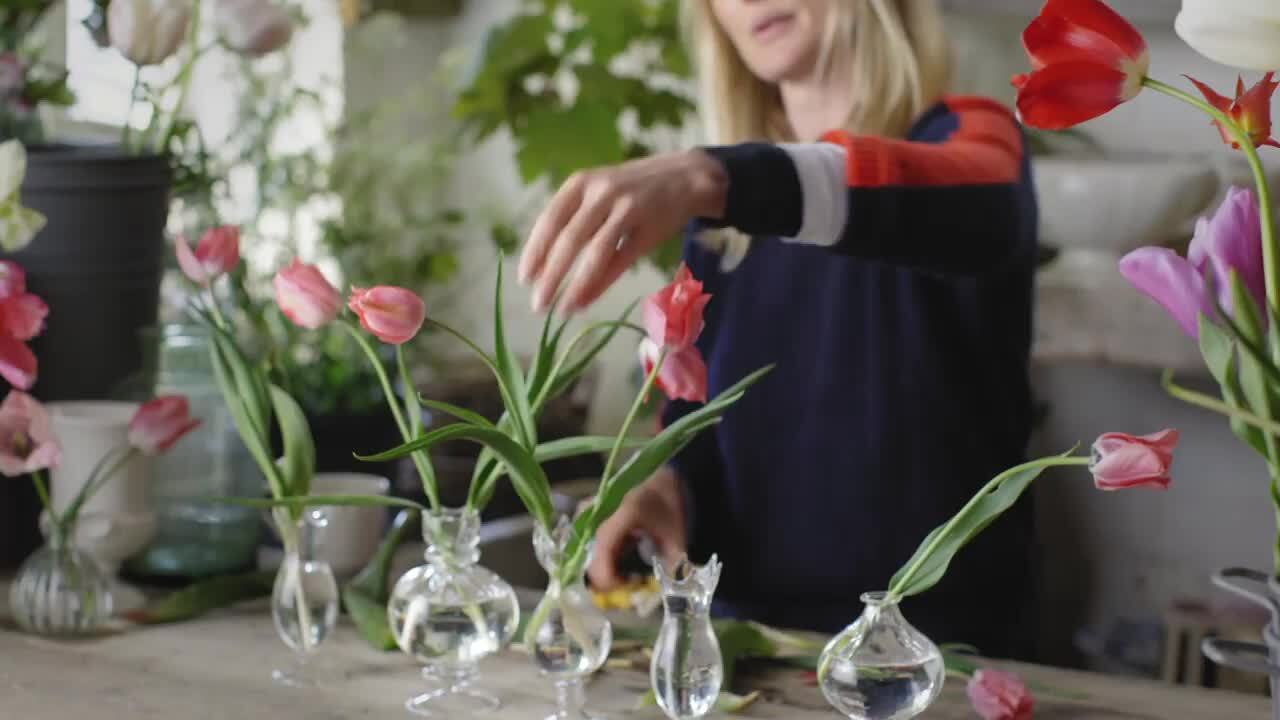
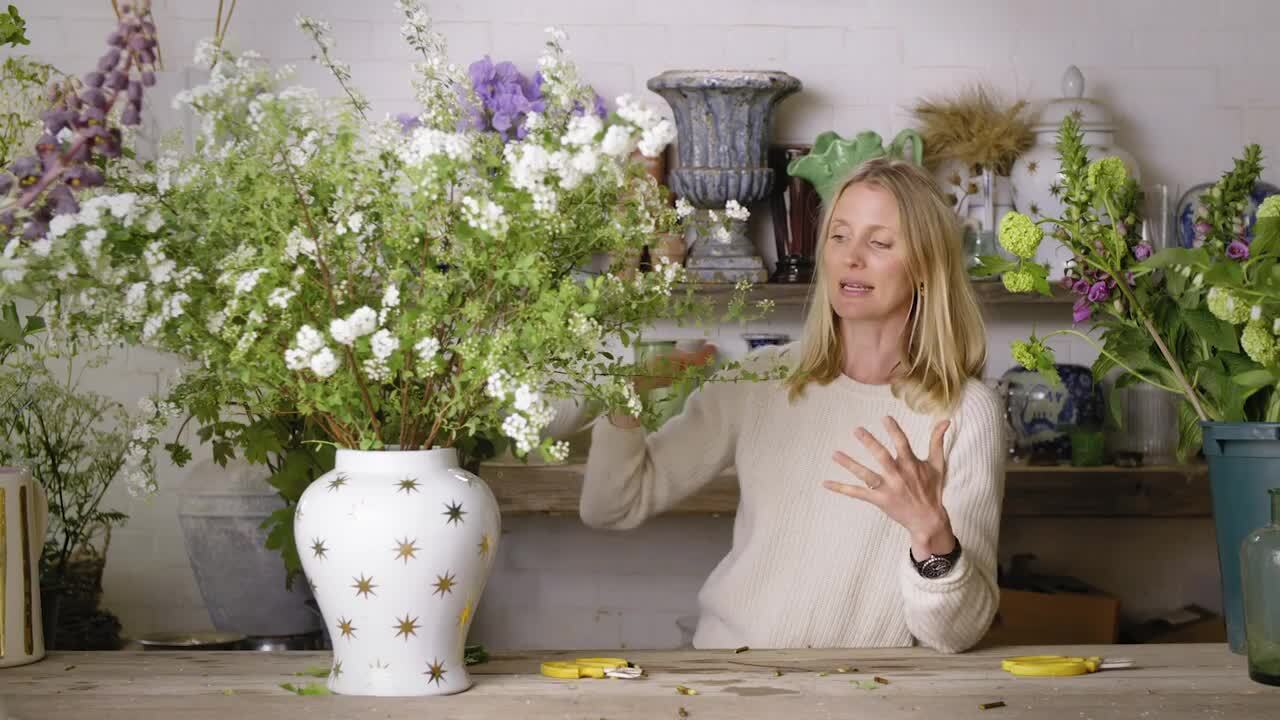
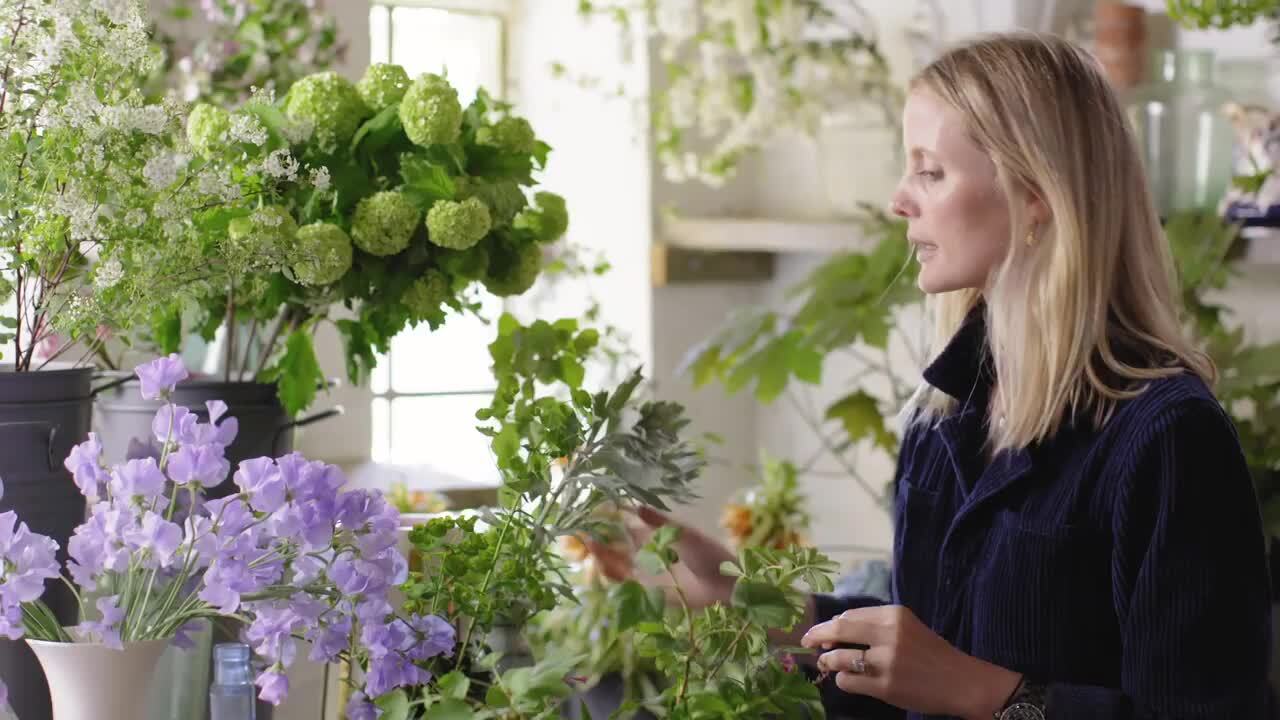
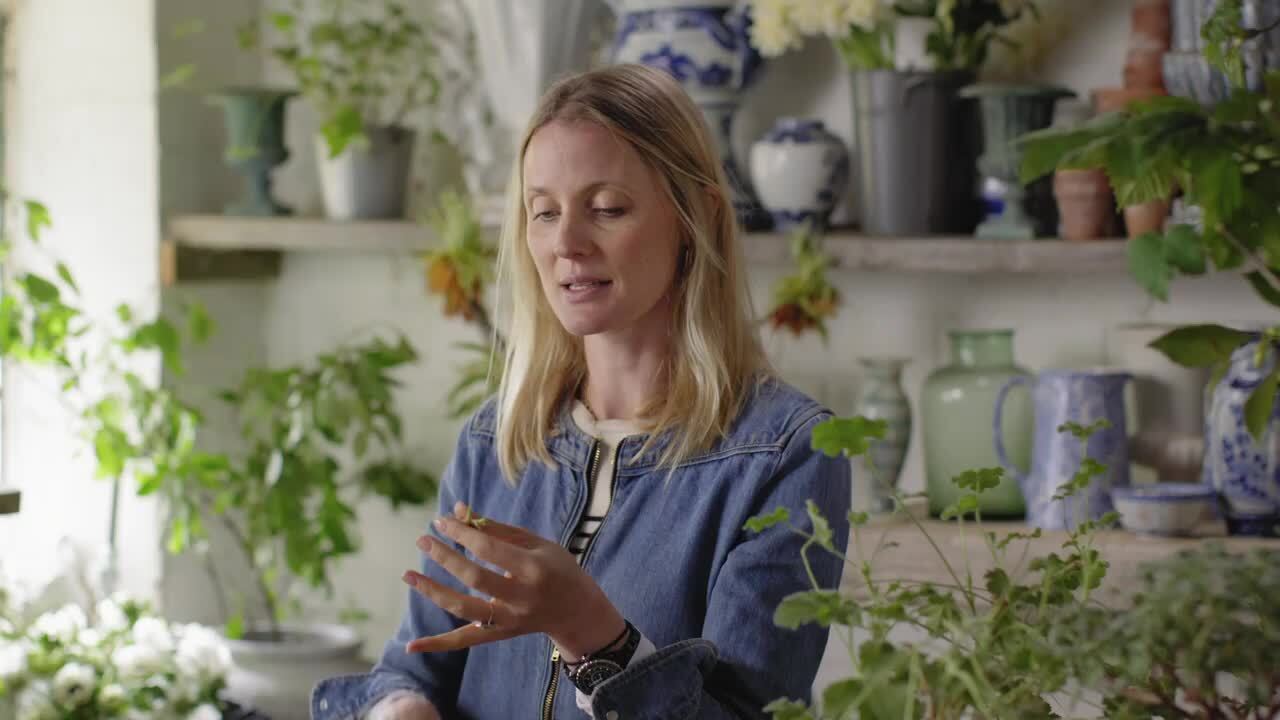
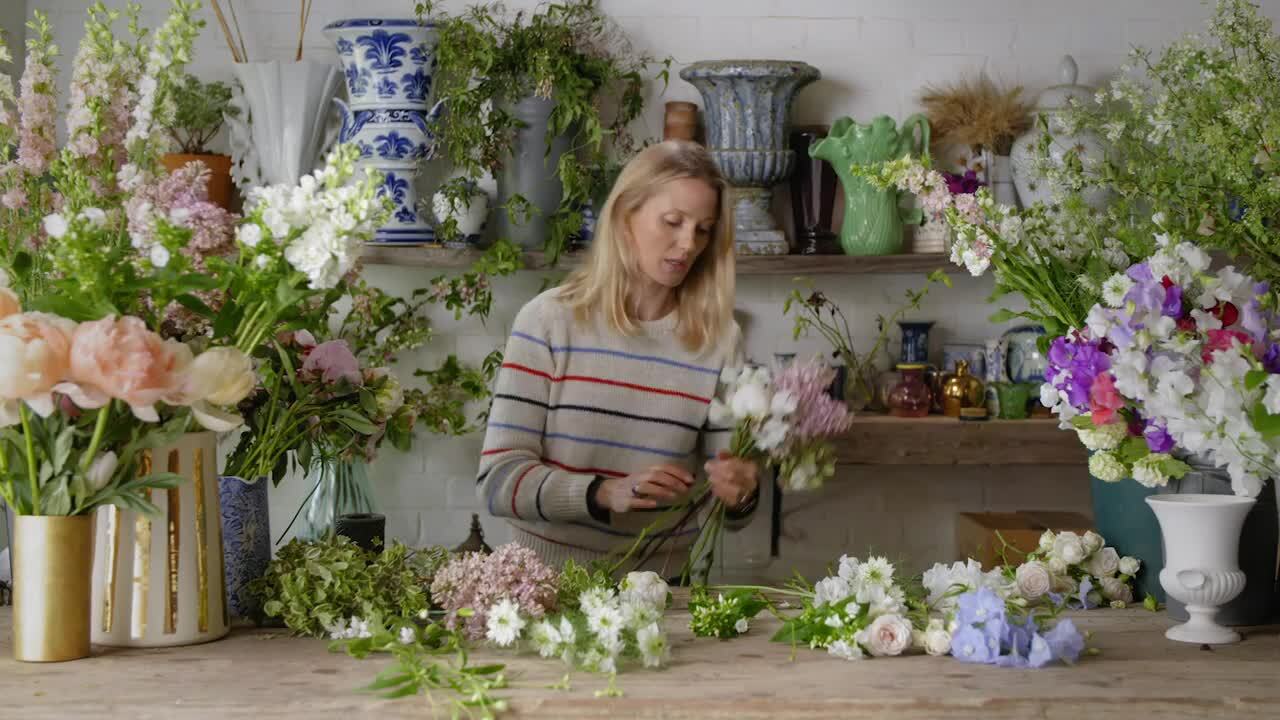
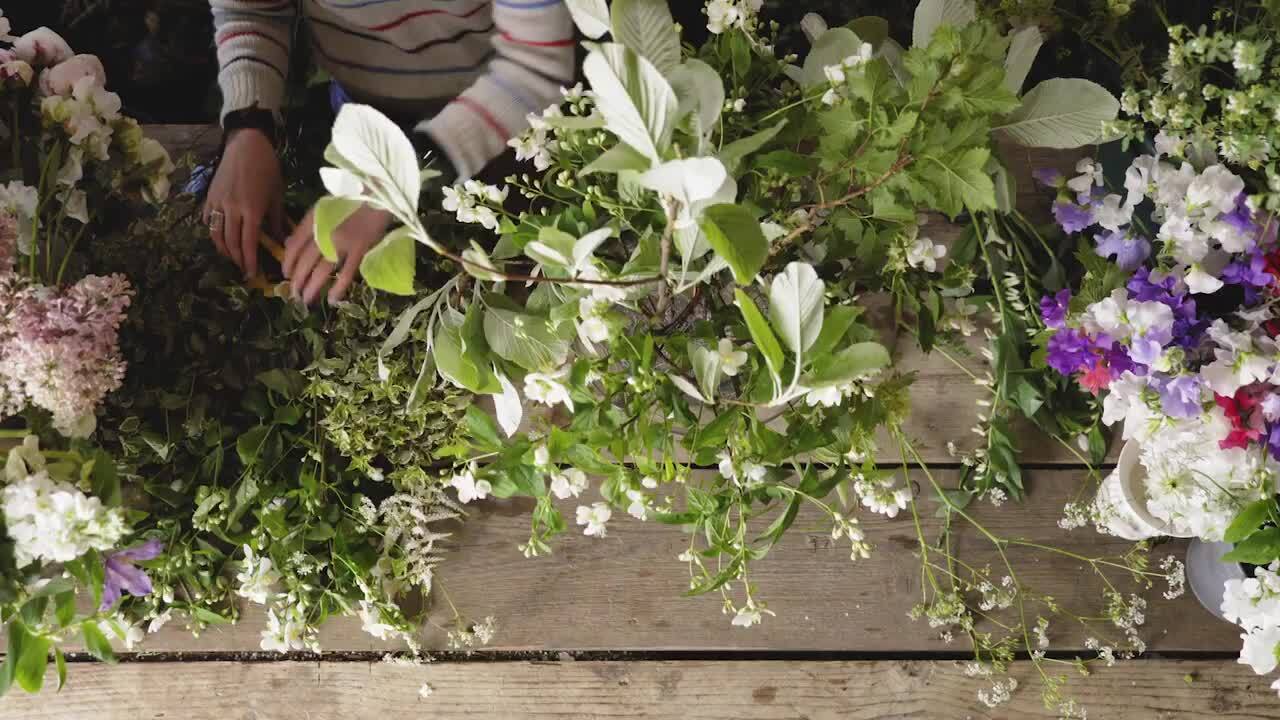
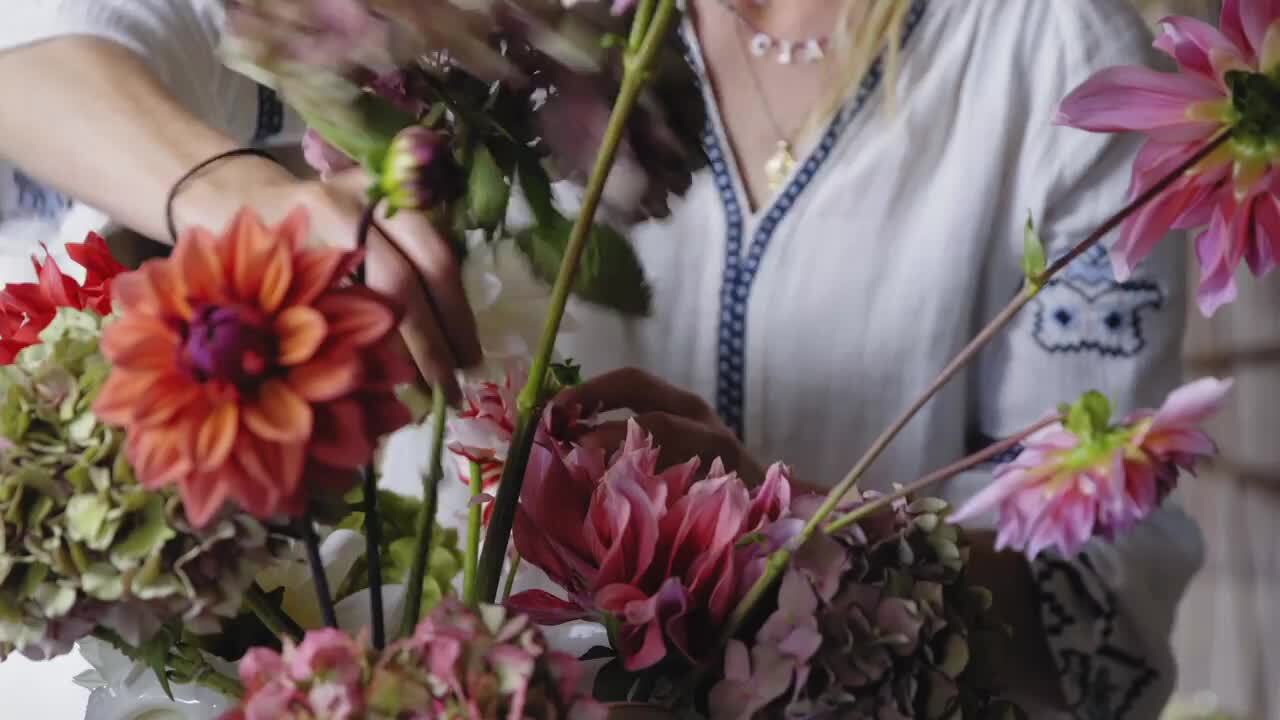
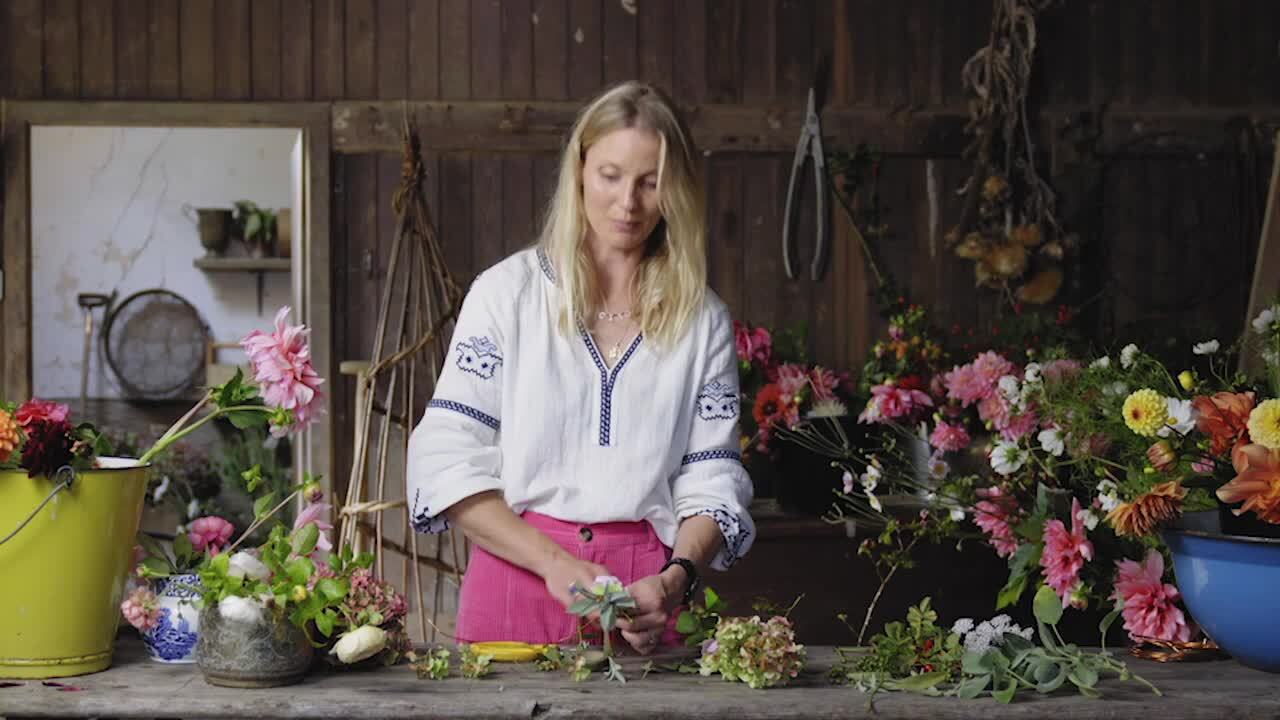
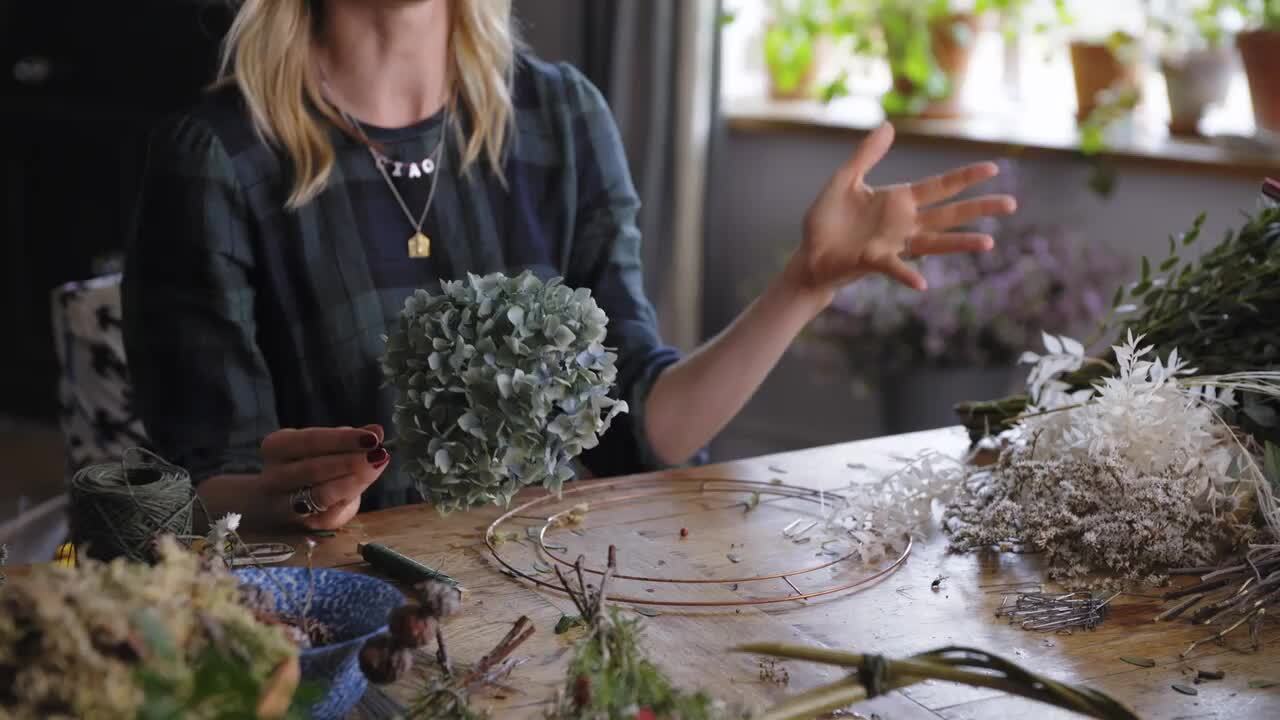
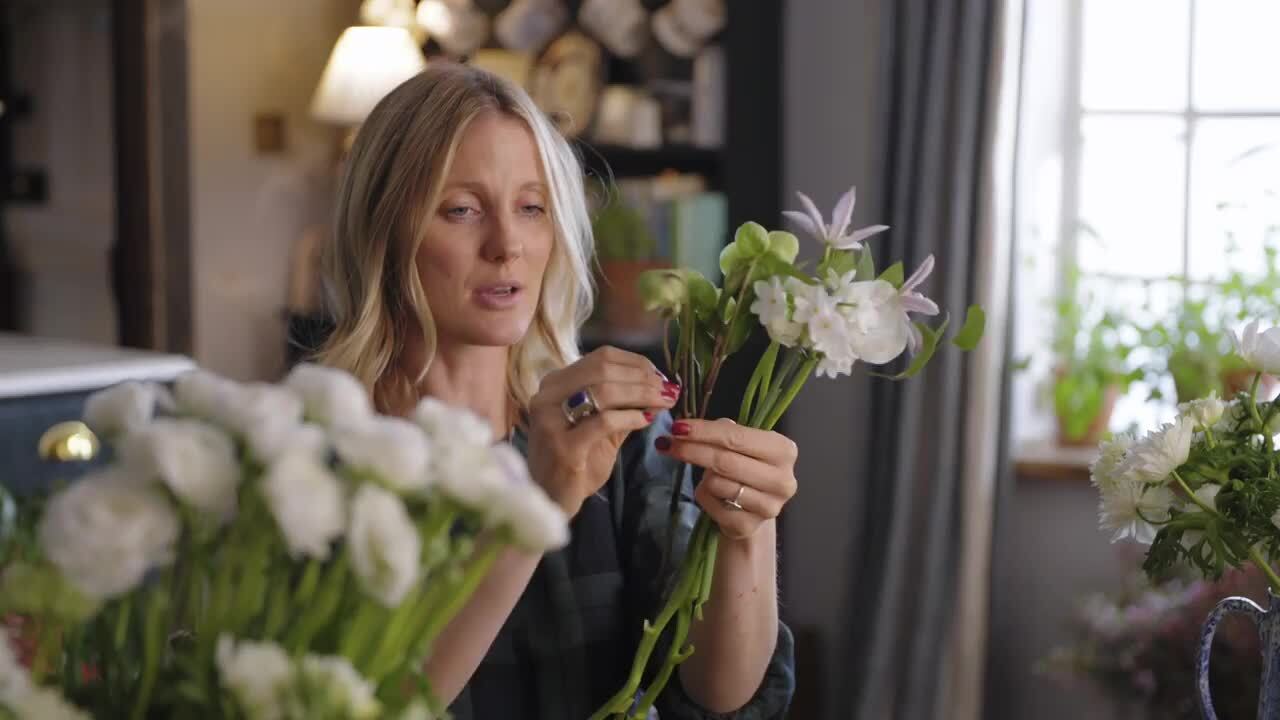
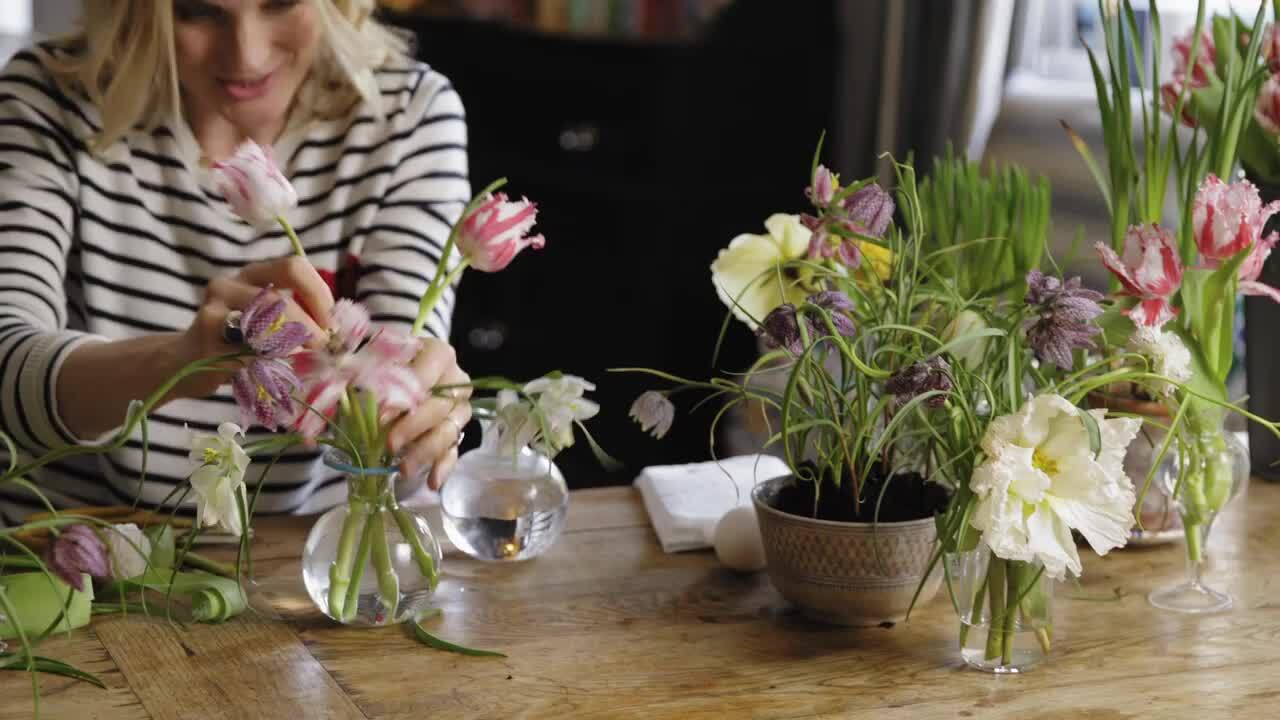
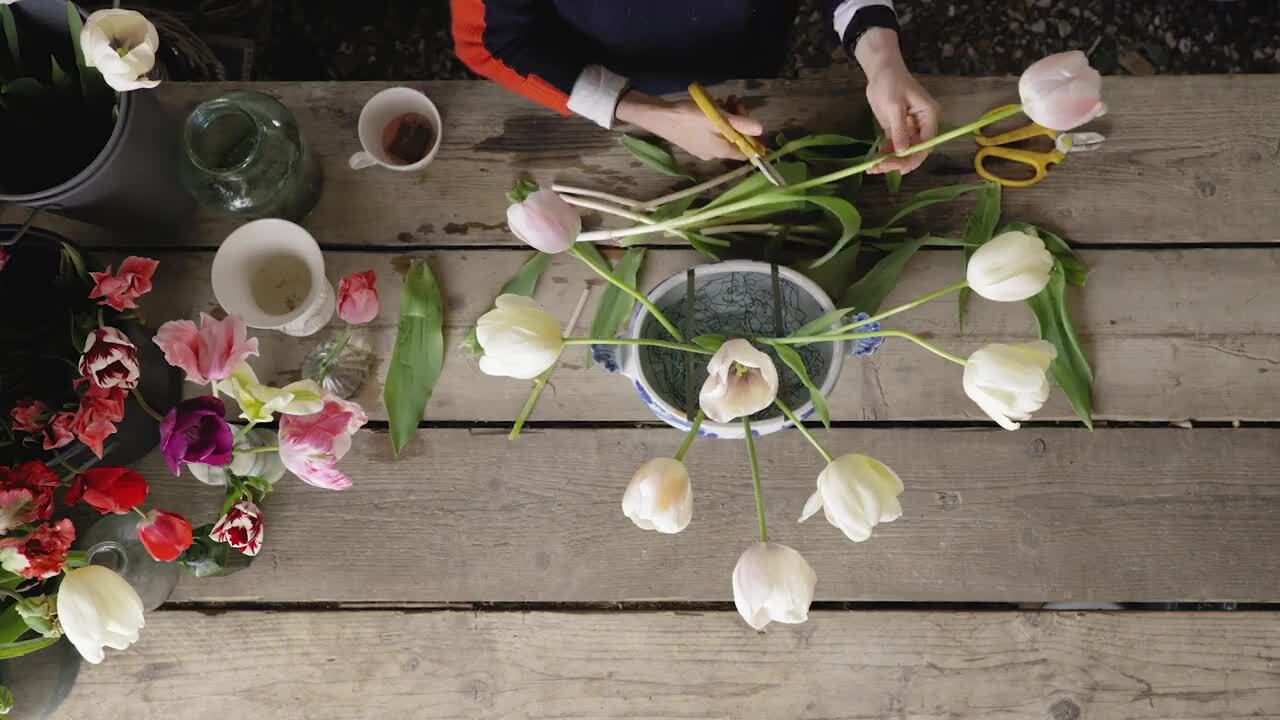
Willow explains why tulips are often overlooked, and then walks you through an arrangement that brings them to life.
In this lesson, I use Francoise, Raspberry Ripple, Apricot Pride, Spring Green, Flaming Club and Belle Epoque tulips, all sourced from the Land Gardeners.
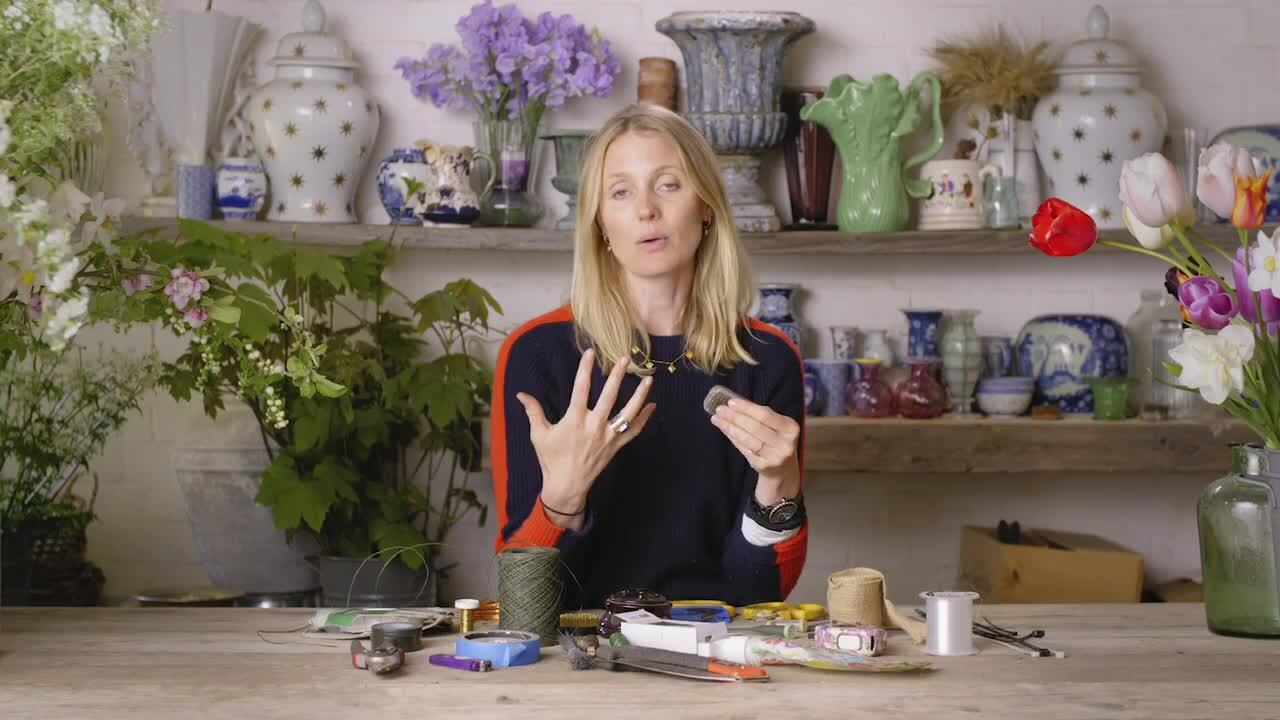
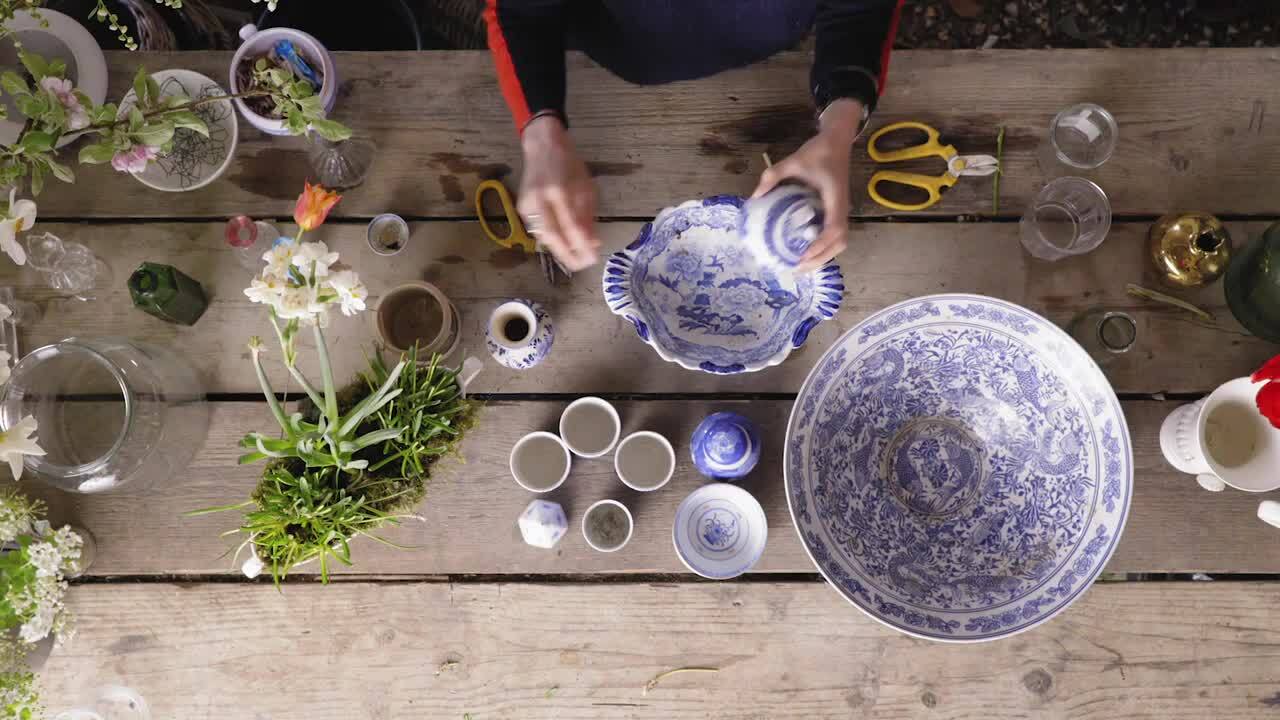
I would really recommend buying locally grown tulips. Go for it and abandon the rules when putting tulips together. I recommend buying galvanised chicken wire, which acts as a structure helping to position the tulips. As a general rule, the bigger the arrangement the wider the pot tape you want.
In my experience tulips are the most thirsty of all the cut flowers. Keep topping up your water levels and checking them. Think carefully about where the arrangement is going to go.
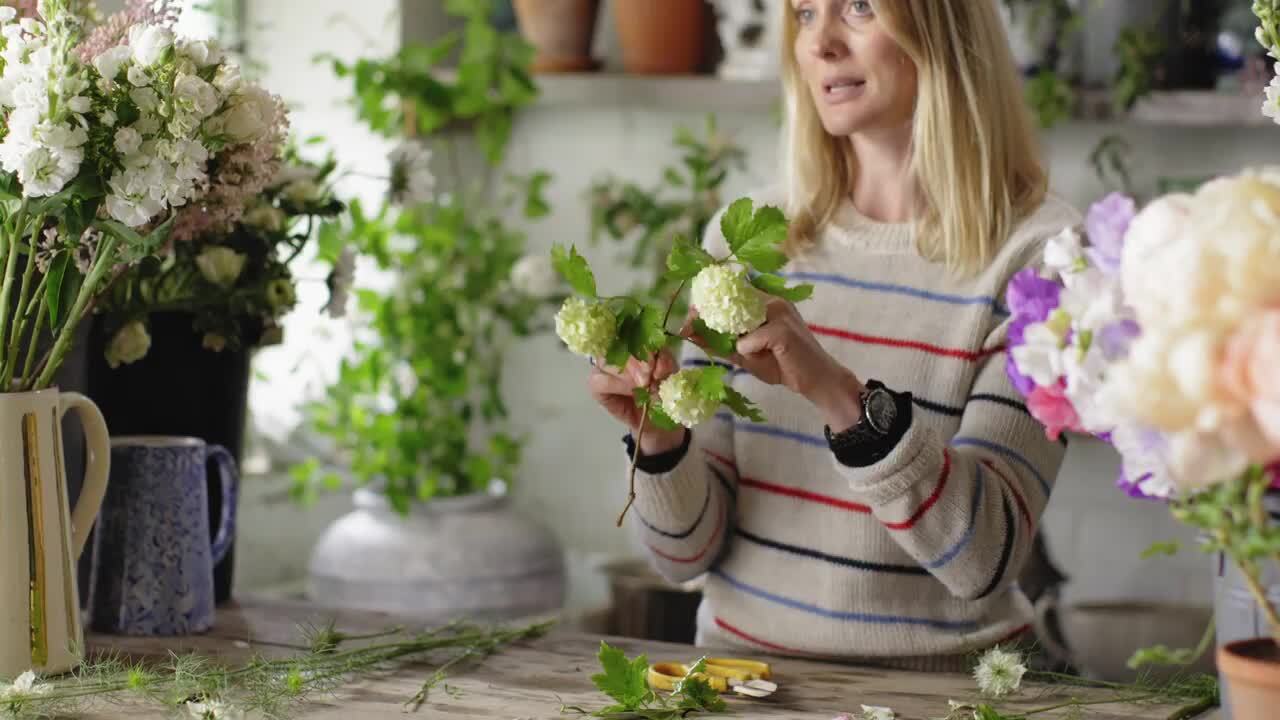
I start with the biggest and strongest tulips and create a structure. It's important to condition your flowers beforehand and lay them out in families. Play about and have loads of different heights when arranging. This makes an arrangement look very wild and natural.
For smaller events, I buy locally, but for larger events I buy from Holland. Colour-wise you want your main flower to be an odd number so one, three, five, seven. You always want to think about covering the neck of a vase, so you don't want to see it.
I recommend erring on the side of caution and cutting the tulips longer. When making arrangements on colour, it's good to choose tonal variations to avoid it looking flat. Use negative space, don't feel like you need to fill every hole with a flower.
Get the full workbook, video lessons, and more with a Create Academy subscription.
Subscribe to access the full workbookAlready a member? Sign in to watch
491 reviews
Read moreCreate Academy has been such a great resource. I'm in the middle of renovating a bungalow with a very large garden and the courses have offered a wealth of inform...
Harvey
Jun 10, 2026
Absolutely love Create Academy! The instructors are extremely informative, and it is beautifully filmed. Create Academy is great value for money and plan on renew...
SG
May 31, 2026
Butter's creativity is stunning! Her ability to incorporate brilliance in small gardens is magical!
Carla
May 30, 2026
The best adventure. I like all the courses, but my favorite are both Rita Konig interior design courses and Anna Jones. Excellent!
Karolina Kluczewska
May 20, 2026
Create Academy has been such a great resource. I'm in the middle of renovating a bungalow with a very large garden and the courses have offered a wealth of information to dive into and explore new ideas. I'm...
Harvey
Jun 10, 2026
Absolutely love Create Academy! The instructors are extremely informative, and it is beautifully filmed. Create Academy is great value for money and plan on renewing my subscription yearly because there are ...
SG
May 31, 2026
Butter's creativity is stunning! Her ability to incorporate brilliance in small gardens is magical!
Carla
May 30, 2026

Your Instructor
World-renowned florist, author and designer, known as the UK’s ‘Queen of Flowers’.
Willow Crossley is a professional floral stylist, creating wild and whimsical arrangements full of colour, pattern and movement for an array of top British brands (Jo Malone, OKA). She is the author of four books and is regularly featured in House & Garden and many other publications. Willow is passionate about the profound impact nature can have on how we feel, and has gained a substantial following for her down-to-earth and inclusive approach to floristry and gardening. Willow firmly advocates a sustainable approach to floristry, working with the seasons and sourcing locally grown stems wherever possible.
Access to all courses


