

















Interior and exterior confidence
Create Academy has been such a great resource. I'm in the middle of renovating a bungalow with a very large garden and the courses have offered a wealth of inform...
Harvey
Jun 10, 2026

Subscribe to watch
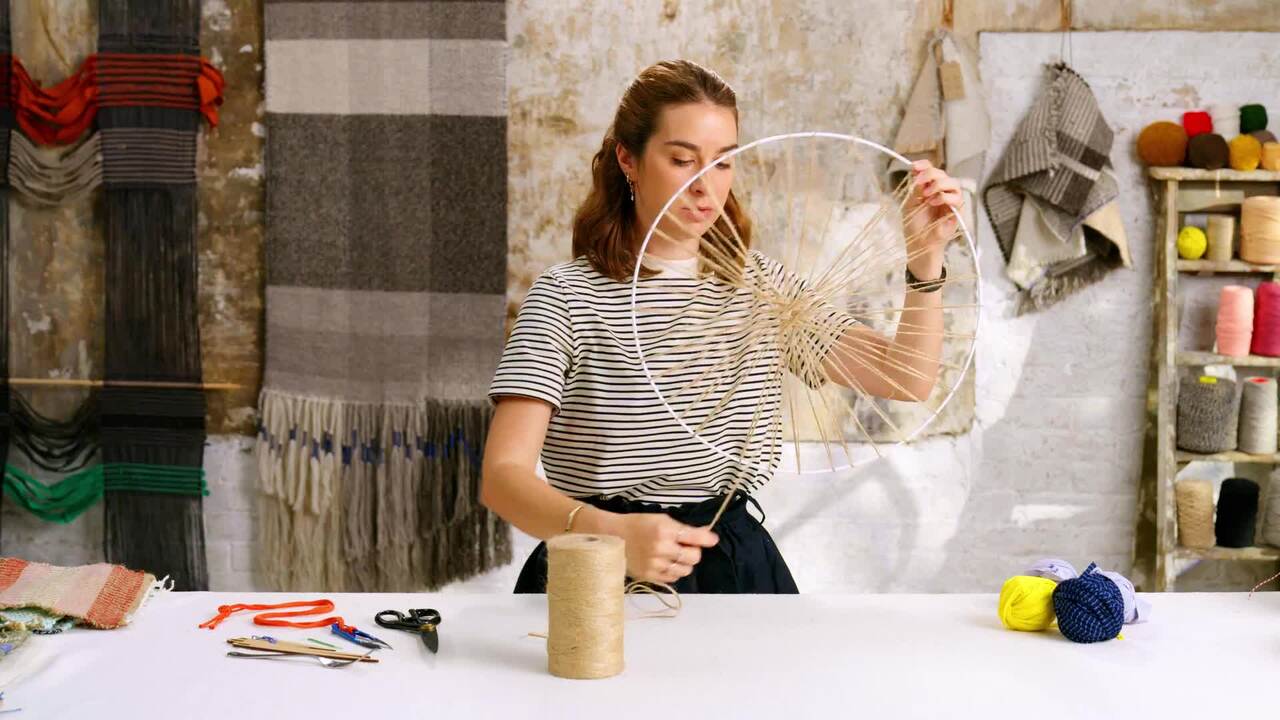
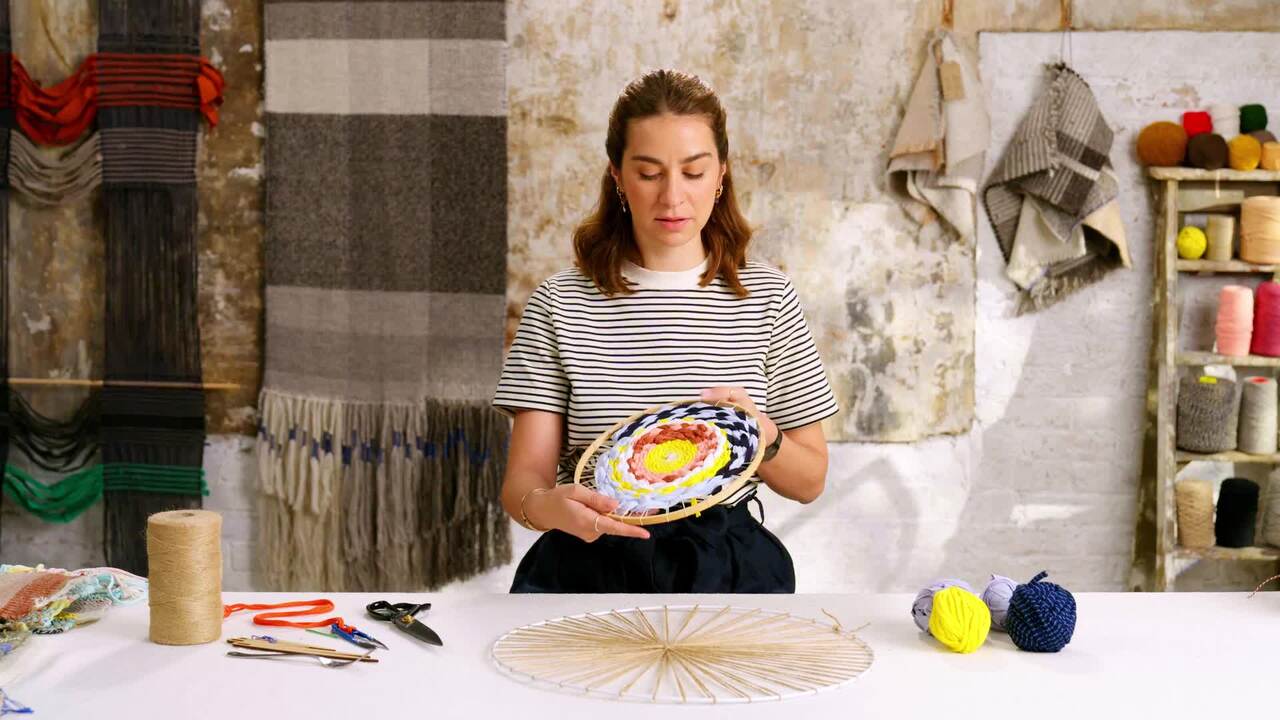
While you can buy a frame loom that is already fully set up, it’s also very easy to make one yourself from things you can find around the house.
Although you can buy a frame loom, it's also very easy to make one yourself and set it up using things you may already have around the house.
You can use either specialist cotton tapestry warp thread or ordinary household string. It must be strong and shouldn't snap easily as it needs to withstand the friction of the weft yarn being woven in.
The warp yarn will be visible in the weaving technique we'll be using, so opt for a colour that works visually with your scheme.
The thickness of the yarn is not that important, but as you practise and undertake different projects, you could try different thicknesses to see what you prefer.
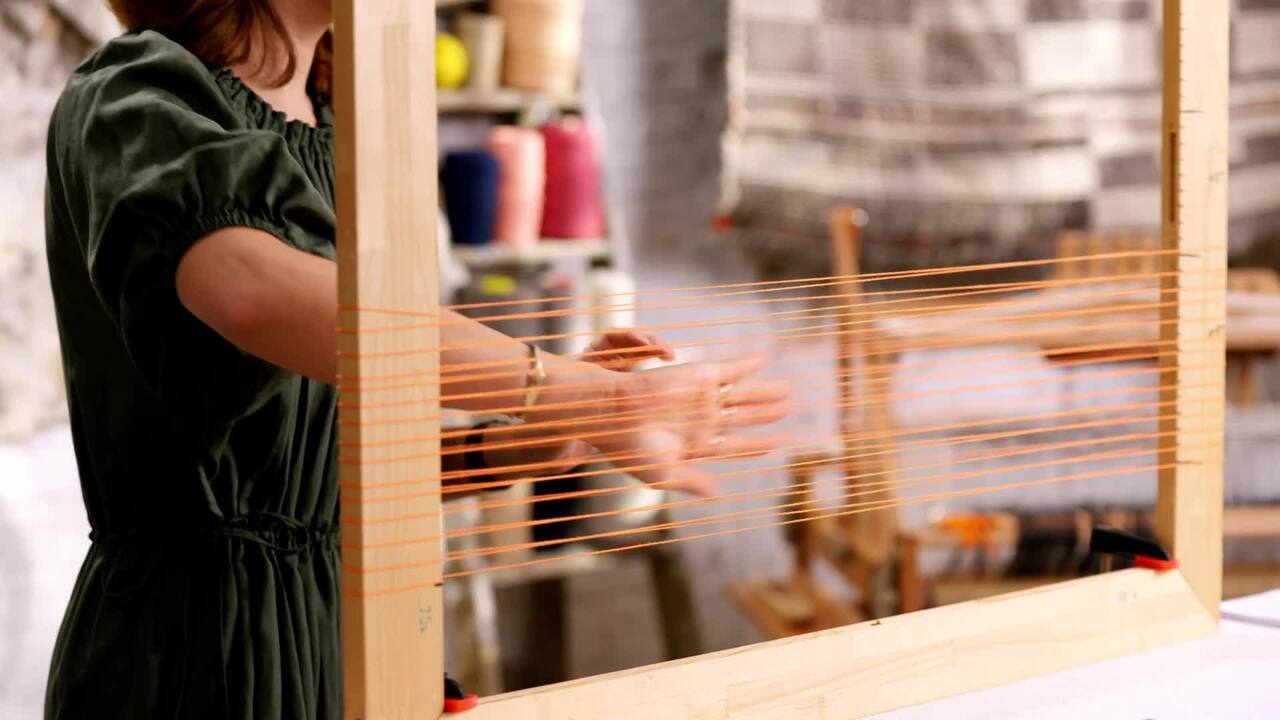
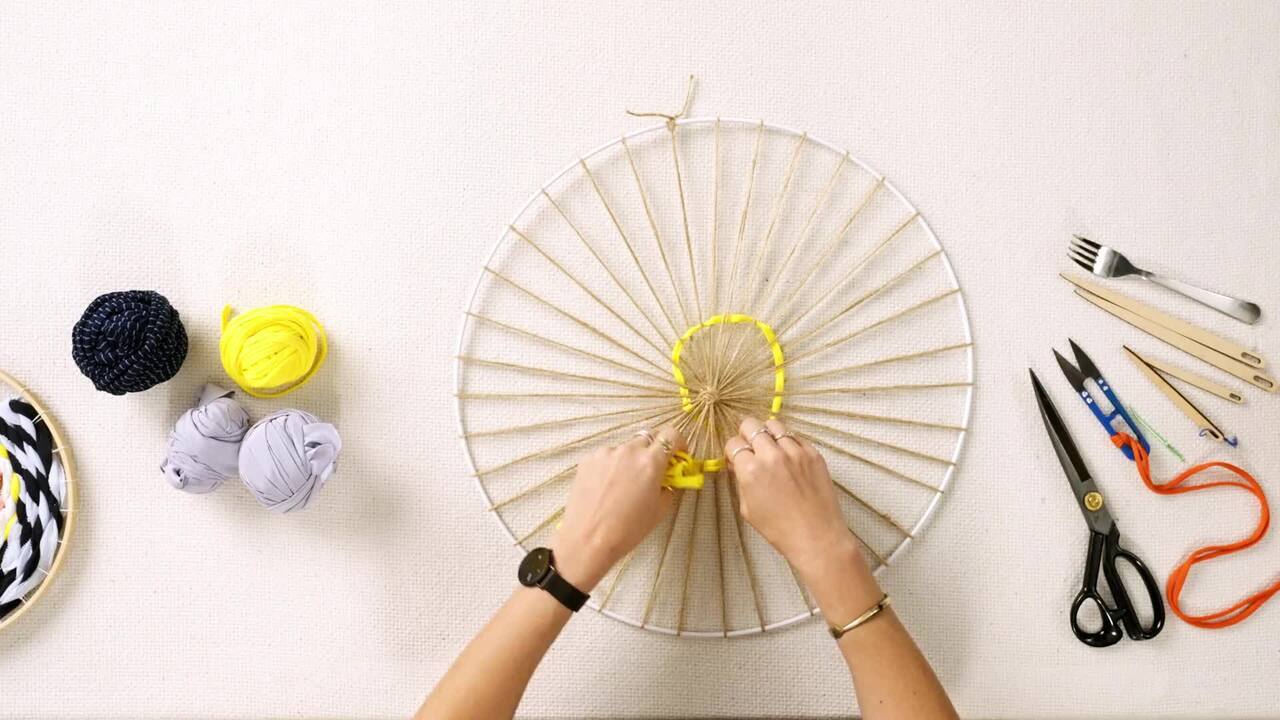
Before we start weaving, we will need to set up the loom by fixing the warp yarn onto the frame. This is a permanent group of yarns that stay in the same place on the loom. They provide the base for our woven piece. They shouldn't take up the entire width of the frame, but just a central section.
STEP 1: Once you have decided on your central weaving section, use a ruler and a permanent marker to measure 0.5-inch intervals within this section along the top of your frame on the inside edge.
STEP 2: Repeat the same measurements along the bottom inside edge of your frame so that they are aligned with the marks at the top.
STEP 3: Tie the end of your warp yarn onto the loom at the first mark on the bottom of the frame using a double knot, making sure it is tight and secure.
STEP 4: Take the spool of your warp yarn in your hand and feed it up over the top of the frame so that it lines up with the corresponding mark.
STEP 5: Take it over and behind the top edge and then back through the middle of the loom to the front of the bottom edge so that it lines up with the second mark.
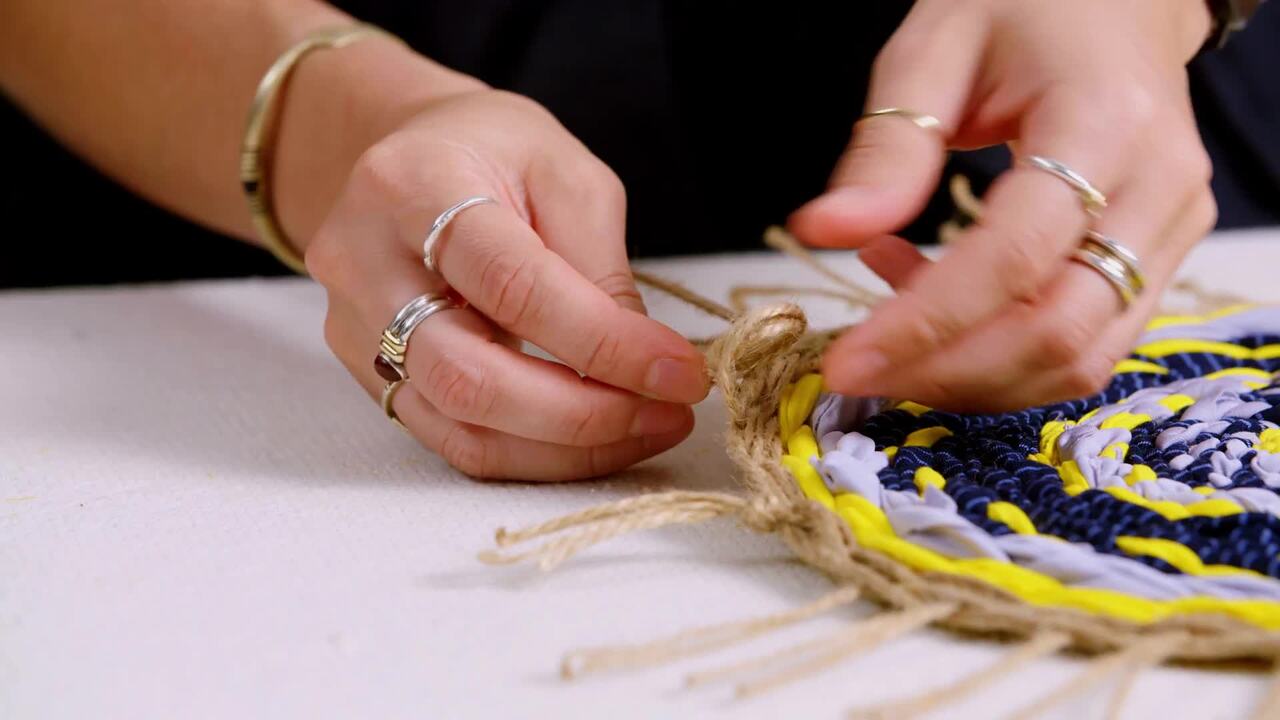
STEP 6: Loop it under the loom and then take it through the centre to the front of the top edge at the second corresponding mark.
STEP 7: Again, take it behind and back through the middle of the loom so that you reach the front of the bottom edge at the third mark.
STEP 8: Keep repeating this process until you reach the final mark, making sure that the warp thread lines up with each mark and is pulled taut throughout.
STEP 9: You will finish at the opposite end to the one you started at. Cut your warp yarn leaving 2–3 inches of excess and secure it to the frame with a double knot while ensuring that you maintain the tension.
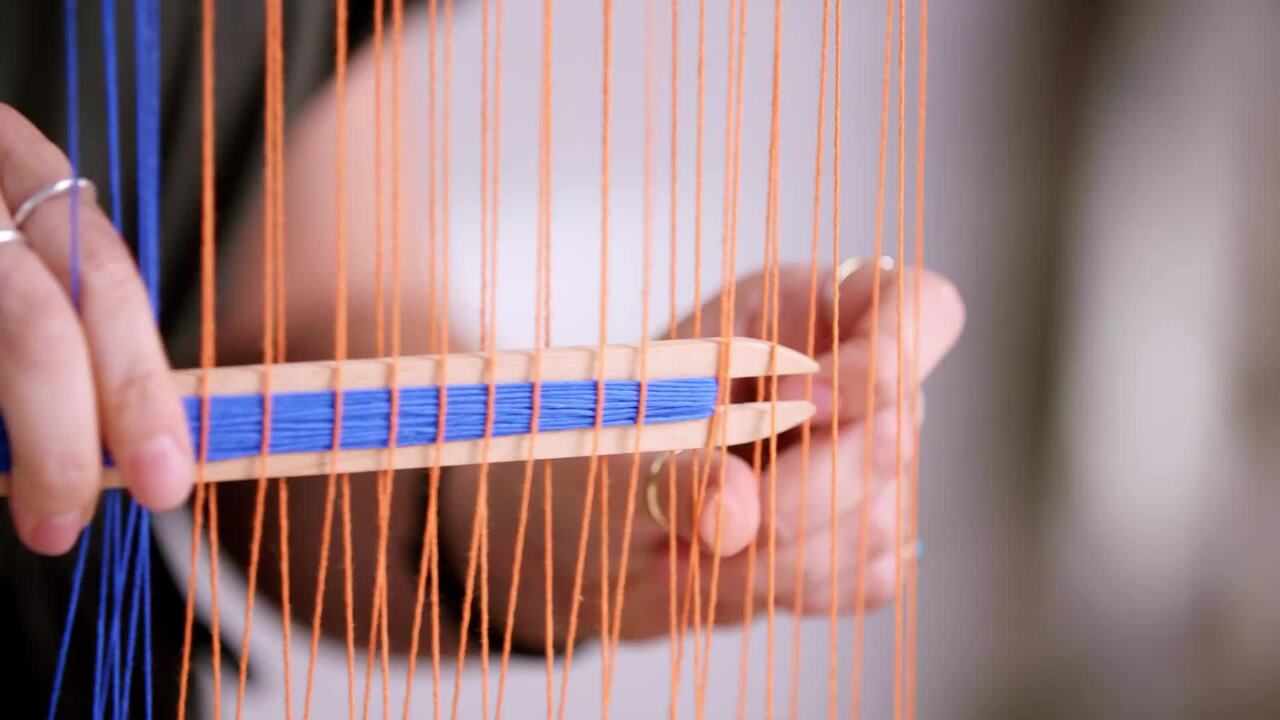
STEP 10: Take your shuttle and insert it into the gap between the warp strings near the top of your frame. All the odd numbered threads will be on top of your shuttle.
STEP 11: Cut two lengths of string that are roughly double the width of your weaving area. You could use the string you have used as your warp strings.
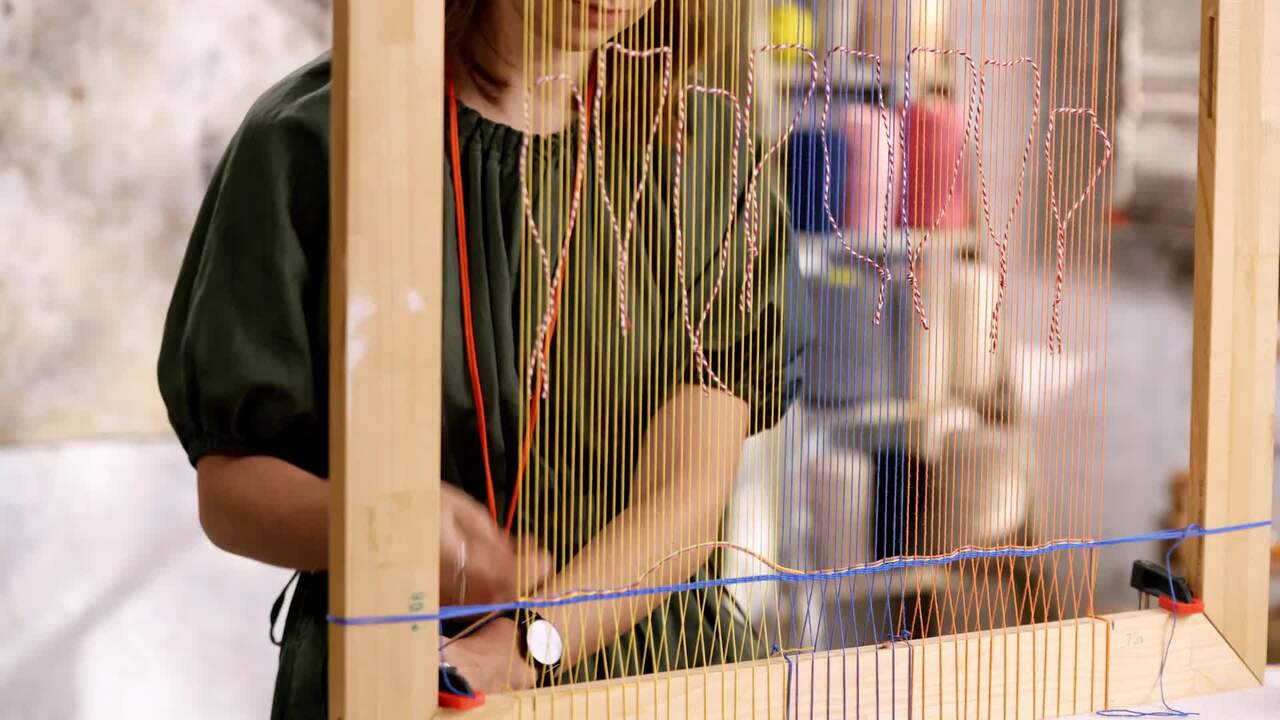
STEP 12: Reach through the loom and pick up half of the even numbered threads. Pass one of the lengths of string underneath them and tie the two ends of the string together to create a loop.
STEP 13: Do the same with the other half of the even numbered threads. You will now easily be able to pick up the even numbered threads.
STEP 14: Cut a length of string that measures just over five times the width of your entire loom.
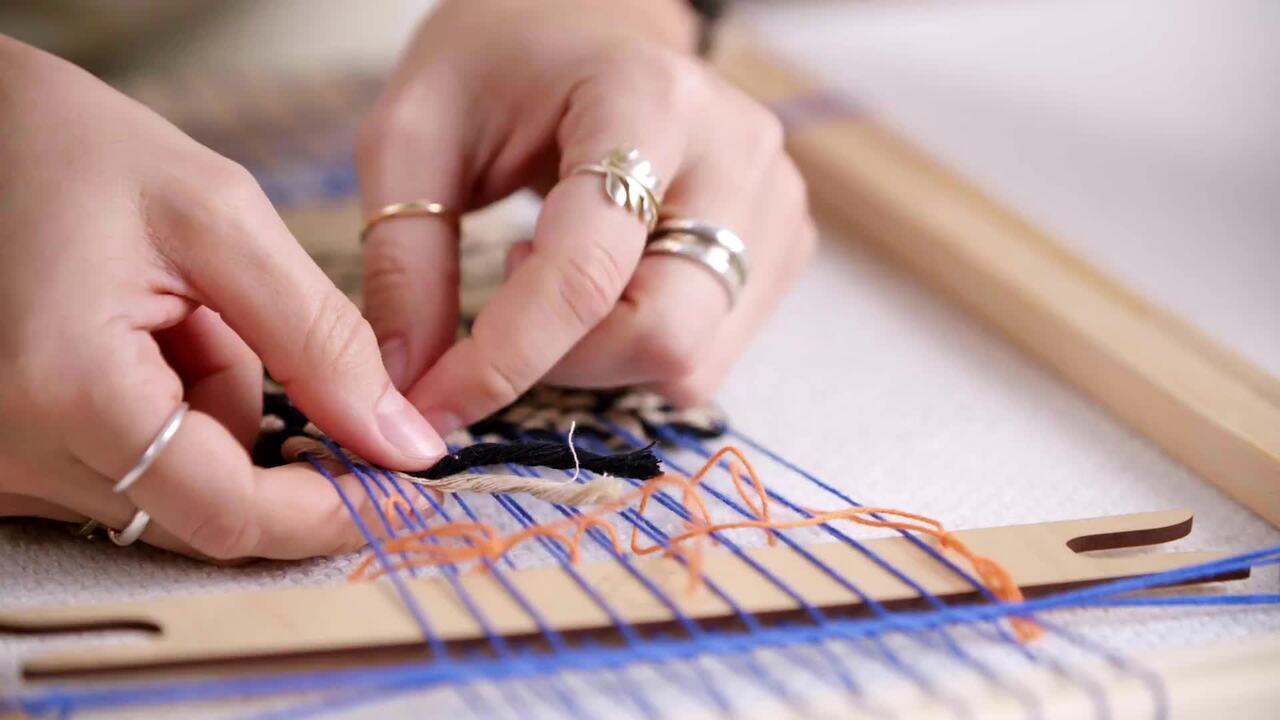
STEP 15: Thread one end onto your tapestry needle and weave the string through your warp strings from the right-hand side, starting by going under the first warp string, over the next, then under the third and over the fourth; repeating until you reach the end of your warp.
STEP 16: Guide the string all the way through so that you only have a little remaining on the right-hand side. Tie this excess to the side edge of the frame to secure it.
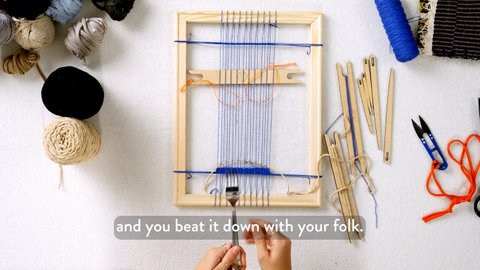
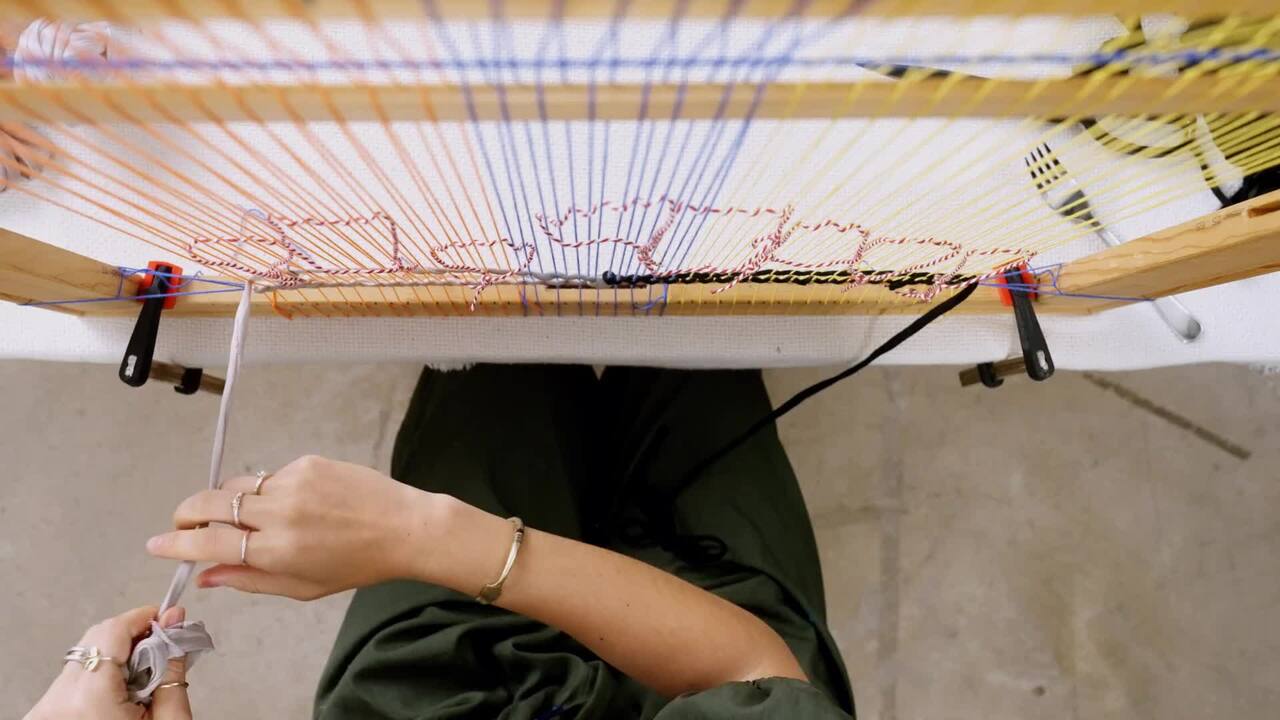
STEP 17: Pull the string tight from the left-hand side, and guide it down your loom so that it sits approximately 2 inches from the bottom. You can use your fingers or the fork to do this.
STEP 18: Take the string over the side of the loom and back under to repeat the process, this time moving in the opposite direction to weave the string back to the right-hand side of your loom. Begin by going over the first warp string so that you are catching alternative yarns with this line of string.
STEP 19: Once you reach the other side, pull the string tight and guide it down to as close to the first line as possible.
STEP 20: Loop the string over the edge of the frame and keep repeating the process until you have five rows.
STEP 21: Once you have completed five rows, secure the string to the edge of the frame with a knot and cut off the excess.
STEP 22: Neaten up the rows with your fork so that it's straight and even all the way along, and check that your warp yarns are still in place too.
STEP 23: You now need to do exactly the same thing on the top of your loom. Move the shuttle out of your way and repeat what you've just done using the same steps.
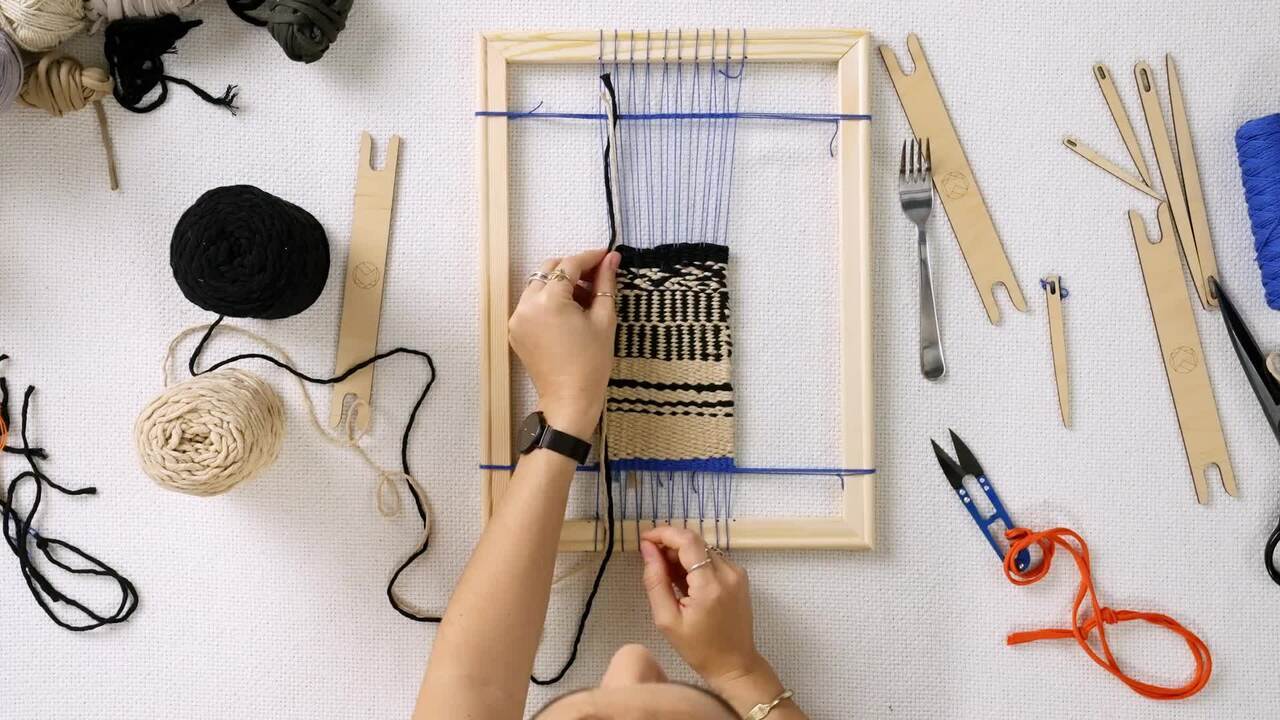
STEP 24: Your loom is complete! I like to work with the shuttle near the top and the strings holding the even numbered yards in the middle facing up.
Get the full workbook, video lessons, and more with a Create Academy subscription.
Subscribe to access the full workbookAlready a member? Sign in to watch
491 reviews
Read moreCreate Academy has been such a great resource. I'm in the middle of renovating a bungalow with a very large garden and the courses have offered a wealth of inform...
Harvey
Jun 10, 2026
Absolutely love Create Academy! The instructors are extremely informative, and it is beautifully filmed. Create Academy is great value for money and plan on renew...
SG
May 31, 2026
Butter's creativity is stunning! Her ability to incorporate brilliance in small gardens is magical!
Carla
May 30, 2026
The best adventure. I like all the courses, but my favorite are both Rita Konig interior design courses and Anna Jones. Excellent!
Karolina Kluczewska
May 20, 2026
Create Academy has been such a great resource. I'm in the middle of renovating a bungalow with a very large garden and the courses have offered a wealth of information to dive into and explore new ideas. I'm...
Harvey
Jun 10, 2026
Absolutely love Create Academy! The instructors are extremely informative, and it is beautifully filmed. Create Academy is great value for money and plan on renewing my subscription yearly because there are ...
SG
May 31, 2026
Butter's creativity is stunning! Her ability to incorporate brilliance in small gardens is magical!
Carla
May 30, 2026

Your Instructor
Award-winning textile designer
Maria Sigma is an award-winning Greek textiles designer and weaver specialising in ethical hand-woven textiles for interiors. Maria’s work - inspired by a traditional Greek Cycladic crocheted lace pattern - celebrates 'zero waste' design and a slow-making ethic, combining a contemporary approach of traditional weaving techniques with a focus on raw natural materials and texture. Maria has collaborated with a long list of exceptional interior designers, architects, galleries, fashion and furniture brands, including Susie Atkinson, Hauser & Wirth, Soho House, The New Craftsman, Anthropologie and Toast. She also teaches regular ‘weaving from waste’ workshops across London and has authored a book on the subject entitled, Weaving: the Art of Sustainable Textile Creation.

Access to all courses

.jpg)
