










Interior and exterior confidence
Create Academy has been such a great resource. I'm in the middle of renovating a bungalow with a very large garden and the courses have offered a wealth of inform...
Harvey
Jun 10, 2026
Subscribe to watch
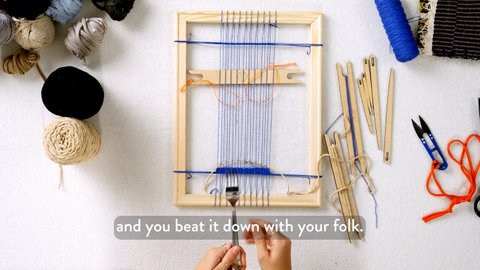
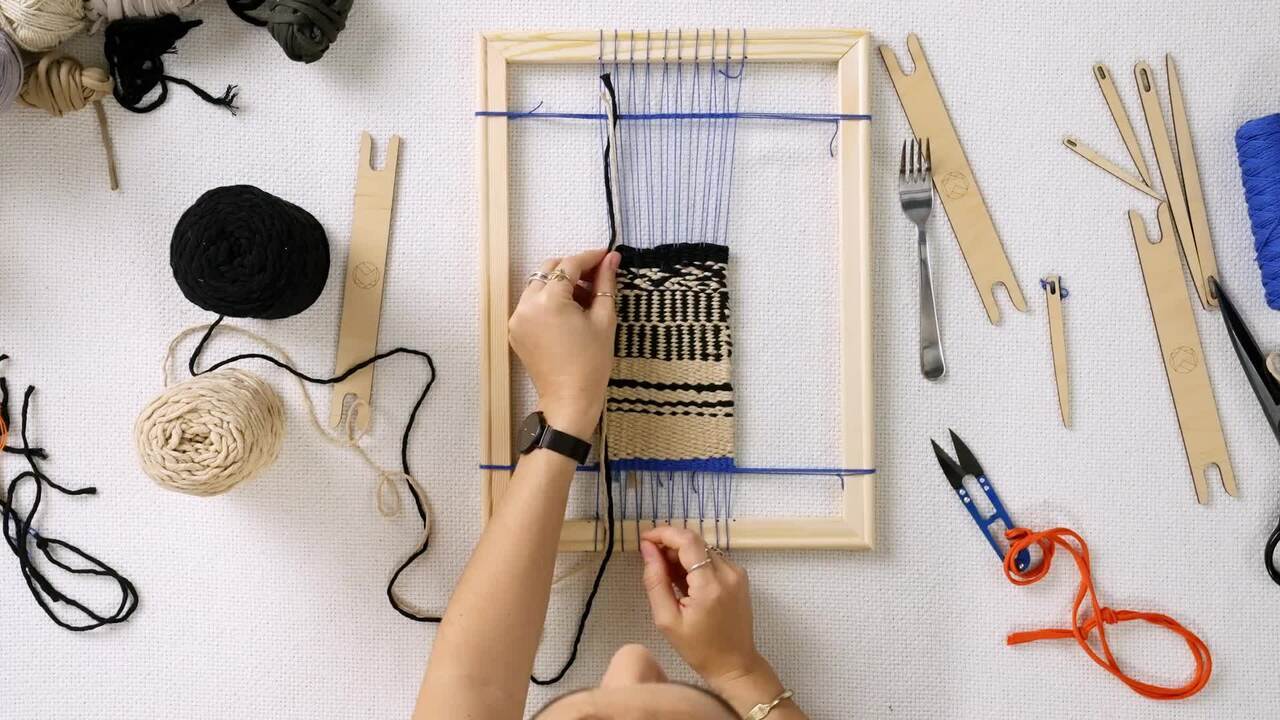
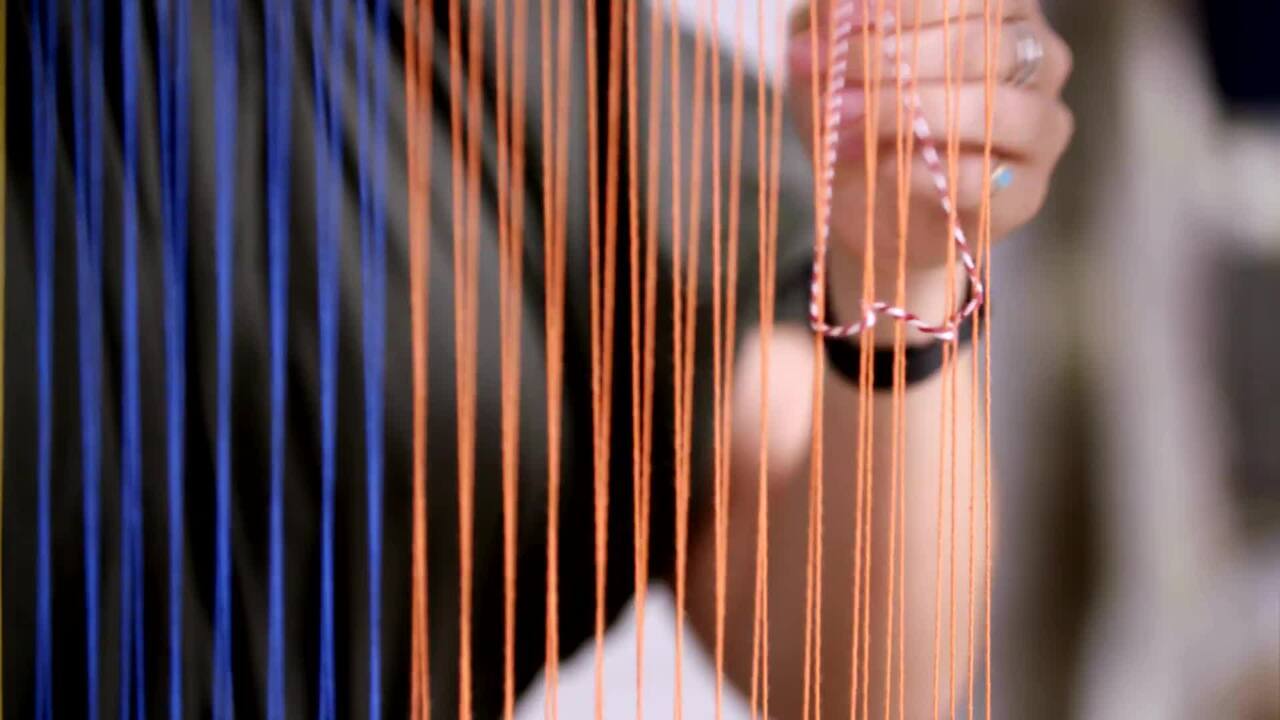
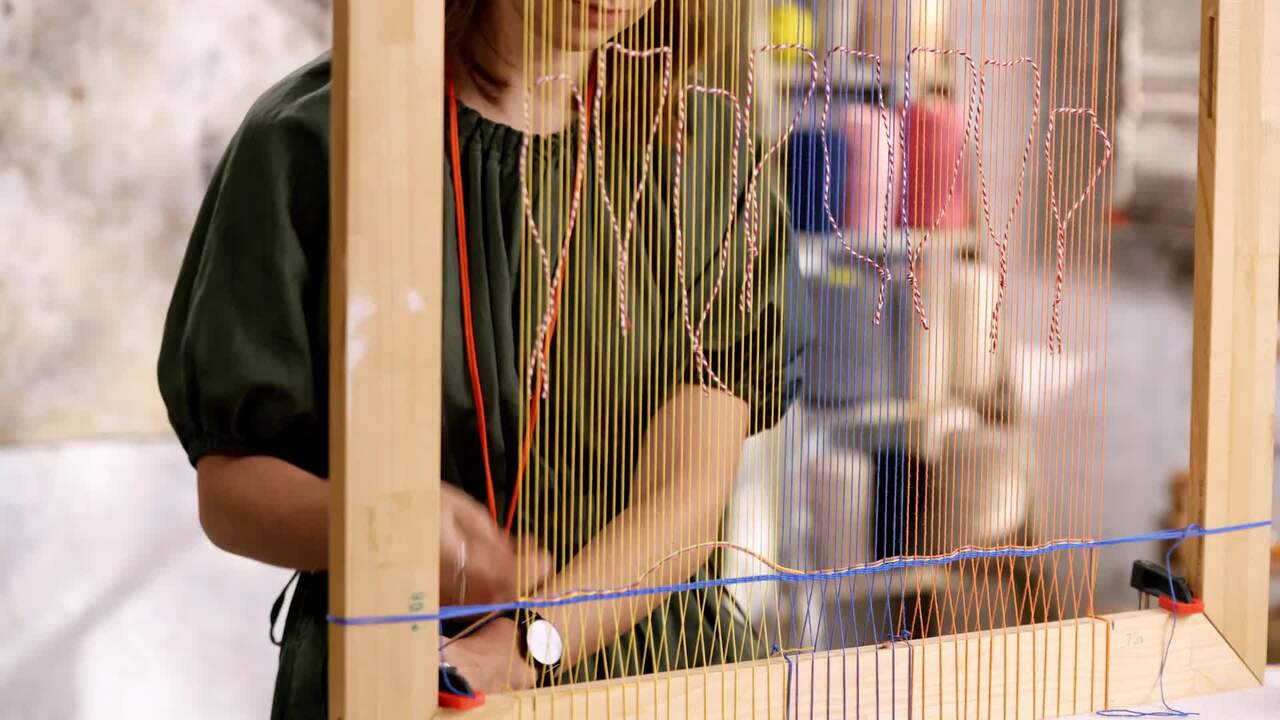
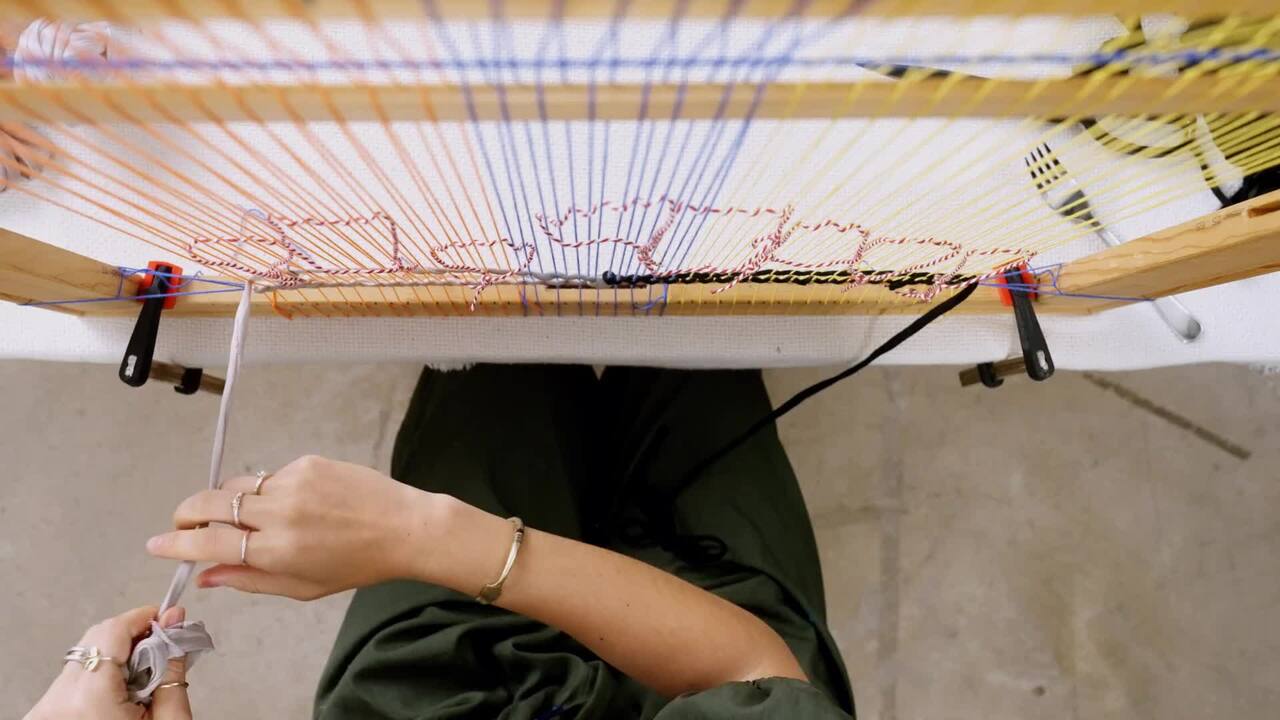
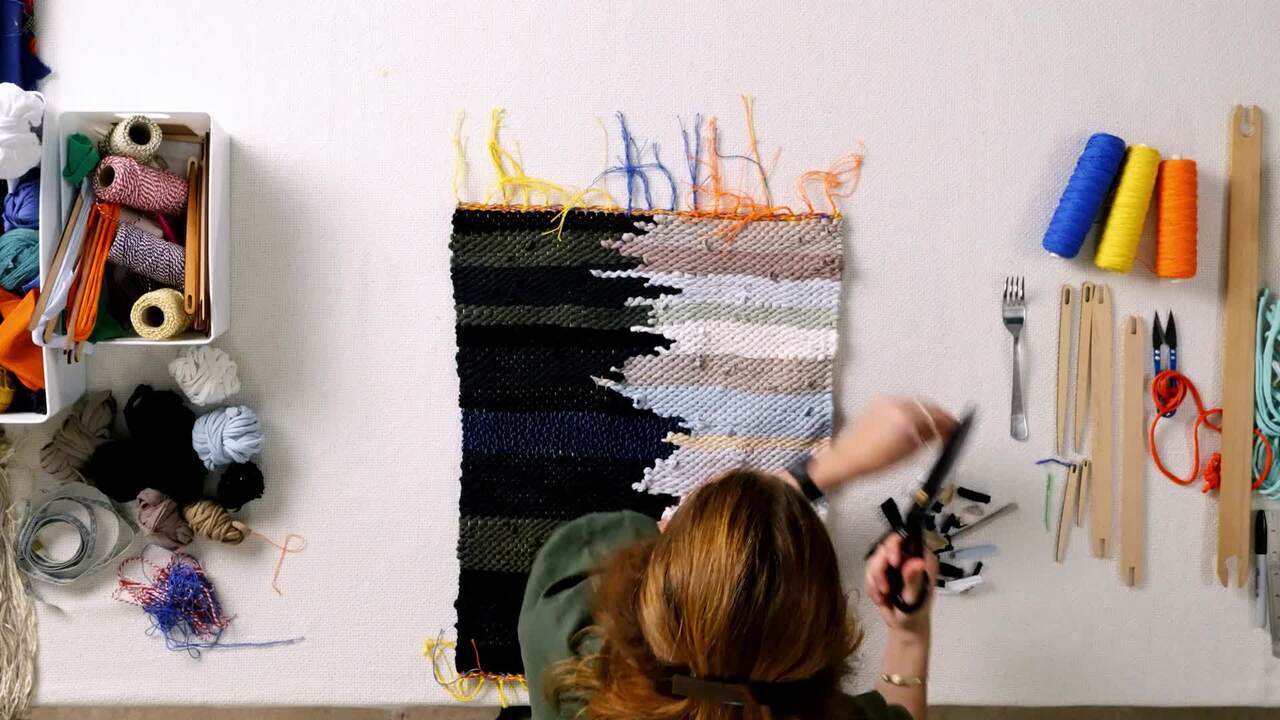
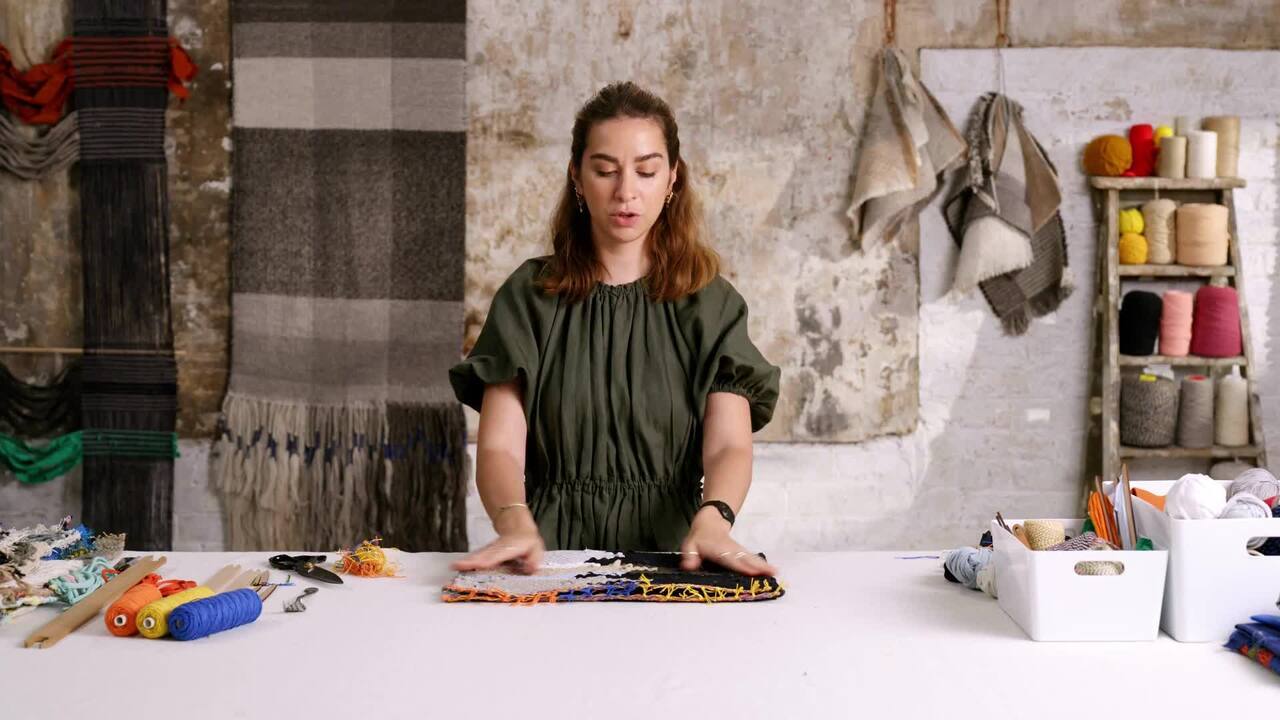
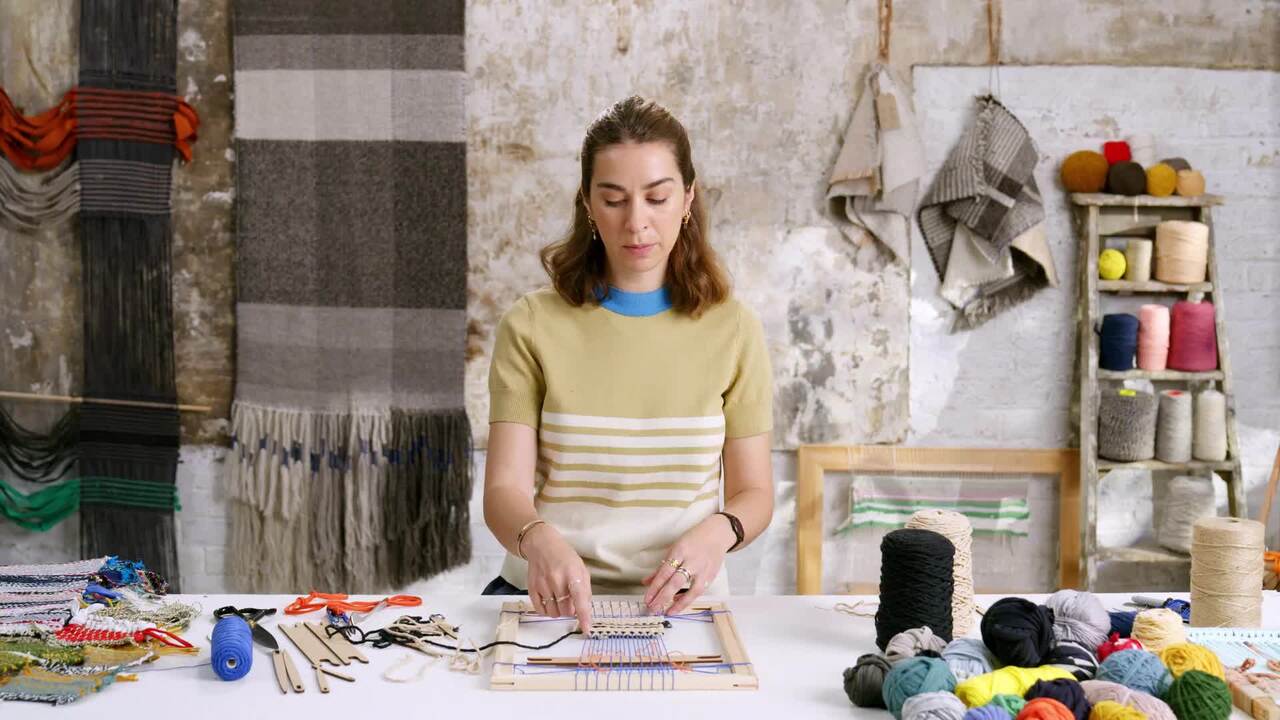
The third technique Maria demonstrates enables you to weave vertical stripes in alternating colours.
Another way to introduce pattern and interest into your weaving is by creating vertical stripes.
When first learning to weave vertical stripes, ideally both yarns should have the same thickness, as it is clearer to see what you are doing and understand the technique. Once you feel confident, you can experiment with yarns of different thicknesses.
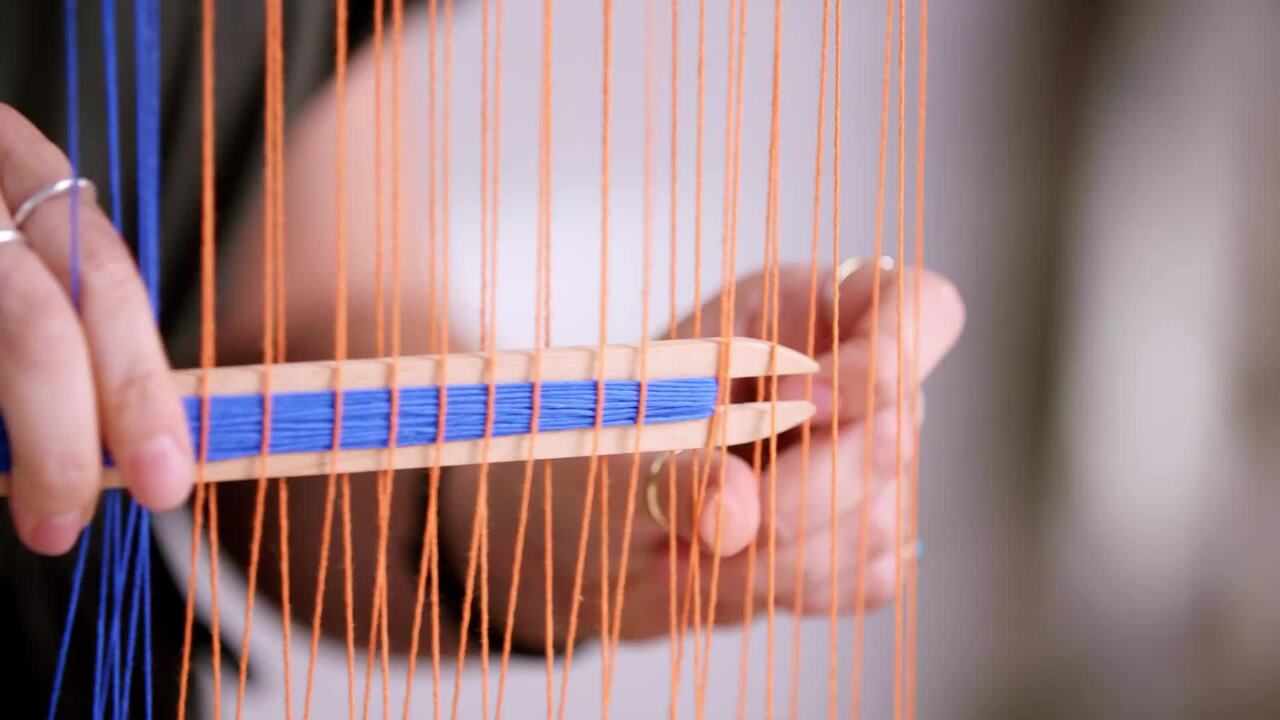
STEP 1: Cut a reasonable length of each colour of thread. Thread both lengths onto their own tapestry needle or a shuttle. I prefer to use a tapestry needle for this technique but see what works best for you.
STEP 2: Begin by weaving your first yarn through as per the basic weaving technique, making sure to leave the excess loose.
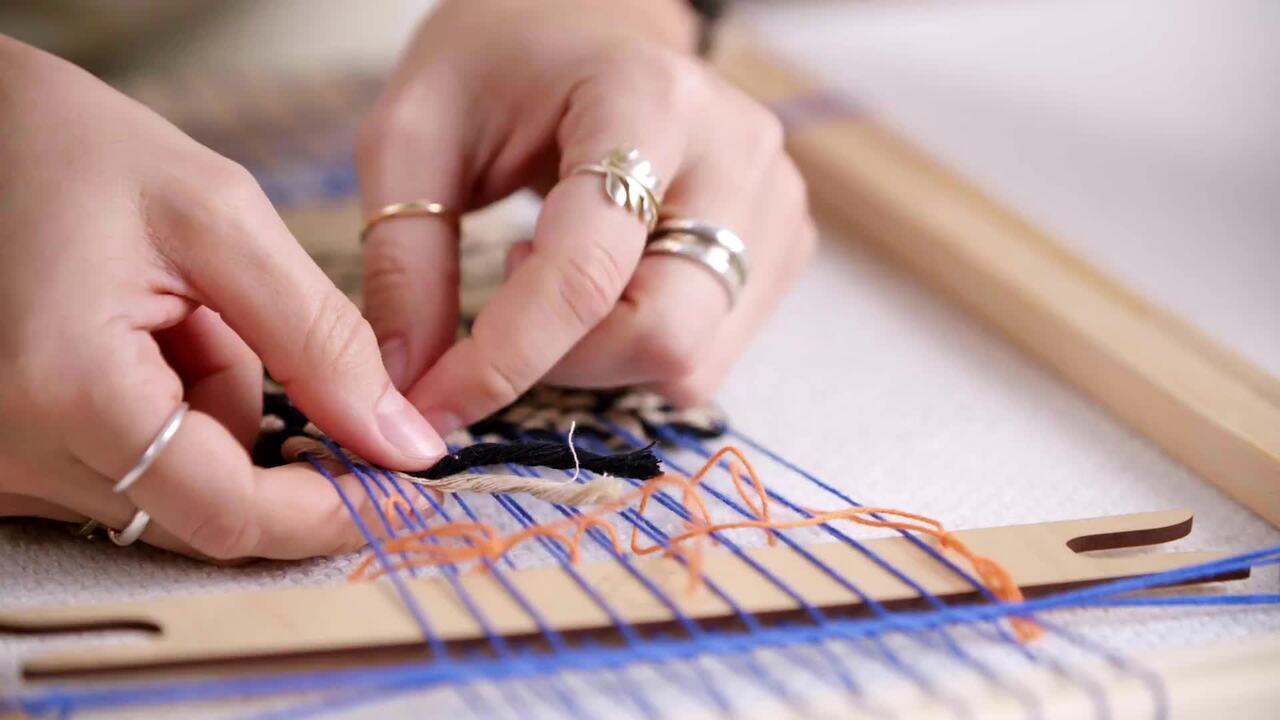
STEP 3: Take your second weft yarn and weave this onto the opposing warp strings, again being sure to leave the excess loose. It doesn't matter which direction you go in, just that one of the weft yarns goes over the odd numbered warp strings and the other weft yarn goes over the even numbered strings.
STEP 4: As one of the weft yarns will always be covering the odd numbered warp strings, and the other weft yarn will always be covering the even numbered strings they won't loop around the sides. To secure the sides, you will need to overlap the threads and interlock them before weaving the next line.
STEP 5: Go back the way you came with your first weft yarn, tucking the loose end into this line and hide it round the back of the loom.
STEP 6: The second weft yarn follows, and you can tuck in this loose end too.
STEP 7: Continue weaving with both weft yarns in this alternating fashion to create a vertical striped effect.
STEP 8: If you wish to swap the colours, you can simply change the sequence. If the first weft yarn was covering the even numbered warp strings, switch it to cover the odd numbered warp strings and use the second weft yarn to cover the even numbered warp strings.
STEP 9: You can also use this technique to create a check pattern, by changing the colour every time you have done enough lines to form a square.
Carry on for as long as you like, experimenting with the technique by adding in different colours and different types of yarns to see what patterns you can create.
Get the full workbook, video lessons, and more with a Create Academy subscription.
Subscribe to access the full workbookAlready a member? Sign in to watch
491 reviews
Read moreCreate Academy has been such a great resource. I'm in the middle of renovating a bungalow with a very large garden and the courses have offered a wealth of inform...
Harvey
Jun 10, 2026
Absolutely love Create Academy! The instructors are extremely informative, and it is beautifully filmed. Create Academy is great value for money and plan on renew...
SG
May 31, 2026
Butter's creativity is stunning! Her ability to incorporate brilliance in small gardens is magical!
Carla
May 30, 2026
The best adventure. I like all the courses, but my favorite are both Rita Konig interior design courses and Anna Jones. Excellent!
Karolina Kluczewska
May 20, 2026
Create Academy has been such a great resource. I'm in the middle of renovating a bungalow with a very large garden and the courses have offered a wealth of information to dive into and explore new ideas. I'm...
Harvey
Jun 10, 2026
Absolutely love Create Academy! The instructors are extremely informative, and it is beautifully filmed. Create Academy is great value for money and plan on renewing my subscription yearly because there are ...
SG
May 31, 2026
Butter's creativity is stunning! Her ability to incorporate brilliance in small gardens is magical!
Carla
May 30, 2026

Your Instructor
Award-winning textile designer
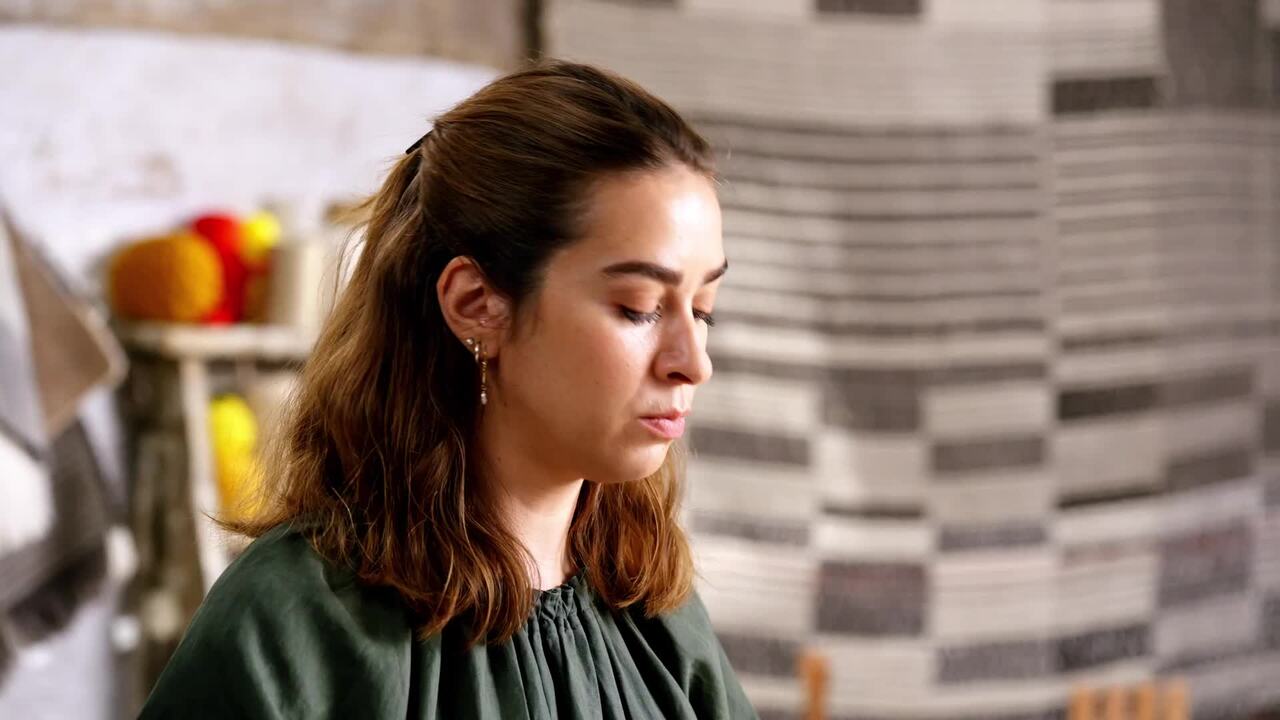
Maria Sigma is an award-winning Greek textiles designer and weaver specialising in ethical hand-woven textiles for interiors. Maria’s work - inspired by a traditional Greek Cycladic crocheted lace pattern - celebrates 'zero waste' design and a slow-making ethic, combining a contemporary approach of traditional weaving techniques with a focus on raw natural materials and texture. Maria has collaborated with a long list of exceptional interior designers, architects, galleries, fashion and furniture brands, including Susie Atkinson, Hauser & Wirth, Soho House, The New Craftsman, Anthropologie and Toast. She also teaches regular ‘weaving from waste’ workshops across London and has authored a book on the subject entitled, Weaving: the Art of Sustainable Textile Creation.
Access to all courses


.jpg)