
Interior and exterior confidence
Create Academy has been such a great resource. I'm in the middle of renovating a bungalow with a very large garden and the courses have offered a wealth of inform...
Harvey
Jun 10, 2026
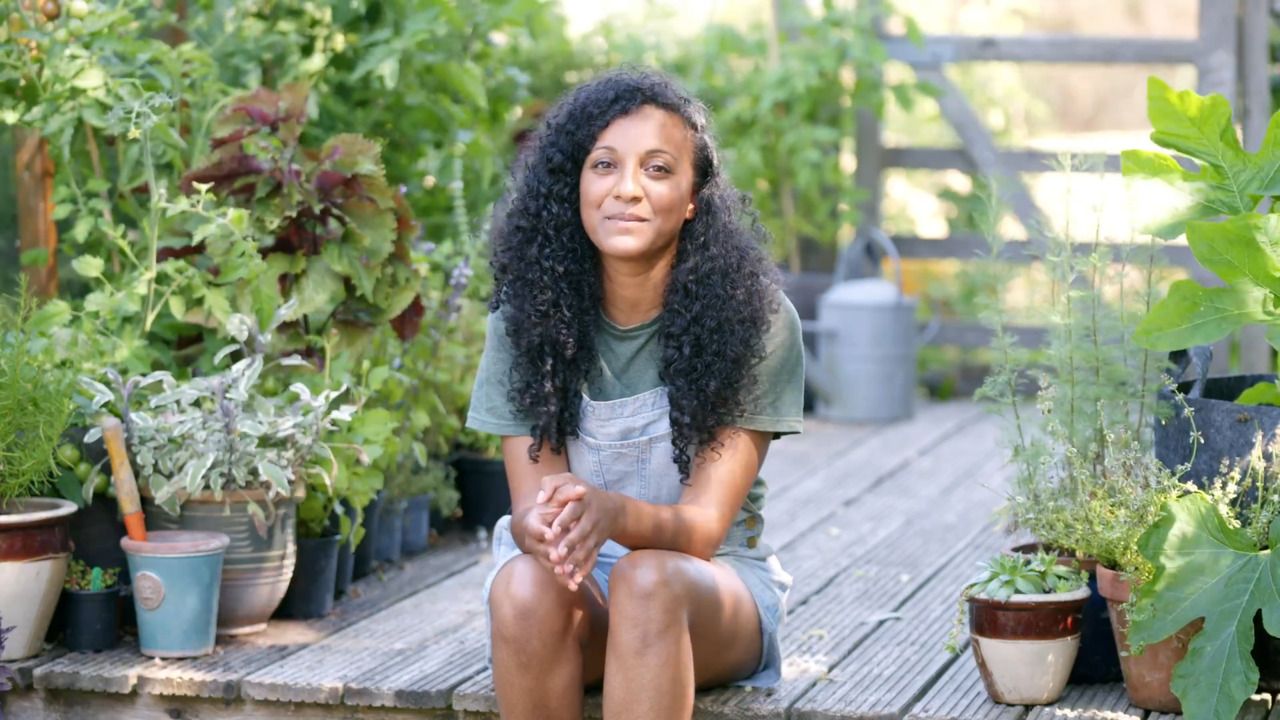
with CLAIRE RATINON — Organic food grower, writer and gardening columnist for The Guardian. Author of Unearthed.
Lesson 19 of 24
Subscribe to watch
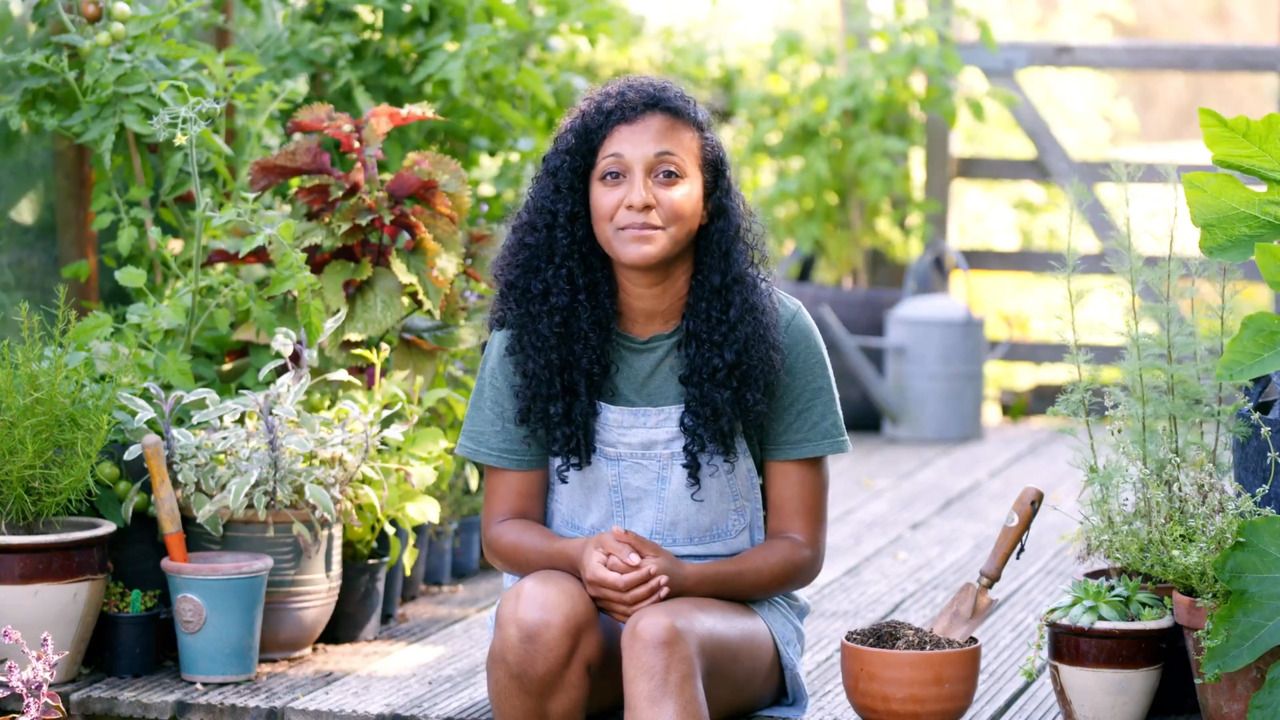
Organic compost is a gardener's best friend. In this lesson, you'll learn what to add to your compost heap and the best place to site it in your garden.
If there's one thing every organic grower should know, it's how to create nutritious compost. In this lesson, you'll learn how and why you should make it.
Creating your own compost is an integral part of the organic gardening process. Not only does it help you to process all your garden waste and kitchen scraps, but it also provides you with all the nutritional material needed to feed your garden and improve your soil health.
I scatter my own homemade compost on my veg patch annually, although as I don't have the space to produce much, I buy in organic compost too. This replenishes the nutrients that the previous years plants have taken from the soil, while also improving the richness of the soil and creating great soil texture.
Compost also helps to improve the water retention of your soil, and without it, the nutrient density of your soil would deplete over time leading to less healthy and vigorous crops.
Composting your garden waste creates a closed-loop system. Each year you are using the plants you have grown to feed your compost, which in turn feeds the plants you will grow next year.
Creating good compost means using the right balance of carbon and nitrogen-rich materials.
Carbon-rich materials are:
Nitrogen-rich materials are:
The composting equation:
It's important to aerate your compost heap from time to time. This helps to generate heat within your heap which helps it to break down faster.
It's easier to turn your heap if it's the open variety, but if it's a bin with a lid on like mine, you can simply stick a garden fork in and turn it around once a month.
If you find that your heap is very dry, then introduce more nitrogen-rich material like grass clippings to add moisture. If your heap is very wet, then add more carbon.
In a perfect world, I'd love to have a three-bay composting system, where you turn your compost from bay to bay as it breaks down and by the third bay it is ready to use. But like many people, I simply don't have the space for this.
So in my garden, I have one of the lidded plastic bins that are available from local councils. Although like many gardeners I was initially sceptical, these bins can produce great compost as long as you monitor what is going on inside and aerate it at least once a month with a garden fork.
Nitrogen-rich
Carbon-rich
I layer these two types of materials together and take the lid off regularly so I can monitor what is happening inside my bin. This method of composting is known as cold composting and will produce good compost within 9 to 12 months.
Some rules for situating your compost heap:
You can tell that compost is ready to use when it has the following characteristics:
There are a few things that you want to avoid putting on your compost heap if you want to keep it healthy, these include:
Note: To learn more about making microbially rich compost take the Land Gardeners' course 'How to heal your soil'.
Get the full workbook, video lessons, and more with a Create Academy subscription.
Subscribe to access the full workbookAlready a member? Sign in to watch
491 reviews
Read moreCreate Academy has been such a great resource. I'm in the middle of renovating a bungalow with a very large garden and the courses have offered a wealth of inform...
Harvey
Jun 10, 2026
Absolutely love Create Academy! The instructors are extremely informative, and it is beautifully filmed. Create Academy is great value for money and plan on renew...
SG
May 31, 2026
Butter's creativity is stunning! Her ability to incorporate brilliance in small gardens is magical!
Carla
May 30, 2026
The best adventure. I like all the courses, but my favorite are both Rita Konig interior design courses and Anna Jones. Excellent!
Karolina Kluczewska
May 20, 2026
Create Academy has been such a great resource. I'm in the middle of renovating a bungalow with a very large garden and the courses have offered a wealth of information to dive into and explore new ideas. I'm...
Harvey
Jun 10, 2026
Absolutely love Create Academy! The instructors are extremely informative, and it is beautifully filmed. Create Academy is great value for money and plan on renewing my subscription yearly because there are ...
SG
May 31, 2026
Butter's creativity is stunning! Her ability to incorporate brilliance in small gardens is magical!
Carla
May 30, 2026

Your Instructor
Organic food grower, writer and gardening columnist for The Guardian. Author of Unearthed.
Claire Ratinon is a food grower and writer, specialising in growing food organically. She is passionate about the act of growing plants - especially edible ones - and the potential for this to be nourishing, connecting and healing. Her journey into horticulture began on a rooftop farm in New York City and since then she has spanned a range of roles, from growing produce for Ottolenghi’s Rovi restaurant to delivering food growing workshops and talks. Claire writes a regular column in The Guardian's magazine and is a contributor to Radio 4’s Gardeners’ Question Time, Waitrose Food Magazine and Bloom magazine. Her book, ‘How To Grow Your Dinner Without Leaving The House’, celebrates the food growing possibilities of small spaces, from window boxes to balconies.
Access to all courses


