
Interior and exterior confidence
Create Academy has been such a great resource. I'm in the middle of renovating a bungalow with a very large garden and the courses have offered a wealth of inform...
Harvey
Jun 10, 2026
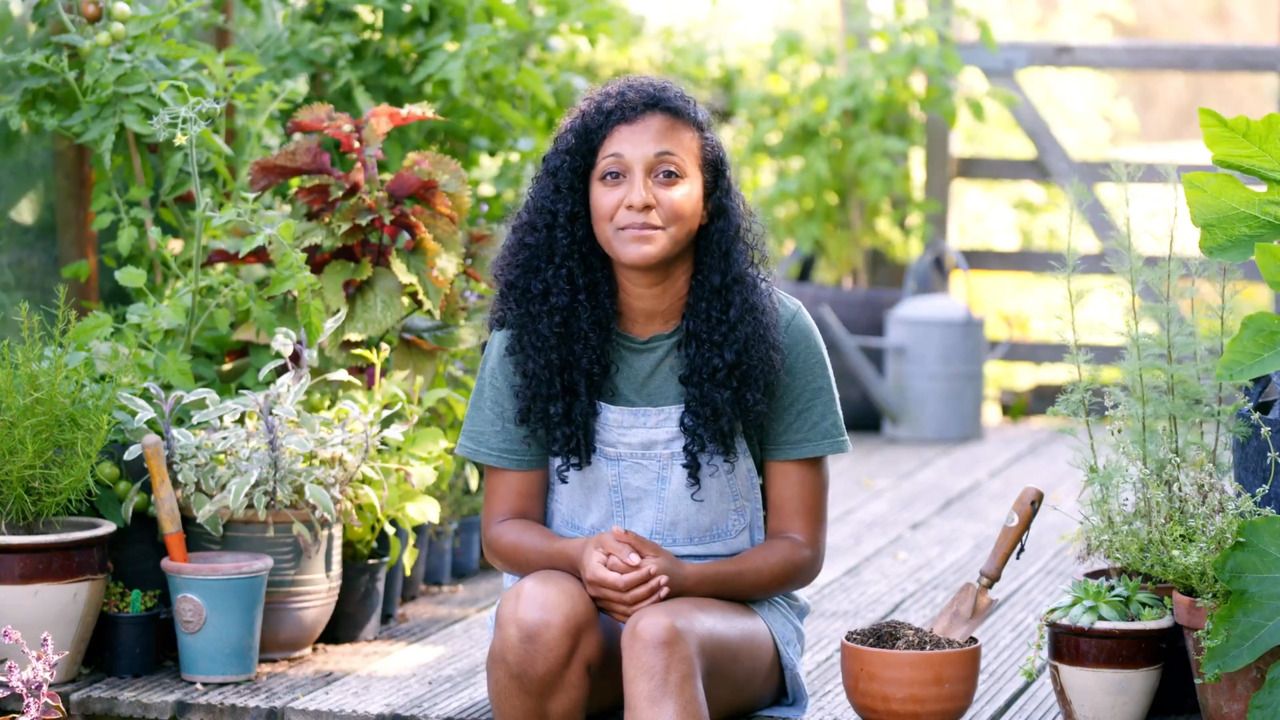
with CLAIRE RATINON — Organic food grower, writer and gardening columnist for The Guardian. Author of Unearthed.
Lesson 12 of 24
Subscribe to watch
Some plants need a little bit of support to thrive. In this lesson, Claire will show you how to support beans and peas with frames and protect brassicas from Cabbage Whites.
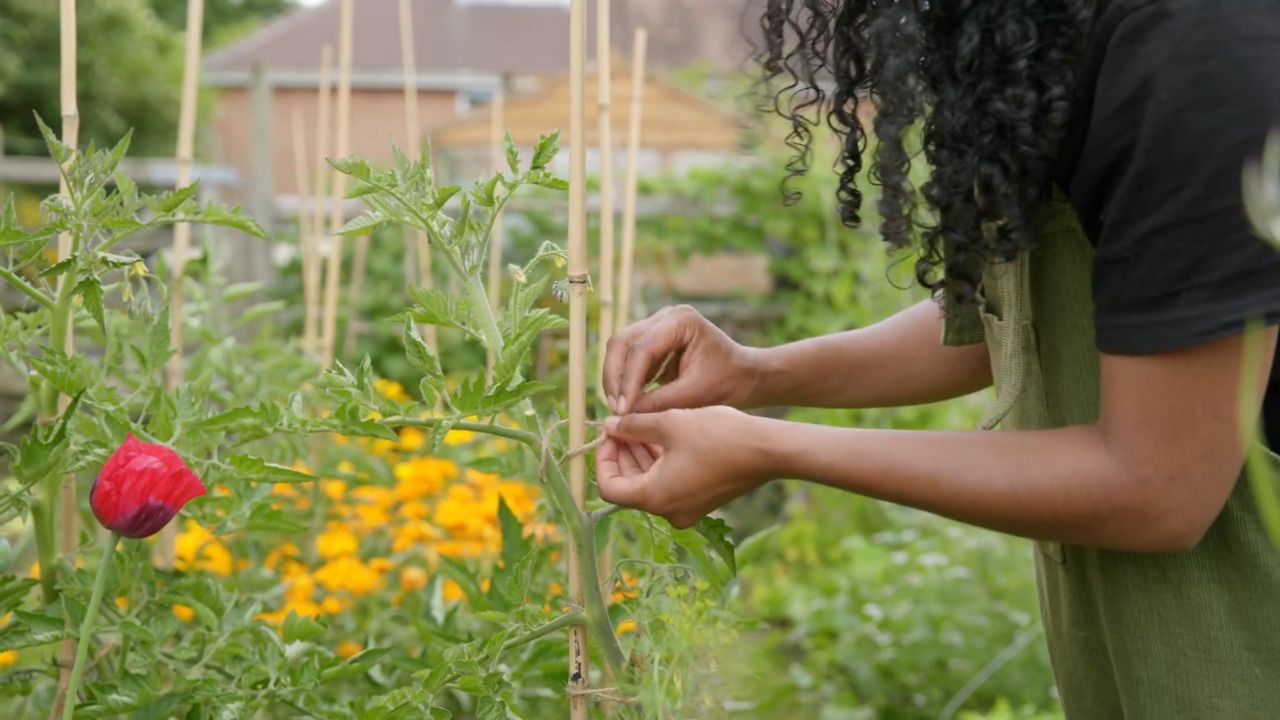
As your plants grow they may need some support to keep them on track. In this lesson, I'll show you how to support your crops and protect them from pests.
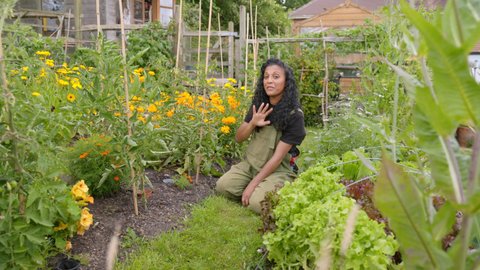
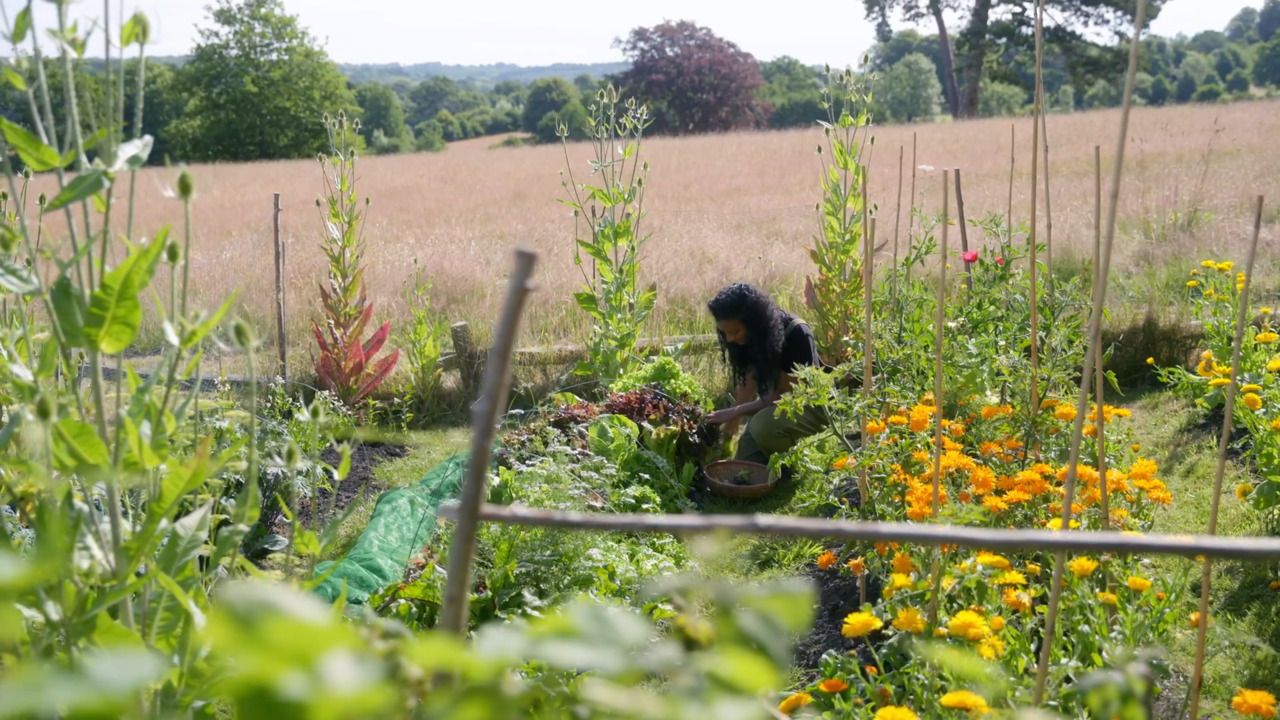
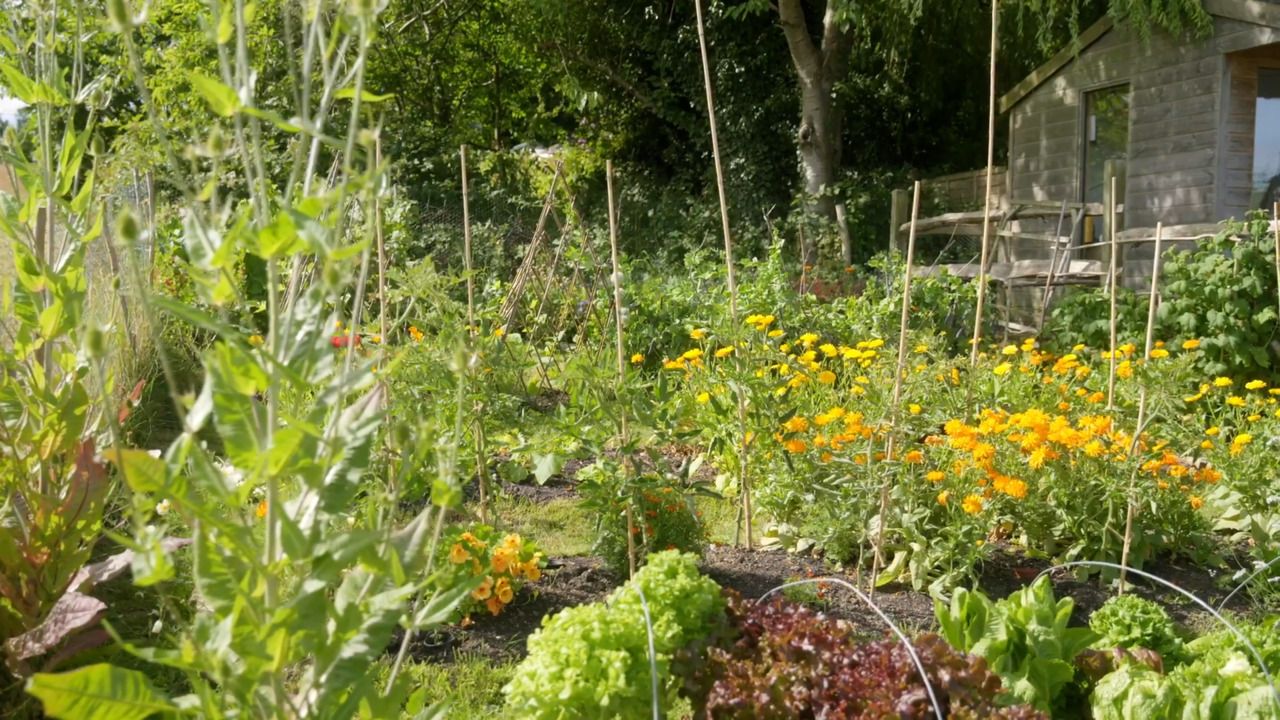
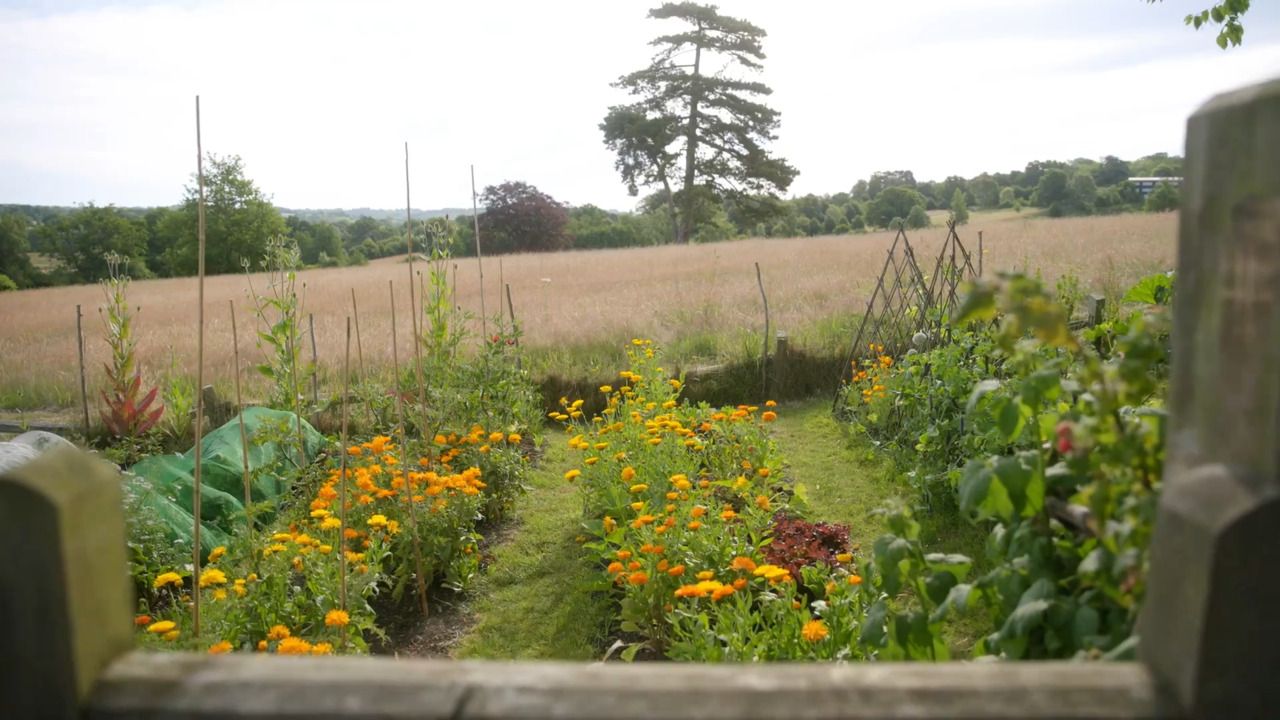
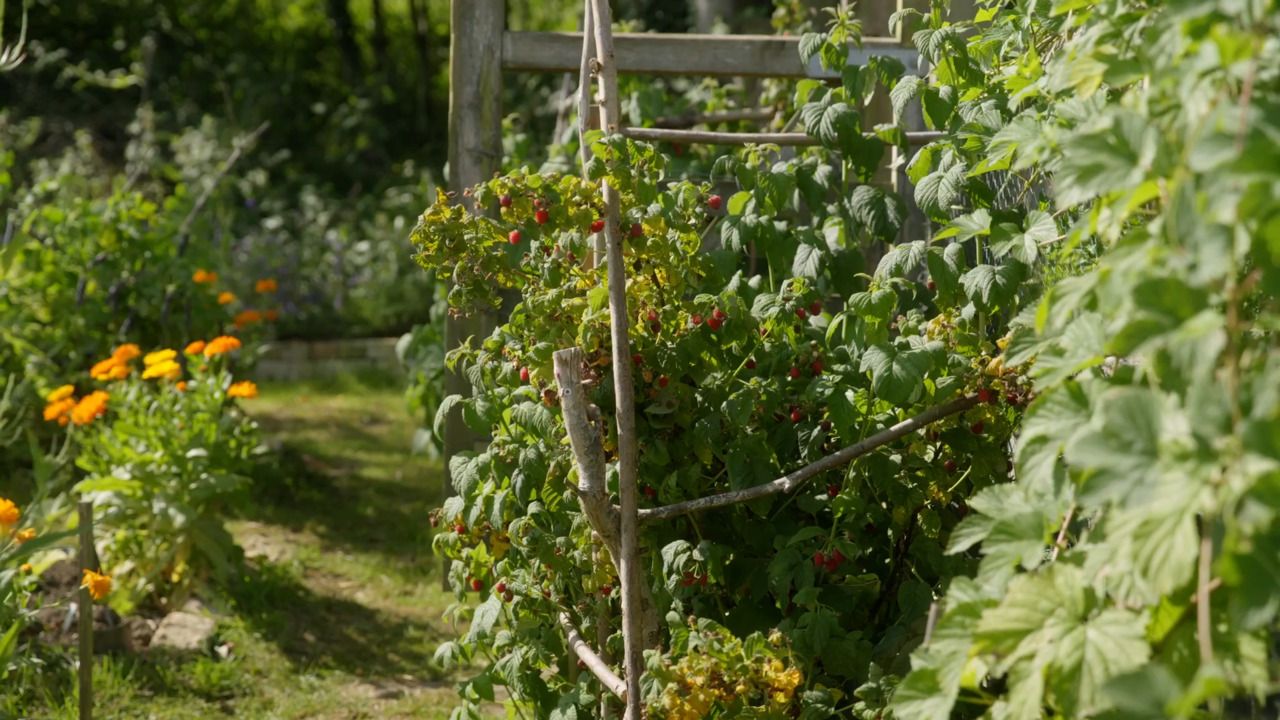
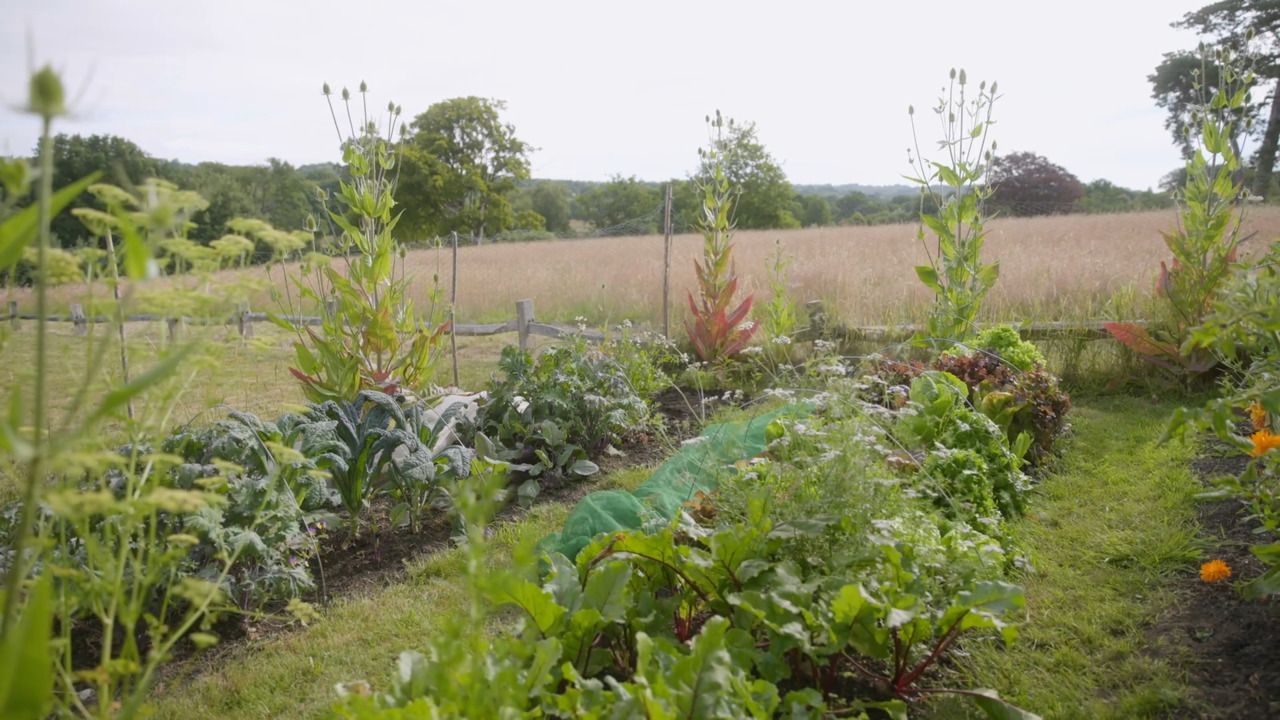
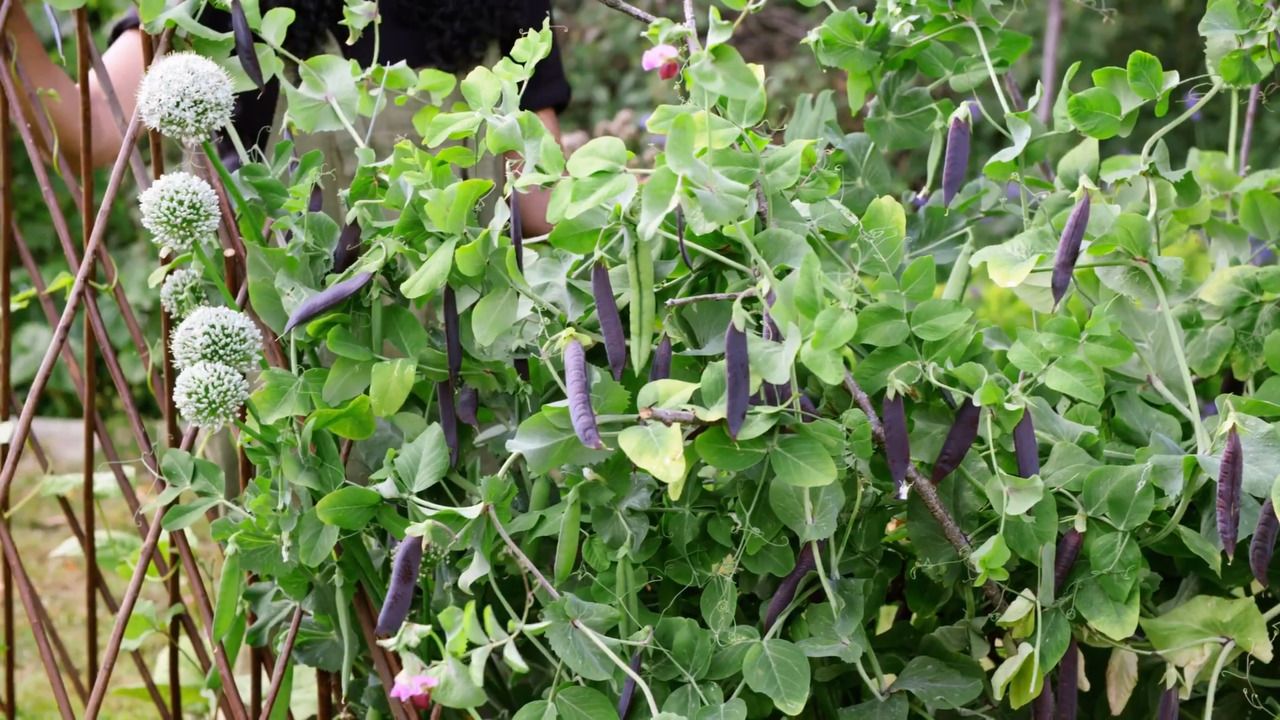
It's mid-July in my vegetable patch and my peas and beans are in full bloom. I have created two types of structures for my peas and beans to grow on.
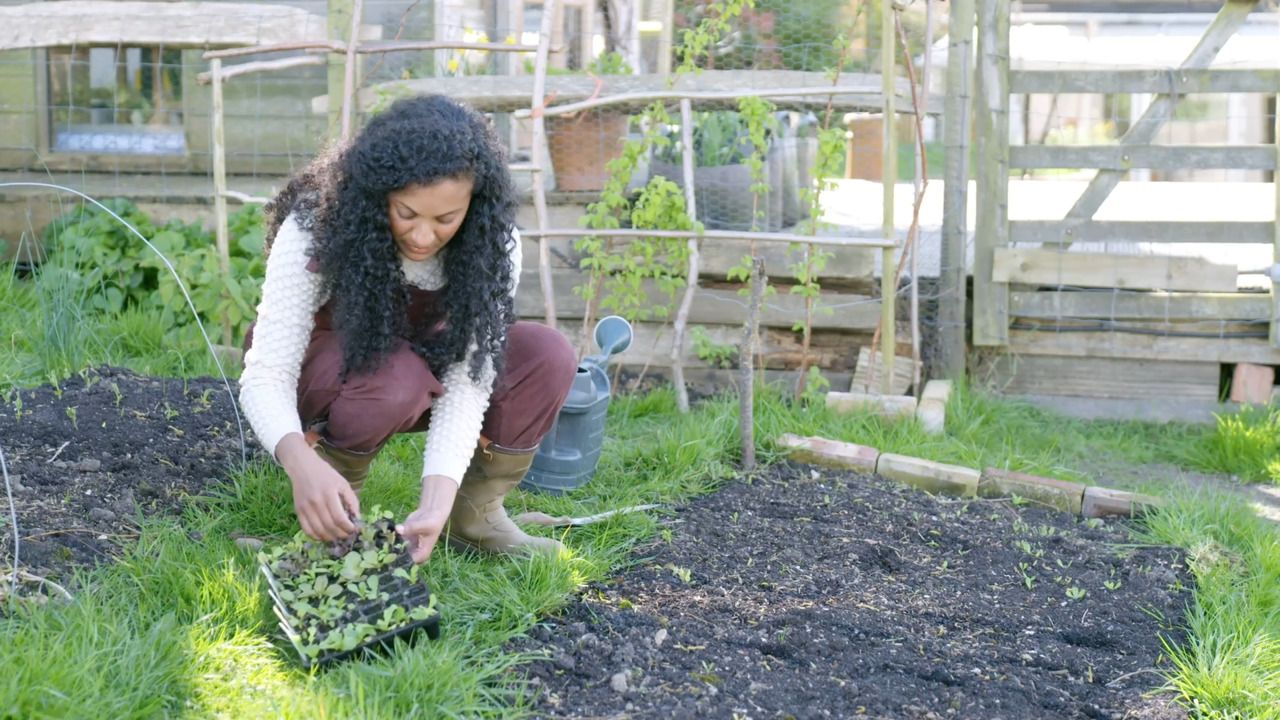
The peas were sown in early spring and planted out as soon as they were developed as they can tolerate some cold. The beans were sown around a month later as they can only go into the soil after all chance of frost has passed.
Peas use their curling tendrils to grab onto whatever they can find and grow in an upward fashion. To help them grow, I've made a structure out of twigs from the past autumn and stuck them into the ground around my pea plants. This gives them a stable structure to grow up.
Bean plants on the other hand climb upwards by curling around things, so for bean plants, it is better to create a tall teepee structure which they can wind their way to the top of as they grow.
I have planted four pea plants per row in this bed, which is around a metre in width. In total I have between 25 and 30 pea plants here, taking up roughly half of my 4-metre bed.
These peas don't need any additional care when they are growing other than a generous amount of water, especially when they are actively growing.
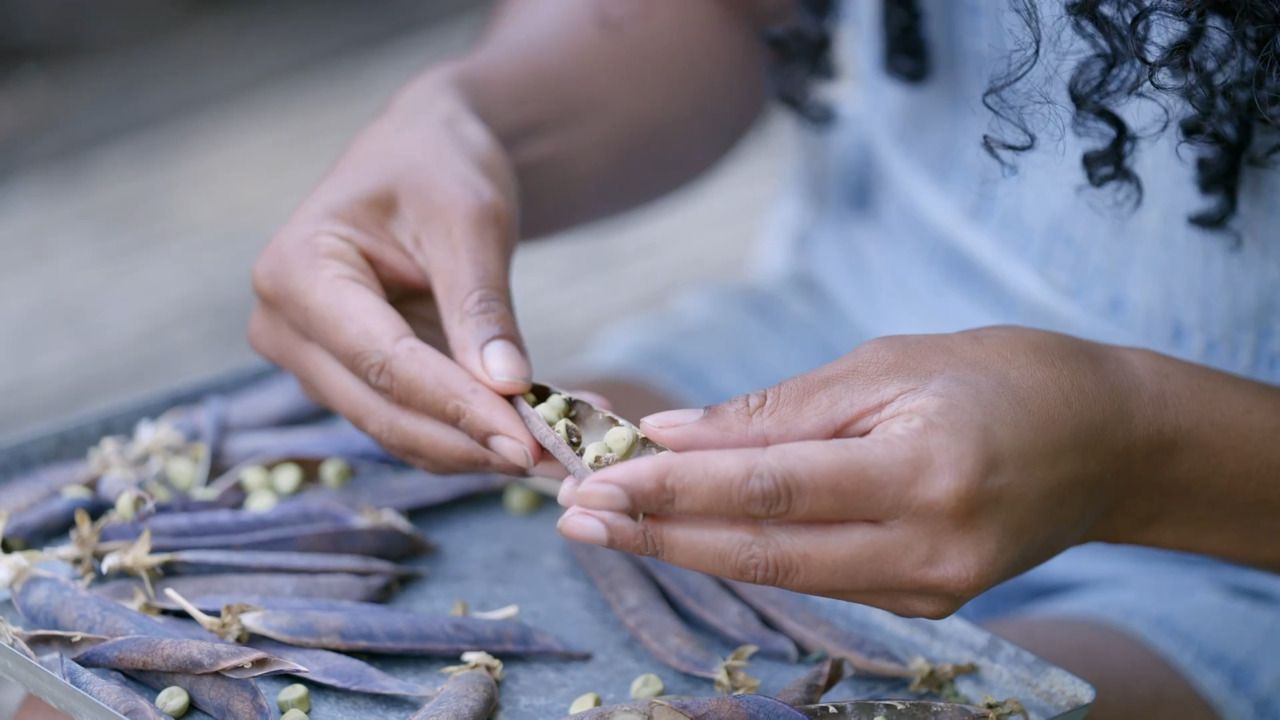
I am growing two types of beans around my bean frames, a climbing bean with purple pods and a runner bean.
I have mixed these bean plants together so that in a few weeks they will be a great tangle of colour and shape.
Runner beans are especially prolific, so if you want a lot of beans they are a great crop to grow and require little care other than watering.
In my 'others' bed, you will find vegetable crops that don't fit neatly into a plant family such as brassicas and cucurbits.
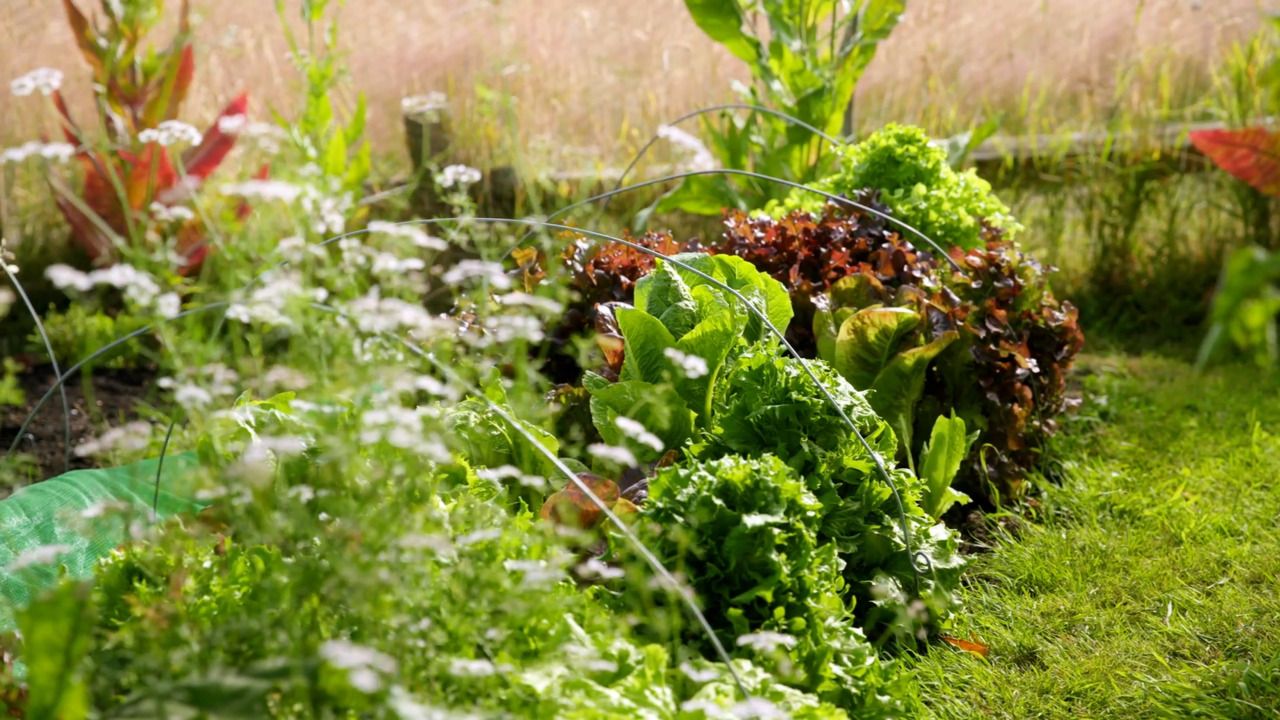
This year I am growing a wide variety of lettuces. Lettuce is a great beginner crop as they're easy to grow and taste so much better than the ones that you will find in a plastic bag in the supermarket.
These lettuces were planted out in April between 20 - 25 cm apart. While this looked like a lot of space at the time, now that they are at their full height, you can see why they need so much space.
If I had planted them closer together they would have competed with one another and they may have been more vulnerable to pests and diseases too.
Next to my fully grown lettuces, you can see some smaller ones. These were sown a few weeks after the first lettuce seeds and then planted out later too. This is an example of successional sowing so that when the first lettuces come out of the ground, I will have some more to fill their place.
Lettuces benefit from a generous amount of water. Regularly watering will keep the leaves crisp and juicy and also delay the bolting process.
Bolting means that your lettuce plant is coming to the end of its life and is about to produce flowers, which after pollination will produce seed. As the lettuce is now putting its energy into seed production instead of leaf production, the leaves won't taste as good as they used to so it's time to remove the lettuce from your patch.
To delay the bolting process, make sure to water your plants regularly or use shade netting which stops the plant from getting too hot and starting to produce seed.
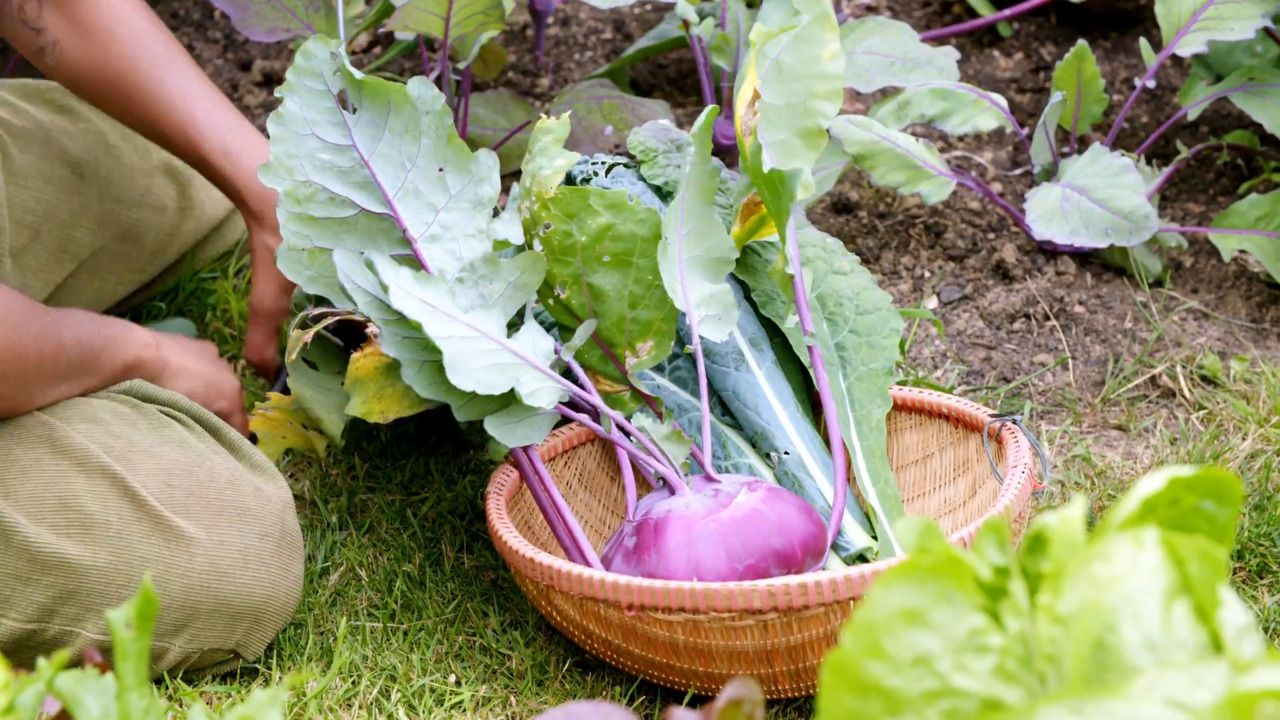
My favourite vegetable family is the brassica family, which includes cabbages, kale, kohlrabi, and the mustards.
Once they have grown past a certain point and are safe from slugs, they are quite low-maintenance plants although they do like a generous amount of water and a good sunny spot if possible.
The key thing to do when growing brassicas though is to install cloche hoops and net them with butterfly netting.
The Cabbage White butterfly lays its eggs on members of the brassica family and the hatched caterpillars will eat through your crop in a matter of days if you don't protect it.
Get the full workbook, video lessons, and more with a Create Academy subscription.
Subscribe to access the full workbookAlready a member? Sign in to watch
491 reviews
Read moreCreate Academy has been such a great resource. I'm in the middle of renovating a bungalow with a very large garden and the courses have offered a wealth of inform...
Harvey
Jun 10, 2026
Absolutely love Create Academy! The instructors are extremely informative, and it is beautifully filmed. Create Academy is great value for money and plan on renew...
SG
May 31, 2026
Butter's creativity is stunning! Her ability to incorporate brilliance in small gardens is magical!
Carla
May 30, 2026
The best adventure. I like all the courses, but my favorite are both Rita Konig interior design courses and Anna Jones. Excellent!
Karolina Kluczewska
May 20, 2026
Create Academy has been such a great resource. I'm in the middle of renovating a bungalow with a very large garden and the courses have offered a wealth of information to dive into and explore new ideas. I'm...
Harvey
Jun 10, 2026
Absolutely love Create Academy! The instructors are extremely informative, and it is beautifully filmed. Create Academy is great value for money and plan on renewing my subscription yearly because there are ...
SG
May 31, 2026
Butter's creativity is stunning! Her ability to incorporate brilliance in small gardens is magical!
Carla
May 30, 2026

Your Instructor
Organic food grower, writer and gardening columnist for The Guardian. Author of Unearthed.
Claire Ratinon is a food grower and writer, specialising in growing food organically. She is passionate about the act of growing plants - especially edible ones - and the potential for this to be nourishing, connecting and healing. Her journey into horticulture began on a rooftop farm in New York City and since then she has spanned a range of roles, from growing produce for Ottolenghi’s Rovi restaurant to delivering food growing workshops and talks. Claire writes a regular column in The Guardian's magazine and is a contributor to Radio 4’s Gardeners’ Question Time, Waitrose Food Magazine and Bloom magazine. Her book, ‘How To Grow Your Dinner Without Leaving The House’, celebrates the food growing possibilities of small spaces, from window boxes to balconies.
Access to all courses


