











Interior and exterior confidence
Create Academy has been such a great resource. I'm in the middle of renovating a bungalow with a very large garden and the courses have offered a wealth of inform...
Harvey
Jun 10, 2026
An Expert Guide to Planting Design
with DAN PEARSON — Acclaimed naturalistic landscape designer. Multiple Chelsea Gold Medal Winner. OBE.
Lesson 16 of 31
Subscribe to watch
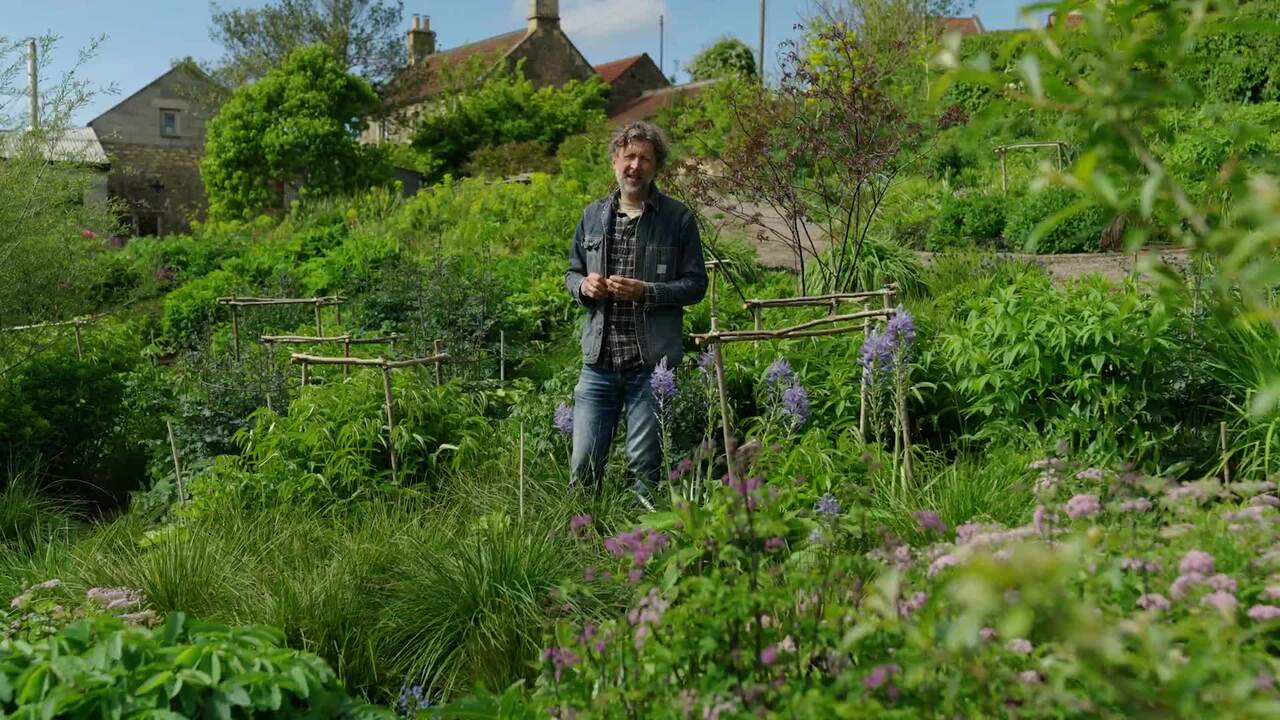
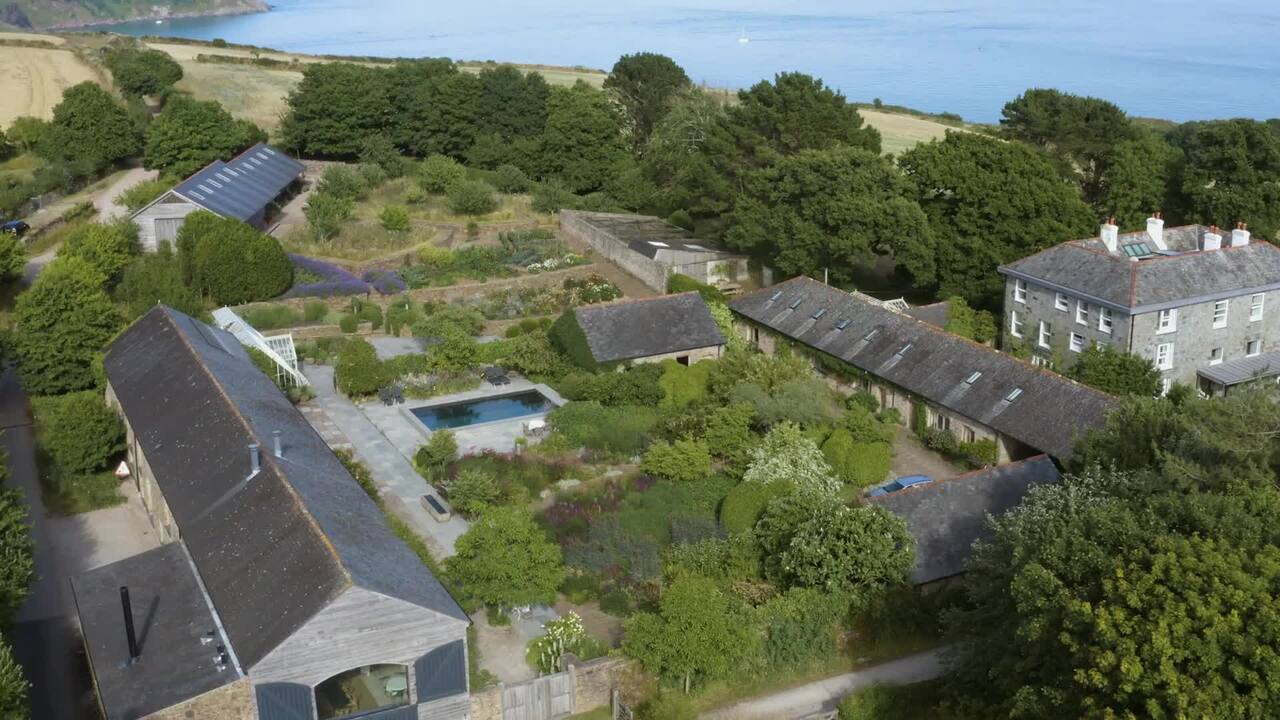
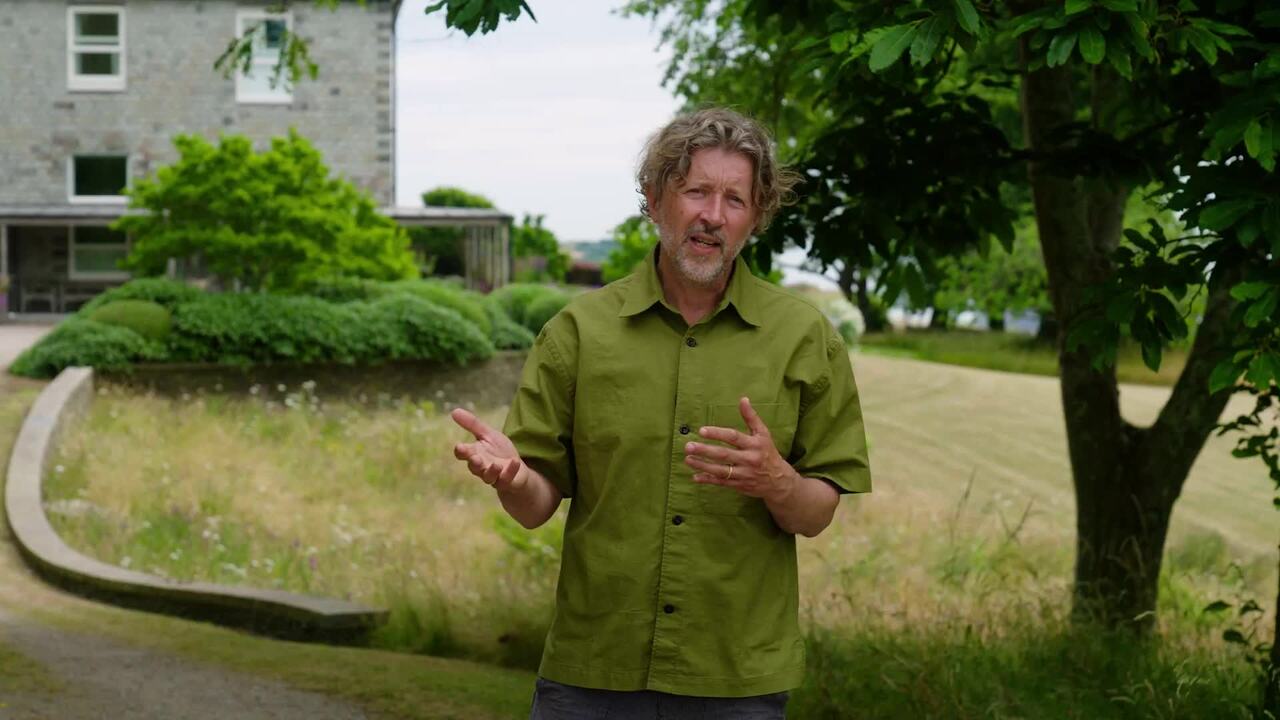
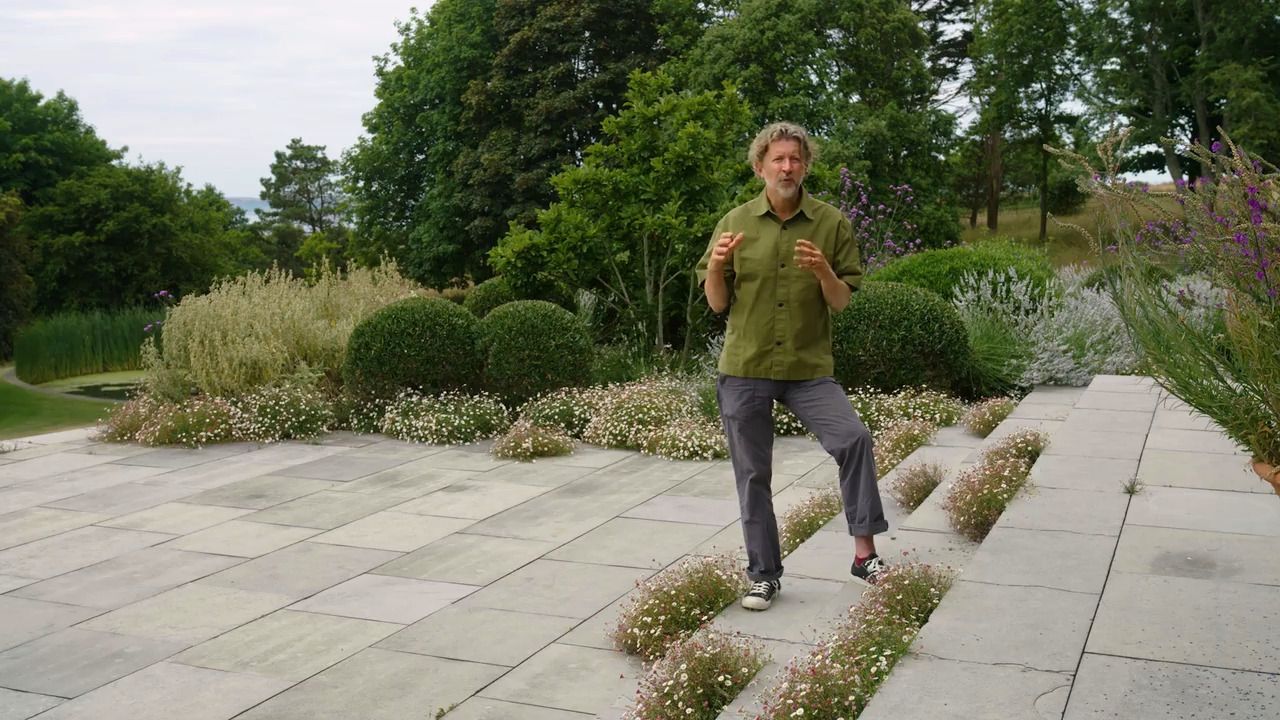
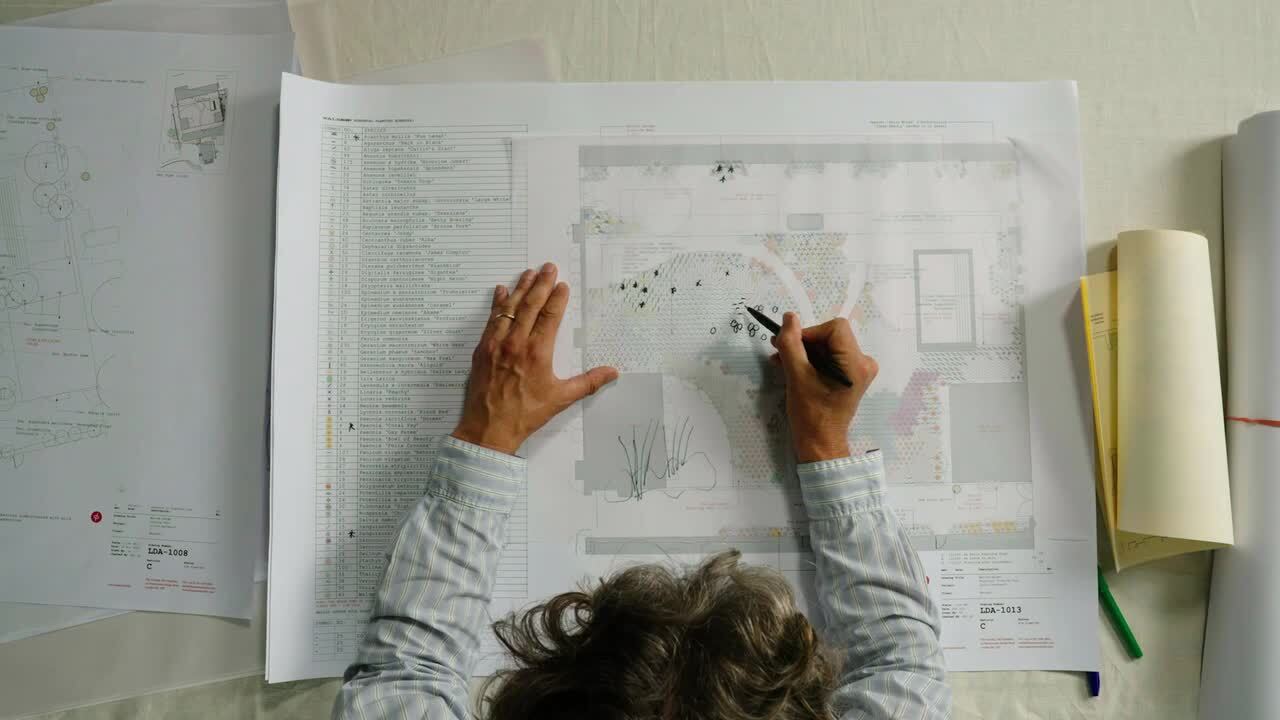
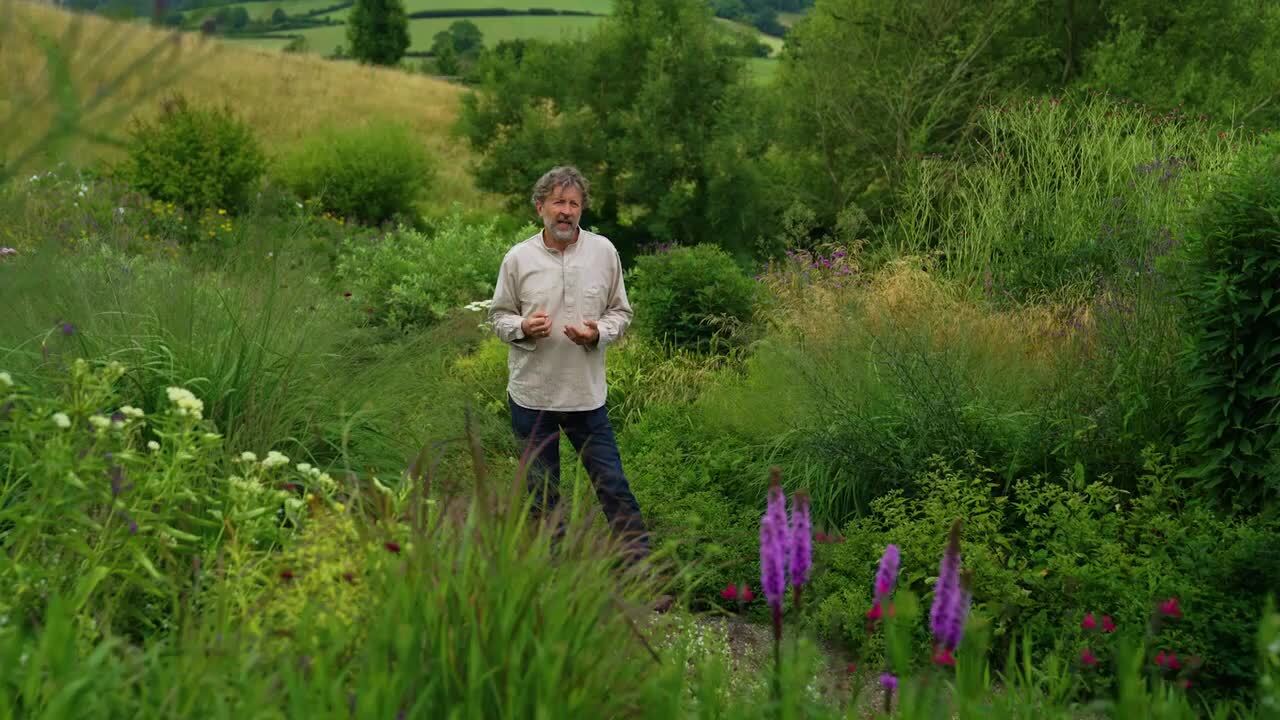
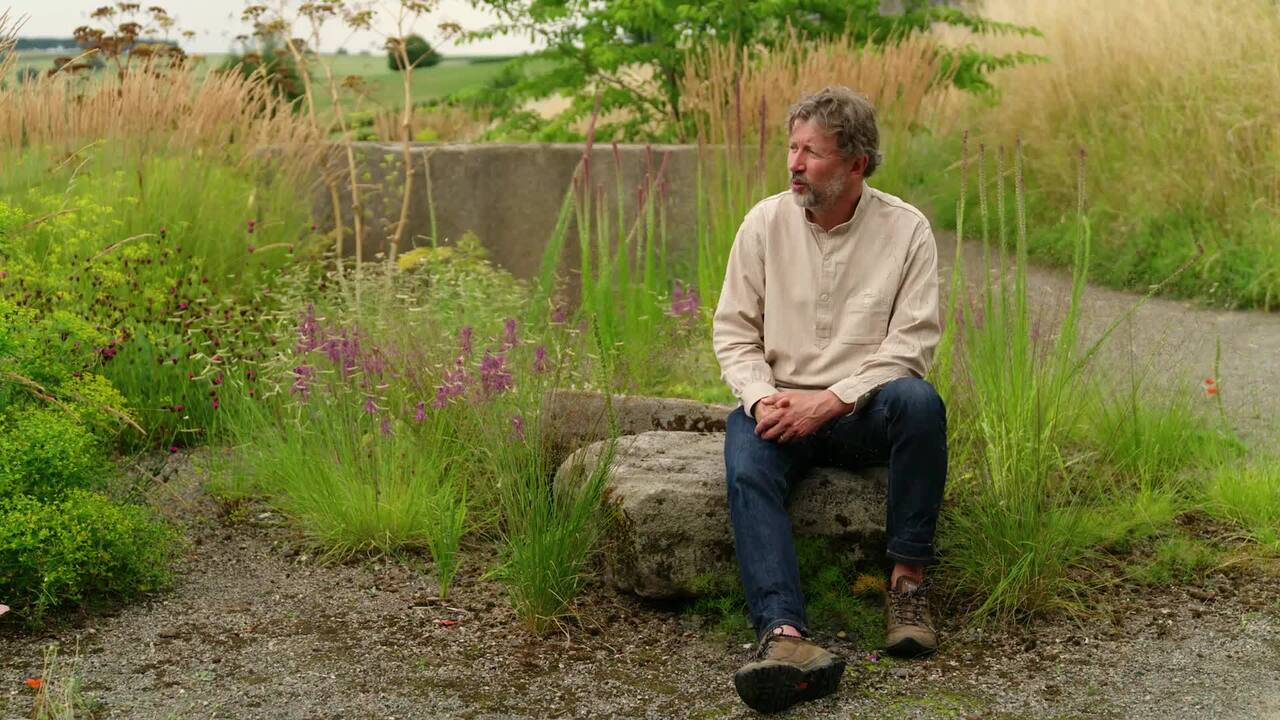
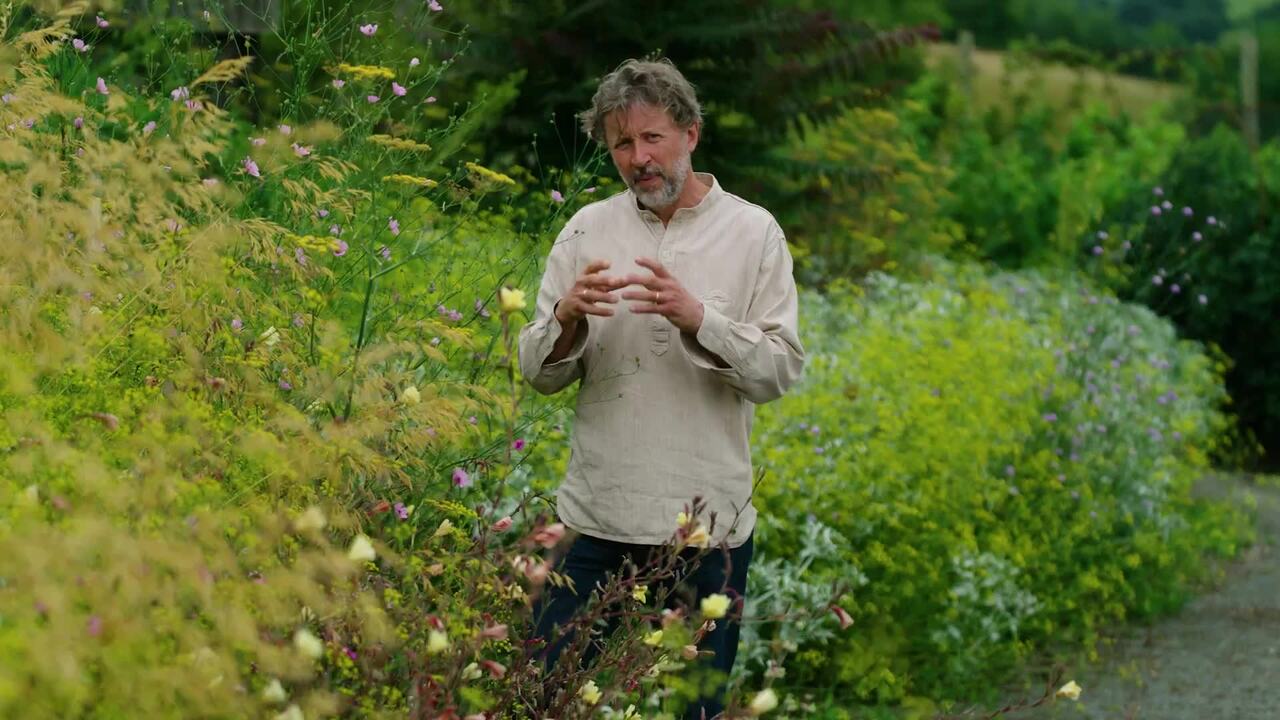
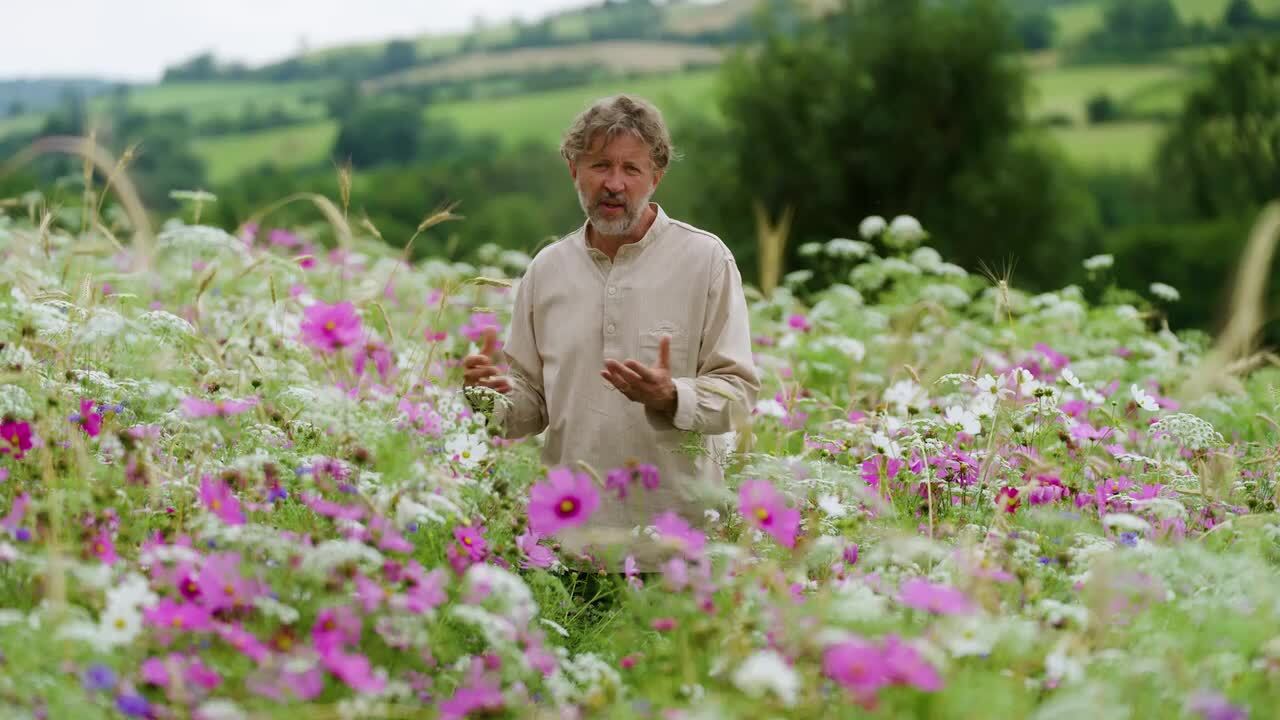
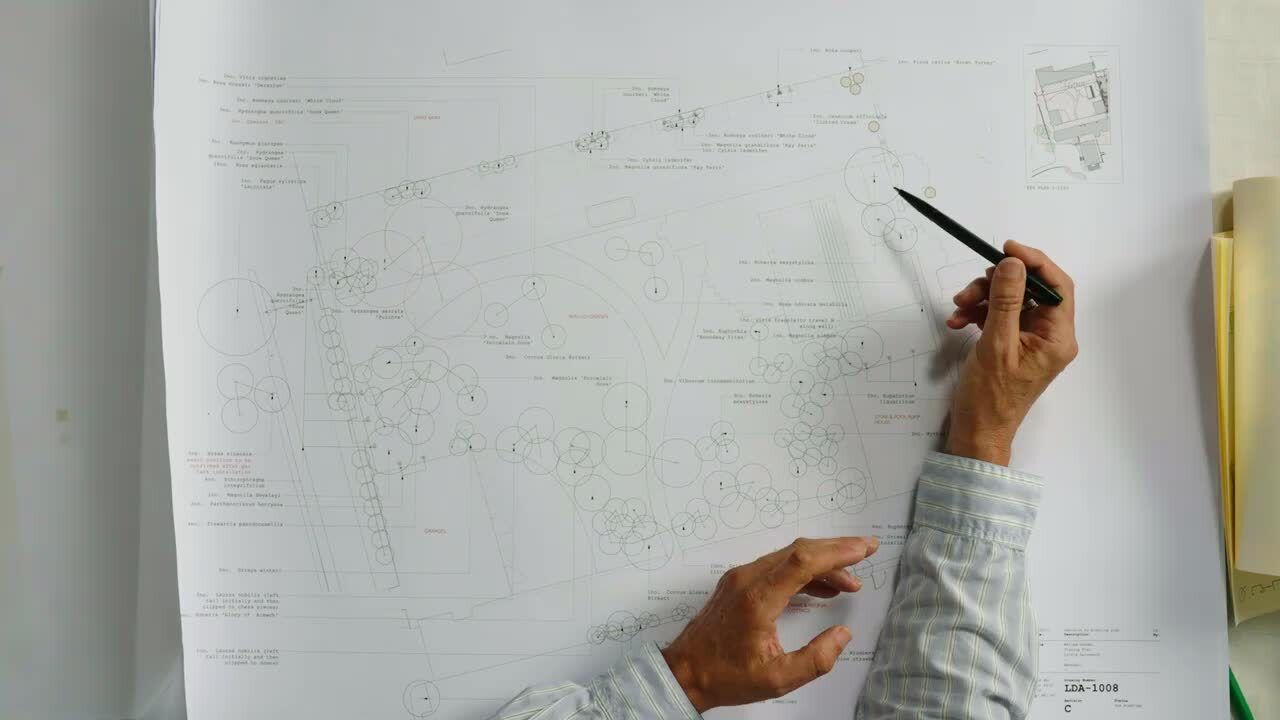
We discover how Dan created a walled garden from just bare walls and an empty yard. He shares insights into designing the hard and soft landscaping for this empty space. You’ll learn about the order of design; the roles of trees, shrubs and climbers; and where to use maps and drawings to help you.
Removing the large barn from the central farmyard created an empty space enclosed by the older farm buildings. In this lesson, we look at how I approached the walled garden, both in terms of organising the space to work out where we wanted hard areas and soft areas of planting and how I approached the planting design.
We first created paths to connect the places that need access but also to allow interaction with the planting as you move through the garden. Then I started to design the planting, step by step.
When I walk around a site, these are the initial notes I make:
These guidelines allow you to start establishing where things will go in the planting plan.
The planting plan works on several levels, through which you gradually work down in scale.
The trees and shrubs are your first key moves.
Within the trees and shrubs, there are several layers working together, with some taller things and others sitting underneath that can create a series of reveals as you move through the garden.
The first thing I put into the walled garden was the evergreen layer screening off the parking and path to the kitchen garden. I wanted this to be indestructible, so I used plants I knew were already adapted to the environment, because I'd noted they were present and thriving when I first looked at the site.
Several key trees and shrubs provide height, weight and break up the width of the site. It's a large garden dominated by buildings and walls, including a solid backdrop of a long barn on one side, and some of these walls needed softening and clothing.
We then looked at other trees and shrubs that are well adapted to this windy, salty environment, and found many useful New Zealand species. Not all of them felt right, but Olearia did. It's a really good tree that we've used here and repeated throughout the garden. It's a late-summer-blooming evergreen that has nice shimmery foliage, and it never gets too big, but sits very well in this environment.
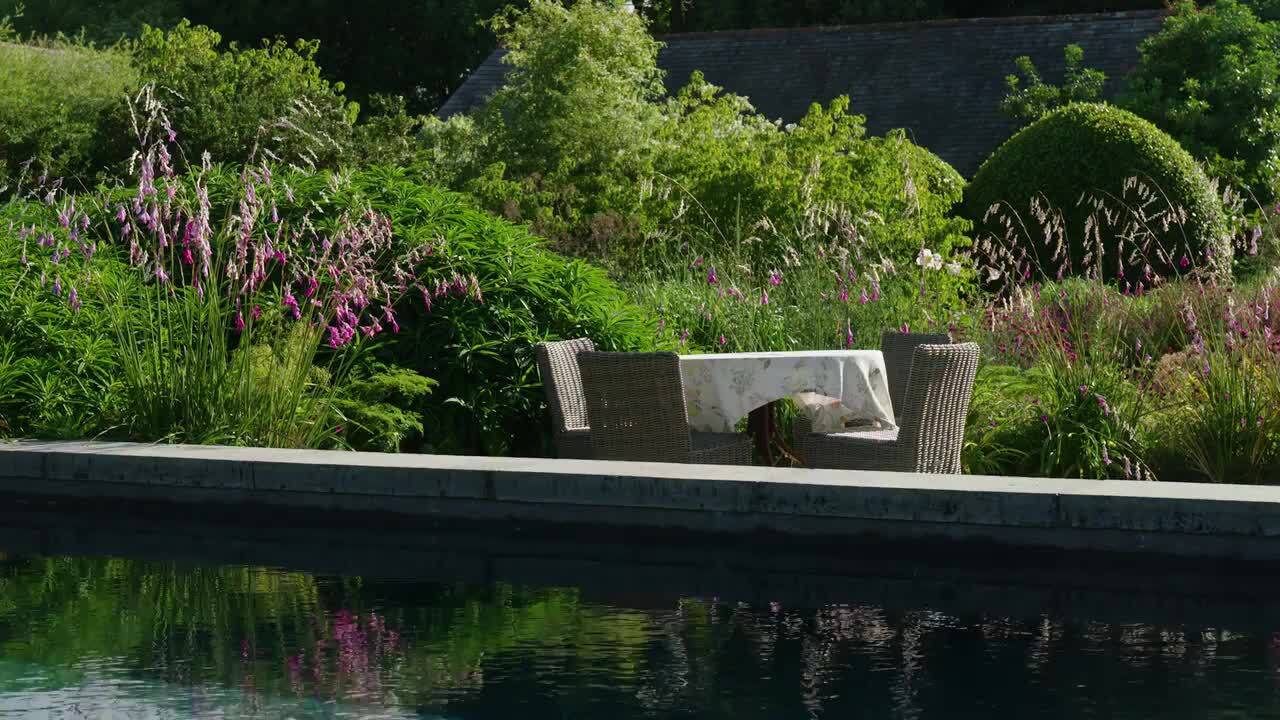
We linked these evergreen trees with low evergreen shrubs, which take that weight down towards ground level and create privacy around the pool. We've used the fantastic giant Euphorbia x pasteurii here.
Finally, we looked at deciduous trees and shrubs. We've used groups of Rosa x odorata 'Mutabilis', one of my favourite roses, which blooms from April right through to November, with delicate single flowers that transition from pale yellow through orange to hot cerise pink.
As well as providing year-round structure, trees and shrubs create vistas through framing, help buildings sit comfortably, and providing shelter and shade for planting. When you're putting together a list of suitable trees and shrubs, it's important to understand what each does in terms of its character.
Identifying these characteristics helps to drive how you put the planting plan together.
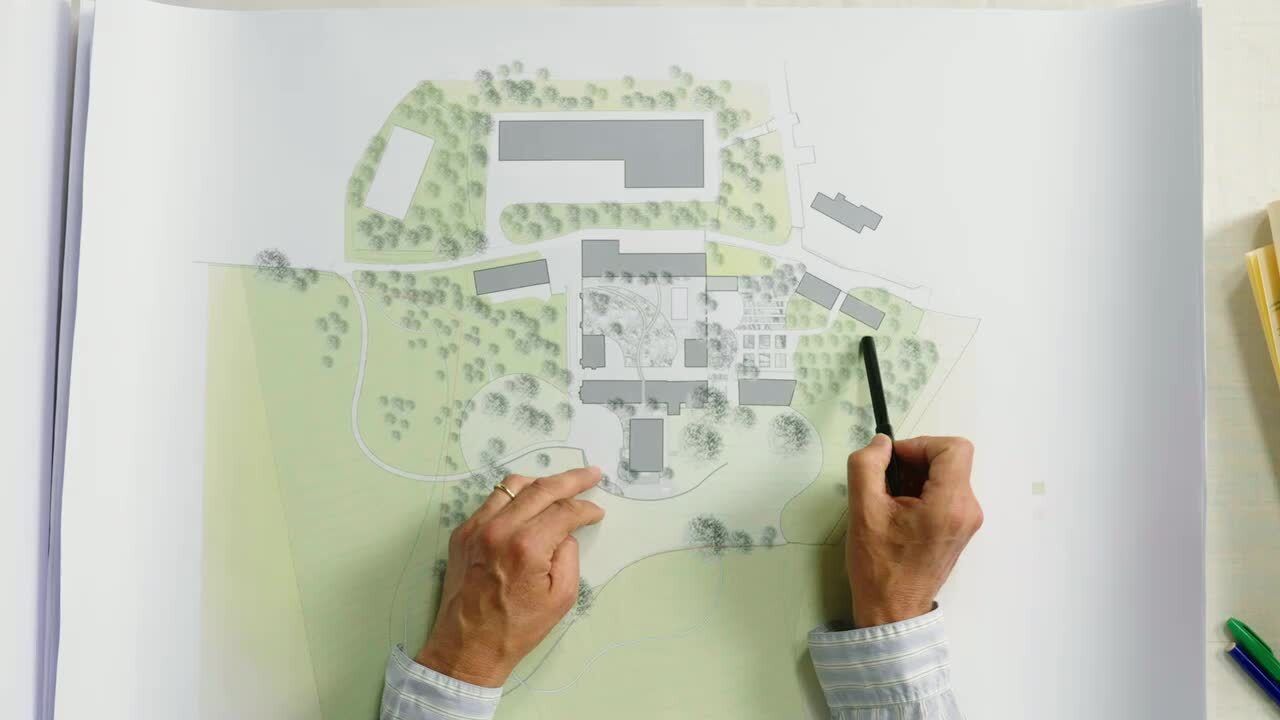
When you put these volumes together by drawing them onto a map, you can immediately see how they relate to the buildings, how you can create spaces alongside the buildings, and how you can make a rhythm that provides both open spaces, where you create the perennial planting, and opaque spaces, which you can't see through.
Mapping out your trees and shrubs allows you to see where:
I'd encourage you to try to put things down on paper wherever possible. As soon as you start sketching, that loosens up your thoughts. It's a simple exercise that shows you where your key moves are, where you want to put things that can animate the space and make it special, and where you want quiet places.
When I'm drawing up my plant lists, I divide them into the following categories:
The key layer is the woody material, as that's what provides the structure. It's easy to overlook walls or fences as planting opportunities, and indeed, sometimes good-looking walls can be nice left unplanted. But walls are actually very valuable planting opportunities, because a climber will take up very little space at ground level, and may only take up less than a metre in depth, but it can provide a big impact.
A climber can scale some distance, so you need to consider climbers that are suitable for the space available, in exactly the same way as you would trees and shrubs. It's always a mistake to plant something too big that you will then have to keep pruning hard.
The maintenance of climbers is really worth getting right. On the big wall, for example, we've put a Rosa 'Cooperi', a big evergreen rose that needs to be very carefully trained to give it a structure in its early years. Once you've got that structure, it can become a host to something else.
We've planted jasmine 'Clotted Cream' at its base, to climb through the rose. These work well together and can cater for two seasons: the rose enjoys a short flowering season, which is then picked up by the later-flowering jasmine to keep the interest going.
Olearia
Euphorbia x pasteurii
Rosa x odorata 'Mutabilis'
Parthenocissus quinquefolia
Rosa 'Cooperi'
Jasminum officinale 'Clotted Cream'
Get the full workbook, video lessons, and more with a Create Academy subscription.
Subscribe to access the full workbookAlready a member? Sign in to watch
491 reviews
Read moreCreate Academy has been such a great resource. I'm in the middle of renovating a bungalow with a very large garden and the courses have offered a wealth of inform...
Harvey
Jun 10, 2026
Absolutely love Create Academy! The instructors are extremely informative, and it is beautifully filmed. Create Academy is great value for money and plan on renew...
SG
May 31, 2026
Butter's creativity is stunning! Her ability to incorporate brilliance in small gardens is magical!
Carla
May 30, 2026
The best adventure. I like all the courses, but my favorite are both Rita Konig interior design courses and Anna Jones. Excellent!
Karolina Kluczewska
May 20, 2026
Create Academy has been such a great resource. I'm in the middle of renovating a bungalow with a very large garden and the courses have offered a wealth of information to dive into and explore new ideas. I'm...
Harvey
Jun 10, 2026
Absolutely love Create Academy! The instructors are extremely informative, and it is beautifully filmed. Create Academy is great value for money and plan on renewing my subscription yearly because there are ...
SG
May 31, 2026
Butter's creativity is stunning! Her ability to incorporate brilliance in small gardens is magical!
Carla
May 30, 2026

Your Instructor
Acclaimed naturalistic landscape designer. Multiple Chelsea Gold Medal Winner. OBE.
British landscape designer, horticulturalist and writer Dan Pearson OBE, has been designing award-winning gardens since 1987. His naturalistic use of plants, light-handed approach to design and deep-rooted horticultural knowledge has made him one of the most celebrated and innovative gardeners working today. Dan trained in horticulture at Wisley and Kew, before starting his garden and landscape design practice in 1987. In 2015, his show garden for Chatsworth and Laurent Perrier was awarded a Gold Medal and Best Show Garden at the Chelsea Flower Show. In 2014 Dan was appointed an advisor to the National Trust at Sissinghurst Castle. For over 20 years Dan has written regular gardening columns, with his work a staple of The Observer, and has written a number of best-selling gardening books.

Access to all courses


