
Interior and exterior confidence
Create Academy has been such a great resource. I'm in the middle of renovating a bungalow with a very large garden and the courses have offered a wealth of inform...
Harvey
Jun 10, 2026
An Expert Guide to Planting Design
with DAN PEARSON — Acclaimed naturalistic landscape designer. Multiple Chelsea Gold Medal Winner. OBE.
Lesson 9 of 31
Subscribe to watch
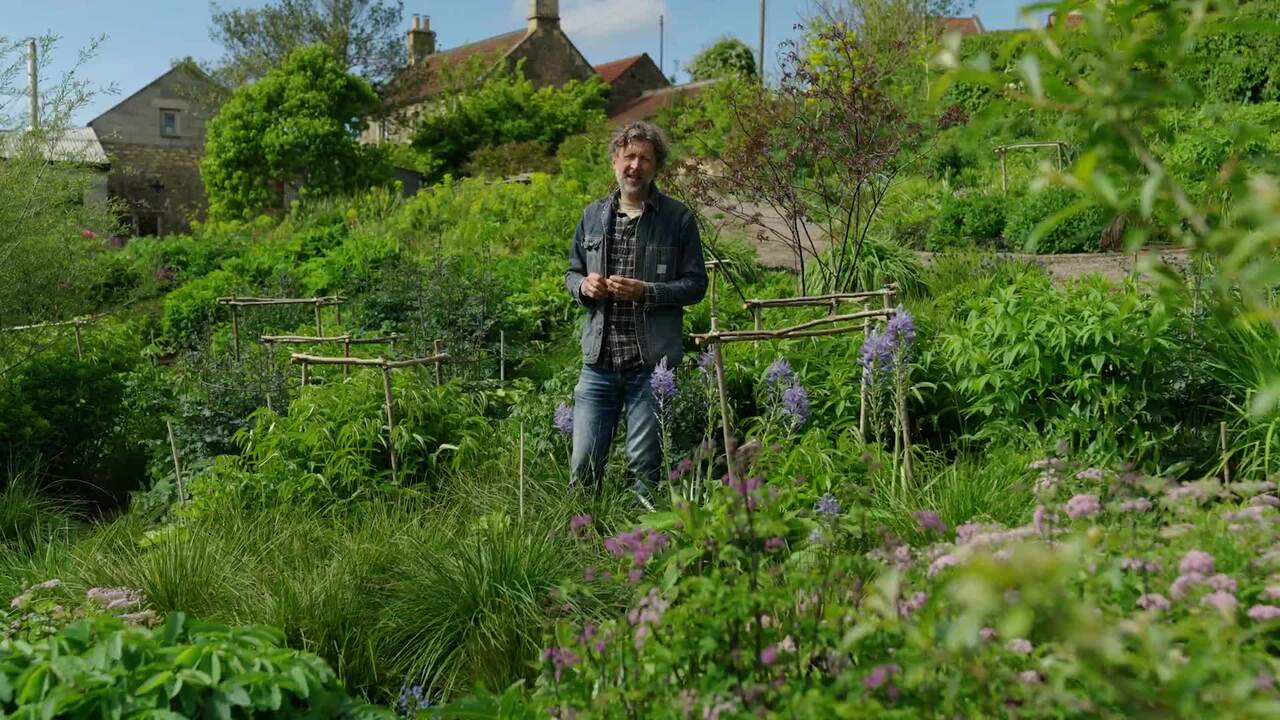
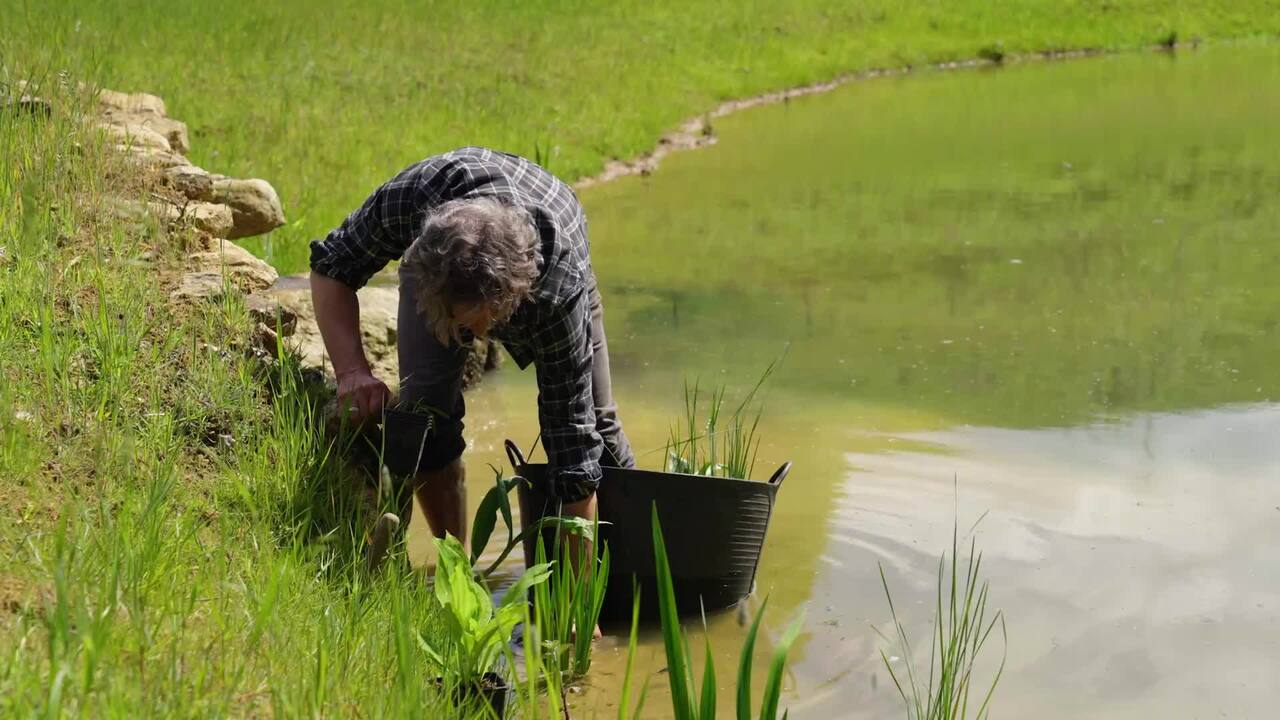
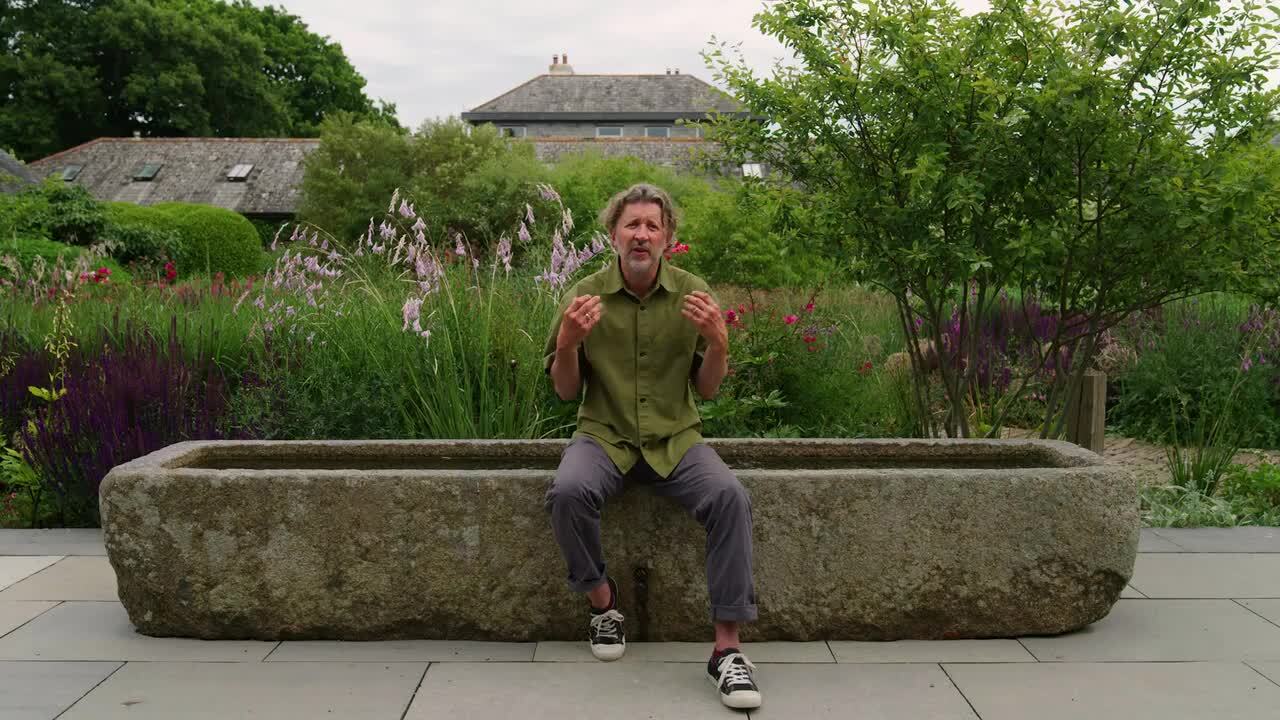
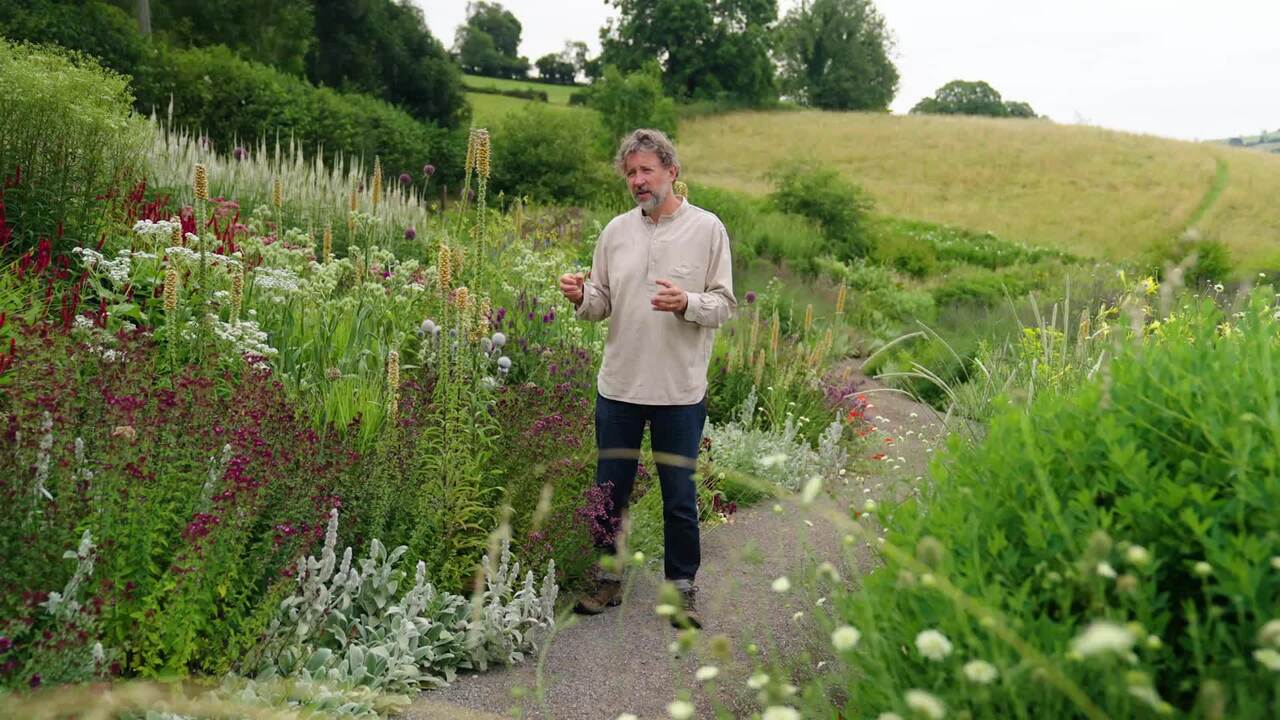
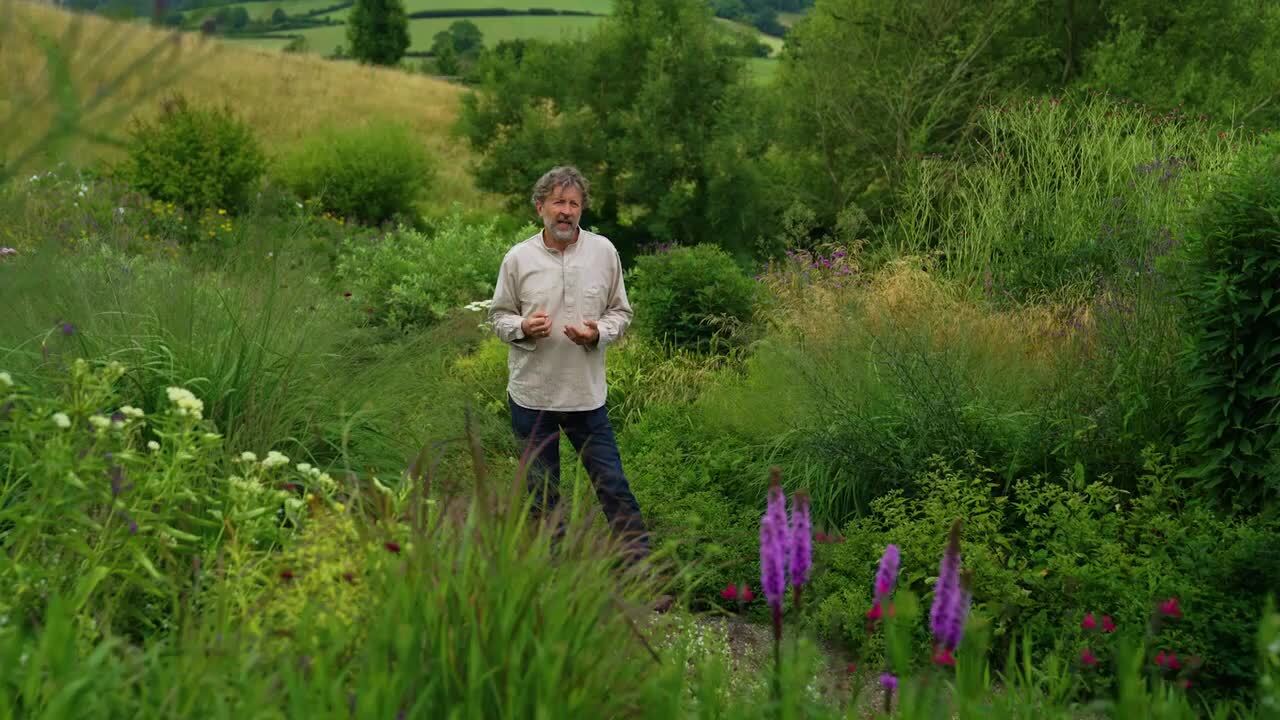
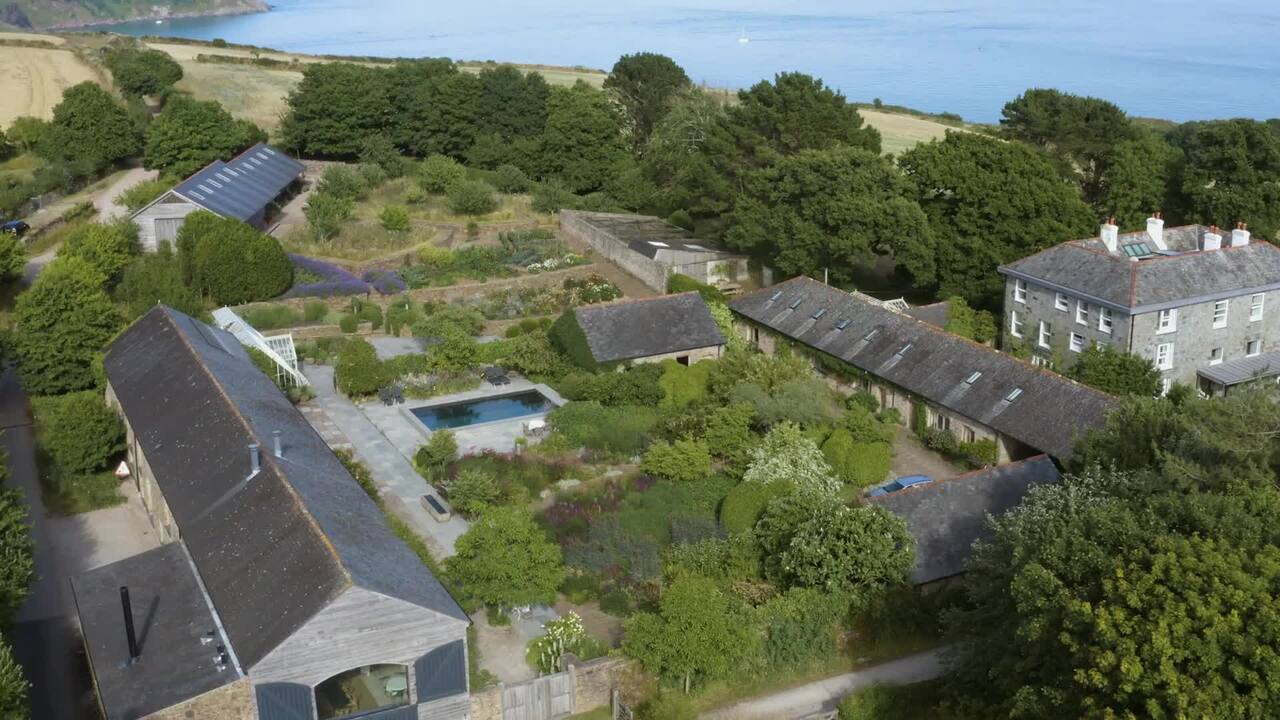
We join Dan as he revisits a former project; a beautiful old farm on the Devon coast. Part 3 focusses on this property as a case study, with Dan exploring how he completely renovated this site to craft it into the landscape and open up a diversity of distinct garden areas.
In this section, we'll take an in-depth look at a project on the south coast of England with a number of different environments, including an exposed front with views of the sea, and a sheltered walled garden.
Little Dartmouth is a farm above the cliffs near Dartmouth in Devon. The owners wanted to make this piece of land really work properly.
At the centre of the 150-acre farm is a farmhouse, with some farm buildings immediately behind it. These were dominated by a huge asbestos barn that sat over them, and my clients had the brilliant idea of removing this to liberate the buildings. They made a new functional farm building close by, so the farm could be kept running separately to the central living area.
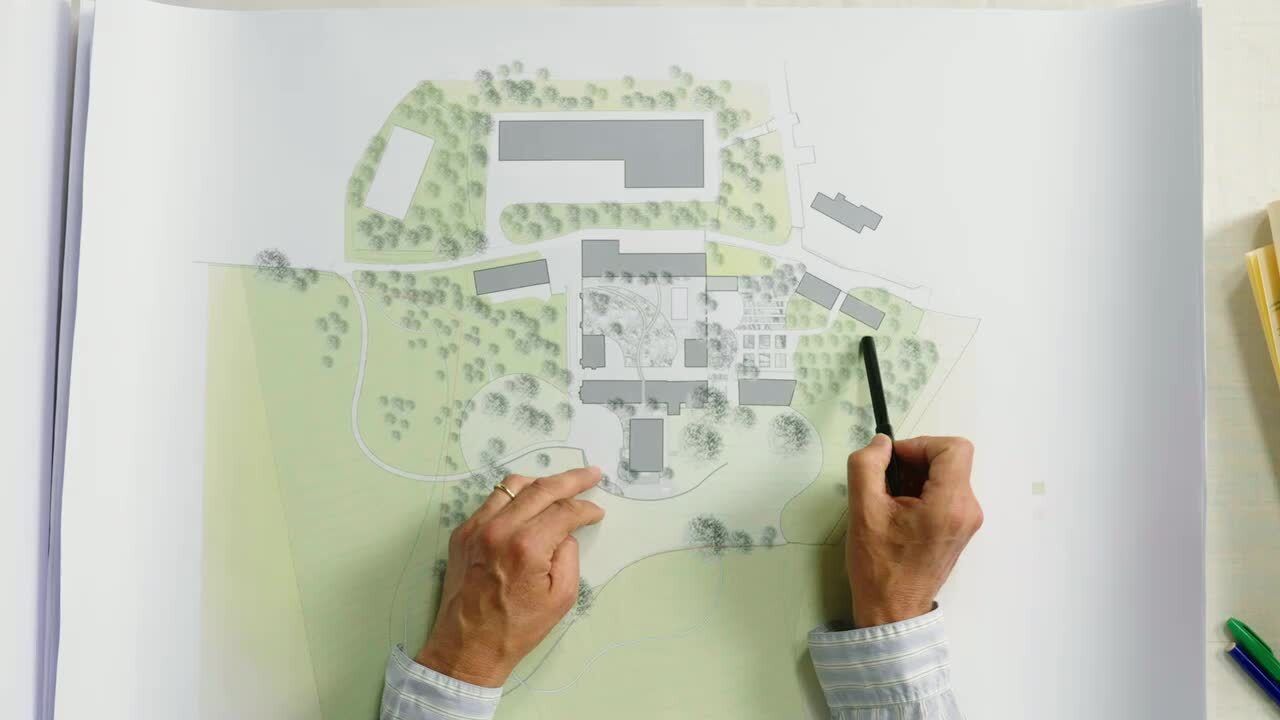
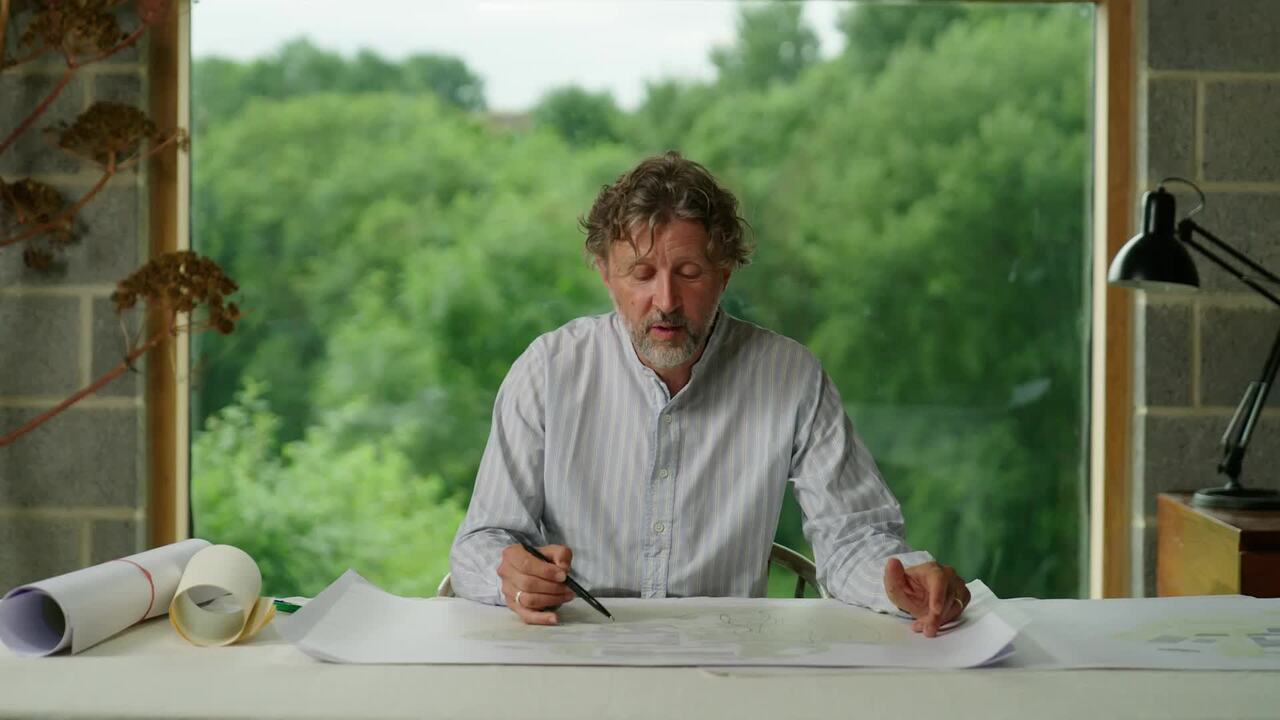
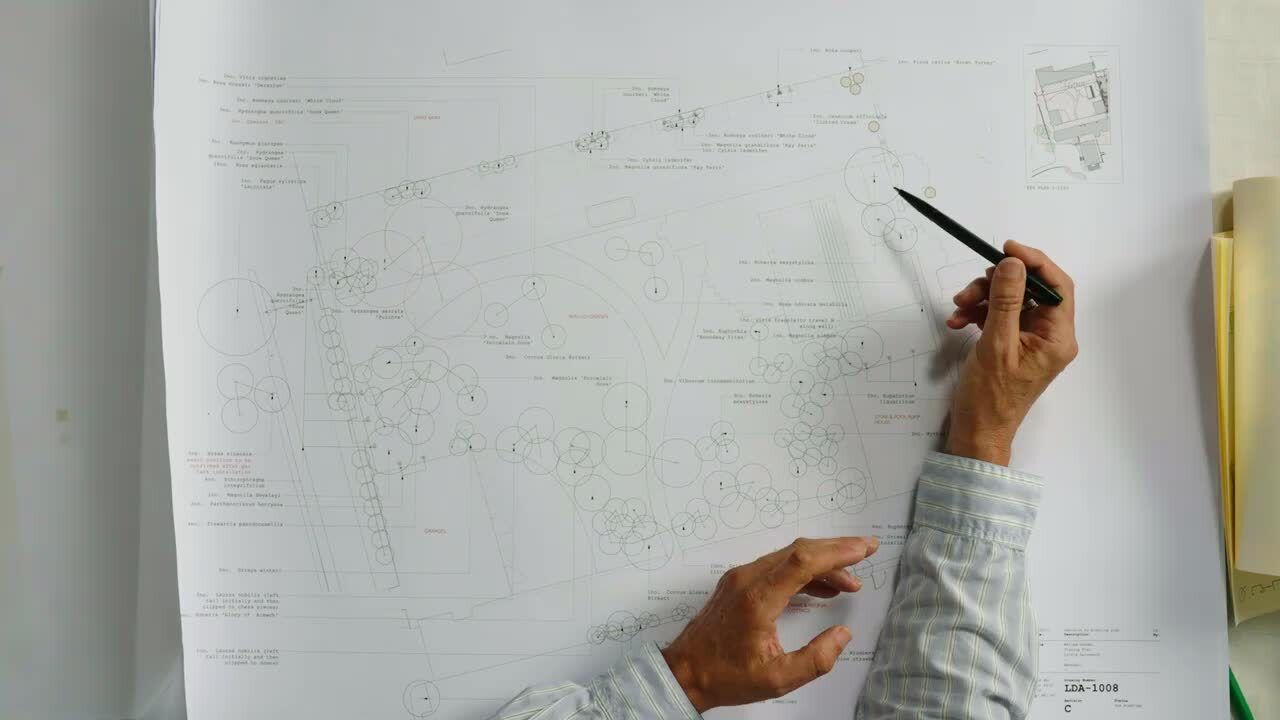
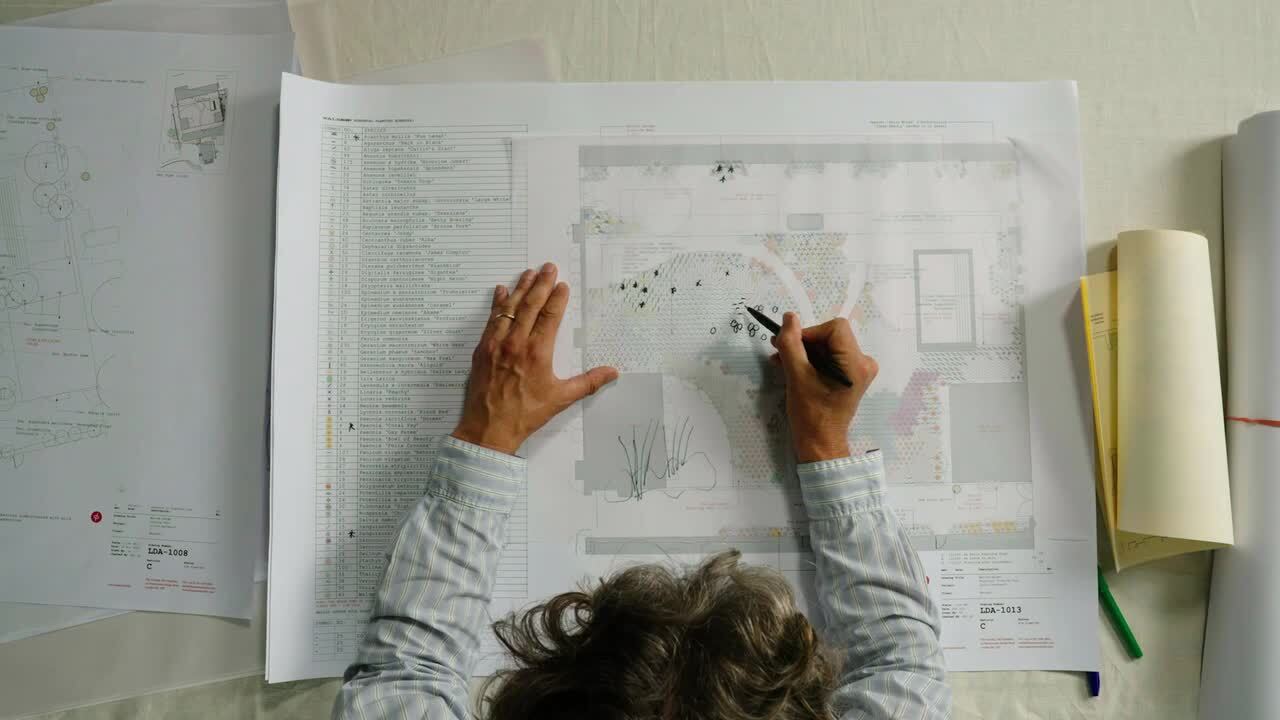
We came in and made a masterplan to look at how the spaces might all work together again. It took us 2–3 years to go through the planning with the clients and to get everything set up so the build could follow. It was a very thorough process – we really wanted to think about how this place could work.
Our guiding principles were:
1. Using local materials. We wanted to keep as many materials on site as we could – we wanted to work very much in context.
2. Doing the right thing for the right place. This is a tough site – it's very windswept.
We needed to find places where there was shelter, and then really work with the context and the plants that would thrive here.
3. Re-working the approach to the house. One of the key elements of the masterplan was to re-orientate the drive to make the most of the setting. Originally, the approach to the house involved slipping in from the lane through the trees and suddenly you were there at the front door – there was no sense of the amazing sea view. The arrival though could be very much part of what makes this place so special, so we wanted to make the most of that. We used some of the farmland to make a sweeping drive that gives a glimpse of the sea for a wonderful reveal of where you are, and then re-orientates to continue the approach to the house.
4. Creating a seamless transition between the landscape and the gardened areas. The garden spaces were kept close to the buildings, and the landscape (farmland, meadows and shelterbelts) brought up to meet these, with a natural segue from one area to the next.
Like most of our designs, this project was very much about context: you're high up on the cliff with an incredible sea view. That drove all the decisions – the materials, plant choices and how we put everything together so the outside landscape worked in and influenced the garden areas. It was all about creating that connection between where you live and the environment you're living in.
To achieve this, we borrowed some land from the farmland to make those blurred edges a bit softer.
Since the house is perched on a hill, there was a level change at the front that needed resolving.
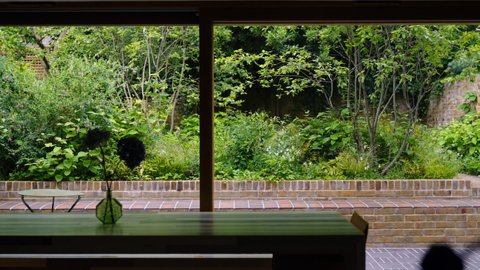
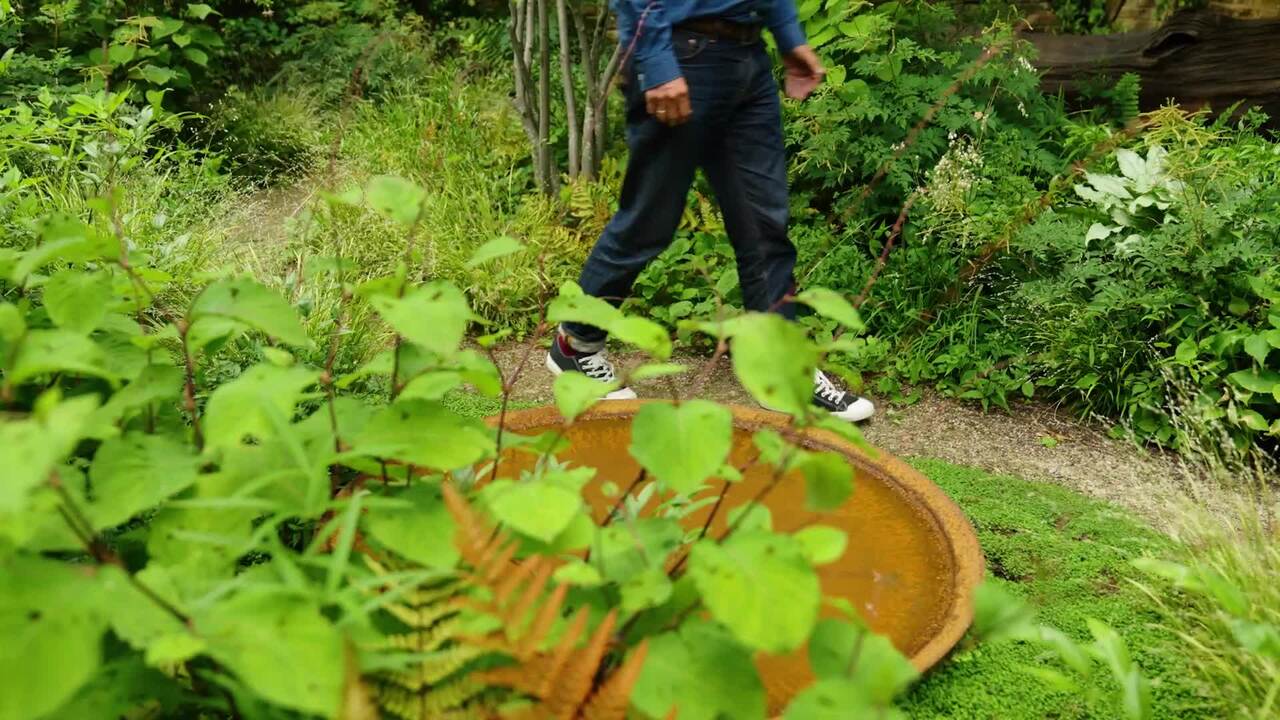
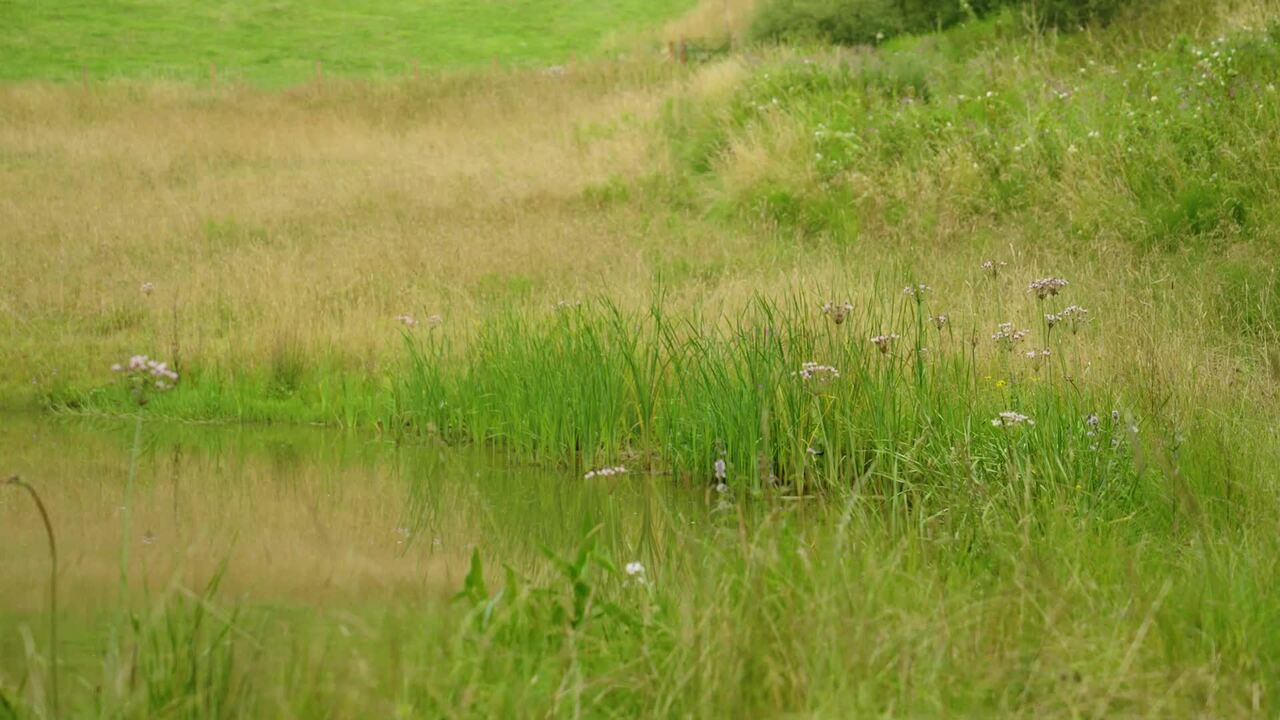
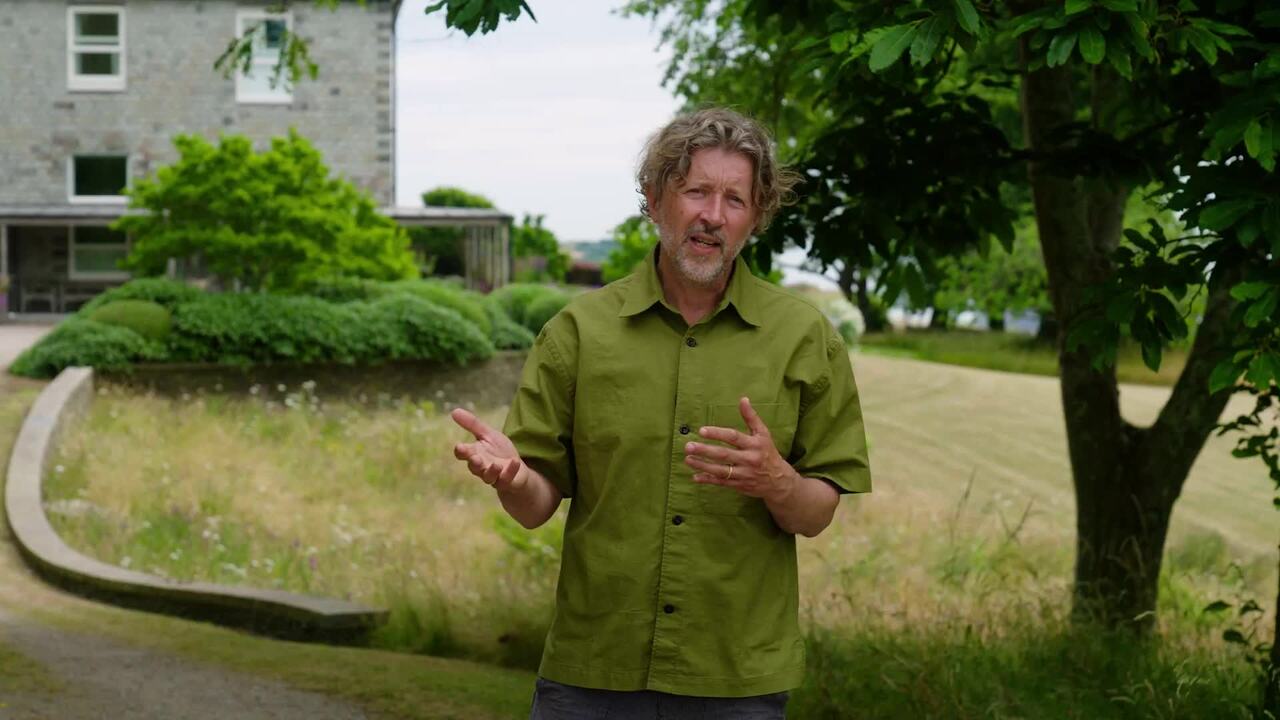
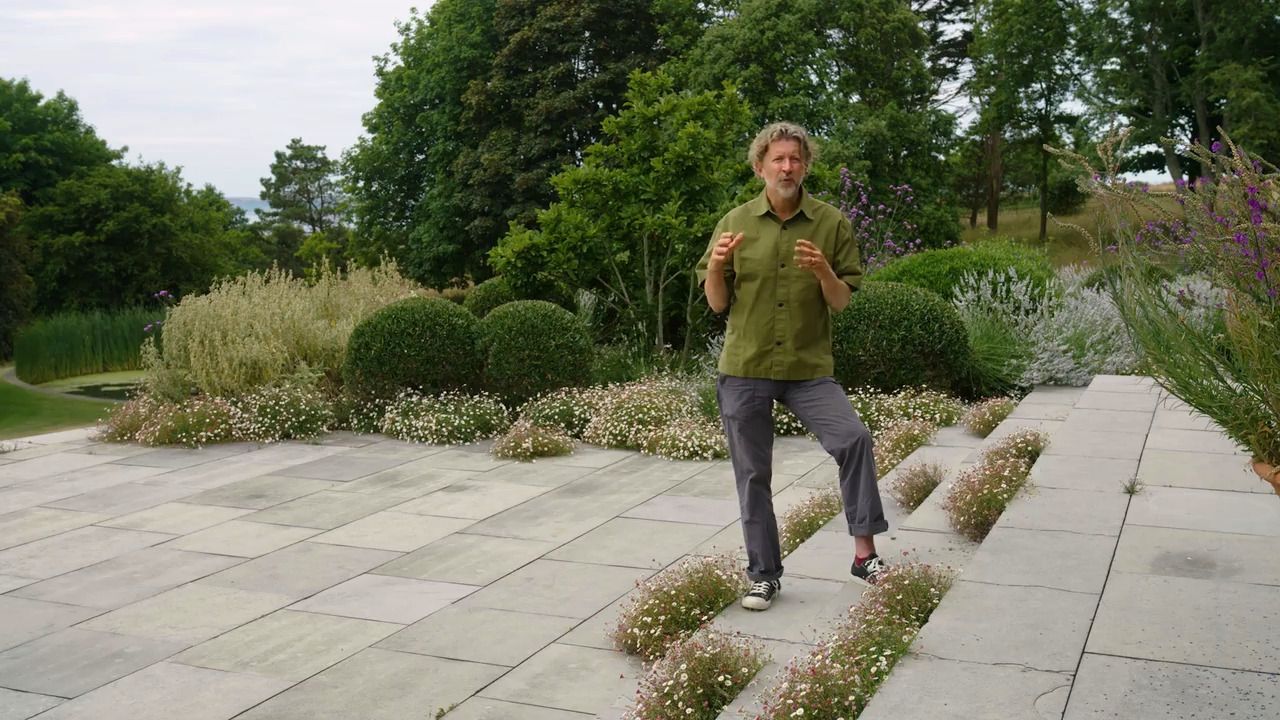
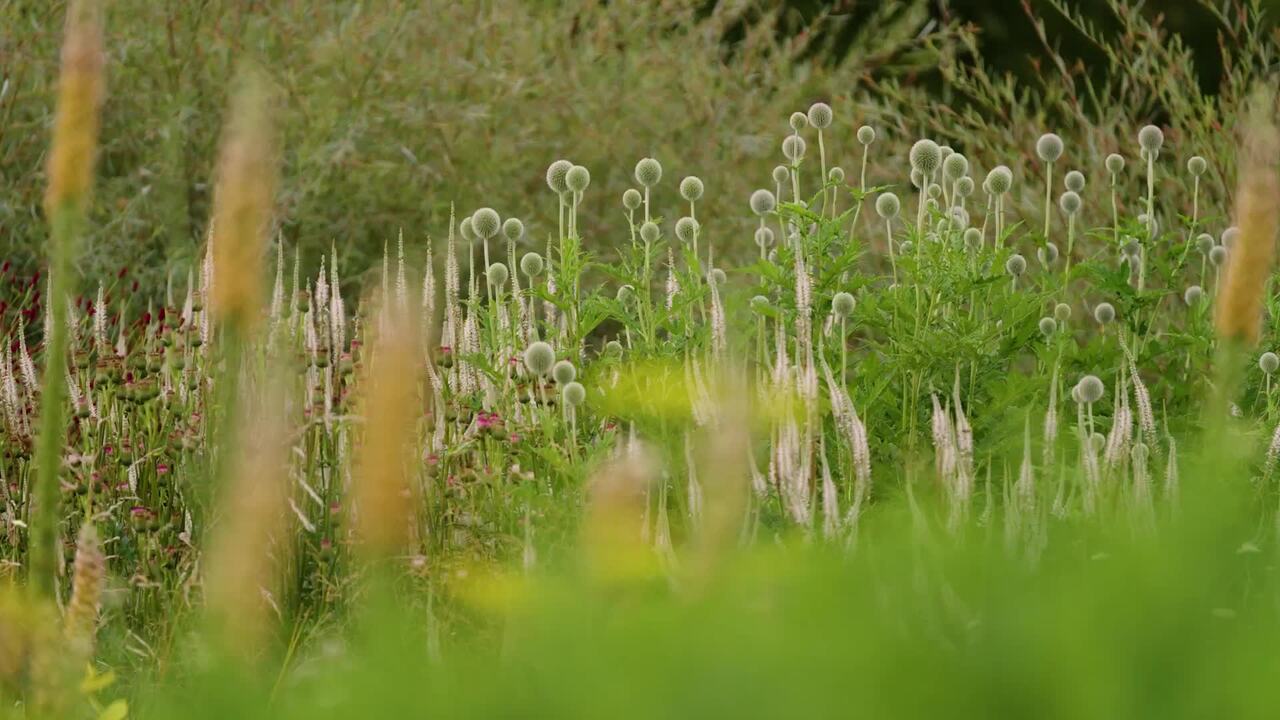
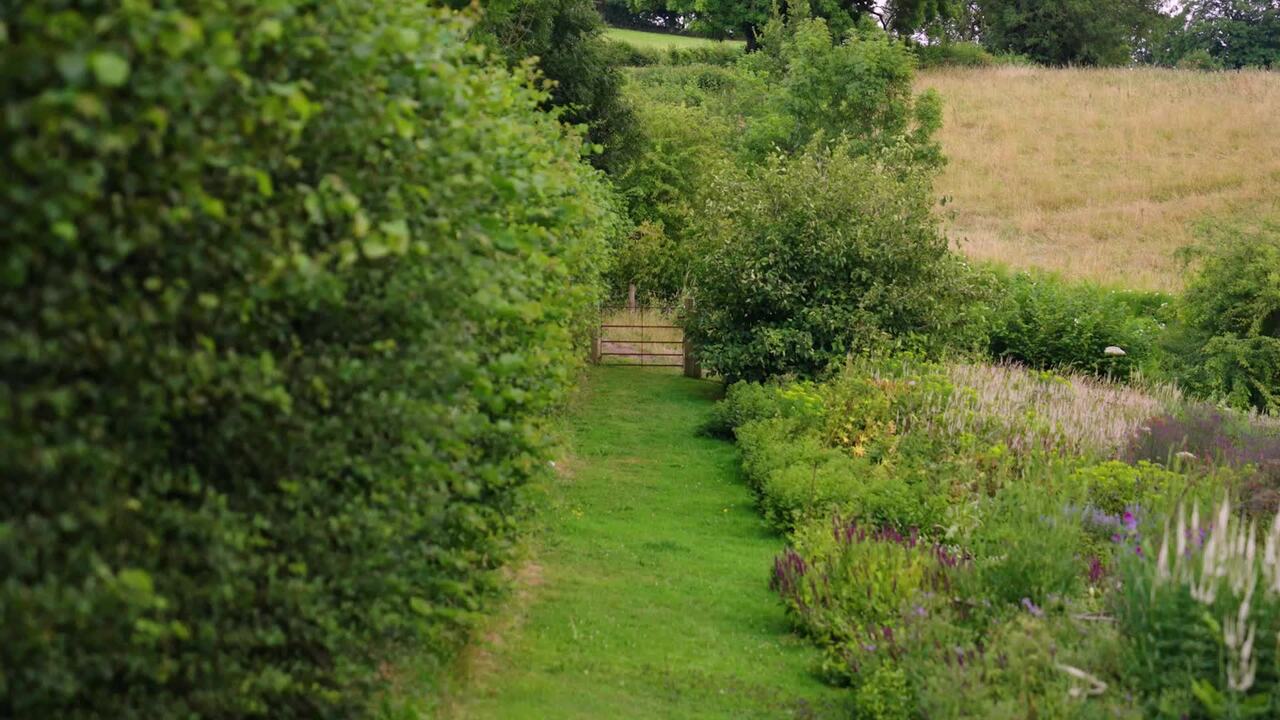
The landscape sweeps up to the garden and meets it in a very gentle way, working into the spaces around the buildings. Mown paths lead to a small lawn, and the beds sit close around the buildings.
All the planting here is driven by the site. There are strong, desiccating winds, so I needed to choose plants that are adapted to these exposed coastal conditions.
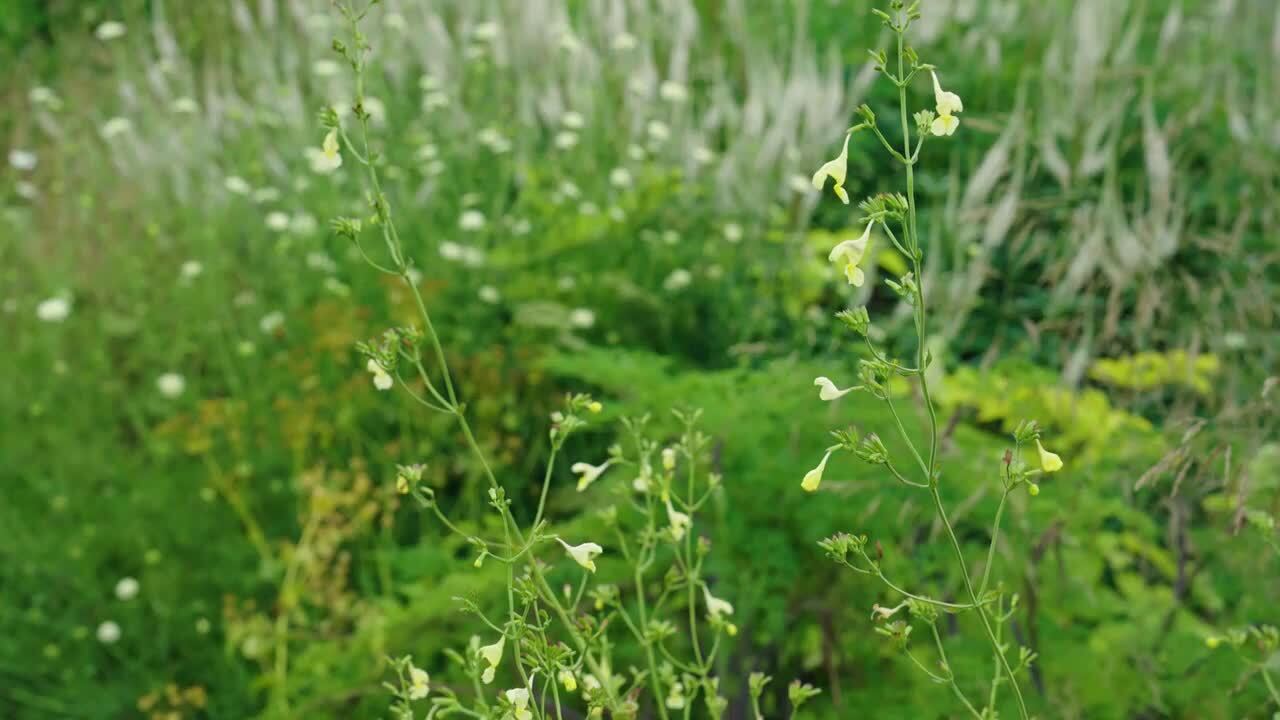
That doesn't mean, however, that we only used plants from the locale. The meadows allow us to tap into the locale, but closer to the buildings we've got Mediterranean plants, like Phillyrea angustifolia, and Mexican daisies (Erigeron karvinskianus).
With this approach, everything feels right in its place, and the plants are happy in their environment. And when plants are thriving, your gardening becomes so much simpler.
Plant Directory
Phillyrea angustifolia
Erigeron karvinskianus
Get the full workbook, video lessons, and more with a Create Academy subscription.
Subscribe to access the full workbookAlready a member? Sign in to watch
491 reviews
Read moreCreate Academy has been such a great resource. I'm in the middle of renovating a bungalow with a very large garden and the courses have offered a wealth of inform...
Harvey
Jun 10, 2026
Absolutely love Create Academy! The instructors are extremely informative, and it is beautifully filmed. Create Academy is great value for money and plan on renew...
SG
May 31, 2026
Butter's creativity is stunning! Her ability to incorporate brilliance in small gardens is magical!
Carla
May 30, 2026
The best adventure. I like all the courses, but my favorite are both Rita Konig interior design courses and Anna Jones. Excellent!
Karolina Kluczewska
May 20, 2026
Create Academy has been such a great resource. I'm in the middle of renovating a bungalow with a very large garden and the courses have offered a wealth of information to dive into and explore new ideas. I'm...
Harvey
Jun 10, 2026
Absolutely love Create Academy! The instructors are extremely informative, and it is beautifully filmed. Create Academy is great value for money and plan on renewing my subscription yearly because there are ...
SG
May 31, 2026
Butter's creativity is stunning! Her ability to incorporate brilliance in small gardens is magical!
Carla
May 30, 2026

Your Instructor
Acclaimed naturalistic landscape designer. Multiple Chelsea Gold Medal Winner. OBE.
British landscape designer, horticulturalist and writer Dan Pearson OBE, has been designing award-winning gardens since 1987. His naturalistic use of plants, light-handed approach to design and deep-rooted horticultural knowledge has made him one of the most celebrated and innovative gardeners working today. Dan trained in horticulture at Wisley and Kew, before starting his garden and landscape design practice in 1987. In 2015, his show garden for Chatsworth and Laurent Perrier was awarded a Gold Medal and Best Show Garden at the Chelsea Flower Show. In 2014 Dan was appointed an advisor to the National Trust at Sissinghurst Castle. For over 20 years Dan has written regular gardening columns, with his work a staple of The Observer, and has written a number of best-selling gardening books.
Access to all courses


