

Interior and exterior confidence
Create Academy has been such a great resource. I'm in the middle of renovating a bungalow with a very large garden and the courses have offered a wealth of inform...
Harvey
Jun 10, 2026
An Expert Guide to Planting Design
with DAN PEARSON — Acclaimed naturalistic landscape designer. Multiple Chelsea Gold Medal Winner. OBE.
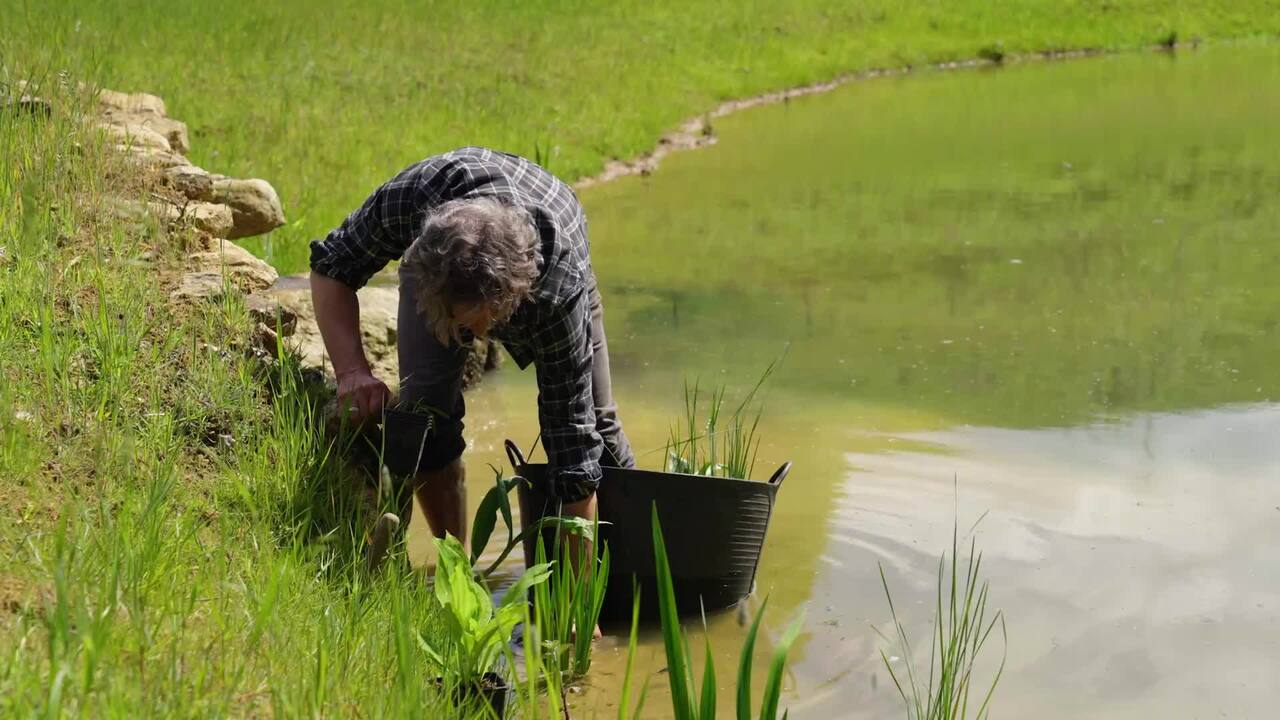
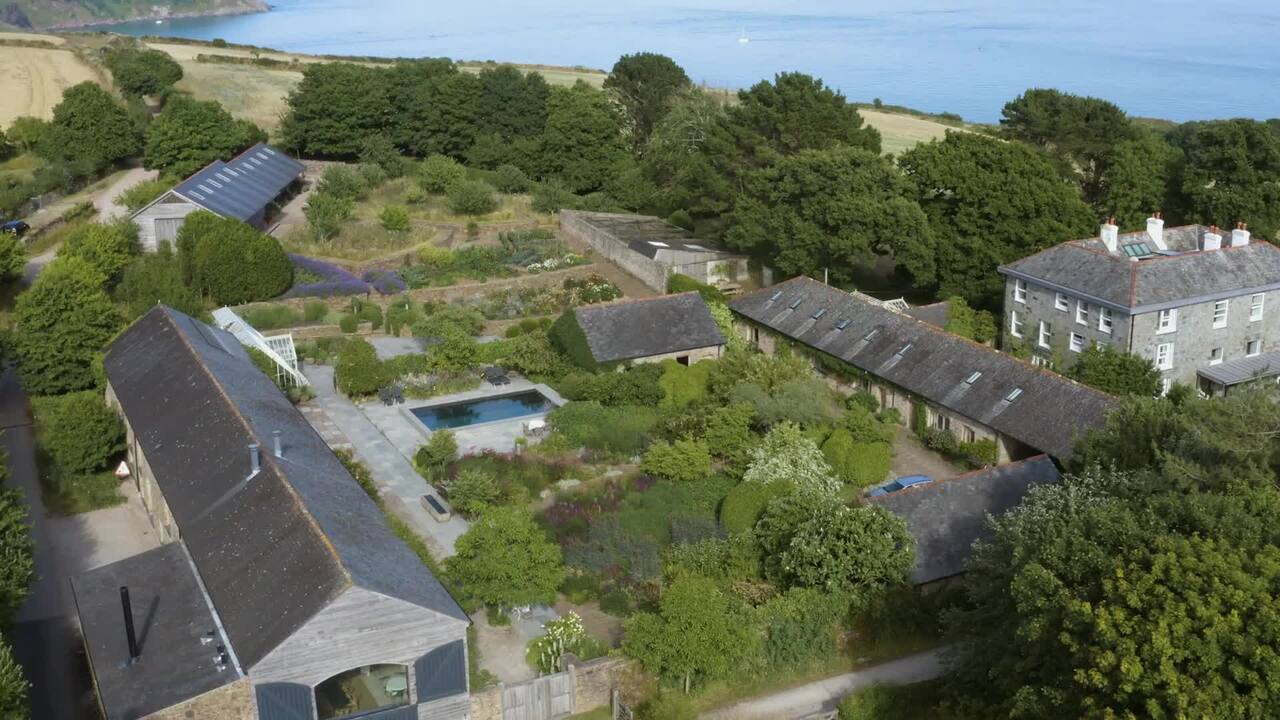
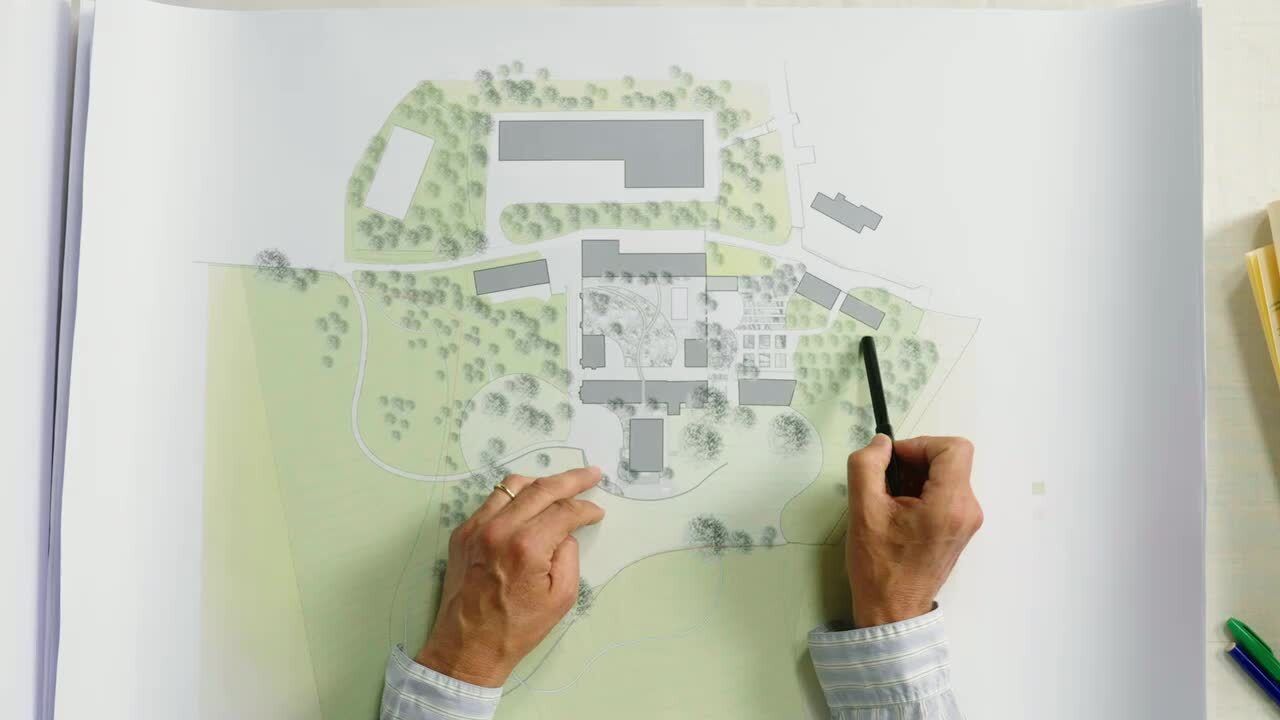
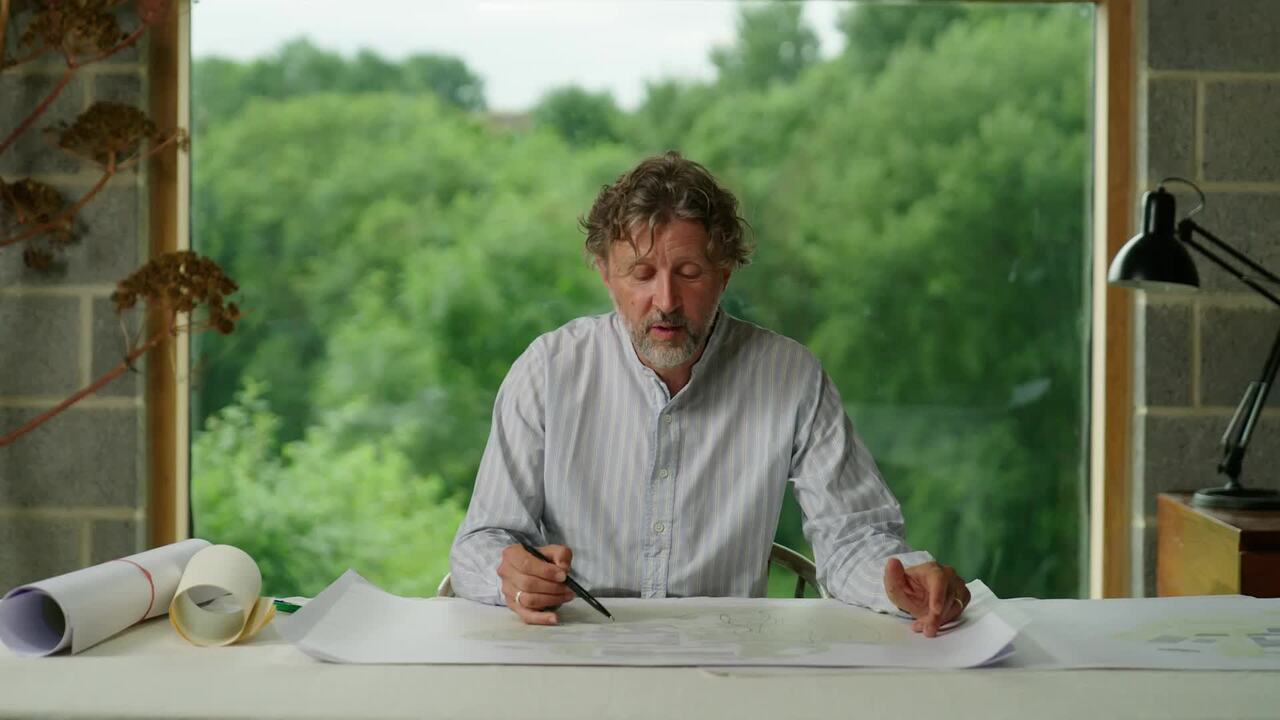
Dan incorporates ponds into his designs wherever possible, but if you’re starting out, it can be hard to know what type of pond to create, where to put it, and how big it should be. Dan goes into more depth on how to practically site and design your pond, including linings, contouring and water management.
It's important to decide what kind of pond you want, and whether you want to keep it brim full or whether you're happy to see some flux in water level.
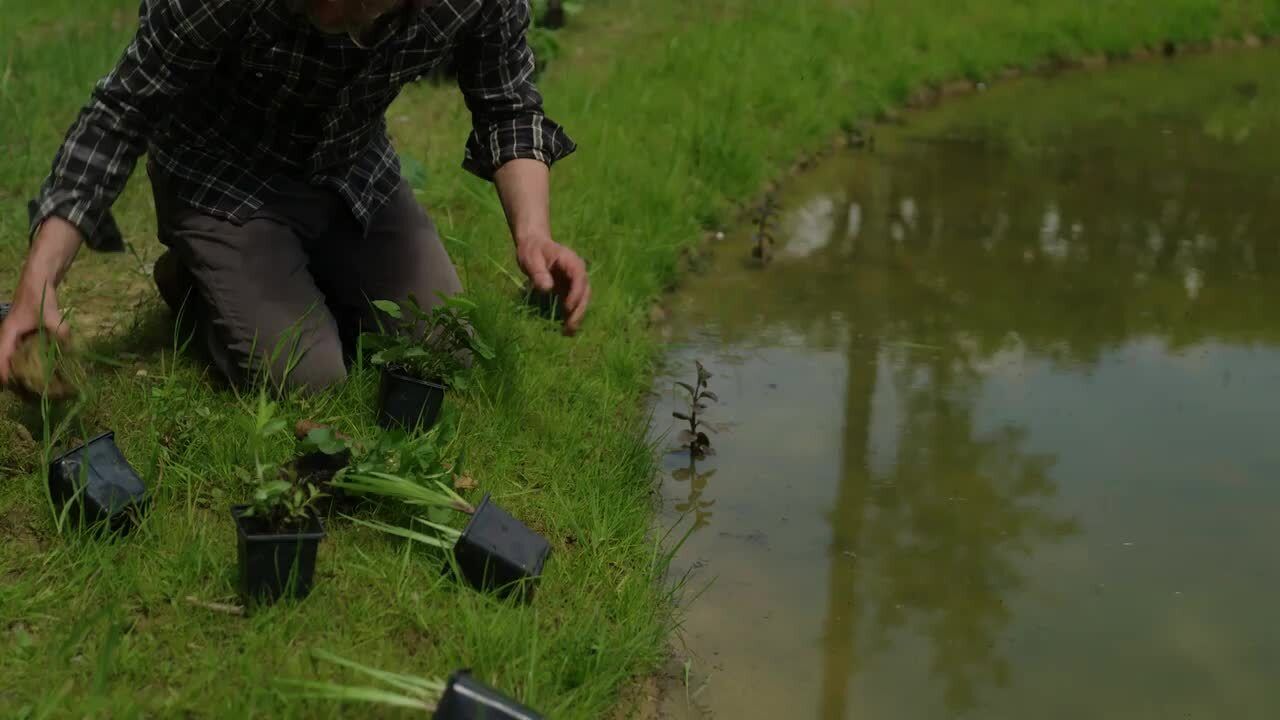
One of the great things about marginal plants is that they help if there's a flux in water levels.
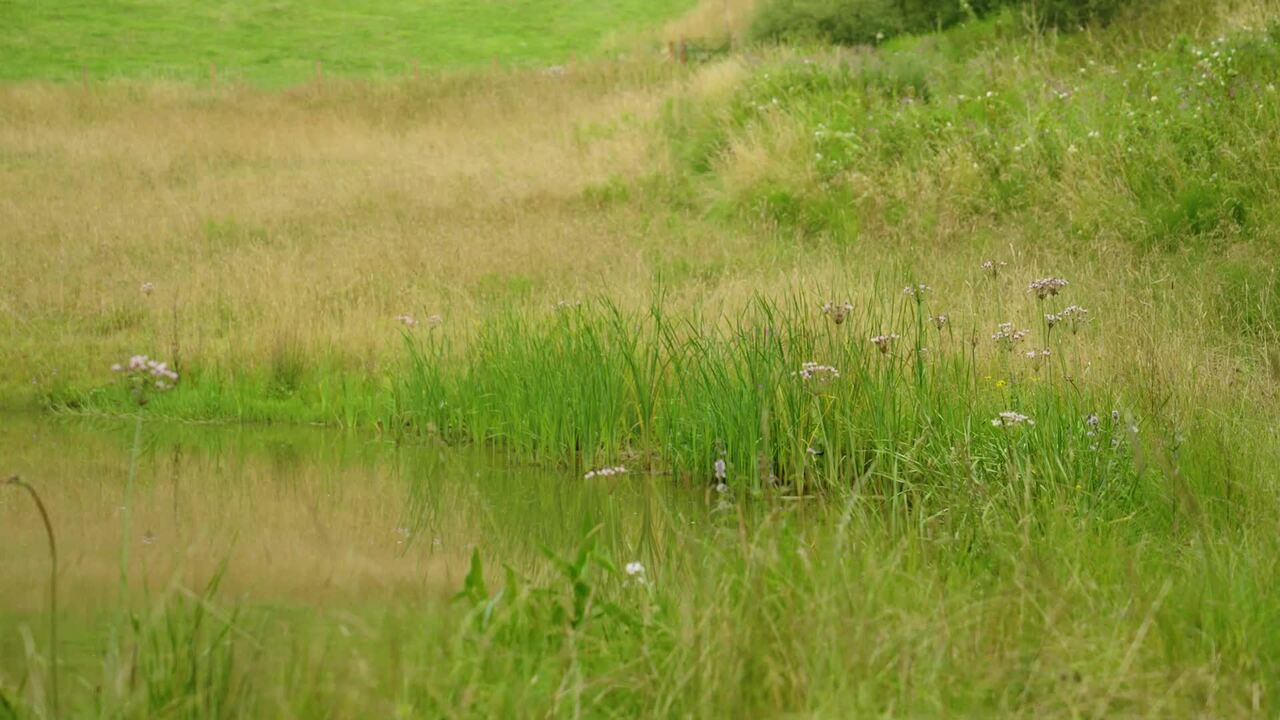
I wanted to create a pond at Hillside from the very beginning, and this site at the bottom of the slope had always seemed like a natural place: the field dips into a hollow, which stays very wet throughout winter and is sometimes even gently flooded.
To check whether you need a liner for your pond, simply dig a hole and test whether it will hold water like a dew pond. Mine didn't – the clay is marbled with other silts, which let water drain away quickly.
Luckily, we did have an ideal water source: a spring that emerges at the top of the garden and runs down the garden along a hedge line. By harnessing this, I knew we could feed the pond. There would then also be an exit point where water could pass out down to the stream once the pond was full.
I initially staked out a rough oval that was around 30 m long and 18 m wide.
I knew I wanted to make a wildlife pond down here, rather than something overly ornamental.
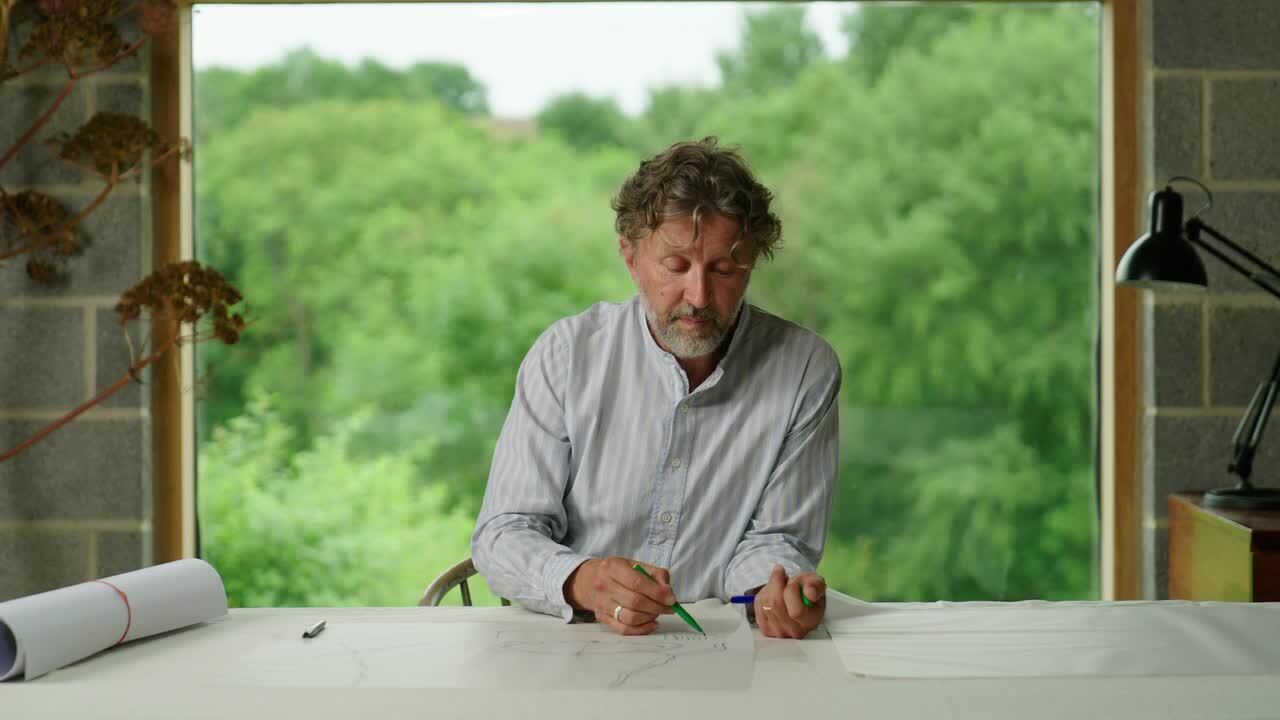
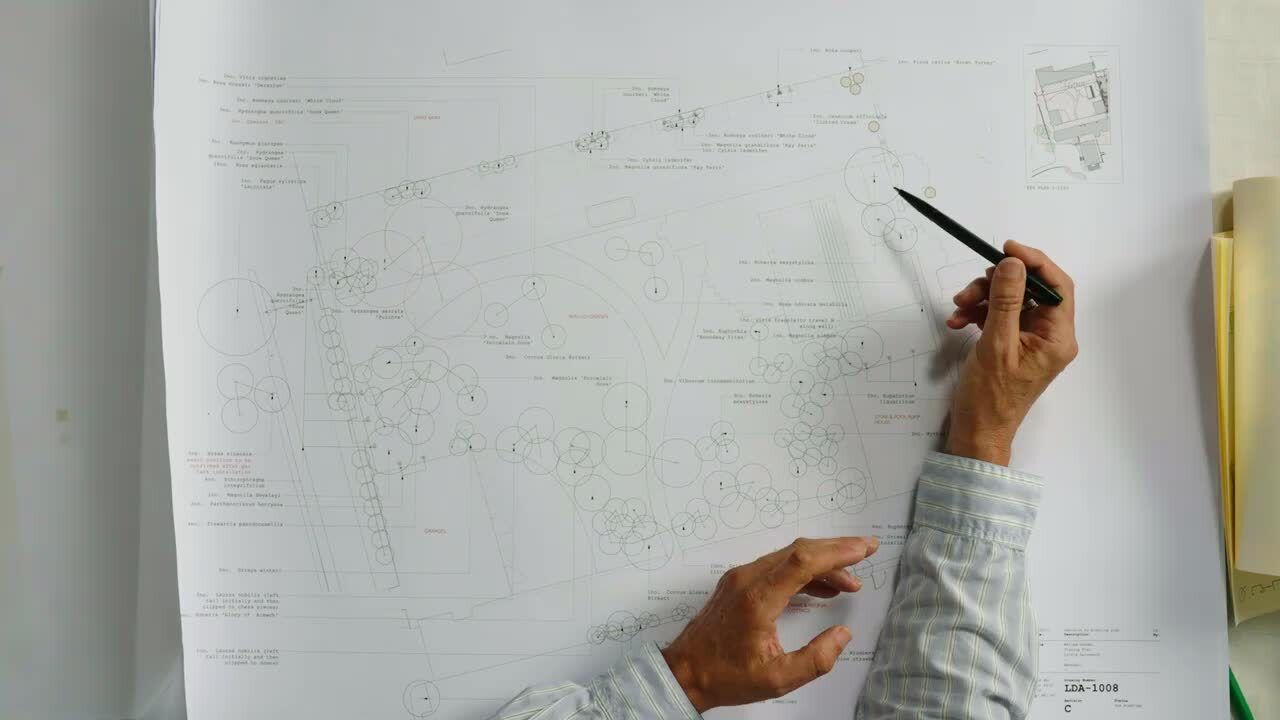
When designing a pond that needs a liner, you need to think about how it's going to work when you build it. A good idea is to draw a cross-sectional diagram of your pond across its longest length, showing the original ground level, the feeder spring – if there is one – and the excavation.
I didn't create marginal shelves around the whole pond because I only wanted vegetation at the two ends, mainly in order to preserve the sight line across the open water to and from the rest of the garden.
Where the spring meets the pond, we made a feature consisting of a headwall and a splash stone that the water falls onto. This provides a focal point, sound, movement, and facilities for wildlife.
I positioned the wall so that it faces due south. This provides a habitat that's always warm for bees, which will want to nest in here, and other insects that like to bask in the warmth.
It's important with any pond that it's not too close to trees.
If you're working with a pre-existing pond, especially if it's a large pond, you need to be very careful when going in and adjusting the balance (e.g. dealing with congestion) – there may be great crested newts that use the pond, which need consideration as these are a protected species in Britain and Europe.
If you do have great crested newts, you need to think about this being their domain, and ensure that anything you do to make the overgrown pond into a healthier environment is something that will work with their lifecycles and give them the opportunities they need for good living.
Congested ponds are often the result of a feeder spring silting up, or perhaps an accumulation of leaf litter.
Ponds do have a life of their own, and every pond is different. But there are certain things you can do to set your pond off on the right course, and then try and keep it on that course with the right maintenance.
The wildlife nature of this pond was really key to me. It was very important that the pond sat well in the landscape, here in this hollow, and that there were soft edges.
I could have made this pond feel like a more distinct place to be – by having a jetty for instance – but I wanted to keep this area very quiet so that it felt part of the hollow. All I've used is a fallen tree trunk to provide a focal point and a place to perch on.
Get the full workbook, video lessons, and more with a Create Academy subscription.
Subscribe to access the full workbookAlready a member? Sign in to watch
Sign up or log in to keep watching
By continuing, you agree to our Terms of Use and Privacy Policy.
491 reviews
Read moreCreate Academy has been such a great resource. I'm in the middle of renovating a bungalow with a very large garden and the courses have offered a wealth of inform...
Harvey
Jun 10, 2026
Absolutely love Create Academy! The instructors are extremely informative, and it is beautifully filmed. Create Academy is great value for money and plan on renew...
SG
May 31, 2026
Butter's creativity is stunning! Her ability to incorporate brilliance in small gardens is magical!
Carla
May 30, 2026
The best adventure. I like all the courses, but my favorite are both Rita Konig interior design courses and Anna Jones. Excellent!
Karolina Kluczewska
May 20, 2026
Create Academy has been such a great resource. I'm in the middle of renovating a bungalow with a very large garden and the courses have offered a wealth of information to dive into and explore new ideas. I'm...
Harvey
Jun 10, 2026
Absolutely love Create Academy! The instructors are extremely informative, and it is beautifully filmed. Create Academy is great value for money and plan on renewing my subscription yearly because there are ...
SG
May 31, 2026
Butter's creativity is stunning! Her ability to incorporate brilliance in small gardens is magical!
Carla
May 30, 2026

Your Instructor
Acclaimed naturalistic landscape designer. Multiple Chelsea Gold Medal Winner. OBE.
British landscape designer, horticulturalist and writer Dan Pearson OBE, has been designing award-winning gardens since 1987. His naturalistic use of plants, light-handed approach to design and deep-rooted horticultural knowledge has made him one of the most celebrated and innovative gardeners working today. Dan trained in horticulture at Wisley and Kew, before starting his garden and landscape design practice in 1987. In 2015, his show garden for Chatsworth and Laurent Perrier was awarded a Gold Medal and Best Show Garden at the Chelsea Flower Show. In 2014 Dan was appointed an advisor to the National Trust at Sissinghurst Castle. For over 20 years Dan has written regular gardening columns, with his work a staple of The Observer, and has written a number of best-selling gardening books.

Access to all courses


