




Interior and exterior confidence
Create Academy has been such a great resource. I'm in the middle of renovating a bungalow with a very large garden and the courses have offered a wealth of inform...
Harvey
Jun 10, 2026
The Art of Gardening at Sissinghurst
with TROY SCOTT SMITH — Head Gardener at Sissinghurst. Garden Writer, Speaker & Lecturer.
Lesson 7 of 56
Subscribe to watch
From the Rose Garden we learn how to keep lawns as healthy and green as possible in a sustainable way, through an effective four-step process done once a year in autum
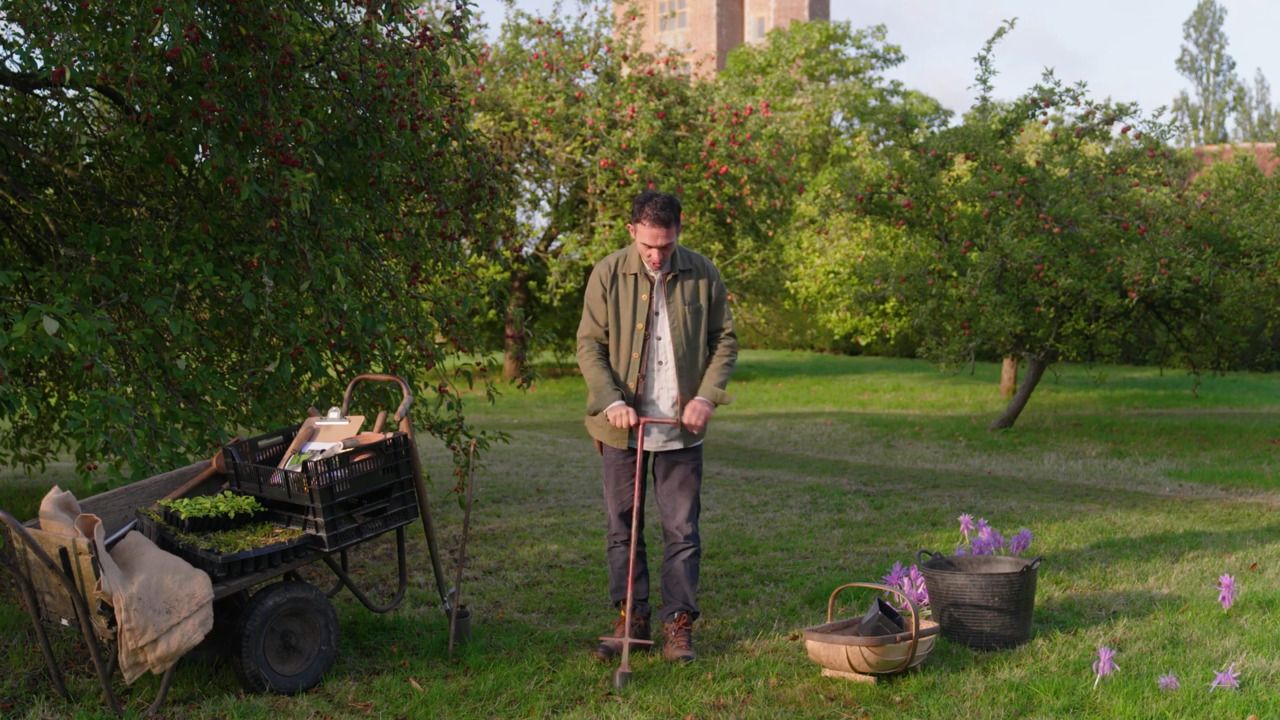
In this lesson, we're going to look at lawns and how to keep them as healthy and green as possible in a sustainable way. We do all our lawn work once a year in early October.
A lawn is made up of millions of tiny plants that need air, water and light to grow, and are under constant competition with foot traffic.
To keep a lawn thriving, turf work is an essential autumn task.
We have three living elements in this garden:
Lawns can be one of the highest maintenance areas of the garden, with potential inputs of fertilisers, irrigation and weedkillers. We don't do any of this and treat our lawn in a completely organic way, including zero irrigation.
This is much more environmentally friendly and sustainable, and our autumn turfwork is what allows it to stay green.
We use machinery for these steps, but it's perfectly possible to use just rakes and garden forks.
The dead material that builds up in lawns stops air, water and light from getting to the grass, and creates a springy lawn that isn't resilient to summer drought or use.
If weeds in your lawn bother you, just dig these out by hand beforehand.
You can scarify your lawn by hand by raking it vigorously with a wire rake.
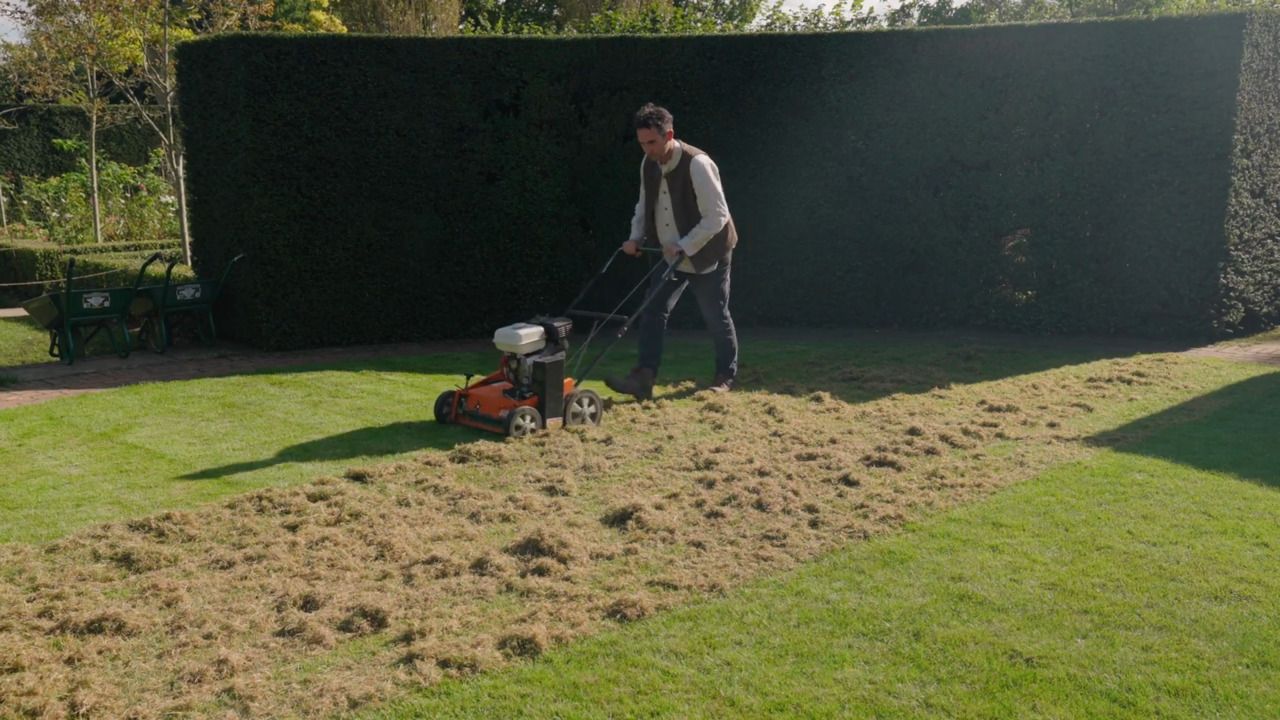
I use a scarifier machine, which is the Eliet E501 model.
It took about 10 minutes to scarify this lawn in two directions and lots of dead grass has come out.
Now we need to rake up that thatch and see how dense the lawn is.
We use hessian sheets for carrying things around the garden, which is easier than trying to get up steps and round corners with a barrow.
Spiking is the next stage after scarifying. This releases compaction and allows water in to reach the roots.
The hollow tine aerator is to aerate the surface layer of the lawn rather than relieving deep compaction, such as that caused by heavy machinery.
Once you've spiked, you move on to slitting. This cuts the grass and encourages tillering to grow new grass shoots. It also relieves any compaction from the tyres of the 'tiner'.
This step isn't absolutely necessary and isn't really something you can do with a hand tool, but you can easily hire in a slitting machine, as you'll only need to use it once a year at the most.
We used to use a 60:40 mixture of sand and loam for top-dressing, but we found this didn't support the soil life, such as insects and worms that help the grass. So now we buy an organic top-dressing.
If we had enough, we would use our own compost, such as Bokashi compost made from anaerobic fermentation.
We mix some grass seed into the fine, sieved organic top-dressing to fill in the spaces we've opened up by scarifying. You can buy lots of different grass seed, but we use a mixture of:
If you don't have a roller, you can still mix your top-dressing and grass seed in a barrow and then spread it with a shovel.
A 12m x 12m lawn has taken around an hour and a half for the whole four-step process, but it's a worthwhile investment given it's the only effort we'll put into this lawn in the whole year apart from weekly mowing.
We use pedestrian mowers and lawn machinery, but you can scale as appropriate:
You don't have to do all of these steps at once or on all your lawns. The key is little and often, and over a period of time.
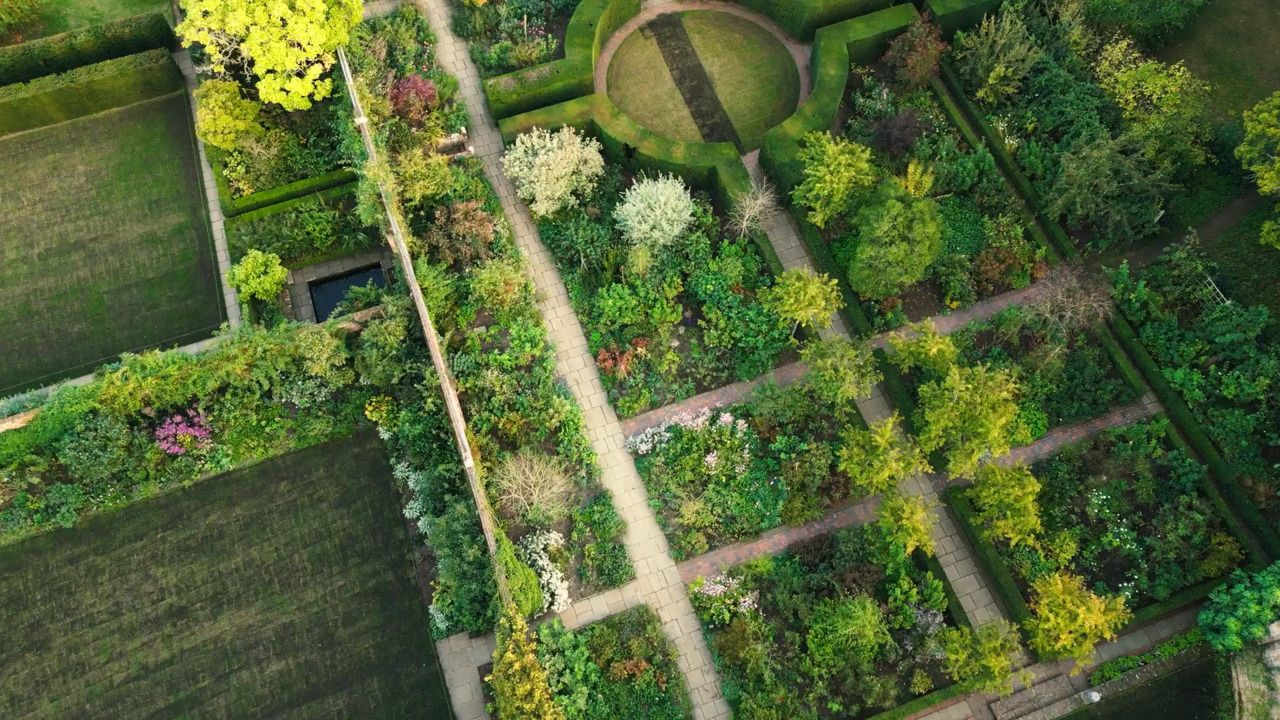
We've moved over to lots of meadow areas at Sissinghurst where we previously had lawns.
However, there are areas that still require more traditional lawn to create a pause or as somewhere to sit or play.
With the organic top-dressing, we have no need to use artificial synthetic fertilisers, which take a lot of energy to produce and contain nitrate that runs off into water courses.
I love the physicality of this proper autumn work. It's so invigorating, not just for the lawn but for us as well
When looking for lawn machinery hire, it may be worth checking online for local independent hire centres near you. However, UK-wide options with many branches include:
Take time to observe the wildlife in your garden. Do you have any birds visiting? How many bees or butterflies can you spot? Have beetles or woodlice found homes under stones, logs or pots?
Troy highlights the importance of gardening in tune with nature and sharing your garden with wildlife. Think about how accessible your garden is for wildlife, and ways you can make your garden more wildlife-friendly.
Get the full workbook, video lessons, and more with a Create Academy subscription.
Subscribe to access the full workbookAlready a member? Sign in to watch
491 reviews
Read moreCreate Academy has been such a great resource. I'm in the middle of renovating a bungalow with a very large garden and the courses have offered a wealth of inform...
Harvey
Jun 10, 2026
Absolutely love Create Academy! The instructors are extremely informative, and it is beautifully filmed. Create Academy is great value for money and plan on renew...
SG
May 31, 2026
Butter's creativity is stunning! Her ability to incorporate brilliance in small gardens is magical!
Carla
May 30, 2026
The best adventure. I like all the courses, but my favorite are both Rita Konig interior design courses and Anna Jones. Excellent!
Karolina Kluczewska
May 20, 2026
Create Academy has been such a great resource. I'm in the middle of renovating a bungalow with a very large garden and the courses have offered a wealth of information to dive into and explore new ideas. I'm...
Harvey
Jun 10, 2026
Absolutely love Create Academy! The instructors are extremely informative, and it is beautifully filmed. Create Academy is great value for money and plan on renewing my subscription yearly because there are ...
SG
May 31, 2026
Butter's creativity is stunning! Her ability to incorporate brilliance in small gardens is magical!
Carla
May 30, 2026

Your Instructor
Head Gardener at Sissinghurst. Garden Writer, Speaker & Lecturer.
Troy Scott-Smith, previously head gardener of Iford Manor and Bodnant garden, now oversees the cherished grounds of Sissinghurst - one of the most famous gardens in England and is designated Grade I on Historic England's register of historic parks and gardens. Coming from a family of committed naturalists, Troy is a seasoned horticulturist, writer, designer and consultant, Troy is also a respected member of the RHS Floral Committee. When he set his sights on the head gardener role, he did so with refreshing candour, speaking passionately of the garden’s need for thoughtful evolution. It is a mark of the National Trust’s forward-thinking spirit that they embraced his vision, inviting him to guide this historic landscape into a compelling new chapter.

Access to all courses


