

















Interior and exterior confidence
Create Academy has been such a great resource. I'm in the middle of renovating a bungalow with a very large garden and the courses have offered a wealth of inform...
Harvey
Jun 10, 2026
The Art of Gardening at Sissinghurst
with TROY SCOTT SMITH — Head Gardener at Sissinghurst. Garden Writer, Speaker & Lecturer.
Lesson 48 of 56
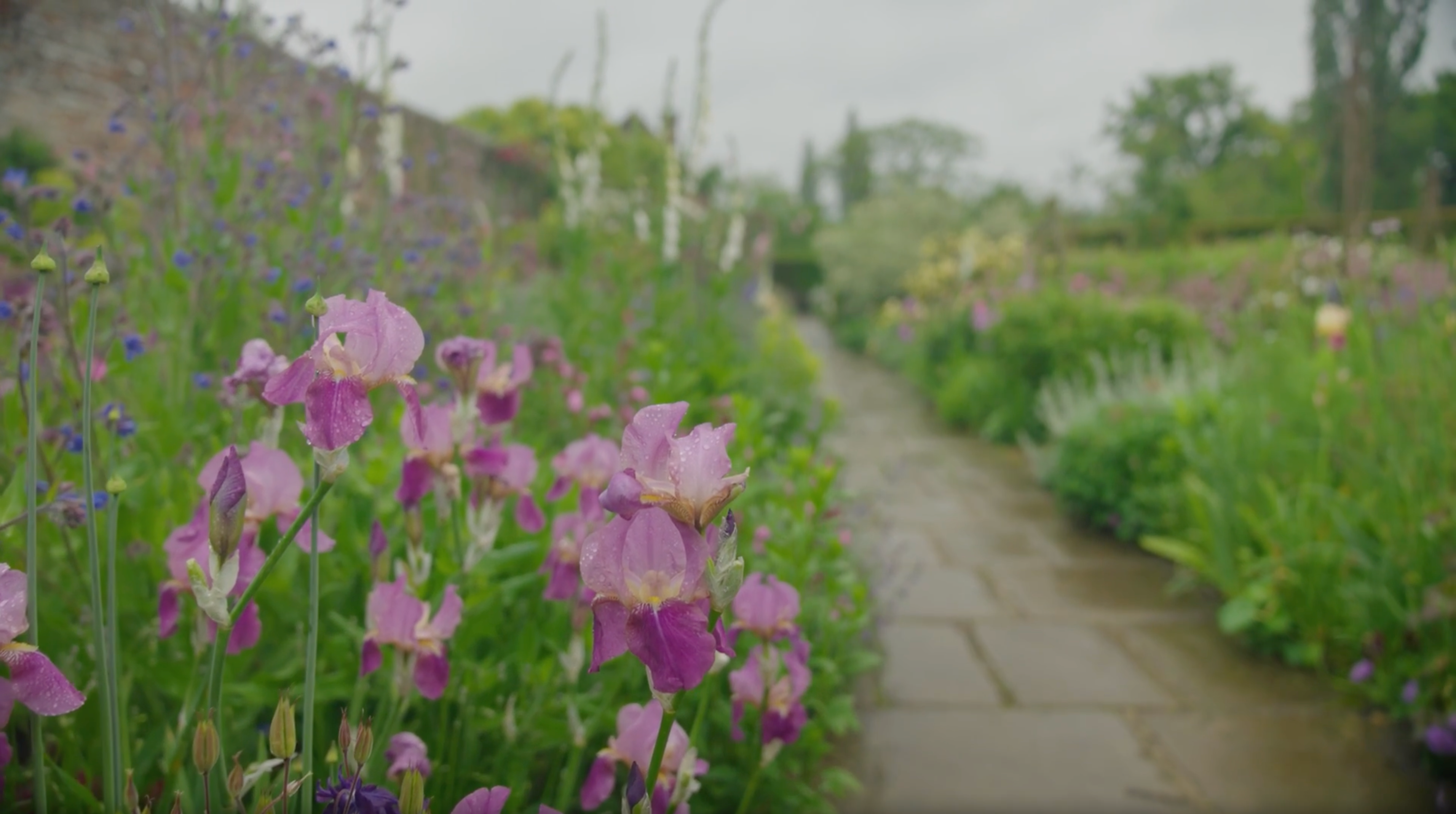
Subscribe to watch
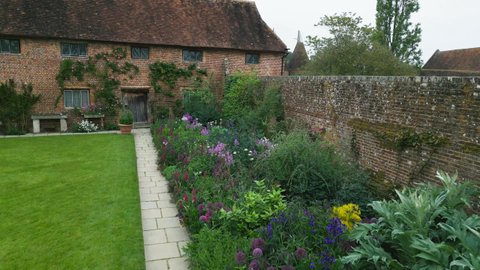
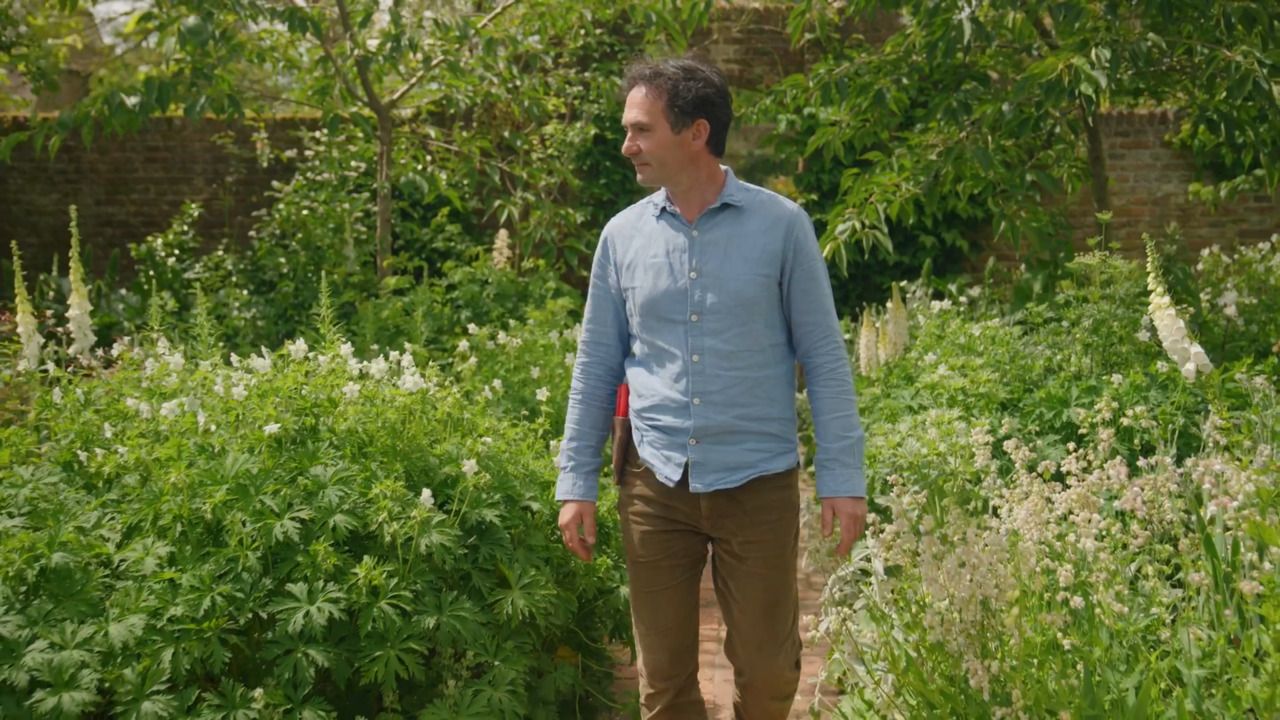
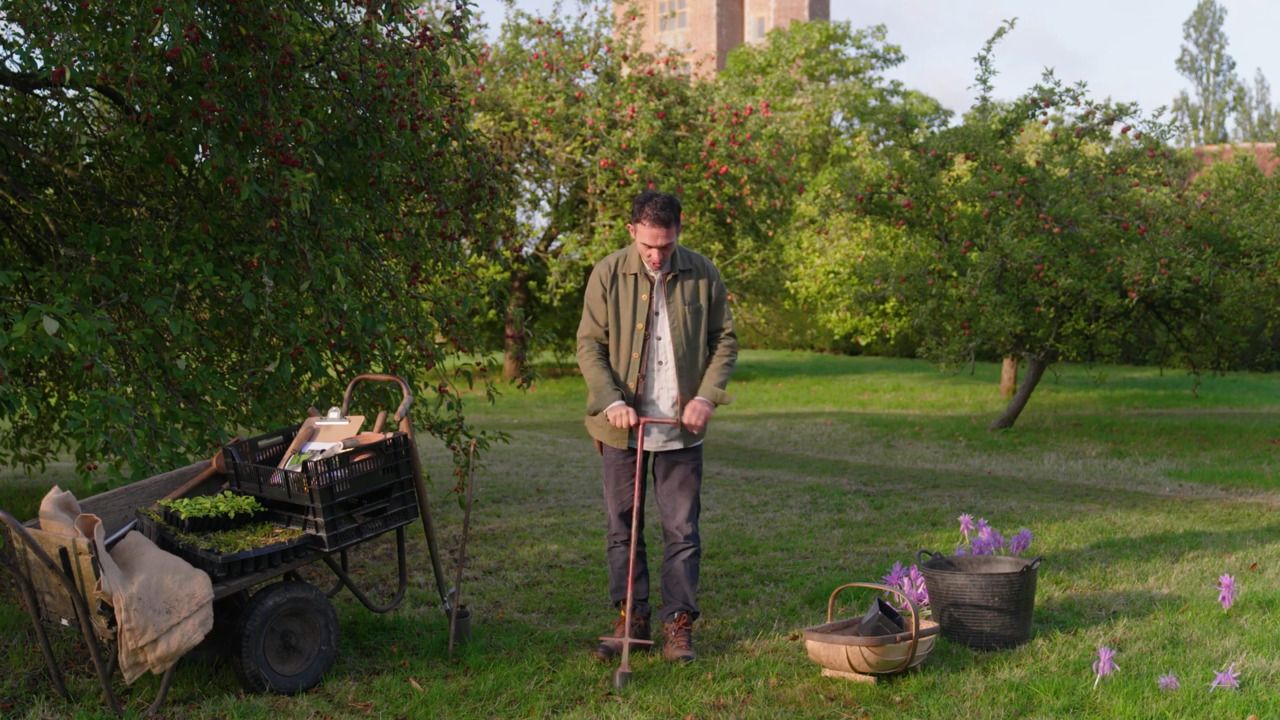
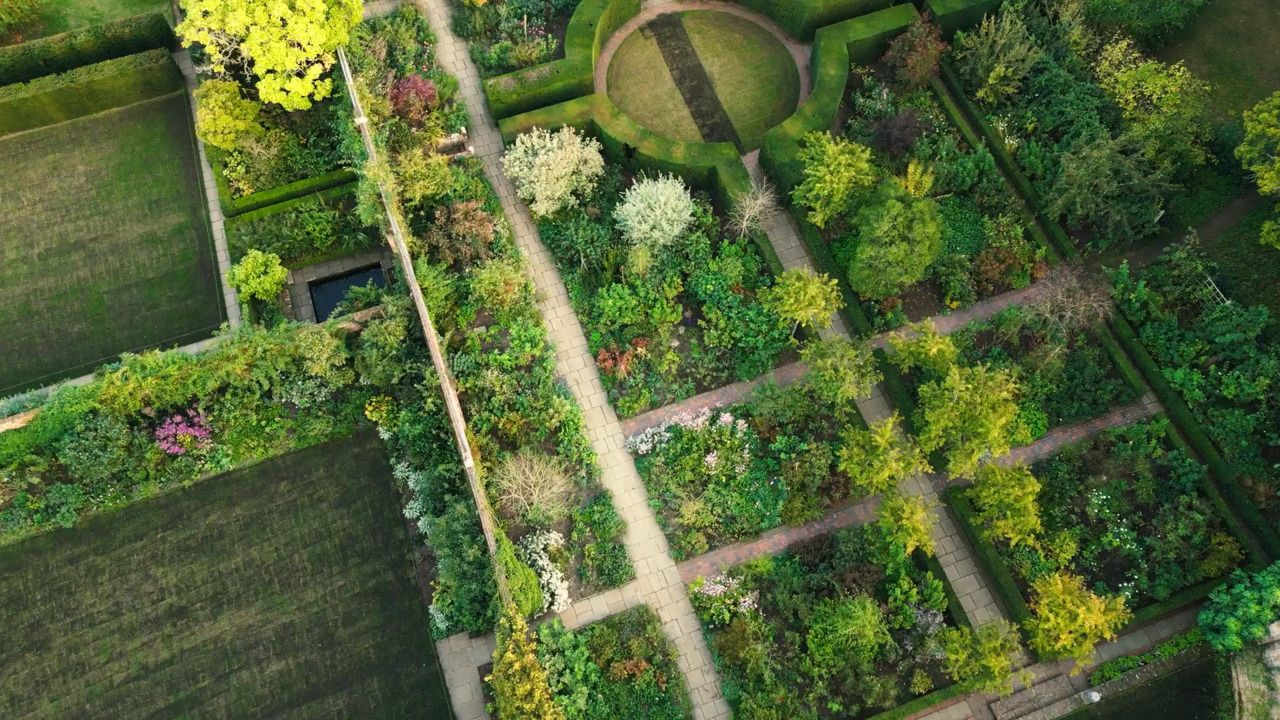
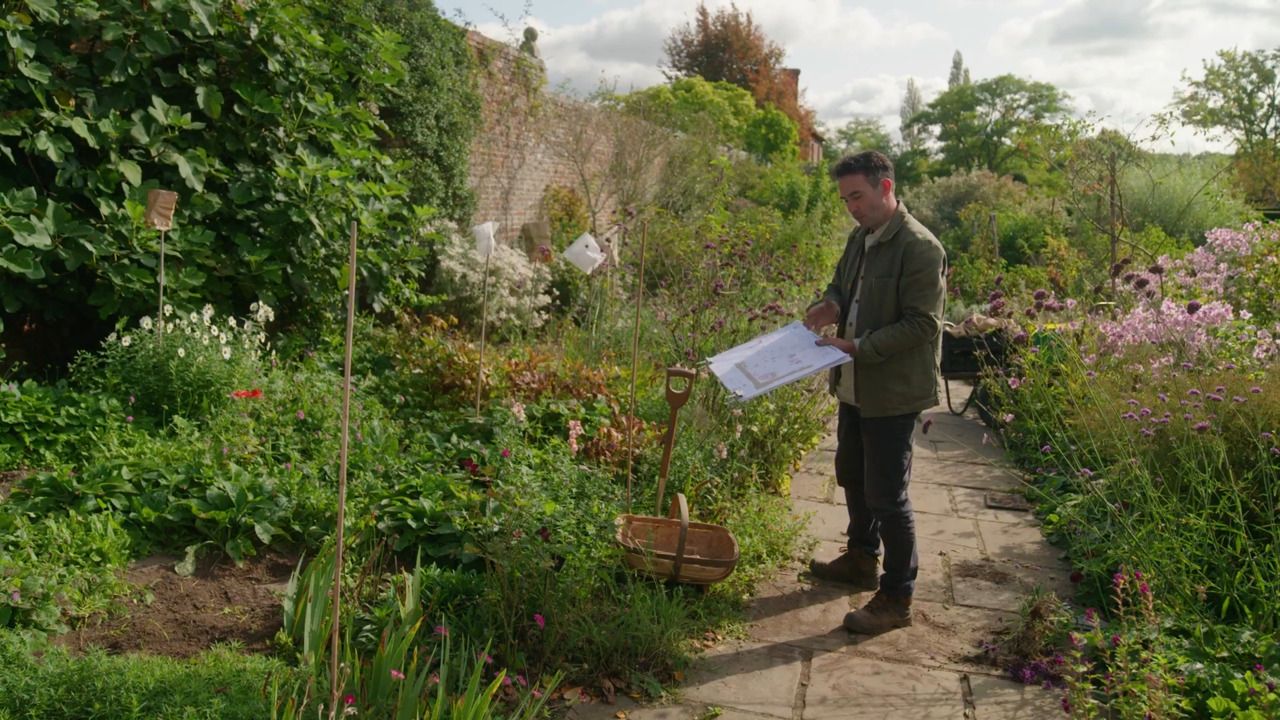
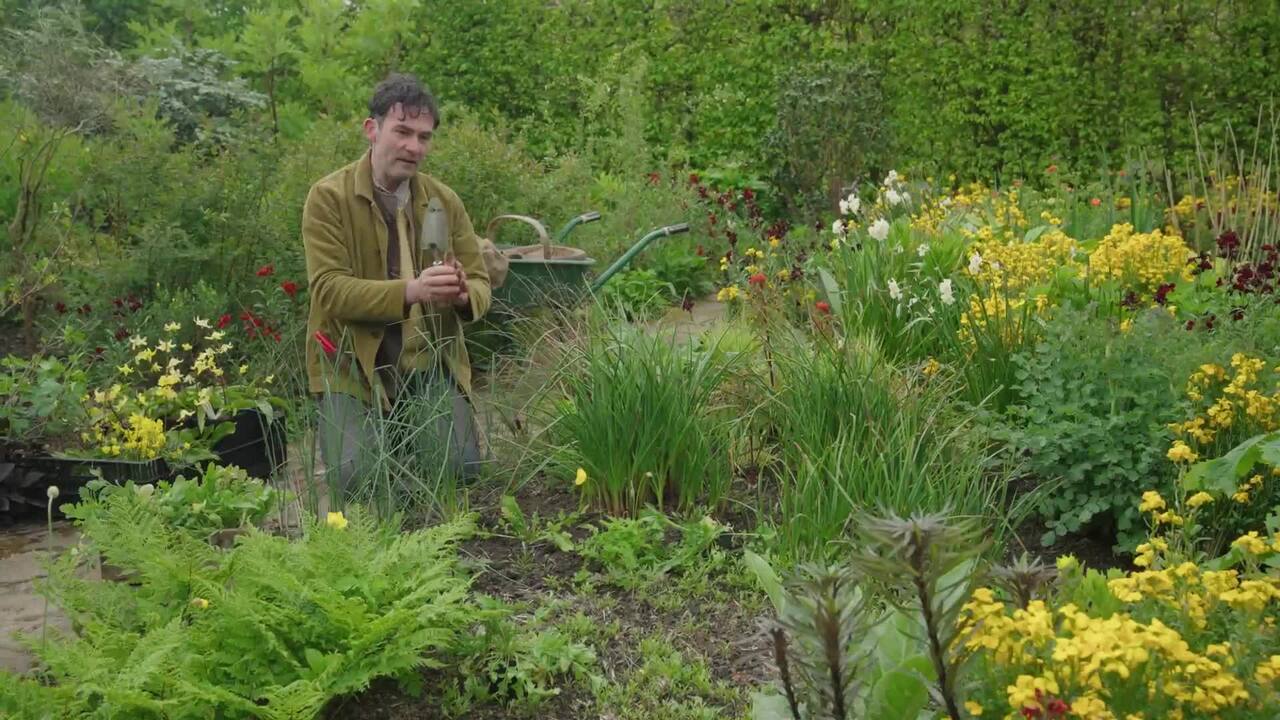
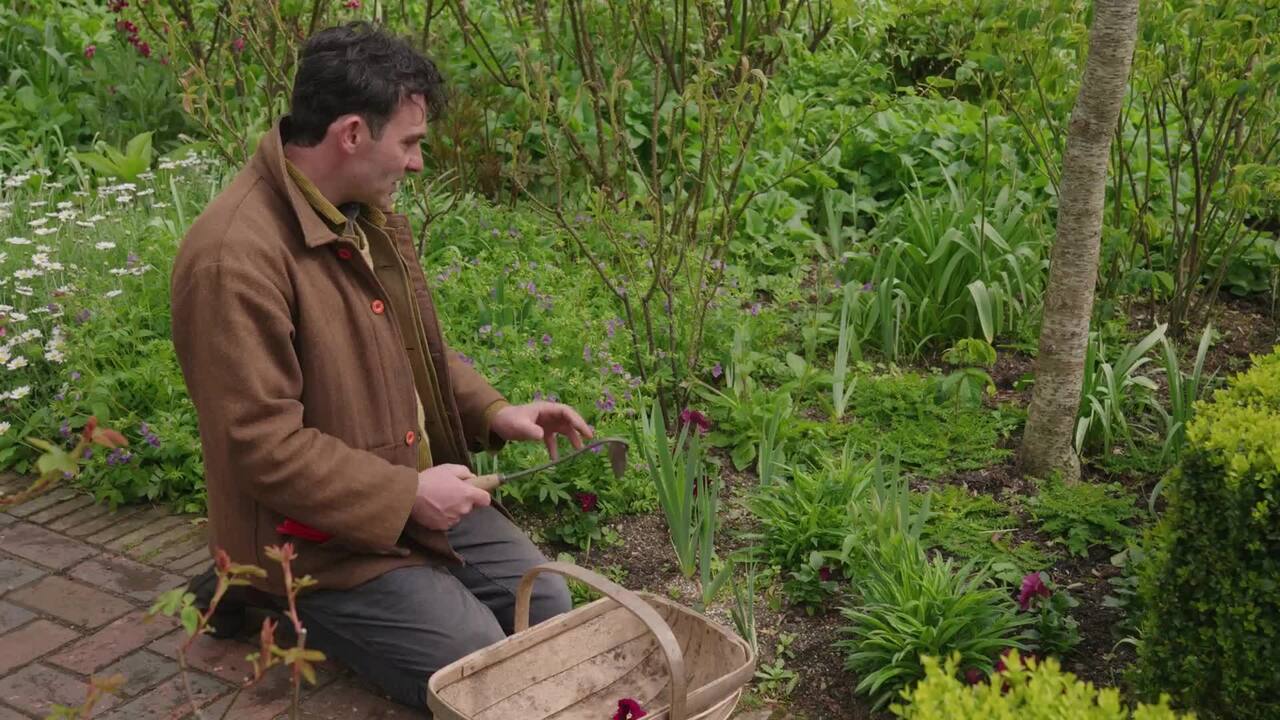
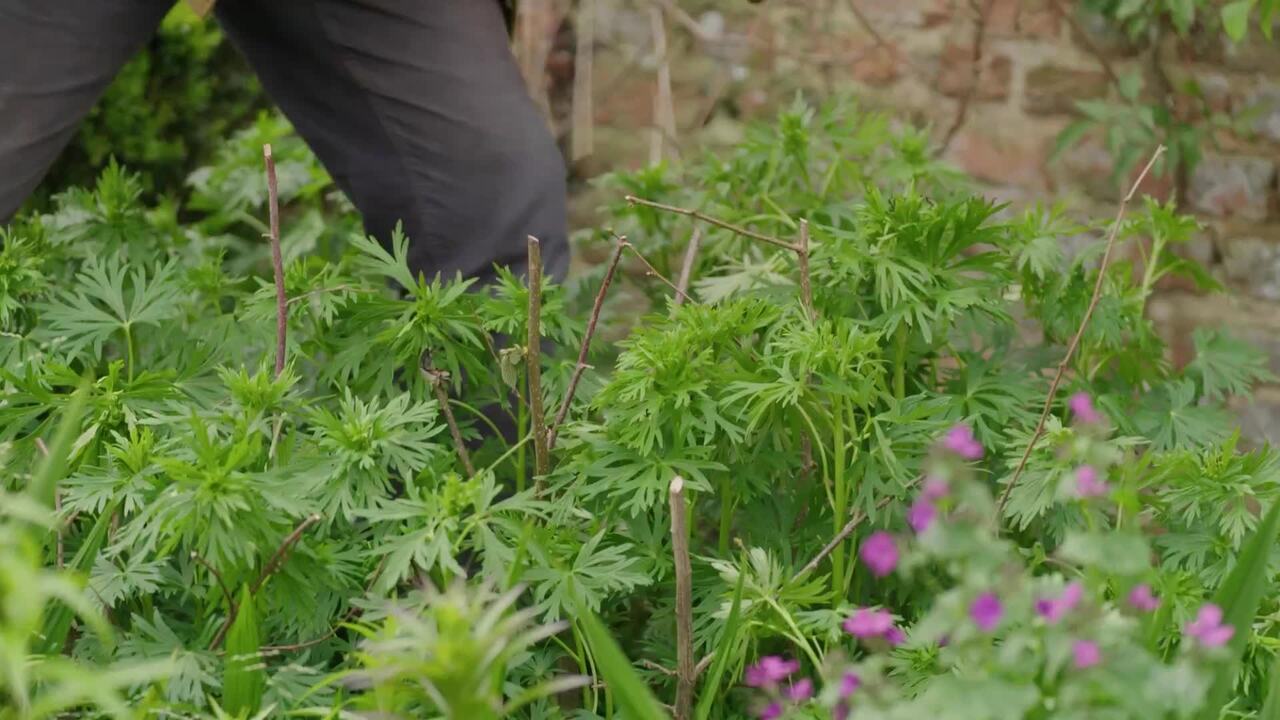
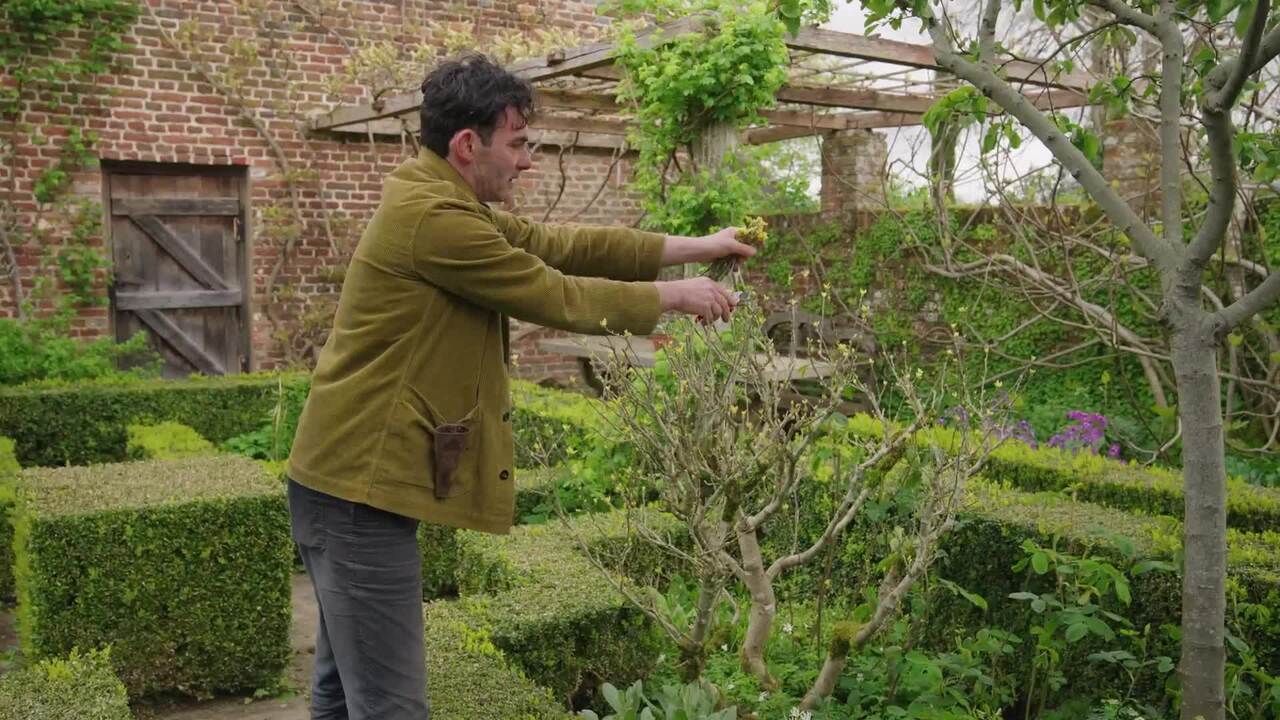
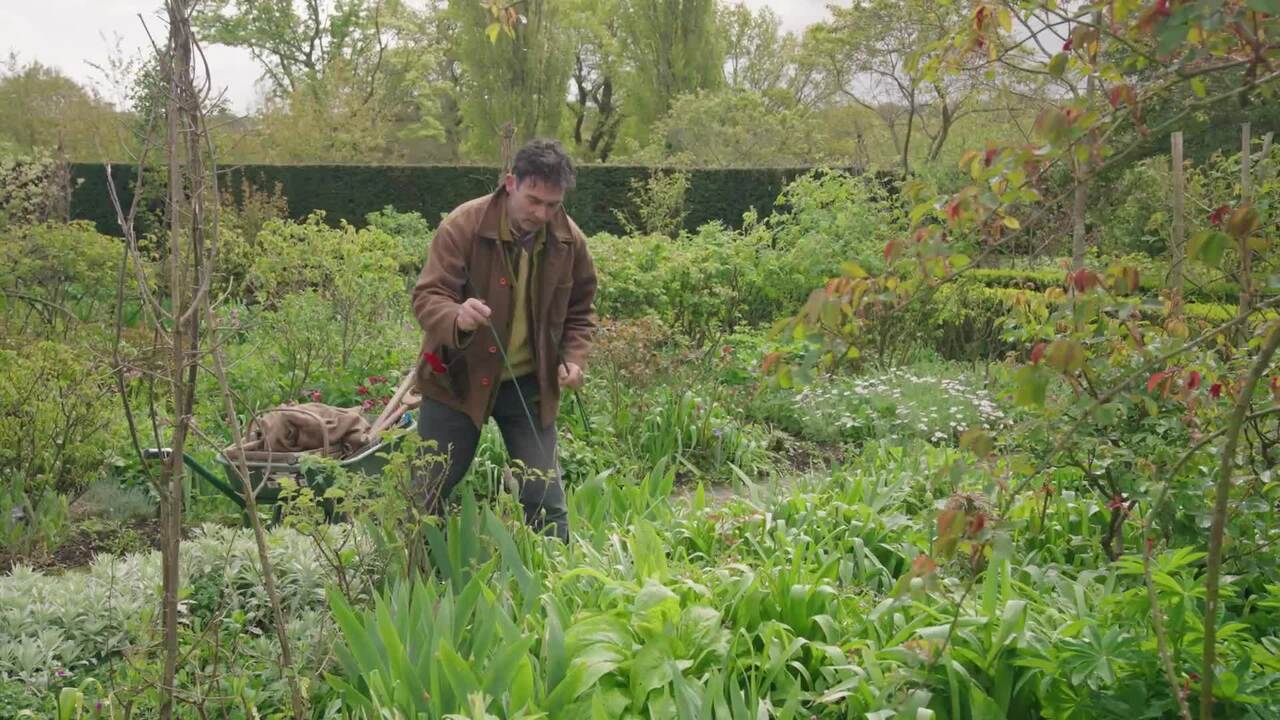
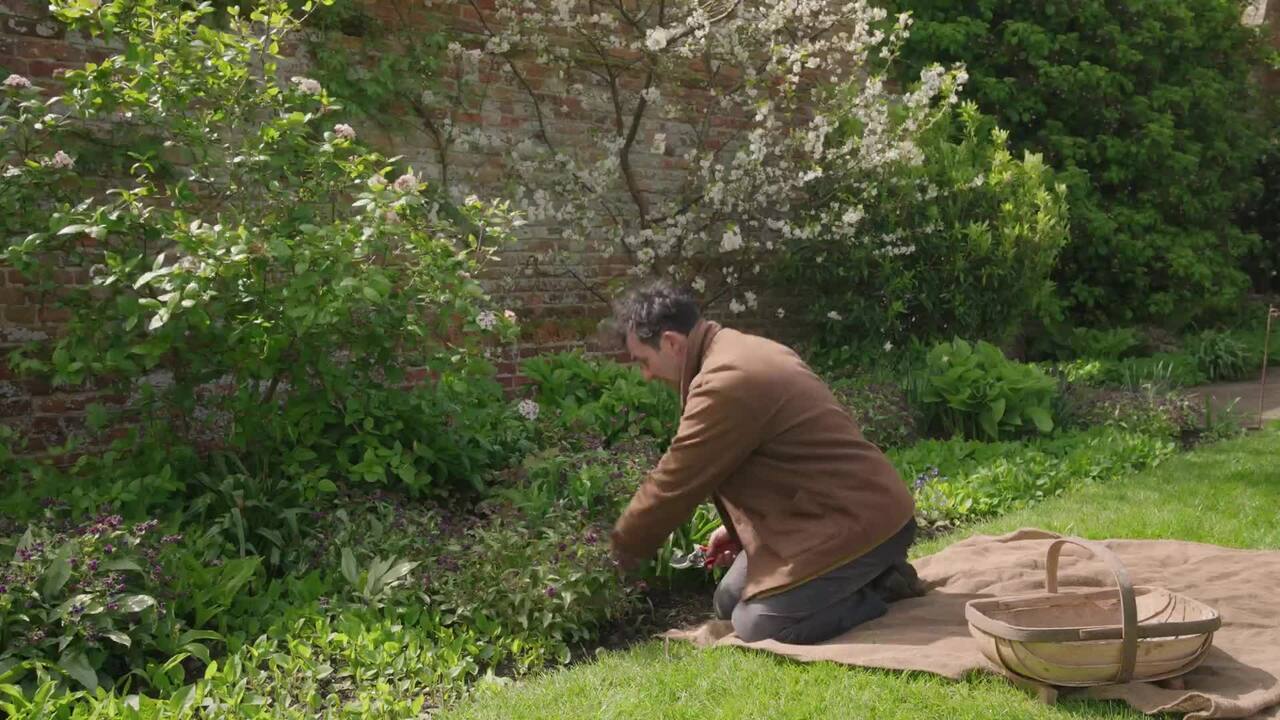
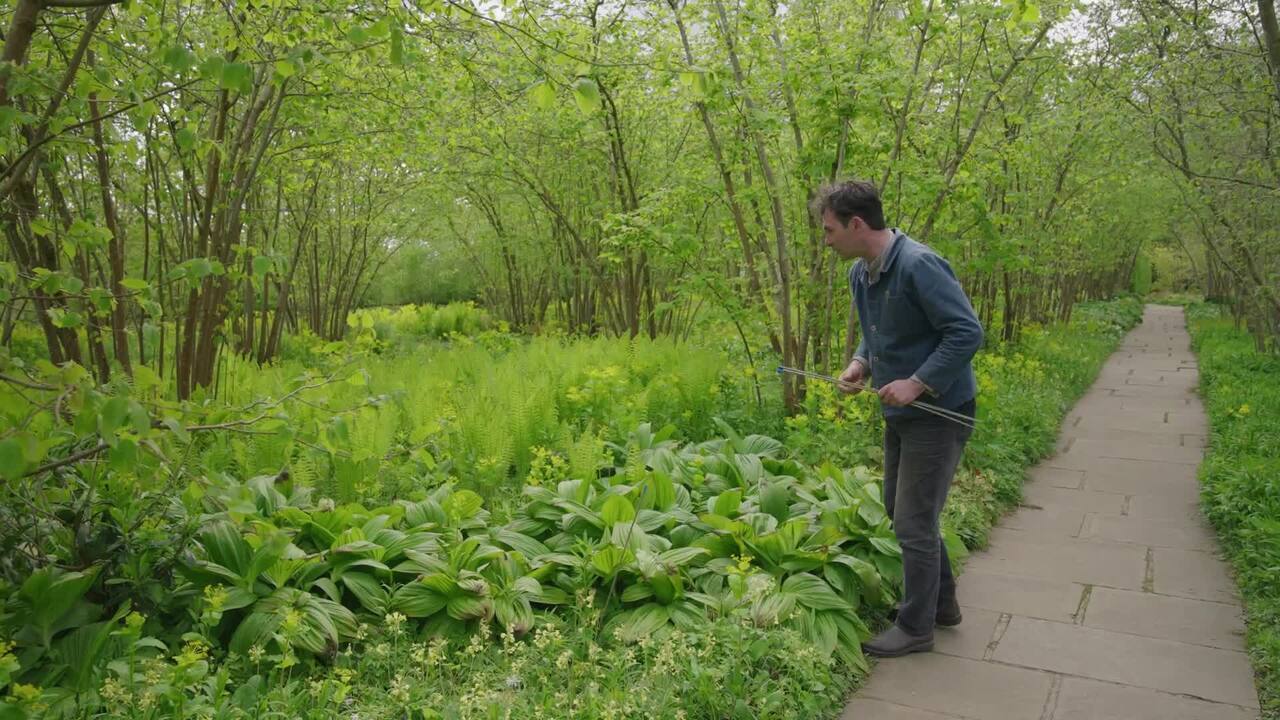
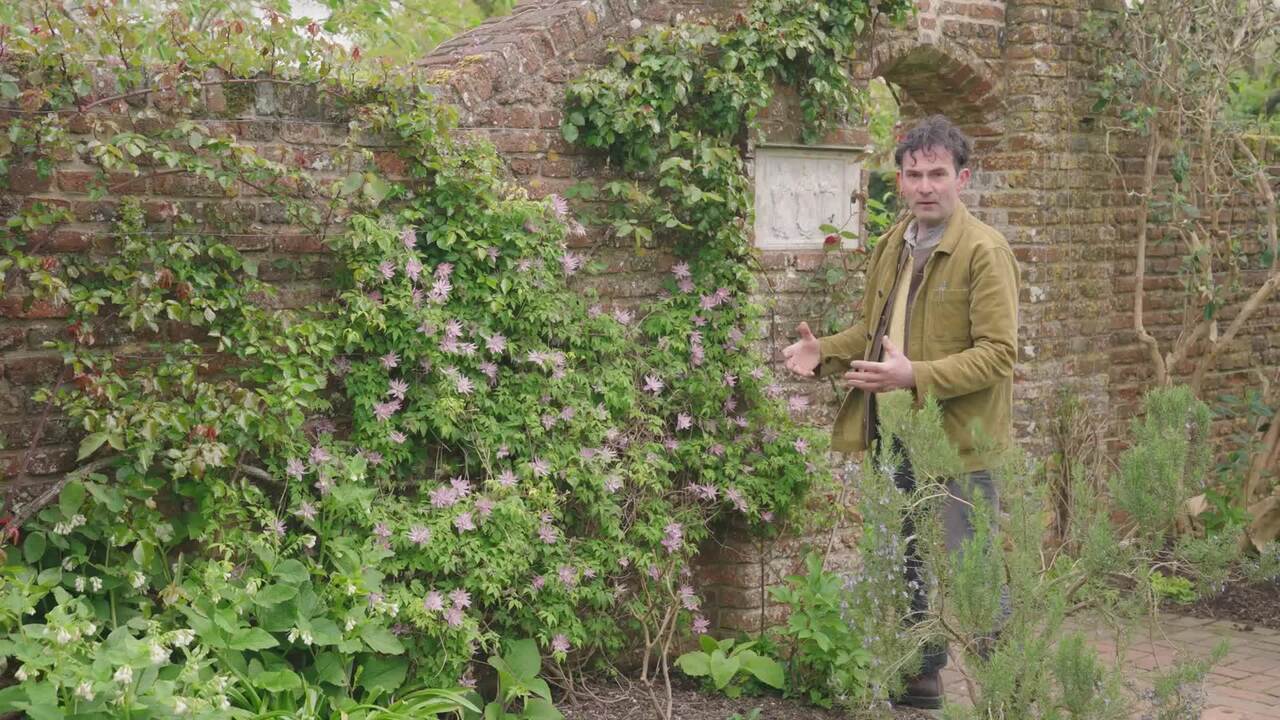
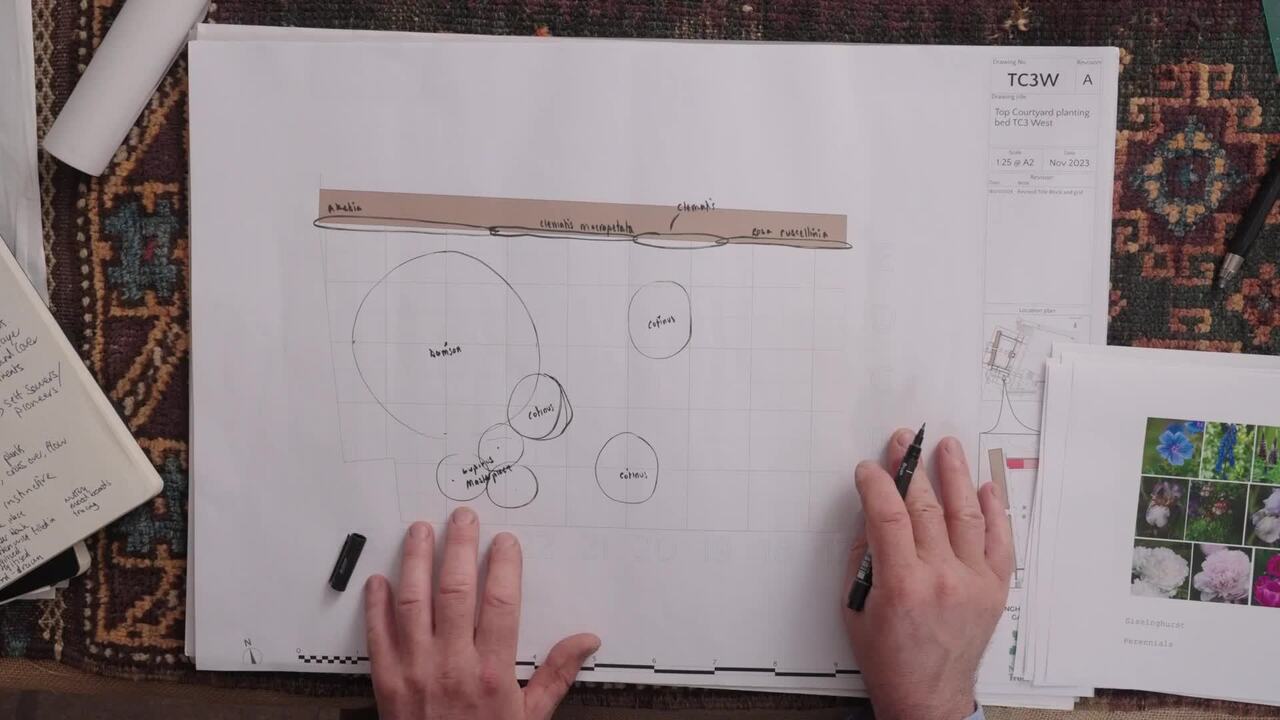
Troy explains how to start building up layers in the planting plan, looking at how to group perennials for impact and how to maximise the succession of interest, with examples of popular perennials he’s chosen for his own redesign.
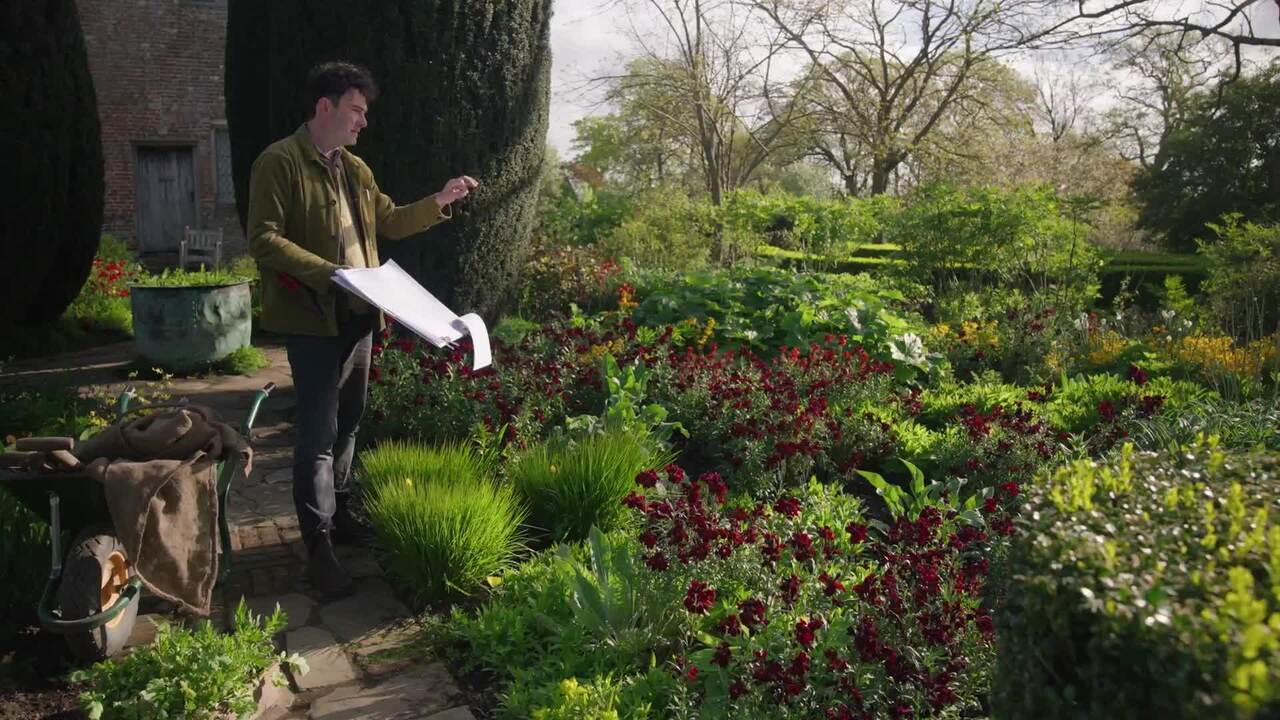
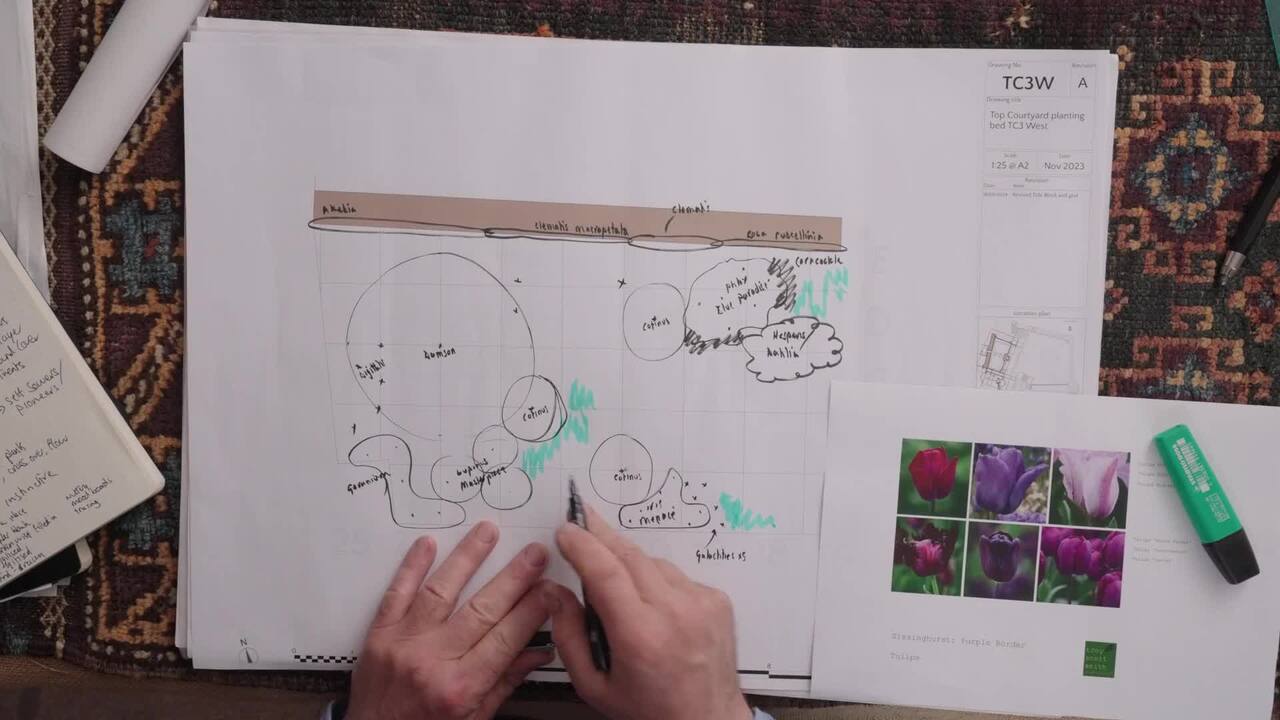
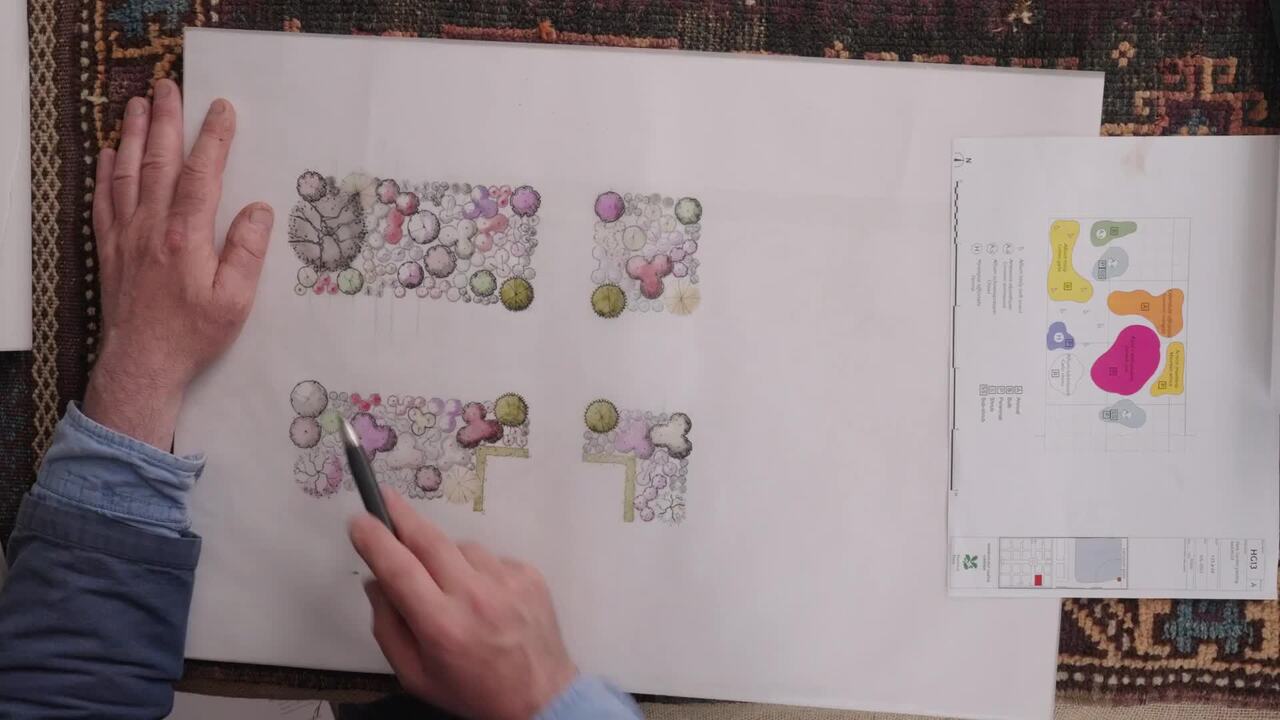
Now we're going to start building up layers in the planting plan, looking at how to group perennials for impact and how to maximise the succession of interest.
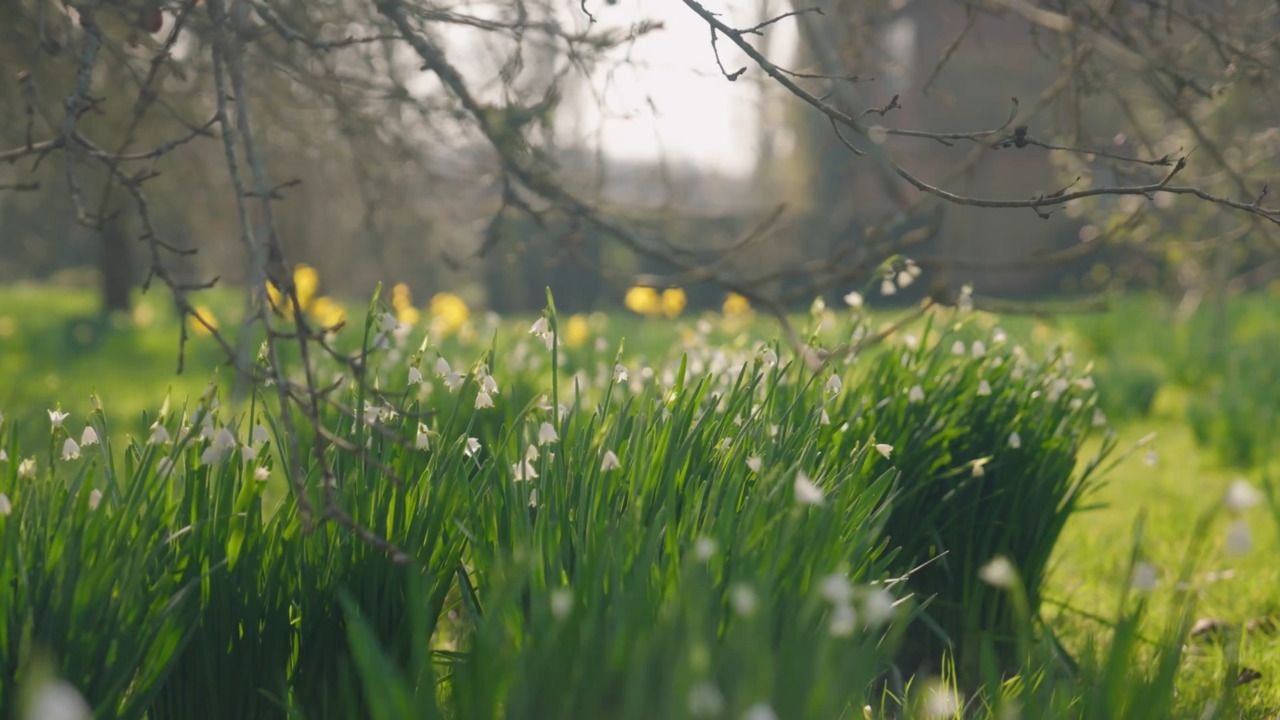
Always consider some evergreens for winter interest, alongside the skeletal structures of the deciduous shrubs and trees.
Lupins
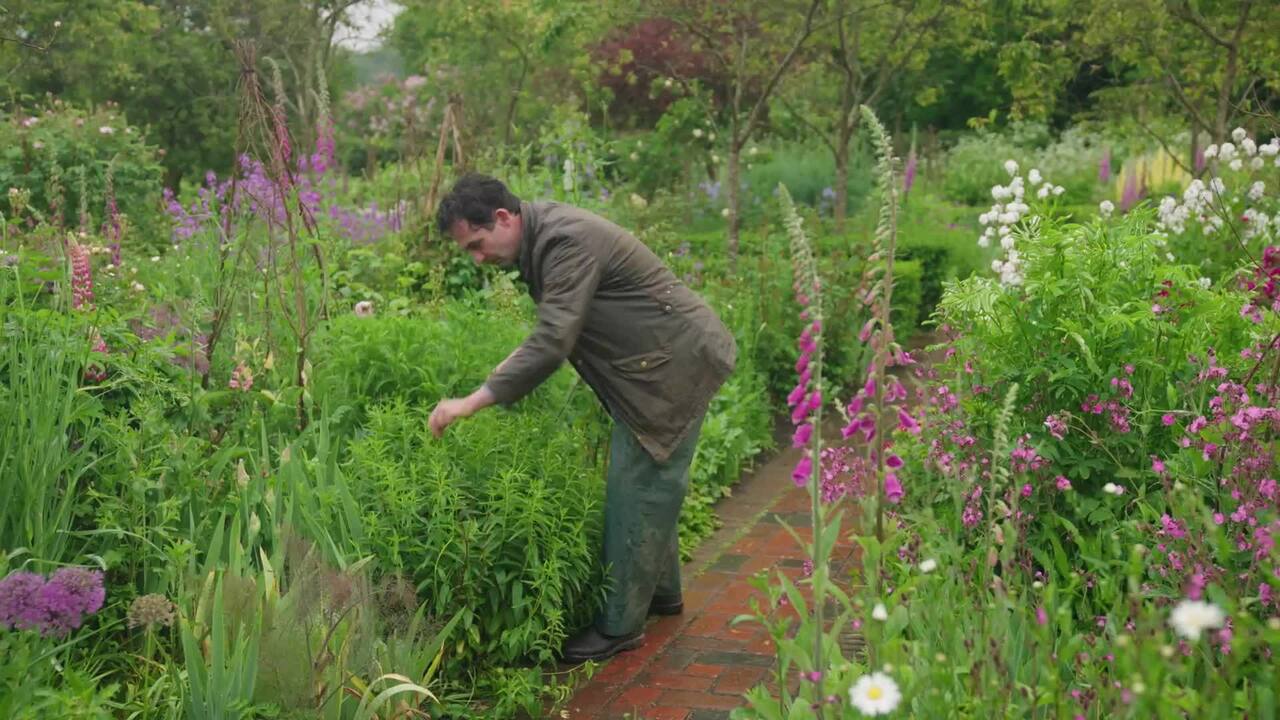
A mid-layer perennial or perhaps an emergent, lupins are perfect plants for repeating down the border to add rhythm and drama near the front. Grouping in threes works well, and I'd use around four groups in a 25m border. Set them back a bit from the front, as they're vulnerable to slugs and snails and will go over around midsummer, leaving just a mass of foliage.
Geraniums
Geraniums are a great mid-layer perennial for using at the corners of a border. Groups of around five work well to wrap around the corner.
Phlox
Phlox flowers for around 6 weeks, but this can be staggered using the Chelsea chop. Planting several together will form a single mass around 5ft high, so put them near the back, and again repeat these groups down the border.
Irises
Irises are best put at the front, as they like to bake in the sun. Separate them from other plants that have a similar vertical form at the same time of year, like lupins. Each iris only takes up a space about 25cm wide, so you may need around eight for a clump.
General Principles
Building up the perennial layer based on your research, mood boards, and when they flower to get them working well together for successional interest.
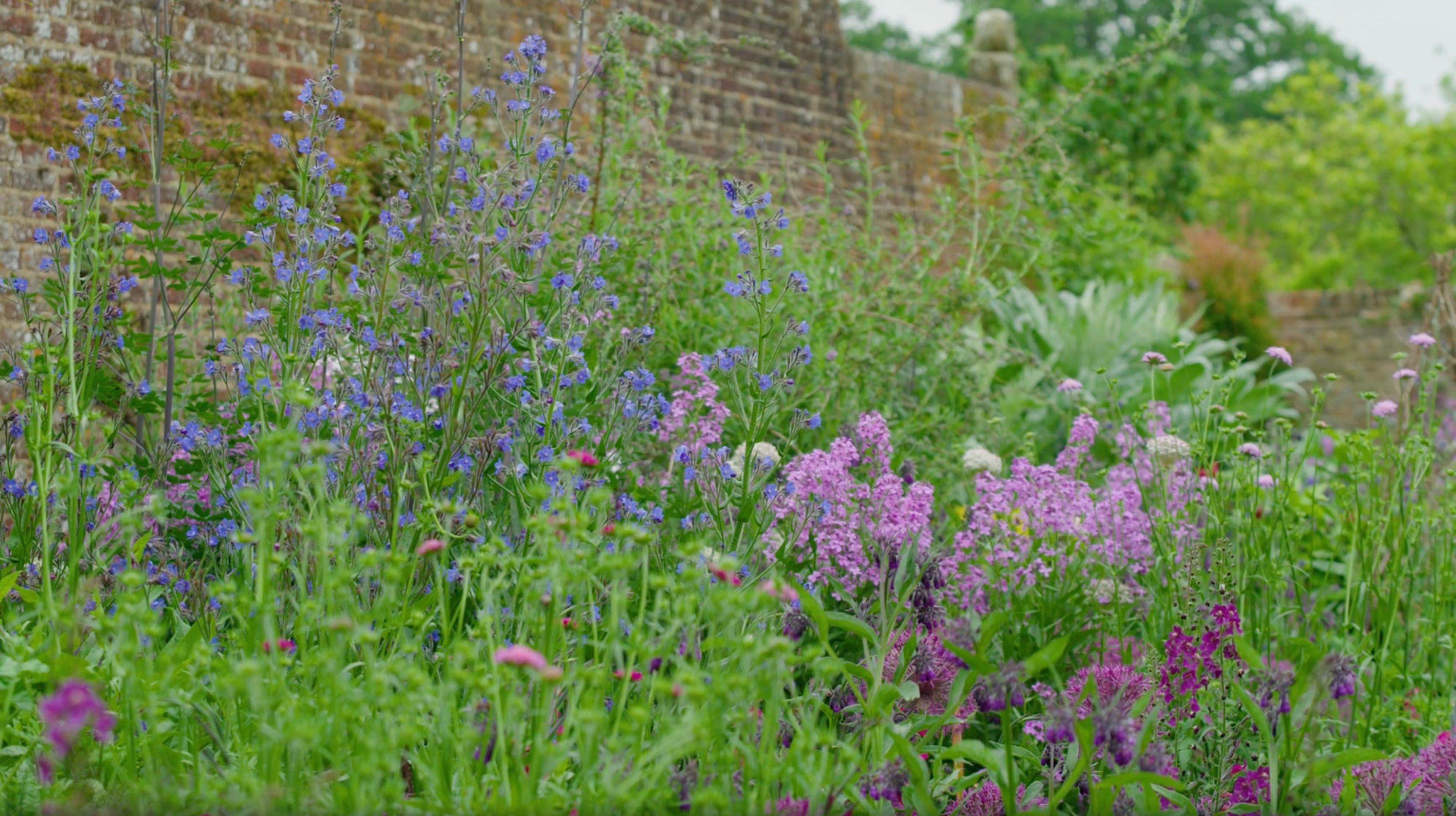
You can be creative around your colour scheme – for a purple border, think about plants that have purple foliage, purple seeds or fruits, or just a streak or eye of purple in the flower. Introducing some contrast can work well even in a colour-themed border – for instance, we're adding some acid yellow into the Purple Border using euphorbia and woad.
If you think they'll still be visible, try using some of the plants from the front further back, too. For example, Iris 'Lothario' is a taller iris that I use in sunny spots further back as well as at the front.
Think about the spread of individual plants to work out the numbers of plants needed.
Aconitum species and cultivars
Aconites, monk's hoods
Hardy herbaceous perennials or biennials
Ranunculaceae
Daphne bholua 'Jaqueline Postill'
Semi-evergreen or evergreen in a mild winter
Mostly hardy evergreen shrub
Thymelaeaceae
Daphne bholua 'Peter Smithers'
Daphne 'Peter Smithers'
Mostly hardy evergreen or semi-evergreen shrub
Thymelaeaceae
Euphorbia species and cultivars
Spurges
Hardy, half-hardy or tender annuals, perennials or shrubs
Euphorbiaceae
Geranium × magnificum
Purple cranesbill
Hardy herbaceous perennial
Geraniaceae
Iris 'Benton Menace'
Tall bearded iris 'Benton Menace'
Hardy herbaceous perennial from rhizomes
Iridaceae
Iris 'Lothario'
Tall bearded iris 'Lothario'
Hardy herbaceous perennial from rhizomes
Iridaceae
Isatis tinctoria
Woad
Hardy herbaceous biennial or short-lived perennial
Brassicaceae
Lupinus 'Masterpiece'PBR
Lupin 'Masterpiece'
Hardy herbaceous perennial
Fabaceae
Phlox paniculata 'Blue Paradise'
Perennial phlox 'Blue Paradise'
Hardy herbaceous perennial
Polemoniaceae
Sarcocca species and cultivars
Sweet box
Evergreen shrubs
Buxaceae
Get the full workbook, video lessons, and more with a Create Academy subscription.
Subscribe to access the full workbookAlready a member? Sign in to watch
491 reviews
Read moreCreate Academy has been such a great resource. I'm in the middle of renovating a bungalow with a very large garden and the courses have offered a wealth of inform...
Harvey
Jun 10, 2026
Absolutely love Create Academy! The instructors are extremely informative, and it is beautifully filmed. Create Academy is great value for money and plan on renew...
SG
May 31, 2026
Butter's creativity is stunning! Her ability to incorporate brilliance in small gardens is magical!
Carla
May 30, 2026
The best adventure. I like all the courses, but my favorite are both Rita Konig interior design courses and Anna Jones. Excellent!
Karolina Kluczewska
May 20, 2026
Create Academy has been such a great resource. I'm in the middle of renovating a bungalow with a very large garden and the courses have offered a wealth of information to dive into and explore new ideas. I'm...
Harvey
Jun 10, 2026
Absolutely love Create Academy! The instructors are extremely informative, and it is beautifully filmed. Create Academy is great value for money and plan on renewing my subscription yearly because there are ...
SG
May 31, 2026
Butter's creativity is stunning! Her ability to incorporate brilliance in small gardens is magical!
Carla
May 30, 2026

Your Instructor
Head Gardener at Sissinghurst. Garden Writer, Speaker & Lecturer.
Troy Scott-Smith, previously head gardener of Iford Manor and Bodnant garden, now oversees the cherished grounds of Sissinghurst - one of the most famous gardens in England and is designated Grade I on Historic England's register of historic parks and gardens. Coming from a family of committed naturalists, Troy is a seasoned horticulturist, writer, designer and consultant, Troy is also a respected member of the RHS Floral Committee. When he set his sights on the head gardener role, he did so with refreshing candour, speaking passionately of the garden’s need for thoughtful evolution. It is a mark of the National Trust’s forward-thinking spirit that they embraced his vision, inviting him to guide this historic landscape into a compelling new chapter.

Access to all courses
.jpg)

